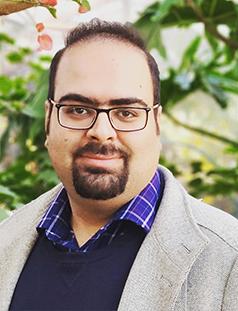
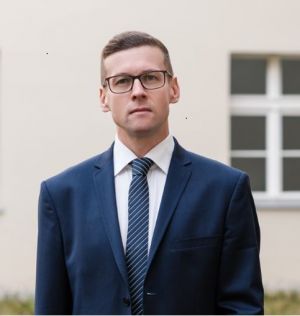
Laurel MacKenzie is an Associate Professor in the Department of Linguistics at New York University (NYU), affiliated with the Faculty of Arts and Science. She specializes in variationist sociolinguistics, dialectology, and language change, with a focus on English and French varieties. Her work integrates quantitative analysis of speech data to explore intra-speaker variation and language evolution. She co-directs the NYU Sociolinguistics Lab and leads the NSF-funded NYC Individual Differences Corpus project, alongside the Our Dialects initiative, an online atlas of British English dialects. Education: PhD in Linguistics, University of Pennsylvania (2012) BA in Linguistics and French, University of California, Berkeley (2006) Research Interests: Morphological and syntactic variation Regional dialects of English and French Linguistic pedagogy and public engagement Recent Projects: Recent work includes publications on participle leveling in English, sociolinguistic replication studies, and grammatical variation analysis. She has also collaborated on dialect mapping tools and consulted for media projects on language change and accents. Awards: No awards explicitly listed in provided texts. Labs/Teams: NYU Sociolinguistics Lab (Co-Director) Our Dialects Project (Academic Lead)
Leigh Oakes is Professor of French and Linguistics in the Department of Modern Languages and Cultures within the School of Languages, Linguistics and Film at Queen Mary University of London. He has held progressive academic positions at the institution since 2000, advancing from Lecturer to his current professorship. His international academic background includes a PhD from the University of Melbourne and research at Stockholm University's Centre for Research on Bilingualism. His educational qualifications include a PhD (2001) and BA (Hons) (1996), both from the University of Melbourne. Oakes specializes in language policy and planning, with particular focus on language and national identity in France, Quebec, and Sweden. His research has expanded into linguistic justice debates in political theory, advocating for normative and interdisciplinary approaches to language policy. Oakes' publication trends reveal a consistent focus on ethical dimensions of language policy, with increasing emphasis on pluricentric justice and linguistic integration since 2016. His work bridges sociolinguistics and political philosophy, demonstrating strong interdisciplinary connections between language attitudes, national identity construction, and policy implementation across Francophone contexts. The 2018 co-authored monograph 'Normative Language Policy' represents a significant theoretical contribution to the field. 2008 Pierre Savard Prize for 'Language, Citizenship and Identity in Quebec' Leverhulme Trust Research Project Grant for 'The Ethics of Linguistic Integration' project Co-editor-in-chief of Sociolinguistica: European Journal of Sociolinguistics Co-editor of Multilingual Matters book series Member of editorial boards for Language Policy and Modern Languages Open Oakes actively supervises PhD candidates in sociolinguistic topics, with current research focusing on linguistic integration in Quebec and adaptation among mobile French speakers. His major Leverhulme-funded project 'The Ethics of Linguistic Integration' examines moral implications of language requirements for immigrants across England, Quebec, and Wales. He serves on several international academic committees including the Association internationale des études québécoises and the British Association of Canadian Studies. He leads the interdisciplinary 'Ethics of Linguistic Integration' research team, which combines expertise from applied linguistics, sociolinguistics, and political theory to investigate language integration policies. His work connects with broader university initiatives through Queen Mary's research highways in social justice and global challenges.
Soumya Dutta is an Assistant Professor in the Department of Computer Science and Engineering at the Indian Institute of Technology Kanpur (IITK), where he leads the INSIGHT: Intelligent Scientific and Visual Computing of Big Data Research Group. He joined IIT Kanpur in October 2022 after working as a Scientist II at Los Alamos National Laboratory (LANL) from July 2019 to August 2022, and previously as a Postdoctoral Research Associate at LANL from June 2018 to July 2019. His educational background includes a Ph.D. and M.S. in Computer Science and Engineering from The Ohio State University (2011-2018), where he was part of the GRAVITY research group, and a B.Tech. in Electronics and Communication Engineering from West Bengal University of Technology, India (2005-2009). Research Interests: Dr. Dutta's research focuses on the intersection of machine learning, visual computing, big data, and high-performance computing. His primary research areas include Machine Learning for Visual Computing and Image Analysis, Big Data Visualization and Analytics, Data Science and HPC, Machine Learning for Scientific Computing, and Explainability and Interpretability of AI Models. His work addresses various big data characteristics including the 5 Vs: Volume, Velocity, Variety, Veracity, and Value. He develops techniques that make complex machine learning models more interpretable and explainable, enabling their effective adoption in real-life applications across scientific domains, social media, IoT, healthcare, and industry applications. Dr. Dutta's research group has secured multiple funded projects including: DAVi: An Intelligent Data Analytics and Visualization Framework (funded by ISRO), Intelligent Visual Computing of Extreme-scale Data for Accelerating Scientific Discovery (IIT Kanpur Initiation Grant), Enabling Interactive Big Data Analytics and Visualization at Exascale (SERB), Development of AI-Enabled National Portal for Efficient Search of Missing People (C3iHub), and Proactive and Generalized Deepfake Defense Mechanisms (C3iHub). Best Reviewer, Honorary Mention Award for IEEE Transactions on Visualization & Computer Graphics (TVCG), 2021 Best Paper Award at ISAV 2021, co-located with Supercomputing (SC) LAAP Award at Los Alamos National Laboratory, 2021 Best Paper Award at TopoInVis 2019 Best Paper Award at ISAV 2018, co-located with Supercomputing (SC) Best Poster Award in 12th Annual CSE Student Poster Exhibition, The Ohio State University, 2018 Best Poster Award in 11th Annual CSE Student Poster Exhibition, The Ohio State University, 2017 Best Paper Honorable Mention Award at IEEE Visualization Conference (IEEE VIS) 2016 Dr. Dutta actively mentors a large group of students including Ph.D., M.Tech., and B.Tech. students. His current Ph.D. students include Shanu Saklani, Sankhadeep Bhowmick, Ananya Chaturvedi, Arpita Santra, Anubhav Dixit (co-supervised), and Robin Shah. He has supervised numerous M.Tech. students with thesis topics ranging from uncertainty-aware neural networks to deepfake detection. Dr. Dutta currently teaches courses including CS360 - Introduction to Computer Graphics and CS661 - Big Data Visual Analytics. The INSIGHT research group collaborates internationally with researchers from Meta, Oak Ridge National Laboratory, and National Taiwan Normal University. The group's work focuses on building machine learning and data science-based solutions to analyze large-scale multifaceted data in a scalable way, enabling interactive and interpretable analytics of complex data from scientific simulations, social media, IoT, healthcare, and other application domains.
Prof. Dr. Henning Klöter is Professor of Modern Chinese Languages and Literatures at Humboldt University of Berlin (HU Berlin) and serves as Dean of the Faculty of Culture, Language and Education. He is affiliated with the Institute of Asian and African Studies and the Department of East Asian Studies. He has been a faculty member since 2015 and leads significant research in sociolinguistics, language planning, and Sinophone studies. His educational background includes studies in Sinology, German Studies, and Linguistics at the University of Trier, Capital Normal University (Beijing), Leiden University, and National Taiwan University. He earned his doctorate from Leiden University in 2003 and completed his habilitation at Ruhr University Bochum in 2010. Henning Klöter's research focuses on multilingualism, language planning, the history of Chinese linguistics in Europe—especially missionary and colonial linguistics—historical sociolinguistics, Overseas Chinese communities, and Taiwan Studies, with regional interests spanning the PRC, Hong Kong, Macao, Singapore, the Philippines, and Taiwan. His work often explores the ideological and political dimensions of language standardization and visibility in public space. Since 2023, he has been Chief Editor of the Journal of Asian Pacific Communication. His recent scholarly output reveals a strong trend in historical and sociopolitical aspects of Chinese language use, particularly across Sinophone regions. Themes include language policy divergence between Taiwan and the PRC, linguistic landscape analysis in Taipei, missionary lexicography, and the evolution of Chinese linguistic standards. His publications bridge historical documentation with contemporary sociolinguistic theory, emphasizing pluricentricity and ideological influences on language. Chief Editor, Journal of Asian Pacific Communication (since 2023) Principal Investigator, ChinGram (Erasmus+ project) Principal Investigator, EMHo (DFG Weave project) He has not received any explicitly mentioned scientific awards in the provided texts. Prof. Klöter is actively engaged in major research initiatives and editorial leadership, contributing significantly to the academic understanding of language in Chinese-speaking societies. He is involved in the Mori-Ōgai Memorial and contributes to the academic community through research projects, publications, and institutional leadership. His work often intersects with cultural memory, colonial history, and linguistic identity in East Asia.
Nicholas Henriksen is an Arthur F. Thurnau Professor and Professor of Spanish & Linguistics at the University of Michigan, where he has held faculty positions since 2012. His research focuses on laboratory phonology, experimental phonetics, sociophonetics, and intonational grammar in Spanish and other Romance languages. Notable projects include studies on sound change in Andalusian and Patagonian Spanish, bilingualism (Afrikaans-Spanish), and second language speech learning. He directs the Michigan Speech Production Lab and co-leads initiatives integrating gender-diverse language into Romance curricula. Henriksen earned a PhD in Linguistics from Indiana University (2010), MA in Hispanic Linguistics (2006), and BA in Spanish/Mathematics from Rutgers (2003). His teaching spans undergraduate and graduate courses in Spanish linguistics, sociolinguistics, and phonetics, emphasizing applied research and pedagogical innovation. He has received prestigious awards, including the LSA Early Career Award (2021) and the Class of 1923 Teaching Award (2018). His research has been funded by grants from the University of Michigan ADVANCE Program and the Humanities Collaboratory, supporting projects like From Africa to Patagonia: Voices of Displacement . Collaborations include work with scholars in Argentina, South Africa, and Spain, examining language contact, heritage language maintenance, and sociolinguistic identity. Publications span over 30 peer-reviewed articles and book chapters, with a focus on phonetic variation, intonation, and bilingualism. He mentors graduate students in experimental phonetics and sociolinguistics, with advisees contributing to studies on Andalusian Spanish, heritage language acquisition, and voice quality.
Prof. Robert Fuchs holds the Frommann Professorship of Applied English Linguistics at the University of Bonn, leading the Chair of Bonn Applied English Linguistics (BAEL) within the Department of English, American and Celtic Studies. His research focuses on World Englishes, corpus linguistics, sociolinguistics, and the impact of artificial intelligence on linguistic analysis. He actively supervises PhD students in topics aligned with his research group's interests, emphasizing empirical work and data science. Recent research explores language change in varieties like Hong Kong English, Trinidadian prosody, and intensifier usage across cultures. Fuchs frequently presents at international conferences, including ISLE, ICAME, and Sociolinguistics Symposium, and publishes extensively in journals like World Englishes and Language and Speech . His teaching includes advanced courses on corpus linguistics and language in culture, with a focus on climate change discourse analysis. He maintains an active academic presence through ResearchGate, Academia.edu, and LinkedIn. Research Interests: Fuchs investigates sociolinguistic variation, AI applications in linguistics, and the structural features of postcolonial Englishes. His work addresses topics such as vowel mergers in Hong Kong English, lexical stress perception in Indian English, and the role of gender in language use. He also explores diachronic changes in aspects like stative progressives and the perfect-past alternation across Asian Englishes. Advising & Grants: Fuchs oversees PhD student recruitment through research associate positions and self-funded scholarships, prioritizing applicants with strong empirical and analytical skills. His funded projects include studies on pandemic discourse (DisCOVIndUK) and linguistic trends in Caribbean English. His lab, BAEL, collaborates internationally, with ongoing work on Trinidadian prosody and Northeast Indian linguistic ecology. Labs/Teams: The Bonn Applied English Linguistics (BAEL) group, part of the University of Bonn's IAAK institute, focuses on cutting-edge research in global Englishes and computational linguistics, hosting international workshops and fostering interdisciplinary collaboration.
Unn Røyneland is a Professor of Scandinavian Linguistics and Multilingualism at the University of Oslo 's Faculty of Humanities . She is affiliated with the Center for Multilingualism in Society Across the Lifespan (MultiLing) and has been a key figure in Norwegian language policy and standardization efforts, including the Nynorsk 2011 orthographic revision . Current Research Focus: Multilingual and multilectal practices on social media Dialect acquisition among migrants Dialect levelling and language attitudes Language and embodiment Multiethnolectal speech styles Language policy and planning Ongoing Projects: Multilectal Literacy in Education (2020-2025) (RCN-funded, Co-PI) Multilectal Practices on Social Media (2020) (with Øystein A. Vangsnes) Urban Talk and Text (MultiLing Core-group project, 2021) AquaAurora (2021, UiT The Arctic University of Norway) Her scholarly work spans 15+ years of research output, with recent publications analyzing: Language activism and social justice (2024) Multilingualism across the lifespan (2022) Migration-induced dialect acquisition (2020) Youth multilingual practices in digital spaces (2018) Nynorsk standardization processes (2016) Multiethnolectal speech patterns (2008-2010) As Co-Chief Editor of the LME Linguistic Minorities in Europe Online series at De Gruyter, she continues shaping academic discourse in multilingualism studies.
PD Dr. Lutz Rzehak is an academic staff member at the Institute for Asian and African Studies (IAAW) within the Faculty of Humanities at Humboldt University of Berlin, serving as a Teacher for special tasks specializing in Modern Iranian languages and the ethnography and cultural history of Afghanistan and Central Asia. His educational background includes: Oriental Studies/History from the State University of Leningrad (1985) Doctorate in Iranian Studies, Humboldt University of Berlin (1991) Habilitation in Central Asian Studies / Iranian Studies, Humboldt University of Berlin (2001) Dr. Rzehak's research spans Central Asian Studies , Iranian Studies , Ethnography , and Linguistics , with fieldwork focusing on Baloch, Pashtun, and Tajik communities. His work examines language evolution, social structures, and cultural practices through historical and contemporary lenses, particularly regarding Soviet influence and post-Taliban Afghanistan. Key contributions include grammatical analyses of Iranian languages and ethnographic studies of religious rituals and tribal systems. His recent publications (2016-2021) reveal consistent focus on Iranian language dynamics (especially Dari and Pashto), ethnic identity politics in Afghanistan, and cultural history of Central Asia. These works address language change mechanisms, ethnic consolidation strategies, and the interplay between tradition and modernity, often utilizing comparative linguistic and ethnographic methodologies. His scientific awards include: Heisenberg Fellow of the German Research Foundation Dr. Rzehak has held significant research positions including Research Associate in the Crossroads Asia Competence Network (2011-2016) and Heisenberg Fellow (2002-2011). While his CV does not list formal PhD advisees, his language lecturing and research supervision have mentored numerous students in Central Asian and Iranian studies through course instruction and fieldwork guidance. He has been actively involved in the Crossroads Asia Competence Network, a major interdisciplinary research initiative examining transregional connections and historical trajectories across Central, South, and West Asia.
Dr. Mohsen Yoosefzadeh Najafabadi is an Assistant Professor in the Department of Plant Agriculture at the University of Guelph, Ontario Agricultural College. He holds a PhD in Plant Breeding from the University of Guelph (2022), following M.Sc. and B.Sc. degrees from the University of Tehran. His research focuses on dry bean breeding, computational biology, and integrating omics technologies to enhance crop resilience and productivity. Key areas include developing stress-tolerant dry bean varieties, leveraging remote sensing for trait prediction, and optimizing genomic selection methods. He leads the Dry Bean Breeding & Computational Biology Program and has contributed to over 30 peer-reviewed publications since 2017. Education : PhD, Plant Breeding, University of Guelph (2022) M.Sc., University of Tehran B.Sc., University of Tehran Research interests emphasize computational tools development (e.g., AllInOne preprocessing framework), omics-based selection strategies, and non-Mendelian heredity mechanisms. His lab combines machine learning with field phenotyping to address agricultural challenges such as disease resistance and climate adaptation. Collaborative projects include soybean cold stress analysis and cannabinoid profile prediction in cannabis. Publications span genomic approaches to crop improvement, remote sensing applications, and transcriptomic studies. He teaches courses in plant breeding methodologies and actively engages in technology transfer initiatives. Lab activities include developing high-yielding dry bean cultivars resistant to biotic/abiotic stresses and advancing data-driven pipelines for crop breeding. Future work aims to synergize AI with multi-omics data to enhance crop resilience in diverse environments.
Robert McColl Millar is a Professor at the University of Aberdeen specializing in historical linguistics and Scots language studies. His research examines language contact phenomena, dialectological variation, and sociolinguistic dynamics within Scottish linguistic communities. His primary research domains include: Historical development of Scots in relation to English and Gaelic Dialectology of Scottish regional varieties (particularly Doric and fishing community dialects) Language policy and standardization efforts for Scots Lexical variation and attrition in endangered dialects Sociolinguistic aspects of language identity and nationalism Historical sociolinguistics of Scotland Language contact-induced change Analysis of Millar's recent publications (2024-2016) reveals three dominant research trajectories: (1) Scots Language Documentation through dialect surveys, lexical studies, and orthographic analysis; (2) Language Contact Mechanisms examining borrowing, interference, and structural change in historical English; (3) Sociopolitical Dimensions exploring Scots' relationship with Scottish identity, nationalism, and language policy. His work consistently bridges theoretical linguistics with practical language planning concerns. No scientific awards are documented in the available sources. While student advising details remain unreported, his publications indicate extensive collaboration with research forums like the Forum for Research on the Languages of Scotland and Ulster. Grant funding specifics are not publicly itemized, though his edited volumes suggest institutional and conference-level support. No dedicated laboratories or research teams are specified in current public materials.
Mark Brown is a Professor at the Department of Communication and Culture at BI Norwegian Business School. He holds a PhD from the University of Oslo (2008) and has extensive experience in academia since 1998, transitioning from business roles in sales and IT. His research focuses on the intersection of language, business, and environmental discourse, emphasizing sustainability communication, corporate social responsibility, and ethical stakeholder dialogue. He has published widely on topics such as corporate environmental rhetoric, Wendell Berry’s ecological philosophy, and the application of John Rawls’ political theory to business ethics. Education Background: PhD in Humanities (2008), University of Oslo MPhil in English (1997), University of Oslo Bachelor of Arts (1995), University of Oslo MSc in Chemical Engineering (1982), Imperial College London Research Interests: Combines linguistic analysis with environmental and business ethics, exploring how corporations construct discourses around sustainability and nature. Key themes include corporate greenwashing, stakeholder communication dynamics, and the rhetorical framing of ecological issues. Teaching: Specializes in intercultural communication at the undergraduate level, including courses on business cultures, ethical dilemmas, negotiation strategies, and presentation skills. His pedagogical work integrates digital learning tools and higher-level cognitive development in students. Grants/Advising: No explicit grants listed, but his research has been supported through institutional affiliations and academic collaborations. He has advised on educational initiatives like the Learning Lab Pilot Programme (2014–2015). Labs/Teams: Active in interdisciplinary research groups focusing on communication studies, sustainability, and ethics. Collaborates frequently with colleagues in humanities and business schools.
Professor Marco Tamburelli is a faculty member at Bangor University's School of Language, Culture and the Arts , specializing in Linguistics with a focus on bilingualism, language policy, and linguistic diversity. He holds a PhD in Linguistics (Bilingualism) and a BA in Linguistics from University College London. Education PhD in Linguistics (Bilingualism), University College London BA in Linguistics, University College London Research Interests His work explores contested languages, bilingual acquisition in diglossic contexts, intelligibility measurements, and the sociopolitical dimensions of language attitudes. He investigates how language policies impact linguistic diversity and the role of implicit/explicit attitudes in language vitality. Recent publications examine Welsh-English bilingualism, Lombard-Italian communities, and Moselle Franconian-German dynamics, emphasizing methodological innovations like the L'ART Research Assistant app for standardized data collection. His studies highlight the interplay between early exposure, language policy, and spontaneous linguistic behavior. Scientific Awards Santander Scholarship donation (2012-2015) Supervision PhD students: Conor Glackin, Judit Vari, Mara Leonardi, Abigail Ruth Price, Lissander Brasca (part-time), Athanasia Papastergiou Outreach & Collaborations Active in public engagement, he presented at international conferences on language contestation, participated in Italian regional policy discussions for Lombard, and served on advisory boards for projects like CIRCE (Counteracting Accent Discrimination Practices in Education). He collaborates with institutions across Italy, Belgium, Germany, and the UK.
Maria Sanchez-Ortiz is a Senior Lecturer in Translation and Interpreting Studies at the School of Language, Literature, Music and Visual Culture (LLMVC), University of Aberdeen, where she has been actively contributing since 2016. She serves as Programme Director for both the on-campus and distance learning MSc in Translation Studies and co-directs the Centre for Multilingual Research. She previously directed the Centre for Translation and Interpreting Studies from 2020 to 2023 and coordinated the undergraduate programme in Modern Languages and Translation from 2017 to 2020. Her educational background is extensive and interdisciplinary: PhD in Translation Studies, University of Bradford (2006) MSc in Dubbing, Subtitling & Localization, Instituto Superior de Estudios Lingüísticos y Traducción, Spain (2019) Postgraduate Certificate in Academic Practice, University of Salford (2015) Diploma in Audiovisual Translation, Universidad de Educación a Distancia, Spain (2014) Diploma in Public Service Interpreting, CIoL (2007) MA in European Studies, University of Bradford (1994) Diploma in Spanish with Translation and Interpreting, CIoL (1992) BA in English Language and Literature, University of Granada, Spain (1989) Maria's research focuses on Translation and Interpreting Studies, with particular emphasis on literary translation, audiovisual translation, translator training, sociolinguistics, dialect translation, and the impact of AI on translation professions. She has supervised multiple PhD students to completion and actively welcomes new doctoral candidates in Spanish and Latin American Studies. Her work consistently bridges theory and practice, with a strong pedagogical orientation. Her 15 most recent publications span from 1996 to 2024, reflecting a sustained engagement with core issues in translation. The articles reveal a deep interest in the pragmatics, ethics, and cultural dimensions of translation, particularly in literary and dialectal contexts. A recurring theme is the translator's agency and the challenges of preserving stylistic and sociolinguistic nuances. More recently, her work has addressed gender, multiculturalism, and the evolving role of technology in translation. She has received numerous teaching accolades, including: Awarded 'Best Undergraduate Lecturer', University of Aberdeen (2024–2025) Awarded 'Funniest Lecturer', University of Aberdeen (2023–2024) Awarded 'Best Taught Postgraduate Lecturer', University of Aberdeen (2018–2019) Nominated for 'The Most Inspiring Lecturer' (2019–2020) and Excellence in Teaching awards Maria Sanchez-Ortiz is an active supervisor, mentor, and curriculum developer. She has served as an external examiner for MA and BA programmes at several UK universities, including Manchester, Open University, Portsmouth, Durham, and Bath. She is a Fellow of the UK Higher Education Academy (since 2015) and a member of key professional bodies such as the Institute of Translation and Interpreting (ITI) and the International Association for Translation and Intercultural Studies. She also contributes to academic journals as a member of editorial and advisory boards. She leads and co-directs major research centres at Aberdeen, fostering interdisciplinary collaboration and innovation in multilingual research. Her leadership in the European Graduate Placement Scheme and membership in the PACTE Research Group highlight her commitment to international cooperation and empirical research in translation competence.
Radosław Dylewski is a Professor at the Faculty of English , Adam Mickiewicz University , where he leads the Department of American Studies: Language and Culture . He holds a D.Litt. in English Linguistics (2014) and an MBA in Higher Education Management (2015). His administrative roles include **Deputy Dean for International Cooperation and Outreach** (2020–2024), **Deputy Dean for Full-Time Studies** (2012–2019), and **Dean’s Representative for Open University** initiatives. Education : M.A. in English (1998), Ph.D. in English (2002), D.Litt. in English Linguistics (2014), MBA in Higher Education Management (2015). Research Interests : Dylewski specializes in dialectology, focusing on New England and American South dialects , African American English , and Polish youth slang . His work examines lexical borrowings between Polish and English, historical morphology , and taboo language in sociocultural contexts. He has also analyzed formulaic closings in 19th-century correspondence and verb forms in early American texts. Key Publications include studies on the use of the lexeme 'shit' in stand-up comedy, Polish loanwords in English, and historical dialects. His recent work explores the validity of literary dialect portrayals and the evolution of irregular verbs in Confederate grammars. Scientific Awards : He has received consecutive **Rector’s Prizes for Administrative Achievements** at Adam Mickiewicz University from 2014 to 2024. Professional Involvement : Dylewski has served on numerous academic committees, including the **EPICUR Council at AMU** (2019–) and as a **NAWA Expert**. He has coordinated international conferences like MEDIEVAL ENGLISH STUDIES SYMPOSIUM and projects such as Innovative Language Research (2020–2024).
Dr Helen West is a Senior Lecturer in English Language within the Division of Communication, Screen and Performance at the University of Chester's School for the Creative Industries. She serves as a research and knowledge exchange representative for her division and has held significant leadership roles including Single Honours English Language Programme leader (2017-18) and Student Engagement Officer for English (2018-2024). Helen's educational background includes a PhD from the University of York (2009-2013), an MSc and MA (Hons) from the University of Edinburgh (2008-2009 and 2004-2008 respectively), and a PGCert in Learning and Teaching in Higher Education from the University of Chester. She became a Fellow of the Higher Education Academy in 2016. Her research focuses on sociolinguistics, particularly sociophonetics, investigating how social factors like age, gender, and social status influence language and accent. Two major research strands dominate her recent work: the Talking Chester/Cestrian English Project examining Chester's unique linguistic position between Liverpool, Manchester and Welsh English varieties; and The Swift Accent Shift Project analyzing Taylor Swift's accent changes between musical genres to explore connections between accent, stylistic categories, and social-psychological processes. Her methodological approach combines computational, quantitative, and qualitative techniques to study language variation and change. Helen's publication record demonstrates consistent scholarly output with a notable recent focus on contemporary sociophonetic investigations. Her work spans traditional academic formats like book chapters and conference presentations while also engaging with public-facing formats including exhibitions and internet publications. The Taylor Swift research represents an innovative approach to studying real-time accent variation through popular culture, while the Chester dialect project contributes to our understanding of regional identity formation through language. As an educator, Helen teaches across undergraduate and postgraduate programs on topics including sociolinguistics, sociophonetics, phonetics and phonology, child language acquisition, forensic linguistics, language and identity, and language and popular culture. She has developed numerous courses including Forensic Linguistics, Language and Identity, and Topics in Sociophonetics. Her leadership roles have focused on enhancing student engagement through immersive teaching experiences and promoting student-as-partner approaches to learning. Helen actively collaborates through projects like the Talking Chester initiative with Dr Jo Close and has organized significant academic events including the 10th Northern Englishes Workshop and Current and New Methods in Sociolinguistics (CANMIS) conference. She also serves as an External Examiner for Blackpool and The Fylde College and holds membership in professional organizations including the International Phonetic Association and Linguistics Association of Great Britain.