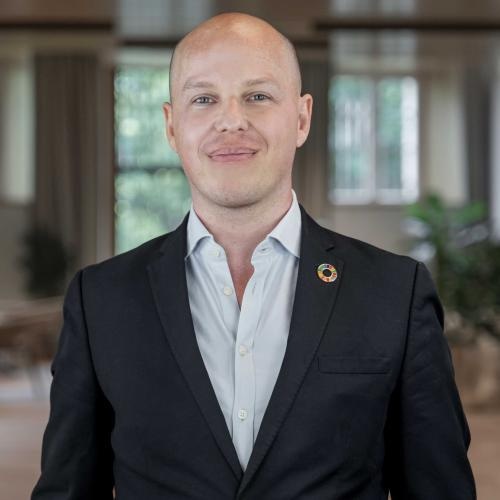
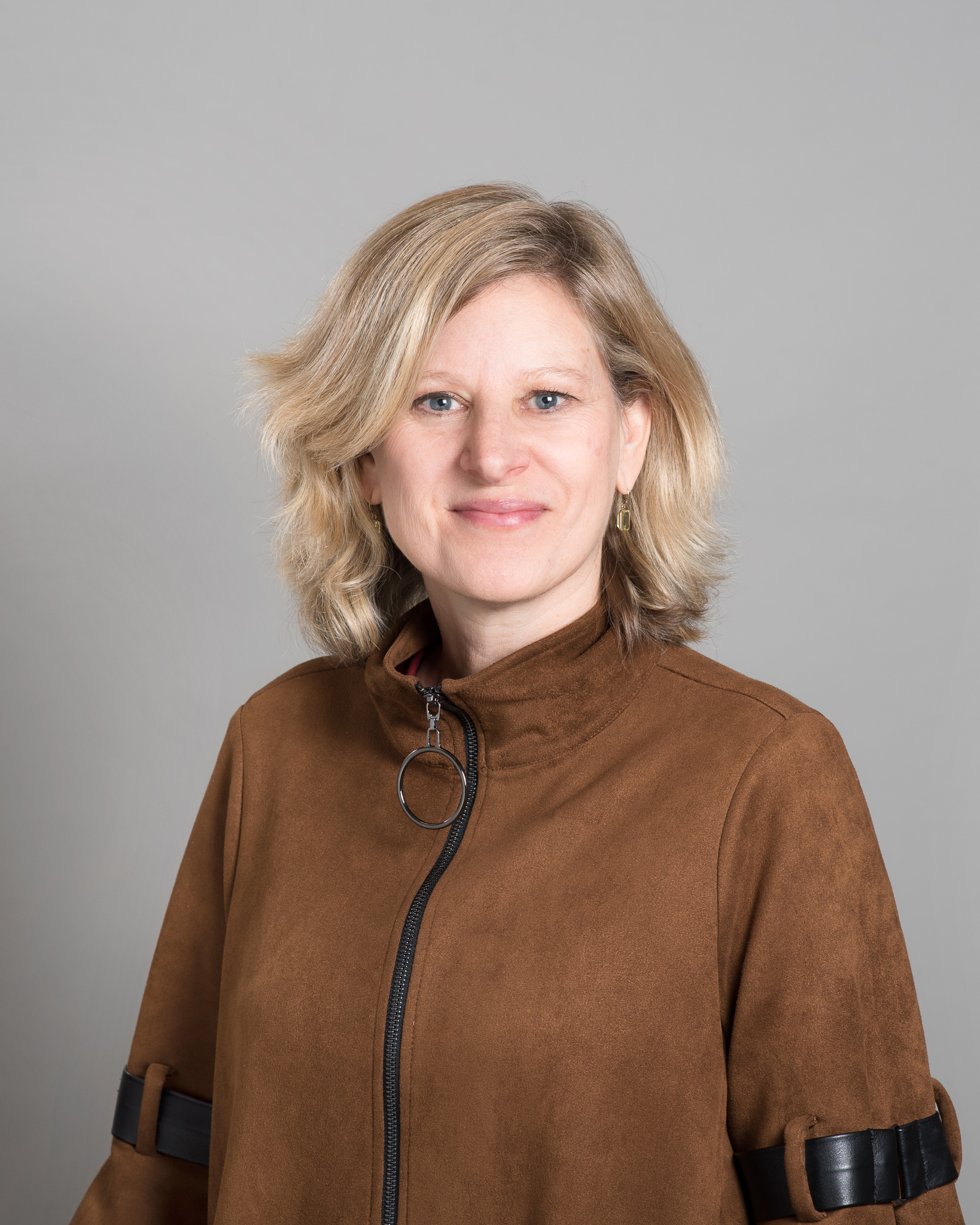
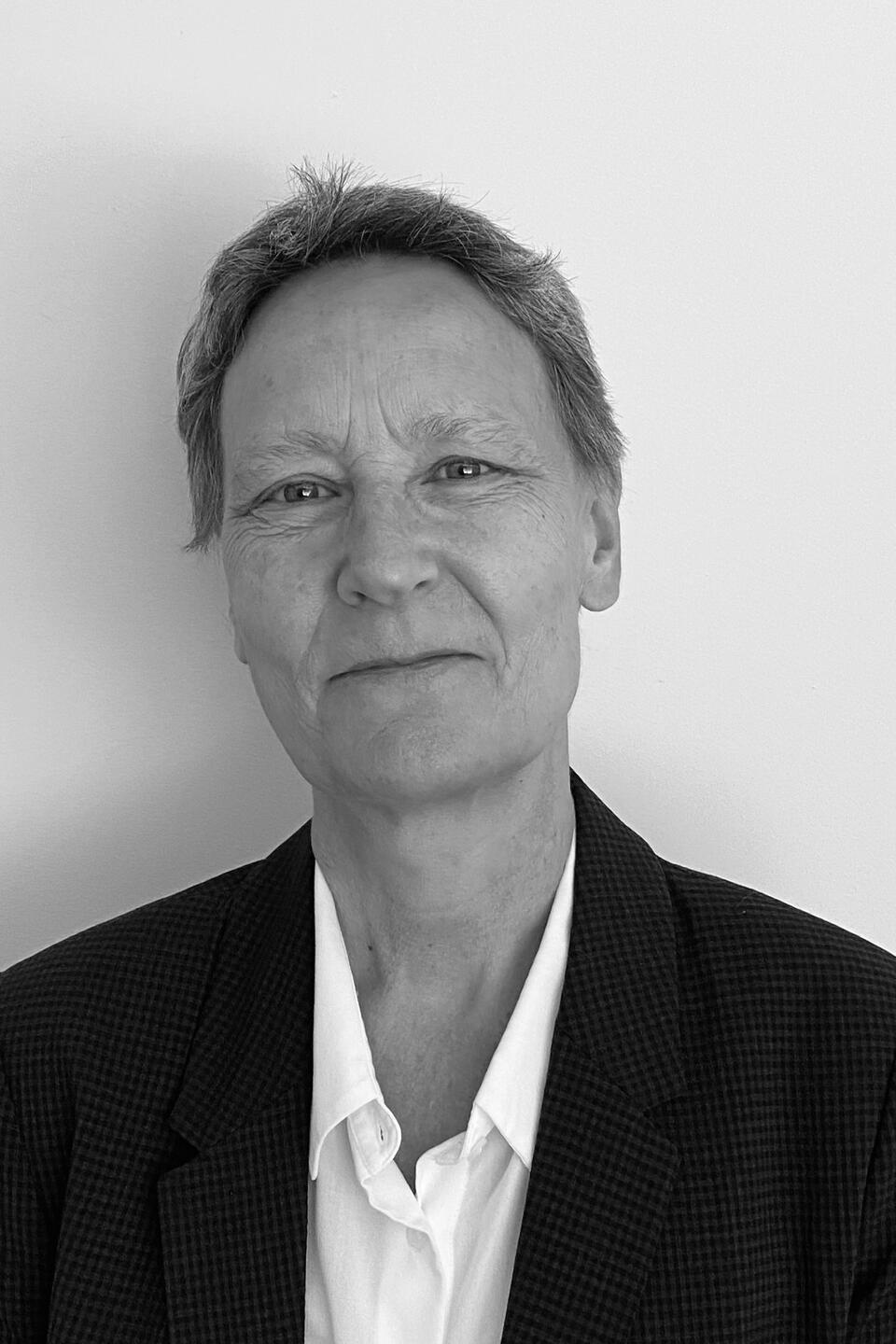
Christian Flachsland is Professor of Climate Policy and Director of the Centre for Sustainability at the Hertie School. He also serves as a Research Fellow at the Mercator Research Institute on Global Commons and Climate Change (MCC) , where he previously led the Governance working group. His research focuses on climate policy design, energy governance, and the political economy of sustainability transitions, with particular emphasis on Germany and the European Union. Flachsland's recent publications analyze climate institutions across Germany, UK, Sweden, and Australia, and develop frameworks for anticipatory policy mix construction in road transport. His work combines machine learning literature mapping with comparative institutional analysis , appearing in top journals like Science and Nature Climate Change . Current projects examine EU carbon border adjustment mechanisms and reflexive governance in climate policy evaluation. As co-coordinator of Governance research in the BMBF-funded Kopernikus-Ariadne project , he assesses climate policy options for Germany and Europe through multi-country institutional comparisons and policy pathway assessments . His work bridges academic research with policy advice, including participation in the IPCC Scoping Meeting for its Sixth Assessment Report.
Tim McLellan is a Research Fellow in the Faculty of Sociology and Anthropology at Thammasat University, with an upcoming position as Lecturer in Anthropology at The Australian National University (ANU) starting July 2024. His research focuses on environmental anthropology, science and technology studies (STS), and the intersection of bureaucracy with scientific practices. McLellan’s work examines how environmental experts navigate audit cultures and bureaucratic challenges to foster equitable and sustainable futures. He conducted ethnographic fieldwork in southwest China with agroforestry scientists and in Thailand with landscape architects designing climate-smart cities. His 2024 book Science Interrupted critiques audit-driven research paradigms and advocates for more vulnerable, collaborative approaches to science. His research spans topics like deskilling in agro-environmental research, global development methodologies, and the role of guanxi in Chinese institutional practices. McLellan’s interdisciplinary work bridges the environmental humanities and sciences, emphasizing participatory and reflexive research practices. His articles analyze themes such as bureaucracy’s dual role as a constraint and catalyst for scientific innovation, the ethical dimensions of global research partnerships, and the temporal dynamics of agroforestry science. Collaborations include transnational projects on biodiversity conservation and urban sustainability. While no explicit awards are listed, his scholarly contributions reflect a commitment to rethinking academic practices to address planetary challenges.
Oliver Laasch is a Professor of Responsible Management at ESCP Business School in Berlin and holds an adjunct professorship in Social Entrepreneurship at the University of Manchester. He has held academic roles at institutions including the University of Nottingham Ningbo (China), Tecnológico de Monterrey (Mexico), and Seoul National University (South Korea), along with visiting positions at the University of Tübingen’s Global Ethic Institute and Copenhagen Business School. His research focuses on responsible management, alternative business models, disruptive activism, and qualitative methods. He has published in top-tier journals such as the Academy of Management Learning and Education , British Journal of Management , and Journal of Business Ethics . Laasch co-authored the Research Handbook of Responsible Management and Sage Handbook of Responsible Management Learning and Education , and has contributed to practitioner outlets like Harvard Business Review and Forbes . He designs and teaches courses at all academic levels, including the Coursera MOOC Managing Responsibly with 40,000+ enrollees. His work on the United Nations Principles for Responsible Management Education (PRME) initiative has been pivotal. He has served as an editorial board member for journals like Academy of Management Learning and Education and Long Range Planning , editing over 40 special issues and books. Laasch advises companies and universities on staff development and has pioneered frameworks for integrating sustainability into business education. His research emphasizes systemic change, ethical leadership, and the intersection of activism with corporate responsibility.
Dr. Juliane Haus is a Research Fellow at WZB Berlin Social Science Center, affiliated with the Research Group Digital Mobility and Social Differentiation. Her work focuses on mobility transitions, social science research methods, ethnomethodology, and video analysis. She holds a PhD in Sociology from TU Berlin (2019). Her research integrates transdisciplinary approaches, emphasizing experimental design, policy evaluation, and visualization in urban mobility contexts. Key projects include BeNaMo (synthesizing sustainable urban mobility research), WiSEV (enhancing municipal traffic transition projects), and 'Verkehrswende erleben' (visualizing car-free urban spaces). Publications span edited handbooks, peer-reviewed articles on mobility policy nexus, and ethnographic studies of economic laboratories. Her work bridges theory and practice, addressing interdisciplinary collaboration between academia, policy, and industry. Awards: None explicitly listed. Advising: No students listed. Grants: Multiple BMBF-funded projects. Labs/Teams: Active in WZB research groups and external collaborations.
Associate Professor Tamara Cumming serves as Associate Director Workforce and Policy at the Children's Voices Centre at Charles Sturt University (CSU). With over 20 years in early childhood roles—including academic positions since 2014—she specializes in educator well-being, workforce sustainability, and practice complexity. She co-leads the Early Childhood Educator Well-being Project and supervises PhD students in related areas. Tamara also supports rural/remote child services through contract research and evaluations for entities like SDN Children's Services and WorkSafe Victoria. Her research interests stem from her 2015 CSU PhD thesis on early childhood educators' practice negotiations. She collaborates internationally through initiatives like the WECARE alliance and actively engages in professional organizations such as Early Childhood Australia and OMEP. Recent work emphasizes cross-national comparisons (e.g., WECARE alliance) and innovative supervision models for educators. Articles focus on job demands, followership dynamics, and clinical support strategies. Tamara has presented at events like the Early Childhood Voices Conference and contributed to media discussions on childcare workforce challenges.
Francisco Laranjo is a Portuguese graphic designer, researcher, and educator with a PhD in Design Methods and Criticism from the University of the Arts London. He holds an MA in Visual Communication from the Royal College of Art and a BA from ESAD – Escola Superior de Artes e Design. Currently serving as Assistant Professor at Lusófona University, he also works as an Associate Lecturer at Central Saint Martins and Co-director of the Shared Institute. PhD in Design Methods and Criticism MA in Visual Communication BA in Communication Design His work bridges graphic design with critical theory, focusing on design pedagogy, ethical implications of data-driven design, and the role of critique in professional practice. Publications span design criticism in Design Observer , Eye Magazine , and academic journals, while his teaching has reached institutions across 8 countries including CalArts, Sandberg Institute, and Zürich University of the Arts. Recent publications demonstrate a trajectory toward critical design theory, post-pandemic design adaptation, and curatorial practices. Key themes include the intersection of design and politics , digital-physical hybridity , and pedagogical innovation in graphic design education. As Editor of Modes of Criticism and co-director of Shared Institute, Laranjo fosters critical discourse through curatorial projects like the 2022 'Designers Troublemakers' exhibition and the upcoming 2025 'Graphic Collection – 50 years of design in Portugal' at the Polytechnic University of Porto.
Dr Lynette Pretorius is a Lecturer at Monash University's School of Curriculum Teaching & Inclusive Education, where she has established herself as an award-winning educator and researcher. With extensive experience teaching across undergraduate, postgraduate, and graduate research levels, she supervises PhD students while weaving together interdisciplinary expertise to create inclusive and transformative learning environments. Her work spans multiple academic contexts while maintaining a consistent focus on compassionate, equitable education. Dr Pretorius's research centers on doctoral education, academic identity, student wellbeing, and AI literacy, with particular emphasis on creating more just and creative academic spaces. Drawing from autoethnography and qualitative methodologies, her work interlaces personal narratives with institutional systems to understand how lived experiences and academic structures shape one another. She champions pedagogies of care that prioritize wellbeing, justice, and student growth through reflexive, relational ethics and methodological transparency. Her recent publications reveal a growing focus on AI literacy in higher education, with multiple 2024-2025 works developing frameworks for responsible AI use, examining AI's decolonial potential, and exploring how generative AI transforms academic communication and research practices. Alongside this emerging AI focus, her longstanding work on doctoral education continues through writing groups, wellbeing research, and investigations into academic identity formation. Dr Pretorius has received significant recognition for her contributions, including: Dean's Award for Teaching Excellence (2022) Global Impact Grant (Student Success) (2022) Senior Fellow, Higher Education Academy (2021) Dean's Citation for Outstanding Contribution to Student Learning (2019) Dean's Award for Programs that Enhance Learning (2019) Her research leadership extends to multiple funded projects including 'Behind the Academic Curtain: Doctoral Students and the Hidden Rules of Academia' (2025-2026) and 'Learning about Academic Publishing through Collaborative Online International Learning' (2024-2025). She actively supervises doctoral students and has developed innovative approaches to research and teaching, particularly through her work on doctoral writing groups as transformative spaces. Dr Pretorius maintains a strong public scholarly presence through her Scholar's Way Blog, University Study Made Easy YouTube Channel, and the AI Literacy Lab. These platforms extend her research impact beyond traditional academic boundaries, reaching broader educational communities and providing practical resources for students and educators navigating contemporary academic challenges.
Mireille E. Broucke is a Professor in the Department of Electrical and Computer Engineering at the University of Toronto, where she is a member of the Systems Control Group within the Faculty of Applied Science and Engineering. She teaches various undergraduate and graduate courses including Adaptive Control and Reinforcement Learning, Robot Modeling and Control, and Introduction to Nonlinear Systems, demonstrating her commitment to education in control systems engineering. Professor Broucke's research focuses on mathematical system theory with particular emphasis on Systems Neuroscience, Reach Control Problems, and Patterned Linear Systems. Her work bridges theoretical control theory with applications in neuroscience and robotics. She has developed theoretical frameworks for understanding neural adaptation through control theory principles and has applied reach control theory to robotics problems including motion control of quadrocopters. Her research demonstrates how control theory can provide insights into biological systems while also advancing engineering applications. Her recent publications show a clear trend toward applying control theory to neuroscience, particularly in understanding adaptive internal models in the brain. The publications span from theoretical reach control problems on simplices and polytopes to practical applications in robotics and neural systems. Her work increasingly focuses on the intersection of control theory and neuroscience, examining how the brain implements adaptive control mechanisms for motor functions. This represents a significant shift from her earlier work which was more focused on pure control theory problems. Professor Broucke has advised several PhD students including Fatima Ghadieh, Erick Mejia Uzeda, and Mohamed Hafez. Her research has been supported by various grants that enable her work in control theory and its applications to neuroscience and robotics. She maintains an active research program with numerous publications in top control theory journals including IEEE Transactions on Automatic Control, Automatica, and Systems and Control Letters.
Dr. Richard Beecroft is a Research Associate at the Institute for Technology Assessment and Systems Analysis (ITAS) at Karlsruhe Institute of Technology (KIT), working within the Research group 'Karlsruhe Transformation Center for Sustainability and Cultural Change' since 2024. He earned his Doctorate in Sustainability Sciences (Dr. phil.) from Leuphana University of Lüneburg in 2019 and previously served as Deputy Professor for Technology, Philosophy and Sustainability at Darmstadt University of Applied Sciences (2022-2023). Dr. Beecroft's research centers on sustainability transformations through Real-World Laboratories as transdisciplinary research and learning environments. His work bridges theoretical frameworks with practical applications for societal transformation, focusing particularly on methodological development for transdisciplinary research. He has been instrumental in establishing the Karlsruhe School of Sustainability and developing the Transformative Project Seminar methodology, which has been implemented across multiple courses. His recent publications demonstrate a strategic shift toward self-experimentation methodologies for sustainable lifestyle changes, with significant contributions on understanding the impacts of Real-World Laboratories and developing practical tools like the Self-Experiment Generator. His research spans sustainability science, technology assessment, education, and urban studies, reflecting the inherently transdisciplinary nature of his approach. As an educator, Dr. Beecroft has developed innovative teaching methods that connect academic learning with real-world sustainability challenges. He managed the KIT Center for Humans and Technology from 2018-2025 and has made substantial contributions to embedding higher education within Real-World Laboratories through transdisciplinary project courses. His current work explores how self-experiments can serve as tools for both personal and societal transformation toward sustainability, with practical applications designed to empower individuals to engage in sustainability transformations through structured personal experimentation.
Meghan Kelly is an assistant professor in the Department of Geography and the Environment at Syracuse University, where she works at the intersection of cartography, feminist theory, and digital storytelling. Previously a doctoral student and instructor at the University of Wisconsin-Madison, she has also taught at Durham University. Her academic career bridges rigorous scholarly research with professional mapmaking for major publications including the Chicago Tribune, Washington Post, Rolling Stone Magazine, and Science Magazine. Kelly's research centers on the role of power in spatial data, map design, and mapping processes, with particular focus on how alternative perspectives can expand conventional cartographic tools. Her recent work examines satellite data usage through a Black feminist lens, while earlier projects investigated Syrian refugee border crossings using feminist methodologies. She approaches cartography as both science and critical practice, consistently challenging traditional representations of space and power. Her publication history shows a clear trajectory from doctoral research on Syrian refugee experiences toward leadership in feminist geographical practice, with increasing emphasis on collaborative, community-engaged mapping approaches. Kelly's work demonstrates how cartography can serve as a tool for social justice when informed by critical theory and diverse perspectives. University-wide Teaching Fellow Award for classroom innovation (2018) Runner up in Map Book and Atlas Category (2015 WLIA) Student Dynamic Map Award Winner (Group) NACIS Runner-Up, David Woodward Award CaGIS Outstanding Thesis Award (2016) Kelly has developed innovative teaching materials across the cartography curriculum, from introductory GIS courses to advanced web cartography. Her teaching philosophy integrates feminist pedagogies with critical approaches to mapping, emphasizing both technical skills and ethical considerations in spatial representation. She has created comprehensive course materials for Geography 170 (Our Digital Globe), Geography 370 (Introduction to Cartography), and Geography 572 (Graphic Design in Cartography), with particular focus on bridging theory and practice in map design. Her collaborative projects, including the Eritrean Human Trafficking Project and Collectively Mapping Borders initiative, demonstrate her commitment to participatory approaches that center marginalized voices in cartographic production. These projects often involve community engagement and alternative visualization techniques to represent complex spatial experiences that conventional maps might overlook.
Professor Michaela Benson is Professor of Public Sociology at Lancaster University's School of Social Sciences. She is internationally recognised for her leadership in Migration Studies and Urban Sociology, with her work critically examining Brexit and migration, lifestyle migration, class, space and place, and self-build housing. Since 2022 she also serves as Chief Executive of The Sociological Review , a charitable foundation advancing public sociology. Education & Recognition: Michaela holds a PhD and was elected Fellow of the Academy of Social Sciences (FAcSS) in 2025. Research Interests: Her research agenda centres on the intersections of migration, citizenship, and urban life, with a particular focus on how these phenomena are reshaped by Brexit. She explores lifestyle migration as a lens on class, coloniality, and identity, and interrogates the meanings of home and housing through self-build practices. Her work is marked by a commitment to reflexive, empirical methodologies and public engagement. Scholarly Output: Across more than 60 publications, her recent articles span critiques of post-Brexit bordering practices, the colonial legacies shaping UK migration regimes, and innovative pedagogies in sociology. A consistent theme is the biopolitical and geopolitical dimensions of migration governance, analysed through ethnographic and multi-sensory methods. Awards & Fellowships: Fellow of the Academy of Social Sciences (FAcSS) – 2025 British Academy Mid-Career Fellowship – 2020-2021 Research Funding & Projects: Brexit, citizens’ rights and British Citizens in the EU-27 5 years on – ESRC consultancy (2025) Rebordering Britain and Britons after Brexit (MIGZEN) – ESRC (2021-2024) BrExpats: Freedom of Movement, Citizenship and Brexit in the lives of Britons resident in the European Union – ESRC (2017-2019) PhD Supervision & Research Groups: She welcomes doctoral researchers working on migration and citizenship, Brexit, class, home and housing, and urban sociology, especially those employing qualitative or ethnographic methods. She is affiliated with the Centre for Alternatives to Social and Economic Inequalities and the Centre for Health Futures .
Professor Carol Fuller is a Professor of Sociology of Education at the University of Reading's Institute of Education. Her research focuses on educational sociology, gender studies, and socio-economic disparities in education. She leads projects on topics such as 'Left-Behind’ Children in rural China, career decision-making in Gulf nations, and the impact of outdoor learning on educational attainment. Education No explicit educational details provided beyond her PhD in Sociology of Education from the University of Reading (2008). Research Interests Carol’s work explores educational identity formation, gender dynamics in education, widening participation strategies, and the role of social capital in shaping aspirations. She employs both qualitative and quantitative methods, often collaborating with international institutions (e.g., University of West Indies, Ho Chi Minh City University). Grants & Projects Thames Valley Chamber of Commerce LSIPs Employer Engagement Research (2023) Ministry of Justice-funded study on girls and routes into crime (2023) University of Reading grants on outdoor learning impacts (2014-2017) Awards Fellow of the Higher Education Academy Teaching & Supervision Supervises doctoral students globally, with current advisees researching topics like cultural parenting practices in Saudi Arabia and gender representations in STEM. Convenes courses such as ED1BSE and ED3FDD, contributing to MA and PhD programs. Labs/Teams Part of interdisciplinary teams at the Institute of Education, collaborating on projects like the 'Indoor/Outdoors Girlhood' initiative and the Jamaican education leadership study.
Dacia Dressen-Hammouda is a Professor of Universities at Université Clermont Auvergne, affiliated with the ACTé Laboratory (Activity, Knowledge, Transmission, Education). She co-leads Theme 1 ( Situations of knowledge transmission and learning ) and has held significant educational responsibilities since 2007, including designing and managing the Multilingual Technical Documentation Engineering and Multilingual Information Design programs. Her research spans English for Specific Purposes (ESP) , multimodality , indexicality , and intercultural rhetoric , with a focus on digital communication and AI integration in education. Research Themes include: Digital and multimodal supports in specialized English Genre-based pedagogies for professional and academic writing Intercultural challenges in second-language politeness negotiation Recontextualization of expert knowledge in digital media Indexicality as a framework for disciplinary identity analysis Article Trends highlight her work on multimodal literacy through instructional videos, indexicality in professional writing , and digital science communication . She explores how digital tools reshape genre mastery and how intercultural exchanges influence academic writing practices. Scientific Contributions include collaborations with researchers like Ciara R. Wigham and Susan Birch-Becaas , with projects such as the DILAN Project (Digital Language and Communication Training for EU Scientists). She has supervised PhD candidates Hamza Miftah and Nedjah Zerrouki , focusing on AI-driven writing support and multimodal travel blogs. Lab Engagement : As co-responsible for Theme 1 at the ACTé Laboratory, she integrates activity theory and ethnographic approaches to study writing as a social and pedagogical activity.
Sarah E. Einstein is an Associate Professor in the Department of English at the University of Tennessee at Chattanooga (UTC). She is a creative nonfiction writer and academic whose work interrogates the intersection of Jewish and Appalachian identities, ethical research methodologies in personal writing, and narrative structure. Education: PhD in Creative Writing from Ohio University (2016), MFA in Creative Nonfiction from West Virginia University (2011) Her research explores: Ethical boundaries when writing about friends/family Travel as a research methodology in narrative nonfiction Authorial selfhood in first-person writing Hybrid identities (Jewish/Appalachian) Her recent publications include a 2025 Judith Magazine essay on selfhood, 2022 Hippocampus and Brevity articles on research ethics, and a 2016 Assay journal piece analyzing authorial responsibility. Key themes across her work: cultural hybridity, memory ethics, and narrative voice in nonfiction. Academic Recognition: Pushcart Prize winner AWP Prize for Creative Nonfiction recipient Featured in Best of the Net anthology As organizer for UTC's Urban League STEAM Enrichment Program (2021-2025), she has mentored students in narrative design. Current service roles include Faculty Senate President Elect (2025-2026) and General Education Committee membership (2024-2025).
Juliette Koning serves as Professor of Business in Society and Head of the Organisation, Strategy & Entrepreneurship Department at Maastricht University's School of Business and Economics. With a PhD in Social Anthropology from the University of Amsterdam, she brings interdisciplinary expertise spanning organizational studies, entrepreneurship, and business ethics. Her academic career includes prior appointments at Oxford Brookes University, Vrije Universiteit Amsterdam, Tilburg University, and Wageningen University. Her research centers on two interconnected domains: (1) small business organizations and entrepreneurship in Southeast Asia—particularly focusing on ethnic Chinese owner-managers—and (2) security studies including maritime security in Indonesia and organizational approaches to security across South Africa, the UK, and the Netherlands. Koning employs extensive qualitative methodologies, often incorporating creative and arts-based approaches, with publications in top journals including Organization Studies , Journal of Business Ethics , and Entrepreneurship & Regional Development . Analysis of her recent publications reveals a consistent focus on identity construction within organizational contexts, ethical dimensions of business practices, and the intersection of cultural-religious frameworks with economic activities. Her work demonstrates increasing engagement with security governance and cross-border cooperation, particularly evident in her NWO-funded research on interorganizational crime control. Koning actively contributes to academic discourse as Associate Editor of Human Relations and has secured significant research funding including an NWO SSH Open Competition grant for her project 'Cross-border Interorganizational Cooperation in Crime Control' investigating Euregional police cooperation in the Meuse-Rhine border region. Her methodological expertise in qualitative approaches extends to mentoring researchers through publications on autoethnography and ethnographic practice.