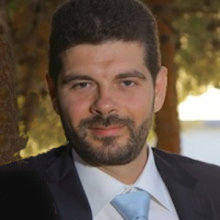
Dr. Christian Schulz is a Postdoc at the High Frequency Systems research group within the Faculty of Electrical Engineering and Information Technology at Ruhr University Bochum. His work focuses on microwave and terahertz systems for industrial, biomedical, and environmental applications. Specializes in plasma diagnostics using radar-based sensors Develops terahertz waveguide sensors for fluid and material analysis Active in millimeterwave radar for combustion and smoke detection Contributor to radar test environments and beam steering antennas His recent publications highlight advancements in THz spectroscopy , radar SLAM algorithms , and overmoded waveguide junctions . Key trends include dielectric waveguide innovations , FMCW radar applications , and machine learning integration for sensor data augmentation. He collaborates with international institutions such as Purdue University (USA), Nagoya University (Japan), and European Microwave Conference networks.
Carley R. is a Researcher in the Photon Science Department at European XFEL GmbH, specializing in X-ray spectroscopy and free-electron laser applications. Their work focuses on ultrafast dynamics in materials, magnetism, and condensed matter physics using advanced X-ray techniques. Carley's research interests span X-ray Spectroscopy, Free-electron Lasers, Materials Science, Ultrafast Dynamics, Condensed Matter Physics, and Magnetism. Their work explores the fundamental interactions between light and matter at extremely short timescales, particularly using the unique capabilities of the European XFEL facility. This research has significant implications for understanding material properties under extreme conditions and developing new technologies in energy and information storage. Analysis of Carley's publication record reveals consistent contributions to high-impact journals including Nature Physics, Advanced Science, and Journal of Synchrotron Radiation. Their research demonstrates expertise in both experimental design and theoretical interpretation of complex X-ray spectroscopy data, with particular emphasis on non-linear X-ray matter interactions and ultrafast dynamics in magnetic and electronic systems. While specific awards are not documented in the available sources, Carley's work appears in prestigious journals, indicating recognition within the scientific community. Their research collaborations span multiple international institutions, reflecting the collaborative nature of large-scale X-ray facility research. Carley R. has made significant contributions to the development and application of advanced X-ray techniques at the European XFEL, particularly in the areas of transient absorption spectroscopy and resonant inelastic X-ray scattering. Their work supports the facility's mission to enable frontier research across multiple scientific disciplines.
Mattias Rasmussen is a Researcher at the Department of Electrical and Photonics Engineering , Technical University of Denmark (DTU) , affiliated with the Center for Nanophotonics (NanoPhoton) . Education: PhD in Photonics, Technical University of Denmark, 2024 Research Interests: Terahertz Spectroscopy, 2D Materials, Graphene, Nonlinear Optics, Photonics, Silicon Nitride, and THz-TDS. His work explores nonlinear conductivity in graphene, dispersion of nonlinearities in dielectrics, and advanced THz waveform detection. Publications (14): His recent studies include Scanning-Free Solid-State Biased THz Waveform Detection (2025), Measurement of χ(3) Dispersion in SiO₂/SiN (2024), and THz Air Photonics (2024), alongside key contributions to two-color air-plasma THz beam profiling and broadband nonlinear THz spectroscopy. Projects: Completed his PhD project Nonlinear Terahertz Transport Dynamics of 2D Materials in the Ballistic Regime (2020–2024) under supervisors B. Zhou and P.U. Jepsen.
Dr. med. vet. Frank Becker is a researcher at the Research Institute for Farm Animal Biology (FBN) in Dummerstorf, Germany, where he is affiliated with the Cell Physiology and Reproduction Group. His work focuses on reproductive biology in cattle and horses, integrating physiology, molecular biology, and biotechnology to improve fertility and breeding practices. His research interests include: Reproductive physiology in farm animals Estrus detection and ovulation control Embryo transfer and in vitro fertilization Sperm and oocyte quality assessment Metabolic influences on fertility Molecular mechanisms of ovarian and testicular function His recent publications highlight advancements in estrus monitoring through vocalization analysis, the impact of heat stress on bull fertility, transcriptomic studies in mastitis recovery, and metabolic profiling in dairy cows. These works reflect a strong trend toward precision livestock farming, integrating molecular tools with behavioral and physiological monitoring. While no specific scientific awards are mentioned in the provided texts, his extensive publication record in high-impact journals demonstrates significant contributions to veterinary and reproductive sciences. Dr. Becker has collaborated extensively with researchers such as W. Kanitz, D. Becker (possibly a co-author with similar name), Jens Vanselow, Klaus Wimmers, and others, indicating active participation in national and international research networks. He has contributed to projects involving embryo cloning, superovulation, and metabolic monitoring in dairy herds. He is involved in developing practical biotechnologies for livestock reproduction, including timed insemination, ovum pick-up, and embryo production systems. His lab focuses on translating basic research into field-applicable tools for improving reproductive efficiency in cattle and horses.
Dr. Vassilis Papadakis is an Assistant Professor in the Department of Biomedical Engineering at the School of Engineering, University of West Attica. He has over 20 years of experience in research and education, with affiliations at the Foundation for Research and Technology – Hellas (FORTH), the University of Crete, the Technical University of Delft, and the Hellenic Mediterranean University. His work bridges applied physics, biomedical optics, and imaging technologies. Education: Ph.D., Department of Biology, School of Science and Technology, University of Crete Ph.D., Department of Ophthalmology, Vardinoyanion Eye Institute of Crete, School of Medicine, University of Crete B.Sc., Department of Physics (Microelectronics), University of Crete His research focuses on in-vivo optical diagnostics , spectral imaging , Raman and FTIR spectroscopy , and computer vision for material characterization. He develops optoelectronic systems for non-destructive evaluation in biomedicine, aerospace, and cultural heritage. His expertise includes reflection/absorption imaging, fluorescence, interferometry, and cavity ring-down spectroscopy. The available publication highlights his interdisciplinary work in cultural heritage , specifically on spectral image registration of paintings, indicating strong trends in image processing , multispectral analysis , and non-invasive diagnostics . Scientific Awards: No awards explicitly mentioned. Advising and Grants: While no formal list of advisees or grants is provided, Dr. Papadakis has supervised research through his leadership of the Bio NDT Lab and extensive publication record. His dual PhDs and postdoctoral work at FORTH suggest sustained grant-supported research in imaging and diagnostics. Labs and Teams: He founded and led the Bio NDT Lab, focusing on non-destructive testing using optical methods. His work is associated with IMBB-FORTH and IESL-FORTH, indicating long-term collaboration in advanced biophotonics and imaging research teams.
Freddy Rabouw is an Associate Professor at Utrecht University's Faculty of Science , affiliated with the Debye Institute for Nanomaterials Science . His research bridges Chemistry and Physics , focusing on energy, charge, and mass transport in nanomaterials. Education BSc in Chemistry (2006–2009) MSc in Nanomaterials: Chemistry & Physics (2009–2011) PhD in Chemistry (2011–2015) Postdoc at ETH Zurich (2016–2018) His work develops time-resolved optical microscopy and spectroscopy to study nanomaterials, with applications in quantum cutting for solar cells , energy transfer in rare-earth dopants , single-nanocrystal properties , and molecular diffusion in catalysts . Article trends include quantum dots , upconversion nanocrystals , operando catalyst thermometry , and photonic engineering . Rabouw's lab, the Leonard S. Ornstein Laboratory , investigates excited-state dynamics and defect tolerance in nanomaterials. His secondary teaching roles involve courses like Advanced Microscopy and Quantum Chemistry , reflecting his expertise in quantum materials and diffusionLab motion analysis.
Dr. David Busch is an Assistant Professor at the University of Texas Southwestern Medical Center (UTSW), holding appointments in the Department of Anesthesiology and Pain Management (primary), and secondary appointments in Neurology and Biomedical Engineering. He is a member of the Biomedical Engineering and Neuroscience Graduate Programs. Dr. Busch earned his Ph.D. in Physics from the University of Pennsylvania in 2011 and completed a postdoctoral fellowship in Neurology at the Children's Hospital of Philadelphia. He joined UTSW in 2018 and leads the Busch Lab, which develops non-invasive and minimally invasive optical tools for monitoring cerebral and spinal cord hemodynamics in critical care settings. His research focuses on translating physical science techniques into clinical applications, particularly for patients on extracorporeal membrane oxygenation (ECMO), neonates with congenital heart disease, and stroke patients. He employs diffuse optical spectroscopy, diffuse correlation spectroscopy, and multimodal neuromonitoring to assess cerebral blood flow, oxygenation, autoregulation, and metabolism. His work bridges physics, engineering, and clinical medicine, with strong applications in neurocritical care and pediatric intensive care. Dr. Busch's recent publications (2022–2025) show a strong trend in advancing non-invasive optical monitoring for pediatric and adult ECMO, placental health, spinal cord ischemia, and cancer therapy response. The articles span high-impact journals in neurology, critical care, biomedical optics, and imaging, reflecting interdisciplinary innovation and clinical translation. Fulbright Commission Institute of International Education Whitaker Fellowship Thrasher Research Foundation Hartwell Foundation Dr. Busch has been funded by NIH-NINDS, NIH-NIBIB, the McDermott Chair at UTSW, and the Women's Auxiliary (Children's Medical Center Foundation). He mentors a diverse team of postdoctoral fellows, graduate students, and medical students. His lab collaborates with institutions including Children’s Health Center, University of Kentucky, NYMC, and University of Rochester. He advises on projects related to cerebral autoregulation, spinal cord monitoring, and microvascular dysfunction in critical illness. Dr. Busch leads the Busch Lab, which is dedicated to developing and validating optical technologies for continuous, bedside monitoring of brain and spinal cord health. The lab focuses on improving patient outcomes through real-time neuromonitoring in intensive care and operating room settings.
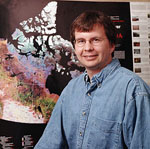
Dr. Derek R. Peddle is a Full Professor in the Department of Geography at The University of Lethbridge, Alberta, Canada. He holds a Ph.D. in Geography/Remote Sensing from the University of Waterloo, M.Sc. in Geography from the University of Calgary, and B.Sc. Honours in Computer Science and Geography from Memorial University of Newfoundland. His academic career began in 1996 as an Assistant Professor, advancing to Associate Professor in 1999 and Full Professor in 2006. Research interests span remote sensing, GIS, and earth system science modeling with applications in global environmental change, forestry, agriculture, water resources, and mountain terrain analysis. Key methodologies include spectral mixture analysis, canopy reflectance modeling, algorithm development, and multi-temporal GIS analysis across scales from centimetres to global coverage. Major research projects include NASA's BOREAS (Boreal Forest Ecosystem Atmosphere Study), alpine terrain analysis in the Canadian Rockies, precision agriculture studies, and watershed analyses. He has developed specialized software for geomorphometric processing, image texture analysis, and hyperspectral data processing. Awards and Honors Fulbright Senior Fellowship in Environment and Climate Change (1999-2000) Canada-U.S. Fulbright Distinguished Visiting Research Chair (2006) NASA Visiting Scientist Award at Goddard Space Flight Center (1994) National Best Ph.D. Thesis Award in Remote Sensing (1997) Alberta Centennial Medal (2005) Six Best Paper Awards at international/national symposia Academic Leadership National Past-Chair of Canadian Remote Sensing Society Associate Editor, Canadian Journal of Remote Sensing NSERC CREATE AMETHYST Program Coordinator Faculty representative on University Board of Governors and Senate (2003-2005) Research Infrastructure Directs a laboratory equipped with ASD-FR spectroradiometers, hemispherical photography systems, field goniometers, GPS units, and advanced computing resources for PCI, ENVI, and ARC-GIS processing. Manages the NSERC-funded CREATE AMETHYST program for hyperspectral science training.
Guido Lars Bruno Wiesenberg is a Researcher at the Department of Geography, Faculty of Science, University of Zurich, where he has been employed since 2014. He previously held research and teaching positions at the University of Cologne, University of Bayreuth, Applied University Weihenstephan-Triesdorf, and Université Pierre et Marie Curie. His work focuses on biogeochemical cycles in terrestrial ecosystems, particularly using molecular proxies and stable isotopes to understand environmental change across time. 1993–2000: Diplom-Geologist (MSc), University of Cologne 2000–2004: Dr. rer. nat., University of Cologne 2008–2013: Habilitation in Geoecology, University of Bayreuth 2013–2014: Habilitation in Physical Geography, University of Zurich His research centers on element and nutrient cycling in plant-soil systems, peatlands, and sedimentary archives. He specializes in lipid biomarkers (e.g., n-alkanes, lignin, pigments), branched tetraether lipids, and stable isotope techniques (δ 13 C, δ 2 H, 14 C labeling) to study carbon sources, decomposition, and paleoenvironmental conditions. He also applies modeling and field experiments to assess climate and land-use impacts. The most recent publications (2023–2025) reflect a strong trend in understanding soil carbon dynamics under climate change, particularly using biomarker and isotopic tools to trace plant-derived carbon, assess warming effects on peatlands, and reconstruct paleoenvironments. Key journals include Nature Communications , Science Advances , Global Change Biology , and Biogeosciences , indicating high-impact interdisciplinary research in biogeochemistry and climate science. Active in DFG Gepris and SNSF Data Portal projects Involved in long-term ecological experiments (e.g., 30-year fertilization, whole-soil warming) Co-supervises students and early-career researchers through collaborative publications Engaged in science communication via podcasts, soil movies, and virtual lab tours Wiesenberg leads research activities within the Physical Geography Laboratory (PhysLabs) at the University of Zurich, focusing on method development in biomarker analysis, isotopic tracing, and soil organic matter characterization. His team integrates fieldwork, lab experiments, and data synthesis to address questions of carbon cycling, ecosystem resilience, and paleoenvironmental change.
Inna Makarenko is a postdoctoral researcher at Vrije Universiteit Brussel, specializing in High Energy Physics and Experimental Physics. Her work focuses on particle collisions, Higgs boson studies, and nuclear modification phenomena in heavy ion collisions. Key research areas: Protons, Collisions, Leptons, Higgs Bosons, Jet Physics, Quark-Gluon Plasma Active in CMS Collaboration, contributing to LHC experiments via data analysis and detector optimization Her recent publications (2023-2025) analyze rare decays, jet quenching, and extended Higgs sectors, with 93 total research outputs and 72 datasets. h-index of 13 and 694 citations reflect her impactful contributions.
Dr. Vincent Roche is a Research Fellow at the University College Dublin in the School of Earth Sciences . His research focuses on structural geology, tectonics, and induced seismicity, with expertise in seismic interpretation and geomechanical modeling. Research Interests : 3D fault geometry and segmentation Induced seismicity mechanisms Fluid-rock interactions in fault zones Petrophysical and mechanical rock properties Geothermal system structural controls Scientific Contributions : Analyzed fault system evolution across multiple tectonic settings using high-resolution seismic data and field studies. Developed models for stress distribution in layered rocks and displacement transfer in conjugate fault systems. Awards : Marie Skłodowska-Curie Fellowship (2021-2023) under Horizon 2020 Professional Activities : Regular reviewer for journals including Environmental Earth Sciences , Geophysics , and SPE Journal . Utilizes geomodeling software such as Traptester, Move 3D, and Gocad for structural analysis.
Thomas Ederth is an Associate Professor and Head of the Department of Biophysics and Biotechnology at Linköping University's Department of Physics, Chemistry and Biology (IFM). With a PhD in Molecular Physics from KTH Royal Institute of Technology (1999) and postdoctoral experience at the University of Oxford, Ederth specializes in surface chemistry and biointerface interactions. Research Interests Surface chemistry of biological material interactions Marine biofouling and antifouling polymers Lipid bilayer and membrane interactions Neutron reflectometry and vibrational spectroscopy Electroactive polymer analysis Method development for surface-sensitive techniques Publication Trends Ederth's recent work spans marine biotechnology (antifouling coatings, bioadhesion), biomedical applications (lysosomotropic agents, toxicity studies), and advanced materials characterization (neutron scattering, Raman spectroscopy). Key methods include neutron reflectivity, vibrational spectroscopy, and surface-enhanced Raman analysis. Teaching Roles Course Manager for TFYA35 Molecular Physics Examiner for TFYA47 Surfaces and Boundary Layers
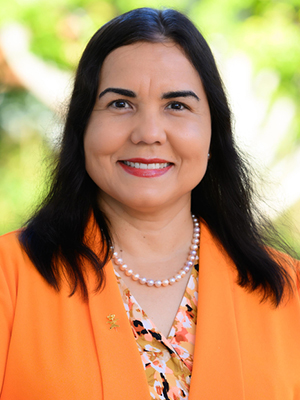
Angela Calderon is a Professor in the Department of Drug Discovery and Development at Auburn University's Harrison College of Pharmacy. She holds the Gilliland Professorship and leads research focused on mass spectrometry applications in enzyme kinetics, natural products drug discovery, and quality/safety assessment of botanical dietary supplements. She is based in 3306c Walker Building, Auburn, AL. B.S., Pharmacy - University of Panama (1990) M.S., Pharmacognosy - University of Illinois at Chicago (1997) Ph.D., Pharmacognosy - University of Lausanne (2002) Her research bridges analytical chemistry and pharmacology, emphasizing LC-MS/NMR methods for drug discovery and supplement safety. Key projects include studying açaí and Ashwagandha for drug interactions, with NIH funding. She has developed assays for enzyme inhibition kinetics and natural product screening. The articles listed reflect trends in pharmacology, biochemistry, and analytical chemistry, with a focus on CYP enzymes, tuberculosis drug targets, and botanical supplement standardization. Her work integrates mass spectrometry and metabolomic approaches across these domains. She mentors graduate students and collaborates with lab personnel on grants related to dietary supplement safety and drug discovery. Her laboratory personnel include graduate students Kabre Heck, Kelli McDonald, and Zarna Atul Raichura.
Professor Bo Cui is a distinguished faculty member at the University of Waterloo's Department of Electrical and Computer Engineering, where he serves as Director of the Waterloo Nanofabrication Group. His research focuses on cutting-edge nanofabrication techniques and their applications across multiple disciplines. Professor Cui received his educational training at prestigious institutions: BSc in Physics from Peking University (1994), followed by MA (2000) and PhD (2003) in Electrical Engineering from Princeton University. After completing his doctoral studies under Professor Stephen Y. Chou at the Nanostructure Laboratory, he worked at the National Research Council of Canada before joining the University of Waterloo in 2008. His research interests span micro-nanofabrication, lithography techniques, MEMS fabrication, microneedle technology, AFM probe fabrication, terahertz photoconductive antenna development, and dry plasma etching. Professor Cui's work bridges fundamental nanofabrication science with practical applications in biomedical devices, nanoelectronics, and photonics. His group has developed innovative methods for electron beam lithography on irregular surfaces, silicon microneedle fabrication, high aspect ratio AFM probes, and terahertz spectroscopy components. Analysis of his recent publications reveals a strong focus on advancing nanofabrication capabilities, particularly in electron beam lithography techniques, plasmonic nanostructures for sensing applications, and novel resist materials. His work demonstrates consistent innovation in overcoming fundamental limitations in nanofabrication processes while maintaining practical relevance to industry applications. Professor Cui leads the Waterloo Nanofabrication Group, which maintains extensive collaborations with industry partners in biomedical devices, sensors, and terahertz spectroscopy. The group utilizes state-of-the-art cleanroom facilities including electron beam lithography, focused ion beam, ICP-RIE/deep RIE, laser direct writing, and physical/chemical vapor deposition systems.
Jeannine Cavender-Bares is the Climate Action Acceleration Professor of Organismic and Evolutionary Biology and Director of the Harvard University Herbaria at Harvard University. Her research focuses on integrating plant physiology, spectral biology, and remote sensing to understand biodiversity patterns and ecosystem processes. Key projects include spectral analysis of plant traits, remote detection of forest diseases, and global biodiversity monitoring initiatives. Her work emphasizes the genetic and evolutionary basis of plant traits, leveraging spectral signatures to advance conservation efforts. She leads the NSF ASCEND Biology Integration Institute and is deeply involved in NextGen herbarium digitization. Collaborative projects like the FAB tree diversity experiments explore species interactions and ecosystem resilience under climate change. Cavender-Bares collaborates internationally to develop protocols for spaceborne biodiversity assessment and urban forest management. Recent studies highlight mechanisms linking plant physiology to spectral reflectance for early disease detection (e.g., oak wilt) and drought stress. Her lab also investigates phylogenetic completeness in biodiversity tracking and functional trait analysis using pressed leaves. These efforts aim to provide actionable insights for sustainability in rapidly changing environments.