Bente Baseler is a Lecturer for Type Design at the Muthesius Academy of Fine Arts in Kiel, Germany, affiliated with the Communication Design department. Her office is located in the Old building (Legienstr. 15, Room L.03.17), and she can be contacted via email at baseler@muthesius.de or telephone at +49 431 5198 483. As part of Schleswig-Holstein's only art school, she contributes to the academy's project-based pedagogy emphasizing artistic freedom and interdisciplinary collaboration within a diverse international community. Her academic specialization centers on Type Design, encompassing the creation and technical refinement of typefaces and typographic systems. This field intersects with broader visual communication practices, focusing on readability, aesthetic expression, and functional application in both digital and print media. Her work supports the Communication Design program's mission to integrate theoretical knowledge with practical, client-oriented projects.
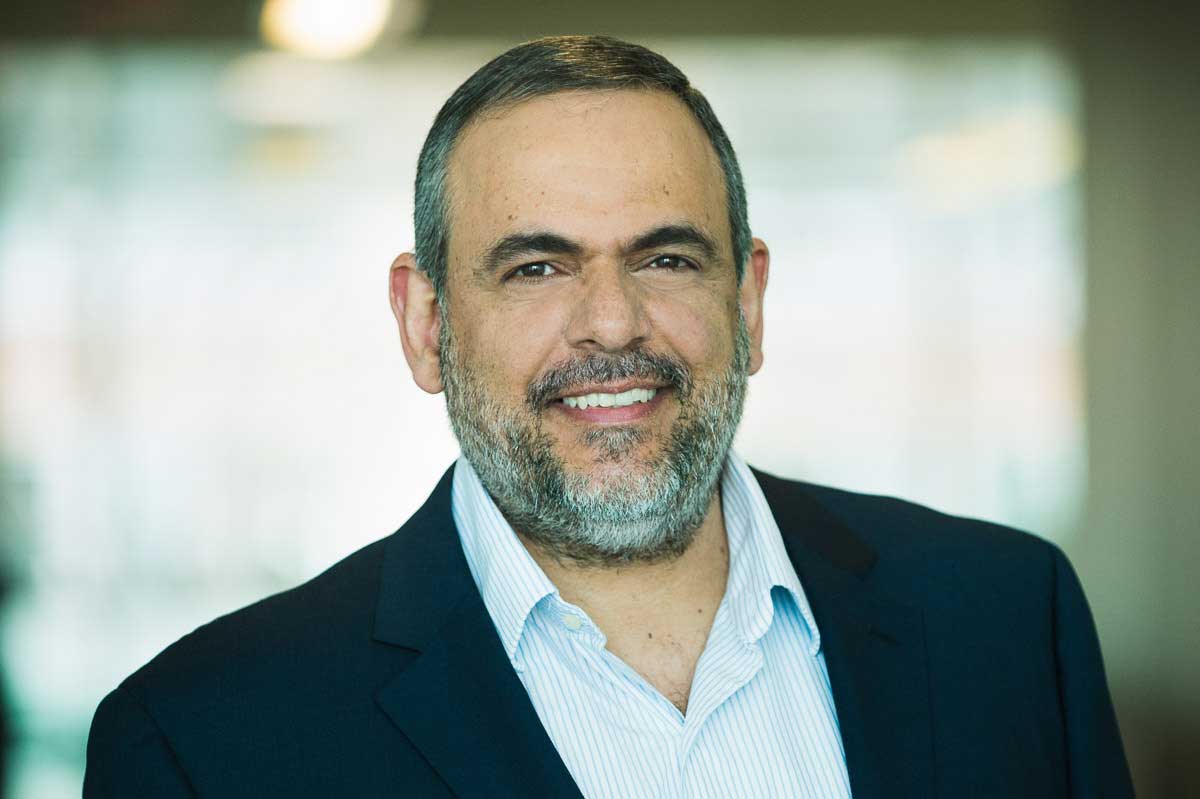
Panagiotis (Pete) Manolios is a Professor in the Department of Computer Science within Northeastern University's College of Engineering in Boston. He leads the Northeastern University Formal Methods (NUFM) research group and maintains an active research program with multiple current PhD students. His primary affiliation is with the College of Computer Science (CCS) at Northeastern University, where he holds a tenured faculty position. Manolios' research focuses on formal methods with particular emphasis on program verification, theorem proving, and safety analysis of systems. His work spans several key areas including floating-point program analysis, resource-aware program verification, protocol verification, and safety-critical systems. He has developed significant tools and methodologies such as ACL2s (a powerful theorem prover) and pioneered approaches for analyzing numeric stability in compiler optimizations. His recent publications demonstrate substantial activity in formal verification, with particular focus on numeric stability analysis, invariant discovery through gamification, and model-based safety analysis of complex system architectures. These works reflect a consistent research trajectory toward making formal verification more practical and applicable to real-world systems, especially those with safety-critical requirements. Manolios has received recognition through multiple NSF grants including the SaTC: CORE: Medium collaborative project on bridging the gap between protocol design and implementation. His work on confidentiality and integrity of deep neural networks represents cutting-edge research at the intersection of formal methods and AI security. He has successfully mentored numerous PhD students who have gone on to positions at major technology companies including Google, Facebook, Intel, and MathWorks. His students' dissertations cover diverse topics within formal methods, from rank-polymorphic programming languages to resource-aware program analysis. Manolios directs several significant research projects including ACL2s (a powerful theorem prover), CID: Confidentiality and Integrity of Deep Neural Networks, Compilation-Dependent Security Properties of Software, and Platform Dependencies of Floating-Point Programs. These projects address fundamental challenges in making formal verification more practical and applicable to real-world systems.