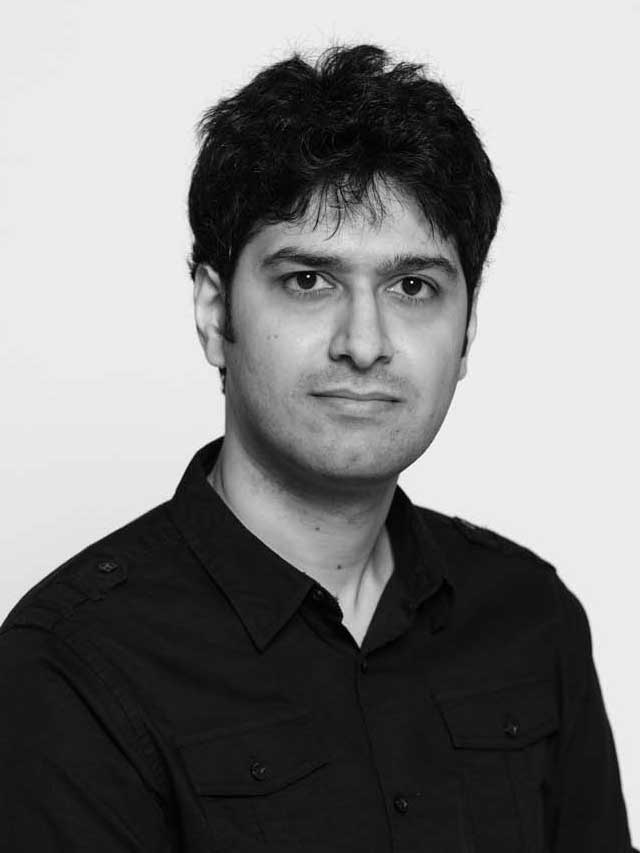
Miten Jain is an Assistant Professor in the Department of Bioengineering at Northeastern University, with a joint appointment in the Department of Physics. His research focuses on nanopore technology, single-cell analysis, and computational biology, aiming to advance genomic and transcriptomic sequencing methodologies. He holds a PhD in Bioinformatics and Biomolecular Engineering from the University of California-Santa Cruz (2017). Dr. Jain leads research projects including 'Characterization of paired tumor and normal cell lines using long read sequencing' (NIST, 2021) and 'Multi-platform, high-coverage, long read sequencing of reference human genomes' (NIST, 2020). His work bridges engineering, physics, and biology, with applications in clinical diagnostics and space microbiology. He was recognized as a top 2% most-cited scientist globally in 2024 by Stanford University. His research outputs span epigenetic profiling, nanopore sequencing innovations, and space-based microbiome analysis. Recent studies include CRISPR-based therapeutic screening for glioma and real-time microbial profiling aboard the International Space Station. Collaborations with institutions like NIST and NASA highlight his interdisciplinary impact. Grants and awards include funding from NIST and recognition for ultra-rapid genome sequencing in critical care settings. His lab focuses on developing scalable, high-resolution genomic tools with applications in precision medicine and fundamental biology.
Elena Montiel Ponsoda is an Associate Professor in the Department of Applied Linguistics at the Faculty of Computer Science, Universidad Politécnica de Madrid (UPM), and a member of the Ontology Engineering Group since 2006. Her interdisciplinary expertise bridges linguistic sciences with computer science, focusing on multilingual aspects of knowledge representation. Education: PhD in Applied Linguistics (2011) from Universidad Politécnica de Madrid M.A. in Conference Interpreting and Translation (2000) from Universidad de Alicante B.A. in Technical Interpreting (2003) from Hochschule Magdeburg-Stendal, Germany Her research centers on the integration of linguistic resources with Semantic Web technologies, specializing in ontology localization, lexicalization, and multilingual terminology representation. She has pioneered approaches to connect translation studies with knowledge engineering, developing frameworks for linguistic linked data and semantic interoperability across languages. Recent publications reveal a strategic shift toward legal domain applications, with significant contributions to the LYNX project's knowledge graph for multilingual legal compliance. Her work demonstrates consistent innovation in representing terminological resources using OntoLex-lemon, with increasing focus on practical implementations in legal informatics and labor market analysis. As an active mentor, she has guided numerous graduate students through thesis research while participating in major international projects including NeOn, ICPS, Monnet, BabeLData, and LIDER. Her leadership extends to organizing key workshops on multilingual semantic web technologies and serving on program committees for top-tier conferences. Montiel Ponsoda maintains influential roles in W3C Community Groups (Ontolex, BMLOD, ld4lt), helping shape international standards for multilingual linked data and language technologies on the Web.
Pauline Phoa is an Assistant Professor at Utrecht University's School of Law, specializing in International and European Law. She is affiliated with the RENFORCE research group and Utrecht's 'Governing the Digital Society' initiative, focusing on EU competition law and the challenges posed by Big Tech ('Modern Bigness'). Utrecht University School of Law International and European Law RENFORCE Research Group Governing the Digital Society Her research bridges EU law with philosophical and literary methodologies, particularly through the Hermeneutic Approach inspired by Paul Ricoeur and James Boyd White. She investigates tensions between economic and fundamental rights in EU jurisprudence, as well as regulatory frameworks for digital platforms and sustainable policies (e.g., CRISPR food, circular economy). Recent publications highlight her expertise in EU internal market law , Big Tech regulation , and legal philosophy . Themes include digital governance, forensic culture, and EU citizenship rights. Stichting Praemium Erasmianum Dissertation Prize (2022) Vereniging voor Wijsbegeerte van het Recht Dissertation Prize (2023) Phoa co-organizes the Festival Europa and contributes to EU Law Live and SEW Tijdschrift . She supervised research in the ERC-funded 'Modern Bigness' project and serves on advisory boards for legal and policy initiatives.
Tiark Rompf is an Assistant Professor at Purdue University , with research spanning programming languages, compilers, and systems. His work bridges domains including architecture, databases, machine learning, and AI through projects like Reachability Types and Rhyme. Co-director of the Purdue Center for Programming Principles and Software Systems (PurPL) Scientific Advisor at SambaNova Systems Previously a member of the Scala team at EPFL His research focuses on: Runtime code generation and advanced compiler technology Expressive data-centric query languages (Rhyme, Datalog) Reachability type systems for memory safety and effect handling Metaprogramming and logical relations for formal verification Recent publications highlight contributions to Datalog compilation (Flan), nested data structures (Rhyme), and polymorphic reachability types. He leads projects exploring: Compiler optimizations for emerging architectures (GPU, TPU, FPGA) ML-driven compiler improvements Secure multi-party computation via metaprogramming Scientific awards include: NSF CAREER Award (2016) Google Faculty Research Awards (2017, 2018) DOE Early Career Research Award (2017) ACM SIGPLAN PL Software Award (2019) GPCE Test of Time Award (2020) Students and alumni from his group have joined institutions like Databricks, DeepMind, Galois, and Meta. He teaches advanced compiler courses including: CS 590 - Advanced Topics in Compilers CS 352 - Compilers CS 502 - Graduate Compilers
David Moskowitz serves as Professor and Graduate Coordinator in the Department of Music at the University of South Dakota's College of Fine Arts. Holding a Ph.D. in Musicology from the University of Kansas (2001), he directs graduate studies while teaching undergraduate and graduate courses in music history since joining USD. Education: Ph.D., Musicology, University of Kansas, 2001 Master of Music, Music History, Ohio University, 1994 Bachelor of General Studies (Violin Performance), Ohio University, 1991 His research centers on Caribbean musical traditions with specialization in Reggae, Ska, and Dancehall, alongside focused studies on Bob Marley and Jimi Hendrix. Moskowitz examines the intersections of music, religion, and identity in the Circum-Caribbean, particularly analyzing how tourism shapes musical expression and how diasporic communities maintain cultural continuity through sound. His work consistently explores political dimensions of popular music, including freedom narratives in postwar America and racial dynamics in rock history. Analysis of his recent publications reveals persistent thematic threads: globalization's impact on Caribbean music forms, gender representation in Jamaican music, and the philosophical frameworks underlying rock criticism. His scholarship demonstrates methodological range from close lyrical analysis to broad cultural studies, consistently centering marginalized voices within popular music discourse. Scientific Awards: Knutson Distinguished Professor Award Nomination (2022) Upper St. Clair High School Arts Hall of Fame (2020) "Professor of the Game" (USD Academic Affairs, 2017) Belbas-Larson Award for Excellence in Teaching (2007) As Graduate Coordinator, Moskowitz oversees the music graduate program while mentoring students through thesis projects focused on popular music studies. His administrative leadership includes developing curriculum for the graduate music history sequence and serving on university-wide committees related to academic affairs. Though specific grant funding isn't documented, his extensive publication record demonstrates sustained scholarly productivity supported by institutional resources. His research infrastructure centers on USD's music department resources, with collaborative connections to the College Music Society's Great Plains Chapter where he delivered keynote addresses. Current projects suggest expanding focus on digital reggae production and gender dynamics in contemporary Dancehall.
Dr. Jun Wu is a Postdoctoral Research Assistant at the Department of Biology, University of Oxford, where he conducts research in the Animal Vibration Lab. Previously, he served as a research associate in the Department of Aerospace Engineering at the University of Bristol. His academic credentials include: PhD in Sound and Vibration Research from the University of Southampton Dr. Wu's research bridges vibration dynamics and biomedical engineering, with current work developing engineering technologies inspired by biological dynamic systems. His publication record reveals a significant pivot toward medical artificial intelligence since 2023, with dominant contributions in surgical vision-language models and medical image segmentation. This dual expertise enables unique cross-pollination between biological vibration principles and clinical AI applications. Analysis of his 2023-2025 publications shows concentrated innovation in adapting foundation models like Segment Anything Model (SAM) for medical contexts. Key advances address uncertainty quantification in segmentation, human-in-the-loop refinement systems, multi-modal diagnostic reasoning, and real-time surgical video analysis. These works consistently target clinical deployment challenges including safety verification, computational efficiency, and human-AI collaboration. Professional recognition includes: Associate Fellow of the Higher Education Academy (AFHEA) Member of the Royal Aeronautical Society (MRAeS) As a core member of Oxford's Animal Vibration Lab, Dr. Wu contributes to research investigating biological dynamic systems for engineering innovation while leading medical AI initiatives that translate these principles into surgical and diagnostic technologies.
Allana Lindgren is Professor and Dean of Fine Arts at the University of Victoria, specializing in dance and theatre history with a focus on Canadian cultural contexts. Her academic leadership spans editorial roles for major reference works and national research initiatives. BA (Honours) in English Literature, University of Victoria MA in Dance History, York University PhD in Theatre History, University of Toronto Her research explores embodied modernism , Canadian cultural diplomacy, and oral history methodologies in performance studies. Key projects examine dance as political expression during the Nazi Olympics, feminist choreography in 1970s Canada, and Franziska Boas's civil rights activism through dance therapy. Her methodological innovation bridges archival research with embodied practice. Recent publications reveal a sustained focus on Canadian identity formation through performance, with increasing emphasis on multiculturalism and decolonial perspectives. Her 2021-2022 edited collections analyze dance pluralism and performance documentation as tools for cultural dialogue. Lindgren co-leads the SSHRC-funded "Gatherings" Partnership Development Grant, creating national archives of Canadian performance history. Her community engagement includes founding the Oral History Dance Project and curating public dialogues for the Canada Dance Festival and Dance Victoria. As Dance Subject Editor for the Routledge Encyclopedia of Modernism and General Editor of The Routledge Encyclopedia of Modernist Dance , she shapes international discourse on embodied modernity. Her service includes leadership roles in the Dance Studies Association and Society of Dance History Scholars.
Andrew B. Nobel is the Robert Paul Ziff Distinguished Professor of Statistics and Operations Research and Professor of Biostatistics at the University of North Carolina at Chapel Hill (UNC). He holds affiliations with the Lineberger Comprehensive Cancer Center and the Computational Genomics Program. His research focuses on statistical genomics, machine learning, network analysis, and inference from dynamical systems. Nobel has collaborated extensively with researchers in Biology, Computer Science, Genetics, and Mathematics. Dr. Nobel earned his PhD in Electrical Engineering from Stanford University (1992), an MS from Stanford (1988), a Certificate of Study in Mathematics from Cambridge University (1986), and a BS in Electrical Engineering from Cornell University (1985). He has taught courses ranging from undergraduate discrete mathematics to advanced graduate-level theoretical statistics and machine learning. His research interests include developing methodologies for analyzing complex biological and network data, with applications to cancer genomics, systems biology, and medical informatics. Recent work emphasizes optimal transport methods for network analysis and statistical approaches for genomic data integration. Awards: Elected Fellow of the Institute of Mathematical Statistics (2008) National Science Foundation CAREER Grant (1995) Beckman Institute Fellow (1992–1995) Churchill Scholar (1985–1986) Dr. Nobel serves on the editorial board of the Journal of the Royal Statistical Society, Series B and has previously contributed to the Annals of Statistics and IEEE Transactions on Information Theory . His work bridges theoretical statistical foundations with practical applications in public health and biomedical research.
Linda C. Giudice is a Distinguished Professor holding the Robert B. Jaffe, MD Endowed Professorship in Reproductive Sciences at the University of California, San Francisco (UCSF) School of Medicine. She serves as Director of the Center for Research on Origins and Biological Consequences of Human Infertility, the UCSF Women's Reproductive Health Research Career Development Center, the UCSF NIH National Center for Translational Research in Reproduction and Infertility (NCTRI), and the UCSF NIH Human Endometrial Tissue and DNA Bank. Her extensive leadership in reproductive sciences spans decades of groundbreaking research and mentorship. 1969: BS Engineering, Columbia University 1971: MSc, Washington University, St. Louis 1976: PhD Biochemistry, University of California, Los Angeles 1982: MD Medicine, Stanford University 1982-83: Internship in General Internal Medicine, Kaiser Foundation Hospital 1983-84: Residency in Gynecology and Obstetrics, Stanford University Medical Center 1984-86: Residency in Obstetrics and Gynecology, Barnes Hospital, Washington University 1986-87: Fellowship in Reproductive Endocrinology and Infertility, Stanford University Medical Center Dr. Giudice's research focuses on environmental impacts on reproductive health, steroid hormone signaling in human endometrium, endometrial-placental interactions, and the endometrium as a mucosal tissue. Her laboratory employs systems biology approaches to investigate molecular mechanisms underlying normal and abnormal human endometrial development and function, with particular emphasis on endometriosis, infertility, and implantation disorders. Her team explores endometrial renewal through stem cell-focused research and investigates the human female reproductive tract as a portal of entry for infection, including HIV transmission. Recent work has centered on epigenetic regulation of endometrial function and the immune environment in endometriosis using single-cell technologies. Analysis of her recent publications reveals a strong trend toward advanced genomic and transcriptomic techniques, particularly single-cell analysis and multi-omics approaches to understand endometrial biology and endometriosis pathogenesis. Her research spans fundamental molecular mechanisms of endometrial function while maintaining strong translational applications for diagnostic and therapeutic development in reproductive medicine. 2002: Elected to the Institute of Medicine of the National Academies 2006-2007: President of the Society for Gynecologic Investigation 2006: Academia Nazionale dei Lincei Arnaldo Bruno International Prize 2008: American Medical Women's Association Woman in Science Award 2008: SGI Distinguished Scientist Award 2008: American Fertility Society Illuminations Award 2008: American Society for Reproductive Medicine Distinguished Researcher Award 2009: NICHD, NIH, DHHS Perinatology Research Branch Wall of Honor 2013: Journal of Women's Health Award for Outstanding Achievement Dr. Giudice has mentored numerous researchers through her laboratory at UCSF, including postdoctoral scholars, REI fellows, and clinical research coordinators. Her lab maintains the UCSF NIH Human Endometrial Tissue and DNA Bank, established in 1999, which serves as a national repository for endometrial and blood specimens. She has secured significant NIH funding through the National Center for Translational Research in Reproduction and Infertility program, supporting translational research in reproductive sciences. The Giudice Lab, located at 513 Parnassus Avenue in the Health Sciences Education Building, operates as a multidisciplinary team investigating endometrial biology from molecular to clinical perspectives. Current research focuses include epigenetic regulation of endometrial function, immune environment in endometriosis, endometrial stem/progenitor cells, and the reproductive tract as a portal for infection. The lab collaborates extensively with other UCSF researchers and participates in national and international consortia focused on women's reproductive health.
Raffaella Bernardi is an Associate Professor at the University of Trento, affiliated with the Department of Information Engineering and Computer Science (DISI) and the Center for Mind/Brain Science (CIMeC). She holds a PhD in Logic and Language from Utrecht University (2002) and has held academic positions at the Free University of Bozen-Bolzano and the University of Trento. Her research focuses on computational linguistics, formal semantics, distributional semantics, and multimodal models, with a particular emphasis on integrating vision and language systems. Education: PhD in Logic and Type Theory (2002, Utrecht University), Master's in Philosophy (1994, University of Chieti), and High School Diploma (1990). Research Interests: Natural Language Processing, Categorial Type Logic, Compositional Distributional Semantics, Visual Dialogues, and Multimodal Reasoning. She has pioneered work on grounding language in visual contexts and has contributed to key projects like the ERC-funded COMPOSES initiative. Grants & Leadership: Principal Investigator on EU projects (e.g., CACAO, Galateas) and member of the ERC COMPOSES team. She chairs conferences like ACL and EMNLP and serves on editorial boards for journals like the Journal of Logic, Language, and Information. Labs: Leads the LaVi (Language and Vision) research group and collaborates with the CLIC Lab. Active in organizing workshops on Formal Grammar and Vision-Language Integration.
Roles and Affiliations: Darrick K. Li is an Assistant Clinical Professor in the Department of Medicine (Digestive Diseases) at Yale School of Medicine, specializing in inpatient gastroenterology. He is a practicing gastroenterologist focused on acute gastrointestinal conditions such as bleeding, inflammatory bowel disease, and nutritional disorders, while also contributing to clinical education and quality improvement initiatives. Education: Dr. Li holds an MD and PhD from Columbia University (2014), with a BS and MS in Molecular Biophysics and Biochemistry from Yale University (2007). He completed internal medicine residency and gastroenterology fellowship at Massachusetts General Hospital. Research Interests: His work centers on gastrointestinal bleeding management, endoscopic techniques, anticoagulation strategies, and quality improvement in hospitalized patients. He also investigates rare gastrointestinal diseases and clinical trial methodologies. Publications: Dr. Li’s research spans 20 years, with recent emphasis on anticoagulation deprescription in GI bleeding, endoscopic cancer management, and liver disease pathophysiology. His articles reflect interdisciplinary approaches to clinical challenges, leveraging systematic reviews and collaborative studies. Awards: Notable recognitions include the AASLD Emerging Liver Scholar Award (2016), Yale Quality & Safety Grant (2021), and excellence in clinical teaching (2018). He is an active member of the American College of Gastroenterology and American Gastroenterological Association. Teaching and Grants: He mentors medical students, residents, and fellows, emphasizing hands-on clinical training. His grants support innovations in GI hospitalist care and evidence-based practices. Recent news highlights his team’s development of AI models for GI bleeding detection, reflecting cutting-edge translational research.
Eva Liina Asu-Garcia is an Associate Professor of Phonetics at the University of Tartu's Faculty of Arts and Humanities, Institute of Estonian and General Linguistics (0.80 position), and an Associate Professor of Swedish Language at the Institute of Foreign Languages and Cultures (0.20 position). She has been affiliated with the University of Tartu since 1995, holding various academic positions including Lecturer, Research Fellow, Senior Research Fellow, and now Associate Professor. She also served as Head of Department at the Institute of Foreign Languages and Cultures from 2021 to 2024. Dr. Asu-Garcia earned her Doctoral degree in Linguistics from the University of Cambridge in 2004, with her dissertation titled 'The Phonetics and Phonology of Estonian Intonation,' supervised by Prof. Francis Nolan. Prior to this, she completed an M. Phil in English and Applied Linguistics (1996-1997) and a B.A. in English Language and Literature (1989-1995) from Tartu University. Her research primarily focuses on phonetics, with special emphasis on Estonian intonation, prosody, and speech production. She investigates the acoustic and articulatory properties of Estonian quantity distinctions, intonation patterns in various discourse contexts, and cross-linguistic aspects of phonetics, particularly in relation to Swedish and Spanish language learners. Her work often combines experimental methods with theoretical linguistics to understand how prosody functions in communication. She has published extensively in international journals and conference proceedings, with recent work examining multimodal aspects of speech, cross-cultural perception of vocalizations, and the documentation of endangered language varieties. Dr. Asu-Garcia has received numerous awards and scholarships throughout her career, including the Kordelin Foundation Scholarship (2016, 2006), Valter Niilus award (2010), and several Cambridge Overseas Trust scholarships. She is an active member of multiple professional organizations including the International Speech Communication Association (ISCA), International Phonetics Association (IPA), and the British Association of Academic Phoneticians (BAAP). She currently supervises PhD student Katrin Leppik (researching Estonian vowel categories and quantity degrees in Spanish L1 speakers) and Master's student Vootele Valter (studying Ruhnu Swedish language clusivity). She has successfully supervised several other students to completion of their degrees. Dr. Asu-Garcia also leads research projects funded by the Ministry of Education and Research and the Nordic Council of Ministers, focusing on multimodal analysis of spoken Estonian and documentation of Ruhnu Swedish dialect.
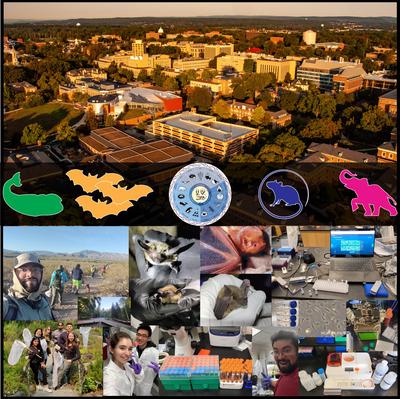
Juan "Manny" Vazquez is an Assistant Professor at the Department of Biology , The Pennsylvania State University . His research focuses on the evolution of longevity-associated traits and gene regulatory networks in long-lived mammals, particularly bats and cetaceans. The Vazquez Lab employs multidisciplinary approaches including functional genomics (gene expression, chromatin accessibility, epigenetics), population genomics , evolutionary genomics , and molecular/cellular biology techniques like high-throughput screens. They generate reference genomes and cell lines for comparative studies, with recent work on Myotis bats revealing DNA damage response mechanisms and host-virus co-adaptation patterns. Current research trends include understanding pleiotropic relationships between disease tolerance and cancer resistance, leveraging natural species diversity for human health insights. The lab collaborates with domestic and international teams, and welcomes proposals from prospective researchers.
Matthew Stone is a Professor in the Department of Computer Science at Rutgers University, New Brunswick. His primary affiliations are within the School of Arts and Sciences, with cross-listed involvement in Cognitive Science and Perceptual Science. He focuses on designing conversational agents that integrate natural language understanding and generation with grounded, meaningful interactions. Key roles include teaching courses such as CS 440 (Introduction to AI) and CS 504 (Computational Modeling). His research emphasizes the computational foundations of meaning, integrating philosophy, linguistics, and AI to create systems that contextualize communication through environmental grounding, intentional reasoning, and collaborative dialogue. Notable projects include the SPUD system for natural language generation and work on multimodal interaction through gesture and facial signals. He has been funded for projects like 'Community-led Language Technology for NJ: A Design Justice Approach.' Education: PhD in Computer Science (assumed based on faculty role). Awards: Influential Paper Recognition (SIGGRAPH '94), RDI^2 Fellowship for Malihe Alikhani. Grants: Community-led Language Technology Project (2021). Stone collaborates with interdisciplinary teams and mentors students like Malihe Alikhani. His labs explore topics such as embodied conversational agents, computational pragmatics, and language grounding in robotics. Recent work emphasizes ethical and societal implications of AI, advocating for inclusive technology design.
Dr Izabella Kimak is a Lecturer at the Department of English and American Studies, Faculty of Languages, Literatures and Cultures, Maria Curie-Skłodowska University. Her work focuses on ethnic minority literature in the U.S., corporeality in American culture, and urban narratives, with a particular emphasis on Polish-American and South Asian American writing. She holds a PhD (2011) and MA (2003) from UMCS, both examining diasporic female identity. PhD: Women at Cultural Crossroads (UMCS, 2011) MA: Native American Women in Their Own Eyes (UMCS, 2003) Her research explores intersections of ethnic identity , gender , and urban spaces , evidenced by her 2023 grant Sweet Home Chicago? on Polish migration literature and 2021 Kosciuszko Foundation fellowship at Northwestern University. Publications span analyses of Bharati Mukherjee, Chicago’s racial dynamics, and edited volumes on post-millennial cultural exhaustion. Key publication trends include Polish-American migration (2024), diaspora myth-making (2022), and postcolonial urbanism (2014). She contributes to editorial boards of Polish Journal for American Studies (2015–2024) and WiN (2019–2023), and co-leads the EAAS Women’s Network (2024–2026). Active in academic collaborations and co-authoring works like the 2023 Memory, Identity, Belonging , she has participated in conferences and research exchanges, including the 2009 JFK Institute Library fellowship in Berlin and the 2007 HCA Spring Academy in Heidelberg. Her expertise also extends to translation between Polish and English.