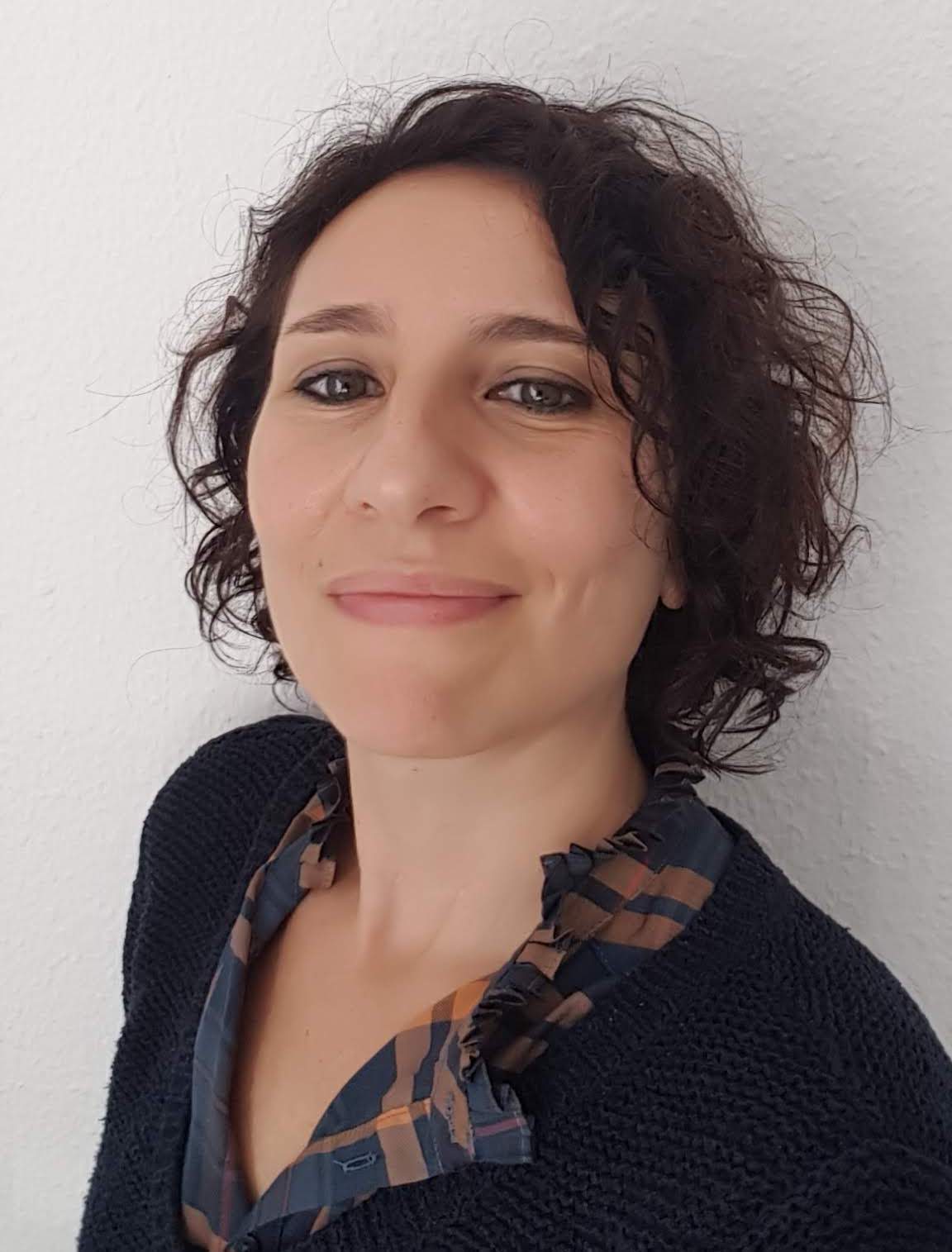
Dr. Francesca Delogu is a Scientific Associate at Saarland University's Department of Linguistics and Language Technology. Her research focuses on the cognitive and neural bases of online language understanding, particularly expectation-based mechanisms, event/script knowledge, pragmatic inferences, and reference processes. Specializes in ERP (Event-Related Potentials) and eye tracking methodologies Collaborates extensively with Prof. Matthew W. Crocker and Dr. Herbert Brouwer Her work examines how extra-linguistic knowledge influences semantic integration and lexical retrieval, with applications in computational linguistics and language technology. She has taught courses on experimental methods in psycholinguistic research since 2012. Key research trends include the functional dissociation of ERP components (N400/P600) in language comprehension, rational redundancy in referential expressions, and the role of discourse context in expectation generation. Her publications span journals like Language, Cognition and Neuroscience , Cognitive Science , and Brain Research .
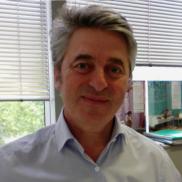
Dr. Minglun Gong is a Professor and Director of the School of Computer Science at the University of Guelph (since 2019). Previously, he served as Professor and Head of the Department of Computer Science at Memorial University of Newfoundland. He holds a Ph.D. from the University of Alberta (2003), M.Sc. from Tsinghua University (1997), and B.Engr. from Harbin Engineering University (1994). His research focuses on visual computing, including computer graphics, computer vision, visualization, image processing, and pattern recognition. He has authored over 150 referred papers and holds patents in the field. He is an Associate Editor for Pattern Recognition and IEEE Signal Processing Letters , and has received awards such as the Izaak Walton Killam Memorial Award and multiple best paper awards. Dr. Gong has advised numerous students, including Ph.D./M.Sc. candidates and visiting scholars. His lab's recent work includes UAV path planning for urban reconstruction, image stylization techniques, and 3D human pose estimation. He actively participates in academic service, including editorial roles, conference program committees, and administrative roles at multiple institutions. His teaching spans courses in image processing, computational photography, and technical communication. He is also involved in administrative committees, such as Graduate Studies and Promotion at Memorial University. Key research contributions include advancements in transparent object modeling, underwater 3D reconstruction, and image-to-image translation. His work emphasizes practical applications in fields like medical imaging, autonomous systems, and environmental modeling.
Stanislas Lyonnet is Professor of Genetics at the Paris Descartes Faculty of Medicine and a geneticist at the Necker-Enfants Malades University Hospital in Paris. Since 2016, he has served as Director of the Institute for Genetic Diseases (Imagine), a position that builds on his extensive leadership in genetic research and clinical practice. His career spans several key roles including directing the 'Genetics and Embryology of Malformations' laboratory from 1992 until 2016 and coordinating the Necker site of the National Reference Center for Rare Diseases. Lyonnet's research focuses on the genetic basis and molecular pathophysiology of congenital malformations, with nearly 400 international publications spanning from 1985 to 2019. His work has significantly contributed to understanding rare genetic disorders, developmental anomalies, and malformation syndromes. Recent publications demonstrate his ongoing contributions to next-generation phenotyping techniques, genotype-phenotype correlations, and the molecular mechanisms underlying various genetic conditions including Coffin-Siris syndrome, ciliopathies, and neurodevelopmental disorders. Inserm Research Prize (2009) Collery Prize from the French Academy of Medicine President of the European Society of Human Genetics (2013) Throughout his career, Lyonnet has been deeply committed to knowledge transfer, having directed the European Master's in Genetics at the University of Paris from 2004 to 2017 and authored educational materials including 'Les 100 mots de la génétique.' He currently chairs the scientific council of the École Normale Supérieure (Ulm) and continues to lead research initiatives at Imagine, focusing on advancing the understanding and treatment of genetic diseases through interdisciplinary collaboration and cutting-edge genomic approaches.
Ming Li is a Professor of Electrical and Computer Engineering at Duke Kunshan University's Division of Natural and Applied Science, and a Principal Research Scientist at the Digital Innovation Research Center. He holds an adjunct position as a Professor at Wuhan University's School of Computer Science. His research focuses on audio/speech processing, multimodal behavior signal analysis, and applications in autism spectrum disorder diagnosis. Li has over 200 publications and serves on editorial boards of journals like IEEE Transactions on Audio, Speech and Language Processing. Education: Ph.D. in Electrical Engineering from the University of Southern California (2013). Awards include the IBM Faculty Award (2016), ISCA 5-Year Best Paper Award (2018), and Youth Achievement Award (2020). He leads initiatives in anti-spoofing countermeasures, voice conversion, and speech synthesis. Recent Courses: Random Signals and Noise Speech Recognition Data Science Key Research Contributions: Development of datasets like KunquDB, TMCSpeech, and systems for speaker verification, deepfake detection, and autism diagnosis tools. His work bridges signal processing with clinical applications, leveraging AI for social interaction improvement in neurodiverse populations.
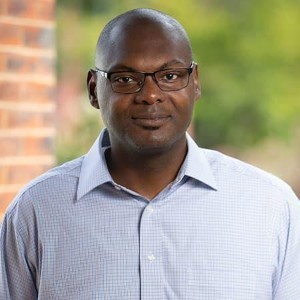
Derrick R. Spires serves as Associate Professor of English in the College of Arts & Sciences at the University of Delaware, specializing in early Black print culture, citizenship studies, and African American intellectual history. His scholarly mission centers on recovering the rich imaginative worlds African-descended people generated through print media and how these imaginings facilitated material change, spanning from tragicomic expressions to mundane daily practices. Spires' research interrogates how Black writers articulated expansive, practice-based theories of citizenship through robust print networks including newspapers, the Colored Conventions movement, and ephemeral publications. His work reveals the centrality of seriality, pseudonymity, and collaborative performance in Black political thought, demonstrating how print culture enabled Black communities to navigate and reshape citizenship frameworks despite systemic exclusion. He examines how early African American literature cultivated aesthetic sensibilities that sustained resistance and community building. Analysis of his 2016-2024 publications reveals consistent thematic threads: the material conditions of Black bibliography, gendered dimensions of political expression, and the performance aspects of print culture. His scholarship increasingly engages with digital humanities methodologies while maintaining deep archival rigor, particularly regarding Dorothy Porter's bibliographic mission and liberation bibliography frameworks. Key publications map connections between early Black social media practices and contemporary digital activism. Spires' accolades include: Modern Language Association Prize for First Book (2020) St. Louis Mercantile Library Prize (2020) National Endowment for the Humanities Fellowship Ford Foundation Fellowship Social Science Research Council Fellowship Mellon/Mays Initiatives Fellowship American Antiquarian Society Fellowship His editorial leadership encompasses the Broadview Anthology of American Literature and the University of Pennsylvania Press series 'Black Print and Organizing in the Long Nineteenth Century.' Research has been supported by major fellowships examining Black print networks, though specific grant details beyond institutional fellowships aren't specified. Spires contributes significantly to recovering marginalized intellectual traditions through meticulous bibliographic work and theoretical innovation in citizenship studies.
Dr. Hamidreza Mohades Kasaei is an Associate Professor in the Department of Artificial Intelligence at the University of Groningen, Netherlands. He holds positions in both the Faculty of Science and Engineering and the Faculty of Medical Sciences/UMCG, focusing on Robotics and image-guided minimally-invasive surgery. His work bridges theoretical advances in machine learning with practical robotic applications. Dr. Kasaei's research focuses on developing algorithms for adaptive perception systems through interactive environment exploration and open-ended learning. His specific interests include 3D object perception, grasp affordance detection, object manipulation, and active perception. He has evaluated his research on various robotic platforms including PR2, UR5e, Kinova, Franka robotic arms, and humanoid robots. His work enables robots to learn from past experiences and intelligently interact with non-expert human users using data-efficient techniques. Analysis of his recent publications reveals strong trends toward increasingly sophisticated manipulation capabilities, particularly in dual-arm coordination and handling dense clutter. There's a clear progression toward integrating language models with robotic control systems, as seen in works like 'Lifelong Robot Library Learning' and 'Towards Open-World Grasping with Large Vision-Language Models.' His research consistently addresses real-world challenges in agricultural robotics, assistive technologies, and service robotics applications. Gratama Science Award (2022) Google Research Scholar Award in Machine Learning (2023) Outstanding Associate Editor for IEEE Robotics and Automation Letters (2023) Dr. Kasaei has successfully supervised multiple PhD students including Zhenxing Zhang (thesis on 'Generative Adversarial Networks for Diverse and Explainable Text-to-Image Generation') and Hamed Ayoobi (thesis on 'Explain What You See: Argumentation-Based Learning and Robotic Vision'). His research is supported by significant grants including the Google Research Scholar Award for 'Continual Robot Learning in Human-centered Environments' and various conference organization roles including workshops at RSS 2023 and NeurIPS 2022. He leads the Lifelong Interactive Robot Learning Lab (IRL-Lab), which focuses on six key research directions: Perception and Perceptual Learning, Object Grasping and Manipulation, Lifelong Interactive Robot Learning, Dual-Arm Manipulation, Dynamic Robot Motion Planning, and Exploiting Multimodality. The lab develops cutting-edge approaches for robots to learn in open-ended fashion through interaction with non-expert human users, with applications in assistive robotics for people with disabilities.
Alessandro Del Tomba is a Tenure-Track Researcher in Linguistics and Glottology at Sapienza University of Rome, specializing in historical linguistics, Indo-European studies, and Central Asian philology. He holds a PhD in Linguistics from Sapienza and Comparative Indo-European Linguistics from Leiden University. Historical linguistics Indo-European studies Eastern Iranian philology Language contact theories His research focuses on Khotanese and Tocharian languages, with recent publications analyzing manuscript transmission, morphological variation, and phonological developments. He serves as Principal Investigator for the FIS project "Khotanese language and texts in contexts (KhoTxt): A multimodal approach to the classification and periodisation of the Khotanese language and its texts within the cultural and historical framework of medieval Central Asia". He teaches General Linguistics at undergraduate levels and Linguistics courses at the graduate level in Modern Philology. Active in international academic networks, he participates in conferences across Italy, Europe, and Asia.
Katie Carmichael is an Associate Professor at Virginia Tech's College of Liberal Arts and Human Sciences, Department of English. She serves as Director of Language Sciences and Co-director of the Speech Lab. Her research focuses on language variation/change, language ideologies, and language-place connections, particularly in Louisiana French and Southern US dialects like New Orleans English and Cajun English. Director of Language Sciences Co-director of Speech Lab Active in language research and teaching Carmichael's work centers on variationist sociolinguistics, exploring topics such as: Low-back vowel mergers in New Orleans English Intergenerational dialect change Raciolinguistic identity in Creole communities Phonetic/phonological diffusion patterns Language endangerment in Louisiana French Place-linked dialect awareness Scientific recognition includes: Roger W. Shuy Best Paper of the Year in American Speech (2024) Exemplary Program Award for Language Sciences (2024) University Award for Excellence in Teaching (2024) College of Liberal Arts Certificate of Teaching Excellence (2024) She teaches graduate-level courses like "Language and Place" and undergraduate courses including "Language and Ethnicity," "Language and Society," and "Contemporary Approaches to Linguistics II." As Co-director of Virginia Tech's Speech Lab, she leads research on acoustic phonetics and sociolinguistic variation.
Daniel L. Schacter is the William R. Kenan, Jr. Professor of Psychology at Harvard University, where he has served since 1991 and chaired the Psychology Department from 1995–2005. He leads the Schacter Memory Lab, pioneering research on human memory's cognitive and neural foundations through behavioral experiments and neuroimaging. His educational trajectory includes a B.A. from the University of North Carolina at Chapel Hill (1974) and a Ph.D. from the University of Toronto (1981), followed by a professorship at the University of Arizona (1987–1991) before joining Harvard. Dr. Schacter's work centers on memory's constructive nature—exploring why memory is inherently fallible and how distortions reveal fundamental mechanisms. His seminal contributions include the theory of episodic simulation (memory's role in imagining future events), links between memory and creativity, aging effects on cognition, and the neural basis of memory errors. He integrates fMRI, cognitive paradigms, and neuropsychological approaches to dissect these processes. Recent publications (2023–2025) emphasize clinical applications in mental health (e.g., suicidal adolescents), AI-creativity interactions, and aging-related memory changes, consistently highlighting the adaptive value of memory distortions across diverse contexts. Major accolades include: Warren Medal from the Society of Experimental Psychologists American Psychological Association's Award for Distinguished Scientific Contributions Election to the American Academy of Arts and Sciences and National Academy of Sciences William James Book Awards for Searching for Memory (1996) and The Seven Sins of Memory (2001) His lab secures substantial grant funding to investigate memory's role in future thinking and creativity, producing over 400 publications. Mentoring spans generations of cognitive neuroscientists, though specific advisees aren't listed in source materials. The Schacter Memory Lab maintains a collaborative environment focused on memory's adaptive functions using cutting-edge neuroimaging and behavioral methods.
Jan G. Bjaalie is Professor of Neuroinformatics and Dean of Research and Innovation at the University of Oslo Faculty of Medicine . Since 2023 he heads the faculty’s research and innovation strategy, while directing the Neural Systems and Graphics Computing Laboratory at the Institute of Basic Medical Sciences. Education: 1990 Ph.D. in Neuroanatomy, University of Oslo 1986 M.D., University of Oslo Research interests revolve around collaborative and open neuroscience, digital brain atlasing, and the cyber-infrastructures that enable data sharing. He leads efforts to build next-generation atlases that integrate multi-scale brain architecture and connectivity data, and to develop ontologies and FAIR-compliant platforms for global neuroscience. Recent work emphasizes in silico integration of rodent and human imaging datasets, leveraging machine-learning registration tools and cloud-based services such as EBRAINS. The goal is to transform how brain data are stored, visualised and reused across laboratories worldwide. Scientific output & impact: A scan of publications from 2023-2025 reveals a strong focus on digital atlas frameworks, automated image registration (DeepSlice, DeMBA), open data standards (AtOM ontology), and large-scale analyses of genetic influences on brain structure in Alzheimer’s models. These works collectively advance reproducible, high-throughput neuroanatomy and cross-species translation. Grants & leadership roles: Coordinator/Partner in EU Flagships EBRAINS 2.0, BRAIN Health, Human Brain Project (2013-2026) Infrastructure Director, Human Brain Project (2018-2023) Leader of Neuroinformatics Platform & EBRAINS Data Services (2017-2023) Head of Institute of Basic Medical Sciences (2009-2016) Executive Director, International Neuroinformatics Coordinating Facility (INCF) (2006-2008) Chair, International Brain Initiative (2021-) Editorial & governance service: Founding Chief Editor Frontiers in Neuroinformatics (2007-), Section Editor Brain Structure and Function (2002-2020), member of the INCF Governing Board and EBRAINS AISBL Management Board, and numerous international advisory panels on data governance and ethics. His laboratory hosts the Norwegian Neuroinformatics Node and collaborates closely with global consortia to deliver open-access atlases, software pipelines and FAIR data standards that underpin modern neuroscience.
Shueng-Han Gary Chan is a faculty member in the Department of Computer Science and Engineering at the Hong Kong University of Science and Technology (HKUST), within the College of Engineering. He is actively engaged in research and mentoring, with a strong publication record in mobile computing, indoor localization, and AI for pervasive systems. His research focuses on indoor localization using Wi-Fi, geomagnetic, and inertial signals , sensor fusion , crowd counting with deep learning , domain adaptation , and efficient mobile AI systems . His work bridges theoretical innovation with real-world deployment, as seen in systems for missing person search and indoor navigation. Recent publications (2023–2025) show a consistent trend toward self-supervised and domain-agnostic learning , efficient model design for mobile devices , and robust signal fusion in noisy environments . His team leverages transformer architectures, graph neural networks, and novel optimization techniques to solve real-world challenges in urban and indoor spaces. He has advised numerous graduate students, including Jierun Chen, Zhuoxuan Peng, and Tianlang He, who have contributed as first authors to joint publications. His collaborations span institutions and include work on large-scale system deployments and mobile AI. He leads a research group focused on mobile and pervasive computing , with projects involving IoT-based contact tracing, indoor navigation (e.g., DeepNavi, SiFu), and real-time localization systems. The team emphasizes practical deployment and system robustness.
Li-San Wang, PhD, serves as Associate Professor of Pathology and Laboratory Medicine and Associate Dean for Computing at his institution, while chairing the Genomics and Computational Biology Graduate Group to direct academic programs and student mentorship. His research spans bioinformatics, computational biology, genomics, and data integration , with concentrated focus on Alzheimer's disease genetics. Wang leverages whole-genome sequencing , multi-ancestry analyses , and structural variation detection to identify risk loci across diverse populations, particularly advancing South Asian and African ancestry genomic studies. Analysis of his 15 most recent publications reveals dominant themes in polygenic risk score transferability across ancestries, genomic data infrastructure development (NIAGADS, ADSP), and functional validation of GWAS findings through tools like BTS and CHARMER. His work consistently addresses health disparities in dementia research through population-specific genetic architectures. As Graduate Group Chair, Wang oversees student training in computational genomics while leading NIH-funded consortia that generate critical genomic resources. His administrative role as Associate Dean for Computing indicates strategic oversight of institutional computational infrastructure supporting large-scale genomic research.
Renáta Pavlová, PhD is a Lecturer for Slovak language at the Institute of Slavic Linguistics and Cultural Studies, Faculty of Humanities, University of Regensburg since September 2020. Previously, she served as a Scientific Assistant at Constantine the Philosopher University in Nitra (2017-2020) and as a Slovak Language Lecturer at the Slavic Institute, University of Cologne (2016-2013). Her academic journey includes completing her PhD at Constantine the Philosopher University in Nitra in 2011 with a dissertation on 'Slovak as a Foreign Language.' Dr. Pavlová's educational background includes: Studies in Slovak Language and Literature – German Language and Literature at Constantine the Philosopher University, Nitra (1998-2003) PhD in Slovak as a Foreign Language from Constantine the Philosopher University, Nitra (2011) Dr. Pavlová's research focuses on three interconnected areas: Slovak as a foreign language with emphasis on linguodidactic aspects, machine translation between German and Slovak, and the development of reading comprehension in foreign language learning. Her work in linguodidactics examines effective teaching methodologies for Slovak language acquisition, while her machine translation research analyzes error patterns and quality assessment. The reading comprehension strand investigates intervention programs for developing literacy skills in both native and foreign language contexts, with applications across primary and secondary education levels. Her recent publications demonstrate a consistent focus on the intersection of language learning, technology, and literacy development. The trend shows increasing attention to machine translation quality assessment, particularly examining morphosyntactic and lexical errors in German-Slovak translation. Her work also reveals a strong commitment to practical applications, with numerous publications on language testing, certification (particularly ECL exams), and intervention programs for reading comprehension. The collaborative nature of her research is evident through multiple co-authored works with colleagues across various institutions. Dr. Pavlová has been involved in several significant research projects including VEGA projects on reading comprehension development (2019, 2017), APVV projects on machine translation error classification (2018), and KEGA projects on language preparation (2019). She also contributed to international initiatives like EUROPODIANS (2009) for developing online Slovak courses and EURONOUNCE (2009) analyzing Slovak pronunciation by German speakers. As an educator, Dr. Pavlová teaches various Slovak language courses at University of Regensburg, including Slovak I, Slovak III (general and translation-specific), Slovak Conversation, and specialized seminars on Machine Translation. She actively participates in cultural outreach, having recently attended events with the Slovak Ambassador and the President of the Slovak Republic, demonstrating her role in promoting Slovak language and culture internationally.
Enrico Franconi is a tenured full Professor in the Faculty of Engineering at the Free University of Bozen-Bolzano, Italy. He is the founder and director of the KRDB Research Centre for Knowledge-based Artificial Intelligence, established in 2002. His research focuses on applying database, AI, and semantic technologies to address challenges in information systems design, data integration, and big data analysis. He holds leadership roles including former Vice-Rector for Research (2005-2006) and director of the European Masters Program in Computational Logic (2004-2019). His academic contributions span Description Logics, knowledge representation, and ontology engineering, with a strong emphasis on theoretical foundations and practical applications. He has led numerous EU-funded projects, including ONTORULE and SeWAsIE, and contributed to international conferences as a program committee member and keynote speaker. His work bridges theory and practice, aiming to translate foundational results into real-world solutions. He is a prolific author with an h-index of 42 and has mentored researchers in areas like semantic web technologies and conceptual modeling. Key achievements include advancing ontology-driven data integration, developing tools like ICOM for conceptual modeling, and contributing to standards for semantic web languages. He is affiliated with the Computational Logic community and actively participates in international research networks such as CAIRNE. His research has been recognized through ANVUR evaluations ranking his department among Italy’s top computer science faculties.
Véronique Plesch is the James M. Gillespie Professor of Art at Colby College, specializing in European art and culture from 1300-1800, Christian iconography, and interdisciplinary word-image studies. She holds a Ph.D. and M.A. from Princeton University and dual Licence ès Lettres degrees from Université de Genève in Medieval French Literature and Art History. Ph.D., Princeton University M.A., Princeton University Licence ès Lettres, Université de Genève (Medieval French Literature & Art History) Her research explores intersections between visual and textual cultures, focusing on graffiti as historical evidence, medieval drama's visual manifestations, and intermedial relationships. She examines devotional practices, regional artistic identities, and the semiotics of sacred spaces. Key publication trends include analyses of Mediterranean intermediality, Alpine art exchanges, and graffiti's role in memory preservation. Her work spans from 1985 studies on Grisons art to recent explorations of 20th-century illustrated books. Professional leadership includes: President, International Association of Word and Image Studies (2008-17) Editorial Board, Early Drama, Art and Music series (2005-18) President, New England Medieval Conference (2011-12) Advisory Editor, Interfaces (2002-) She teaches courses like 'Graffiti, Past and Present' and 'Vienna 1900', integrating her expertise in medieval/modern art transitions and visual rhetoric.