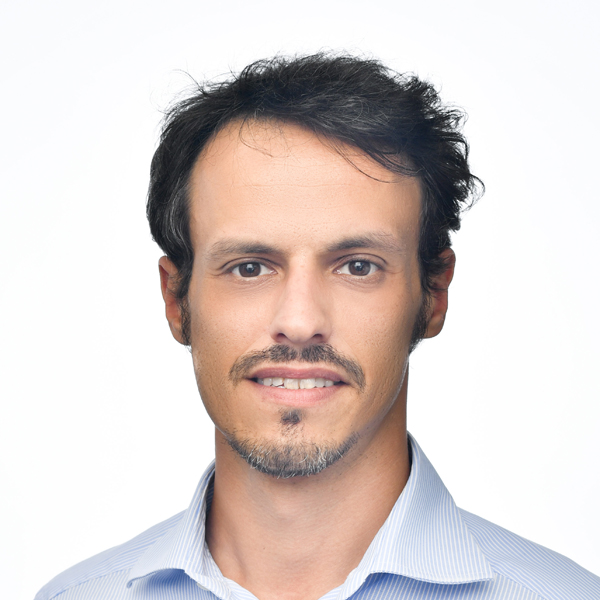
Vitaliano Fiorillo is an Associate Professor at SDA Bocconi School of Management and a part-time Professor of Management at Bocconi University . He directs the Invernizzi AGRI Lab and has led research and training programs across sectors like agri-food, energy, and automotive. Education: Bocconi University (Master's in Economics and Management of Energy and Environment), Università di Bergamo (Ph.D. in Logistics and Supply Chain Management), MIT Zaragoza Logistic Centre (collaboration), Centro Alti Studi per la Difesa (Master's in International Relations), Università degli Studi di Pavia (Bachelor's in Political Science). His research focuses on supply chain management and sustainability , particularly in agribusiness. Recent work includes regenerative agriculture , carbon farming , and sustainable finance in the agricultural sector. Key publications address performance indicators in dairy farming, soil regeneration via banking systems, and megatrends in agribusiness. His research trends emphasize environmental economics , innovative agricultural practices , and supply chain resilience . Scientific Awards: EFMD International Case Writing Competition Winner (2013), Best Case Award – Bringing Technology to the Market (2013). Vitaliano has secured grants for applied research in agribusiness and sustainability. He is affiliated with the Invernizzi Reference Centre on Agrifood (IRCAF) and the Fondazione Sviluppo Patrimonio Ca’ Granda .
José Remesal Rodríguez (born June 27, 1948, in Lora del Río, Sevilla) is Professor of Ancient History at the University of Barcelona since 1988, affiliated with the Department of Prehistory, Ancient History and Archaeology. His academic career began with research grants at the Instituto Rodrigo Caro in Madrid (1973-75) and the Spanish School of History and Archaeology in Rome (1976). Professor Remesal Rodríguez has established himself as a leading authority on Roman economic history, with particular expertise in amphora studies, Roman trade networks, and the distribution of food products throughout the Empire. His research has centered on the analysis of Dressel 20 amphorae containing Baetican olive oil, which has revolutionized understanding of interprovincial trade patterns. His scholarly output demonstrates remarkable consistency and depth, with significant publications spanning from the 1980s to the present. Recent works like Heinrich Dressel y el Testaccio (2022) and Arqueología y Téchne (2022) showcase his continued research productivity and evolving methodological approaches. His publications reveal a progression from detailed cataloging of archaeological materials to increasingly sophisticated theoretical frameworks for understanding Roman economic integration. Roman Trade Networks and Economic Integration Amphora Studies (particularly Dressel 20) Roman Military Supply Systems Economic Relations between Roman Provinces Historiography of Roman Archaeology Ancient Food Economies Professor Remesal Rodríguez has made significant contributions to collaborative research projects, most notably the EPNet project (ERC Advanced Grant), where he applied formal methods to investigate Roman economic networks. His work on the 'Timbres Amphoriques' project has produced comprehensive catalogs of amphora stamps that serve as essential references for researchers worldwide. His research has demonstrated how the Roman Empire developed sophisticated administrative systems that enabled long-distance trade across vast territories, fundamentally reshaping understanding of ancient economic integration. His work with CEIPAC has produced detailed analyses of amphora distributions, particularly the extensive study of materials from Colonia Ulpia Traiana (Xanten), revealing patterns of Mediterranean-Germania trade relations. Professor Remesal Rodríguez's scholarship bridges traditional archaeological analysis with innovative quantitative approaches, making significant contributions to ongoing debates about the nature of the Roman economy.
Professor Jürgen Wilhelm Böse is a Professor of Logistics at the Faculty of Commerce and Social Work, Ostfalia University of Applied Sciences, Suderburg Campus. He has held this position since 2018 and is responsible for teaching and research in logistics, particularly focusing on port terminal planning and operations. His office is located in Building C, Room 106.2, Suderburg. Professor Böse's academic journey began with studies in Industrial Engineering at the Technical University of Braunschweig (1991-1997), followed by research assistant work at the same institution (1997-2002). He then gained industry experience as Branch Manager at LOGIS.NET (2003-2005) and Senior Consultant at HPC Hamburg Port Consulting (2005-2010), before returning to academia as Senior Engineer at the Institute for Maritime Logistics, Hamburg University of Technology (2010-2018). His research focuses on planning complex logistics systems, particularly seaport container terminals. His work encompasses developing initial system solutions based on business experience and spreadsheet calculations, using discrete event-oriented simulation for validation and optimization, and coupling simulation tools with Artificial Intelligence for automated system optimization. This approach typically yields qualitatively better results at significantly lower costs compared to manual expert use of these tools. His research interests include: Planning of complex logistics systems, especially seaport container terminals Discrete event-oriented simulation for logistics optimization Integration of production and logistics systems in value creation networks Artificial Intelligence applications in logistics and port operations Truck arrival forecasting and resource planning at logistics nodes Sustainable port operations and green terminal planning Professor Böse has made significant contributions to the field through his publications, most notably as editor of the 'Handbook of Terminal Planning' (Springer, 2nd edition 2020). His work spans numerous journal articles, conference papers, and research project reports focused on port logistics, terminal planning, and simulation applications. He has received research funding for projects including: Lkw-Wartezeitprognose für logistische Knoten (Truck Wait Time Forecasting for Logistics Nodes) IMOTRIS (Intermodal Transport Routing Information System) ISETEC II (Location Systems in Port Handling) NETRALOG (Bio-analog algorithms for horizontal transport control) As an educator, Professor Böse teaches regular courses in Project Management, Supply Chain Management, Transport Management, and Warehousing. He also offers specialized courses on logistics simulation and quantitative methods. In addition to his teaching duties, he serves in several administrative roles including as Research Commissioner and Internationalization Commissioner for Faculty H.
Professor David Finkelstein serves as Honorary Professor in the Department of Information Studies at University College London, recognized internationally as 'one of our most distinguished historians of journalism' (Times Literary Supplement). With over 30 years of academic leadership across eight Scottish and English higher education institutions, he maintains active research output and supervision capacity. His educational background includes a BA and PhD, complemented by prestigious fellowships: Fellow of the Royal Society for the Arts (FRSA), Fellow of the English Association (FEA), and Fellow of the Royal Historical Society (FRHistS). Finkelstein specializes in book history, print culture, journalism studies, and media history, with particular expertise in Scottish publishing traditions, transnational typographical trade networks, and colonial periodicals. His research examines how print environments shaped cultural identities, labor movements, and imperial communications from the 19th to 21st centuries, often through comparative analyses of British and Irish press evolution. Recent publications (2020-2024) demonstrate sustained focus on comprehensive press histories, including multi-volume reference works and colonial periodical studies. His output reveals consistent methodological rigor in analyzing material print culture while connecting historical practices to contemporary media transformations. Awarded the Robert and Vineta Colby Scholarly Book Prize twice (2007, 2021), his notable works include The House of Blackwood , Movable Types: Roving Creative Printers of the Victorian World , and the award-winning Edinburgh History of the British and Irish Press series. Available for research supervision, grant assessment, and academic consultancy, Finkelstein actively contributes to scholarly discourse through journal reviewing, conference participation, and mentoring. His current projects continue exploring colonial press networks and Scottish publishing diasporas.
Jennifer Rundels is a tenured Associate Professor and Research and Instruction Librarian at Central Michigan University Libraries, serving as the dedicated business librarian for the College of Business Administration. She provides comprehensive research support and information literacy instruction across all business departments including Business Information Systems, Economics, Entrepreneurship, Finance and Law, Management, and Marketing, Hospitality, and Logistics. Additionally, she teaches LIB 197: Introduction to Library and Information Research in both on-campus and online formats, reaching a broad undergraduate audience with foundational research skills training. Her educational background includes: Master of Arts in Educational Technology, Central Michigan University (2012) Master of Library and Information Science, Wayne State University (1995) Bachelor of Arts in English, magna cum laude, Oakland University (1993) Professor Rundels' research program bridges theoretical frameworks with practical library applications. She pioneers innovative methodologies like ATP bioluminescence technology for measuring library space cleanliness, explores career trajectory analysis for distance librarians, and develops enhanced research consultation models. Her work consistently examines the intersection of educational technology with information literacy instruction, particularly in business education contexts where threshold concepts present unique challenges. This focus on practical implementation distinguishes her contributions to library science literature. Her publication record demonstrates sustained scholarly activity from 2013-2023, with recent high-impact work in The Journal of Academic Librarianship and Business Horizons. The 2023 publications reveal two distinct research trajectories: one applying biotechnology to physical library management, and another analyzing business research methodologies through unconventional lenses like golf. This diversity reflects her ability to connect library science with broader academic and practical concerns while maintaining focus on student outcomes and librarian effectiveness. Professor Rundels maintains active scholarly engagement through conference presentations at venues like the Distance Library Services Conference and Great Lakes Conference on Teaching and Learning. Her editorial work on conference proceedings demonstrates leadership in the distance librarianship community. While specific grant details aren't public, her ongoing publication record in peer-reviewed journals indicates sustained research activity. She provides direct research consultation support for business students and faculty, with potential for student involvement in her active projects examining library space utilization and information literacy assessment. Although she does not lead a named research laboratory, Professor Rundels operates within CMU Libraries' collaborative research culture. Her work frequently involves cross-departmental teams, as evidenced by the library cleanliness study and business networking research. She contributes to the academic community through editorial roles for conference proceedings and by developing practical frameworks for implementing information literacy standards in credit-bearing courses, demonstrating commitment to advancing professional practice beyond individual research projects.
Dr. Marc C. Green serves as a Postdoctoral Research Fellow within the School of Science, Engineering & Environment at the University of Salford, affiliated with the Acoustics Innovation Institute. His research bridges acoustic engineering, machine learning, and environmental psychology with focus on unmanned aircraft systems noise impact assessment. PhD in Music Technology, University of York (2020) Dr. Green's research investigates how drone noise interacts with urban soundscapes through innovative methodologies including soundwalk assessments in controlled environments, psychoacoustic laboratory testing , and deep learning model development . His work specifically examines time-variant noise characteristics, flight operation impacts, and environmental interactions (such as pine tree barriers in urban parks) to understand human annoyance responses. The integration of spatial audio techniques with machine learning enables novel approaches to predicting UAV sound affect beyond traditional sound pressure level metrics. Analysis of his 11 recent publications (2024-2025) reveals a strong focus on practical solutions for urban drone integration, with 55% dedicated to psychoacoustic modeling, 27% to field assessment methodologies, and 18% to technical noise characterization. His work consistently addresses the tension between societal benefits of drone technology and community noise impacts. EPSRC connected nation pioneers prize for 'Creative Computing for the Digital Economy' (for EigenScape database development) Currently leading the RefMap project to reduce UAS environmental impact, Dr. Green's research receives direct institutional support through the Acoustics Innovation Institute. His EigenScape database continues to serve as a foundational resource for global soundscape researchers. The systematic review framework he developed for UAS noise impact testing provides regulators with evidence-based assessment protocols. Dr. Green operates within the Acoustics Innovation Institute's collaborative ecosystem, leveraging specialized recording equipment and computational resources. His research group maintains comprehensive drone noise datasets across multiple platforms and develops open methodologies for community noise assessment in evolving urban air mobility scenarios.
Professor Mehmet Güray Güler holds a faculty position at Istanbul Technical University (ITU) in the Department of Data Science and Analytics within the School of Business. Previously, he served as Professor in ITU's Department of Industrial Engineering (2024) and held progressive academic appointments at Yildiz Technical University from Research Assistant (2005-2013) to full Professor (2022-2024). His educational background includes a PhD in Industrial Engineering from Boğaziçi University (2005-2012), preceded by Master's (2003-2005) and Bachelor's degrees from the same institution. Professional experience includes R&D Manager at Lojika Information Technologies (2014-2015). Research focuses on Modeling and Optimization , Machine Learning , and Operations Research with specific applications in hydrogen supply chains, renewable energy systems, and stochastic optimization. Recent work demonstrates strong emphasis on Turkey's energy transition, with multi-objective models for hydrogen infrastructure and electricity market strategies. Publication trends show increasing focus on sustainable energy systems since 2020, with significant contributions to hydrogen logistics (60% of recent publications) and machine learning applications in energy markets (25%). Key methodological approaches include stochastic programming, multi-objective optimization, and neural network integration. Award highlights: Operations Research Association Member (2006-present) Current research leadership includes the active project Türkiye Hidrojen Tedarik Zinciri Ağı: Strateji ve Politikalar (2024-2026) as Principal Investigator. Grant activities focus on national energy infrastructure development with strong industry-academia collaboration. Laboratory work centers on energy systems modeling with computational infrastructure for large-scale stochastic optimization. Current team focuses on hydrogen economy transition strategies for Turkish national policy development.