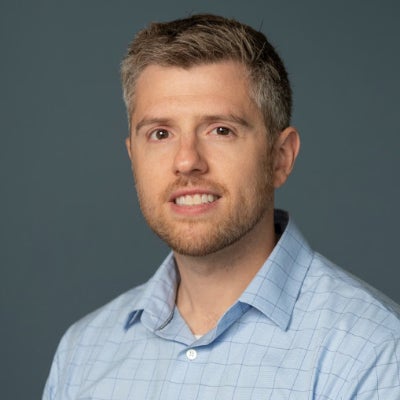
Dr. Daniel Roxbury is an Associate Professor and Graduate Director at the Department of Chemical, Biomolecular and Materials Engineering within the University of Rhode Island's College of Engineering. With expertise in nanoscience and carbon nanomaterials, his research focuses on nano-bio interactions, developing functionalized nanotubes for biomedical applications and environmental monitoring through his NanoBio Engineering Laboratory. His work spans multiple disciplines including: Biomedical nanosensors Smart wearable biomaterials Targeted drug delivery systems Environmental nanotechnology Single-molecule imaging Nanotoxicology Recent publications emphasize machine learning-enhanced spectral analysis, coral reef conservation nanotechnology, and wearable stress monitoring textiles. His 2024 ACS Nano study introduces AI-driven macrophage phenotyping, while 2023 Nature Nanotechnology work explores coral reef restoration strategies using nanomaterials. Awarded the 2019 NSF CAREER grant for cellular nanometrology, he leads multiple NIH-funded projects including: $820,000 NSF CAREER: Spectral Imaging for Sub-Cellular Nanometrology $140,000 Miriam Hospital COBRE: Cortisol Detection Textiles $700,000 NSF EAGER: Multiplexed Wound Biomarker Detection His laboratory houses state-of-the-art equipment including: Near Infrared Hyperspectral Microscope Custom NIR Fluorescence Spectrometer Jasco UV/VIS/NIR Spectrophotometer Biosafety Cabinet Cell Culture Incubator Cryo-Storage System
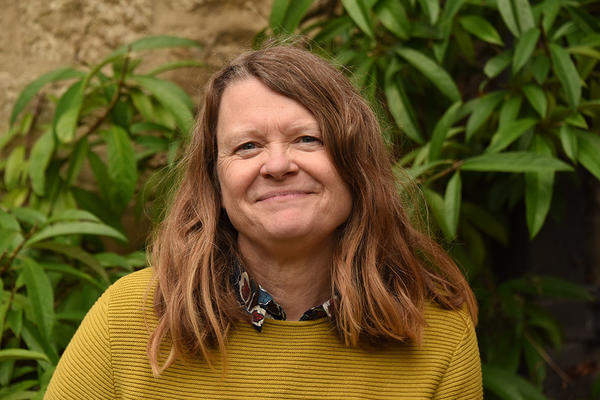
Professor Lindsay Turnbull is a Professor of Plant Ecology at the University of Oxford's Department of Biology. Her research focuses on understanding the evolutionary and ecological basis of plant trait diversity and its consequences for ecosystems. Key interests include seed size variation, plant-soil interactions, and the impact of organic farming on biodiversity. She leads a research group exploring topics such as mutualism stability, species coexistence, and island conservation genetics. Turnbull's work integrates experimental, observational, and computational approaches to address fundamental questions in ecology. Her lab, based at the Department of Biology (Mansfield Road and South Parks Road campuses), has contributed to global understanding of biodiversity-ecosystem functioning relationships and plant-microbe symbioses. Notable projects include studies on Aldabra giant tortoises and coral reef connectivity in the Seychelles, highlighting her commitment to applied conservation science. Her research spans multiple scales—from molecular interactions in legume-rhizobia systems to large-scale biodiversity patterns in grasslands and tropical ecosystems. Recent work emphasizes the role of trait-based approaches in predicting ecological responses to environmental changes such as eutrophication and climate variability. Her publications frequently bridge theoretical and applied ecology, offering insights into both natural and human-managed ecosystems.
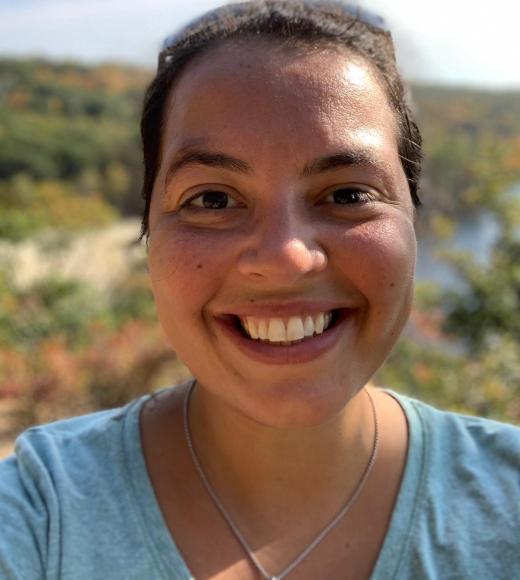
Anya L. Brown is an Assistant Professor in the Department of Evolution and Ecology at the University of California, Davis, based at the Bodega Marine Lab. Her research focuses on the community ecology of marine systems, particularly coral reefs, investigating how host-associated microbes and trait variation influence species resilience to stress, ecological interactions, and adaptive plasticity. Education: B.S. (Brown University, 2009), M.S. in Biology (California State University, Northridge, 2012), Ph.D. in Ecology (University of Georgia, 2018). Postdoctoral Experience: Ewel Postdoctoral Fellow in Tropical Ecology (University of Florida, 2018-2020); Postdoctoral Scholar in Marine Chemistry and Geochemistry (Woods Hole Oceanographic Institution, 2020-2022). Her recent publications highlight microbial dynamics in coral reefs, antibiotic effects on reef microbiomes, and trait-mediated interactions. She emphasizes interdisciplinary approaches, combining molecular tools with observational and experimental studies. The Brown Lab actively engages students in cross-system marine research, prioritizing inclusivity in scientific communities. Key trends in her work include understanding microbial responses to environmental stressors, coral disease mechanisms, and the role of extended phenotypes in reef ecology. These studies span tropical and temperate marine ecosystems, with implications for conservation and restoration. Scientific Awards: Hellman Fellowship 2024-25 Ewel Postdoctoral Fellowship in Tropical Ecology Dr. Brown's lab fosters research across coral reefs and local coastal systems, integrating ecological and microbial perspectives. She advocates for inclusive teaching and research practices while advancing microbial ecology frameworks in marine conservation.
Professor Nick Paul is a marine scientist at the University of the Sunshine Coast (UniSC), leading applied research in seaweed and algae for sustainable product development. He holds a PhD and BSc (Hons) from UNSW and a Graduate Certificate in Tertiary Education Management from the University of Melbourne. His work focuses on seaweed aquaculture innovations, including waste-to-resource biotechnology, functional foods, and environmental remediation. He leads international projects funded by organizations like ACIAR, CSIRO, and Advance Queensland. Research interests include seaweed-based solutions for livestock health, wastewater treatment, and sustainable aquaculture expansion near the Great Barrier Reef. He has pioneered commercial land-based seaweed farming and developed intellectual property in this field. Awards include the 2015 UNAA World Environment Day Award for Sustainable Water Management and the 2015 Queensland Water Innovation Forum Best Paper. He serves on the Asian Fisheries Society Council and Fiji’s National Seaweed Taskforce. Key publications span seaweed cultivation methods, marine genomics, and socio-economic impacts of aquaculture in the Pacific. Grants total over A$3.7 million for projects like diversifying Pacific Island seaweed industries and improving Indonesian seaweed production.
Dr. Nicola Allison is a Reader at the University of St Andrews, School of Earth & Environmental Sciences, where she leads research on biomineralisation. Her work focuses on how marine organisms form calcium carbonate structures, the impact of environmental changes on these processes, and the role of these biominerals in reconstructing past climates. Her research integrates experimental studies using controlled aquaria systems to culture corals and other organisms, alongside geochemical analyses of fossil carbonates. Key areas include the effects of ocean acidification, rising temperatures, and organic matrices on biomineral formation. She collaborates internationally, including through the International Ocean Discovery Program (IODP). Publications highlight advancements in understanding coral skeletal chemistry, aragonite precipitation mechanisms, and the development of climate proxies. She holds grants from NERC, MASTS, and the Leverhulme Trust, supporting projects on coral calcification, biomolecule influences, and climate change impacts. Dr. Allison actively engages in public outreach through workshops and conferences, contributing to climate science communication and policy-relevant research on marine ecosystems.
Susan Diana Owen is a Senior Lecturer in Geography at NUS, specializing in environmental policy and adaptation governance. Her research examines science-policy interfaces in coastal management and climate adaptation planning. Owen investigates community responses to environmental change, participatory governance models, and the translation of scientific knowledge into policy frameworks. Current work focuses on coastal vulnerability, adaptation strategies for island communities, and institutional responses to sea-level rise. Teaching includes 'Methods for Environmental Studies', 'Environmental Management in Singapore', and field-based courses integrating physical and social science approaches to environmental challenges.
Matthew A. Reidenbach is a Professor and Department Chair of Environmental Sciences at the University of Virginia, with a courtesy appointment in Mechanical and Aerospace Engineering. His research focuses on coastal oceanography, particularly the interplay between hydrodynamics and marine ecosystems, including coral reefs, seagrass meadows, and oyster reefs. He investigates topics such as larval transport, wave dynamics, and nature-based coastal resilience strategies. His work emphasizes ecological engineering solutions for climate change adaptation, combining field observations with computational modeling. Reidenbach holds a Ph.D. (2004) and M.S. (1998) in Civil and Environmental Engineering from Stanford University, and a B.S. (1997) from Cornell University. He has received prestigious awards including the NSF Career Award and the University of Virginia’s All-University Teaching Award. His research group utilizes advanced techniques like LiDAR remote sensing, PIV flow visualization, and eddy covariance systems to study coastal processes. Key research themes include: 1) Biophysical interactions in marine ecosystems (e.g., mussel aggregations, sponge filtration); 2) Coastal protection via living breakwaters; 3) Ecosystem metabolism and nutrient cycling in tidal systems. He collaborates with engineers and ecologists to bridge theoretical and applied science, addressing real-world challenges like sea-level rise and habitat restoration. Notable grants: NSF CAREER award, collaborative NSF projects on biophysical feedbacks Labs: Coastal Ecosystem Dynamics Lab, affiliated with UVA’s Batten Institute for Climate Theory and Practice Public engagement: Advises on oyster reef restoration strategies for Chesapeake Bay and Gulf Coast communities
Professor Steve Simpson is a leading marine biologist and fish ecologist at the University of Exeter's Biosciences department. He serves as Professor of Marine Biology & Global Change and leads a dynamic research group focused on understanding marine ecosystems, particularly in the context of climate change and human impacts. His work has been prominently featured in Blue Planet II and he actively engages with industry, policy makers, and the public through media appearances and outreach activities. Education PhD, University of York, UK (2000-2004) MRes Marine & Coastal Ecology & Environmental Management, University of York, UK (1998-1999) BSc Marine Biology (Hons), University of Liverpool, UK (1995-1998) Professor Simpson's research centers on the behavior of coral reef fishes, bioacoustics, and the effects of climate change on marine ecosystems. His approach uniquely combines fieldwork in remote environments with laboratory experiments, data-mining, and computer modeling. He has pioneered new methods for listening to ocean soundscapes and understanding fish communication, revealing how anthropogenic noise disrupts natural behaviors and ecological processes. His work on climate change impacts examines shifting fish distributions and their implications for fisheries management and conservation. Analysis of Simpson's recent publications reveals two dominant research themes: the impacts of anthropogenic noise on marine life and climate change effects on fisheries. His work demonstrates how underwater noise from boats and industrial activities impairs fish hearing, disrupts predator-prey relationships, and affects reproductive success. Simultaneously, his climate change research tracks how warming seas are altering fish distributions, creating 'mackerel wars' and requiring fisheries adaptation. These research strands converge in his innovative work on developing solutions like bubble curtains to mitigate noise impacts. Scientific Awards FSBI Medal (2016) NERC Knowledge Exchange Fellowship (2011-2014) NERC Postdoctoral Research Fellowship (2004-2007) Royal Society International Fellow (2007-2008) EPHE Postdoctoral Fellow (2007-2008) Professor Simpson leads a thriving research group of approximately 10 postdocs, PhD, and Masters students. His grant portfolio includes major NERC funding for projects on marine noise impacts and climate change effects on fisheries. He has developed strong industry partnerships through a Knowledge Exchange Fellowship, working with Cefas, the Met Office, Sustainable Marine Energy Ltd, and HR Wallingford Ltd. His research has directly informed policy through contributions to Marine Climate Change Impacts Partnership reports and presentations to European Parliament. Simpson has also created innovative knowledge exchange initiatives including the 'Vision of Sustainable Fisheries in 2050' thinktank. Simpson has developed specialized research infrastructure including a mobile lab with Ecocean in Montpellier for assessing marine noise impacts, and has conducted large-scale acoustic experiments in dry docks. His work on underwater acoustics was prominently featured in Blue Planet II, and he maintains active engagement with media through TEDx talks, BBC appearances, and public lectures to schools and community groups. He serves on the International Quiet Ocean Experiment Science Committee, helping shape global research on ocean noise.
Professor Michael Fabinyi is a distinguished academic at the University of Technology Sydney, where he serves as Professor in Social and Political Sciences within the Faculty of Design and Society. Previously, he held positions as Associate Professor (2019-2023) and Senior Lecturer (2016-2018) at the same institution. His academic journey includes significant research experience at the Australian Research Council Centre of Excellence for Coral Reef Studies at James Cook University (2010-2016), where he progressed from Postdoctoral Research Fellow to Senior Research Fellow. Professor Fabinyi completed his PhD at the Australian National University in 2009 and earned his BA (Hons.) from the University of Melbourne. His international experience is extensive, having lived and worked in China, Indonesia, Malaysia, Papua New Guinea, the Philippines, and Solomon Islands. He has held visiting appointments at Peking University (2013-14) and WorldFish in Malaysia (2015), and currently serves as an Adjunct Associate Professor at Palawan State University in the Philippines. Professor Fabinyi's research focuses on the social, political, and cultural dimensions of marine resource use and management. His work spans coastal livelihoods, agrarian change, food security in coastal contexts, seafood trade, fisheries governance, and coral reef restoration. His research approach integrates theories and methods from anthropology, development studies, and human geography, with a strong emphasis on Southeast Asian contexts, particularly the Philippines. He has developed expertise in political ecology, environmental anthropology, and the blue economy, examining how maritime zone developments impact small-scale fishing communities across Southeast Asia. His recent publications reveal a strong focus on coral reef restoration governance in Southeast Asia, small-scale fisheries contributions to global food systems, and China's role in global seafood trade. Professor Fabinyi's work consistently addresses the intersection of environmental conservation and human wellbeing, with particular attention to governance structures, equity issues, and the social dimensions of marine resource management. His research often employs ethnographic methodologies including interviews, focus group discussions, and participant observation to understand local perspectives on marine resource management. Professor Fabinyi has secured significant research funding from various sources including the Australian Research Council, Australian Centre for International Agricultural Research, and the Nippon Foundation Ocean Nexus Centre. His current projects focus on sandfish mariculture, coral reef restoration and governance in the Philippines, small-scale fisheries governance in the Philippines, edible bird's nest trade in Indonesia, and China's role in global fisheries. At UTS, Professor Fabinyi coordinates and teaches undergraduate subjects on political economy, sociology, and climate justice and policy. He actively supervises PhD students researching fisheries governance and coastal livelihoods. His work engages with multiple UN Sustainable Development Goals, particularly Life Below Water (14), No Poverty (1), Reduced Inequalities (10), Responsible Consumption and Production (12), Zero Hunger (2), and Decent Work and Economic Growth (8). Professor Fabinyi is an active contributor to international research networks, collaborating with scholars across Southeast Asia, Australia, and globally. His work bridges academic research with policy relevance, contributing to debates on sustainable ocean governance, equitable blue economy development, and effective coral reef conservation strategies that consider both ecological and social dimensions.
Prof Justin Seymour is a Professor in the Climate Change Cluster (C3) at the University of Technology Sydney (UTS). He leads the Ocean Microbiology Group, focusing on microbial ecology and oceanography. His research explores microbial roles in ocean ecosystems, spanning from ocean-basin dynamics to microscale interactions between microbes and marine organisms. He supervises Masters and PhD students, teaches Microbial Ecology (91170), and advises on courses like Ocean Systems and Climate Change (91156). Education: Not explicitly listed, but his academic role implies advanced degrees in microbiology or marine science. Affiliations: Faculty of Science, UTS Climate Change Cluster (C3) Research Interests: His work addresses microbial contributions to ocean biogeochemistry, including interactions between microbes and corals, fish, seagrasses, and harmful pathogens. Key themes include: Microbial Oceanography Marine Microbial Ecology Climate Change Impacts on Microbiomes Articles Trends: Recent publications emphasize climate-driven shifts in microbial communities, pathogen dynamics linked to oyster mortality, and chemotaxis mechanisms in marine bacteria. Research highlights include the role of Vibrio species in disease outbreaks and the influence of marine heatwaves on microbiology. Awards: ARC Discovery Projects (DP240100370, DP230100127, DP210101610) UTS Chancellor's Research Fellowship Gordon and Betty Moore Foundation Grant Advising & Grants: Active in securing funding (e.g., ARC, NSW Government, Fisheries grants) for projects like oyster disease resilience and microbial contamination studies. Supervises interdisciplinary teams addressing climate change and marine health challenges. Labs/Teams: Leads the Ocean Microbiology Group, collaborating internationally on microbial ecology, coral restoration, and aquaculture.
Dr. Boris Worm is a Full Professor in the Department of Biology at Dalhousie University, affiliated with the Faculty of Science. His academic journey includes a MSc (University of Kiel, 1996) and PhD (University of Kiel, 2000), followed by postdoctoral research at Dalhousie University and the Leibniz Institute for Marine Science. He specializes in marine conservation biology, biodiversity science, community ecology, and macroecology. His research focuses on global marine biodiversity trends, ecosystem functioning, and conservation solutions. He teaches Biology 2060: Introductory Ecology and BIOL 3065: Conservation Biology , emphasizing quantitative methods and policy implications. His lab (wormlab.biology.dal.ca) explores topics like phytoplankton dynamics, fisheries impacts, and climate adaptation. Recent work addresses bycatch mitigation, climate risk indices, and fisheries governance. Collaborations include Ocean School (oceanschool.nfb.ca), promoting ocean literacy. He advises PhD and MSc students researching fish population dynamics, elasmobranch bycatch, and open-ocean ecosystems. Education: MSc, University of Kiel, Germany (1996) PhD, University of Kiel, Germany (2000) Postdoc, Dalhousie University (2000–2003) Postdoc, Leibniz Institute (2003–2004) Labs & Teams: Worm Lab (marine conservation and biodiversity)
Dr. Cesare Andrea Papazzoni serves as Associate Professor at the Department of Chemical and Geological Sciences, University of Modena and Reggio Emilia. His expertise spans vertebrate paleontology , biostratigraphy , and paleoenvironmental reconstructions with a focus on foraminifera and carbonate systems . Teaching responsibilities include courses on Paleontology and Evolution of Vertebrates (Master's in Science Teaching and Communication) and Applied Biostratigraphy (Geosciences program), where students engage in fossil identification, gamma-ray stratigraphy, and paleoclimatic analysis. Research interests center on climate change impacts on marine calcifiers during Paleogene thermal events (EECO, MECO). His work examines resilient coral reef ecosystems , nummulitid foraminifera , and shallow-water carbonate factories through integrated biostratigraphic, isotopic, and sedimentological methods. Recent studies include iron ooid genesis in Eocene basins and taxonomic revisions of historical fossil collections. Publications (2021–2025) reveal expertise in benthic community dynamics during MECO , taphonomic analysis of vertebrate fossils , and biostratigraphic correlation between SBZ and CN zones . Collaborative work spans ichthyosaur morphology , coral diversification patterns , and microfacies analysis of Paleogene successions. Current projects integrate multidisciplinary approaches to sedimentary systems affected by tectonic-climatic coupling.
Dr. Cecilia D'Angelo is an Associate Professor at the University of Southampton, affiliated with the Institute for Life Sciences, Marine Biology and Ecology, and the Southampton Marine and Maritime Institute. Her research explores coral reef ecology, focusing on environmental stress responses, biomineralisation, and artificial light impacts. She investigates nutrient stress in reef corals, coral-symbiont interactions, and the effects of ocean warming. Her work bridges molecular biology and geochemical analysis, with a particular interest in nature-based solutions for reef conservation. Recent studies highlight her contributions to understanding coral bleaching mechanisms, symbiotic mutualism, and light pollution mitigation. Collaborations include Professor Joerg Wiedenmann and Professor Gavin Foster. Dean’s Prize for Outstanding Contributions in Research (2015) FNES Faculty Teaching Award (2018) She supervises PhD students George Clarke and Finley Spencer Chadwick, focusing on ocean and earth science topics. Her active projects span coral adaptation to warming, biomineralisation insights, and 3D-printed artificial reefs. Completed initiatives include ALAN impacts and nutritional bottlenecks in coral growth.
Professor Brendan Kelaher is a marine biologist with over 20 years of experience at Southern Cross University , where he serves as Chief Remote Pilot and Chair of the Animal Care and Ethics Committee. His work integrates drone technology with marine ecology to address critical challenges in coastal ecosystems and climate change adaptation. With a BSc (Hons) and PhD from the University of Sydney , his research spans marine wildlife monitoring , 4D habitat mapping , fisheries biology , and cloud brightening to prevent coral bleaching. He teaches Marine Megafauna and Drone Technology units in the Bachelor of Science program. His recent publications highlight advancements in drone-based marine monitoring , plastic pollution impacts on macroalgal decomposition, and climate engineering for reef preservation. Thematic keywords include Marine Ecology , Climate Change Mitigation , and Drone Technology , with sub_fields like Shark Behavior Analysis and Plastic-Biodegradation Interactions . Outstanding Teaching Award (2021) Senior Researcher Award for Research Excellence (2022) Outstanding Teaching Excellence Award (2023) He supervises students in marine wildlife monitoring , drone habitat mapping , and climate change adaptation research. His affiliations include the National Marine Science Centre and Faculty of Science and Engineering at Southern Cross University.
Bruce Prideaux is a Professor of Tourism at James Cook University's Cairns Institute, specializing in sustainable tourism, climate change impacts, and destination management. He holds an academic position in the Department of Tourism and Hospitality Management and has been affiliated with the university since at least 2005. His research focuses on environmental and socio-cultural aspects of tourism, including coral reef conservation, climate crisis responses, and community-based tourism initiatives. Education background not explicitly stated in text. His work spans academic publications, government reports, and edited volumes, including contributions to Rainforest Tourism, Conservation and Management (Routledge, 2014) and Drive Tourism: Trends and Emerging Markets (Routledge, 2011). He has collaborated extensively with institutions like the Reef and Rainforest Research Centre and the Marine and Tropical Sciences Research Facility. Research interests emphasize the intersection of tourism with environmental sustainability, cultural heritage preservation, and regional development. Key themes include climate change adaptation strategies, visitor behavior analysis, and the economic roles of tourism in peripheral regions. His studies often address tropical destinations, particularly in Australia's Wet Tropics and the Great Barrier Reef.