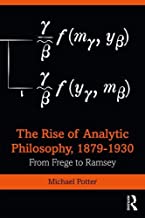
Michael Potter is Professor of Logic at the Faculty of Philosophy , University of Cambridge, and a Life Fellow at Fitzwilliam College. Previously at Balliol College, Oxford (D.Phil. in pure mathematics), he has held research fellowships at St Andrews, Harvard, and Stirling University (AHRC-funded). His work bridges historical and systematic philosophy, focusing on History of analytic philosophy (Frege, Russell, Wittgenstein, Ramsey) Philosophy of mathematics and logic Philosophy of religion Potter's research has produced major works like Set Theory and its Philosophy (OUP 2004) and The Rise of Analytic Philosophy (Routledge 2019), with significant contributions to understanding the Metaphysical underpinn't> of the Tractatus Neo-Fregean logicism Paradoxes in mathematical foundations He has supervised research on topics spanning dialetheism, predicative mathematics, and modal ontological arguments. Scientific awards include the AHRC Senior Research Fellowship (2004-2005). His recent publications analyze Transcendental arguments in Wittgenstein Sortition-based democratic theory Philosophical implications of Ramsey's infinite proofs via peer-reviewed chapters and journal articles.
Alexander Wendt is the Mershon Professor of International Security and Professor of Political Science at The Ohio State University. He holds a PhD from the University of Minnesota (1989) and has taught at Yale University, Dartmouth College, and the University of Chicago before joining OSU in 2004. His work is foundational to constructivism in international relations, notably through his 1992 article Anarchy is What States Make of It and his 1999 book Social Theory of International Politics , which earned the Best Book of the Decade Award (2006). He is widely recognized, including as the most influential IR scholar over 20 years (TRIP Survey, 2017) and recipient of the 2023 Johan Skytte Prize for advancing constructivism with Martha Finnemore. Wendt’s research bridges philosophy and social science, exploring quantum theory’s implications for decision-making and social science in works like Quantum Mind and Social Science (2015). His current projects include a book on UAP and human security, responding to the Pentagon’s 2021 confirmation of UAP as a threat. His career spans theoretical innovations in agency-structure interactions, norms, and sovereignty, with a focus on redefining international relations through interdisciplinary lenses. Awards include the prestigious Skytte Prize (2023) and sustained recognition for transforming constructivism into a leading paradigm. His work challenges classical social science frameworks, proposing quantum theory as a revolutionary baseline for understanding human cognition and societal systems.
Prof. Dr. Harald Lesch is a distinguished Professor of Theoretical Astrophysics at Ludwig Maximilian University of Munich and Lecturer in Natural Philosophy at the Munich School of Philosophy. Born on July 28, 1960 in Giessen, he completed his physics studies at Justus Liebig University of Giessen and Rheinische Friedrich-Wilhelms University of Bonn, earning his doctorate in 1987. After research positions at the Heidelberg-Königsstuhl State Observatory and University of Toronto, he received his habilitation at the University of Bonn in 1994. Lesch is renowned for making complex scientific concepts accessible to the public. His research interests span theoretical astrophysics, cosmology, gravitational waves, and the philosophical implications of scientific discoveries. He has authored numerous books exploring the relationship between science, philosophy, and everyday life, focusing particularly on how cosmic phenomena connect to human existence. His television career began in 1998 with 'Alpha Centauri' and 'The Physics of Albert Einstein' on BR-alpha. Since September 2008, he has presented ZDF's science magazine, which evolved from 'Abenteuer Forschung' to 'Leschs Kosmos' in 2014, and most recently to 'Terra X Harald Lesch' in 2024. In February 2016, he launched the YouTube channel 'Terra X Lesch & Co,' further expanding his science communication efforts. Patron of the Children's University Weimar since 2018 Presenter of 'The Big Questions' since 2023 Host of numerous documentary series including 'Fascination Universe' (2009-2023), 'Supercodes - The Secret Formulas of Nature' (2021/2022), and 'Das Rätsel Zeit' (2024) Lesch has received over 20 major awards recognizing his exceptional contributions to science communication, including the Communicator Prize (2005), multiple Deutscher Fernsehpreis awards (2018, 2020), and Germany's highest honor, the Verdienstorden der Bundesrepublik Deutschland (2023). His work bridges the gap between academic research and public understanding, making him one of Germany's most influential science communicators.
Sean Carroll serves as the Homewood Professor of Natural Philosophy at Johns Hopkins University and holds External Faculty status at the Santa Fe Institute. His research bridges cosmology, quantum mechanics, and philosophy, focusing on foundational questions about spacetime emergence, quantum interpretation, and complexity across cosmic scales. Carroll earned his Ph.D. from Harvard University in 1993. His academic trajectory reflects deep engagement with theoretical physics and philosophical inquiry, culminating in his current named professorship at Johns Hopkins. Carroll's research centers on the intersection of physics and philosophy, with significant contributions to quantum foundations, cosmology, and the nature of emergence. He is a leading proponent of the many-worlds interpretation of quantum mechanics and has pioneered work on the thermodynamic arrow of time, quantum decoherence, and the fine-tuning of initial cosmic conditions. His recent investigations explore discretized quantum systems, holographic principles in gravity, and the philosophical implications of quantum gravity. Analysis of his 2022-2025 publications reveals a pronounced shift toward computational approaches in quantum gravity, with increasing emphasis on finite-dimensional Hilbert spaces and GPU-accelerated modeling. His work consistently integrates quantum information theory with cosmological questions, particularly examining how spacetime geometry emerges from quantum entanglement and how complexity evolves in closed systems. Carroll's scientific recognition includes: National Science Foundation Fellowship NASA Fellowship Sloan Research Fellowship Packard Fellowship Fellow of the American Physical Society American Institute of Physics Award Fellow of the Royal Society Guggenheim Fellowship Fellow of the American Association for the Advancement of Science His research has been sustained through major fellowships from NSF, NASA, Sloan, and Packard foundations, enabling interdisciplinary collaborations across physics and philosophy. Carroll actively mentors graduate students at Johns Hopkins and contributes to public discourse through his popular science books (including the Biggest Ideas in the Universe series) and the weekly Mindscape podcast. As Fractal Faculty at the Santa Fe Institute, Carroll participates in cross-disciplinary research on complex systems, exploring how emergent phenomena arise from fundamental physical laws. His work bridges theoretical physics with broader questions about complexity in biological, cognitive, and social systems.
Alyssa Ney is a leading Professor of Philosophy at Ludwig-Maximilians University Munich (LMU), holding the Chair of Metaphysics within the Faculty of Philosophy, Philosophy of Science, and Religious Studies. Her work bridges metaphysics with the philosophy of physics and mind, focusing on the interpretation of quantum theories, fundamentality, and the unity of science. Education: PhD in Philosophy (Brown University), MS in Physics (UC Davis), BS in Physics and Philosophy (Tulane University) Previous appointments: UC Davis (2019-2024), University of Rochester (2005-2019) Ney’s research explores the metaphysical implications of quantum mechanics, particularly wave function realism and its challenges in grounding macro-objects. She investigates the relationship between quantum theory and classical conceptions of space, time, and causation, with a focus on locality and nonlocality. Her work also addresses physicalism, mental causation, and the methodology of metaphysical inquiry. Recent publications include analyses of density matrix realism (“ Is the Universe Fundamentally a Density Matrix? ”), many-worlds interpretations (“ Branching (Almost) Everywhere and All At Once ”), and the metaphysical status of spacetime in quantum gravity contexts. She was awarded the 2025 Patrick Suppes Prize for her book The World in the Wave Function and the 2024 Humboldt Foundation Bessel Award. Scientific Awards Patrick Suppes Prize (2025) Friedrich Wilhelm Bessel Research Award (2024) FQxI Essay Contest Second Prize (2018) Elsie Field Dupre Prize in Physics (1999) Ney actively mentors underrepresented scholars in philosophy of science and serves on editorial boards for Philosophy of Physics and British Journal for the Philosophy of Science . She has organized workshops connecting metaphysics with philosophy of physics and quantum interpretation.
Dr. Eiko Fried is an Associate Professor at Leiden University's Faculty of Social and Behavioural Sciences, where he works at the intersection of clinical psychology, psychiatry, epidemiology, methodology, and complexity science. His research focuses on improving psychological science through open science practices and innovative measurement approaches. PhD in clinical psychology, Free University of Berlin Postdoctoral training at KU Leuven and University of Amsterdam Promoted to Associate Professor at Leiden University in 2021 Key research areas include: Psychopathology measurement and classification Network analysis in mental health research Ecological momentary assessment (EMA) methodology Open science advocacy and implementation Dynamic systems modeling in psychology Transdiagnostic approaches to mental disorders Recent publications demonstrate expertise in: Symptom network analysis across disorders Improving depression measurement standards Transdiagnostic assessment protocols Mental health data integration challenges Psychological theory construction Methodological innovations in clinical research
Christian List is a Professor of Philosophy and Decision Theory at Ludwig Maximilian University of Munich (LMU Munich) and Co-Director of the Munich Center for Mathematical Philosophy (MCMP). He holds concurrent visiting professorships at the London School of Economics (LSE) and has held prestigious positions globally, including at Harvard Law School and Princeton University. His work bridges philosophy with social sciences, focusing on decision theory, free will, consciousness, and group agency. Education: D.Phil. in Politics (Oxford, 2001), M.Phil. and B.A. in Mathematics & Philosophy (Oxford). Key roles include Fellow of the British Academy and Member of the Bavarian Academy of Sciences. Research interests span metaphysical questions (free will, consciousness), formal methods in decision theory, and the philosophy of the social sciences. His monograph Why Free Will is Real (2019) is a landmark work. Recent articles explore AI ethics, probability aggregation, and consciousness theories. Scientific awards include the Joseph B. Gittler Award (2020) and the Social Choice and Welfare Prize (2010). He has edited major journals like Economics and Philosophy and contributed to the Stanford Encyclopedia of Philosophy . His advisory and editorial work spans multiple disciplines, reflecting his interdisciplinary approach to philosophy and social science.
Alex Moran is an Assistant Professor at Bilkent University starting Fall 2025. He holds a PhD from the University of Cambridge (2019), a BPhil from Oxford (2014), and a BA from University College London (2012). His research focuses on metaphysics, philosophy of mind, meta-ethics, and the history of philosophy. He has held fellowships including the Leverhulme Early Career Fellowship (Oxford, 2019-2022), IRC Research Fellowship (Trinity College Dublin, 2022-2023), and SNSF Research Fellowship (Université de Fribourg, 2023-2025). He is also a Research Associate at Stockholm University for his project on contingent grounding and the mind-body problem. Education: PhD, University of Cambridge (2019) BPhil, University of Oxford (2014) BA, University College London (2012) Research interests include metaphysical grounding, perceptual experience (naïve realism), physicalism, and early analytic philosophy. His current projects explore contingent grounding physicalism and the disclosive nature of sensory experience, with a book under contract with Oxford University Press. He also writes popular philosophy, including a trade book In Praise of Mischief (Reaktion Press). Awards include the Leverhulme Early Career Fellowship and recognition in the Philosophy of Memory Essay Prize (runner-up, 2022). His work appears in journals like Australasian Journal of Philosophy , Philosophical Studies , and Inquiry . Beyond academia, he publishes poetry and is working on a novel, while engaging in music and boxing.
Professor Richard Holton is a Fellow and Director of Studies in Philosophy at the University of Cambridge. His work spans moral philosophy, philosophy of mind, and epistemology, with a focus on agency, responsibility, and trust. His recent research examines mental effort, akrasia (weakness of will), and ethical decision-making in pandemic contexts. Publications highlight interdisciplinary connections between philosophy, psychology, and medical ethics. While his articles address causation, self-deception, and linguistic frameworks, no explicit scientific awards or student advisement records are documented in the provided materials.
Christian List is Professor of Philosophy and Decision Theory at Ludwig Maximilian University of Munich, where he serves as Co-Director of the Munich Center for Mathematical Philosophy (MCMP). Previously, he was Professor of Philosophy and Political Science at the London School of Economics until 2020. His work bridges philosophy, economics, and political science with a particular focus on individual and collective decision-making and the nature of intentional agency. Professor List's research spans multiple interconnected domains: theories of individual and collective choice (particularly social choice theory and judgment aggregation), free will and consciousness, the philosophy of mind and action, and the foundations of the social sciences. His work on group agency, developed in his influential book Group Agency with Philip Pettit, has reshaped debates about corporate entities and collective intentionality. His more recent work on free will, culminating in his book Why Free Will is Real , presents a scientifically grounded defense of free will against reductionist skepticism. His recent publications reveal a sophisticated integration of formal methods with deep philosophical questions, particularly regarding consciousness, probability aggregation, and the relationship between different levels of explanation. List's work consistently demonstrates how mathematical precision can illuminate fundamental philosophical problems while maintaining relevance to broader social and scientific contexts. Scientific Awards and Recognition: Elected Fellow of the British Academy (2014) Member of Academia Europaea (2023) Member of the Bavarian Academy of Sciences and Humanities (2022) Joseph B. Gittler Award from the American Philosophical Association (2020) Philip Leverhulme Prize in Philosophy (2007) 5th Social Choice and Welfare Prize (2010) List has supervised numerous PhD students and early-career researchers, many of whom have gone on to prominent positions in philosophy and related fields. His collaborative work with Franz Dietrich on judgment aggregation has been particularly influential. As Co-Director of the Munich Center for Mathematical Philosophy, he has secured substantial research funding and established MCMP as a leading international hub for formal and mathematical approaches to philosophical problems. Through the Munich Center for Mathematical Philosophy, List leads a vibrant research community that brings together philosophers, economists, political scientists, and mathematicians to tackle foundational questions using rigorous formal methods. The center hosts regular workshops, seminars, and visiting scholars, creating a dynamic intellectual environment that bridges disciplinary boundaries.
Zoe Drayson is an Associate Professor in the Department of Philosophy at the University of California, Davis, and serves as the Director of the Cognitive Science Program. She holds a Ph.D. in Philosophy from the University of Bristol (2011), an M.Sc. in Philosophy of Mental Disorder from King’s College London (2005), and an M.A. in Philosophy from the University of Edinburgh (2000) with First Class Honours. Research Focus: Drayson's work bridges philosophy and the mind-brain sciences, emphasizing the nature of psychological explanation and the relationship between scientific and philosophical approaches to the mind. Her research spans: Representation in cognitive science Perception-action interplay Metaphysics and epistemology of mental states Explanatory virtues in cognitive theories Challenging radical conclusions in cognitive science Recent Publications: Focus on predictive processing, extended cognition, implicit knowledge, and Bayesian modeling. Themes include theoretical integration, philosophical naturalism, and the limits of empirical reductionism. Scientific Awards: Center for Philosophy of Science Visiting Research Fellowship (2015) with $6,000 stipend University of Stirling Impact Fellowship (2013) with £10,000 research grant Arts and Humanities Research Council Doctoral Award (£45,000) (2007) AHRC Masters for Research Preparation Award (£13,000) (2004) Teaching: Drayson teaches courses in philosophy of mind, cognitive science, and evolution of mind at UC Davis, including graduate-level philosophy of psychology and the interdisciplinary Cognitive Science major curriculum.
Professor Robin Hendry is a faculty member at Durham University , serving as Co-Director of CHESS (Centre for Humanities Engaging with Science and Society) and actively engaged in research leave . His academic work bridges philosophy of science , history of chemistry , and metaphysical questions in physical sciences , with a focus on scientific realism , emergence , and chemical substances . Robin's research explores the ontological relationship between chemistry and physics , arguing for a realist view of chemical substances and strong emergence in chemical systems. He has authored influential works such as 'The Metaphysics of Chemistry' and co-edited The Routledge Handbook of Emergence (2019), contributing to debates on downward causation and scientific modeling . 2023 : Structure, essence and existence in chemistry 2021 : Elements and principles, Structure and emergence 2020 : Trusting Atoms 2019 : Emergence in Chemistry, Philosophy of Chemistry (Stanford Encyclopedia) Recent scientific awards include John Templeton Foundation funding for the Durham Emergence Project (2013-16) and AHRC grants for 'Structure in Chemistry' (2012). He has supervised PhD students in philosophy of science and served as Director of Research in the Department of Philosophy.
Barbara Drossel is a Full Professor at the Institute of Solid State Physics within the Faculty of Physics at the Technical University of Darmstadt, where she has been conducting research since February 2002. Her work bridges theoretical physics, complex systems theory, and theoretical ecology, focusing on interdisciplinary approaches to understanding emergent phenomena in natural systems. She leads the AG Drossel research group that investigates the theoretical foundations of complex networks, ecological communities, and quantum systems. Professor Drossel's research spans multiple domains with emphasis on complex systems theory, where she has made significant contributions to understanding random Boolean networks, food web modeling, and the physics of ecological communities. Her work demonstrates how simple rules can lead to complex emergent behavior across different scales, from quantum systems to ecological networks. She investigates how top-down causation operates in complex systems and explores the relationship between microscopic dynamics and macroscopic patterns in diverse contexts. Analysis of her recent publications reveals a consistent focus on theoretical frameworks that connect physics with ecology. Her work shows increasing integration of quantum mechanics with ecological modeling, particularly in understanding emergence and time evolution in complex systems. She frequently employs network theory to analyze ecological communities and has developed innovative approaches to studying species interactions, mutualistic networks, and spatial dynamics in meta-communities. Minerva Fellowship Heisenberg Fellowship DFG Fellowship for research at MIT Professor Drossel has supervised numerous doctoral students whose work spans theoretical ecology, complex systems, and statistical physics. Her research group has secured funding for projects examining the stability of ecological networks, quantum decoherence, and the mathematical foundations of complex systems. She maintains active collaborations with researchers across Europe and has contributed to major theoretical advances in understanding how complexity emerges from simple interactions in diverse systems. The AG Drossel research group operates at the intersection of physics and theoretical biology, maintaining strong connections with both the physics and biology departments at TU Darmstadt. The group combines mathematical rigor with biological relevance, developing models that capture essential features of complex natural systems while remaining analytically tractable. Their work has influenced both theoretical physics and ecological theory, demonstrating the power of interdisciplinary approaches to complex systems.
Stéphanie Ruphy is a Professor of Philosophy of Science at the École Normale Supérieure - PSL University in Paris, where she conducts research at the intersection of philosophy, science policy, and scientific integrity. She currently serves as Director of the French Office for Research Integrity (OFIS), demonstrating her leadership in promoting ethical research practices across France. Her educational background is uniquely interdisciplinary, holding a doctorate in astrophysics from Sorbonne University and a PhD in philosophy from Columbia University in New York. This dual expertise informs her distinctive approach to philosophical questions about science. Ruphy's research centers on scientific pluralism, scientific integrity, and the relationship between science and democracy. She has developed the concept of "foliated pluralism," which challenges traditional metaphysical interpretations of scientific diversity. Her work examines how citizen participation can enhance scientific objectivity and how research governance structures affect scientific progress. She explores the philosophical implications of computer simulations in scientific practice and investigates questions about natural kinds across different scientific domains. Her publications reveal a consistent focus on the philosophical foundations of scientific practice, with particular attention to the relationship between scientific methods and societal values. Ruphy has made significant contributions to understanding how scientific pluralism relates to metaphysical questions, how citizen science affects scientific objectivity, and how research integrity frameworks can be strengthened. Her work bridges theoretical philosophy with practical concerns about research governance. Among her notable honors: Member of Academia Europaea (2018) Member of European Academy of Sciences (EURASC) (2017) Appointed to French Council for Scientific Integrity (CoFIS) (2017) As an educator at the École Normale Supérieure, Ruphy mentors future researchers in understanding their responsibilities within knowledge societies. She has observed growing student interest in "involved" research connected to societal concerns. Her work on a research integrity oath for PhD students in France demonstrates her commitment to embedding ethical considerations in research training. She actively engages with policy questions about balancing scientific freedom with societal responsibilities. Ruphy leads significant initiatives in research integrity through her directorship of OFIS, where she organizes conferences and develops frameworks for maintaining trust in scientific practices. Her work connects academic philosophy with practical policy concerns, creating bridges between theoretical considerations and real-world research governance.
ZhaoHong Han is a Professor of Language and Education at Teachers College, Columbia University, and Director of the Center for International Foreign Language Teacher Education (CIFLTE). Her research focuses on second language acquisition (SLA), systems thinking, and the integration of AI into language education. She holds a Ph.D. in Applied Linguistics from Birkbeck College, University of London, and has authored over 100 scholarly publications. Key Affiliations: Teachers College, Columbia University Expertise: SLA theory, language teacher education, crosslinguistic influence, and AI applications Research Interests Dr. Han explores foundational SLA concepts like fossilization, ultimate attainment, and the critical period hypothesis through complex dynamic systems theory. She investigates how AI can transform language learning, emphasizing ethical use of generative models like ChatGPT. Her work bridges theory and practice through teacher training and classroom-based research in diverse contexts like Tunisian EFL education. Publications Her recent work addresses AI's role in SLA (2025), social physics in language development (2024), and critical age-attainment relationships (2023). She frequently critiques methodological limitations in SLA research while advocating for interdisciplinary approaches. Center for International Foreign Language Teacher Education As director, she leads global initiatives to improve language teacher training through evidence-based practices and cross-cultural collaboration.