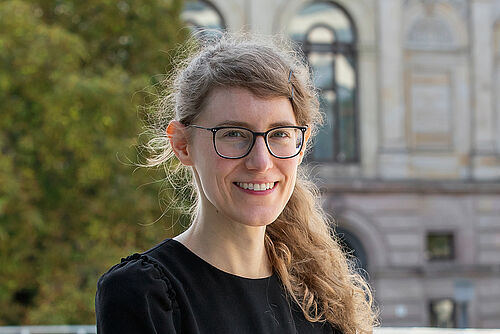
Carmen Gräßle serves as Junior Professor for 'Flows and Dynamics' at the Institute for Partial Differential Equations within the Carl-Friedrich-Gauß-Faculty at Technical University of Braunschweig since October 2021. Her academic journey includes postdoctoral research at the Max Planck Institute for Dynamics of Complex Technical Systems in Magdeburg (2019-2021) and research assistant position at the University of Hamburg (2015-2019). Her research focuses on simulation and control of flows and dynamical systems , with specialization in model order reduction techniques including proper orthogonal decomposition and reduced basis methods. Additional research areas encompass data assimilation, adaptivity concepts, and phase field systems. She leads the DFG Research Unit 3022 project on 'Automated data-driven damage detection' (project number 418311604). Professor Gräßle teaches 'Numerical Methods for Ordinary and Partial Differential Equations (CSE)' for the summer term 2025. Her research team includes Dr. Saddam N Y Hijazi and Jannis Marquardt. Her work bridges theoretical mathematics with practical engineering applications, particularly in fluid dynamics and system control.
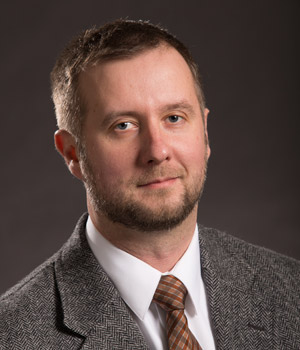
Dr. Kamesh Subbarao is a Professor and director of the Aerospace Systems Laboratory (ASL) in the Mechanical and Aerospace Engineering Department at The University of Texas at Arlington (UTA). He has been a faculty member at UTA since 2003, progressing from Assistant Professor to Associate Professor and finally to Professor in 2019. His academic journey began with a PhD from Texas A&M University in 2001, followed by work at The MathWorks Inc. before joining UTA. Dr. Subbarao's educational background includes a PhD in Aerospace Engineering from Texas A&M University (2001), an MS in Aerospace Engineering from the Indian Institute of Technology (1995), and a BS in Aerospace Engineering from the Indian Institute of Technology (1993). His research interests span flight dynamics and control, unmanned vehicle systems, morphing wing aircraft structures, air traffic management, reduced order modeling of fluid-structure interactions, cooperative control of large scale interconnected systems subject to communication delays, multi-sensor fusion applied to aircraft guidance and spacecraft navigation, bipedal locomotion, and uncertainty characterization in orbital mechanics. His work focuses on nonlinear and adaptive control, linear and nonlinear filtering/estimation approaches, and cooperation and coordination for multiple unmanned vehicles subject to measurement uncertainties and distributed time delays. Dr. Subbarao's recent publications demonstrate strong focus on uncertainty quantification, cooperative control of multiple vehicles, UAV swarms, lunar exploration, and aircraft safety. His research shows a consistent trajectory toward more complex multi-agent systems, incorporating machine learning techniques for improved prediction and control, with applications spanning both terrestrial and space environments. President's Excellence in Teaching Award (2021) Lockheed Martin Aeronautics Company Excellence in Teaching Award (2016) AIAA Foundation Award for "Model Reference Adaptive Control" (2001) Best Paper of the Space Flight Mechanics Conference, American Astronautical Society (2021) Multiple Outstanding Reviewer awards from AIAA Journal of Guidance, Control, and Dynamics Dr. Subbarao has been actively involved in advising students, as evidenced by his nomination for the Outstanding Advisor Award in 2018-19. His research has been generously funded by major organizations including DARPA, NSF, AFRL, ONR, NASA, Lockheed Martin, Whirlpool Inc., Nextgen Aeronautics, and Hypercomp Inc. His laboratory work, particularly through the Aerospace Systems Laboratory, has produced significant contributions to the field of aerospace engineering and control systems. He is a Fellow of the Royal Aeronautical Society (FRAeS), an Associate Fellow of AIAA, and Senior Member of IEEE, ASME, and the American Astronautics Society (AAS), reflecting his standing in the academic and professional community.
Ilya Avdeev is a Professor of Mechanical Engineering at the University of Wisconsin-Milwaukee (UWM) and holds multiple leadership roles including Director of the Lubar Entrepreneurship Center (LEC), Co-Founder/Executive Director of the UWM Student Startup Challenge, and Director of the Advanced Manufacturing and Design Laboratory. He is on sabbatical during the Spring 2025 semester. His research focuses on real-time modeling (Digital Twin), energy storage systems, and design thinking in engineering education. Education: PhD in Mechanical Engineering from the University of Pittsburgh (2003), MS and BS in Mechanical Engineering from St. Petersburg State Technical University, Russia (1999 and 1997). Research interests span advanced manufacturing, battery safety, and interdisciplinary education innovation. His work integrates computational modeling with practical applications in energy systems and biomedical devices. Over 20 years of academic and industry collaboration have resulted in impactful contributions to both technical and entrepreneurial ecosystems. Notable initiatives include the Milwaukee Regional Energy Education Initiative (as PI) and the UWM Student Startup Challenge, which fosters student entrepreneurship. His publications address topics like battery impact analysis, MEMS simulation, and educational pedagogy.
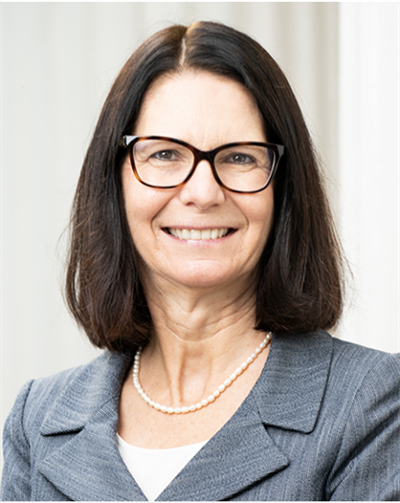
Anastasia Smirnova is an Associate Professor at the Department of English Language and Literature, San Francisco State University. She holds a Ph.D. in Linguistics from Ohio State University, with postdoctoral research at Tufts University and a Visiting Research Assistant Professor position at the University of Michigan. Her research focuses on syntax, semantics, and sociolinguistics. Key areas include argument structure, word order, temporal/modal semantics, and the intersection of language with social processes such as language ideology and stereotyping. She employs experimental and corpus-based methods to explore how language reflects psychological and social dynamics. Her publications span theoretical linguistics, computational linguistics, and health communication. Recent work examines linguistic simplification in AI systems, evidentiality in Slavic languages, and health information accessibility on university websites. She has presented at leading institutions like MIT, Harvard, and the University of Chicago. Smirnova’s interdisciplinary approach bridges formal linguistics with applied domains such as healthcare communication and human-computer interaction. Her research emphasizes both theoretical innovation and real-world societal impact.
Nadine Aubry is Professor and Senior Advisor to the Dean of Engineering at Tufts University School of Engineering, Department of Mechanical Engineering. An internationally recognized scholar, she previously served as Provost and Senior Vice President at Tufts (2019-2021), Dean of Engineering at Northeastern University (2012-2019), and Department Head at Carnegie Mellon University. Her leadership spans multiple institutions with global impact. Education: Ph.D. in Mechanical and Aerospace Engineering, Cornell University (1987) M.S. in Mechanical Engineering, Université Scientifique et Médicale de Grenoble B.S., Grenoble - Institut National Polytechnique Research Focus: Dr. Aubry pioneers computational approaches in fluid dynamics, specializing in turbulence modeling, microfluidics, and electrohydrodynamics. Her work integrates dynamical systems theory with nanoparticle manipulation and biofluid applications. Recent research emphasizes machine learning-enhanced methods for flow prediction, convective heat transfer optimization, and aerodynamic design using physics-informed neural networks. Publication Trends: Recent articles demonstrate strong emphasis on machine learning applications in fluid mechanics and thermal systems. Dominant themes include physics-informed neural networks for flow prediction, deep reinforcement learning for active flow control, convolutional networks for aerodynamic optimization, and hybrid AI methods for multiphysics problems across aerospace, electronics cooling, and biomedical domains. Awards & Honors: Elected Member: U.S. National Academy of Engineering Fellow: American Academy of Arts & Sciences, American Physical Society, ASME, AAAS, AIAA G.I. Taylor Medal for Fluid Mechanics Research National Academy of Inventors Fellow C.C. Mei Distinguished Lecturer Grants & Leadership: Secured USDA funding for aging research (2014-2019). Chaired International Union of Theoretical and Applied Mechanics assemblies globally. Serves on National Academy of Engineering prize committees and governance boards.
Dr. Yi Wang is Professor of Mechanical Engineering at University of South Carolina's College of Engineering and Computing. He directs the Integrated Multiphysics & Systems Engineering Laboratory (iMSEL) researching computational and data-enabled science for multiphysics systems including microfluidics, additive manufacturing, and autonomous systems. Research develops physics-based adaptive modeling, reduced order techniques, and data-driven surrogate models for complex engineering systems. Applications include microfluidic device optimization, aeroelastic reduced order models, robotic path planning, and structural health monitoring. Honors include Breakthrough Stars Award, Research Progress Award, and multiple Dean's Excellence Awards. He serves as Associate Editor for Discover Applied Sciences and editorial board member for multiple journals. Current NSF and DoD-funded projects focus on aeroservoelastic reduced order modeling and autonomous systems perception. Research group includes 5 postdoctoral fellows and 12 graduate students working on multidisciplinary computational projects. Teaching includes Flight Dynamics and Control, Engineering Analysis, and senior design courses.
Professor Pedro Diez is a faculty member at the Universitat Politècnica de Catalunya (UPC), specializing in computational mechanics and reduced-order modeling. He holds a BSc and PhD in Civil Engineering from UPC (1989 and 1996, respectively). His research focuses on error estimation, extended finite element methods (X-FEM), and applications in automotive and geophysical systems. He co-organizes the International Conference in Adaptive Modeling and Simulation since 2003, with the next edition in 2023. Key research areas include: Reduced Order Models (POD/PGD) Goal-oriented adaptivity in numerical simulations Geophysical inversion and thermal modeling Automotive structural dynamics and NVH analysis Sustainable materials for civil engineering His work bridges computational methods with real-world applications, such as earth dam monitoring, hydraulic fracturing modeling, and biomechanical simulations. Recent publications emphasize real-time risk analysis, parametric solutions for nonlinear systems, and inverse problem techniques in geophysics. His contributions to numerical methods have advanced high-fidelity, low-cost simulations across engineering disciplines. Publications span over 30 years, with a focus on: Efficient parametric solutions for transient coupled systems Nonintrusive reduced basis methods Thermo-hydro-mechanical modeling of geological media Advances in error estimation and model order reduction underpin much of his work, enabling applications in structural health monitoring, crashworthiness analysis, and geophysical exploration.
Dr. Gerrit Welper is Assistant Professor of Mathematics at the University of Central Florida's College of Sciences, specializing in approximation theory and neural network optimization. His research bridges computational mathematics and machine learning, particularly analyzing gradient descent dynamics in neural networks and developing efficient reduced-order models for transport equations. Recent work establishes approximation guarantees for gradient-flow trained shallow networks, develops neural representations of entropy solutions, and creates transformed snapshot interpolation techniques for parametric systems. He has advanced adaptive Petrov-Galerkin methods for hyperbolic PDEs and developed rigorous performance bounds for reduced-order models. Dr. Welper's publications demonstrate increasing focus on physics-informed machine learning architectures and their mathematical foundations, with recent innovations in sparse backpropagation and low-rank neural representations.
Volkan Patoglu is a Full Professor at Sabancı University 's Mechatronics Program within the Faculty of Engineering and Natural Sciences . He co-founded and serves as Chief Scientific Officer at Interact Medical Technologies Inc. , while maintaining academic roles since 2005. His research spans two laboratories: the Human-Machine Interaction Laboratory and Cognitive Robotics Laboratory . B.Sc., Middle East Technical University (1999) M.Sc., University of Michigan in Mechanical Engineering (2000) and Electrical Engineering (2002) Ph.D., University of Michigan (2005) Research Focus: Physical human-robot interaction (pHRI) with emphasis on: Force-feedback exoskeletons for rehabilitation and augmentation Hybrid dynamical systems control Haptic interface design and stability analysis Cognitive robotics with symbolic reasoning integration Medical robotics applications Publication Trends: Recent works focus on series elastic actuation optimization, hybrid planning algorithms, and advanced haptic rendering techniques. His research bridges control theory with practical applications in rehabilitation robotics and human augmentation systems. Honors: TÜBİTAK Career Award (2008) Science Academy Young Scientist Award (2015) Multiple IEEE Associate Editor Awards Best Application Paper Awards (2020, 2013) NATO Science Fellowship (1999) Key Contributions: Developed original methods for hybrid dynamical system control, designed multiple rehabilitation exoskeletons (AssistOn series), and pioneered integration of answer set programming with robotic planning. Serves as Associate Editor for IEEE Robotics and Automation Letters and IEEE Transactions on Neural Systems & Rehabilitation Engineering .
Dr. Ozgur Tumuklu is an Assistant Professor in the Department of Mechanical, Aerospace and Nuclear Engineering at Rensselaer Polytechnic Institute (RPI). His research focuses on computational physics, rarefied non-equilibrium flows, and stability analysis of hypersonic reacting flows. He holds a Ph.D. in Aerospace Engineering from the University of Illinois at Urbana-Champaign (2018), and prior roles include postdoctoral research with NASA's Artemis project at the Jet Propulsion Laboratory and software development at the University of Arizona. Education : Ph.D., Aerospace Engineering, University of Illinois at Urbana-Champaign (2018) M.S., Aerospace Engineering, Middle East Technical University (2013) B.S., Aerospace Engineering & Physics, Middle East Technical University (2010/2009) Research : Dr. Tumuklu's work integrates high-performance computing, open-source software development, and data-driven techniques to study hypersonic flows across continuum-to-rarefied regimes. Key areas include shock-boundary layer interactions, nonequilibrium aero-optics, and adaptive combustion control in ramjets. His lab (Havalab) develops tools like SU2-NEMO for multiphysics simulations. Publications : His recent work emphasizes hypersonic instability dynamics, magnetohydrodynamic effects, and hybrid particle-continuum modeling. Themes include predictive signature analysis, wake turbulence, and flow control strategies in extreme regimes. Advising & Grants : While specific grants are not listed, his research aligns with NASA-funded initiatives and hypersonic propulsion projects. He mentors students in advanced CFD and plasma-kinetic simulations. Labs/Teams : Director of Havalab, a research group advancing computational tools for hypersonic aerothermodynamics and rarefied flows.
Dr. Fabian Faulstich is an Assistant Professor at the Department of Mathematical Sciences of Rensselaer Polytechnic Institute (RPI), holding the Eliza Ricketts Foundation Career Development Chair. His expertise bridges quantum chemistry, applied mathematics, and numerical methods. He earned a B.Sc. in Physics and Mathematics, and an M.Sc. in Mathematics from Technical University of Berlin, followed by a Ph.D. in Computational Chemistry and Applied Mathematics from the University of Oslo. After a postdoctoral fellowship at UC Berkeley, he joined RPI in 2023. His research focuses on advancing coupled-cluster theory, density matrix embedding theory, and algebraic geometry applications in quantum systems. Key areas include numerical methods for electronic structure calculations, error estimation in quantum approaches, and geometric formulations of quantum phenomena. He explores interdisciplinary topics such as twisted bilayer graphene modeling and discontinuous Galerkin methods for quantum simulations. Education: B.Sc. Physics/Mathematics (TU Berlin, 2015-2016), M.Sc. Mathematics (TU Berlin, 2017), Ph.D. Computational Chemistry (University of Oslo, 2020) Notable awards include the Eliza Ricketts Foundation Chair. His work emphasizes mathematical rigor and computational innovation in quantum chemistry, with contributions to both theoretical frameworks and numerical implementations. His research group at RPI develops novel algorithms for complex chemical systems, leveraging algebraic geometry and advanced optimization techniques. Current projects include homotopy continuation methods for coupled-cluster solutions and error diagnostics for single-reference approaches. He collaborates on interdisciplinary initiatives involving condensed matter physics and materials science.
Nikhil Muralidhar is an Assistant Professor in Computer Science at Stevens Institute of Technology, leading the ScAI (Scientific Artificial Intelligence) Lab. His research focuses on Knowledge-Guided Machine Learning (KGML), integrating scientific domain knowledge to enhance model generalization in areas like computational fluid dynamics and anomaly detection. Honors: First place in COVID-19 Symptom Data Challenge (2020) NSF Urban Computing Fellow (2016-2018) Research Projects: Includes CAAD-EF for anomaly detection in wireless networks and PhyFlow for 3D fluid flow modeling.
Dr. Yifan Wang is an Assistant Professor in the Department of Mathematics and Statistics at Texas Tech University. His research focuses on computational fluid dynamics, fluid-structure interaction, artificial intelligence, machine learning, and numerical solutions of PDEs, with applications in biomedical engineering and high-performance computing. His research interests include developing numerical methods such as Galerkin finite elements, spectral element methods, discontinuous Galerkin methods, and smoothed particle hydrodynamics to solve complex fluid-structure interaction problems. Specific applications include cardiovascular modeling, blood flow analysis in stented arteries, microfluidic systems for cancer detection, and bioartificial organ design. Wang's publications demonstrate a strong focus on multiscale modeling in biomedical contexts, including computational studies of drug effects in carcinogenesis, stents, and tumor cell dynamics. Recent work explores machine learning applications in biological data regression, medical diagnostics, and predictive modeling of disease outbreaks. He contributes to cardiovascular engineering through computational analysis of stent geometries in tortuous arteries and hemodynamic modeling of stenotic vessels, with emerging work in geothermal energy systems and multiphysics modeling techniques.
Muhammad Mohebujjaman is an Assistant Professor at the University of Alabama at Birmingham (UAB) . His research focuses on Uncertainty Quantification of stochastic PDEs (including Navier-Stokes and Magnetohydrodynamics equations), Reduced Order Modeling , Population Dynamics , and Applied Analysis , with applications to multiphysics problems and fast algorithms. He teaches courses in Numerical Analysis , Scientific Computing , and Partial Differential Equations . Education : B.S. in Mathematics, University of Dhaka M.S. in Applied Mathematics, University of Dhaka M.S. and Ph.D. in Applied and Computational Mathematics, Clemson University He previously held postdoctoral positions at Virginia Tech (joint appointment in Mathematics and Biomedical Engineering & Mechanics) and MIT's Plasma Science and Fusion Center, where he contributed to data-driven reduced order modeling and Krylov solvers for fusion reactor simulations. His office hours are Monday/Wednesday 11:10 am–12:10 pm or by appointment.
Dr. Ying Sun is the Herman Schneider Professor and Director of Research and Strategic Initiatives at the University of Cincinnati's College of Engineering and Applied Science (CEAS). She previously served as Head of the Mechanical & Materials Engineering Department, leading initiatives such as the Industrial & Systems Engineering programs and faculty recruitment. Her research focuses on multiphase flows, machine learning, additive manufacturing, and thermal systems. She holds awards including the NSF CAREER Award and is a Fellow of APS and ASME. Education: Ph.D., Mechanical Engineering, University of Iowa, 2006 M.S., Mechanical Engineering, University of Iowa, 2001 B.Eng., Thermal Engineering, Tsinghua University, 1998 Research Interests: Multiphase transport phenomena, machine learning applications in thermal systems, additive manufacturing, and sustainable energy solutions. Her work bridges fundamental science and engineering applications, such as decarbonization and thermal management. She leads the Complex Fluids & Multiphase Transport Laboratory and co-chairs the Gordon Conference on Micro and Nanoscale Phase Change Phenomena. Grants & Funding: Over $8M in grants from NSF, NASA, and others, including projects on 3D-printed titanium radiators, acoustic signatures in boiling, and decarbonization REU programs. She also leads the NSF-funded REALIZE-2050 REU Site. Awards: NSF CAREER Award AFOSR Summer Faculty Fellowship CNRS Visiting Professorship ASME/APS Fellowships Labs/Teams: Directs the Complex Fluids & Multiphase Transport Lab, focusing on interfacial phenomena, energy systems, and data science. Collaborates internationally with institutions like Princeton University and Tsinghua University.