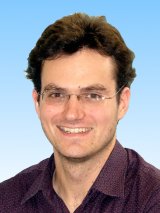
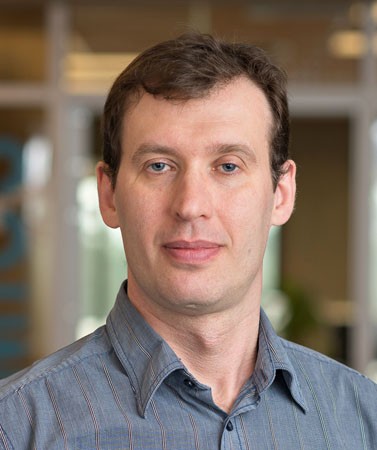
Grégoire Ithier is a Senior Lecturer in Physics at the Department of Physics, Royal Holloway, University of London. His research focuses on quantum engineering, decoherence, thermalization, mesoscopic physics, and random matrix theory. He leads the 'TypDyn' project exploring typical dynamics of embedded quantum systems, and co-leads the Leverhulme Trust-funded 'Generation and detection of quantum signals' initiative. His work bridges theoretical and experimental domains, including superconducting circuits and cryogenic microwave engineering. Ithier's research tools include advanced numerical methods (e.g., exact diagonalization) and statistical techniques (e.g., random matrix theory). Key Projects: TypDyn: Studies typical dynamics in embedded quantum systems (2015–present) QSimFP: Quantum simulators for fundamental physics (2020–2024) A new statistical theory of disordered quantum systems (2020–2024) His experimental work involves superconducting qubits, Josephson devices, and nano-superfluidic cavities. Grants include STFC and Leverhulme Trust funding. Recent publications address quantum thermalization, many-body systems, and random Hamiltonian analysis.
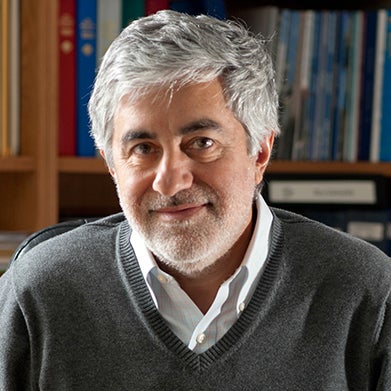
David Sherman is an Associate Professor in the Department of Mathematics at the University of Virginia, part of the College of Arts & Sciences. His research focuses on functional analysis and operator algebras, with specialized interests in noncommutative L p spaces, operator theory within von Neumann algebras, model theory of operator algebras, and noncommutative convexity. He has contributed to foundational studies of noncommutative L p spaces, isometries between operator algebras, and applications of logic to operator algebras. Recent teaching includes advanced calculus, linear algebra, and operator theory courses. His work bridges pure mathematics with interdisciplinary themes, such as applying set-theoretic methods to algebraic structures and exploring connections between operator algebras and logic. Sherman has co-authored significant papers on topics like support expansion C*-algebras and quantization of coarse spaces, reflecting his expertise in modern operator theory. His research outputs emphasize structural properties of operator algebras, with notable contributions to the classification of II₁ factors and model-theoretic approaches to noncommutative systems. While no specific awards are listed, his extensive publication record and teaching roles highlight his academic impact. Sherman maintains administrative involvement in undergraduate mathematics programs and graduate initiatives at UVA.
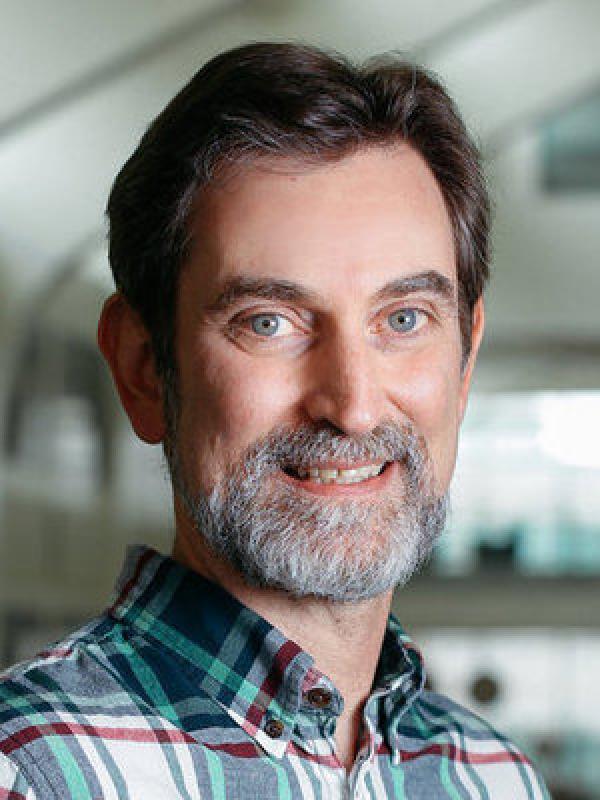
Professor David Armstrong serves as Professor of Materials Science and Engineering at the University of Oxford and Fellow and Tutor at St Edmund Hall. His work focuses on developing materials for extreme environments including nuclear fusion reactors, aerospace systems, and energy storage applications through microstructural control and advanced mechanical characterization. His educational background includes a first degree in Materials Science from St Anne’s College, Oxford and a DPhil from Corpus Christi, Oxford investigating micromechanical properties in copper and nickel alloys. This foundational work evolved into radiation damage studies during his Culham Centre for Fusion Energy Junior Research Fellowship. Armstrong's research centers on mechanical behavior of materials under extreme conditions—high temperatures (jet engines, reactors), radiation exposure (nuclear facilities, space), and high stresses (batteries, geological systems). He develops novel testing methodologies for nanoscale mechanical properties up to 1300 K, collaborating with Rolls Royce, UKAEA, ESA, and Berkeley on fusion materials, aerospace components, and battery technologies. His work bridges fundamental micromechanics with industrial applications in energy systems. Analysis of his 2023-2025 publications reveals dominant themes in nuclear fusion materials (tungsten, ODS steels), lithium battery interfaces, and ceramic composites for extreme environments. Methodologically, his group pioneers correlative microscopy combining nanoindentation, TEM, and atom probe tomography to study irradiation effects, high-temperature deformation, and interfacial degradation across length scales. His scientific recognition includes: Culham Centre for Fusion Energy Junior Research fellowship (2009) Royal Academy of Engineering Research Fellowship (2013) Institute of Materials Minerals and Mining Grunfeld Memorial Award & Medal (2015) As an educator, Armstrong teaches core mechanical properties courses across undergraduate years and leads Fusion CDT modules on nuclear materials. He supervises numerous doctoral students while serving on the EPSRC Fusion Advisory Board and CDT management board. Current grants support micro-engineering of alloys for nuclear environments and lithium-metal battery development through industry partnerships with Rolls Royce and MicroMaterials. His research group operates advanced micromechanical testing facilities for high-temperature and irradiated materials, collaborating with UKAEA’s Culham Centre and European fusion laboratories on plasma-facing component development. Future work targets solid-state battery interfaces and radiation-resistant high-entropy alloys for next-generation fusion reactors.
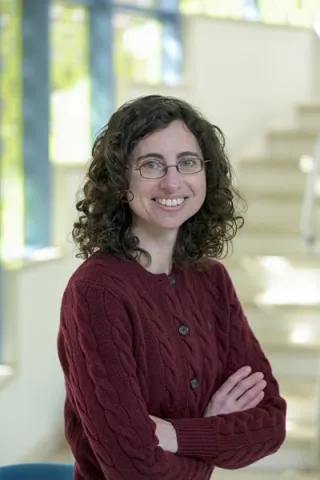
Prof. Benjamin Stamm is a Professor of Numerical Mathematics at the University of Stuttgart, leading the Chair of Numerical Mathematics for High Performance Computing within Faculty 08. He holds a Ph.D. and master's degree in mathematics from École Polytechnique Fédérale de Lausanne (EPFL) and has previously worked at RWTH Aachen University, Sorbonne Université UPMC Paris 6, UC Berkeley, and Brown University. His research focuses on numerical analysis, scientific computing, and simulations, particularly efficient discretizations for PDEs, eigenvalue problems, error certification, reduced basis methods, and HPC implementations. He develops scalable numerical methods for problems in computational chemistry and physics, emphasizing accuracy, efficiency, and interdisciplinary collaboration with chemists, physicists, and materials scientists. Prof. Stamm’s work includes contributions to domain decomposition methods, polarization energy calculations, and software development like the ddX library. His publications span topics such as model order reduction, quantum simulations, and molecular dynamics. Collaborations and software tools underscore his commitment to bridging computational methods with real-world scientific challenges.
Martin Fergie is a Lecturer in Healthcare Sciences at the University of Manchester's Division of Informatics, Imaging & Data Sciences. His research focuses on applying machine learning and computer vision to medical imaging for disease outcome prediction, including breast cancer risk assessment via mammograms and multiplex immunofluorescence imaging for cancer outcomes. He holds a PhD in machine learning from the University of Manchester (2008–2012), followed by roles as CTO at DigitalBridge and CEO at Spotlight Pathology Ltd. He is actively involved in the InnovateUK ICURe program to reduce pathologists' workload through AI in digital pathology. Education: PhD in Machine Learning (University of Manchester, 2013), MSc/Molecular Pathology Teaching Role. Research interests include predictive modeling for disease outcomes, AI-driven pathology tools, and imaging biomarker development. Key projects include breast cancer risk prediction from mammograms and histology-based clinical outcome modeling for follicular lymphoma and head/neck cancers. Recent articles highlight advancements in AI for breast density assessment, extracellular matrix phenotyping, and H&E-to-multiplex immunohistochemistry translation. His work contributes to UN Sustainable Development Goals related to health and innovation. Awarded the 2023 Teaching Excellence Award (Highly Commended) for contributions to medical education. Collaborates on projects like the 'Developing targeted strategies for precision breast cancer prevention' initiative. External roles include Non-executive Director at VREvo Ltd and CEO at Spotlight Pathology Ltd. Associated with research platforms like Digital Futures and the Lydia Becker Institute.
Gustavo Scuseria is the Robert A. Welch Professor of Chemistry, Professor of Physics and Astronomy, and Professor of Materials Science and NanoEngineering at Rice University . He is a leading figure in computational quantum chemistry , with seminal contributions to electronic structure theory , coupled cluster methods , and density functional theory (DFT) functionals like HSE and PBE0. His research spans strong correlation , symmetry-projection techniques , and quantum computing applications . Education: PhD in Physics (1983) from University of Buenos Aires Research: Pioneered linear scaling quantum methods , developed HSE functional for semiconductor band gaps, and advanced symmetry-projected wave function approaches Awards: Feynman Prize in Nanotechnology, Humboldt Research Award, Guggenheim Fellowship, and multiple Fellowships from ACS, APS, and RSC Software Contributions: Key developer of Gaussian suite and TURBOMOLE implementations His recent publications focus on symmetry-projected methods for spin systems, dualities in electron correlation , and quantum computing applications . Collaborations with institutions like Los Alamos National Laboratory and Max-Planck Institute have shaped his interdisciplinary approach. Scuseria's work remains foundational for quantum chemistry software and materials science research.
Sonia Coriani is a Professor in Physical Chemistry at DTU Chemistry, Technical University of Denmark, since 2017. She leads a research group focused on theoretical chemistry and computational spectroscopy. Her academic journey includes a PhD from Aarhus University (2000), a permanent research scientist position at the University of Trieste (1999-2014), and associate professorship there since 2014. She held an adjunct associate professor position at the Centre for Theoretical and Computational Chemistry in Oslo (2007-2011) and was a Marie Curie IEF fellow (2010-2012) and AIAS-COFUND senior fellow (2015-2016). Education: Chemistry, University of Modena (1993) PhD in Theoretical Chemistry, Aarhus University (2000) Her research centers on developing quantum-chemical methodologies for static and dynamic molecular properties, particularly for systems with high dimensionality, complex environments, or novel spectroscopic phenomena. Key areas include non-linear optical experiments, magnetic circular dichroism, X-ray spectroscopies, and quantum computing applications in chemistry. Her recent publications highlight advancements in quantum linear response theory, polarizable embedding environments, X-ray absorption in water, and quantum algorithms for molecular properties. Collaborative work spans interdisciplinary projects with experimentalists, covering gas-phase molecules to biomolecular systems. Scientific Awards: Marie Curie IEF fellowship AIAS-COFUND senior fellowship Her work addresses challenges in ultrafast dynamics, photoionization, and the intersection of chemistry with physics and computational science, emphasizing accuracy and novel experimental guidance.
Richard J. Furnstahl is a Professor in the Department of Physics at The Ohio State University. His research focuses on effective field theory (EFT), renormalization group methods, computational nuclear physics, and low-energy nuclear theory. He holds prestigious fellowships from the American Physical Society (2001) and the American Association for the Advancement of Science (2007), and was recognized as an APS Outstanding Referee (2009). He also received the OSU Alumni Award for Distinguished Teaching (1997). Education: B.S. in Physics from MIT (1981), Ph.D. in Physics from Stanford University (1986). Research emphasizes applying EFT and Bayesian methods to nuclear systems, including neutron star equations of state, nucleon-nucleon scattering, and uncertainty quantification. His work bridges computational techniques like eigenvector continuation and reduced-order emulators with foundational theories such as chiral EFT. Recent efforts focus on interpolating between small- and large-coupling regimes and quantifying correlated truncation errors in dense nuclear matter models. Key contributions include developing the Density Matrix Expansion approach for energy density functionals and advancing the FRIB Theory Alliance for nuclear dynamics studies. His emulators reduce computational costs while maintaining accuracy in scattering problems. He also explores the intersection of machine learning and nuclear theory through Bayesian additive regression trees and neural network applications. He leads projects on nuclear symmetry energy, proton Compton scattering experiments, and the NUCLEI initiative for ab initio nuclear structure calculations. His work emphasizes rigorous uncertainty analysis and theoretical consistency across scales.
Abolfazl Safikhani is an Assistant Professor in the Department of Statistics at George Mason University. He holds a PhD in Statistics and Probability from Michigan State University and has held prior positions at Columbia University and the University of Florida. His research focuses on network modeling, high-dimensional statistics, spatiotemporal models, and applications in urban planning, neuroscience, and smart cities. He is an Associate Editor for Technometrics , Statistica Sinica , and Data Science in Science . He has contributed to advancements in statistical methodologies for time series analysis, including change point detection, transfer learning, and spatiotemporal modeling. His work bridges theoretical statistics with practical applications in urban growth prediction, healthcare (e.g., cancer drug response modeling), and transportation systems. Recent research trends include leveraging explainable AI for land use modeling, longitudinal omics data analysis, and structural break detection in high-dimensional systems. His publications span theoretical developments and real-world case studies, such as subway ridership during the pandemic and New York City’s taxi demand dynamics. Despite no listed awards, his editorial roles highlight his influence in statistical science. He actively mentors students and collaborates on interdisciplinary projects, emphasizing data-driven solutions for complex societal challenges.
Nuria Garcia-Araez is a Professor at the University of Southampton , specializing in electrochemistry and battery technology. As the lead researcher of the FunRedox EPSRC Fellowship , her work focuses on advancing energy storage solutions through innovative materials and electrochemical processes. Email: N.Garcia-Araez@soton.ac.uk Research Interests Her research spans electrochemistry , energy storage , and materials science , with emphasis on improving battery performance and safety. Key areas include: Lithium metal and lithium-ion batteries Electrolyte decomposition and interfacial stability Protective coatings for electrodes Novel synthesis methods for battery materials Thermal protection mechanisms in energy storage Scientific Awards EPSRC Fellowship Key Research Trends Her recent publications highlight advancements in lithium battery systems , including studies on: Interfacial reactivity of electrodes Protective coatings for sulfur/carbon composites Redox mediator applications in Li-O2 batteries Impedance and transport properties in Li-S systems
Ning Xiang is an Assistant Professor in the Department of Agricultural, Food & Nutritional Science at the University of Alberta, within the Faculty of Agricultural, Life and Environmental Sciences. He holds a PhD from Purdue University and specializes in cellular agriculture, focusing on cultivated meat production and sustainable food systems. His research integrates cell biology, biomaterials engineering, and bioprocess optimization to address environmental and ethical challenges in conventional meat production. Education PhD in [Discipline], Purdue University, West Lafayette, USA Research Interests Dr. Xiang’s work centers on advancing cultivated meat technology through interdisciplinary approaches: Cell Line Development : Establishing stable cell lines from animal species for scalable meat production Biomaterials : Designing edible scaffolds (e.g., soy amyloid fibrils, bacterial cellulose) to mimic meat textures Bioreactor Engineering : Innovating systems for high-density cell culture and nutrient delivery Food Safety : Assessing nutritional value and safety protocols for novel cultured meat products Teaching He instructs courses such as Food Safety , Advanced Foods , and Advanced Agri-Chemical Analysis , emphasizing emerging technologies and food innovation. Advising & Grants Dr. Xiang mentors graduate students and postdocs in multidisciplinary teams. His lab actively seeks researchers with expertise in cell biology, bioprocess engineering, and food chemistry. Current projects aim to optimize bioreactor scalability, reduce production costs, and enhance product sensory qualities. Labs/Teams His research group collaborates across disciplines to develop next-generation cellular agriculture solutions, focusing on preclinical and pilot-scale production challenges.
Daniel Aili is a Professor and Head of Unit at Linköping University, affiliated with the Department of Physics, Chemistry and Biology within the Faculty of Science and Engineering. His research focuses on the design and development of functional nanoscale materials for biomedical applications, particularly through molecular self-assembly processes. PhD in Molecular Physics, Linköping University (2008) MSc in Engineering Biology, Linköping University (2003) Postdoctoral training at Nanyang Technological University, Singapore (2010–2011) Postdoc in Prof. Molly Stevens' lab, Imperial College London, UK (2009–2010) His research interests lie at the intersection of soft materials, nanotechnology, and biomedicine. He specializes in creating bioresponsive and biointeractive materials using self-assembly techniques. His work spans biosensors, drug delivery systems, regenerative medicine, and wound healing technologies. A key focus is on hydrogels and bioinks that mimic the extracellular matrix, enabling 3D and 4D bioprinting of tissue-like structures. Recent publications highlight advancements in nanocellulose-based wound dressings with infection-sensing capabilities, controlled antimicrobial release, and high-density biofabrication for skin regeneration. These studies reflect a strong trend toward translational biomaterials that bridge fundamental science with clinical applications, particularly in diagnostics and regenerative therapies. Daniel Aili has received numerous scientific honors, including: ERC Consolidator Grant Wallenberg Academy Fellow (with prolongation) Future Research Leader by the Swedish Foundation for Strategic Research AkzoNobel Nordic Prize for Surface and Colloid Chemistry (2012) Ingvar Carlsson Award (2012) Arnbergska Prize from the Royal Swedish Academy of Sciences (2013) He leads the Laboratory of Molecular Materials and has secured major grants from the Knut and Alice Wallenberg Foundation, the Swedish Foundation for Strategic Research (SSF), and the European Commission (Horizon 2020). He mentors several PhD students and contributes to large collaborative projects such as the SSF MED-X initiative HEALiX. His lab develops innovative materials that can grow artificial tissues, test cancer drugs, and create smart wound dressings that detect infection—contributing significantly to reducing animal testing and advancing personalized medicine. Daniel Aili’s research group operates within the interdisciplinary research environment Advanced Functional Materials (AFM) at Linköping University. The team combines expertise in biophysics, bioengineering, polymer chemistry, and materials science to push the boundaries of biomimetic material design. Their work on dynamic hydrogels and modular bioinks enables real-time control over cell behavior and tissue formation, positioning them at the forefront of next-generation regenerative therapies.
Prof. Dr. Hunger Brezinova is an Assistant Professor at TU Wien's Institut für Theoretische Physik. Her research focuses on quantum many-body systems, strong-field atomic physics, and reduced density matrix methods. She leads projects on adaptive quantum propagation techniques and two-particle density matrix theories for attosecond correlation dynamics. Main Affiliation: E136 - Institut für Theoretische Physik Key Research Areas: Attosecond Science, Quantum Correlations, Non-Equilibrium Dynamics, Strong Laser Fields Her work bridges theoretical developments with computational methods, particularly in simulating ultrafast electron dynamics in atoms and condensed matter systems. Recent studies include ionization processes in helium, fermionic Hubbard models, and coherence effects in Bose-Einstein condensates. Publications highlight advancements in density matrix formalisms and their applications to non-equilibrium systems. She advises PhD students like Stefan Donsa and Fabian Lackner, contributing to foundational studies in quantum many-body theory.
Vadim Marmer is a Professor at the University of British Columbia (UBC) since 2005, affiliated with the Vancouver School of Economics . He earned his Ph.D. at Yale University. His research centers on Econometrics , with specific expertise in estimation and inference in auctions, weak identification, non-stationary time series, and network-dependent data analysis. Education : Ph.D., Yale University Institutional Affiliation : University of British Columbia Research Focus : Econometric theory, auction modeling, regime switching, and financial time series. His recent publications focus on stochastic cycles in macroeconomic data, treatment effect estimation in triangular models, and auction theory advancements. Collaborations include Jun Ma, Zhengfei Yu, and Artyom Shneyerov. Though no explicit awards are listed, his work appears in top journals like Journal of Econometrics and Quantitative Economics .
Breeanna Kelln is an Adjunct Professor in the Department of Plant Sciences, focusing on forage systems, grazing management, and livestock-environment interactions. Her research emphasizes pasture rejuvenation, beef cow winter feeding strategies, and the integration of crop and livestock systems to enhance sustainability and reduce environmental impacts. Her work spans decades, addressing topics such as ruminal fermentation dynamics, methane emissions from ruminants, and the economic and ecological benefits of legume-based forage systems. Key themes include optimizing forage biomass, improving steer performance, and mitigating greenhouse gases through innovative grazing practices. Kelln’s publications highlight advancements in sod-seeding bloat-free legumes, condensed tannin-containing legumes, and polycrop systems. She has also explored the effects of winter feeding systems on soil health, nutrient distribution, and crop productivity, contributing to both applied and theoretical knowledge in agricultural sustainability. Her research consistently bridges practical farm management with environmental stewardship, aiming to balance economic viability with ecological resilience in livestock and forage production systems.