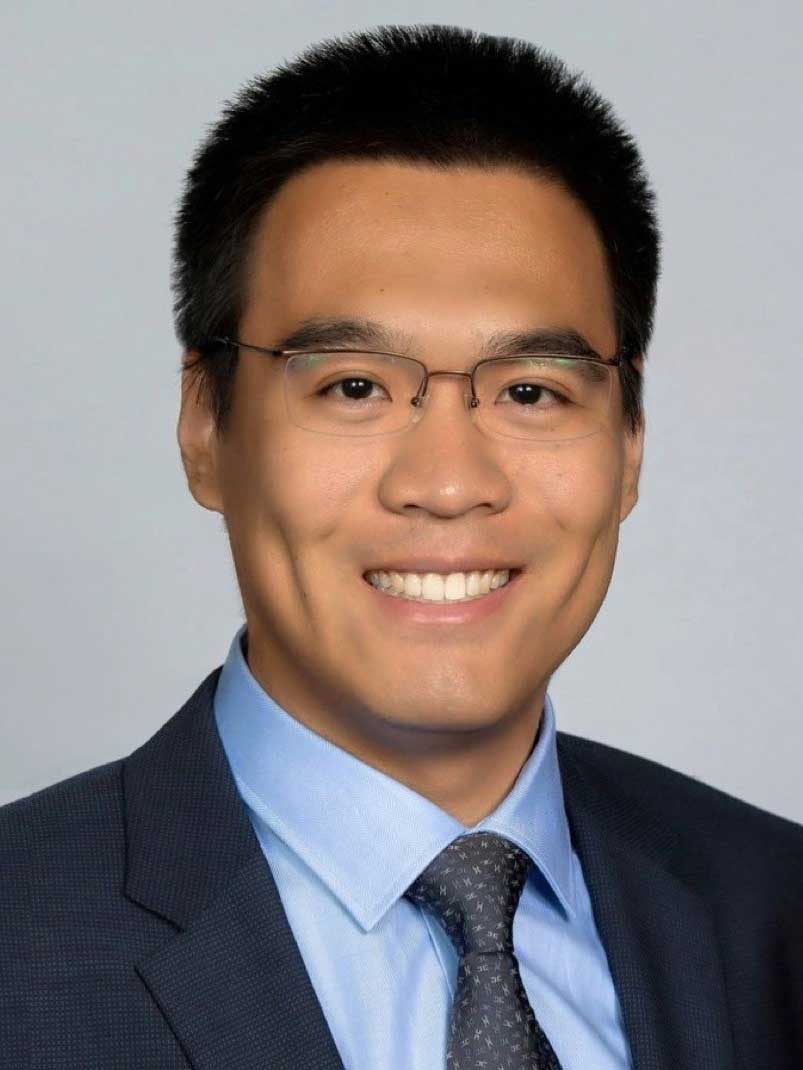
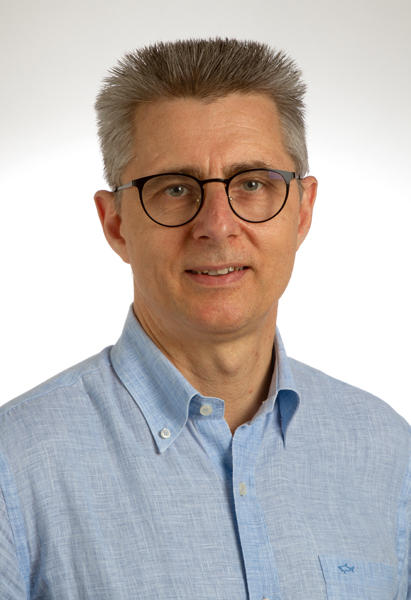
Dr. Paul G. O'Brien is an Associate Professor in the Department of Mechanical Engineering at York University, Canada, affiliated with the Lassonde School of Engineering. His research focuses on interdisciplinary clean energy solutions, including energy storage, thermophotovoltaic systems, decarbonization of buildings, and life cycle assessments. He leads the Advanced Materials for Sustainable Energy Technologies (AM-SET-Lab) and has authored over 50 journal articles. His work spans materials science, photonic crystal engineering, and radiative cooling technologies. Research interests include optimizing thermal energy storage systems, photonic crystal-based filters for solar applications, and CO2 capture via direct air capture systems. His lab develops materials for passive cooling, solar-thermal integration, and advanced photocatalytic CO2 reduction. Dr. O’Brien collaborates across engineering disciplines to address global energy challenges. Recent publications highlight innovations in ellipsoidal optical cavities for thermophotovoltaics, radiative cooling materials, and techno-economic assessments of carbon capture technologies. His work bridges fundamental material science with applied engineering solutions for sustainable energy systems.
Dr Paul Henshall is a Senior Lecturer in Mechanical Engineering at Oxford Brookes University, affiliated with the School of Engineering, Computing and Mathematics. His work bridges advanced thermal systems, renewable energy, and mathematical modelling, with a strong focus on sustainable technologies. His research interests include: Mathematical modelling of renewable energy systems Second-life battery energy storage Thermal management of battery packs Lithium-ion cell characterization Advanced solar thermal systems Thermochemical energy storage The analysis of his recent publications (2018–2025) reveals a consistent focus on energy storage and solar thermal technologies. His work emphasizes computational modelling, experimental validation, and sustainability assessment, particularly in second-life batteries and high-efficiency solar collectors. Key themes include battery degradation prediction, thermal stress analysis, and the integration of renewable systems in buildings and industry. Professional recognitions include: Chartered Physicist (CPhys) Member of the Institute of Physics (MInstP) Fellow of the Higher Education Academy (FHEA) Member of the Institute of Physics Energy Group Committee Paul supervises MEng and PhD students, including Dr. Farhad Salek, whose thesis focused on second-life battery systems. He teaches core modules in engineering mathematics, numerical methods, and computational modelling. He is involved with the Centre for Batteries, Electric Vehicles and Electronics and the Architectural Engineering Research Group, contributing to interdisciplinary research in sustainable energy systems.
Michael Ellis is an Associate Professor in the Department of Mechanical Engineering at Virginia Tech since 2012, with prior roles as Associate Professor and John R. Jones Faculty Fellow (2007–2012). His work spans fuel cell systems, energy modeling, and sustainable technologies. Ph.D. , Mechanical Engineering, Georgia Institute of Technology (1996) M.S. , Mechanical Engineering, Georgia Institute of Technology (1993) B.S. , Mechanical Engineering, University of Tennessee (1985) Research interests include fuel cell systems for building cogeneration, energy consumption modeling, industrial process analysis, and optimal hybrid energy system design. Recent work focuses on battery recycling processes, microbial fuel cells, and thermal stress characterization of membranes. His 15 most recent publications highlight trends in battery recycling scalability , fuel cell durability , microbial energy conversion , and nanomaterials for energy applications . Key subfields include membrane stress modeling, microbial adhesion mitigation, and hybrid gas/electric system optimization. Excellence in Architecture Award (2006) Woodruff Teaching Fellowship (1995) Tau Beta Pi Member Multiple teaching awards at Virginia Tech (2000–2003) As faculty advisor for the award-winning Solar Decathlon team (2002), he contributed to interdisciplinary energy projects. His work connects mechanical engineering with sustainable energy systems, focusing on practical implementations and material innovations.
Professor Ayman S. Mosallam holds dual appointments in Civil & Environmental Engineering and Materials & Manufacturing Engineering Technology at the University of California, Irvine (UCI). He serves as the Director of the UCI Structural Engineering Testing Hall and CEO of Smith-McCoy & Associates Engineering Firm. A globally recognized expert in sustainable building systems, his work emphasizes innovative composites, seismic rehabilitation, and affordable housing solutions like 3D sandwich panels and solar technologies. Education: Ph.D., Structural Engineering, Catholic University of America (1990) M.S., Civil Engineering, Catholic University of America (1985) B.S., Structural Engineering, Cairo University (1978) Research Focus: Advanced composites for infrastructure, hybrid systems for earthquake engineering, and eco-friendly construction. Key projects include the Sauvie Island Steel Bridge (feather-weight sandwich composites) and Schuyler Heim Bridge (hybrid decking). Current initiatives involve a diagnostic system for military bridge health monitoring with Boeing and TACOM, and a collision protection system using honeycomb technology funded by Ohio DOT. Awards: Fellow, American Society of Civil Engineers (ASCE) Top 2% Civil Engineering Researchers (2019-2020) Leadership & Outreach: Founded Egypt Green Building Council, developed the Green Pyramid Rating System, and advises the World Bank on energy-efficient construction. Serves on editorial boards for Composites: Part B Journal and ASCE manuals. Industry Links: Collaborates with Alpha Star Corps, Boeing, and the U.S. Army TACOM. Active in developing practical solutions for infrastructure resilience and sustainability through partnerships with academia and industry.
Yi Zheng is an Associate Professor in the Department of Mechanical and Industrial Engineering at Northeastern University, where he directs the Nano Energy Laboratory. He previously held positions at the University of Rhode Island before joining Northeastern in 2019. His research focuses on nanoscale thermal transport, renewable energy systems, photon-based cooling, and sustainable materials derived from biomass. Zheng serves on editorial boards for Scientific Reports and Journal of Photonics for Energy , and actively participates in conferences like ASME IMECE. He holds a PhD in Mechanical Engineering from Columbia University (2015), with earlier degrees from Columbia and Tsinghua University. Education: Ph.D., Mechanical Engineering, Columbia University (2015) M.S., Mechanical Engineering, Columbia University (2011) B.S., Mechanical Engineering, Tsinghua University (2009) Research Interests: Prof. Zheng’s work bridges nanotechnology and energy systems, emphasizing novel materials for thermal management, radiative cooling, and sustainable energy harvesting. His lab develops biomass-derived composites for solar desalination, thermophotovoltaics, and smart cooling paints. Key projects include ultra-dark solar absorbers, phase-change material-based thermal devices, and recyclable cellulose-based materials. Grants & Awards: 2024 ASME Rising Star Award 2019 NSF CAREER Award 2025 NASA Glenn Faculty Fellow 3M Non-Tenured Faculty Award (2022) Labs/Teams: The Nano Energy Laboratory at Northeastern collaborates internationally on projects like photonics-enabled biosensors and adaptive radiative cooling systems. Recent innovations include self-cleaning cellulose composites and cooling paints for urban heat reduction.
Professor Paolo Fornasiero is a Full Professor of Inorganic Chemistry at the University of Trieste, Department of Chemical and Pharmaceutical Sciences, where he has worked since 1998. He serves as Deputy Director of the department since 2021 and Scientific Responsible of the CNR Research Unit associated with the Institute of Chemistry of OrganoMetallic Compounds (ICCOM) since 2008. His career spans EU projects, bilateral collaborations with China, India, and Argentina, and leadership roles in journals like ACS Catalysis (Executive Editor since 2021). Full Professor (2016–present) Associate Professor (2006–2016) Assistant Professor (1998–2006) Post-Doc, University of Reading (1996–1997) His research focuses on multi-functional metal-oxide nanosystems for energy and environmental catalysis, including green hydrogen production , CO2 valorization , and methane emission control . He pioneered core-shell catalysts and single-atom systems for stability and selectivity. His work extends to solid oxide fuel cells and photocatalytic water depollution . Recent publications highlight trends in photothermal catalysis , single-atom catalysts , and CO2 electroreduction . His 280+ papers (3 in Science , 2 in Nature Communications ) reflect expertise across Environmental Catalysis , Nanomaterials , and Green Energy . 2022 Malatesta Medal 2021 European Academy of Sciences member 2017 Edoardo Kramer Award 2016 Heinz Heinemann Award 2013 Chiusoli Gold Medal He oversees PhD/postdoc advising and participates in global capacity-building via UNIDO and World Academy of Sciences . His lab collaborates with institutions like KAUST , Czech Academy of Sciences , and Dalian Institute of Chemical Physics .
Dr. Eylem Asmatulu is an Associate Professor in the Department of Mechanical Engineering at Wichita State University (WSU), part of the College of Engineering. She joined WSU as an educator in 2015, became an Assistant Professor in 2017, and was promoted to her current rank in 2023. Previously, she worked in Environmental Health and Safety at WSU. She currently advises three PhD, three MS, and two BS students, having graduated 13 students since 2015. Her research focuses on recycling and reuse of materials, composite materials engineering, nanotechnology safety, and sustainable manufacturing. She has secured over $1.7 million in grants, published 131+ articles (h-index 26), and contributed to fields like thermal energy storage, biomedical nanomaterials, and aerospace material science. Her work emphasizes interdisciplinary approaches, combining machine learning for material property prediction and addressing safety concerns in nanotechnology across industries. Key projects include flame-retardant composites, biogas production optimization, and superhydrophobic nanofiber applications for water treatment. She actively promotes sustainability through recycling innovation and lean manufacturing practices in aerospace. Dr. Asmatulu’s research has been cited over 2,870 times. Her contributions span academia and industry, with a focus on translating innovations into practical solutions for environmental and industrial challenges.
Jinsong Huang serves as Adjunct Professor in the Materials Science and Engineering department at the University of North Carolina at Chapel Hill, where he leads an interdisciplinary research group focused on perovskite-based electronic materials and devices. His laboratory, housed in Murray Hall 1115, maintains active collaborations with academia, industry, and national laboratories while training next-generation scientists and engineers for competitive job markets. Dr. Huang earned his educational credentials through a rigorous academic path: Ph.D. in Materials Science & Engineering from UCLA (2007), M.S. in Semiconductor Physics from Chinese Academy of Sciences (2003), and B.E. in Materials and Photoelectronic Physics from Xiangtan University (2000). His research program spans Perovskite Solar Cells , Photodetectors , and X-ray Imagers , with particular emphasis on fundamental material physics, device design, stability enhancement, and scalable manufacturing. The group's work bridges applied research with deep scientific understanding, focusing on high-performance, low-cost electronic materials that address critical energy and medical imaging challenges. Current projects include self-powered photon-counting detectors, bifacial perovskite modules, and all-perovskite tandem solar cells. Analysis of recent publications reveals a strategic research trajectory toward commercialization of perovskite technologies, with increasing focus on stability, scalability, and real-world performance metrics. The work spans fundamental science (defect engineering, crystal growth) to applied technologies (medical imaging detectors, flexible solar cells), demonstrating remarkable breadth while maintaining technical depth in perovskite material systems. Highly Cited Researcher 2021 in Material Science and Chemistry Principal Investigator for $1.5 million UNC System Research Opportunities Initiative (2025) Multiple student/postdoc awards including Postdoctoral Awards for Research Excellence Consistent high-impact publications in Nature, Science, and Advanced Materials Huang actively mentors students and postdocs, with notable alumni including four of the 41 Tar Heels ranked as 'highly cited researchers' in December 2023. His research group has secured significant funding including the recent $1.5 million UNC System grant for 'Ultra-High Efficiency Perovskite Tandem Solar Cells' focusing on North Carolina's energy production and reduced fossil fuel dependence. The laboratory maintains strong industry partnerships that facilitate technology transfer and real-world implementation of research findings. The Huang Research Group operates as a dynamic interdisciplinary team with scientists from chemistry, materials science, physics, and electrical engineering backgrounds. Their collaborative culture has produced numerous breakthroughs including record-efficiency perovskite modules certified by NREL, self-powered photon-counting detectors published in Nature, and lead-recycling technologies highlighted in Nature Communications. Current facilities support crystal growth, device fabrication, and advanced characterization of perovskite materials for both energy and radiation detection applications.
Fengqi You is the Roxanne E. and Michael J. Zak Professor in Energy Systems Engineering at Cornell University. He holds affiliations with multiple departments and graduate fields, including Chemical Engineering, Computer Science, and Sustainability. His research focuses on systems engineering, artificial intelligence, and their applications in energy systems, digital agriculture, and sustainability. You serves as Chair of Ph.D. Studies in Systems Engineering and leads initiatives like the Cornell AI for Sustainability Initiative (CAISI) and the Cornell Institute for Digital Agriculture (CIDA). Education: B.Eng. from Tsinghua University (2005), Ph.D. from Carnegie Mellon University (2009). Before Cornell, he worked at Argonne National Laboratory and Northwestern University. Research Interests Decarbonization of energy systems (e.g., photovoltaics, battery tech) Material informatics and computer-aided molecular design AI-driven solutions for agriculture and climate resilience Supply chain optimization and smart manufacturing Awards & Recognition Fellow of AAAS, AIChE, and Royal Society of Chemistry Over 25 major awards including NSF CAREER (2016), AIChE Research Excellence (2017), and the 2024 Cecil Award Grants & Leadership Recipient of NSF NRT Award for AI in Sustainability Sciences Amazon Research Award for LCA transparency using LLMs Labs & Initiatives Cornell AI for Science Institute (CUAISci) Cornell Institute for Digital Agriculture (CIDA)
Dr. Joshua M. Pearce is a Professor at Western University, holding appointments in the Department of Electrical & Computer Engineering and the Ivey Business School. He is the John M. Thompson Chair in Information Technology and Innovation at the Thompson Centre for Engineering Leadership & Innovation and a Fellow of the Canadian Academy of Engineering. His research focuses on open-source appropriate technology for sustainability and poverty reduction, spanning solar photovoltaics, 3D printing, distributed recycling, and policy analysis. Ph.D. in Materials Engineering from Pennsylvania State University Former Richard Witte Professor at Michigan Tech Editor-in-Chief of HardwareX Author of multiple open-source sustainability books His work integrates engineering, economics, and policy to solve global sustainability challenges. Recent projects include agrivoltaic systems, open-source medical devices, and climate-resilient food production frameworks. He leads the Free Appropriate Sustainability Technology (FAST) research group, which has produced over 200 open-access publications cited in top-tier journals like Renewable and Sustainable Energy Reviews (IF=16.3) and HardwareX (IF=2). Dr. Pearce's scientific contributions include: Fulbright-Aalto University Distinguished Chair Top 0.06% most cited scientist (Elsevier metrics) Leading open-source hardware certification frameworks Developing low-cost scientific instruments His research team includes cross-disciplinary collaborators from Mechanical Engineering, Environmental Science, and Policy Studies. The FAST group emphasizes practical open-source solutions for energy, water, and food security in both developed and low-resource contexts.
Associate Professor Hu Yunfei is affiliated with the School of New Materials and New Energy at Shenzhen University of Technology , where she leads the New Energy Systems and Smart Microgrids Laboratory . She is a member of the China Renewable Energy Society and Guangdong Solar Energy Association . PhD in Materials Processing Engineering (2005), South China University of Technology Bachelor of Engineering (2000), South China University of Technology Her research focuses on new energy systems , solar-storage direct-flexible systems , and high-efficiency photovoltaic devices , including perovskite solar cells , tandem solar cells , and transparent conductive oxides . Her work spans fundamental materials science and applied energy systems. The 15 most recent publications highlight her expertise in polycrystalline silicon thin films , transparent conductive oxides , perovskite solar cells , and optoelectronic materials . These works reflect trends in improving solar cell efficiency, stability, and manufacturing scalability. She has led projects such as the development of consumer solar power optimizers , optical performance testing for bifacial solar panels , and industrial collaborations on silicon ribbon substrates . Her projects are funded by institutions like the Norwegian Science Foundation and National Natural Science Foundation of China . At Shenzhen University of Technology, she oversees the New Energy Systems and Smart Microgrids Laboratory , integrating advanced materials and system design for renewable energy applications.
Garvin Heath is a Principal Environmental Engineer and Distinguished Member of the Research Staff at the National Renewable Energy Laboratory (NREL) . He is also a Senior Research Associate at the Renewable and Sustainable Energy Institute, University of Colorado Boulder , where he contributes to quantitative sustainability assessments and energy systems analysis. Life Cycle Assessment Air Quality Modeling Circular Economy Frameworks Environmental Impact of Energy Technologies His 15 most recent publications focus on photovoltaics, renewable diesel production, and sustainability metrics, with keywords spanning Renewable Energy, Environmental Science, and Public Health . Notable works include lifecycle analyses of solar PV systems and biomass conversion technologies. NREL Chairman's Award (2013) NREL Distinguished Member of Research Staff (2021) NREL President's Award (2011) NREL Technology Transfer Excellence Award (2019) He serves as an Associate Editor for the Quantitative Sustainability Assessment section of Frontiers in Sustainability and is actively involved in international collaborations like the IEA PVPS Task 12 program on photovoltaic sustainability.
Hiroshi Onoda is a Professor at the Faculty of Science and Engineering and Graduate School of Environment and Energy Engineering , Waseda University. His work focuses on environmentally friendly design , LCA , resource recycling , renewable energy systems , and smart communities . He holds a Doctor of Engineering from Waseda University and has held various leadership roles, including Dean of the Graduate School of Environment and Energy since 2022. Education : PhD in Mechanical Engineering (Waseda University, 2006) Professional Leadership : Environment Energy Advisor (Saitama Prefecture, 2010–2015), Director of Waseda Environmental Institute Co., Ltd. (2011–2017) Research Themes : Onoda’s research spans smart waste management , EV integration , CO2 reduction , and renewable energy deployment . He emphasizes AI and IoT applications in waste systems, decentralized energy solutions for developing nations, and decarbonization strategies for urban and industrial contexts. Publication Trends : His recent work addresses AI-driven recycling optimization , community-level GHG inventories , and DAC-based fertilizer systems , reflecting his commitment to circular economy and low-carbon mobility . Key sub-fields include robotic waste sorting , decentralized energy planning , and plastic recycling economics . Scientific Awards : Environment Minister’s Commendation (2024) Best Paper Award, ICET4SD (2021) JSME Environment Division Award (2014) JSME Research Encouragement Award (2018) Grants and Projects : Onoda has led nationwide evaluations of low-carbon industrial zones , hydrogen utilization , and plastic recycling policies . He contributes to Japan’s decarbonization roadmap through roles in NEDO and Ministry of the Environment committees. Labs and Initiatives : He founded the Waseda Environmental Research Institute, Inc. (2003) and drives innovation through the BRIDGE LIFE Platform for smart communities in Japan.
Maria Sharmina is a Professor in Energy and Sustainability at The University of Manchester’s School of Engineering, affiliated with the Tyndall Centre for Climate Change Research and Policy@Manchester. She holds roles including Co-Director of Policy@Manchester, UKRI Digital Security & Resilience Theme advisor, and Sustainable Robotics Committee member at BSI. Her work focuses on low-carbon business models, circular economy, and climate policy, with leadership in projects like the £6M UKRI BuildZero programme. Education: PhD in the Tyndall Centre, background in economics and statistics. She advises governments (e.g., UK Government Office for Science, BEIS) and has served on University Senate and Departmental Research Leadership roles. Research Interests: Energy systems transformation, food-energy-water nexus, emission scenarios, and policy design. She emphasizes sustainable innovation, net-zero housing, and plastics circularity. Key projects include analyzing hydrogen’s role in decarbonization, SME compliance with plastics policies, and financing smart local energy systems. Awards: 2024 Social Responsibility Medal and Making A Difference Award for contributions to social/environmental impact via entrepreneurship. Her work bridges academia and policy, with outputs including 79 research publications and 16 projects. Grants/Consultancy: Principal Investigator on BuildZero (UKRI £6M), funded studies on community energy finance, and consultancy with Oxfam, Manchester City Council, and the Co-operative Group. Labs/Teams: Lead researcher at Tyndall Manchester, collaborates across disciplines (e.g., Digital Futures Institute) to address sustainability challenges through systemic approaches.
Kristian Sevdari is a Postdoctoral Researcher at the Department of Wind and Energy Systems, Technical University of Denmark (DTU). He was born in Kucove, Albania, in 1995, and holds a B.Sc in electrical engineering from the Polytechnic University of Tirana (2016), an M.Sc from UiT Norges arktiske universitet, Norway (2020), and a Ph.D. from DTU (February 2024). Since 2020, he has been working at DTU on multiple projects including Solar-Move, AHEAD, FLOW, EV4EU, ACDC, and FUSE. His research focuses on renewable energy integration and electric vehicle grid integration, with specific expertise in vehicle-to-grid systems, power system dynamics and stability, prosumers and flexible demand, wind power integration, and smart grid technologies. His work contributes to UN Sustainable Development Goals related to sustainable energy and climate action. Dr. Sevdari's recent publications demonstrate a strong trend toward solving practical challenges in EV-grid integration, with emphasis on bidirectional charging technologies, harmonics analysis, battery second-life applications, and smart charging strategies for residential and urban environments. His research bridges theoretical control approaches with experimental validation across multiple European contexts. Best paper award at 2024 IEEE Transportation Electrification Conference & Expo Best paper award of the IEEE PES ISGT-Europe 2021 conference As a supervisor, he has guided multiple Master's theses on topics including telematics integration for EV cost reduction, open charge point protocol implementation, vehicle-to-grid testing, and compatibility testing for EV ecosystems. He is actively involved in the IEEE PES Task Force on electric vehicle grid integration and IEA Task 53, and is the founder of IEEE REST conferences, Qendra SUSALB, and EkoVolt.