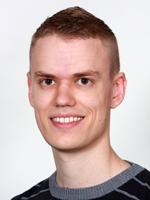
Andreas Kleppe is an Associate Professor at the Department of Digital Signal Processing and Image Analysis, University of Oslo. His research focuses on integrating deep learning with medical imaging for cancer prognosis, particularly in gynecological and colorectal cancers. Research Interests Digital Signal Processing Medical Image Analysis Machine Learning Artificial Intelligence Deep Learning Medical Informatics Publication Trends Recent works emphasize deep learning for cancer outcome prediction, biomarker validation (e.g., DNA ploidy, L1CAM), and histopathological analysis. Collaborative studies span gynecological oncology, prostate cancer, and colorectal cancer, often leveraging automated staging markers. Labs/Groups He is affiliated with the Digital Signal Processing and Image Analysis (DSB) research group at UiO.
Prof. Sebastian Watt is a volcanologist at the University of Birmingham's School of Earth and Environmental Sciences. His research spans physical volcanic processes, tephrochronology, and hazard assessment, with fieldwork conducted in Central Mexico, Indonesia, Papua New Guinea, and the Lesser Antilles. NERC Postdoctoral Fellow (Southampton, 2011) Active PI on projects including Ruang volcano tsunami hazards (2024-2025) Research focuses on: Long-term volcanic eruption records Volcanic edifice collapse mechanics Subduction zone volcanism Volcano-climate feedbacks Statistical methods in geology 2024-2025 publications analyze arc volcanism in Mexico, gravitational instability at Anak Krakatau, and subsea cable hazards. Earlier work includes heat flow studies offshore Montserrat and Antrim lava stratigraphy. Awards include: EGU Arne Richter Award (2014) Geological Society Murchison Fund (2015) Current projects address eruption-driven tsunami risks in Indonesia and lacustrine tephra records in Mexico. Collaborates with institutions in the UK, US, and partner countries. Supervises PhD students through field-based interdisciplinary research combining geochemistry, geophysics, and geochronology.
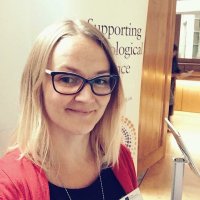
Professor Julia Allan is a Professor of Psychology at the University of Stirling, specializing in Health Psychology and Behavioral Science. She previously served as Deputy Lead of the Health Psychology Group and Programme Director of the MSc Health Psychology at the University of Aberdeen (2012-2023). Her research focuses on behavioral adherence in health contexts, environmental cue-based interventions, and healthcare professional well-being. Key professional roles include past Chair of the British Psychological Society's Division of Health Psychology Scotland (2018-2020) and Executive Committee member of the European Health Psychology Society (2020-2024). Education: PhD in Psychology (University of Aberdeen, 2004), Postdoctoral Fellowship at the University of Aberdeen (2004-2006), and a Chief Scientist's Office Research Training Fellowship (2006-2011). Research Interests: Effortful health behavior maintenance (e.g., diet adherence, chronic disease self-management) Environmental cue design for health behavior change Health professional stress, fatigue, and decision-making processes Telehealth interventions for cancer survivorship Awards: Senior Fellow of the Higher Education Academy Recipient of prestigious research fellowship funding Advising & Grants: Developed the MSc Health Psychology program at Aberdeen. Current work focuses on digital health interventions (e.g., ASICA app for melanoma survivors) and workplace health programs for nurses. Active in translational research bridging psychological theory and public health practice. Labs/Teams: Leading the Health Psychology research group at Stirling, collaborating with the Health & Behaviour research programme. Involved in multidisciplinary initiatives combining clinical, behavioral, and technological approaches to health challenges.
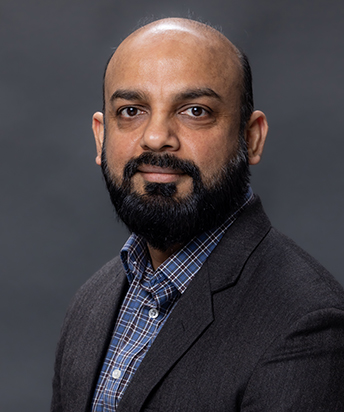
Sandeep Singhal is Associate Professor of Pathology and Biomedical Engineering at UND. His research develops multi-omics biomarkers for cancer prognosis/therapy response, focusing on breast cancer disparities and prostate radiation toxicity. Key contributions include PIK3CA mutation signatures for endocrine therapy response and DNA methylation-based immune classifiers. Recent work explores arsenic-related bladder carcinogenesis and radiogenomics models. Published in Nature Genetics and Journal of Clinical Investigation, he serves on Scientific Reports editorial board. Secured grants for clinical genomics and toxicity prediction. Holds adjunct appointments at Columbia University and directs bioinformatics for North Dakota INBRE.
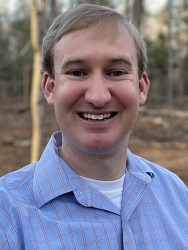
Adam D. Pfefferle, PhD, is an Assistant Professor in the Department of Genetics at the University of North Carolina at Chapel Hill and Director of the LCCC Translational Genomics Lab (TGL). He holds a PhD from UNC Chapel Hill and a Master of Engineering in Materials Science from NC State University. His research focuses on translational genomics, assay development, and cancer biology, particularly in triple-negative breast cancer and spatial transcriptomics. Pfefferle’s work bridges laboratory research with clinical applications, leveraging mouse models and genomic technologies to identify drug targets and improve diagnostic tools. Education PhD in Genetics, UNC Chapel Hill Master of Engineering in Materials Science, NC State University Research Interests Pfefferle’s research integrates molecular biology, bioinformatics, and engineering to develop diagnostic assays and understand tumor biology. Key areas include: Assay development for clinical diagnostics (e.g., microfluidic platforms) Genomic profiling of breast cancer subtypes (e.g., claudin-low, basal-like) Mechanisms of therapeutic resistance in metastatic cancers Spatial transcriptomics and single-cell sequencing for tumor heterogeneity analysis Lab & Translational Work As TGL Director, he oversees a facility providing genomic services for academic and clinical research, including NanoString assays, spatial transcriptomics, and NGS. The lab supports projects like UNCseq and The Cancer Genome Atlas (TCGA), having processed over 12,000 assays. Collaborations & Grants Pfefferle collaborates with researchers at UNC Lineberger Comprehensive Cancer Center and has contributed to studies on drug targets and metastasis mechanisms in breast cancer. His work has informed clinical trials and diagnostic technologies (e.g., Codetta Bio’s molecular diagnostics).
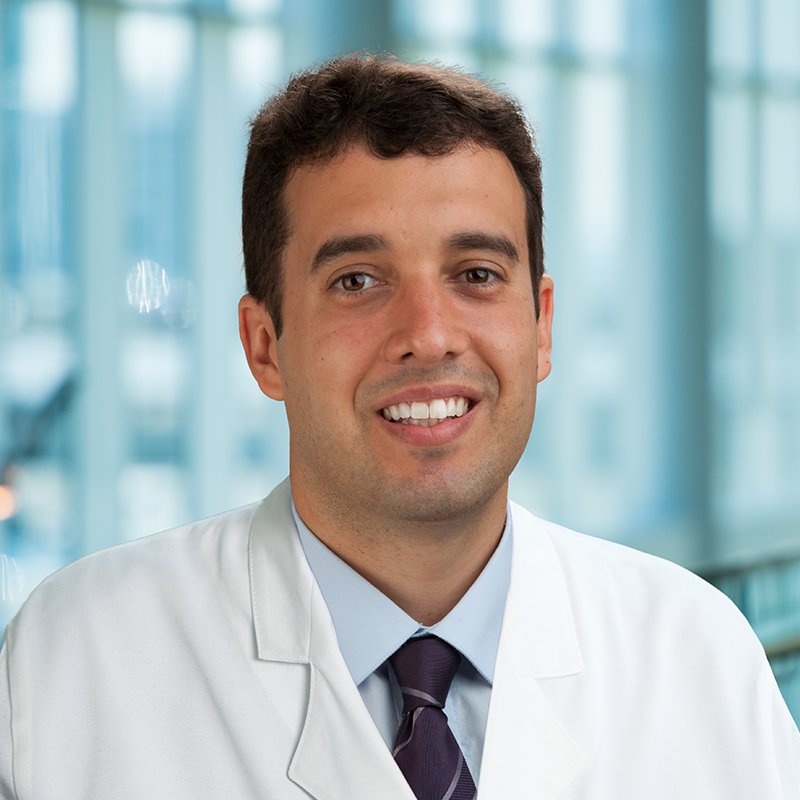
Dr. Marco Pinho is an Associate Professor of Radiology at UT Southwestern Medical Center and serves as the Associate Chief of the Neuroradiology Division. His clinical expertise spans cross-sectional imaging of neurological diseases and oncologic imaging, with a particular focus on brain tumor characterization and neurological disorders. Dr. Pinho received his medical degree from Universidade Estadual De Campinas in São Paulo, Brazil. He completed his radiology residency and advanced fellowship training in neuroradiology at Universidade De São Paulo, followed by a research fellowship at Massachusetts General Hospital in Boston. Dr. Pinho's research program centers on the development and validation of advanced MRI techniques for evaluating central nervous system malignancies, with a particular emphasis on response assessment in clinical trials. His work involves close collaboration with basic scientists, neuro-oncologists, and neurosurgeons at UT Southwestern. His research spans multiple domains including: Advanced MRI techniques for brain tumor characterization Hyperpolarized metabolic imaging for neuro-oncology applications Neurovascular imaging and cerebrovascular reactivity mapping Deep learning applications for brain tumor segmentation and molecular classification Motion correction techniques in functional MRI Dr. Pinho's extensive publication record demonstrates a consistent focus on advancing neuroimaging techniques, particularly in the areas of brain tumor imaging, cerebrovascular disorders like Moyamoya disease, and the application of advanced MRI methodologies. His work frequently bridges the gap between technical MRI development and clinical applications in neuro-oncology and neurovascular disease. Dr. Pinho actively contributes to medical education and leadership at UT Southwestern, having previously served as the Associate Program Director of the Radiology Residency Program and coordinator of the Global Health Teleradiology program. He currently serves on several important committees including the Radiology Resident Selection Committee, the Clinical Competency Committee, the Brain Tumor Committee, and the Intracranial Pressure Disorder IPT. Dr. Pinho maintains active membership in numerous professional organizations: Radiological Society of North America International Society of Magnetic Resonance in Medicine American Society of Neuroradiology American Society of Spine Radiology American Society of Functional Neuroradiology Sociedade Paulista de Radiologia
Julia Debik is an Associate Professor at the Department of Public Health and Nursing, Faculty of Medicine and Health Sciences, Norwegian University of Science and Technology (NTNU), with a dual research role at the Musculoskeletal Research Group and CIMORe. She holds a PhD in Medical Technology and a Master of Science in Industrial Mathematics from NTNU, combining computational expertise with biomedical research. Academic Roles: Associate Professor (Onsager Fellow - AI and Health) Departments: Public Health and Nursing, Circulation and Medical Imaging Collaborations: National Network for Breast Cancer Research, Nordic Metabolomics Society, Metabolomics Society Research Focus: Integrating machine learning with metabolomics to uncover breast cancer risk factors, treatment response, and prognostic signatures. Her work emphasizes NMR-based metabolic profiling, biobank utilization (HUNT2, UK Biobank), and sample handling standardization (freeze-thaw cycles, delayed centrifugation). Publication Trends: Over 15 recent articles focus on metabolomic-biomarker discovery for breast cancer, circadian exercise effects, and technical validation of NMR platforms. Key subfields include lipoprotein associations, multi-omics integration, and AI-driven analysis of spatial -omics data. Scientific Contributions: Onsager Fellowship in AI and Health Key collaborator in HUNT biobank studies International presentations at Metabolomics Society conferences Developer of machine learning frameworks for multi-cancer profiling Outreach Activities: Regularly participates in public science events like Researchers' Night, delivers lectures on AI and molecular epidemiology, and contributes to popular science communication through initiatives like 'Tumorteltet'.
Associate Professor Anthony Glover is a practicing specialist endocrine surgeon and surgical oncologist at the University of Sydney. He serves as Director of the Master of Surgery Program and holds academic affiliations with the Northern Clinical School (University of Sydney) and St Vincent’s Clinical School (UNSW). His clinical practice focuses on thyroid and parathyroid disease at Kolling Institute St Leonards, Bondi Junction, and St Vincent's Clinic. Education: MBBS, PhD, FRACS Leadership: Coordinator for postgraduate surgical coursework programs and Senior Instructor for the Care of the Critically Ill Surgical Patient Course (RACS) Research interests center on thyroid cancer biology, surgical education, and improving clinical outcomes through genomic analysis. Key projects include molecular profiling of advanced thyroid cancers and development of surgical competency frameworks. He leads the Thyroid Cancer Research Group and contributes to international registries like the Australian New Zealand Thyroid Cancer Registry. Over 50 peer-reviewed articles span surgical innovation, molecular pathology, and clinical outcomes. Notable works include validation of the International Medullary Thyroid Carcinoma Grading System and assessment of BRAFV600E mutation specificity in papillary thyroid carcinoma. Awards: 2022 NSW Premier’s Cancer Research Fellowship, NHMRC Neil Hamilton Fairley Fellowship (2016-2020) Grants: NHMRC Development Grants, Cancer Institute NSW funding Active in surgical education through development of assessment modules for General Surgeons Australia and leadership roles in ANZES and the Surgical Education Research and Training (SERT) Institute.
Professor Kongfatt Wong-Lin is a Professor of Computational Neuroscience and Machine Intelligence at the School of Computing, Engineering and Intelligent Systems, Ulster University. He is based at the Intelligent Systems Research Centre (ISRC) at the Magee Campus in Derry~Londonderry, where he conducts cutting-edge research at the intersection of computational modeling, neuroscience, and artificial intelligence. His research interests span computational modeling of neural systems, cognitive neuroscience, cognitive psychology, brain disorders, neural computation and engineering, artificial intelligence, and data science. Professor Wong-Lin is a member of the UK EPSRC Peer Review College and a Fellow of the Higher Education Academy, reflecting his significant contributions to both research and education. Professor Wong-Lin's research output reveals a consistent focus on computational neuroscience, particularly in understanding decision-making processes, neural circuits, and applications to dementia diagnosis. His work combines theoretical modeling approaches with practical healthcare applications, most notably developing AI and machine learning algorithms to streamline dementia diagnoses and improve patient care pathways. Scientific awards include: Ulster University's Distinguished Research Fellowship Award (2016) Ulster University Research Excellence Award (2019) International Joint Conference on Neural Networks (IJCNN) Best Paper Award (2011) 3rd Best Poster Award, IEEE-EMBS International Summer School (2015) Best Poster Award, Translational Medicine Conference (2015) Professor Wong-Lin leads multiple significant research projects, including ALCOME (focusing on acoustic and linguistic markers of cognitive decline in dementia), 'Uncovering the neural architecture underlying decisions abstracted from movements' (2021-2026), and developing a Brain-Computer Interface driven Mental Fatigue Monitoring System for stroke rehabilitation therapy. In 2021, he founded the international ISRC Computational Neuroscience, Neurotechnology and Neuro-inspired AI School, establishing a platform for global collaboration in these fields. His academic journey includes a Ph.D. in Physics with focus on Computational Neuroscience from Brandeis University, postdoctoral work at Princeton University, and previous degrees from the National University of Singapore. Professor Wong-Lin maintains active collaborations with institutions worldwide, including visiting fellowships at the University of Galway and University of Oxford.
Dr. Genecy Calado de Melo is a Lecturer in Operative and Primary Care Dentistry at the Royal College of Surgeons in Ireland (RCSI) School of Dentistry . As a registered dental surgeon with advanced training in dental medicine and a PhD in oral cancer diagnostics via vibrational spectroscopy, he bridges clinical practice with cutting-edge research. Education : PhD, Technological University Dublin (2019) MSc in Dentistry, Fernando Pessoa University (2018) Bachelor of Dental Surgery, Universidade Tiradentes (2014) Member of the Faculty of Dentistry, RCSI Research Focus: Specializing in Raman microspectroscopy for oral cancer detection , his work develops minimally invasive diagnostic protocols using saliva and brush biopsy samples . Key contributions include multiblock data analysis for improved diagnostic accuracy and standardized Raman acquisition protocols . Scientific Impact: His research has been recognized with the RCSI award at the British Society of Oral & Maxillofacial Pathology . With over 15 peer-reviewed publications, his work explores spectral differentiation of oral lesions , salivary biomarkers , and clinical applicability of biophotonics . Clinical Expertise: Prior clinical experience in primary dental care , oral medicine , and paediatric dentistry informs his translational research approach, emphasizing practical diagnostic solutions that reduce patient trauma while maintaining clinical rigor.
Joseph Yuan-Chieh Lo is a Professor in Radiology at Duke University, with additional appointments as Professor in the Department of Electrical and Computer Engineering and Professor of Biomedical Engineering. He is also a Member of the Duke Cancer Institute. His academic career spans multiple disciplines within medical imaging and computational medicine. Dr. Lo's research focuses on the intersection of radiology, artificial intelligence, and medical physics. His primary areas of interest include medical imaging, particularly digital breast tomosynthesis, computational phantoms, and the application of machine learning to improve cancer detection and diagnosis. His work has significantly contributed to the development of computer-aided detection systems, virtual imaging trials, and methods for improving the accuracy of breast cancer screening. His recent publications demonstrate a strong emphasis on applying artificial intelligence to radiology, with particular attention to breast cancer detection, lung cancer screening, and the development of computational models for medical imaging analysis. His research group has produced numerous papers on improving annotation efficiency, multi-disease classification, and interpretable AI models for clinical applications. Dr. Lo has mentored numerous students and researchers, as evidenced by the extensive list of co-authors on his publications. His collaborative work spans multiple institutions and departments, reflecting the interdisciplinary nature of his research. His technical expertise includes the development of computational phantoms (XCAT), virtual clinical trials, and methods for de-identification of medical imaging data. His work bridges the gap between engineering, computer science, and clinical medicine, with practical applications in improving cancer screening and diagnosis.
Jillian Richmond is an Adjunct Assistant Professor of Dermatology at UMass Chan Medical School, affiliated with the T.H. Chan School of Medicine and multiple biomedical programs. Her primary research focuses on autoimmunity, immunology, fibrosis, and translational research, with a strong emphasis on autoimmune skin diseases like lupus and vitiligo. She holds academic roles across departments including Dermatology, Genetic and Cellular Medicine, Neurology, and the NeuroNexus Institute. Education: BS in Molecular & Cell Biology from Johns Hopkins University, and a PhD in Pathology & Immunology from Boston University School of Medicine. Her work spans mechanistic studies of autoimmune skin pathologies, biomarker development, and therapeutic strategies such as JAK inhibitors and spatial transcriptomics. Notable contributions include insights into chemokine networks in vitiligo and lupus, and the role of CXCR3 in fibrosis. Her interdisciplinary approach bridges veterinary and human medicine, as seen in canine dermatitis studies. Publications span over two decades, with recent focus on spatial profiling, therapeutic targeting, and biomarker identification. Collaborations include work on clinical trials (e.g., simvastatin for vitiligo) and translational applications. Active in global dermatology education through virtual lecture series.
Jacob Mandel, M.D., is an Associate Professor in the Department of Neurology at Baylor College of Medicine and a member of the Dan L Duncan Comprehensive Cancer Center. He specializes in neuro-oncology, focusing on primary brain tumors, brain metastases, and neurologic complications of cancer. Dr. Mandel's roles include co-leader of the Glioma Working Group and co-moderator of the Brain Tumor Board at Baylor. Education: MD from Rush Medical College (2008), BS from University of Illinois-Chicago (2004). Clinical training includes residency and internship at Ohio State University Medical Center, and a clinical fellowship at MD Anderson Cancer Center. Research interests span neuro-oncology topics such as glioblastoma treatment strategies, venous thromboembolism in malignant brain tumors, and disparities in cancer care. His work has been published in journals like Neuro-Oncology, Journal of Neuro-Oncology, and Neurology. Dr. Mandel is actively involved in clinical trials for primary brain tumors and contributes to education programs for neurology residents and hem/onc fellows. His research emphasizes translational insights into tumor biology and clinical outcomes. Affiliations include Baylor Neurology Clinic at the McNair Campus in Houston, Texas. He maintains board certifications in Neurology and Neuro-Oncology.
Mircea Tesileanu is a Research Fellow in the Department of Neurosurgery at the Yale School of Medicine, Yale University. His primary focus is on molecular and epigenetic research in neuro-oncology, particularly investigating DNA methylation profiles and their prognostic significance in brain tumors. He also analyzes regulatory processes and drug development through the lens of oncology assessments by organizations like the European Medicines Agency (EMA). Education: PhD in Neuro-Oncology, Erasmus MC (2023) MSc in Neuroscience, Erasmus MC (2017) MD in Medicine, Erasmus MC (2017) Research interests center on the interplay between molecular markers (e.g., IDH mutations, MGMT promoter methylation) and clinical outcomes in gliomas and astrocytomas. His work emphasizes optimizing treatment strategies and understanding histological variability in tumors. He collaborates extensively with international groups like the European Organisation for Research and Treatment of Cancer (EORTC) and contributes to pivotal trials such as CATNON and TAVAREC. His recent publications highlight analyses of EMA drug assessments, post-hoc trial evaluations, and molecular biomarker studies. No scientific awards are listed in the provided information. Advising and grants: While no formal advisees are noted, Dr. Tesileanu’s research contributions to high-impact clinical trials (e.g., CATNON, TAVAREC) reflect his role in advancing translational research. He is part of the Verhaak Lab, which focuses on genomic and epigenomic analyses of brain tumors, located at Sterling Hall of Medicine in New Haven.
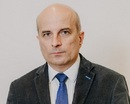
Krzysztof Pancerz is a Professor at the Department of Computer Science within the Faculty of Philosophy at John Paul II Catholic University of Lublin (KUL), Poland. His institutional affiliation is formalized as "prof. KUL" with contact address at Al. Racławickie 14, 20-950 Lublin. He holds dual doctorates: PhD in Computer Science (2006) and DSc in technical sciences (2018) from the Polish Academy of Sciences in Warsaw. His research spans Computational Intelligence and Medical Diagnostics , with emphasis on machine learning for cancer detection using Raman/FTIR spectroscopy. Key areas include: Knowledge discovery from biomedical spectral data Ontology-based information systems Unconventional computing models Deep learning for disease biomarker identification Recent publications (2022-2025) demonstrate consistent focus on cross-disciplinary applications, particularly in oncology and reproductive health diagnostics. He actively organizes scientific workshops including: International Workshop on AI in Medical Applications (FedCSIS conferences, 2011-2018) Knowledge and Data Engineering in Medicine (KES conferences since 2018) His research leadership includes managing the Ministry of Science-funded project on non-invasive laryngeal disease diagnostics and contributing to the EU FP7 PhyChip project on slime mould computing. Current thesis supervision includes topics like fruit leaf recognition and financial deposit forecasting using neural networks. Professional engagement: Member of Polish Fuzzy Sets Society (POLFUZZ) ORCID: 0000-0002-5452-6310 Publications indexed in arXiv, dblp, PubMed