Pasi Peura is a Professor of Metals Technology at Tampere University’s Hervanta Campus, specializing in metallurgy and materials science. His research spans alloy development, additive manufacturing, welding, and heat treatment, with a focus on high-entropy alloys and advanced steels for automotive applications. Education: Doctor of Science (Technology), UMIST and The Victoria University of Manchester (1998); Licentiate of Science (Technology), Mechanical Engineering (1994) Peura’s work emphasizes understanding microstructure-property relationships through novel manufacturing techniques like wire arc additive manufacturing (WAAM) and high-speed laser cladding. His group collaborates extensively with industry, leveraging over 20 years of industrial experience. Recent publications highlight advancements in: Wear-resistant composite coatings Quench and partitioning (Q&P) steel treatments Dynamic softening mechanisms in high-entropy alloys Residual stress analysis in flame-cut steel Scientific Awards: DQ Cold Roll Award for research group (2014) He serves on international committees including the International Deep Drawing Research Group (IDDRG) and contributes to standardization efforts in steel testing.
Professor Geoff Smith is a leading academic in Pharmaceutical Process Analytical Technology at De Montfort University, affiliated with the Leicester School of Pharmacy and the Pharmaceutical Technologies research group. He holds a PhD from the University of Brighton and a BPharm from the University of Bath, and has been instrumental in advancing freeze-drying and process analytical technologies. His research expertise lies in developing and applying novel sensing technologies for pharmaceutical manufacturing. Key areas include freeze-drying process development, impedance and dielectric spectroscopy, terahertz imaging, dynamic laser speckle, and electrostatic measurements for powder flow analysis. His work is strongly industry-oriented, focusing on enhancing process understanding and control through real-time, non-invasive monitoring. The recent publications highlight a strong trend in the application of Through-Vial Impedance Spectroscopy (TVIS) for lyophilization process optimization. Research spans from fundamental studies on ice nucleation and glass transition to practical applications in micro-collapse detection, heat transfer coefficient calculation, and container compatibility. There is also significant work on terahertz-based characterization of crystallinity and microneedle penetration, indicating a broader interest in advanced spectroscopic and imaging techniques for pharmaceutical quality assurance. Scientific Awards and Recognition: While specific awards are not listed in the provided text, his extensive publication record, multiple patents, and leadership in Innovate UK-funded projects reflect high recognition in his field. Professor Smith has successfully secured substantial research funding from Innovate UK and the Technology Strategy Board, including grants such as EXTALcoat, FastLyo, AtlasBio, BioStaRT, and LyoDEA, involving collaborations with industry leaders like GEA, AstraZeneca, and Sanofi. He has supervised numerous PhD projects and plays a key role in teaching Pharmaceutical Quality by Design and Good Manufacturing Practice. He leads the Pharmaceutical Technologies group, which he restructured to include chemists, physicists, and engineers, fostering a multidisciplinary approach to solving current pharmaceutical challenges. Laboratories and Research Groups: He leads the Pharmaceutical Technologies research group at DMU, which focuses on developing and applying advanced analytical techniques like TVIS, terahertz spectroscopy, and laser speckle imaging for pharmaceutical process understanding and control. The group operates at the intersection of pharmaceutical science, engineering, and material science, with a strong emphasis on industrial collaboration and technology transfer.
Jon Friedrich is a Professor of Chemistry at Fordham University's Department of Chemistry. His research focuses on Analytical Chemistry and Planetary Science , with a specialization in meteorite composition, asteroid geology, and advanced imaging techniques like X-ray tomography. His work examines chondrites, carbonaceous chondrites, and ordinary chondrites to understand their formation, metamorphism, and impact histories. Key projects include studies of Bennu asteroid samples, Jupiter Family Comet meteorites, and shock-induced deformation in extraterrestrial materials. Research interests emphasize morphological and compositional analysis of meteorites , including chondrule formation, elemental distribution, and structural characterization using 3D petrography. He has pioneered techniques to non-destructively analyze meteorite porosity and internal structures via microtomography, contributing to curation standards for extraterrestrial samples. Publications highlight investigations into chondrite classification (H/L/LL types), shock effects on asteroid parent bodies, and compositional trends in carbonaceous chondrites. His work bridges analytical chemistry with planetary science, informing models of early solar system dynamics and asteroid evolution. Lab facilities include the JMH 540 laboratory at Fordham University, where advanced imaging and geochemical analysis tools are employed. Collaborations involve international space agencies and meteorite curation institutions, reflecting the global impact of his research.
Albert Zelenika is a postdoctoral researcher at the Karlsruhe Institute of Technology (KIT), affiliated with the Mechanics of Materials 1 (WM1) group within the Institute of Applied Materials. His research focuses on dislocation dynamics, materials physics, and advanced X-ray microscopy techniques. Education: BSc in Physics, University of Trieste (2014-2018) MSc in Physics, University of Trieste (2018-2021) PhD in Physics, Technical University of Denmark (2021-2024) Zelenika specializes in the application of Dark Field X-ray Microscopy (DFXM) and X-ray diffraction microscopy to study structural evolution during plastic deformation in metals and ceramics. His work reveals critical insights into dislocation patterning, cell formation, and strain dynamics in crystalline materials. Recent research trends highlight Zelenika's contributions to understanding dislocation boundaries , geometrically necessary boundaries (GNBs) , and self-organization of dislocations using in-situ and 4D X-ray imaging. His studies span applications in aluminum , ferritic alloys , and borophene characterization. Laboratory & Collaborations : Zelenika works in Xufei Fang's Lab at KIT and collaborates with researchers at the Technical University of Denmark and European Synchrotron Radiation Facility . His work involves interdisciplinary teams utilizing synchrotron radiation and advanced diffraction techniques.
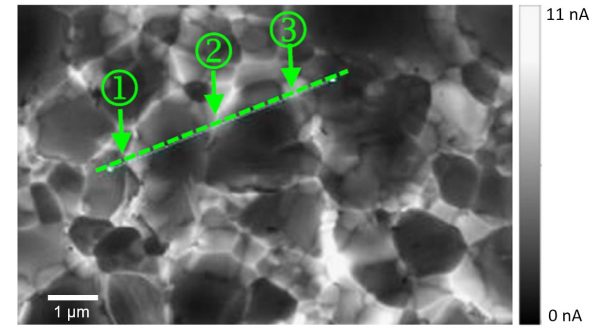
Heayoung Yoon serves as an Associate Professor in the Electrical & Computer Engineering department and Adjunct Associate Professor in Materials Science & Engineering at the University of Utah's College of Engineering. Her research focuses on advanced fabrication and nanoscale characterization of optoelectronic materials and devices, with particular expertise in engineering micro/nanostructures of semiconductor materials to enhance functionality and stability in optoelectronic devices including translucent solar cells and radiation-hard systems. Dr. Yoon earned her BS in Physics with a Computer Science minor from Chungnam National University in South Korea, an MS in Physics from Pohang University of Science and Technology, and a PhD in Electrical Engineering from The Pennsylvania State University. Her academic journey includes positions at Samsung, Penn State University, and NIST where she conducted research on molecular junction devices, pillar array solar cells, and near-field optoelectronic imaging techniques. Her research interests span multiple cutting-edge areas in energy technology and materials science. Dr. Yoon leads investigations into radial junction solar cells that decouple light absorption from carrier collection, thin-film solar cells with enhanced efficiency through microstructural optimization, translucent solar cells for diverse applications like skylights and self-powered facades, multi-probe microscopy techniques for nanoscale characterization, and molecular junction devices for advanced optoelectronics. Her work bridges fundamental research with practical applications to address global sustainability challenges. Analysis of Dr. Yoon's 15 most recent publications reveals a strong focus on solar cell technology and nanoscale characterization. Her research consistently explores patterned back contacts, micro/nanostructured solar cells, and perovskite materials, with particular attention to grain boundaries, surface potential variations, and carrier dynamics at the nanoscale. The publications demonstrate interdisciplinary approaches combining electron microscopy, optical spectroscopy, and device engineering to advance photovoltaic technologies. Outstanding Teaching Award (2024, ECE Department) Chair's Award (2022, ECE Department) CAREER Award (2021, National Science Foundation) Dr. Yoon actively mentors students through thesis research and undergraduate research projects, and leads the Yoon Research Group which develops in-situ, local measurement techniques using electron beams and focused light sources. Her lab focuses on elucidating structure-property relationships in micro/nanomaterials and devices, with applications in energy, optoelectronics, and chemical and biomedical fields. The group leverages cross-disciplinary collaborations to advance energy technologies, particularly in creating exploratory optoelectronic systems that address emerging global challenges in sustainability.
Associate Professor Gwenaelle Proust is an academic in the School of Civil Engineering at The University of Sydney. She holds a Diplôme d'ingénieur (eq.BE) from ISITEM (France), a Master's degree from Drexel University (USA), and a PhD in Materials Science and Engineering from Drexel University (2005). Her research focuses on improving the mechanical properties of metals (aluminum, steel, titanium, magnesium) for automotive/aerospace applications through microstructural analysis and additive manufacturing innovations. Her work emphasizes materials optimization for energy efficiency and structural performance, including projects like Microtimber (3D-printed composite panels from waste wood) and collaborations with industry partners. She leads the Sydney Manufacturing Hub and is a member of the University of Sydney Nano Institute. Research interests include twinning in magnesium alloys, modeling material behavior under complex loads, and bio-inspired composite design. She teaches courses such as CIVL2110 Materials and supervises PhD projects on topics like post-treatment routes for architectural materials and interpenetrating phase composites.
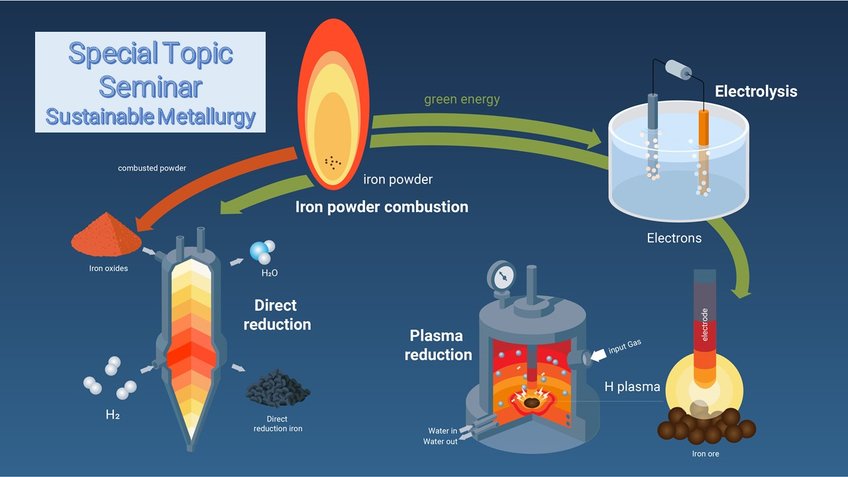
Prof. Wangzhong Mu is a Senior Lecturer (Docent) in the Department of Materials Science and Engineering at KTH Royal Institute of Technology, Stockholm. His research focuses on sustainable metallurgy, microstructure physics, and alloy design. He leads the thermo-physical property analysis section in the Hultgren Lab and is affiliated with Digital Futures at KTH. Educations: PhD in Materials Science, KTH Royal Institute of Technology (2015) MSc/Bachelor's in Materials Science, Northeastern University, China Research Interests: Inclusion engineering and microstructure-property correlations in steels High-entropy alloy design using digital tools (AI/thermodynamic modeling) In-situ characterization via confocal microscopy and multiscale analysis Recycling-oriented steel production and CO2 reduction strategies Grants/Projects (selected): SSF Strategic Mobility Grant (2023-2024): Clean steel for sustainable future VINNOVA Mobility Grant (2022-2024): Hydrogen-based metallurgy STINT Project (2022-2023): Inclusion engineering for green steel EIT RawMaterials (ENDUREIT, 2019-2021): Durable steels at intermediate temperatures Labs/Teams: Hultgren Lab (materials characterization), Digital Futures (AI-driven metallurgy), and international collaborations with Hanyang University (South Korea), IIT Bombay (India), and Tohoku University (Japan).
Dr. Haiming Liu is an Associate Professor at the School of Electronics and Computer Science (ECS) at the University of Southampton. She leads the Centre for Machine Intelligence and contributes to research, teaching, and supervision across undergraduate and postgraduate levels. Her work focuses on user-centered interactive information access technologies, integrating interdisciplinary approaches from Computer Science, Psychology, and Social Sciences. Dr. Liu earned her PhD in 2010 from The Open University’s Knowledge Media Institute, researching user interaction with content-based image retrieval systems. Her career includes roles at the University of Bedfordshire and University of Central Lancashire before joining Southampton in 2022. Her research spans applications in E-Health, E-Learning, and Digital Humanities, emphasizing user preferences and behavior modeling. She currently supervises six PhD students and actively recruits new candidates. She is also involved in projects like the 'Image-based Conversational Search for Users with Intellectual Disability.' Dr. Liu’s teaching responsibilities include computer science modules, and she maintains an active research profile with publications in journals like Materials Characterization and conferences on inclusive design.
Dr. Gabriele C. Sosso is an Associate Professor specializing in Computational Chemistry. His research focuses on molecular simulations, phase transitions, and material design, with notable contributions to ice nucleation mechanisms, drug delivery systems, and sustainable materials. He advises multiple PhD students across various programs, including MAS CDT, DTP, and EPSRC-funded projects. His work bridges computational methods with real-world applications in energy, environment, and biomedicine. Research interests include: molecular dynamics of condensed matter, machine learning-driven drug design, ice recrystallization inhibition, and the structural analysis of materials under extreme conditions. Recent studies explore small molecule eutectics as plastic alternatives and lipid bilayer interactions with drugs. Advising and grants: Supervises 8+ PhD students (listed above) under programs like EPSRC NPIF and MRC DTP. His research leverages advanced computational tools and collaborative projects in materials science and biophysics. Labs/teams: Collaborates on interdisciplinary teams focusing on computational chemistry, nanotechnology, and environmental materials science, though specific lab affiliations are not detailed in the provided text.
Prof. Matthias Militzer holds the Dofasco Chair in Advanced Steel Processing at the Department of Materials Engineering, Faculty of Applied Science, The University of British Columbia. He specializes in multi-scale modeling of microstructure evolution and physical metallurgy of advanced low-carbon steels, with interdisciplinary research in Cu interconnects for microelectronics. Research Interests: Multi-scale modeling of microstructure evolution during phase transformations Physical metallurgy of advanced high-strength steels (e.g., dual-phase steels, linepipe steels) Recrystallization and grain growth in electrodeposited Cu thin films Collaborations: McMaster University, ArcelorMittal Dofasco, Evraz, Dan Bizzotto (UBC), Ilya Elfimov (UBC) Recent Publications: Focus on phase transformations in Fe-Mn alloys, intercritical annealing, solute-interface interactions, and multi-scale models linking atomistic simulations to macroscopic process optimization in steels. Scientific Awards: Runner’s-up certificate as 'highly commended' in the James Clerk Maxwell Young Writers Prize (2013)
Dr. Dikai Guan is an Associate Professor in Lightweight Materials at the University of Southampton, leading research on high-performance light alloys and additive manufacturing. He holds a PhD from the University of Sheffield (2015) and a prestigious UKRI Future Leaders Fellowship (2020). His work focuses on developing low-cost, high-performance alloys, with emphasis on magnesium alloys and sustainable materials processing. He has organized major conferences like the Royal Microscopical Society's EBSD 2021 and serves on editorial boards of journals like Carbon Neutrality Frontiers . Education: BEng and MEng in Materials Science from Central South University (2008–2011), PhD from University of Sheffield (2015). Joined University of Southampton in 2022. Active in international collaborations, including projects with industrial partners to recycle alloy waste into bespoke products. Key achievements include pioneering in-situ casting for nanostructured Mg alloys and publishing in top-tier journals like Nature and Acta Materialia . Research interests include additive manufacturing of light alloys, microstructure characterization, and sustainable materials development. Awards include the 2024 International Magnesium Award and Fellowships from the Higher Education Academy and IOM3. He advises five PhD students and oversees projects funded by the Royal Society and UKRI.
Professor Edward D Burton is a Professor (Research Scholar) in the Faculty of Science and Engineering at Southern Cross University, where he leads the Environmental Geochemistry & Mineralogy research group. His work integrates laboratory experiments, field studies, and synchrotron-based X-ray techniques to investigate metal(loid)-mineral-microbe interactions across diverse environments including acid sulfate soils, contaminated lands, and mine sites. His educational background includes a BSc(Hons) and PhD from Griffith University, establishing his foundation in earth sciences and geochemistry. Research focuses on Environmental Geochemistry and Mineralogy with emphasis on arsenic/antimony speciation , iron mineral transformations , and heavy metal dynamics in contaminated systems. His group pioneers synchrotron-based approaches to decipher contaminant retention mechanisms, particularly in acid sulfate soils and mine drainage environments, directly informing remediation strategies for water quality protection. Recent publications reveal intensifying research on climate-hydrological interactions affecting contaminant mobility, with dominant themes in antimony-arsenic co-behavior in iron mineral systems and advanced applications of X-ray spectroscopy. This reflects his strategic shift toward interdisciplinary solutions for complex environmental contamination scenarios. Key scientific awards include: Future Fellowship (Professorial Level) from Australian Research Council (2020-2024) Vice-Chancellors' Excellence in Research Award from Southern Cross University (2015) 5 Year Australian Research Fellowship from Australian Research Council (2011-2015) 3 Year Post-Doctoral Fellowship from Australian Research Council (2007-2010) Professor Burton has supervised 14 PhD students and 11 postdocs to completion, currently mentoring 5 PhD candidates, 1 MSc student, and 2 postdocs. His research is funded by 5 ARC Discovery Projects ($1.51 million), 7 ARC Linkage Projects ($2.72 million as Chief Investigator), and $2.66 million in-kind from ANSTO for synchrotron projects over the past five years. The Environmental Geochemistry & Mineralogy group operates as a multidisciplinary hub specializing in cutting-edge synchrotron techniques, with active collaborations across government agencies, mining industries, and international research institutions to address critical environmental contamination challenges.
Al Omar Mesnaoui is a Researcher at the Polytechnic University of Catalonia (UPC), affiliated with the Department of Mechanical Engineering at the Manresa School of Higher Engineering (EPSEM). He specializes in materials science, metallurgy, and robotics, focusing on the thermo-mechanical behavior of metals and advanced manufacturing processes. His work includes developing neural network models for steel processing and designing robotic systems for industrial applications. He has contributed to over 88 academic activities, including peer-reviewed articles, books, and projects funded by national and international grants. Notably, he has received the 6th Quality Prize in University Teaching. Education: Licenciado en Ciencias Físicas (Solid-State Physics) and Doctor en Ciencias Físicas (Materials Science and Metallurgical Engineering). He is part of research groups TECNOFAB and DigiFACT, focusing on advanced manufacturing and digital factory technologies. His projects include PulmoFlow (low-cost respiratory diagnostics) and AI-based education initiatives in mechanical engineering. Key research areas include microalloyed steel deformation, robotic co-workers, and biomechanical modeling of human movement post-stroke. He has collaborated extensively with colleagues like Peña-Pitarch and Alcelay on topics ranging from material processing maps to humanoid robotics. His work bridges materials science with industrial applications, emphasizing sustainable and intelligent manufacturing systems.
Richard Arès is a professor at the University of Montreal specializing in semiconductor epitaxy, photovoltaics, and photonics. His research spans electrical engineering, mechanical engineering, and condensed matter physics. Doctorate in Physics from Simon Fraser University (1998) Master's in Physics from Université de Montréal (1993) Bachelor's in Physics from Université de Montréal (1990) His work focuses on: Advanced semiconductor growth techniques High-efficiency multi-junction solar cells Photonics device fabrication Nanomaterials engineering Surface and interface analysis Process control in ultra-high vacuum environments Recent publications highlight expertise in: Through-cell via contacts for photovoltaics Quantum dot enhanced solar cells Mesoporous semiconductor structures Nonlinear optical waveguides Temperature-sensitive epitaxy processes
Professor Janos Urai is a renowned academic at RWTH Aachen University, specializing in structural geology and salt tectonics. He leads the Lehr- und Forschungsgebiet Geologie - Endogene Dynamik department, focusing on deformation mechanisms in evaporites, microstructural analysis, and the application of geological structures to energy and resource exploration. His research integrates field observations, laboratory experiments, and numerical modeling to understand salt diapir dynamics, fault mechanics, and rheological behavior of geological materials. Key areas of expertise include salt tectonics in Romania's Transylvanian Basin, microstructural analysis of glacier salt, and the influence of evaporite deformation on regional tectonics. He has contributed to understanding the geomechanics of salt caverns for radioactive waste storage and energy projects, while also exploring carbonation processes in peridotites and fracture network evolution in carbonate reservoirs. Professor Urai's work bridges fundamental geological research with applied challenges in mining, energy transition, and geohazard mitigation. His interdisciplinary approach combines structural geology, petrophysics, and geochemistry, with a strong emphasis on fieldwork in salt mines and ophiolite complexes such as the Samail Ophiolite in Oman.