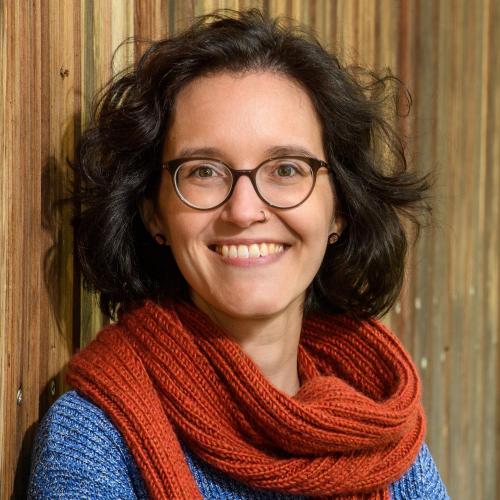
Professor Sara B. Pritchard is a leading scholar in environmental science and technology studies (STS) at Cornell University's College of Arts and Sciences. She holds a Ph.D., M.A., and B.A. in History from Stanford University and University of Puget Sound. Her research critically examines light pollution, environmental ethics, and the intersection of technology and nature. Pritchard has received grants from the National Science Foundation and Cornell's Atkinson Center for a Sustainable Future, among others. Her major works include Night as Environment: Light Pollution and the Anthropocene (2024) and Confluence: The Nature of Technology and the Remaking of the Rhône (2011). She co-edited influential volumes such as New Natures: Joining Environmental History with Science and Technology Studies (2013) and pioneered the concept of 'envirotechnical analysis.' Pritchard advises students across disciplines including Anthropology, Asian Studies, and Natural Resources. Her research explores dark histories, nuclear disasters, and sustainable energy transitions. She collaborates with global scholars through special journal issues on topics like climate justice and polar night studies. Pritchard’s work bridges environmental humanities with technological critique, emphasizing interdisciplinary approaches to urgent ecological challenges.
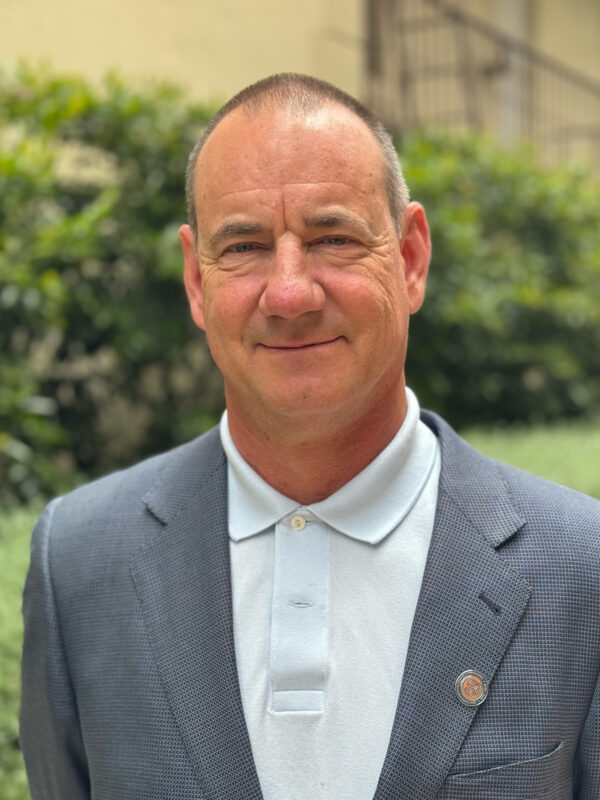
Prentice L. White is a Professor and the Associate Vice Chancellor for the Evening Division and Emerging Program at Southern University Law Center. A 1995 alumnus of SULC, he joined the faculty in 2001 after serving as an Assistant District Attorney and Senior Research Attorney, specializing in criminal appellate litigation. Education : B.A. from Xavier University of Louisiana (1991), MBA from University of New Orleans (2001), J.D. from Southern University Law Center (1995). Research interests span Criminal Law , Civil Procedure , Tort Law , and Legal Education , with a focus on Judicial Accountability , Domestic Violence Legislation , and Environmental Tort Law . His publications analyze legal reforms for domestic violence, judicial immunity, plea negotiations, and environmental liability. Notable trends in his articles include critiques of judicial discretion in criminal justice, advocacy for victim compensation in ecological disasters, and pedagogical approaches to legal education. His work bridges Legislative Analysis , Civil Rights , and Legal Ethics . Professional Background : He teaches courses such as Civil Law Property , Criminal Procedure , and Advanced Legal Writing , leveraging his experience in state and federal appellate courts.
Alberto Brugnoli is a Full Professor in Applied Economics at the University of Bergamo, Italy, where he has served since 2020. He holds the UNESCO Chair on Human Rights, International Cooperation and Sustainable Development and serves as Delegate for International Cooperation in Developing Countries at the University of Bergamo. His academic career spans over 30 years with progressive appointments from Researcher to Full Professor. Brugnoli's research focuses on International Development Cooperation, Sustainable Development, Local Development, Regional Governance and Policy, Migration, Municipal Financing, and Trade. His work demonstrates a strong international dimension through collaborations with institutions like Fundação Getulio Vargas (Brazil), McGill University (Canada), OECD, and the European Commission. His recent publications show a clear trajectory toward sustainability, decarbonization, and economic transition topics. His research output reveals a progression from traditional economic policy topics toward contemporary challenges of sustainability, climate change, and social development. The most recent publications (2022-2025) predominantly address decarbonization, sustainable economic transitions, and regional development strategies, reflecting current global economic policy priorities. Award by the Scientific Committee of the First Report on Finance of the Rosselli Foundation (2012) Award by the NATO Assistant Secretary General for Public Diplomacy (2009) Recognition from Università Bocconi for editorial contributions (1999) Brugnoli has advised numerous international research projects and has extensive teaching experience in Development Economics, Regional Economics, and International Cooperation. His leadership extends to serving as President of the Master's Degree Program in Human Rights, Migration and International Cooperation (2018-2022) and various delegate roles at the University of Bergamo.
Jon Miller is a Research Associate Professor in the Department of Civil, Environmental and Ocean Engineering at Stevens Institute of Technology. He holds dual roles as Director of the NJ Coastal Protection Technical Assistance Service and NJ Sea Grant Coastal Processes Specialist. Miller earned a B.E. in Civil Engineering from Stevens (1999), followed by M.S. and Ph.D. in Coastal Engineering from the University of Florida (2001, 2004). His research focuses on coastal hazard mitigation, nature-based solutions, and numerical modeling of coastal systems. Education: - Ph.D. Coastal Engineering, University of Florida (2004) - M.S. Coastal Engineering, University of Florida (2001) - B.E. Civil Engineering, Stevens Institute of Technology (1999) Research Interests: Miller's work emphasizes coastal resilience through innovative engineering approaches. Key areas include: - Wave attenuation mechanisms of natural/nature-based features - Climate change impacts on coastal erosion - Living shoreline design and implementation - Sediment management strategies for inlets and beaches - Dune system vulnerability analysis Grants & Awards: - $1M+ funding from NOAA, NSF, and state agencies - 2024 ASCE Educator of the Year Award - 2023 Robert G. Dean Coastal Award - Over 20+ technical reports guiding coastal policy Professional Leadership: - Editorial roles in Shore & Beach and Journal of Coastal Research - Leadership in NJ Coastal Resilience Collaborative - Advisor for 3 Technogenesis Summer Scholars Labs & Projects: - Principal Investigator for SEECPRS disaster response system - Co-developed NJ Living Shorelines Engineering Guidelines - Conducts fieldwork on Hudson River shoreline restoration
Xiaojiang Du is the Anson Wood Burchard Endowed Professor at Stevens Institute of Technology, directing research in IoT security, AI security, and wireless networks. An IEEE Fellow and ACM Distinguished Member, he leads NSF-funded projects on secure IoT systems and cross-platform security vulnerabilities. Education PhD in Electrical Engineering, University of Maryland MS in Electrical Engineering, Tsinghua University BE in Electrical Engineering, Tsinghua University Research Focus: Develops security frameworks for IoT ecosystems and adversarial machine learning, with recent breakthroughs in smart home security anomaly detection. Honors: IEEE Fellow, ACM Distinguished Member, multiple best paper awards at IEEE conferences. Graduated PhD students hold faculty positions at UNC Charlotte, UL Lafayette, and ShanXi University. Professional Service: IEEE ComSoc Distinguished Lecturer, Associate Editor for IEEE Transactions, and General Co-Chair for IEEE/ACM IWQoS 2023. Secured $9M+ in research funding from NSF, NSA, and DOD.
Dr. Matthew Brookhouse is a Senior Lecturer at the Fenner School of Environment & Society, part of the Australian National University's Institute for Climate, Energy & Disaster Solutions. With a PhD in Dendroclimatology from ANU, he specializes in using forest structural complexity and tree-ring analysis to understand climate interactions and ecological responses in Australian subalpine environments. Research Focus: Sub-alpine ecology, Dendrochronology, CO2 responsiveness in eucalypt species Teaching: First-year research methods with emphasis on statistical application, advanced modeling and field botany Projects: Leading collaborative snow-gum dieback research and dendrochronological monitoring initiatives His publications span 2006-2025 with recent emphasis on machine learning applications for forest monitoring, tropical tree-ring chronologies for climate change, and climate sensitivity in Australian alpine ecosystems. Key collaborations include institutions like Australian Nuclear Science and Technology Organisation and University of Canberra researchers. Current projects focus on snow-gum woodland dieback mechanisms, high-resolution dendrometric monitoring, and integrating dendrochronology with environmental policy frameworks. He maintains active supervision of research students and contributes to both undergraduate and postgraduate curriculum development.
Nick Abel is an Honorary Associate Professor at the Fenner School of Environment & Society, Australian National University. With a distinguished international career spanning Africa and Australia, he has worked in Zimbabwe, Kenya, Ethiopia, Botswana, Somalia, Swaziland, Zambia, and Australia. His academic credentials include a Ph.D., M.Sc., and B.Sc.(Hons.), reflecting a strong foundation in environmental sciences and complex systems thinking. Abel's research program centers on the critical challenge of human adaptation to climate change, with particular focus on why adaptation efforts are insufficient to prevent environmental and social tipping points. He critically examines Australia's role as the world's third largest exporter of fossil fuels while facing escalating climate impacts, investigating how fossil fuel companies have maintained influence over public policy. His work integrates social-ecological systems theory, resilience thinking, and practical governance frameworks to address climate adaptation challenges. His publication record demonstrates a clear evolution from foundational work in rangeland management and complex adaptive systems toward urgent climate policy interventions. Early research established theoretical frameworks for understanding resilience in dryland ecosystems, while recent work focuses on transformation pathways, Indigenous engagement, and community-based adaptation strategies. A consistent thread throughout his career is the integration of diverse knowledge systems and the development of practical approaches for environmental governance in rapidly changing conditions. Abel has registered to supervise research students at ANU and participates in significant collaborative projects, including the current 'Partnering with local communities in regional Australia to increase resilience to flood events' (2022-2025). His high-impact publications, including the highly cited 'Resilience management in social-ecological systems' (1,120 Scopus citations) and 'From Metaphor to Measurement: Resilience of What to What?' (2,596 Scopus citations), demonstrate his foundational contributions to the field. Through his work with various research groups and projects, Abel has helped establish frameworks for understanding social-ecological systems and climate adaptation. His contributions to the Fenner School include advancing methodologies for integrating scientific and Indigenous knowledge systems, developing practical approaches to environmental governance, and critically examining the political economy of climate policy in Australia.
Dr. Stephanie Spahr is a Research Group Leader at the Leibniz Institute of Freshwater Ecology and Inland Fisheries (IGB) in Berlin, Germany, where she leads the Organic Contaminants research group within the Department of Ecohydrology and Biogeochemistry. Previously, she served as a Junior Research Group Leader at the University of Tübingen's Center for Applied Geoscience (2019-2021) and as a Postdoctoral Researcher at Stanford University's Department of Civil and Environmental Engineering (2016-2019). Dr. Spahr earned her PhD in Environmental Chemistry from the Swiss Federal Institute of Technology Lausanne (EPFL) and the Swiss Federal Institute of Aquatic Science and Technology (Eawag) in 2016. Her doctoral research focused on the formation of N-nitrosodimethylamine during water disinfection with chloramine. She completed her MSc in Geoecology at the University of Tübingen in 2012, with thesis work on carbon and nitrogen isotope analysis of benzotriazoles conducted at Eawag, and her BSc in Geoecology/Ecosystem Management at the same institution in 2010. Dr. Spahr's research focuses on trace organic contaminants in aquatic systems, with particular expertise in transformation processes of contaminants in natural and engineered systems, advanced oxidation processes for water treatment, urban blue-green infrastructure, and compound-specific isotope analysis. Her work bridges environmental chemistry, engineering, and ecology to address water quality challenges in urban and natural water systems. She employs advanced analytical techniques to track contaminant sources and transformation pathways, with a strong emphasis on practical applications for water treatment and environmental protection. Her recent publications demonstrate a strong focus on biochar-based water treatment technologies, particularly for stormwater management. She investigates how biochar amendments can remove trace organic contaminants from urban runoff, with recent work examining persulfate activation mechanisms, the role of chloride in reactive species formation, and the performance of engineered media filters under dynamic conditions. Her research also extends to understanding contaminant transport in rivers, the ecological impacts of pollutants, and developing analytical methods for environmental monitoring. The interdisciplinary nature of her work connects chemical processes with ecological outcomes. Outstanding Review Paper Award 2023 in Environmental Science: Water Research & Technology Selected for the Falling Walls Female Science Talents Intensive Track 2023 Selected mentee in the Leibniz Mentoring Programme 2022-2023 Best poster award (1st prize) at the Wasser 2022 of the Water Chemistry Society Selected fellow in the Postdoc Academy for Transformational Leadership 2020-2022 (Robert Bosch Stiftung) Selected fellow in the Athene Program for early female career researchers at the University of Tübingen, 2020-2021 As a Research Group Leader, Dr. Spahr supervises multiple research projects including 'POllution in UrbaN ponds, eco-evolutionary Dynamics, and Ecosystem Resilience (POUNDER)', 'Dynamic hyporheic zone', 'NYMPHE', and the 'Incident-related special investigation programme for the environmental disaster in the Oder River'. She serves on the Executive Board of the German Water Chemistry Society and heads its Expert Committee on 'Oxidative Processes'. Her collaborative work spans numerous institutions across Germany and internationally, addressing critical water quality challenges through interdisciplinary approaches. Dr. Spahr leads the Organic Contaminants research group at IGB Berlin, which focuses on understanding the fate and treatment of organic pollutants in water systems. Her team employs advanced analytical techniques including compound-specific isotope analysis to track contaminant sources and transformation pathways. The group collaborates extensively with other departments at IGB and with international partners on projects addressing urban water challenges and ecological impacts of pollution. Current research emphasizes innovative water treatment technologies, particularly biochar-based systems for stormwater management, and investigating the complex interactions between contaminants, aquatic ecosystems, and human activities.
Professor Philip Birch is a distinguished academic in Criminology at the University of Technology Sydney (UTS), Faculty of Design & Society, School of International Studies & Education. With over 15 years of academic experience across British, American, and Australian university systems, he has established himself as a leading expert in policing, community safety, and criminal justice. His extensive practical background in criminology, including roles as a Specialist Crime Team Manager, Community Safety Research Manager, and Through Care Worker in UK correctional facilities, informs his applied research approach. Professor Birch's educational background includes a BSocSci. (Hons) in Social Policy (Crime & Justice) from the University of Manchester, multiple postgraduate qualifications from the Open University (including an MSc. in Social & Criminological Research Methods), a Post Graduate Certificate in Higher Education Practice from the University of Huddersfield, and a PhD in Criminology from the University of New South Wales. He also holds a Fellowship with the Higher Education Academy. His research centers on six key areas: Police & Policing; Community Safety & Crime Prevention; Prisons, Probation & Parole Policy & Practice; Assessment, Treatment & Management of Offenders; Gender & sexuality inclusive Domestic and Family Violence; and Sex Work, Sex Workers and Procurement. His work emphasizes the practical application of criminological research to real-world justice issues, with strong industry engagement across law enforcement and correctional services. Recent publications reveal a clear trend toward police mental health, aging in policing, hate crime identification, trauma-informed policing approaches, and digital community safety initiatives. His research employs diverse methodologies including qualitative case studies, Delphi methods, rapid evidence assessments, and comparative analyses across multiple jurisdictions. Teaching award (2019) from Australian College of Educators for outstanding contribution to education Literati Award (2019) for published work Fellowship of the Higher Education Academy Professor Birch has supervised numerous Honours, Masters by Coursework, Masters by Research and PhD students in Criminology, Criminal Justice and Policing, with several completions to date. He has secured over $1.3 million in research funding, including an ARC Linkage grant, and has acted as an external assessor for domestic and international funding bodies. His research projects address critical issues in criminology and policing, often with direct policy implications. He established the Crime & Security Science (CaSS) Research Group at UTS in 2022, a cross-faculty initiative connecting academia with industry to advance evidence-based criminology, criminal justice, policing, and community safety research. This group serves as a hub for collaborative projects addressing contemporary security challenges through translational research.
Professor Dylan Jones is a Professor of Operational Research at the University of Portsmouth within the School of Mathematics and Physics. He holds dual affiliations with the Centre for Operational Research and Logistics and the Centre of Excellence in Defence, Risk & Resilience. His academic journey includes a BSc (Hons) in Mathematics with Operational Research from the University of Southampton and a PhD in Operational Research from the University of Portsmouth. Specializing in Multi-Criteria Decision Making (MCDM), his research spans logistics, healthcare, renewable energy, and defense applications. He has led over 18 PhD theses and secured EU funding for projects focused on offshore wind energy and sustainable logistics. Professor Jones is also the Director of the Centre for Operational Research and Logistics, emphasizing strategic port development and disaster risk reduction. His work integrates advanced methodologies like goal programming and mixed modeling to address complex real-world challenges. Recent contributions include frameworks for offshore wind farm logistics, sustainable port selection, and resilience-based maintenance strategies. Education: BSc (Hons) in Mathematics with Operational Research, University of Southampton PhD in Operational Research, University of Portsmouth Research interests revolve around applying operational research principles to solve multi-objective problems in logistics, healthcare systems, and renewable energy sectors. His work emphasizes sustainability, decision-making under uncertainty, and optimizing resource allocation. Key projects include developing methodologies for offshore wind energy infrastructure and analyzing risk in maritime logistics. His research outputs (109+ publications) focus on advancing operational research techniques, with notable contributions to goal programming, logistics optimization, and multi-criteria decision analysis. He collaborates internationally, particularly in Brazil, France, Spain, and Portugal, to address global challenges in sustainable energy and infrastructure. Labs/Teams: Centre for Operational Research and Logistics Centre of Excellence in Defence, Risk & Resilience
Thomas Gillespie is a Professor and Co-Chair of the Environmental Science and Engineering (D.Env.) Program at the Department of Geography, University of California, Los Angeles (UCLA). His research integrates Geographic Information Systems (GIS), remote sensing, and biogeography to study tropical dry forests in biodiversity hotspots and develop predictive models for species distribution and conservation. Education: Ph.D. in Geography, UCLA (1998) M.A. in Geography and Planning, California State University, Chico (1994) B.A. in International Affairs, University of Colorado, Boulder (1990) Research Interests: Gillespie’s work focuses on field-based floristic surveys and remote sensing analysis of tropical dry forests across the Pacific, Caribbean, and California. He combines GIS with ecological data to model biodiversity patterns, anthropogenic disturbance impacts, and climate change scenarios. His research spans biogeography, conservation science, and environmental policy. Scientific Awards: NASA Earth and Space Science Fellowship Grants: Gillespie has secured major grants from the National Science Foundation (NSF), Environmental Protection Agency (EPA), National Institutes of Health (NIA, NICHD), and MacArthur Foundation for projects on urban greening, disaster recovery, and tropical forest conservation.
Ian Condry is a Professor of Japanese Culture and Media Studies at MIT, affiliated with the Department of Anthropology. He holds a BA in Government from Harvard (1987) and a PhD in Anthropology from Yale (1999). His research focuses on Japanese popular culture, media globalization, and creative industries. He is best known for his seminal work on hip-hop in Japan and anime production, emphasizing collaborative creativity and cultural hybridity. Condry leads the MIT Spatial Sound Lab, exploring immersive audio technologies, and co-founded the music discovery platform Hearby.com. He hosts the 'Near and Far' Japanese hip-hop radio show on WMBR 88.1FM since 2018 and releases music as Leftroman. Condry’s academic roles include former Head of Global Studies and Languages at MIT and Executive Committee member of the Technology Broadcasting Corporation. His work bridges academic research with creative practice, including organizing the Dissolve Music conference and curating multimedia projects. He has pioneered open-access publishing, making his books available under Creative Commons licenses. His research spans media anthropology, youth culture, and digital media’s societal impact. Key projects include the MIT/Harvard 'Cool Japan' research initiative and studies on post-3/11 cultural recovery. Condry’s interdisciplinary approach integrates ethnographic methods with technological innovation, addressing themes of global cultural flows and participatory media production.
Laura Albert is a Professor of Industrial & Systems Engineering at the University of Wisconsin-Madison and former David H. Gustafson Department Chair (2021-24). She serves as a Fellow of AAAS and IISE, and previously held the INFORMS presidency. Her research focuses on optimizing public-sector systems, with applications in critical infrastructure protection, emergency response, and cybersecurity. She advocates for public engagement through op-eds and blogs like 'Punk Rock Operations Research.' Education: PhD in Industrial Engineering, University of Illinois at Urbana-Champaign (2006) MS in Industrial Engineering, University of Illinois at Urbana-Champaign (2001) BS in Industrial Engineering, University of Illinois at Urbana-Champaign (2000) Research Interests: Dr. Albert’s work bridges operations research and public policy, addressing challenges in emergency medical services, voting system security, law enforcement strategies, and opioid treatment diversion programs. She employs mathematical optimization, game theory, and stochastic modeling to design resilient systems. Awards: INFORMS Impact Prize (2018) NSF CAREER Award (2011) Fulbright Award (2020) AAAS Fellow (2020) Advising & Grants: While explicit student names aren’t listed, her research has been supported by grants from the NSF, Army Research Office, and other agencies. She advises on interdisciplinary projects involving public health, cybersecurity, and disaster management. Labs/Teams: Engaged in collaborative efforts across the College of Engineering, including affiliations with the Electrical & Computer Engineering department. Leads initiatives on resilient infrastructure and emergency response systems.
Kevin O'Brien is the Jack M. Forcey Professor of Political Science at the University of California, Berkeley. He specializes in Chinese politics, particularly focusing on contentious politics, protest dynamics, and state-society relations in rural China. His research examines mechanisms of protest control, authoritarian governance, and institutional reforms. O'Brien holds a B.A. from Grinnell College (1979) and a Ph.D. from Yale University (1987). Education: B.A., Grinnell College; Ph.D., Yale University Affiliations: Institute of East Asian Studies, UC Berkeley Research interests include rightful resistance, relational repression, and adaptation strategies under autocratic regimes. He has authored/co-authored influential books such as Rightful Resistance in Rural China and edited volumes on popular protest and grassroots elections in China. Books: Reform Without Liberalization , Popular Protest in China , Grassroots Elections in China Awards include the Sage Award for Best Paper in Comparative Politics (2004). His work integrates fieldwork insights with theoretical frameworks, addressing topics like land expropriation, migrant worker rights, and NGO operational challenges in China's evolving political landscape.
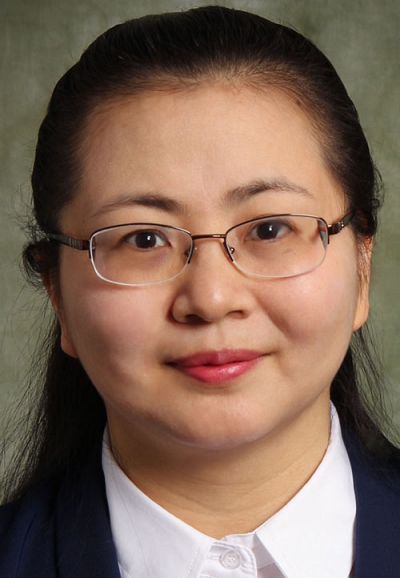
Ping Yang is a Professor and Associate Director for Research and Graduate Programs in the School of Computing at Binghamton University (SUNY). She holds a Ph.D. in Computer Science from Stony Brook University, an ME from the Chinese Academy of Sciences, and a BS from Zhongshan University. Her research focuses on cybersecurity, AI-based security, virtual machine security, privacy policy analysis, and formal methods. She directs the Center for Information Assurance and Cybersecurity and coordinates cybersecurity programs at both undergraduate and graduate levels. Education: BS in Computer Science, Zhongshan University ME in Computer Science, Chinese Academy of Sciences MS and PhD in Computer Science, State University of New York at Stony Brook Research Interests: Dr. Yang's work spans information and systems security, security in virtualized computing, access control mechanisms, privacy policies, and formal methods for security verification. Her projects include blockchain-based provenance storage, real-time anomaly detection in workflows, and privacy-preserving virtual machine migration. She has led NSF-funded initiatives on security in cloud environments and scientific workflows. Awards: Not explicitly listed in the provided materials. Advising & Grants: Advised over 30 PhD/Master’s students and contributed to grants including NSF Scholarship for Service and GenCyber programs. Her team develops tools like RBAC-PAT for access control analysis. Labs/Teams: Leads the Center for Information Assurance and Cybersecurity and collaborates on projects involving secure data workflows and blockchain applications in scientific research.