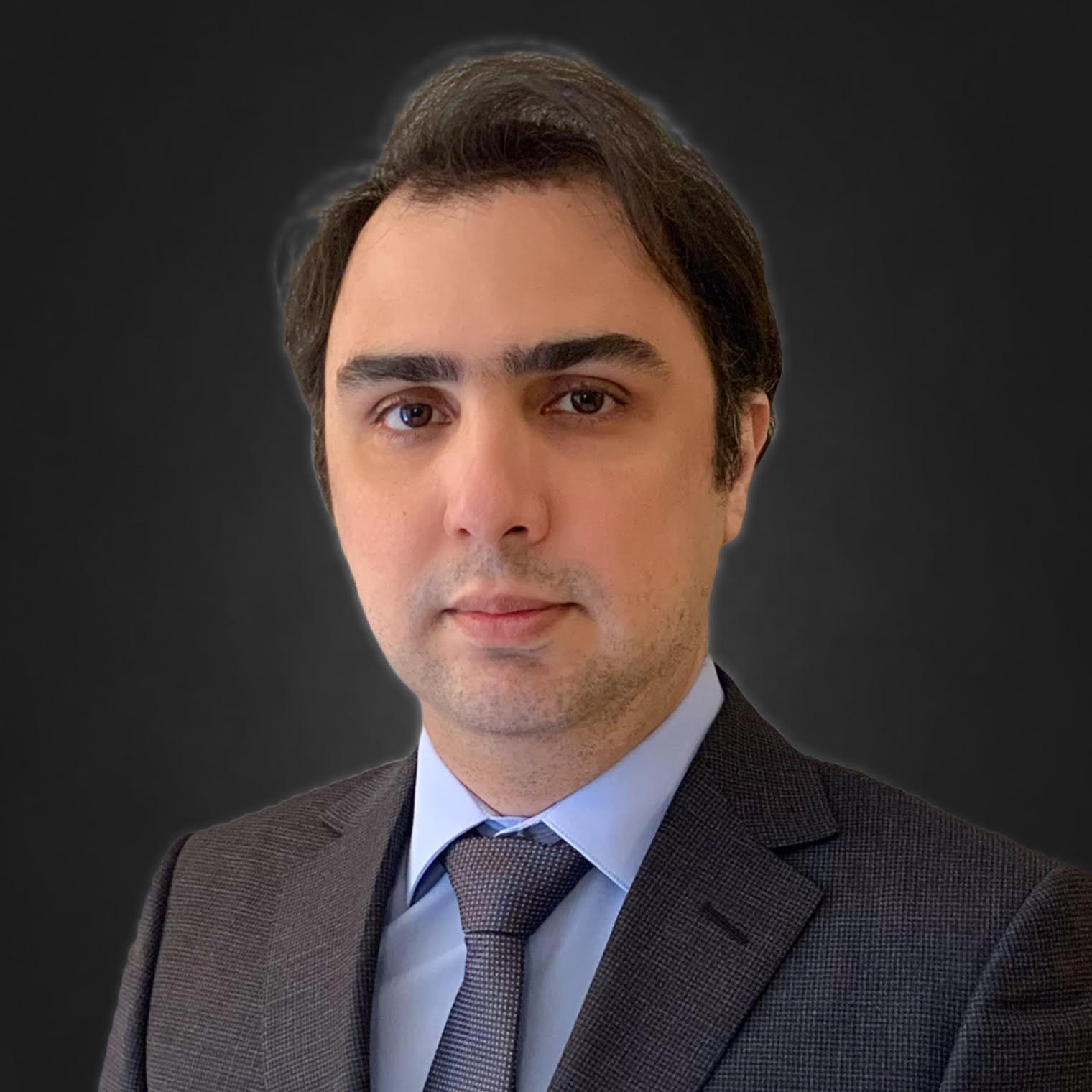
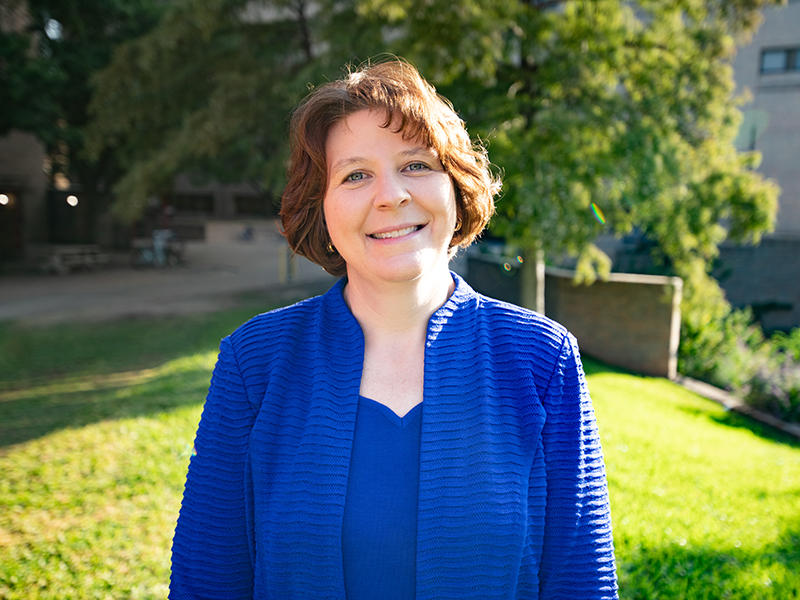
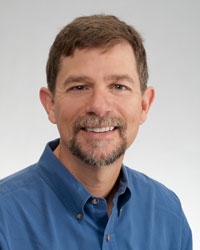
Anoosheh Heidarzadeh is an Assistant Professor in the Department of Electrical and Computer Engineering at Santa Clara University's School of Engineering. He holds a Ph.D. in Electrical and Computer Engineering from Carleton University (2012) and previously served as a Visiting Assistant Professor at Texas A&M University (2018-2022) and Associate Research Scientist at the same institution (2015-2017). His postdoctoral research was conducted at the California Institute of Technology (2013-2014). His research focuses on: Information and coding theory : Fundamental limits of data transmission and storage systems Private and secure computing : Protocols for confidential data processing in networked environments Fault-tolerant distributed systems : Resilient computation frameworks for large-scale applications Distributed machine learning : Scalable algorithms for collaborative learning architectures Recent publications (2021-2022) demonstrate strong emphasis on privacy-preserving computation (covering 73% of articles) and distributed coding techniques (67% of articles), with innovations in private information retrieval, matrix operations, and group testing methodologies. Theoretical contributions dominate (87%), while 13% address applied challenges like COVID-19 screening.
Alex Lombardi is an Assistant Professor of Computer Science at Princeton University, specializing in cryptography and theoretical computer science. His work explores cryptographic proof systems, post-quantum security, and quantum cryptography. Princeton University (Current) Simons-Berkeley Postdoctoral Fellow (Former) MIT (Graduate Training) Visiting Scientist, Cryptography 10 Years Later Program (2025) Education: PhD in Computer Science from MIT (advised by Vinod Vaikuntanathan) Master's Thesis on Provable Instantiations of Correlation Intractability and the Fiat-Shamir Heuristic Dr. Lombardi's research spans foundational cryptography, with a focus on indistinguishability obfuscation, worst-case assumptions, and quantum cryptographic protocols. His work on SNARGs and PPAD hardness has advanced cryptographic proof systems, while his recent projects address quantum verification and post-quantum security. He encourages prospective cryptography students to apply to Princeton's PhD program. His publications highlight advancements in LWE-based cryptography, quantum protocols, and complexity-theoretic foundations. Key themes include secure computation, hash function design, and cryptographic reductions under quantum assumptions. Scientific Awards: Simons-Berkeley Postdoctoral Fellowship Dr. Lombardi serves on program committees for STOC 2025, EUROCRYPT 2025, and other conferences. He has taught courses like COS 433/533 (Cryptography) and COS 533 (Advanced Cryptography) at Princeton.
Venkatesan Guruswami is a Chancellor's Professor in the Department of EECS and a Senior Scientist at the Simons Institute for the Theory of Computing at UC Berkeley . He also holds a Professor position in the Department of Mathematics . His academic journey began with a B.Tech in Computer Science from the Indian Institute of Technology, Madras (1997) , followed by a Ph.D. in Computer Science from the Massachusetts Institute of Technology (2001) . After a Miller Research Fellowship at UC Berkeley (2001–02), he held faculty roles at the University of Washington and Carnegie Mellon University before returning to UC Berkeley in January 2022. Education : B.Tech, IIT Madras (1997) Ph.D., MIT (2001) Professional Affiliations : Chancellor's Professor, UC Berkeley (EECS) Senior Scientist & Interim Director, Simons Institute Professor, UC Berkeley (Mathematics) Guruswami's research spans multiple domains within Theoretical Computer Science , focusing on Error-Correcting Codes , Approximation Algorithms , Randomness in Computing , Probabilistically Checkable Proofs , and Computational Complexity . His groundbreaking work in List Decoding has enabled codes with minimal redundancy for correcting worst-case errors, while recent advancements include Polar Codes , Deletion-Correcting Codes , and Constraint Satisfaction Problems . He has also contributed to Quantum Coding Theory , Locally Recoverable Codes , and Approximation Hardness in various computational contexts. His publications reflect a deep engagement with interdisciplinary topics. Key trends include: Quantum Information Theory : Quantum LDPC codes, transversal gates, and quantum storage. Algebraic Coding : Reed-Solomon codes, AG codes, and polynomial-based constructions. Computational Complexity : Hardness of approximation, CSPs, and parameterized intractability. Data Transmission : Polar codes, deletion channels, and feedback mechanisms. Algorithmic Techniques : Spectral methods, semirandom models, and Lasserre hierarchy applications. Guruswami has received numerous accolades, including the Simons Investigator Award , Presburger Award , Packard Fellowship , Sloan Research Fellowship , ACM Doctoral Dissertation Award , and the IEEE Information Theory Society Paper Award . He is an ACM Fellow (2017) and IEEE Fellow (2019) , with recent honors like the Guggenheim Fellowship (2023) and AMS Fellow (2023) . As an advisor, he has mentored over 25 PhD and postdoctoral researchers , including Atri Rudra , Prasad Raghavendra , and Peter Manohar , whose work has won awards like the Edmund M. Clarke Doctoral Dissertation Award and CRA Outstanding Undergraduate Researcher Award . His research is supported by grants from the National Science Foundation , Packard Foundation , and Sloan Foundation . He also serves as Editor-in-Chief of the Journal of the ACM and holds leadership roles in IEEE and arXiv moderation. Guruswami is actively involved in Simons Institute programs and co-organized workshops on Coded Computation and Information Theory . His work bridges theoretical advancements with practical applications in Cloud Storage , Quantum Computing , and Group Testing , including pandemic-era contributions like AC-DC: Amplification Curve Diagnostics for SARS-CoV-2 .
Kash Barker serves as the John A. Myers Professor and David L. Boren Professor at the University of Oklahoma in the Department of Industrial & Systems Engineering within the College of Engineering. As Graduate Liaison, he leads research on network resilience, supply chains, and systems engineering for societal good, with applications spanning infrastructure, supply chains, and community systems. His lab has produced 11 Ph.D. graduates (10 in academia) and 31 M.S. graduates. Research Domains: Resilient networks and interdependent systems Risk and decision analytics Supply chain survivability Pandemic economic impact modeling Climate migration optimization Cyber-Physical-Social Systems Article Trends emphasize disinformation defense , network restoration optimization , and multi-layer resilience modeling across infrastructure, supply chains, and community systems. His work combines game theory , machine learning , and decision analysis frameworks. Scientific Awards & Roles: Fellow, Institute of Industrial and Systems Engineers Senior Member, IEEE Fellow, Fulbright Finland Foundation (2023) Associate Editor roles in IISE Transactions and Naval Research Logistics Editorial Board Member for Risk Analysis and Scientific Reports Faculty Advisor, OU INFORMS student chapter Educational Background: Ph.D., Systems Engineering, University of Virginia M.S., Industrial Engineering, University of Oklahoma B.S., Industrial Engineering, University of Oklahoma
Fu-Kuo Chang is a Professor in the Department of Aeronautics and Astronautics at Stanford University, with a secondary affiliation in the Bio-X program. His research focuses on multifunctional materials, intelligent structures, and structural health monitoring (SHM), emphasizing applications in aerospace, robotics, and medical devices. He has pioneered work on embedded sensors, self-diagnostic systems, and energy storage composites. Academic Appointments: Professor (Stanford), Editor-in-Chief of International Journal of Structural Health Monitoring (since 2012), and Chair of the International Workshop on Structural Health Monitoring (since 1997). Honors: Multiple lifetime achievement awards in SHM, AIAA and ASME Fellowships, and the NSF Presidential Young Investigator Award (1988). Research interests include bio-inspired sensory materials, autonomous systems (e.g., 'fly-by-feel' vehicles), and multidisciplinary integration of structural mechanics, electrical engineering, and materials science. His recent work addresses challenges in smart skins for robotics, thermoplastic composites, and predictive modeling of material degradation. Publications span structural health monitoring, advanced composites, and robotics, reflecting expertise in both theoretical and applied domains. His lab, the Structures and Composites (SACL) laboratory, drives innovation in smart materials and system integration. Advising: Supervises doctoral and master’s students in aeronautics and materials science. Grants/Contributions: Active in industry and government collaborations, including roles on the US Army Research Laboratories Advisory Board and leadership in SHM industry initiatives.
Carolyn Conner Seepersad serves as the J. Mike Walker Professor of Mechanical Engineering at the University of Texas at Austin and directs the Center for Additive Manufacturing and Design Innovation. She holds membership in the U.T. System Academy of Distinguished Teachers and maintains active leadership in the additive manufacturing community through roles such as co-organizer of the Solid Freeform Fabrication Symposium and ASME Design Engineering Division Executive Committee membership. Her academic credentials include: PhD in Mechanical Engineering from Georgia Tech (2004) MA/BA in Philosophy, Politics and Economics from Oxford University (1998, Rhodes Scholar) BS in Mechanical Engineering from West Virginia University (1996) Dr. Seepersad's research centers on computational design methodologies and additive manufacturing innovation , with particular expertise in simulation-based design of complex systems, environmentally conscious product development, and materials engineering. Her work bridges theoretical design frameworks with practical manufacturing applications, emphasizing sustainability and performance optimization across aerospace, automotive, and energy systems. Current projects explore reactive extrusion additive manufacturing, negative stiffness materials, and machine learning integration for process-aware design. Analysis of her 15 most recent publications reveals a dominant focus on process innovation in additive manufacturing (70%), particularly stereolithography and selective laser sintering, with growing emphasis on data-driven design approaches (20%) and sustainable engineering applications (10%). Her work demonstrates consistent progression from fundamental material design toward integrated system optimization and industrial scalability. Her scientific recognition includes: International Outstanding Young Researcher Award in Freeform and Additive Manufacturing (2009) UT System Regents’ Teaching Award (2010) ASME Design Automation Committee Outstanding Young Investigator Award (2010) ASEE Outstanding New Mechanical Engineering Educator Award (2013) Multiple ASME and ASEE best paper awards U.T. System Academy of Distinguished Teachers membership Dr. Seepersad maintains an extensive advising portfolio with 48 graduate students (16 PhD, 24 MS, and 8 current) plus 2 postdoctoral researchers, reflecting sustained research productivity and educational impact. Her Product, Process, and Materials Design Lab fosters interdisciplinary collaboration between mechanical engineering, materials science, and computational design teams.
Sean Ovens is a Postdoctoral Fellow at the University of Waterloo, specializing in distributed computing theory. His research focuses on proving lower bounds for time and space complexities of distributed algorithms, with interests in concurrent data structures, randomized algorithms, and performance profilers for multithreaded applications. PhD in Computer Science (2023), University of Toronto MSc in Computer Science (2019), University of Calgary BSc in Computer Science (2017), University of Calgary Sean has received Best Paper Awards at the 2024 and 2022 ACM Symposiums on Principles of Distributed Computing (PODC). He has extensive teaching experience as a Teaching Assistant and Instructor at the University of Toronto, contributing to courses in data structures, distributed computing theory, and computability. His professional activities include organizing workshops for underrepresented groups in AI research, mentoring graduate applicants, and participating in competitive programming initiatives. Sean is also a certified educator with training in hybrid teaching strategies and cultural humility.
Dr. Adnan Anwar Malik serves as Head of STEM Programs, Senior Lecturer, and Program Coordinator for Civil Engineering at the University of Newcastle Australia within the College of Engineering, Science and Environment. His academic career began in 2018 after five years as a professional geotechnical engineer with international firms. His educational background includes a Ph.D. and Master of Engineering in Environmental Science and Civil Engineering from Saitama University, Japan, and a B.Sc. in Geological Engineering from the University of Engineering and Technology Lahore, Pakistan. His research focuses on deep foundations and excavation systems, with specialization in eco-friendly piling techniques like press-in and rotary press-in driven piles. Dr. Malik's recent publications demonstrate strong trends in sustainable geotechnical solutions, particularly screw pile technology optimization, recycled construction materials, and unsaturated soil mechanics. His work combines experimental testing with numerical modeling to address challenges in difficult subsurface conditions and waste material utilization. His scientific achievements include multiple prestigious awards: Best presentation award at the 1st International Symposium on Construction Resources (2021) Best presenter at the 50th National Conference on Geotechnical Engineering (2015) MEXT Scholarship for doctoral studies (2012) Excellent Master Thesis award from Saitama University (2011) Asian Development Bank scholarship (2009) While specific grant details aren't provided, his research demonstrates significant industry relevance through practical applications in sustainable construction. His leadership roles include Head of STEM Programs and Civil Engineering Program Coordination, reflecting his institutional impact beyond pure research.
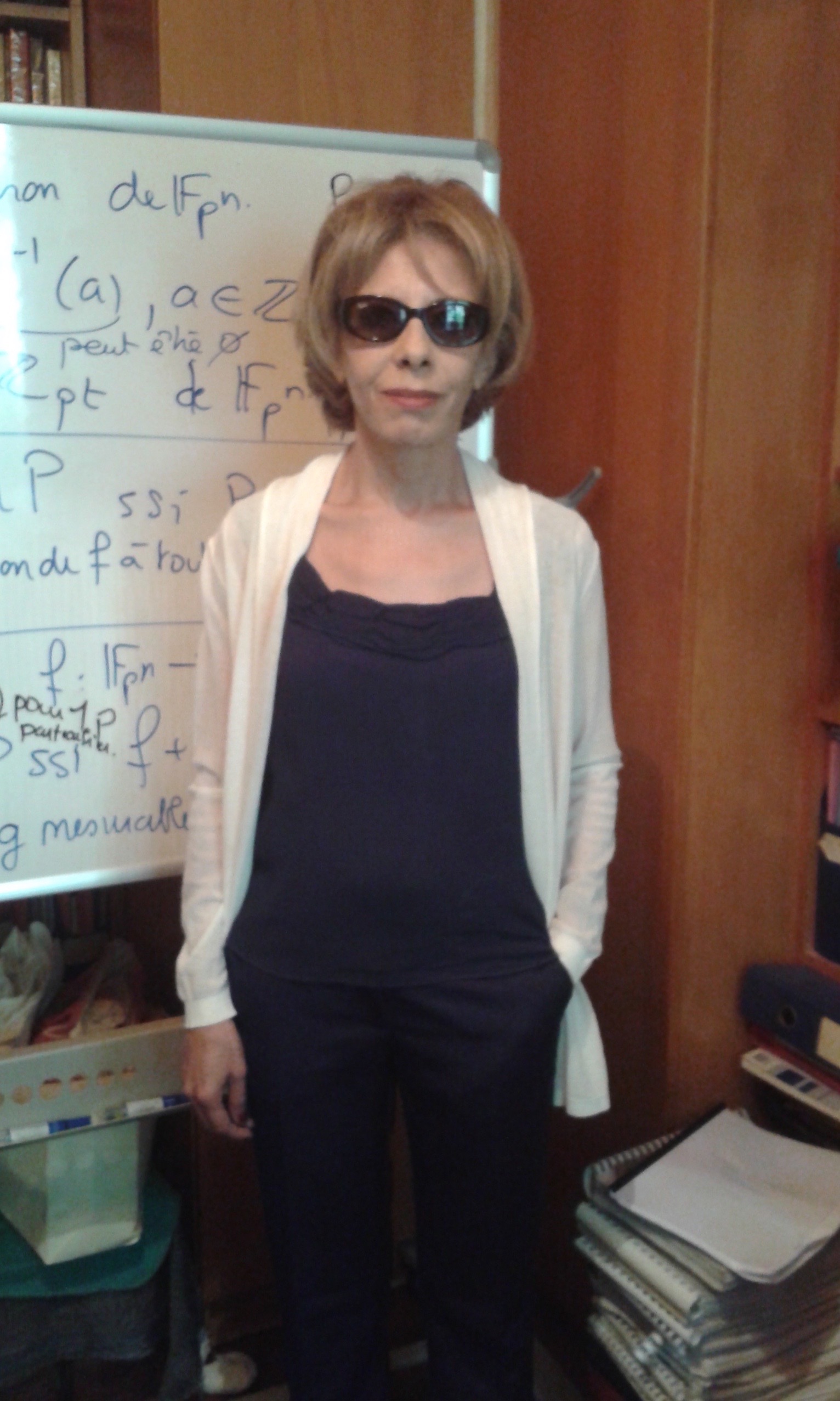
Sihem Mesnager is a University Professor of Mathematics at the University of Paris VIII, affiliated with the Laboratory of Analysis, Geometry and Applications (LAGA) at Paris XIII (CNRS) and the AGC3 research group (Algebra, Geometry, Combinatorics) . She holds an adjunct professorship at Télécom Paris within the MIC2 Mathematics team of the Computer Science and Networks department (INFRES). Her work bridges pure mathematics and applied cryptography, focusing on Boolean functions, bent functions, and coding theory for secure communication and data protection. PhD in Mathematics, University of Pierre and Marie Curie (Paris VI), Sorbonne University (2002) Habilitation (HDR) in Mathematics, University of Paris VIII (2012) Research Interests Dr. Mesnager specializes in symmetric cryptography and coding theory , particularly their applications to secure digital communication, error correction, and post-quantum cryptographic protocols. Her algebraic approach employs finite fields, exponential sums, algebraic geometry, and finite geometry to analyze and construct cryptographic primitives like S-boxes, APN functions, and optimal linear codes. She also investigates algorithmic aspects of computer algebra in these domains. Scientific Awards George Boole International Prize (2020) PEDR Excellence Scientific Award (2019-2022) PEDR Excellence Scientific Award (2014-2017) Publications & Projects Her recent work includes constructing weightwise perfectly balanced Boolean functions for the FLIP cipher, optimizing Inner Product Masking schemes via coding theory, and developing post-quantum secure functional encryption using multivariate cryptography. She has contributed to Reed-Muller codes, BCH codes, and Gaussian sum-based linear codes with one-dimensional hulls, emphasizing their applications in side-channel attack resistance and quantum error correction.
Professor Suzanne Fielding is a faculty member at the Department of Physics, Durham University. She holds a Professor academic rank and has been actively contributing to the field of soft condensed matter physics since 2009. Her research focuses on flow instabilities, shear banding, viscoelastic turbulence, soft glassy rheology, and biologically active suspensions. Education: BSc in Physics, University of Oxford (1997) PhD in Physics, University of Edinburgh (2000) Her research explores how complex fluids and soft solids deform and fail under stress, with particular emphasis on shear banding phenomena, flow-induced phase transitions, and mechanical properties of biological tissues. Recent work investigates delayed material failure, recoverable strain mechanisms, and nonmonotonic stress relaxation patterns. Key trends in her 15 most recent publications (2025–2022) include: shear banding across amorphous materials and granular flows; mechanical cloaking in auxetic systems; rheological behavior of biological tissues; and theoretical models of friction aging. These studies span journals like Physical Review and Soft Matter , often combining computational simulations with analytical physics. Scientific Awards: Arthur B. Metzner Award, Society of Rheology Her funding history includes prestigious fellowships: EPSRC Postdoctoral Research Fellowship (2003–2006), EPSRC Advanced Research Fellowship (2007–2012), and ERC Starting/Consolidating Grant (2012–2017). She has supervised PhD student Sam Walker and collaborates extensively with researchers in soft matter physics and rheology.
Jannik Matuschke serves as Associate Professor in the Department of Decision Sciences and Information Management at KU Leuven's Faculty of Economics and Business (FEB). He is an active member of both the KU Leuven Institute for Artificial Intelligence (Leuven.AI) and the KU Leuven Institute for Mobility (LIM), holding office at Hogenheuvelcollege (HOGC) 04.123 in Leuven, Belgium. His academic career spans multiple prestigious institutions across Europe, reflecting his international recognition in operations research and theoretical computer science. Dr. Matuschke completed his PhD in Mathematics in 2013 at Technische Universität Berlin under Martin Skutella and Britta Peis. His academic journey included a postdoctoral position at Universidad de Chile (2014), a DAAD P.R.I.M.E. fellowship at the University of Rome 'Tor Vergata' (2015), and a junior group leader/lecturer position at Technische Universität München (2016-2018) before joining KU Leuven in 2019. His research focuses on the intersection of discrete mathematics, theoretical computer science, and operations research, with specific expertise in combinatorial optimization, algorithm design and analysis, game theory and social choice, robustness and uncertainty, and logistics applications. Dr. Matuschke has made significant contributions to network flow theory, security games, and robust optimization frameworks, developing both theoretical foundations and practical applications. Analysis of his recent publications reveals a strong emphasis on robustness under uncertainty, with increasing focus on security applications and theoretical aspects of scheduling problems. His work demonstrates consistent innovation in decomposing complex optimization problems and developing approximation algorithms for challenging combinatorial settings. 2024 Meritorious Service Reward of the journal Operations Research Dr. Matuschke actively mentors several PhD students and postdocs, including Yanfei Chen, Léonie Gallois, Phablo Moura, Felix Rauh, and Fei Wu. He leads significant research projects such as 'Rigidity and Flexibility: Structures and Algorithms' (starting 2025), 'Designing resilient and recoverable infrastructures via multi-level and multi-stage optimization' (2022), and 'Optimization and analytics for stochastic and robust project scheduling' (2020), with funding from diverse sources including KU Leuven start-up grants, FWO research projects, and DAAD fellowships. As an integral member of the academic community, Dr. Matuschke serves as Associate Editor for Omega (since 2023), Operations Research Letters (since 2024), and OR Spectrum (since 2019). He co-chairs the program committee for WAOA 2025 and has participated in numerous prestigious conference committees. At KU Leuven, he coordinates the 'Master's Thesis in Production and Logistics' program and serves on the Teaching Portfolio Peer Review Committee.
Dr. Michael H. Young is a Research Professor at the Bureau of Economic Geology, Jackson School of Geosciences, University of Texas at Austin. He holds a Ph.D. in Soil and Water Science from the University of Arizona (1995), an M.S. in Hydrogeology from Ohio University (1986), and a B.A. in Geology from Hartwick College (1983). He has over 35 years of experience spanning academic research, federal regulation, and industry, focusing on environmental geosciences, hydrology, and soil science. Currently, he serves as Associate Director for Environmental Research at BEG (2010–2020) and on the Graduate Studies Committee for the Jackson School. His research spans vadose zone hydrology, soil-plant-water interactions, groundwater recharge, and the water-energy nexus. Notable contributions include studies on shale play impacts, CO₂ sequestration, and landscape evolution in arid regions. He has authored/co-authored over 100 peer-reviewed publications and serves on editorial boards, including the Vadose Zone Journal . His awards include Fellowships from the Geological Society of America and Soil Science Society of America. Dr. Young’s work integrates field, lab, and numerical modeling to address environmental challenges. He has led projects on induced seismicity, hydraulic fracturing impacts, and soil moisture networks like the Texas Soil Observation Network (TxSON). He advises on energy-water sustainability and has collaborated with institutions globally through consortia like the International Soil Modeling Consortium.
Anna-Lena Horlemann is an Associate Professor for Foundations of Computation at the School of Computer Science, University of St. Gallen. Her research focuses on algebraic coding theory, post-quantum cryptography, and network coding. She leads the Coding Theory and Cryptography research group, actively contributing to NIST's post-quantum standardization efforts. Her work addresses quantum computing threats to current cryptosystems and develops error-correcting codes for reliable data transmission and storage. Education: PhD in Mathematics from the University of Zurich (2013), supervised by Prof. Joachim Rosenthal. Diploma in Mathematics from Ruhr-Universität Bochum. Research interests span coding theory (e.g., rank-metric codes, subspace codes), cryptography (code-based systems, privacy protocols), and neuroinformatics (connectome analysis). Recent publications emphasize Lee metric applications, MDS code classification, and cryptanalysis of Gabidulin-based systems. She mentors doctoral researchers such as Nadja Willenborg and Violetta Weger, focusing on topics like code densities and quantum-resistant algorithms. Her team's work bridges theoretical foundations and practical implementations, with contributions to error-correction resilience and cryptographic security in post-quantum scenarios. No formal awards listed, but actively participates in international conferences (IEEE, CBCrypto) and journal reviews.
Charul Rajput is a Research Fellow at Aalto University's Department of Mathematics and Systems Analysis, School of Science. Their research focuses on Information Theory, Coding Theory, Discrete Mathematics, and Algebra, with a particular emphasis on caching systems and network optimization. Recent work includes advancements in hierarchical coded caching, hotplug models, and error probability analysis in communication channels. Publications span topics like function-correcting codes, private information retrieval, and locally recoverable codes. Rajput's research also intersects with systems analysis, addressing challenges in distributed storage and network efficiency. Research interests include the theoretical foundations of coding and information theory, with applications to modern communication systems. Key contributions address the design of efficient caching schemes and error-correcting codes for high-performance networks. No scientific awards or grants are explicitly mentioned in the provided texts. Rajput is affiliated with the Algebra and Discrete Mathematics research group at Aalto University, contributing to interdisciplinary projects that bridge pure mathematics and practical network systems.
Christina Busing is a Full Professor for Combinatorial Optimization at RWTH Aachen University, a position she has held since 2021. Previously, from 2016 to 2021, she served as a Junior Professor for Robust Planning in Medical Care at the same institution. She leads the Teaching and Research Group on Combinatorial Optimization, contributing significantly to the academic community through her research and teaching activities. Her educational background includes Mathematics studies at WWU Münster, Universidad Comlutense de Madrid, and the Technical University of Berlin. Her doctoral work was completed under the supervision of Prof. Möhring, focusing on Recoverable Robustness in Combinatorial Optimization. She has also held postdoctoral positions at institutions in Aachen, Lancaster, and Vienna. Professor Busing's research spans multiple areas of optimization theory and application. Her work focuses on optimization under uncertainty, robust optimization, scenario generation, combinatorial optimization, complexity theory, optimality criteria, and both exact and heuristic algorithms. She has made significant contributions to applying these theoretical frameworks to practical problems in healthcare, energy systems, and transportation networks. Her interdisciplinary approach bridges theoretical computer science with real-world operational challenges. Her extensive publication record demonstrates a consistent focus on robust combinatorial optimization, with recent work emphasizing applications in healthcare systems, particularly in patient-to-room assignment, primary care scheduling, and pharmacy services. She has developed novel methodologies for handling uncertainty in optimization problems, including recycling valid inequalities and designing consistent decision frameworks for two-stage optimization problems. RWTH Aachen Brigitte Gilles Award for contributions to the advancement of women in science (2022) RWTH Aachen FAMOS Award for excellent family-friendly leadership (2019) RWTH Aachen university-wide Best Teaching Award (2018) TU Berlin Best Diploma Excellence Award in Mathematics (2008) German National Scholarship (Cusanuswerk) (2003-2007) Professor Busing serves on multiple program committees including EURO (2019), INOC (2018), and ESA (2017). She is also involved with the UnRAVeL Graduate College since 2018. Her teaching portfolio includes courses on Graph and Network Optimization, Mathematical Heuristics for Discrete Optimization Problems, and Combinatorial Optimization. She has developed problem-based learning approaches for heuristic methods in decision problems across mathematics, computer science, and industrial engineering. Her research group actively collaborates on interdisciplinary projects addressing operational issues in healthcare, energy systems, and transportation networks, developing mathematically optimized solutions for complex real-world challenges.