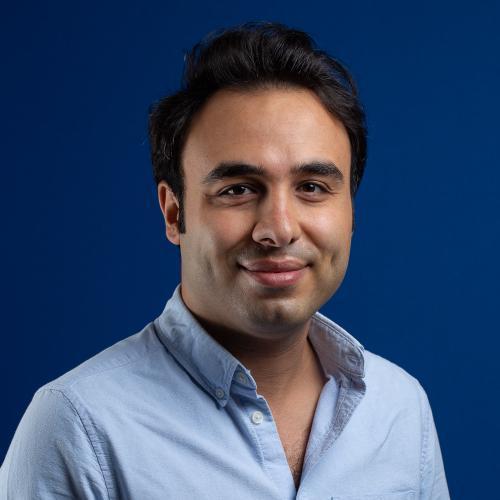
Soheil Mohammadi is an Adjunct Professor at the Department of Naval, Electrical, Electronic and Telecommunications Engineering (DITEN), University of Genoa. He teaches Multi-Hazard Impact and Risk Assessment in the Master's program in Engineering for Natural Risk Management. His research focuses on: Disaster recovery methodologies for urban systems Multi-hazard risk assessment integrating floods, seismic events, and pandemics Urban resilience planning using tools like Fuzzy Cognitive Mapping Development of recovery frameworks for sustainable settlements Mohammadi's publications (2020-2025) emphasize resilience-based solutions for cities exposed to natural hazards, with recurring themes in seismic/flood recovery, participatory planning, and critical infrastructure interdependencies. No awards, grants, or supervised students are documented.
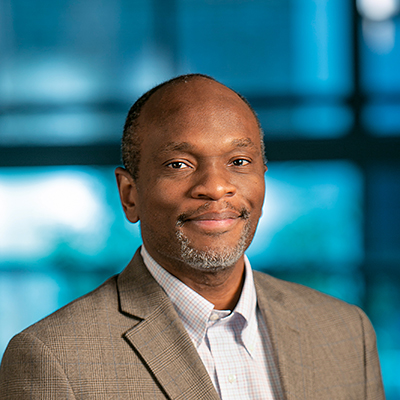
Chinedum O. Osuji is the Eduardo D. Glandt Presidential Professor and Department Chair of Chemical and Biomolecular Engineering at the University of Pennsylvania's School of Engineering and Applied Science. He also holds a secondary appointment in Materials Science and Engineering. His research integrates multiple disciplines to advance fundamental understanding of soft matter while addressing critical challenges in water purification, energy generation, and advanced materials development. Professor Osuji's research spans several interconnected areas including soft matter physics, complex fluids, directed self-assembly, and nanostructured membranes. His lab investigates how external fields (magnetic, electric, optical) can control the spatiotemporal structuring of self-assembled soft materials, with particular focus on liquid crystals, block copolymers, and nanocomposites. A significant thrust of his work involves developing autonomous experimentation platforms to accelerate soft materials discovery, particularly through the Soft-AE system that integrates machine learning with high-throughput characterization. Analysis of his recent publications reveals a strong focus on membrane science for separation applications, with particular emphasis on precisely engineered nanoporous structures at the sub-1 nm scale. His work bridges fundamental soft matter physics with practical applications in water purification, energy storage, and responsive materials. The research consistently demonstrates how controlling nanoscale structure through directed self-assembly leads to enhanced macroscopic properties. Osuji has been recognized with the prestigious Eduardo D. Glandt Presidential Professorship, highlighting his significant contributions to engineering and materials science. His research has been published in top-tier journals including Nature Materials , Science Advances , ACS Nano , and Proceedings of the National Academy of Sciences . Professor Osuji maintains an active research group with numerous PhD students, postdoctoral researchers, and collaborators across multiple research thrusts. His lab is organized into specialized subgroups focusing on Autonomous Experimentation, Directed Self-Assembly, Membrane Separations, and Complex Fluids. This structure enables deep expertise in specific areas while facilitating cross-pollination of ideas between research domains. The Osuji Lab operates from facilities in Towne Hall (office) and the Moore building (research space), with equipment supporting advanced materials characterization including microscopy, scattering techniques, and rheological measurements. The lab's collaborative approach extends to partnerships with other Penn researchers and external institutions, particularly in advancing membrane technologies for water purification and energy applications.
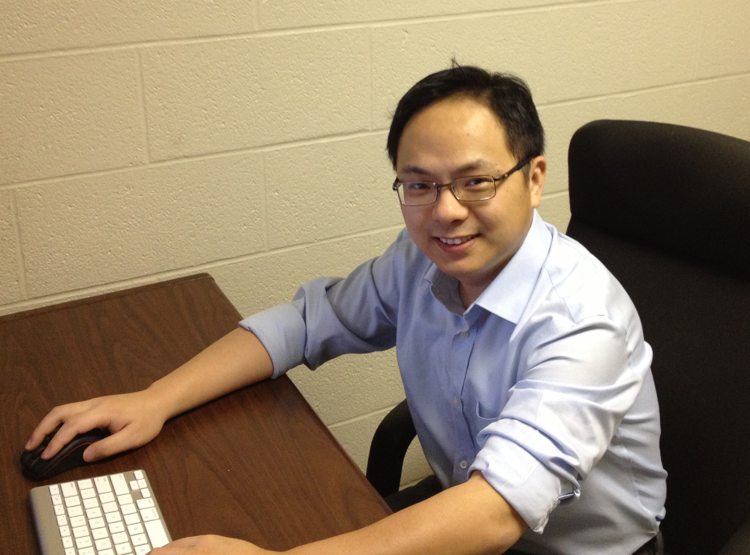
Xiao Shen is an Associate Professor in the Department of Physics and Materials Science at the University of Memphis, College of Arts and Sciences. As a computational physicist, his research focuses on condensed matter physics and modern electronic-structure methods to investigate solid-state phenomena. Research areas: 2D materials (particularly silicon telluride), memristive systems, thermoelectrics, defect engineering, ferroelectric metals, and magnetocaloric effects Teaching: Quantum Mechanics, Statistical Mechanics, and Computational Physics courses Funding: National Science Foundation, ORAU Ralph E. Powe Jr. Faculty Enhancement Award, University of Memphis Research Investment Fund, and College of Arts and Sciences Early Career Research Award His publications (2015-2025) demonstrate expertise in computational modeling of phase transitions in vanadium dioxide, defect engineering in garnet crystals, memristive switching mechanisms, and 2D nanomaterials with applications in electronics and energy systems. Scientific awards include: National Science Foundation grants Ralph E. Powe Jr. Faculty Enhancement Award (ORAU) Early Career Research Award (University of Memphis) Research Investment Fund support Dr. Shen actively supervises research projects and has published extensively on topics ranging from radiation effects in semiconductors to nanostructured supercapacitor materials , with recent work focusing on ultrafast phase transitions and dimensional material properties .
Dr. Wei Pan is an Honorary Research Fellow in the Department of Mathematics at Imperial College London, affiliated with the Faculty of Natural Sciences. His research focuses on applied mathematics, mathematical physics, and computational modeling with applications in energy systems, particularly fuel cells and lithium-ion batteries. He specializes in developing advanced models for electrochemical systems, integrating machine learning and multi-physics approaches to address challenges in energy storage and conversion. Dr. Pan's work spans interdisciplinary areas including electrochemistry, thermal engineering, and material science. His affiliations include the Mathematics of Planet Earth initiative and the Stochastic Analysis Research Group, reflecting his commitment to applied mathematical research with real-world impact. His recent publications highlight innovative methods for fuel cell performance optimization, battery state-of-charge estimation, and degradation modeling to enhance energy system reliability and efficiency. Key research trends in his articles include the application of reduced-order models, machine learning-driven simulations, and coupled electrochemical-thermal-mechanical frameworks to improve energy storage technologies. His methodologies emphasize practical implementation through computational tools and multi-scale analysis. Dr. Pan has not listed any awards or grants in the provided text, but his affiliations suggest ongoing collaborations within Imperial College's research networks. No advising roles or student supervision details are available in the current data.
Dr. Shuvajit Bhattacharya is a Research Associate Professor at the Bureau of Economic Geology , part of The University of Texas at Austin . He leads the HotRock geothermal research consortium and contributes to projects on geothermal energy, unconventional oil/gas resources, carbon storage, and geologic hydrogen. His work focuses on advancing geophysical and petrophysical data processing workflows for integrated subsurface characterization. Education : Ph.D. in Geology (West Virginia University, 2016), M.Sc. in Applied Geophysics (IIT Mumbai, 2010), B.Sc. in Geology (University of Calcutta, 2008) Research Interests span geophysics, petrophysics, integrated subsurface characterization, and machine learning. His work addresses energy-water nexus challenges, geological carbon sequestration, and unconventional resource recovery using cutting-edge geophysical techniques. Recent Publications highlight advancements in CO2 storage security, geothermal exploration, shale reservoir characterization, and water resource management. His article in 2025 on formate-alternating-gas injection demonstrates innovative approaches to co-optimizing oil recovery and carbon storage. Scientific Awards : A.I. Levorsen Award (2023), J. Clarence Karcher Award (2022), multiple student competition wins (2015) Professional History includes roles at The University of Texas at Austin (2020-present), University of Alaska Anchorage (2017-2020), and Battelle Memorial Institute (2016-2017). He has extensive experience in both academic and industry settings, blending theoretical research with practical applications.
Chirica Maria Iuliana serves as a Researcher at the National Institute of Materials Physics in Romania, affiliated with the Laboratory of Catalytic Materials and Catalysis. Her academic background includes a Bachelor's (2014-2017), Master's (2017-2019), and PhD (2019-2022) in Chemistry and Physics from the University of Bucharest. Her research focuses on heterogeneous catalysis with specialization in MAX phases (3D layered ternary carbides/nitrides) and MXenes (2D materials). Key application areas include catalytic selective oxidation, chemoselective hydrogenation, and PET depolymerization for circular economy solutions. Her experimental expertise spans materials synthesis (co-precipitation, hydrothermal, sol-gel), catalyst preparation (wet impregnation), and advanced characterization techniques (XRD, FTIR, SEM-EDXS, GC-MS). Analysis of her 11 publications (2020-2025) reveals strong emphasis on MXene catalysts for plastic upcycling (notably PET-to-terephthalic acid conversion) and MAX phase-supported systems for methane oxidation and hydrogenation reactions. Her work bridges fundamental materials science with sustainable chemical processes, showing increasing focus on environmental applications since 2021. Best poster award at Catalysis Science & Technology Symposium (2021) Mention award at University of Bucharest Student Scientific Session (2017) Her laboratory work involves developing recoverable solid acid catalysts and investigating ion release mechanisms in bioactive glasses. Current projects focus on optimizing sulfonated MXenes for polymer recycling and designing copper-gallium doped bioglass coatings with antimicrobial properties for medical implants.
S. Sebnem Ahiska King is an Associate Teaching Professor at the Fitts Department of Industrial and Systems Engineering , NC State University. She previously held roles as Assistant Professor and later Adjunct Associate Professor/Lecturer at Galatasaray University in Turkey, where she taught Operations Research courses in English and French. Her academic journey includes a Ph.D. and Master's from NC State and Galatasaray University, respectively, alongside a Bachelor's from Istanbul Technical University. Her research interests revolve around Operations Research applications , particularly in stochastic processes for manufacturing/remanufacturing systems, unreliable multi-supplier systems, and logistics network design. She also explores recoverable systems and mathematical programming for production and inventory management. Her work emphasizes real-world problem-solving in supply chain resilience and decision-making under uncertainty. Ahiska King’s teaching focuses on Operations Research core courses such as Mathematical Programming Modeling, Stochastic Processes, Discrete Optimization, Inventory Management, Logistics Engineering, and Engineering Economic Analysis. She maintains an active role in curriculum development through her affiliation with the CAMAL research group . Her recent publication (2021) in Omega - The International Journal of Management Science addresses optimal ordering strategies in two-supplier systems prone to disruptions, reflecting her expertise in supply chain and stochastic modeling. Though no formal grants or awards are listed, her extensive academic career and cross-continental collaboration highlight her contributions to the field.
Dr. Vinayak Ramkumar is a Postdoctoral Researcher at the Institute for Communications Engineering, Technical University of Munich (TUM), under Prof. Antonia Wachter-Zeh’s COD group. Previously, he was a Postdoctoral Fellow at Tel Aviv University (2023–2024) and a Visiting Researcher at Washington University in St. Louis. He earned his Ph.D. from the Indian Institute of Science (2023) under Prof. P. Vijay Kumar. His research focuses on Coded computation , Erasure codes for distributed storage , Information-theoretic privacy , Codes for low-latency streaming , and Quantum codes . Key contributions include explicit constructions of streaming codes and quantum locally recoverable codes. He has received prestigious awards, including the Qualcomm Innovation Fellowship India (2021) and the Prof. F. M. Mowdawalla Medal (2017–18) for his M.Sc. thesis. His work bridges theoretical foundations with practical applications in distributed systems and quantum computing.
Dr. Alexander Barg is a Professor of Electrical and Computer Engineering (ECE) at the University of Maryland, College Park, with affiliate appointments in Computer Science, Mathematics, and the Institute for Systems Research. He holds a Ph.D. from the Russian Academy of Sciences (1987). His research focuses on coding theory, quantum codes, information theory, and distributed storage systems. He has advised numerous graduate students and postdocs, contributing to advancements in error-correcting codes and quantum computing. His work spans theoretical foundations and applications, including smoothing of codes, quantum code design, and recoverable storage systems. He has authored over 200 publications and serves on editorial boards of leading journals like IEEE Transactions on Information Theory and Foundations and Trends® in Communications and Information Theory . He teaches graduate and undergraduate courses on information theory, coding, and probability. Research highlights include contributions to classical and quantum coding bounds, LDPC codes, and polar codes. His grants and awards reflect sustained NSF support for projects on discrepancy theory, energy optimization, and distributed storage.
Vítor Gaspar is an Assistant Professor in the Department of Chemistry at the University of Aveiro, affiliated with the COMPASS Group and the G5 - Biomimetic, Biological and Living Materials research unit. His work focuses on bioengineered materials for cancer research, 3D tumor modeling, and drug screening applications. He has supervised multiple PhD students and contributed to projects such as O2CELLS (European Commission-funded) and 3S4Leather (industry collaboration). Research interests include biomaterials engineering, tumor-stroma interactions, and nanomedicine. His recent studies emphasize 3D bioprinting of tumor models, surface-enhanced Raman scattering for biomarker detection, and genetic engineering of living materials. Notably, he received the Young Researchers Award 2021 for contributions to cancer treatment innovations. Key projects involve developing oxygen-releasing biomaterials for tissue engineering, recovering rare earth elements from catalytic converters, and valorizing leather waste via additive manufacturing. His lab collaborates with institutions globally, advancing translational biomedical research. Advising includes seven current PhD students, and his grants include HORIZON and FCT funding. He leads efforts in biofabrication, cellular hybrid materials, and in vitro tumor models for drug discovery.
Ryan Chahrour is the Ernest S. Liu Professor of Economics and International Studies at Cornell University. His research focuses on the role of beliefs in driving macroeconomic phenomena, monetary and fiscal policy effects, and international pricing frictions. He serves as Associate Editor for several leading economics journals including the Journal of Monetary Economics and Journal of International Economics. Dr. Chahrour earned his Ph.D. from Columbia University in 2012, following a B.A. in Philosophy and Economics from Swarthmore College. Prior to joining Cornell, he held faculty positions at Boston College and has been a visiting scholar at UC Berkeley, Toulouse School of Economics, and Federal Reserve Banks. His research explores expectations formation, international currency dynamics, trade finance, and business cycle amplification mechanisms. Current investigations examine how news selection shapes inflation expectations and the resilience of the US dollar amid geoeconomic tensions. Publication trends reveal sustained focus on expectation-driven economic fluctuations, international monetary systems, and information frictions. Recent work combines theoretical modeling with empirical analysis of currency dominance and trade dynamics. He actively advises graduate students, with current advisees working on topics ranging from international finance to macroeconomic forecasting.
Dr. Paul Bouman is an Associate Professor at the Erasmus School of Economics (Erasmus University Rotterdam), affiliated with the Econometric Institute. He holds a PhD in Operations Research (2017) from Erasmus University, focusing on passenger behavior and complexity in public transport. His research interests span algorithm design, logistics optimization, public transportation systems, and computational methods for resource allocation. **Education**: - BSc in Computer Science (Utrecht University) with a minor in Artificial Intelligence - MSc in Applied Computing Sciences (Utrecht University), thesis on Recoverable Robust Optimization - PhD in Complexity in Public Transport (Erasmus University Rotterdam), thesis: “Passengers, Crowding and Complexity” **Research Focus**: Bouman’s work addresses challenges in public transport optimization, including route planning, disruption management, and algorithmic solutions for logistics. He explores decentralized control systems, ship-to-shore logistics, and evolutionary road network modeling. His research integrates operations research, complexity science, and computational tools. **Teaching & Tools**: He teaches programming and operations research courses, supervising over 20+ master’s theses annually. He developed tools like Grade Handler (browser-based grading system) and Examination Software for online proctoring. His scheduling software automates teaching assistant assignments using optimization algorithms. **Affiliations**: - Erasmus Research Institute of Management (ERIM) - Erasmus Center for Optimization in Public Transport (ECOPT) - Dutch Network on Mathematics of Operations Research (LNMB) **Impact**: Bouman’s research contributes to improving public transport efficiency and resilience. Notably, his student Rolf van Lieshout’s thesis received an honorable mention in the TSL Dissertation Award.
Philipp Woelfel is a Professor in the Department of Computer Science at the University of Calgary, serving as Associate Head (Graduate Affairs) and holding the NSERC CRC II in Randomized and Distributed Algorithms. His research focuses on randomized algorithms, computational complexity, and distributed computing. He teaches courses such as CPSC 351 (Theoretical Foundations of Computer Science II), CPSC 522 (Introduction to Randomized Algorithms), and CPSC 622 (Randomized Algorithms). Woelfel has received numerous awards, including multiple Best Paper Awards at the ACM Symposium on Principles of Distributed Computing (PODC) in 2023, 2012, and 2011, as well as the GECCO'08 Best Paper Award in 2008 and the 2004 Dissertation Award. His work emphasizes theoretical foundations of distributed systems, synchronization primitives, and algorithmic complexity. His research contributions span adaptive snapshot implementations, randomized mutual exclusion, and lower bounds analysis for distributed algorithms. He actively contributes to conferences and journals, advancing the field through rigorous theoretical analysis and practical algorithm design.
James Harden is Full Professor and Chair of the Department of Physics at the University of Ottawa. His research integrates experimental, computational, and theoretical approaches in biological physics, biomaterials, and soft condensed matter. Key areas include biological physics focusing on polymer physics applications to biomolecular assemblies and cell mechanics, and soft matter research connecting nanostructure to molecular properties. Research spans biophysics, biomaterials, computational biology, and soft matter systems including hydrogels, proteins, and complex fluids. Recent publications demonstrate consistent focus on phase transitions, material memory effects, cellular mechanics, and biomolecular interactions, with extensive use of advanced techniques like rheo-XPCS.
Jian Liu is an Associate Professor in the Department of Systems and Industrial Engineering at the University of Arizona, College of Engineering, and an affiliated faculty member in the Statistics Graduate Interdisciplinary Program. He has been with the university since 2008, first as a faculty member from 2008–2014 and continuing in his current role since 2014. PhD in Industrial and Operations Engineering and Mechanical Engineering, University of Michigan, Ann Arbor (2008) MS in Statistics, University of Michigan, Ann Arbor (2006) MS in Industrial and Operations Engineering, University of Michigan, Ann Arbor (2005) MS in Mechanical Engineering, Tsinghua University, Beijing (2002) BS in Precision Instruments & Mechanology, Tsinghua University, Beijing (1999) Dr. Liu’s research centers on data analytics and system informatics, with a focus on integrating engineering knowledge, optimization, and statistical learning to model system performance, prognostics, diagnostics, and risk management. His work applies to manufacturing, civil, chemical, and software systems, emphasizing multi-source, multi-scale data fusion in hierarchical and distributed environments. Key research areas include reliability modeling, quality engineering, machine learning, and decision-making under uncertainty. His recent publications demonstrate a strong trend in applying advanced statistical and machine learning methods to real-world systems such as autonomous vehicles, water distribution networks, UAV/UGV surveillance, and healthcare monitoring. The integration of DDDAS (Dynamic Data-Driven Application Systems) frameworks, tensor decomposition, Bayesian modeling, and digital twins reflects a multidisciplinary approach spanning engineering, computer science, and data science. Honorable Mention for the Best Paper in the 2020 IISE Transactions Focus Issue on Quality and Reliability Engineering Honorable Mention for the Best Paper Award, International Conference on Industrial Engineering and Engineering Management, 2020 Outstanding Associate Editor Award, Journal of Manufacturing Systems, Spring 2019 Dr. Liu has secured research funding from the US National Science Foundation, US Department of Homeland Security, and US Air Force Office of Scientific Research. He has collaborated with domain experts on projects related to machining/assembly process improvement, water system service enhancement, and software reliability. He has advised students and contributed to professional leadership as a council member, board director, and currently as president of the Quality Control and Reliability Engineering (QCRE) Division of IISE. He is actively involved in research teams and labs focused on system informatics, data fusion, and reliability engineering, often employing simulation, sensor networks, and real-time data analysis in applications ranging from manufacturing to public health.