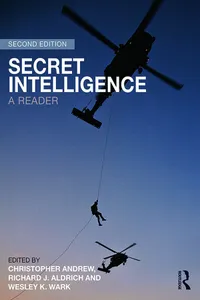
Richard J. Aldrich is a Professor of International Security at the University of Warwick. His research focuses on intelligence, cybersecurity, and digital politics, with notable contributions to understanding historical and modern security challenges. He has led major projects including the AHRC-funded study on the CIA and U.S. foreign policy, and co-edits journals like Intelligence and National Security . Aldrich advises governments on records management and declassification, notably assisting the German Bundestag inquiry into the NSA 'Snowden' affair. He holds a Distinguished Scholar award from the International Studies Association and has published extensively, including the acclaimed GCHQ: Centenary Edition . Teaching modules include 'Vigilant State: The Politics of Intelligence' and 'Cybersecurity: War, Spies, Crime, and Protest on the Internet.'
Dr. Herb Lin is the Hank J. Holland Fellow in Cyber Policy and Security at the Hoover Institution and Senior Research Scholar for Cyber Policy and Security at the Center for International Security and Cooperation (CISAC), both at Stanford University. He also serves as Chief Scientist, Emeritus for the Computer Science and Telecommunications Board of the National Academies, where he worked from 1990 to 2014, and as Adjunct Senior Research Scholar and Senior Fellow in Cybersecurity at Columbia University's Saltzman Institute for War and Peace Studies. Dr. Lin received his doctorate in physics from MIT, providing him with a strong technical foundation that informs his policy work at the intersection of technology and national security. His academic background bridges the gap between deep technical understanding and policy application in the cybersecurity domain. Dr. Lin's research focuses on the policy dimensions of cybersecurity and cyberspace, with particular emphasis on offensive cyber operations as instruments of national policy, information warfare, and influence operations affecting national security. His work addresses critical challenges at the intersection of emerging technologies like artificial intelligence, quantum computing, and their implications for nuclear security, election integrity, and democratic processes. He has been instrumental in analyzing how cyber capabilities are transforming traditional security paradigms and how policy frameworks must adapt to these changes. His extensive publication record reveals a consistent focus on the evolving relationship between cyber capabilities and national security strategy. Lin's work demonstrates increasing attention to the implications of artificial intelligence for warfare, the vulnerabilities created by quantum computing for current cryptographic systems, and the growing threat of cyber-enabled information warfare to democratic institutions. His research trajectory shows a progression from traditional cybersecurity issues toward the broader implications of digital technologies for national and international security. Member of Science and Security Board of Bulletin of the Atomic Scientists Served on President Obama's Commission on Enhancing National Cybersecurity (2016) Regular congressional testimony on cybersecurity matters Contributor to Stanford Emerging Technology Review As a mentor and collaborator, Dr. Lin works extensively with policymakers, military officials, and technology experts to translate complex cybersecurity concepts into actionable policy recommendations. His approach emphasizes practical solutions to emerging threats while recognizing the technical limitations and policy constraints that shape real-world security outcomes. Dr. Lin is associated with multiple research initiatives including Stanford's Center for International Security and Cooperation and the Stanford Emerging Technology Review, which aim to connect technological advances with policy considerations for national security decision-makers.
London School of Economics and Political Science (LSE)United Kingdom
Professor Matthew Jones is Professor of International History at the London School of Economics and Political Science (LSE), where he joined in 2013. He previously held academic positions at the University of Nottingham and Royal Holloway, University of London. He was appointed Cabinet Office official historian for the UK strategic nuclear deterrent in 2008. University: London School of Economics and Political Science School: Department of International History Academic Rank: Professor Email: m.c.jones@lse.ac.uk Office: SAR.3.09 Office Hours: Wednesday 1-2pm, Thursday 4-5pm Education: Undergraduate Degree: University of Sussex DPhil in Modern History: St Antony’s College, Oxford Professor Jones’s research focuses on 20th-century international history, particularly Post-WWII British Foreign and Defence Policy , Cold War Nuclear History , and British Decolonization in Southeast Asia . His work explores Anglo-American relations, nuclear strategy in Asia, and the political history of the UK’s nuclear deterrent. He has a sustained interest in the Vietnam War and US foreign relations after 1941. His recent publications reveal a strong trend in official historical analysis of nuclear policy, especially through his two-volume Official History of the UK Strategic Nuclear Deterrent , based on full access to classified government records. His scholarship combines diplomatic, strategic, and political history with deep archival research, often uncovering new insights into high-level decision-making during the Cold War. Scientific Awards and Recognition: Appointed Cabinet Office official historian of the UK strategic nuclear deterrent and Chevaline programme (2008) Recipient of grants from the Arts and Humanities Research Council, British Academy, JFK Library, LBJ Library, Gilder Lehrman Institute, and Eccles Centre Professor Jones has supervised multiple PhD students, including Grant Golub, Alexandra Penler, and William King. His research is supported by major grants from national and international funding bodies. He has also served as Head of the Department of International History at LSE from 2017 to 2020. He is actively involved in public engagement, having delivered talks at institutions such as the Woodrow Wilson Center, Los Alamos National Laboratory, and the Royal United Services Institute. His work bridges academic scholarship and policy-relevant historical analysis.