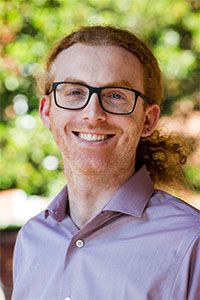
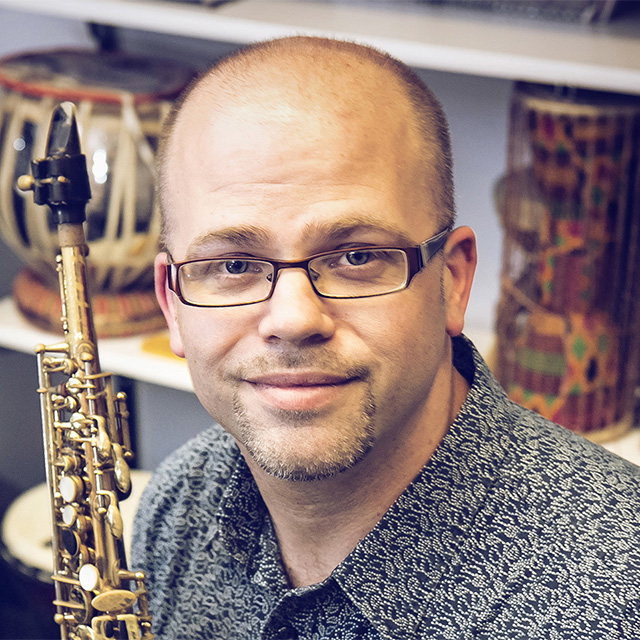
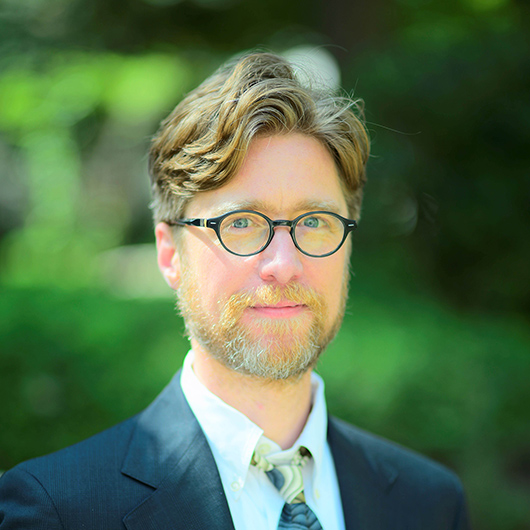
Jan Herbst is a Professor of Music at the University of Huddersfield and Director of the Centre for Research in Music and its Technologies. His academic journey includes multiple doctorates (PhD, Dr. habil.) from Leuphana University Lüneburg and research expertise in popular music studies, music production, and systematic musicology. He leads AHRC-funded projects such as 'Heaviness in Metal Music Production' and 'Songwriting Camps in the 21st Century.' His work bridges practical music production and theoretical research, with over 80 publications including books like The Cambridge Companion to Metal Music and Heaviness in Metal Music Production . Herbst’s research focuses on metal music aesthetics, record production techniques, and the cultural dimensions of music technology. He has held roles at German and Swiss universities, including teaching guitar performance and music production. His editorial roles include the Cambridge Companions series and journals like Metal Music Studies . Current projects explore blockchain in music, gear acquisition syndrome, and extreme metal vocal techniques. His academic affiliations include the IASPM UK & I executive committee and editorial boards for major musicology publications. Herbst actively engages with industry through collaborations with producers and performers, maintaining a balance between academic rigor and practical music creation.
Dr Kevin Hunt is a Lecturer in Piano (Jazz) at the Sydney Conservatorium of Music, University of Sydney. He holds a Doctor of Philosophy (2016) and a Master of Music in Jazz Performance (2004) from the same institution. His academic roles include supervising six research projects (2017) across Honours, Masters, and PhD levels. Education: MMus(Perf) Sydney (2004), PhD in Jazz Studies (2016). Professional training includes studies with Don Burrows, Bill Motzing, and a scholarship in NYC (2001). Research focuses on jazz piano performance, intercultural collaborations with Aboriginal Torres Strait Islander musicians, and the sonic qualities of Australian-made Stuart & Sons pianos. Key projects include the OUR MUSIC workshop-festivals (2012-2016) and the Ancient & New CD project blending ancient Indigenous chants with jazz improvisation. Performance highlights include the ABC FM Listeners Choice Award-winning JS Bach Trio (1998), recordings with Don Burrows and Simon Tedeschi, and collaborations in cabaret theatre such as Prince Bettliegend (2017). Active in education since 2005, he currently leads the Kevin Hunt Trio and performs with Emma Pask and Marie Wilson. Awards include the 2016 PhD and 1998 ABC award. His work bridges jazz innovation with cultural heritage preservation, evidenced by intercultural projects and academic publications on Yiddish theatre and Indigenous music collaboration.
Alana Clifton-Cunningham is a dedicated educator and researcher in fashion and textile design at the University of New South Wales, Faculty of Arts, Design & Architecture. With over two decades of experience in higher education, she has established herself as a leader in sustainable and innovative design education. Her work bridges traditional craftsmanship with cutting-edge technologies, creating experiential learning environments that prepare students for contemporary design practice while addressing global sustainability challenges. Educational Background: 2021 | UNSW - Learn to Lead: Progress Needs Resilient Leaders 2019 | UTS - Graduate Certificate in Higher Education Transdisciplinary Learning 2008 | UNSW (COFA) - Master of Design (Hons) Research 2002 | UTS - Graduate Certificate in Higher Education Teaching and Learning 2001 | TAFE - Diploma of Marketing Management 1993 | UTS - Bachelor of Design (Hons) (Fashion and Textile Design) Clifton-Cunningham's research focuses on sustainable fashion practices, with particular emphasis on circular economy principles in textile production and garment design. Her work explores scalable models for textile remanufacturing, clothing waste reduction, and sustainable workwear systems. She is deeply engaged in addressing clothing sizing issues and standards in Australia, advocating for more inclusive approaches to fit and body diversity. Her commitment to equity, diversity, and inclusion underpins all aspects of her leadership and teaching, making her a strong advocate for responsible design futures that prioritize both environmental sustainability and social justice. Her publication record demonstrates a consistent focus on the intersection of design education, cultural exchange, and sustainable practices. Notable works include her 2022 book chapter on cross-cultural textile workshops in India, her 2018 analysis of undergarment technology evolution, and her contributions to exhibitions like 'Out of Hand' at the Powerhouse Museum. These works collectively highlight her emphasis on hands-on, experiential learning that connects students with real-world sustainability challenges and cultural contexts. Research Grants: 2024 | Redesigning Clothing Waste Using a Circular Design Framework - LP230200929 $220,473K 2024 | Department of Community and Justice - $17,900 2024 | Education Focussed Community of Practice (PVCESE) - $2,500 2023 | Department of Community and Justice - $15,900 2023 | Education Focussed Community of Practice (PVCESE) - $6,995 2017 | AbbVie Pharmaceutical Pty Ltd, HS Support Garments: Chief Investigator - $35,000 Clifton-Cunningham actively supervises research in fashion and textile design, with a focus on sustainable practices and innovative design processes. Her extensive industry network, including partnerships with major fashion labels, brings real-world insight into the classroom. She has led international global studios, including immersive programs in India where students collaborate with artisans. Her current ARC Linkage project 'Redesigning Clothing Waste Using a Circular Design Framework' represents a significant contribution to sustainable fashion research. Her creative practice is reflected in numerous exhibitions, including the Seoul International Fashion Art Biennale (2016, 2018), Wangaratta Contemporary Textile Awards, and the Powerhouse Museum's 'Out of Hand' exhibition. These artistic endeavors complement her academic work, demonstrating the practical application of her research interests in sustainable and innovative textile design.
Alison Wright is Professor of Italian Art at University College London's Department of History of Art, specializing in Italian art from c. 1300-1550. She teaches across all undergraduate and postgraduate levels and welcomes doctoral supervision for thematically-conceived projects not restricted to painting. Her academic journey at UCL spans from Lecturer (1993), to Reader (through 2016), and Professor (since 2016), with additional leadership roles including Head of Department (2016-2019) and Chair of the Exams Board. Her educational background includes a PhD from the University of London (1992) and a BA (Hons) from the Courtauld Institute of Art (1987). She maintains high proficiency in Italian, French, and German, supporting her comparative cross-European research approach. Wright's research centers on the material effects and interrelation of art, ideology and ritual in European art from the 14th to 16th centuries, with particular focus on Italy. Her work examines artistic practice, materials and materiality, with recent research investigating gold's activation in European port cities across late Medieval England, North Italy and Southern Spain. She explores how art functioned in relation to broader social, political and religious interests, particularly examining commission and reception of artworks. Her publication record demonstrates consistent engagement with Italian Renaissance material culture, spanning topics from frame ornamentation to sculptural practices. Her work shows particular interest in how materials convey meaning, with recurring themes of religious context, workshop practices, and the political dimensions of artistic production. Recent publications continue this trajectory with focus on Fra Angelico's use of light, Donatello's sculptural encounters, and the transformational properties of gold. Wright's teaching spans undergraduate and postgraduate levels with courses covering Italian Renaissance portraiture, private and public sculpture, the history of the category 'Art', and specialized seminars on Place, Space and the Imagination in the Italian City (c. 1300-1520) and Seeing through Materials in the Renaissance. She has held various administrative roles including Impact Lead (2024), Research Fellow with the Leverhulme Trust (2023-2024), and Head of Department (2016-2019).
Marissa Benedict is an Assistant Professor of Trumpet at the University of Minnesota, Twin Cities, where she maintains an applied studio of 16 undergraduate and graduate students. She holds affiliations with the Minnesota Orchestra, St. Paul Chamber Orchestra, and remains principal trumpet for the Pasadena Symphony/Pops while continuing performances with the Los Angeles Philharmonic and Los Angeles Chamber Orchestra. Assistant Professor, Department of Music, University of Minnesota Principal Trumpet, Pasadena Symphony/Pops Active performer with Minnesota and LA-based orchestras Education Bachelor of Music in Trumpet Performance, University of Southern California (1984) Research & Performance Focus Marissa Benedict's career spans 40 years of expertise in trumpet performance across classical, jazz, and studio recording disciplines. Her pedagogical work includes brass fundamentals instruction and chamber music coaching. Recent projects like Continental Drift (2023) and Homage (2023) showcase her solo and ensemble artistry. She has been featured on over 180 motion picture soundtracks, including Spider-Man: No Way Home (2021) and Avatar: The Way of Water (2022). Notable Collaborations Los Angeles Philharmonic tours (Asia, Scotland, Boston to London) 2019 Academy Awards (Oscars®) Yamaha Educator and Performing Artist Publications Benedict, M. (2022). Beyond Lip Service: A Framework for Brass Fundamentals. Carl Fischer Publishing. Student Development Her graduates in Music Education and Performance majors are actively teaching and performing in the Minneapolis area. Benedict continues to recruit nationally and provide masterclasses across the United States.
Dr hab. Andrzej Wojciechowski is an Associate Professor at the Stanisław Moniuszko Academy of Music in Gdańsk , affiliated with the Department II – Instrumental . As a certified violinist and postdoctoral scholar, he specializes in Polish violin music, chamber ensembles, and 20th-century compositions. Graduated with distinction from the Academy of Music in Gdańsk (1998), studying under Prof. Krystyna Jurecka Collaborates with orchestras like the Polish Baltic Philharmonic and Sopot Chamber Philharmonic Co-created concert projects with artists such as Jan Stanienda and Krzysztof Penderecki His research interests span Polish musicology, violin pedagogy, and interdisciplinary artistic education. He has edited publications with "Eufonium" and promoted Polish music through recordings like Violin Works by Roman Maciejewski (2011) and The Work of Gdańsk Composers (2015). His scientific awards include: Medal of the National Education Commission (2009) Individual Award for contributions to artistic education (2012) Honorary Medal 'For Merit to Polish Culture' (2014, 2015) Rector's Award, 3rd degree (2014, 2016) Wojciechowski has taught over 50 graduates, many of whom have won music competitions, and leads the Academic Chamber Orchestra as concertmaster and conductor. His work bridges performance, education, and preservation of Polish musical heritage.
Maxwell Tfirn is a Lecturer and Director of Creative Studies at Christopher Newport University , Department of Music, Theatre and Dance, where he teaches Music Composition, Sound Synthesis, and Music Technology. His research focuses on real-time recursive compositions and data sonification for scientific analysis. PhD in Composition and Computer Technologies - University of Virginia M.A. in Music Composition - Wesleyan University His work bridges music composition with bacterial behavior studies through NSF-funded research on Data Sonification of Bacterial Chemotaxis . Notable performances include works at ICMC, SEAMUS, and Subtropics Music Festival. Collaborations with ensembles like Jack Quartet and Loadbang highlight his impact in contemporary music circles. Key Trends in Publications: Articles span real-time algorithmic compositions, sensor-based live performance tools, and interdisciplinary sonification projects merging microbiology with auditory analysis. Subfields include neural network integration, audiovisual data mapping, and glitch-based performance aesthetics. Scientific Awards: Best Use of Sound (Academic) - ICAD (2023) Research Collaborations: National Science Foundation grant exploring bacterial chemotaxis sonification. Mentorship roles include advising students at Christopher Newport University and contributing to experimental music festivals globally.
Jez Coram is a Lecturer in Digital Media Practice at the University of Leeds , School of Media and Communication. He holds a practice-led PhD in Fine Art, Film, and Digital Cultures from Newcastle University, supervised by leading figures in the field. With a background in the third sector, he has extensive experience in multimedia design, research, and community engagement. Research Focus: Expanded essay film, socio-cultural-techno perceptions, climate futures, hybrid documentary practices, and sustainability. Current Projects: Co-Investigator on the Polycrisis Research Network (Horizons Institute); leads the longitudinal study Essaying the Gare with Mick Schofield. Teaching and Professional Roles: Currently teaches on the BA Digital Media programme. Previously a Teaching Assistant at Newcastle University and a facilitator in community art projects like For the Love of People . Professional memberships include the Priestley Centre for Climate Futures and Advance HE (FHEA). Artistic Outputs: 15+ films/installations (2012–present) blending personal testimony, archive material, and speculative environments. Notable works: The Black Prince , Capteur , The Derealisation Effect , and We're All Someone's Daughter, We're All Someone's Son (Grenfell solidarity project). Grants and Collaborations: Funded by Horizons Institute, Arts Council England, Screen Yorkshire, and Freedom Studios. Collaborations span institutions like West Yorkshire Playhouse, Justice4Grenfell Campaign, and Purple Patch Arts board.
Peter Epstein is an Associate Professor of Jazz Saxophone and Director of Jazz Studies at the University of Nevada, Reno (UNR), within the School of Music under the College of Liberal Arts. He holds a Master of Music (MM) in Saxophone Performance from UNR (2004) and a Bachelor of Fine Arts (BFA) from California Institute of the Arts (1992). His research interests focus on jazz performance, improvisational music, and global musical traditions. Epstein has directed jazz studies programs, led ensembles like The Collective, and collaborated internationally with artists such as Brad Shepik and Medeski, Martin & Wood. He has released over 50 recordings and toured 20+ countries, emphasizing avant-garde jazz and cross-cultural fusion. Epstein’s recent works, such as Polarities (2014), explore experimental improvisation and saxophone techniques. His earlier albums, like Staring At The Sun (1999), highlight his technical mastery and avant-garde approach. Received the 2013 Nevada Regents’ Award for Creative Activities and 2014 Nevada Arts Council Fellowship. Founding member of the School for Improvisational Music in NYC. Teaches workshops globally, including Eastman School of Music, Nepal, and Sweden. He advises UNR’s jazz ensembles, including the Reno Jazz Orchestra, and contributes to interdisciplinary music initiatives. Epstein’s work bridges traditional jazz with contemporary improvisation, emphasizing collaborative creativity.
William Lucey is an Associate Professor in the Music Production and Engineering (MP&E) and Songwriting departments at Berklee College of Music, a leading institution in contemporary music education. His academic role is deeply informed by his extensive professional career as a performer, songwriter, and producer. His research and creative interests center on music production, songwriting craft, audio engineering, and the integration of analog and digital technologies in music. He emphasizes practical, real-world applications in his teaching, drawing from decades of experience in the music industry. The body of his recent work—including songs like Home , Haunt Me Again , and All I Want for Christmas is a Christmas No. 1 —demonstrates a broad range across genres such as Americana, pop, rock, electronic, and folk. His production style is hands-on, spanning songwriting, arrangement, performance, engineering, and mixing. He frequently collaborates with emerging and established artists, often playing multiple instruments and overseeing full production. Meteor Award Ireland for Best Hope for the Future Boston Music Awards for Best New Act and Best Vocalist World Peace Award for Best International Act As an educator and mentor, Lucey has taught songwriting and production at Berklee for over 25 years, guiding countless students in developing their artistic voices. He also engages in professional projects that serve as living case studies for his pedagogy. His studio practice blends analog warmth with digital precision, reflecting his philosophy of marrying the best of both worlds. While no formal lab or research team is mentioned, his production house functions as a creative hub for collaboration with session musicians and artists worldwide.
Bryn Harrison is a British composer and Senior Lecturer in Composition at the University of Huddersfield. He explores musical temporality through cyclical structures, memory representation, and extended durations. His work has been performed by ensembles including Plus Minus, Elision, and London Symphony Orchestra, with notable premieres at international festivals. Key Works: Receiving the Approaching Memory (2014), Piano Quintet (2017), and Vessels (2013). Research: Focuses on immersive listening, memory, and temporal perception in music. Awards: Recipient of the Paul Hamlyn Foundation Award for Composers. Publications include co-edited books Overcoming Form (2013) and Being Time (2018). Collaborations: Works with ensembles like Wet Ink and Contrechamps, and performers such as Philip Thomas and Aisha Orazbayeva. Supervision: Actively supervises PhD students and contributes to external examinerships at institutions like the Royal College of Music.
Timothy J. Campbell is Associate Professor of Music at the University of South Dakota's College of Fine Arts, where he conducts the Symphonic Choir and Collegium Musicum. He serves as Chorus Director for the South Dakota Symphony Orchestra and founded the professional vocal ensemble Transept, whose 2021 debut album 'Live at the Cathedral' received Grammy-winning studio mastering. His educational background includes a B.S. from Bemidji State University, M.M. from the University of Minnesota, and D.M.A. from the University of Arizona. Prior academic appointments include West Virginia University and roles with Men's Consort Houston and St. Luke's Early Music Ensemble. Dr. Campbell specializes in choral conducting, vocal performance, and early music with emphasis on consort singing and historical performance practice. His research bridges Renaissance repertoire with contemporary choral works, focusing on innovative programming and vocal arts development across South Dakota's educational institutions. His recent publications and presentations reveal consistent themes in choral pedagogy, early music revival, and artistic curation. Key trends include practical conducting tools for educators, exploration of Bach's sacred works, and cross-era programming strategies that connect plainchant with modern compositions through vocal consort techniques. Through Transept's education initiatives and USD teaching roles, he mentors students via applied voice lessons, choral literature courses, and conducting practicums. His outreach extends to high school and church ensembles across South Dakota, fostering community engagement through masterclasses and collaborative performances. Dr. Campbell leads multiple ensembles including the USD Symphonic Choir, Collegium Musicum, and professional group Transept. His direction of the South Dakota Symphony Orchestra Chorus for major works like Handel's Messiah and Bach's St. Matthew Passion demonstrates his leadership in regional performing arts.
Jacob Smith is a Professor and Associate Department Chair in the Department of Radio/Television/Film at Northwestern University's School of Communication, where he also directs the Master of Arts in Sound Arts and Industries program. His academic foundation includes a PhD in Communication and Culture from Indiana University. Smith's scholarly identity centers on the cultural history of media with specialized expertise in sound studies and environmental media, exploring intersections between auditory cultures, ecological systems, and technological evolution. Research trajectories reveal a sustained investigation into sound's role across historical and contemporary contexts—from phonograph cultures to digital sonic environments—with increasing emphasis on media ecology and the Anthropocene since 2015. His work bridges academic rigor and creative practice through experimental audiobooks that challenge traditional scholarly formats. Smith's publications demonstrate consistent innovation in media historiography, particularly regarding radio's evolution and sound's environmental dimensions. Recent outputs (2016-2020) coalesce around three thematic clusters: aeroecology/wildlife sound (e.g., Lightning Birds ), post-network media infrastructures (e.g., Travels with Jack ), and critical examinations of sound citizenship (e.g., Indian Sound Culture ). His scholarly impact is recognized through prestigious awards: SCMS Anne Friedberg Innovative Scholarship Award (2022) for Lightning Birds: An Aeroecology of the Airwaves Kraszna-Krausz Best Moving Image Book Award (2017) for Anatomy of Sound: Norman Corwin and Media Authorship Association for Recorded Sound Collections Award (2012) for Spoken Word: Postwar American Phonograph Cultures As program director, Smith advises MA candidates in Sound Arts and Industries while teaching graduate/undergraduate courses spanning recording industry history, environmental media, and sound studies. His editorial collaborations (e.g., Indian Sound Culture ) indicate significant interdisciplinary grant activity, though specific funding details aren't provided. The MA program he co-founded functions as a nexus for sound-art experimentation, connecting academic research with creative industry practices through studio-based learning.
Anne Danielsen is a Professor and Deputy Head at the RITMO Center for Interdisciplinary Studies of Rhythm, Time, and Motion at the University of Oslo. Her research bridges musicology, cognitive science, and interdisciplinary studies, focusing on rhythm, music production, and the intersection of music, media, and technology. University: University of Oslo Role: Professor Projects: TIME (NFR TOP RESEARCH), RITMO (NFR Center of Excellence) Danielsen’s work explores microrhythm , groove , and temporal perception in music, with a particular emphasis on popular and African-American music . She investigates how music cognition interacts with sonic features and body posture in performance, integrating psychological and acoustic analysis . Her recent projects include MusicLab Copenhagen , a dataset for interdisciplinary concert research, and studies on beta oscillations and pupil responses in groove perception. Danielsen collaborates across disciplines, examining how personality traits and genetic factors influence musical sensibility through twin studies. In music production , she analyzes how digital audio workstations transform rhythmic structures and investigates acoustic chamber design for sound experiments. Her research also addresses gender patterns in music mediation and the cultural implications of rhythmic aesthetics.
Paul Théberge is a Professor at Carleton University, cross-appointed to the Institute for Comparative Studies in Literature, Art and Culture and the School for Studies in Art and Culture (Music). He teaches graduate courses in Cultural Mediations (technologies of culture), Film Studies (sound in visual media), and Music (sound studies), reflecting his interdisciplinary academic home within Ottawa's major research institution. His research interrogates the material and cultural dimensions of sound technologies, with core expertise in music-technology-culture intersections, internet-mediated musical practices, and sonic applications in film/television. Théberge's scholarship bridges musicology, media studies, and science and technology studies, examining how recording technologies reshape creative practice and auditory experience across historical periods from analog tape to digital streaming platforms. Analysis of his 15 most recent publications reveals persistent engagement with sound's materiality—from multichannel audio histories to the embodied nature of listening—and consistent exploration of technological transitions, particularly the internet's disruption of traditional music production/distribution models. His work demonstrates deep methodological versatility spanning archival research, ethnographic observation, and creative composition. Scientific recognition includes: International Association for the Study of Popular Music (US branch, 1998) Society for Ethnomusicology (2000) While the source text doesn't specify current advising activities, his extensive editorial work (e.g., co-editing Living Stereo ) and composition output suggest significant mentorship through collaborative projects. His research has been supported through Canada Research Chair funding and industry partnerships like Sony Classical International.