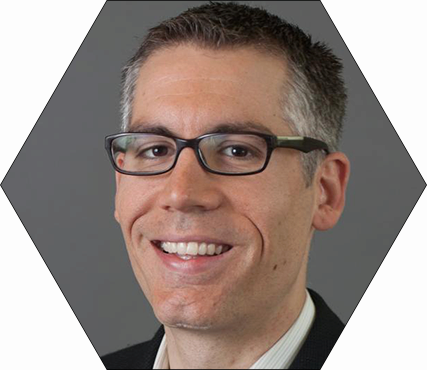
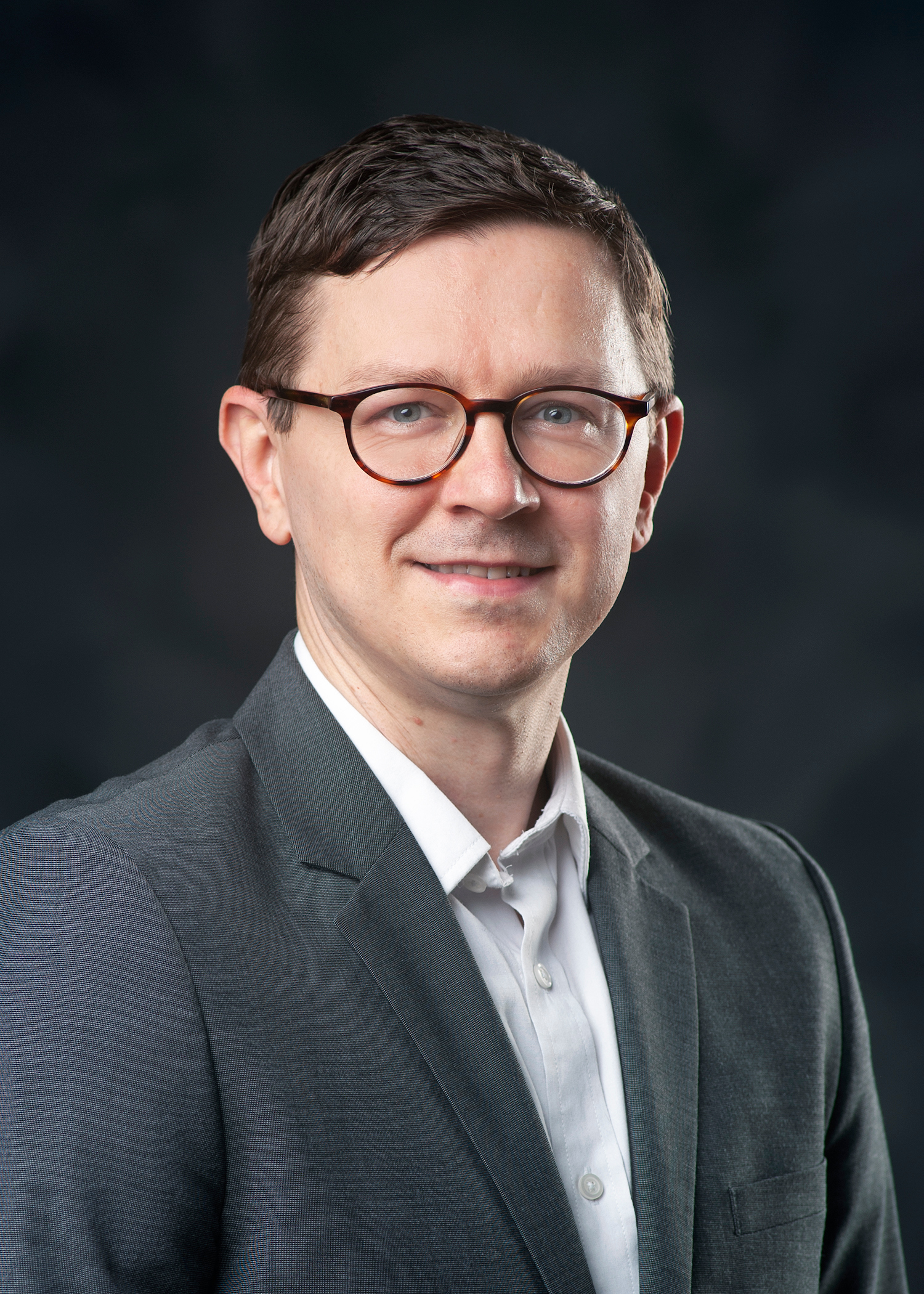
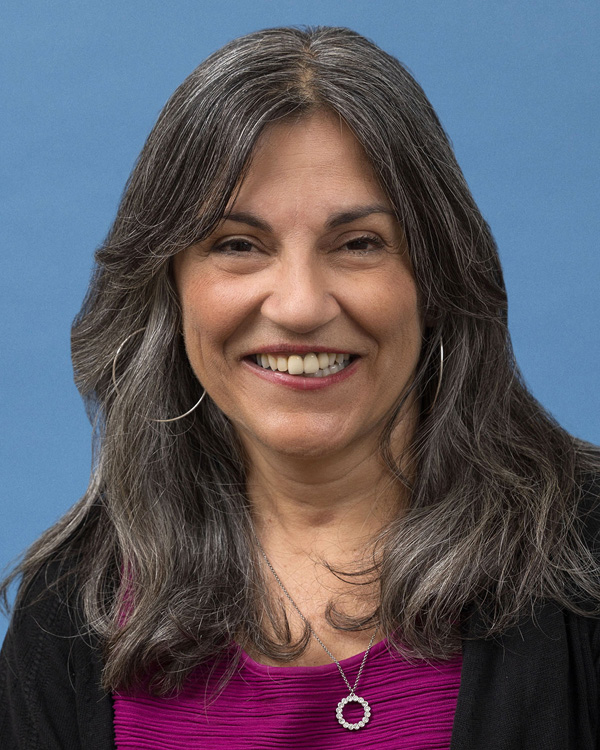
Mathias Funk is an Associate Professor in the Industrial Design department at Eindhoven University of Technology (TU/e), leading the Things Ecology lab. His research focuses on designing with data and systems behavior, particularly in IoT and medical technology contexts. He co-founded UXsuite GmbH and developed the OOCSI communication framework. With a PhD in Electrical Engineering from TU/e (2011), Funk has held academic roles since 2013, including postdoctoral positions in Electrical Engineering and Industrial Design. He teaches courses like 'Data-enabled design' and supervises projects on AI, data foundry, and OOCSI applications. His work bridges engineering and design, addressing sustainability and human values through systemic design approaches. Education: PhD in Electrical Engineering, TU/e (2011) Computer Science background from RWTH Aachen Postdoc at TU/e's Electrical Engineering and Industrial Design departments Research Interests: Data-driven design methodologies, IoT systems, medical technology innovation, sustainable design practices, and interactive systems for musical expression. Recent work emphasizes telemonitoring efficacy in heart failure care and federated learning applications. Awards: Best Paper Award (2014) Honorable Mention (2021) Grants/Projects: Leading initiatives like MEDICAID (medtech solutions), ACACIA (interpretable AI), and Data-Driven Servitizing in Professional Printing. Active in clinical workflow prototyping and cardiovascular disease detection projects. Lab Activities: Manages the Things Ecology lab, focusing on systemic design challenges in smart ecosystems. Collaborates internationally through spin-offs and visiting lectureships.
Dr Kevin Hunt is a Lecturer in Piano (Jazz) at the Sydney Conservatorium of Music, University of Sydney. He holds a Doctor of Philosophy (2016) and a Master of Music in Jazz Performance (2004) from the same institution. His academic roles include supervising six research projects (2017) across Honours, Masters, and PhD levels. Education: MMus(Perf) Sydney (2004), PhD in Jazz Studies (2016). Professional training includes studies with Don Burrows, Bill Motzing, and a scholarship in NYC (2001). Research focuses on jazz piano performance, intercultural collaborations with Aboriginal Torres Strait Islander musicians, and the sonic qualities of Australian-made Stuart & Sons pianos. Key projects include the OUR MUSIC workshop-festivals (2012-2016) and the Ancient & New CD project blending ancient Indigenous chants with jazz improvisation. Performance highlights include the ABC FM Listeners Choice Award-winning JS Bach Trio (1998), recordings with Don Burrows and Simon Tedeschi, and collaborations in cabaret theatre such as Prince Bettliegend (2017). Active in education since 2005, he currently leads the Kevin Hunt Trio and performs with Emma Pask and Marie Wilson. Awards include the 2016 PhD and 1998 ABC award. His work bridges jazz innovation with cultural heritage preservation, evidenced by intercultural projects and academic publications on Yiddish theatre and Indigenous music collaboration.
Alana Clifton-Cunningham is a dedicated educator and researcher in fashion and textile design at the University of New South Wales, Faculty of Arts, Design & Architecture. With over two decades of experience in higher education, she has established herself as a leader in sustainable and innovative design education. Her work bridges traditional craftsmanship with cutting-edge technologies, creating experiential learning environments that prepare students for contemporary design practice while addressing global sustainability challenges. Educational Background: 2021 | UNSW - Learn to Lead: Progress Needs Resilient Leaders 2019 | UTS - Graduate Certificate in Higher Education Transdisciplinary Learning 2008 | UNSW (COFA) - Master of Design (Hons) Research 2002 | UTS - Graduate Certificate in Higher Education Teaching and Learning 2001 | TAFE - Diploma of Marketing Management 1993 | UTS - Bachelor of Design (Hons) (Fashion and Textile Design) Clifton-Cunningham's research focuses on sustainable fashion practices, with particular emphasis on circular economy principles in textile production and garment design. Her work explores scalable models for textile remanufacturing, clothing waste reduction, and sustainable workwear systems. She is deeply engaged in addressing clothing sizing issues and standards in Australia, advocating for more inclusive approaches to fit and body diversity. Her commitment to equity, diversity, and inclusion underpins all aspects of her leadership and teaching, making her a strong advocate for responsible design futures that prioritize both environmental sustainability and social justice. Her publication record demonstrates a consistent focus on the intersection of design education, cultural exchange, and sustainable practices. Notable works include her 2022 book chapter on cross-cultural textile workshops in India, her 2018 analysis of undergarment technology evolution, and her contributions to exhibitions like 'Out of Hand' at the Powerhouse Museum. These works collectively highlight her emphasis on hands-on, experiential learning that connects students with real-world sustainability challenges and cultural contexts. Research Grants: 2024 | Redesigning Clothing Waste Using a Circular Design Framework - LP230200929 $220,473K 2024 | Department of Community and Justice - $17,900 2024 | Education Focussed Community of Practice (PVCESE) - $2,500 2023 | Department of Community and Justice - $15,900 2023 | Education Focussed Community of Practice (PVCESE) - $6,995 2017 | AbbVie Pharmaceutical Pty Ltd, HS Support Garments: Chief Investigator - $35,000 Clifton-Cunningham actively supervises research in fashion and textile design, with a focus on sustainable practices and innovative design processes. Her extensive industry network, including partnerships with major fashion labels, brings real-world insight into the classroom. She has led international global studios, including immersive programs in India where students collaborate with artisans. Her current ARC Linkage project 'Redesigning Clothing Waste Using a Circular Design Framework' represents a significant contribution to sustainable fashion research. Her creative practice is reflected in numerous exhibitions, including the Seoul International Fashion Art Biennale (2016, 2018), Wangaratta Contemporary Textile Awards, and the Powerhouse Museum's 'Out of Hand' exhibition. These artistic endeavors complement her academic work, demonstrating the practical application of her research interests in sustainable and innovative textile design.
Adam Marcus is an Associate Professor of Architecture at Tulane University School of Architecture and serves as Research Director of the Center on Climate Change and Urbanism. He directs Variable Projects, an award-winning design and research studio operating at the intersection of architecture, computation, and fabrication, and is a partner in Futures North, a public art collaborative dedicated to exploring data aesthetics. His educational background includes: Master of Architecture from Columbia University Bachelor of Arts from Brown University Adam's research focuses on critical approaches to design computation, digital fabrication, and robotics, exploring how these technologies enable new modes of ecological, material, and public engagement. His work particularly emphasizes climate adaptation, buoyant ecologies for sea level rise, computational representation, and multispecies architecture. He integrates these interests through practical design-build projects that address ecological challenges while advancing architectural representation and fabrication techniques. His recent publications demonstrate a strong emphasis on computational approaches to architectural representation and ecological design. The works consistently explore the intersection of digital technologies with ecological imperatives, particularly focusing on climate adaptation strategies, multispecies collaborations, and innovative drawing protocols that bridge analog and computational paradigms. His book 'Drawing Codes' represents a significant contribution to rethinking architectural drawing in the computational age. Notable awards include: Selected as one of the '30 Most Admired Educators' by Design Intelligence (2013) Recipient of the New Faculty Teaching Award from the Association of Collegiate Schools of Architecture (2016) Adam has served on ACADIA's Board of Directors from 2015 to 2021 and currently serves on the editorial board of the International Journal of Architectural Computing. His teaching at Tulane includes design studios and courses in computational design and digital fabrication with ecological applications, building on his decade of experience at California College of the Arts where he co-founded the Architectural Ecologies Lab. He leads research initiatives through Tulane's Center on Climate Change and Urbanism, developing practical design solutions for ecological challenges, particularly those related to climate change and sea level rise. His Buoyant Ecologies Float Lab project exemplifies this approach, creating 'optimized upside-down benthos for sea level rise adaptation' that has received attention from major media outlets including Smithsonian Magazine and Architectural Record.
Dr Jan Woudstra is an Honorary Professor at the University of Sheffield's School of Architecture and Landscape. With a PhD in Landscape Architecture from University College London and a background in landscape design, horticulture, and conservation, he has taught landscape architecture and history since 1995 and part-time at the Architectural Association School of Architecture from 1988-2005. Education: PhD, MA (Conservation), Dip Hort (Kew) Research Focus: History and theory of modern movement landscape architecture, planting design, hard landscape detailing, and international design trends Supervision: Claudia Leticia Martínez Velarde, Lei Gao, Kairan Li, Sang Jung Yoon, Vivienne Rose Parrott, Jijun Zhao, Manoochehr Salahi Moghadam, Hossein Donyavi, Sally O’Halloran Contact: j.woudstra@sheffield.ac.uk | Arts Tower, Floor 12, Western Bank, Sheffield, S10 2TN His research emphasizes landscape conservation, sustainability, and social equitability, with case studies on designers like Christopher Tunnard, Peter Shepheard, and Robert Marnock. He explores the tension between memory and innovation in historic landscapes. Recent publications address Buddhist pilgrimage sites, Scandinavian design, and historical planting techniques. Collaborations with Peter Blundell Jones and others analyze the interplay between architecture and landscape.
Dr. Craig R. Forest is a Professor at the Georgia Institute of Technology's Woodruff School of Mechanical Engineering, specializing in bioMEMS, neuroengineering, and high-throughput instrumentation. He leads the Precision Biosystems Laboratory, focusing on developing robotic tools for neuroscience and genomics. His research bridges mechanical engineering with biological systems, creating innovations like the PatcherBot for automated electrophysiology. Forest earned his Ph.D. (2007) and M.S. (2003) from MIT and B.S. (2001) from Georgia Tech. He has been recognized with awards including the 2013 Georgia Tech Class of 1940 W. Roane Beard Outstanding Teacher Award and Engineer of the Year (2013). His work emphasizes interdisciplinary collaboration, particularly through initiatives like CREATE-X and the Invention Studio, fostering student entrepreneurship and maker culture. Key contributions include ultra-high-throughput genomics tools, microfluidic systems, and acoustic reporter genes for medical imaging. Forest’s lab explores emerging fields like intracellular robotics in neuroscience and molecular communication networks, with applications in drug discovery and personalized medicine. Scientific awards highlight his impact in education and engineering innovation. His grants and collaborations span academic and industrial partnerships, advancing both theoretical and applied research in bioengineering and nanotechnology.
Nicolas Riviere is a Professor at INSA Lyon in the Department of Mechanical Engineering, working within the Laboratory of Fluid Mechanics and Acoustics (LMFA - UMR 5509). He is part of the "Fluides complexes et transferts" (Complex Fluids and Transfers) group and the Environment team. His teaching activities primarily focus on fluid mechanics at the Mechanical Engineering Department of INSA Lyon, covering: General balances (mass, momentum, energy) Aerodynamics Compressible flows Numerical simulation of flows Free surface hydraulics Prof. Riviere's research centers on free surface hydrodynamics, with applications to natural and industrial risks. His work takes an experimental approach, utilizing the laboratory's channel facilities, particularly the channel intersection installation. His research spans river floods with compound beds, urban flooding, sanitation networks, torrential flows, and flow-obstacle interactions. He has developed a strong interdisciplinary focus, co-leading the "Baignades en Rivières Urbaines" studio with Oldrich Navratil from University Lyon 2 and the EVS Laboratory. His publication record demonstrates consistent contributions to the fields of fluid mechanics and environmental hydraulics, with recent work focusing on open-channel flows, urban flooding phenomena, vegetation-flow interactions, and experimental techniques for studying complex hydraulic phenomena. His research often bridges theoretical fluid mechanics with practical environmental applications. Prof. Riviere has received recognition for his work in environmental fluid mechanics, with numerous publications in high-impact journals in hydraulic engineering and fluid mechanics. He has supervised multiple PhD students and research projects related to environmental fluid mechanics and has collaborated with various institutions on interdisciplinary research projects addressing water-related challenges. The laboratory where he works, LMFA, provides extensive experimental facilities including wind tunnels, hydrodynamic channels, and advanced measurement techniques such as PIV (Particle Image Velocimetry), LDV (Laser Doppler Velocimetry), and other state-of-the-art instrumentation for fluid flow analysis.
Marissa Benedict is an Assistant Professor of Trumpet at the University of Minnesota, Twin Cities, where she maintains an applied studio of 16 undergraduate and graduate students. She holds affiliations with the Minnesota Orchestra, St. Paul Chamber Orchestra, and remains principal trumpet for the Pasadena Symphony/Pops while continuing performances with the Los Angeles Philharmonic and Los Angeles Chamber Orchestra. Assistant Professor, Department of Music, University of Minnesota Principal Trumpet, Pasadena Symphony/Pops Active performer with Minnesota and LA-based orchestras Education Bachelor of Music in Trumpet Performance, University of Southern California (1984) Research & Performance Focus Marissa Benedict's career spans 40 years of expertise in trumpet performance across classical, jazz, and studio recording disciplines. Her pedagogical work includes brass fundamentals instruction and chamber music coaching. Recent projects like Continental Drift (2023) and Homage (2023) showcase her solo and ensemble artistry. She has been featured on over 180 motion picture soundtracks, including Spider-Man: No Way Home (2021) and Avatar: The Way of Water (2022). Notable Collaborations Los Angeles Philharmonic tours (Asia, Scotland, Boston to London) 2019 Academy Awards (Oscars®) Yamaha Educator and Performing Artist Publications Benedict, M. (2022). Beyond Lip Service: A Framework for Brass Fundamentals. Carl Fischer Publishing. Student Development Her graduates in Music Education and Performance majors are actively teaching and performing in the Minneapolis area. Benedict continues to recruit nationally and provide masterclasses across the United States.
Professor Isabelle Doucet is a Professor of Architecture and PGR Lead at the School of Architecture and Landscape, University of Sheffield, having joined in February 2025. Previously, she held professor positions at Chalmers University of Technology in Sweden (2018-2024) and the Manchester Architecture Research Group at the University of Manchester (2009-2018). Her academic journey began with PhD studies at Delft University of Technology in The Netherlands. Her educational background includes PhD, Masters and Bachelor degrees in Architecture from Delft University of Technology. She has been a visiting scholar at Yale University (2022), University of Sydney (2018), University of Queensland (2017) and the Brussels Centre for Urban Studies (2015). Doucet's research sits at the intersection of architecture, environmental humanities, and feminist theory. Her work centers on expanded histories of architecture and activism after 1968, women as role models in architecture, and environmental (multispecies) storytelling. She approaches these topics through historical cases (particularly post-1968), theoretical revisiting, and innovative methods of inquiry. Her research combines oral histories of women in architecture with critical revisiting of emancipatory theories from an intersectional perspective. Her extensive publication record shows a consistent focus on critical architectural practice, urban activism, and environmental storytelling. Over the past fifteen years, her work has evolved from examining specific historical cases in Brussels to broader theoretical frameworks connecting feminist theory, environmental humanities, and architectural practice. Recent publications increasingly engage with multispecies encounters and ecological storytelling in architecture. Member of the Steering Group of the Architectural Humanities Research Association (AHRA) Advisory board member for Dimensions: Journal of Architectural Knowledge and CLARA Architecture/Recherche Former editor for Architectural Histories (until 2023) Doucet actively supervises doctoral students and has developed international PhD courses. Her grant portfolio reflects her research interests in women in architecture, environmental storytelling, and architectural activism. She has co-supervised multiple doctoral students to completion and served as an external examiner for students at prestigious institutions worldwide.
William Lucey is an Associate Professor in the Music Production and Engineering (MP&E) and Songwriting departments at Berklee College of Music, a leading institution in contemporary music education. His academic role is deeply informed by his extensive professional career as a performer, songwriter, and producer. His research and creative interests center on music production, songwriting craft, audio engineering, and the integration of analog and digital technologies in music. He emphasizes practical, real-world applications in his teaching, drawing from decades of experience in the music industry. The body of his recent work—including songs like Home , Haunt Me Again , and All I Want for Christmas is a Christmas No. 1 —demonstrates a broad range across genres such as Americana, pop, rock, electronic, and folk. His production style is hands-on, spanning songwriting, arrangement, performance, engineering, and mixing. He frequently collaborates with emerging and established artists, often playing multiple instruments and overseeing full production. Meteor Award Ireland for Best Hope for the Future Boston Music Awards for Best New Act and Best Vocalist World Peace Award for Best International Act As an educator and mentor, Lucey has taught songwriting and production at Berklee for over 25 years, guiding countless students in developing their artistic voices. He also engages in professional projects that serve as living case studies for his pedagogy. His studio practice blends analog warmth with digital precision, reflecting his philosophy of marrying the best of both worlds. While no formal lab or research team is mentioned, his production house functions as a creative hub for collaboration with session musicians and artists worldwide.
Chiara Sabatti is a Professor of Biomedical Data Science and Statistics at Stanford University, with affiliations to the Stanford Center for Computational, Evolutionary and Human Genomics (CEHG), Bio-X, and the Stanford Cancer Institute. She serves as Associate Director for Stanford Data Science and has led the development of the Data Science Major curriculum since 2012. Research Focus: Statistical models for high-throughput genomics data, causal inference in genetic studies, false discovery rate control, and knockoff methods for variable selection. Key Leadership: Associate Chair for Education and Training (2020-present), Vice Chair of Biomedical Data Science (2018-2019). Her work bridges statistical genetics with data science education, emphasizing robustness and interpretability in scientific findings. Recent publications highlight innovations in genome-wide association studies (GWAS), causal variant localization, and cost-effective sequencing techniques for underrepresented populations. Current projects include developing knockoff-based methods to address population structure and multi-resolution hypothesis testing. Scientific Awards: Institute of Mathematical Statistics (IMS) Fellow (2022) NSF CAREER Award (2003-2008) She mentors doctoral and graduate students in Biomedical Data Science, collaborates with the Data Studio on interdisciplinary projects, and actively recruits curious researchers to her lab. Her outreach efforts focus on expanding data science education and increasing research participation from underrepresented groups.
Aaron White serves as an Assistant Professor in the School of Architecture at Mississippi State University, where he contributes to both architectural education and research in architectural history. His work bridges historical scholarship with contemporary critical examinations of race, empire, and cultural identity in the built environment. White's educational background provides a strong foundation for his interdisciplinary approach: PhD in Architectural History and Theory from Columbia University MA in Architecture from Pratt Institute BA in Architecture from the University of Idaho His research focuses on the complex relations between classicism and colonization in late-sixteenth and early-seventeenth century English architecture. White examines how architectural forms and practices functioned within imperial frameworks, particularly exploring connections between built environments and racial constructions. His work on whiteness in early modern architecture represents a significant contribution to expanding architectural history to address racial formations in premodern contexts, as evidenced by his 2025 edited volume "Early Modern Architecture and Whiteness" published by Routledge. White's publication record reveals an evolving scholarly trajectory that increasingly engages with critical race theory while maintaining connections to his foundational interests in classicism and colonialism. His most recent works demonstrate sophisticated analysis of how architectural spaces participated in the construction of racial identities, particularly whiteness, in early modern England. The 2025 Routledge volume represents a major scholarly intervention that reframes architectural history through the lens of race studies, examining how premodern architecture contributed to racial hierarchies and power structures. White has presented his research extensively at major academic conferences including the Society of Architectural Historians annual meetings, Association of Collegiate Schools of Architecture conferences, and specialized forums such as the Southeast Society of Architectural Historians. His presentations demonstrate engagement with both architectural history specialists and broader scholarly communities interested in race, empire, and cultural studies. As an educator, White has developed innovative approaches to architectural history pedagogy, as evidenced by his 2025 work on integrating AI into architectural history courses. His teaching likely emphasizes critical perspectives that connect historical architectural practices to contemporary issues of race, representation, and social justice in the built environment. He is affiliated with research centers at Mississippi State University including the Fred Carl, Jr. Small Town Center and the Gulf Coast Community Design Studio, suggesting connections between his historical scholarship and community-focused architectural practice.
Bryn Harrison is a British composer and Senior Lecturer in Composition at the University of Huddersfield. He explores musical temporality through cyclical structures, memory representation, and extended durations. His work has been performed by ensembles including Plus Minus, Elision, and London Symphony Orchestra, with notable premieres at international festivals. Key Works: Receiving the Approaching Memory (2014), Piano Quintet (2017), and Vessels (2013). Research: Focuses on immersive listening, memory, and temporal perception in music. Awards: Recipient of the Paul Hamlyn Foundation Award for Composers. Publications include co-edited books Overcoming Form (2013) and Being Time (2018). Collaborations: Works with ensembles like Wet Ink and Contrechamps, and performers such as Philip Thomas and Aisha Orazbayeva. Supervision: Actively supervises PhD students and contributes to external examinerships at institutions like the Royal College of Music.
Yalda T. Uhls serves as Assistant Adjunct Professor in the Department of Psychology at the University of California, Los Angeles (UCLA), where she founded and directs the Center for Scholars & Storytellers. This initiative bridges academic research with entertainment industry practices to maximize positive media impacts on youth development through evidence-based collaborations with studios and platforms. Her academic foundation includes a Bachelor of Arts from the University of California, Berkeley, complemented by a Master of Business Administration and Doctor of Philosophy in Developmental Psychology from UCLA. Prior to her academic career, she spent 15 years as a senior film executive at major studios including MGM and Sony, providing unique industry insights that inform her translational research approach. Dr. Uhls' research program investigates how traditional and digital media shape preteen and adolescent social behavior, with particular emphasis on proactive strategies for families and content creators to harness media for positive health outcomes. Her work extends to critical examinations of diversity, inclusion, and implicit bias in media representation, reflecting her perspective as an American-born child of Iranian immigrants. She actively promotes evidence-based media practices through her advisory roles with organizations including Common Sense Media, YouTube Kids, and the Barbie advisory council. Analysis of her publication record reveals consistent focus on media's developmental impacts, with recent work exploring parental mediation techniques, cross-cultural digital behaviors, and screen-free environments for emotion recognition. Her 2014 study demonstrating improved nonverbal emotion skills in preteens after screen-free outdoor camps received widespread attention in outlets like Time Magazine and the New York Times. Her significant contributions have been recognized through: Society for Research in Child Development Outstanding Doctoral Dissertation Award (2015) UCLA Dissertation Award UCLA Service Award for Psychology in Action As an educator, she teaches the undergraduate course Digital Media and Human Development while mentoring students through Psychology in Action, a graduate-student-run program translating research for public audiences. Her industry-academic bridge-building has led to consultations with the White House, Google, Pixar, NFL, and Harvard Business School, alongside authoring the parenting guide Media Moms & Digital Dads. The Center for Scholars & Storytellers represents her flagship initiative, creating structured pathways for entertainment industry professionals to access developmental science through workshops, reports, and direct collaborations, thereby operationalizing her vision of media as a positive developmental tool.
Timothy J. Campbell is Associate Professor of Music at the University of South Dakota's College of Fine Arts, where he conducts the Symphonic Choir and Collegium Musicum. He serves as Chorus Director for the South Dakota Symphony Orchestra and founded the professional vocal ensemble Transept, whose 2021 debut album 'Live at the Cathedral' received Grammy-winning studio mastering. His educational background includes a B.S. from Bemidji State University, M.M. from the University of Minnesota, and D.M.A. from the University of Arizona. Prior academic appointments include West Virginia University and roles with Men's Consort Houston and St. Luke's Early Music Ensemble. Dr. Campbell specializes in choral conducting, vocal performance, and early music with emphasis on consort singing and historical performance practice. His research bridges Renaissance repertoire with contemporary choral works, focusing on innovative programming and vocal arts development across South Dakota's educational institutions. His recent publications and presentations reveal consistent themes in choral pedagogy, early music revival, and artistic curation. Key trends include practical conducting tools for educators, exploration of Bach's sacred works, and cross-era programming strategies that connect plainchant with modern compositions through vocal consort techniques. Through Transept's education initiatives and USD teaching roles, he mentors students via applied voice lessons, choral literature courses, and conducting practicums. His outreach extends to high school and church ensembles across South Dakota, fostering community engagement through masterclasses and collaborative performances. Dr. Campbell leads multiple ensembles including the USD Symphonic Choir, Collegium Musicum, and professional group Transept. His direction of the South Dakota Symphony Orchestra Chorus for major works like Handel's Messiah and Bach's St. Matthew Passion demonstrates his leadership in regional performing arts.