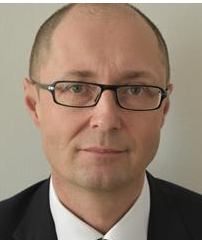
Ole Jakob Elle is a Professor II at the University of Oslo's Department of Informatics, affiliated with the Research Group for Robotics and Intelligent Systems (ROBIN) and the Strategic Research Initiative in Multimodal Medical Imaging and Image Analysis (MEDIMA). His work focuses on advancing medical robotics, computer-aided surgery, and AI-driven solutions for healthcare. Key areas include cardiac monitoring, holographic surgical planning, and robotic systems for minimally invasive procedures. Research interests span artificial intelligence, medical imaging, surgical navigation, and adaptive systems. Notable contributions include developing HoloPatch for intracardiac surgery planning and algorithms for real-time echocardiography guidance. His interdisciplinary approach integrates robotics, computer vision, and clinical applications to enhance surgical precision and patient outcomes. Publications highlight advancements in neural networks for valve detection, mixed reality applications in surgery, and AI-based medical data structuring. Collaborations involve clinicians, engineers, and computer scientists to address challenges in cardiac defects, laparoscopic surgery, and remote medical mentoring. Elle’s work is published in journals like Scientific Reports , European Heart Journal , and Computer Methods and Programs in Biomedicine , reflecting his impact on translational medical research and technology development.
Ernst Gunnar Gran is Associate Professor at the Department of Information Security and Communication Technology at the Norwegian University of Science and Technology (NTNU), where he heads the communication technology discipline. He also holds an adjunct research scientist position at Simula Research Laboratory, where he headed the Cloud department until December 2016. His research spans high performance computing (HPC), HPC interconnection networks, enterprise data centre networks, cloud computing, and data-intensive processing in multi-clouds. He serves as the Scientific Leader of Communication Technologies in the RCN-funded infrastructure project eX3 (Experimental Infrastructure for Exploration of Exascale Computing) and has significant experience with both RCN-funded and EU-funded research projects, including the H2020 project Melodic (Multi-cloud Execution-ware for Large-scale Optimised Data-Intensive Computing). Gran received his M.Sc. and Ph.D. degrees in computer science from the Department of Informatics, University of Oslo, in 2007 and 2014, respectively. Both theses focused on different aspects of resource management in high performance interconnection networks. He previously headed the RCN-funded project ERAC (Efficient and Robust Architecture for Big Data Clouds) and led the design, implementation, and deployment of the multi-homed IP-based research testbed NorNet Core. Gran also has several years of experience as a system administrator and scientific programmer. His research interests center on the intersection of high performance computing and networking, with particular focus on anomaly detection in time series data, HPC interconnection networks, network virtualization, and cloud computing infrastructure. His work demonstrates a consistent evolution from fundamental networking research to applied solutions for modern computing challenges, particularly in IoT security and smart home applications. His recent publications show a strong emphasis on developing lightweight, real-time anomaly detection systems using deep learning techniques. Analysis of his publication trends reveals a clear progression from traditional HPC networking research toward time series anomaly detection applications, particularly for IoT systems. His 15 most recent publications show dual focus areas: approximately 60% concentrate on anomaly detection methods for time series data (particularly for IoT applications), while the remaining 40% maintain his foundational work in HPC networking, virtualization, and cloud infrastructure. This evolution demonstrates his ability to adapt core networking expertise to emerging application domains while maintaining technical depth. While no specific scientific awards are mentioned in the provided text, Gran's leadership roles in significant research projects (eX3, Melodic, ERAC) indicate recognition of his research capabilities within the academic and research funding communities. His position as Scientific Leader of Communication Technologies in the RCN-funded eX3 project further demonstrates his standing in the Norwegian research community. Gran's teaching responsibilities include serving as course coordinator for DCSG1006 Data Communication and Networks, DCSG2001 Interconnected Networks and Network Security, and Networks: Administration, Programming and Security. His research leadership extends to significant grant-funded projects, including the RCN-funded eX3 infrastructure project and the EU H2020 Melodic project. His previous leadership of the ERAC project and the NorNet Core research testbed demonstrates sustained ability to secure and manage substantial research funding. His laboratory and team affiliations include the Department of Information Security and Communication Technology at NTNU, where he heads the communication technology discipline, and Simula Research Laboratory, where he maintains an adjunct position. The NorNet Core research testbed, which he led the development of, represents a significant infrastructure contribution to the networking research community. His current work with the eX3 project suggests ongoing involvement in experimental infrastructure for exascale computing exploration.
Christian Doeller is a Professor of Medicine (Neuroscience) at the Norwegian University of Science and Technology (NTNU), leading research at the Kavli Institute for Systems Neuroscience . He also serves as Managing Director of the Max Planck Institute for Human Cognitive and Brain Sciences and Professor of Psychology (Learning and Memory) at Leipzig University , Germany. Specializes in translational neuroscience of ageing and Alzheimer's disease Focuses on cognitive neuroscience of learning and memory Key projects: Jebsen Centre for Alzheimer's Disease, Helse Midt-Norge, and ERC-CoG project GEOCOG His recent research explores hippocampal-entorhinal cognitive maps, spatial navigation, and memory reconfiguration across abstract and Euclidean spaces. Collaborations span NTNU, Max Planck Institute, and Leipzig University. Notable article trends include human cognitive neuroscience applications, neuroimaging techniques (DTI-fMRI, eye tracking), and neural coding in memory systems. Themes like stress effects on memory and cortical motor system interactions with cognitive maps are recurrent. Christian Doeller's team investigates brain mapping and neurodegenerative diseases, leveraging advanced neuroimaging and computational models. His work bridges basic neuroscience with clinical applications in Alzheimer's research.
Bjørn Solvang is a Professor in the Department of Industrial Engineering at UiT The Arctic University of Norway, campus Narvik. His research focuses on advanced manufacturing systems, robotics, and digital transformation in industrial contexts. His primary research interests include: Reconfigurable Manufacturing Systems Industry 4.0/5.0 Technologies Human-Robot Collaboration Digital Twins and Virtual Reality Applications Supply Chain Optimization Cognitive Infocommunication in Robotics He investigates how these technologies enhance flexibility, efficiency, and sustainability in manufacturing, particularly for small and medium enterprises (SMEs). Analysis of his recent publications reveals a strong trajectory toward smart manufacturing systems with increasing emphasis on Industry 5.0 principles. His work consistently addresses real-world industrial challenges through robotics integration, digital twin implementations, and AI-driven optimization, often involving European cross-organizational collaborations. Professor Solvang actively contributes to the ArcLog research group (Intelligent Manufacturing and Logistics) and the "Industry 5.0 enabled Smart Logistics" project. He has participated in multiple European cooperation initiatives providing educational frameworks for SMEs transitioning to advanced industrial paradigms. Based at Campus Narvik (room A4050), he maintains active industry engagement through research projects targeting practical manufacturing innovations and sustainable logistics solutions.