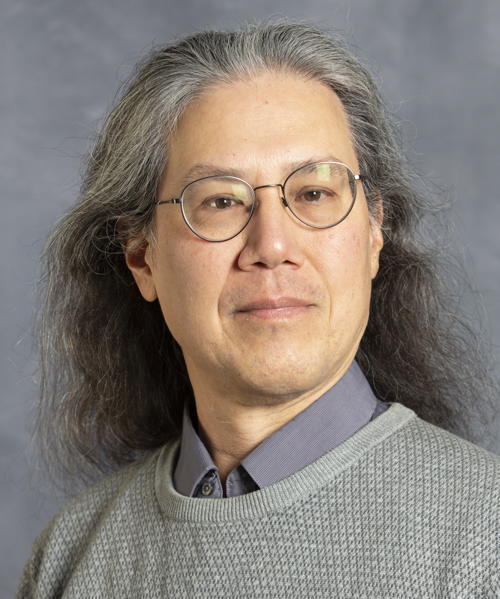
Jan Madsen is a Professor at DTU Compute, Technical University of Denmark, and Head of the Embedded Systems Engineering section. His research focuses on system-level modeling and design of embedded computing systems, particularly cyber-physical systems, microfluidic biochips, and synthetic biology applications. Develops design automation tools and methodologies for embedded systems Supervises numerous PhD students and leads major research projects Research Interests Key areas include: Embedded systems-on-a-chip Cyber-Physical Systems (Internet-of-Things) Microfluidic Lab-on-Chip devices Synthetic biology with molecular computing Design, modeling, and optimization of complex systems Scientific Awards DATE Fellow (2019) IEEE CEDA Outstanding Recognition (2019) DTU Scientific Advise Award (2013) Best Paper Awards at MECO (2013) and CASES (2009) Jorck’s Foundation Research Award (1995) Publications His 14+ journal papers and 115+ conference papers demonstrate expertise in: SystemC-based modeling frameworks Energy-aware sensor networks Self-healing eDNA architectures Microfluidic biochip synthesis RTOS modeling and MPSoC exploration
Kevin Crowston is a Distinguished Professor of Information Science at Syracuse University's School of Information Studies (iSchool), where he examines how information technology enables new organizational forms through empirical studies, theoretical modeling, and system design. His work focuses on coordination-intensive processes in virtual settings, with significant contributions to citizen science, data science teamwork, and journalism transformation. Education A.B. in Applied Mathematics (Computer Science), Harvard University, 1984 Ph.D. in Information Technologies, MIT Sloan School of Management, 1991 Research Focus : Crowston investigates coordination mechanisms in human-AI collaboration, particularly through projects like Gravity Spy (combining citizen scientists with machine learning for gravitational wave analysis) and journalism innovation (e.g., ReelFramer for AI-assisted news-to-video translation). His framework addresses how intelligent systems reshape work design, knowledge production, and team dynamics in scientific and media contexts. Publication Trends : Recent articles (2024-2025) reveal three dominant threads: (1) Human-AI co-creation in journalism (deskilling/upskilling dynamics, creative tool adoption), (2) Citizen science evolution with AI (co-learning systems, lexical entrainment), and (3) Socio-technical governance of intelligent machines (control-accountability alignment, project archetypes). These reflect his central inquiry into how technology reconfigures work structures. Scientific Recognition ACM Distinguished Speaker Research Leadership : Crowston currently directs two major NSF initiatives: (1) HCC grant 21-06865 on intelligent support for non-expert information navigation, and (2) FW-HTF grant 21-29047 exploring human-technology collaboration in journalism. He spearheaded a Research Coordination Network establishing socio-technical frameworks for work in the age of intelligent machines, culminating in a special issue of Information, Technology & People . Collaborative Infrastructure : He co-leads the Gravity Spy citizen science ecosystem (integrating LIGO physicists, machine learning systems, and volunteers) and serves as co-editor-in-chief of Information, Technology and People , previously editing ACM Transactions on Social Computing . His MIDST platform research advances stigmergic coordination for data science teams.
Sebastian Risi is a Professor at the IT University of Copenhagen , where he directs the Creative AI Lab and co-directs the Robotics, Evolution and Art Lab (REAL) . His work bridges computational evolution, deep learning, and collective intelligence for applications in robotics, art, and video game design. His research focuses on self-organizing AI systems that grow or assemble through local interactions, inspired by biological development. Key areas include neuroevolution , neural cellular automata , and generative modeling , with applications in adaptive robotics, game content creation, and damage-resilient AI. Recent publications highlight trends in self-assembling neural architectures (NDPs) and 3D functional machine generation (Minecraft experiments). Awards include ERC Consolidator Grant (2022), Best Paper at FDG’21 , and Google Faculty Award (2019). Scientific Awards : ERC Consolidator Grant (GROW-AI), Best Paper FDG’21, Runner-Up IEEE Games’20, GECCO 2017 Competition Winner, Sapere Aude Grant, Amazon/Google Faculty Awards He advises on projects like GROW-AI (EU-funded), AI-TESTER (game testing), and C2SIM (military systems). Media coverage includes Science , Wired , and Popular Science .
Professor Hans Gellersen is a faculty member at the Department of Computer Science, Aarhus University. His research focuses on human-computer interaction, virtual/augmented reality, eye tracking, and multimodal interaction. He leads projects exploring gaze-based interfaces, natural input techniques, and XR applications. Key interests include improving interaction efficiency in 3D environments and addressing accessibility challenges in extended reality systems. Recent work emphasizes dynamic eye dominance analysis for foveated rendering, multimodal input cascades (hand-head-eye), and gaze-assisted 3D object manipulation. He investigates user performance in VR/AR systems, calibration methods for eye tracking, and collaborative mixed reality tools. Notable contributions include frameworks for spatial interfaces, gesture fusion, and accessibility adaptations for users with movement disorders. His publications span top venues like CHI, IEEE VR, and ACM Transactions on Computer-Human Interaction. Research themes include gaze-hand coordination, implicit calibration systems, and reconfigurable collaboration spaces. Current projects explore seamless interaction techniques that combine gaze with physical movements and environmental cues.
Petar Popovski is a Professor at the Department of Electronic Systems within the Technical Faculty of IT and Design at Aalborg University, Denmark. His research focuses on next-generation wireless communication systems, with a strong emphasis on ultra-reliable low-latency communication (URLLC), Internet of Things (IoT), multiple access, and 6G technologies. He leads several high-impact research projects, including the Classique - Center for Classical Communication in the Quantum Era funded by the Danish National Research Foundation and WATER (Wireless Architectures for intelligent and Trusted connectivity in the posT-5G ERa) supported by Villum Fonden. His research interests span key areas in modern communication theory and systems, including random access , non-terrestrial networks , satellite communication , and machine learning for reliable communication . He is actively involved in advancing the integration of sensing and communication, digital twin technologies, and quantum-era classical communication frameworks. The recent publications highlight a strong trend toward deterministic and reliable access in wireless networks, integration of sensing and communication for industrial automation, and novel physical-layer techniques using reconfigurable intelligent surfaces. These works are published in top IEEE journals such as IEEE Transactions on Communications , IEEE Transactions on Haptics , and IEEE Transactions on Vehicular Technology . Award highlights include the Best Student Paper Award (2021) , recognizing his mentorship and collaborative research excellence. Prof. Popovski serves as a principal investigator (PI) and supervisor in multiple research projects, securing significant funding from national and international bodies such as the Danish National Research Foundation and the European Space Agency (ESA). He hosts visiting researchers regularly and contributes to scientific leadership through editorial roles and conference participation. He is a key figure in the Connectivity section at Aalborg University and leads cutting-edge research in future wireless systems, contributing to both theoretical foundations and practical implementations in smart infrastructure, space communication, and dependable 6G networks.
Yan Kyaw Tun is a Tenure Track Assistant Professor in the Department of Electronic Systems at Aalborg University's Technical Faculty of IT and Design, located in Copenhagen, Denmark. His research lies at the intersection of wireless communications, edge computing, and artificial intelligence, with a strong focus on next-generation networks (5G/6G), UAV-assisted systems, and intelligent resource management. His educational background includes a Ph.D. in Computer Engineering from Kyung Hee University, South Korea, where he was awarded the Best Ph.D. Thesis Award in 2021, and a Bachelor of Engineering in Marine Electrical Systems and Electronic Engineering from Myanmar Maritime University. Dr. Tun's research interests span Edge Computing , Multi-Access Edge Computing (MEC) , Resource Allocation , Unmanned Aerial Vehicles (UAVs) , Reinforcement Learning , Energy Efficiency , and Integrated Sensing and Communication (ISAC) . His work leverages AI and optimization techniques to enhance the performance of wireless networks, particularly in space-air-ground integrated systems and satellite-HAP environments. The recent publications highlight a clear trend toward intelligent and sustainable networking: the integration of STAR-RIS (Simultaneously Transmitting and Reflecting Reconfigurable Intelligent Surfaces), Federated Learning for satellite-HAP systems, and AI-driven optimization for UAV trajectories and beamforming. These works are published in high-impact venues such as IEEE Transactions on Mobile Computing and IEEE ICC , showcasing his leadership in cutting-edge communication technologies. His scientific accolades include: IEEE ComSoc Outstanding Young Researcher Award for EMEA Region (2024) Best Ph.D. Thesis Award (2021) Student Best Paper Award at APNOMS 2019 Korea Network Operation and Management Conference Award (2020) Korea Computer Congress 2018 Award Dr. Tun is actively engaged in the academic community as an advisor and grant participant. Though no direct advisees are listed, his involvement in large collaborative projects—evidenced by co-authorship with senior researchers like Prof. Choong Seon Hong—indicates mentorship and team leadership. He has served on the editorial boards of IEEE Internet of Things Journal , IEEE Open Journal of the Communications Society , and IEEE Network , and has secured research support through participation in IEEE-organized workshops and special issues. He is a key organizer of upcoming workshops, including the 'Sustainable AI for Next-Generation Wireless Communications and Networking' at IEEE GLOBECOM 2025 and the 'Digital Twin Networks' workshop at IEEE/CIC International Communications in China 2025, reflecting his role in shaping future research directions in intelligent and green networking.
Lars Dittmann is a Professor at the Department of Electrical and Photonics Engineering at the Technical University of Denmark (DTU), leading the Networks Technology and Service Platforms section. His work bridges advanced networking technologies with real-world applications in healthcare and transportation. Academic Role: Professor, Head of Section University: Technical University of Denmark (DTU) Department: Networks Technology and Service Platforms Research Interests: Professor Dittmann specializes in Software-Defined Networking (SDN) , 5G and IoT technologies , and energy-efficient network design , with a focus on applications in telemedicine and transportation systems . His work integrates machine learning for privacy-preserving traffic analysis and explores optical networks for high-bandwidth scenarios. Scientific Contributions: His recent publications emphasize green cellular networks using SDN/NFV/C-RAN, IoT benchmarking for coverage and mobility, and secure edge architectures for railways. Collaborative projects like the Future Patient telerehabilitation program highlight his interdisciplinary impact. Supervision: He supervises PhD candidates such as Radheshyam Singh, focusing on SDN-based IoT security and 5G network optimization. Labs & Projects: Leads initiatives like EXplorative network PLAnnINg and Broadband Trial Integration , addressing challenges in network reliability , emergency communication , and optical data center scaling .
Ole Madsen is a Professor at the Department of Materials and Production within The Faculty of Engineering and Science at Aalborg University . His research focuses on Robotics and Automation , particularly in 5G Smart Production , AI for Manufacturing , and Industry 4.0 applications. He also holds a part-time position at Adding Robotics , applying his expertise in robot integration for industrial and healthcare settings. Research Interests : Robotics, Automation, AI, Sensor Systems, Modular Manufacturing, Welding Technology, Digital Twins, Human-Centered Robotics, Industry 4.0 His work spans 35+ years with over 205 publications , emphasizing smart production systems and robot-assisted processes . Key contributions include Swarm Production Architectures , 5G-Enabled Robotics , and Human-Robot Collaboration frameworks. He has supervised 10 PhD students and led major projects like RAU (Robot-Assisted Ultrasound) and GINP: Robotics & AI Innovation Network . Scientific Awards : SCAP2020 Best Presentation Award (2020) Ole's 31 projects include AP2030: Aseptic Factory 2030 (pharma production), AddSmart (robotics R&D), and 5G-Enabled Autonomous Systems . His 127 press/media mentions highlight advancements in robotic welding , industrial metaverse , and swarm production . He maintains an ORCID: 0000-0003-2133-2541 with extensive publication records across Swarm Robotics , Modular Manufacturing , and AI-Driven Production .
Mirgita Frasheri is a Tenure Track Assistant Professor at the Department of Electrical and Computer Engineering, Aarhus University. Her research focuses on autonomous systems, multi-agent systems, and digital twins, particularly in the context of cyber-physical systems and robotics. Education: PhD in Computer Science from Mälardalen University (2020), specializing in Modelling and Control of Collaborative Adaptive Autonomous Agents. Mirgita's research explores the application of digital twins for enhancing cyber-physical systems, fault tolerance mechanisms in autonomous robotics, and federated digital twin platforms. Her work bridges theoretical advancements with industry-oriented solutions. Recent publications highlight trends in systematic reporting for digital twins, federated architectures, and autonomous agent integration in sensor networks. She is actively involved in collaborative projects, including agricultural robotics and CPS optimization. She participated in the 20th Overture Workshop and contributes to interdisciplinary research in digital twin services and mobile sensor networks.
Gert Frølund Pedersen is a Professor at the Department of Electronic Systems , Aalborg University , within the Technical Faculty of IT and Design . His research focuses on antennas, propagation, and millimeter-wave systems. He leads projects like DRONES (30 million DKK from Innovationsfonden) for drone-based electromagnetic signature analysis and EcoSurf6G for energy-efficient reconfigurable surfaces in 6G networks. With over 758 research outputs and 21 PhD students supervised, he contributes extensively to wireless communication advancements. Antenna Engineering Millimeter-Wave Systems Reconfigurable Intelligent Surfaces Deep Learning in Antenna Design His recent work emphasizes millimeter-wave IoT applications , UWB propagation channels , and 5G/6G antenna arrays . Publications highlight innovations in transmitarray antennas , liquid crystal polarization control , and metasurface design using AI. His research spans from fundamental electromagnetic safety to cutting-edge wireless infrastructure. Notable awards include Best Reading Paper of the Issue (IEEE Transactions on Microwave Theory and Techniques, 2020), ESI Highly Cited Paper (2019), and Ridder af Dannebrog (2021). He frequently engages with media to address public concerns about mobilstråling (mobile radiation) and its safety.
Dimitris Chrysostomou is an Associate Professor in the Department of Materials and Production at Aalborg University, Denmark. He leads the Robotics & Automation Group and directs the AI:Cybernetics Lab. His work focuses on developing safe, intuitive robotic systems for industrial and social contexts, emphasizing human-robot interaction (HRI), AI ethics, and collaborative robotics. Chrysostomou has over 15 years of research experience, funded by EU frameworks and national grants, with over 70 peer-reviewed publications. Education: PhD in Robot Vision (2013) and Diploma in Production Engineering (2006) from Democritus University of Thrace. He coordinates courses in robotics and manufacturing technology, emphasizing problem-based learning models. Administrative roles include heading the Robotics and Automation Group and the Aalborg Robotics Challenge steering committee. Research interests span AI-driven robotics, ethical implications of robot behavior, and HRI evaluation methodologies. Key projects include SAPIENT (2025-2027) for robotic intelligence and RIACT (2024-2025) on collaborative robot technology. Editor-in-Chief of *Industrial Robot* journal, IEEE Senior Member, and leader in euRobotics standardization initiatives. Notable contributions include virtual assistants for industrial robots, trust evaluation frameworks in HRI, and energy-based approaches for collaborative robotics. Active in conference organization, editorial roles, and industry collaborations, including co-founding AI startups.
Ming Shen is an Associate Professor at the Department of Electronic Systems, part of The Technical Faculty of IT and Design at Aalborg University. His research focuses on antennas, millimeter-wave systems, and AI-driven RF sensors with applications in 5G/6G communications, biomedical engineering, and smart systems. His research interests span antenna design (including phased arrays, metamaterials, and compact structures), AI integration in electromagnetic systems, and medical sensor technologies. Recent projects include drone-based electromagnetic signature analysis, vibration energy harvesting for pacemakers, and smart healthcare systems for posture recognition and surgical site infection monitoring. Key projects include DRONES: Drone-Obtained Electromagnetic Signatures (2024–2028), Sensor Intelligence for Healthcare and Sports (2022–2027), and DeepBone (2021–2022), which explored deep learning for surgical infection detection. His work also bridges machine learning and electromagnetic design, with breakthroughs in surrogate modeling and automated antenna optimization. Ming Shen has supervised 6 PhD students and published over 160 peer-reviewed articles. Notable contributions include AI-assisted NLOS sensing, ultra-wideband antenna innovations, and medical applications such as electrical impedance-based bone healing assessment.
Peter Gorm Larsen is Professor in the Department of Electrical and Computer Engineering at Aarhus University, affiliated with the DIGIT Center. With over 300 research outputs since 1989, his work centers on digital twins, cyber-physical systems, and embedded AI. Current projects include RoboSAPIENS (robotic adaptation), CP-SENS (cyber-physical sensing), and DIGIT-BENCH (digital twins for wind industry test benches). Research focuses on developing reusable digital twin platforms and autonomous reconfiguration frameworks. Recent publications demonstrate advancements in semantic interoperability for coupled digital twins and service-oriented architectures. Since 2018, Professor Larsen has received international recognition including the Reviewer Recognition award. His work spans robotics, sustainable energy systems, and healthcare applications. Professor Larsen maintains active collaborations across Europe and serves on multiple program committees. Teaching activities include Discrete Mathematics and supervision of graduate students in software engineering and embedded systems.
Lukas Esterle is Associate Professor at Aarhus University's Department of Electrical and Computer Engineering. His research focuses on enabling collaboration among autonomous systems through computational self-awareness, collective learning, and autonomous decision-making. His work draws inspiration from natural systems, psychology, and anthropology to develop resilient distributed systems. Key research areas include: autonomous multi-agent coordination, digital twin architectures, computational trust models, and distributed learning frameworks for robotic systems. His investigations target applications in smart cities, industrial automation, and edge computing environments. Professor Esterle teaches courses in Software Engineering, Computer Games Technologies, and Autonomous Agents & Multi-Agent Systems. He coordinates multiple European research projects including DIAMOND (Developing Personalized Capabilities), FLOCKD (Federated Learning for Collaborative Knowledge), and MARVEL (Multimodal Data Analytics for Smart Cities).
Karen Waltorp is an Associate Professor in the Department of Anthropology at the University of Copenhagen, Faculty of Social Sciences. Her work bridges visual and multimodal anthropology, digital media, emerging technologies, energy infrastructures, gender, and migration studies. She is deeply engaged in ethnographic fieldwork in South Africa and Denmark, with shorter research trips to West Africa, Central Asia, and the Middle East. Current Affiliation: Department of Anthropology, University of Copenhagen Research Leadership: Principal Investigator of two major South African projects and one in Denmark; leads the Ethnographic Exploratory and Multimodal MediaLab Networks: Coordinator of the Multimodal Ethnography Network (EASA), former coordinator of EASA Future Anthropologies Network (2016–2023) Education: PhD in Anthropology, Aarhus University (2017), dissertation on smartphones and young Muslim women in Copenhagen Research Interests: Karen Waltorp’s research centers on how digital technologies reconfigure space, personhood, and social relations. She explores the interplay between digital media, energy infrastructures, and social inequality, particularly through gendered and postcolonial lenses. Her work critically examines algorithmic ecologies, technological imaginaries, and energy futures, emphasizing environmentally and socially just alternatives. She is committed to public-facing, interdisciplinary anthropology and the development of multimodal ethnographic methods. Publication Trends: Her recent publications reflect a strong focus on digital sociality, energy futures, and the socio-technical dimensions of emerging technologies in the Global South. She frequently collaborates on interdisciplinary and international projects, producing co-edited volumes, special journal issues, and award-winning multimodal outputs. Her work appears in high-impact outlets and engages with both academic and public audiences. Scientific Awards: Royal Anthropological Institute, Basil Wright Film Prize EthnoFest: Athens Ethnographic Film Festival Nordic Panorama DOX LAB Advising and Grants: Waltorp supervises MA and PhD students in her research areas. She is the Principal Investigator of significant funded projects, including ‘CLAIMS to Energy Citizenship in South Africa’ (DFC, 10 million DKK) and ‘Digital everyday lives far from Silicon Valley’ (IRFD Inge Lehmann, 2.9 million DKK). She has served on prestigious grant panels such as the European Research Council (Advanced Grant) and Riksbankens Jubileumsfond. Labs and Teams: She heads the Ethnographic Exploratory (EE) and founded the Multimodal MediaLab at the Department of Anthropology, fostering a collaborative space for experimenting with ethnography in audiovisual, digital, and interactive formats. She also coordinates the departmental research group Technē: Technologies and the Digital.