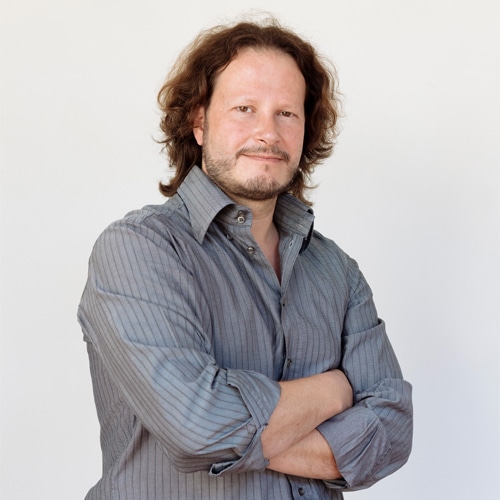
Yunxiang Yan is a Professor in the Department of Anthropology at the University of California, Los Angeles (UCLA). His work focuses on China and Cultural Anthropology , with specific expertise in Economic Anthropology , Family and Kinship , and Individualization . Education: Ph.D. in Social Anthropology from Harvard University (1993). Yan’s research explores the intersection of social change , moral theory , and family dynamics in modern China. His ethnographic studies in rural villages provide foundational insights into exchange theory and cultural globalization . Recent publications analyze food safety , medical ethics , and moral crises in China, reflecting his interdisciplinary approach combining anthropology, sociology, and philosophy. Articles span themes like intergenerational intimacy , political oppression , and networked social structures . Scientific Awards: Guggenheim Fellowship Levenson Prize-winning Research Yan’s work bridges local Chinese studies with global anthropological discourse. He has held positions at the Chinese University of Hong Kong, Johns Hopkins University, and UCLA since 1996. His career reflects a commitment to documenting the lives of ordinary people, rooted in his early experiences as an expelled villager during Maoist China. Contact: yan@anthro.ucla.edu
Nicholas Evans is a Distinguished Professor in the Department of Linguistics at the School of Culture, History & Language, Australian National University. He is an ARC Laureate Fellow and serves as Director of the ARC Centre of Excellence for the Dynamics of Language (CoEDL), reflecting his leadership in integrating typology, descriptive linguistics, and cognitive science. His work spans linguistic diversity, endangered languages, and the interplay between language and culture. His research focuses on Australian and Papuan languages, with extensive fieldwork in remote communities. Key interests include linguistic typology, historical and contact linguistics, semantics, and the cognitive underpinnings of grammar. He has published foundational grammars and dictionaries of Kayardild, Bininj Gun-wok, and Dalabon, contributing significantly to the documentation of endangered languages. His recent publications reveal a strong trend in cross-linguistic studies of social cognition (SCOPIC), syntactic typology, and phylogenetic modeling of the Yam languages. These works integrate linguistic, cognitive, and genetic data, highlighting interdisciplinary approaches to understanding language evolution and human diversity. ARC Laureate Fellow Fellow of the Australian Academy of the Humanities (FAHA) Fellow of the Academy of the Social Sciences in Australia (FASSA) Fellow of the British Academy (FBA) Evans supervises research students and leads major projects such as 'The Wellsprings of Linguistic Diversity' and CoEDL, which involve extensive collaboration across institutions and disciplines. His grants include modeling Pacific creoles and phonemic analysis of Tok Pisin. He is also involved in digital archiving initiatives like PARADISEC and the Language Data Commons of Australia, ensuring long-term preservation of linguistic data. He leads and contributes to research teams focused on Southern New Guinea languages, paradigm syncretisms (PARABANK), and cultural heritage preservation. His work emphasizes reciprocal engagement with speech communities and training the next generation of language documenters.
Robert Ghrist is the Andrea Mitchell University Professor at the University of Pennsylvania with dual appointments in the Department of Mathematics and the Department of Electrical and Systems Engineering. He serves as Associate Dean for Undergraduate Education for Penn Engineering. His educational background includes a B.S. in Mechanical Engineering from the University of Toledo (1991), and M.S. and Ph.D. degrees in Applied Mathematics from Cornell University (1994, 1995). Ghrist's research bridges pure and applied mathematics, focusing on applied algebraic topology , dynamical systems , and geometric methods in data science. His work extends to network theory, topological data analysis, and computational geometry, with applications spanning robotics, neuroscience, and social dynamics. Key innovations include developing sheaf-theoretic approaches for networked systems and persistence homology techniques for high-dimensional data. Analysis of his recent publications reveals a strong emphasis on lattice-theoretic frameworks , topological robotics , and network dynamics , with emerging applications in neural data interpretation and geometric computing. His research consistently integrates category theory with real-world engineering challenges. Significant scientific recognition includes: Presidential Early Career Award (PECASE, 2004) Scientific American 'Top 50' Research Leader (2007) Mathematical Association of America's Chauvenet Prize (2013) University of Pennsylvania Lindback Award for Distinguished Teaching (2015) DoD National Security Science and Engineering Faculty Fellowship (NSSEFF, 2015) Ghrist leads multiple federally funded research initiatives supported by AFOSR, DARPA, NSF, and ONR. He directs the development of educational tools including the Calculus BLUE/GREEN Project video series and custom GPTs for mathematical pedagogy. His open online courses have reached over 100,000 learners globally.
Daniel Cooney is an Assistant Professor in the Department of Mathematics at the University of Illinois Urbana-Champaign. He holds additional affiliations as an Affiliate at the Carl R. Woese Institute for Genomic Biology. His research focuses on applying partial differential equations (PDEs), dynamical systems, and stochastic processes to study evolutionary dynamics, particularly in biological and social systems. Key themes include multilevel selection, evolutionary game theory, and the emergence of cooperative behavior. Cooney earned his PhD in Applied and Computational Mathematics from Princeton University, advised by Simon Levin, and completed a postdoc as a Simons Fellow in Mathematical Biology at the University of Pennsylvania. His work bridges theoretical mathematics with applications in ecology, epidemiology, and social sciences. Recent publications explore topics like altruistic punishment in cultural systems, classroom-turnover dynamics, and protocell evolution. He actively participates in academic outreach, co-organizing conferences such as the AMS Special Session on Mathematics of Infectious Disease and the SIAM Minisymposium on Social-Ecological Systems. His research has been published in high-impact journals including *Proceedings of the National Academy of Sciences* and *Bulletin of Mathematical Biology*.
Yochai Benkler is the Berkman Professor of Entrepreneurial Legal Studies at Harvard Law School and faculty co-director of the Berkman Klein Center for Internet and Society at Harvard University. He specializes in Law and Political Economy, Technology Law and Policy, Communications Law, and Access to Knowledge. His work bridges academia and activism, focusing on the intersection of technology, collaboration, and societal structures. Benkler's research emphasizes decentralized collaboration, information commons, and the impact of technology on democracy. He has advised governments and international organizations on innovation policy and telecommunications. His notable works include The Wealth of Networks (2006), which explores social production in the digital age, and Reconstructing Class Analysis (2024), co-authored with Talha Syed, which rethinks class dynamics within capitalism. He has received numerous awards, including the Oxford Internet Institute Lifetime Achievement Award (2012), Ford Foundation Visionaries Award (2011), and Electronic Frontier Foundation Pioneer Award (2007). His work is publicly accessible at benkler.org . Benkler serves on the boards of the Open Society Foundations and the Freedombox Foundation. His research spans law, political economy, and technology, addressing issues like fake news, network propaganda, and the role of the internet in governance.
Mark D. Haiman is a Professor at the University of California, Berkeley, Department of Mathematics, with research interests spanning algebra, combinatorics, and algebraic geometry. His work connects symmetric function theory with geometric objects like Hilbert schemes and algebraic structures such as Cherednik algebras and Hecke algebras. Appointed: 2001 Contact: mhaiman@math.berkeley.edu Teaching: Math 256B—Algebraic Geometry (Spring 2025), Math 249—Algebraic Combinatorics (Spring 2024), and others in calculus and Lie groups. Research Interests : Haiman's research focuses on Macdonald polynomials, LLT polynomials, Hilbert schemes of points in the plane, and their combinatorial and geometric implications. His work includes resolving the Macdonald positivity conjecture and the n! conjecture through algebraic geometry. Publications : Haiman has contributed to foundational papers in combinatorial and algebraic structures, including generalizations of the shuffle theorem and positivity results for LLT polynomials. His articles often bridge representation theory, symmetric functions, and geometric methods. Students : He has supervised numerous PhD students, including Magda Hlavacek (2023), Foster Tom (2022), Jeremy Meza (2021), Maryam Farahmand-Asil (2018), Maria Monks Gillespie (2016), and others working on combinatorial algebraic geometry and related fields.
Anujit Chakraborty is an Associate Professor in the Department of Economics at the University of California, Davis . His research bridges Economic Theory , Behavioral Economics , and Experimental Economics , focusing on decision-making under risk and time constraints, procrastination, and present-biased behavior. Education : Ph.D. in Economics (University of British Columbia, 2017), M.S. in Quantitative Economics (Indian Statistical Institute, 2011), B.E. in Electronics Engineering (Jadavpur University, 2009) His work explores procrastination , present bias , prosocial behavior , and interpersonal uncertainty , often using experimental methods to analyze anomalies in economic preferences. Recent publications investigate democracy measurement , news source diversity , and peer-grading systems . Dr. Chakraborty teaches Intermediate Economics (ECN 100B) and Behavioral Economics at both undergraduate and Ph.D. levels.
Aimee van Wynsberghe is the Alexander von Humboldt Professor for Applied Ethics of Artificial Intelligence at the University of Bonn, where she also serves as Director of the Institute for Science and Ethics (IWE). Her work focuses on integrating ethical values into AI and robotics design, positioning Bonn as a leader in human-centered AI in Europe. She co-founded the Foundation for Responsible Robotics and advises international bodies such as the European Commission and the World Economic Forum. Van Wynsberghe holds a PhD in Applied Ethics from the University of Twente (2012), an MA in Bioethics (Erasmus Mundus, 2008), an MA in Applied Ethics from KU Leuven (2007), and a BSc in Cell Biology from Western Ontario (2006). Her research spans AI ethics, robotics ethics, care ethics, and sustainable technology, with a particular emphasis on value-sensitive design. Recent publications highlight her leadership in sustainable AI, ethical robotics, and multidisciplinary approaches to AI's hidden costs. She has secured significant funding, including the Humboldt Professorship (€3.5M) and Stiftung Mercator support (€3.8M), and leads the Bonn Sustainable AI Lab. Her awards include the L’Oréal UNESCO For Women In Science Award (2018) and the Humboldt Professorship (2021). Scientific Advisory Roles: Member, European Commission High-Level Expert Group on AI (2018–2020) Director, Artificial Intelligence Lab at TU Delft (2019–2021) Co-founder, ALLAI (2019–2021) Board Member, Konrad Zuse Schools of Excellence (2022–) Labs & Teams: She founded the Bonn Sustainable AI Lab and previously coordinated the 4TU Robotics Task Force. Current affiliations include the University of Bonn’s IWE, the German National Academy of Sciences (Leopoldina), and the German Academy of Science and Literature in Mainz.
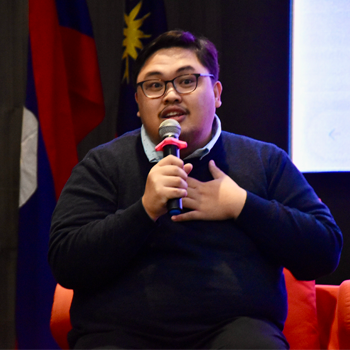
Chris Millora is a Lecturer in the Department of Educational Studies at Goldsmiths, University of London. He serves as Head of Programme for the MA Social Justice in Education and leads critical modules such as Introduction to Social Justice in Education and Global Education: Power, Practice and Policy . His work bridges youth learning, social justice, and international development, with a focus on grassroots activism. Education: PhD in Education and Development (2021), MA in Lifelong Learning Policy and Management (2016) Research Focus: Youth activism, volunteerism, and educational equity in Global South contexts Key Research Areas: Millora investigates youth-led social movements as informal learning spaces, employing ethnographic and participatory methods. His work examines how volunteering, activism, and dissent intersect with development agendas, SDGs, and systemic inequalities. Article Trends: Recent publications analyze bureaucratic literacies in Philippine volunteering, pandemic-era youth organizing, and criminalization of dissent in Southeast Asia. These works emphasize power structures, policy implications, and transformative learning. Scientific Awards: Leverhulme Trust Early Career Fellowship Grants & Collaborations: He has secured funding from UKRI/GCRF and collaborated with organizations like UN Volunteers, International Association for Volunteer Effort, and Global Campaign for Education. His research engages with UNESCO Chairs and BALID associations.
Prof. Dr. Aimee van Wynsberghe is the Alexander von Humboldt Professor for Applied Ethics of Artificial Intelligence at the University of Bonn. She serves as Director of the Institute for Science and Ethics (IWE) and founded the Bonn Sustainable AI Lab. Her affiliations include the German National Academy of Sciences Leopoldina, the European Commission's High-Level Expert Group on AI (2018-2020), and advisory roles at Deloitte, the World Economic Forum, and the Konrad Zuse Schools for AI Excellence. . Education PhD in Applied Ethics, University of Twente (2012) M.A. in Bioethics, Erasmus Mundus (2008) M.A. in Applied Ethics, Catholic University of Leuven (2007) B.Sc. in Honours Cell Biology, University of Western Ontario (2006) Research Interests focus on integrating ethical frameworks into AI and robotics design. Key areas include AI ethics, robotics ethics, digital ethics, care ethics, and value-sensitive design. She pioneered ethical guidelines for care robots and explores systemic risks in AI sustainability. Publication Trends show a shift toward sustainability challenges in AI, analyzing hidden environmental costs, post-colonial biases in AI standards, and structural ethical frameworks. Her work bridges philosophy, technology, and policy to address global AI impacts. Scientific Awards L'Oréal UNESCO For Women In Science Award (2018) Grants include a 3.8M EUR Mercator Foundation grant (2022), 3.5M EUR Humboldt Professorship (2021), NWO Gravitation Grant (2020), and others. She advises governments and institutions on AI ethics and co-founded the Foundation for Responsible Robotics. Labs & Teams : She leads the Bonn Sustainable AI Lab and has directed the Artificial Intelligence Lab at TU Delft. Her work involves interdisciplinary collaborations, including the interdisplinary task force at Aarhus University (2025).
Ana Caraiani is a Royal Society University Research Fellow and Professor in the Department of Mathematics at Imperial College London, specializing in Number Theory and Arithmetic Geometry. She is a member of the Number Theory group, focusing on the Langlands program, Shimura varieties, and p-adic Galois representations. Her work bridges arithmetic geometry and representation theory, with contributions to modularity lifting theorems, cohomology of Shimura varieties, and local-global compatibility in the Langlands program. Education: She earned a Ph.D. in Mathematics from Harvard University in 2012. She held positions as a Veblen Research Instructor (2013–2015) and Veblen Fellow (2015–2016) at the Institute for Advanced Study's School of Mathematics. Research Interests: Her research emphasizes the classical and p-adic Langlands programs, Shimura varieties, arithmetic geometry, and moduli stacks of Galois representations. Specific topics include vanishing theorems for cohomology, modularity of elliptic curves over CM fields, and applications of perfectoid spaces. Key Contributions: Caraiani has advanced the proof of modularity of elliptic curves over imaginary quadratic fields, established vanishing theorems for Shimura varieties with torsion coefficients, and contributed to the potential automorphy of Galois representations over CM fields. Her work links geometric approaches to arithmetic conjectures, such as the Sato-Tate and Ramanujan conjectures. Awards and Recognition: Royal Society University Research Fellowship (202?), Veblen Research Instructor/Fellowships (2013–2016), and contributions to major collaborative projects like the Potential Automorphy over CM Fields paper in the Annals of Mathematics.
Dr. Zara Ersozlu is a Senior Lecturer in Mathematics Education within the School of Education at the University of Newcastle, Australia. With a distinguished international career spanning multiple continents, she has held academic positions at prestigious institutions including North Carolina State University (USA), Gazi and Gaziosmanpasa Universities (Turkey), National Taiwan Normal University (Taiwan), The University of Western Australia, Murdoch University, and Deakin University. Her academic journey includes tenured positions as an Associate Professor and leadership roles as Department Head and Chair in teacher education disciplines. Currently, she teaches undergraduate and postgraduate courses in mathematics education, including Effective Pedagogies in Primary Mathematics, K-6 Mathematics, K-6 Numeracy, and Digitally Supported Learning. Dr. Ersozlu earned her Doctor of Philosophy from Firat University in Turkey and her Master of Art from Sakarya University. Her extensive academic preparation is complemented by five years of practical teaching experience in public schools prior to entering academia. This blend of theoretical knowledge and practical classroom experience informs her approach to teacher education and educational research. At the broadest level, Dr. Ersozlu's research investigates solutions to real-life problems impacting people's well-being, success, and capacity to achieve. Her scholarly work spans primary and secondary mathematics education, the psychology of mathematics (including metacognition, self-regulation, and anxiety), cross-cultural educational studies, teacher education, virtual simulated learning environments, and educational assessment. She has increasingly focused on the transformative potential of AI and machine learning in education, exploring how these technologies alter teaching, learning, and research processes. Her methodological expertise encompasses both quantitative and qualitative approaches, allowing her to effectively analyze both small and large educational datasets. Analysis of Dr. Ersozlu's recent publications reveals a strong emphasis on mathematics anxiety, teacher education, and the integration of technology in learning environments. Her work demonstrates a consistent focus on practical applications of educational research to address real-world challenges in mathematics education. The interdisciplinary nature of her research connects educational psychology, technology integration, and cross-cultural perspectives, with particular attention to how these elements intersect in teacher preparation and student learning outcomes. 2023 ATEA Research Recognition Award from the Australian Teacher Education Association 2021 Fellow of the Higher Education Academy (Advance HE, UK) 2010 Fellowship Program for Postdoctoral Researchers from the Council of Higher Education of Turkey Dr. Ersozlu is deeply committed to mentoring the next generation of scholars, currently supervising four PhD students and having successfully guided ten students to completion. Her grant portfolio includes significant funding for projects such as Best Practice Guidelines for RPL in Initial Teacher Education Programs ($60,000), Exploring the Reciprocal Relationship Between Mathematics Anxiety and Mathematical Resilience ($2,599), and multiple conference travel awards. She serves as an Associate Editor for several prominent journals including the International Electronic Journal of Mathematics Education and as Editor for Interdisciplinary STEM Education. Her editorial work reflects her standing as a respected voice in mathematics education research. Dr. Ersozlu's academic leadership extends to her role in developing innovative teaching approaches that integrate virtual simulation technology and learning analytics. Her work with TeachLivE™, a mixed-reality classroom simulation platform, demonstrates her commitment to creating authentic learning experiences for teacher education students. Through these initiatives, she bridges the gap between educational theory and classroom practice, preparing future educators to effectively implement evidence-based teaching strategies in diverse learning environments.
Diego Garlaschelli is Professor of Theoretical Physics at the IMT School for Advanced Studies in Lucca, Italy, and at the Lorentz Institute for Theoretical Physics, University of Leiden, the Netherlands. He leads the NETWORKS research unit at IMT and the Econophysics and Network Theory group at Leiden. He is also an external faculty member at the Complexity Science Hub in Vienna and an associate member of the Enrico Fermi Research Center in Rome. His affiliations reflect a strong international and interdisciplinary research profile in network science and statistical physics. He holds a master's degree in theoretical physics from the University of Rome III (2001) and a PhD in Physics from the University of Siena (2005). His postdoctoral experience includes positions at the Australian National University, the University of Siena, the University of Oxford, and the Sant’Anna School of Advanced Studies in Pisa. Garlaschelli’s research spans network theory, statistical physics, econophysics, financial complexity, ecological networks, and social dynamics. He applies maximum entropy models, information theory, and random graph frameworks to understand complex real-world systems. His teaching includes courses in Network Theory, Econophysics, and Complex Systems at both PhD and MSc levels. The 15 most recent publications highlight a consistent focus on network reconstruction, ensemble inequivalence, renormalization, and applications to financial and socio-economic systems. Key themes include statistical inference in networks, resilience, and multi-scale modeling, with publications in top journals such as Nature Reviews Physics , Physics Reports , Science , and Physical Review Letters . His scientific awards include the Best Paper Award at the 6th International Workshop on Self-Organizing Systems (2012) and the Jan Kijne Prize (2013) as supervisor. He has secured multiple grants from NWO, the European Union, and the Royal Society, and has supervised over 40 students at PhD, master’s, and bachelor’s levels. He also mentors postdocs and visiting scientists. Garlaschelli leads and organizes major international workshops and schools in network science and complex systems. He serves on scientific committees and is an active referee for journals like Nature and Physical Review Letters , as well as funding agencies including the ERC and NWO.
Peter Shearer is a Professor of Geophysics at the Institute of Geophysics and Planetary Physics , affiliated with the Scripps Institution of Oceanography at the University of California, San Diego. His research focuses on observational seismology, mantle discontinuities, earthquake location methods, source properties, and seismicity patterns. Education: B.S. in Geology and Geophysics, Yale University (1978) Ph.D. in Geophysics, UCSD Scripps Institution (1986) Research Interests Shearer's work uses large seismic datasets to study Earth's interior structure, particularly mantle transition zones, lithospheric discontinuities, and earthquake triggering mechanisms. His methods include waveform cross-correlation relocation, SS precursor analysis, and seismic wave scattering studies. Scientific Contributions His publications span 40+ years, with recent works analyzing aftershock migration, mantle discontinuities, and fault weakening. Key themes include Global mantle imaging using teleseismic data High-resolution fault zone seismicity Deep Earth structure from scattered waves Scientific Awards AGU Fellow (1999) SIO Outstanding Teaching Award (2003) Lehmann Medal (AGU, 2020) National Academy of Sciences member (2009)
CHONG Yidong is a Professor in the Division of Physics and Applied Physics at Nanyang Technological University (NTU), Singapore. He leads the Centre for Disruptive Photonic Technologies and holds positions in the School of Physical and Mathematical Sciences. His research focuses on theoretical photonics, topological systems, and non-Hermitian physics, with contributions to photonic crystals, topological insulators, and coherent perfect absorbers. He has been recognized with awards including the President's Science Award (2020) and the National Research Foundation Fellowship (2012). Education: Ph.D. (Physics), Massachusetts Institute of Technology (2005–2008) B.Sc. (Physics) and B.Sc. (Mathematical & Computational Sciences), Stanford University (1999–2003) Research Interests: Topological photonics, non-Hermitian systems, photonic topological insulators, PT-symmetric structures, and applications in quantum optics and acoustics. Recent Articles: Focus on experimental realizations of topological lasers, exceptional points in non-Hermitian systems, and higher-order topological phenomena in acoustic and photonic platforms. His work bridges theory and experiment, with collaborations in materials science and electrical engineering. Awards: Extensive recognition for both research and education, including Nanyang Research and Education Awards. Teaching: Courses in mathematical methods for scientists, quantum mechanics, and computational physics, emphasizing numerical techniques and wave phenomena.