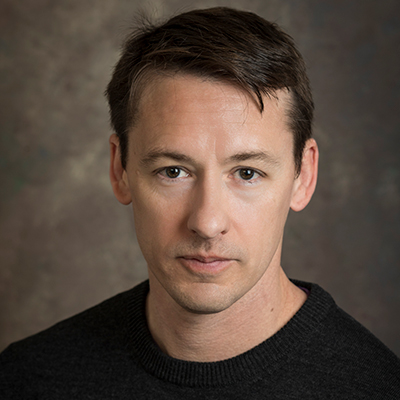
Vlad Pribiag is an Associate Professor at the School of Physics and Astronomy, University of Minnesota, focusing on quantum devices and topological materials. His research spans 2D/1D quantum systems , Majorana zero-modes , and quantum transport in nanowires . Research Interests His group develops topological quantum computing platforms by studying spin-helical liquids in InSb nanowires and DNA-programmable molecular lithography . They aim to overcome fabrication-induced disorder using van der Waals materials and explore Multiterminal Josephson Junctions for artificial band structures. Scientific Awards Moore Foundation Experimental Physics Investigators Grant (2024) Research Trends Recent publications highlight advances in DNA-assembled superconducting architectures , Josephson diode effects , and ballistic transport in nanowires . Subfields include topological Weyl nodes , spin filtering , and quantum point contact tuning . Students & Collaborators Current: Mohit Gupta, Colin Riggert, Gavin Menning Alumni: Yilikal Ayino (Intel), Zedong Yang (Google), Gino Graziano (Intel)
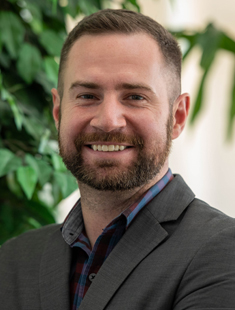
Peter Larm is an Associate Professor and Senior Lecturer at Stockholm University's Department of Public Health Sciences. He earned his PhD from Karolinska Institutet in 2010 and has held positions at the University of Montreal, Uppsala University, Mälardalen University, and the Swedish Association for Alcohol and Drug Education (CAN). His research focuses on adolescent mental health, alcohol epidemiology, and public health interventions, with particular emphasis on longitudinal trends and risk factors in youth populations. Dr. Larm leads multiple research projects including: 'The new generation of young people is feeling worse than before' (examining declining youth mental health) 'Promoting and preventive work for children's mental health and unequal mental health' (ChiPP program) Studies on adolescent substance use decline and its relationship to mental health outcomes Intervention research for children of substance-abusing parents His work utilizes epidemiological approaches and population-level data analysis. His recent publications demonstrate strong thematic coherence around adolescent mental health trajectories, substance use patterns, and social determinants of health. Articles frequently employ longitudinal designs and examine interactions between lifestyle factors, parenting practices, and mental health outcomes. Cross-national comparisons (e.g., Sweden vs. Denmark) and methodological examinations of assessment tools (e.g., SDQ factor structure) are recurring elements. Emerging interests include migration health and physical activity's bidirectional relationships with mental health. No scientific awards or student advising relationships are documented in the provided materials. Research is conducted through institutional collaborations rather than dedicated labs or teams.
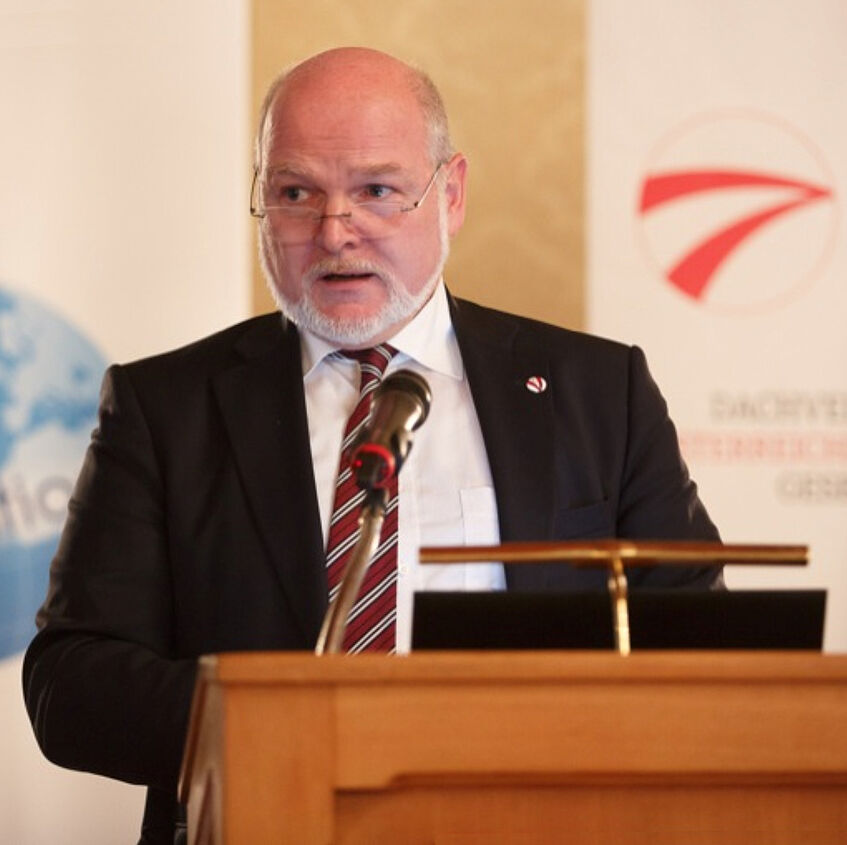
Boban Arsenijevic is a Professor at the Institute of Slavic Studies within the Faculty of Humanities at the University of Graz, Austria. His academic position and research profile establish him as a prominent figure in Slavic linguistics. His research interests encompass: Semantics, syntax, and morphology with special focus on their interfaces Verbal aspect and Slavic verb prefixation Agreement mechanisms, particularly gender agreement Clausal embedding and relativization The evolution of language Sociolinguistics and language policy Philosophy of language Professor Arsenijevic employs formal methods in his research, primarily generative grammar and formal semantics, while remaining open to functional considerations when appropriate. His empirical approach combines speaker introspection, corpus analysis, and experimental methods depending on the research question. He is an active member of the "Dimensions of Europe" profile area and participates in the "Heterogeneity and cohesion" and "Language and Plurality" research networks at the University of Graz. His recent publications (2022-2025) demonstrate consistent focus on verbal aspect, agreement phenomena, and morphosyntactic structures in Western South Slavic languages. His work bridges theoretical linguistic frameworks with concrete empirical data, including the development of specialized resources like the WeSoSlaV database for the Western South Slavic verbal system. His research shows particular attention to theme vowels, secondary imperfectivization, and morphosyntactic variation across Slavic languages. Professor Arsenijevic maintains an active research agenda with numerous publications each year, reflecting his significant contribution to the field of Slavic linguistics. His work connects theoretical linguistics with practical applications in language teaching and language policy.
Michele Heisler, MD, MPA, serves as Professor of Health Behavior and Health Equity at the University of Michigan School of Public Health and Professor of Internal Medicine, with additional roles as Research Scientist at the Center for Clinical Management Research and Medical Director of Nobel Peace Prize-winning Physicians for Human Rights (PHR). Her work bridges clinical practice, public health research, and human rights advocacy across global contexts. Her educational background includes a BA from Amherst College (1983), MPA from Princeton University (1987), and MD from Harvard Medical School (1997). This interdisciplinary training underpins her dual expertise in policy and clinical medicine. Dr. Heisler's research pioneers peer support models to address social determinants of health, with pathbreaking clinical trials demonstrating how training patients, community members, and families improves chronic disease outcomes. Her human rights work documents health consequences of systemic violence and informs UN protocols, legislation against police violence, and reparations frameworks. Current projects include diabetes prevention trials in Detroit/Ypsilanti and medical-legal documentation of torture against marginalized groups. Her 2025 publications reveal three dominant research trajectories: glaucoma management through personalized coaching (40% of recent work), diabetes/food insecurity interventions using peer support (35%), and human rights advocacy addressing immigration policies and medical ethics (25%). This triad reflects her integrated approach to clinical care, health equity, and structural violence. Securing over $45 million in federal grants, Dr. Heisler leads implementation science projects scaling peer support models across US health systems and internationally. As PHR Medical Director, she mobilizes clinicians to document rights violations while directing federally funded diabetes trials and community health worker programs in Brazil/UK. Her research group operates through the Center for Clinical Management Research, collaborating with safety net health systems to implement peer coaching, reciprocal support models, and community health worker interventions. Current initiatives include the Support, Educate, Empower (SEE) glaucoma program and INSPIRA diabetes prevention trial combining food vouchers with peer support.
Douglas Jones is an Associate Professor in the Department of Anthropology at the University of Utah, with a career spanning over two decades at the institution. His research bridges evolutionary anthropology, kinship systems, and cognitive science, focusing on how social norms and biological evolution interact to shape human behavior. Academic Rank: Associate Professor (2005–present) Previous Positions: Visiting Assistant Professor (1997–1998, 2000–2001) Teaching: Courses include Anthropology of Violence, Brazilian Culture, Language and Thought, Tribes & Global Systems. Research interests include: Kin selection and ethnic group selection Evolutionary models of social cohesion Game theory applications to anthropological phenomena Barbarigenesis and historical collapse of complex societies Racial cognition in Brazilian contexts His publications employ interdisciplinary frameworks like Optimality Theory to analyze kinship grammars, demonstrating connections between linguistic and social structures. While no scientific awards are listed, his teaching and outreach activities include maintaining a "Logarithmic History" blog covering universal history from Big Bang to modernity.
Loretta Johnson is a Professor at the Division of Biology , Kansas State University, and Co-Director of the Ecological Genomics Institute. Her research integrates genomic and ecological approaches to study adaptive mechanisms in plants and animals. Education: Ph.D. in Plant Ecology (University of Connecticut, 1992) Research Focus: Ecological Genomics, examining genetic responses of organisms to environmental stressors like lead contamination and climate change gradients. Key species: Andropogon gerardii (big bluestem grass). Recent Publications reveal interdisciplinary studies on genetic divergence, phenotypic plasticity, and ecotypic variation in grassland species. Her work bridges field ecology with genomic analysis to inform climate change adaptation strategies. Collaborations: Partnering with geneticists, ecologists, and environmental scientists on NIH-funded Superfund Research Center initiatives.
Assoc. Prof. Tomáš Bučko, PhD., is a faculty member in the Department of Physical and Theoretical Chemistry at the Faculty of Natural Sciences, Comenius University in Bratislava. He actively contributes to theoretical chemistry and materials science research while teaching master's-level courses in Theoretical and Computational Chemistry. His research focuses on theoretical catalysis, solid-state physics, and computational methods development, with emphasis on noncovalent interactions, ab initio molecular dynamics simulations, and density functional theory applications for studying reaction mechanisms in zeolites and complex materials systems. Analysis of his 2015-2020 publications reveals dominant themes in computational catalysis, particularly zeolite-mediated hydrocarbon reactions, free energy calculations using hybrid machine learning approaches, and advanced dispersion corrections for periodic DFT systems. His work consistently bridges fundamental quantum mechanics with practical catalytic applications. He leads significant research projects including: APVV/15/105: "Noncovalent Interactions in Systems of Increasing Complexity" VEGA-1/0777/19: "Reference calculations of properties, interactions and reactivity of chemical systems" EuroFusion Horizon 2020 project: "Computational Modeling of Cs-Mo interactions in Neutral Beam Injection sources" IFP Energies nouvelles collaboration: "Reactivity of zeolites using ab initio molecular dynamics" International collaborations span University of Vienna, IFP Energies Nouvelles Lyon, Lorraine University, and Karlsruhe Institute of Technology. Bučko serves as a verified Publons reviewer (ID: 1378264) for top journals including Physical Review B, Nature, and Journal of Catalysis. His development contributions to the VASP simulation program—particularly molecular dynamics modules and dispersion corrections—have achieved widespread adoption in computational chemistry.
Benjamin Bruening is a Professor and Chairperson of the Department of Linguistics and Cognitive Science at the University of Delaware, within the College of Arts & Sciences. His research focuses on syntax and its interactions with morphology and semantics, with particular expertise in the Algonquian languages Passamaquoddy-Maliseet and Mi'kmaq. Dr. Bruening received his Ph.D. in Linguistics from the Massachusetts Institute of Technology in 2001 and his B.A. from the University of Utah. His research interests span multiple areas within linguistic theory, with a primary focus on syntactic structure and its interfaces. He has made significant contributions to our understanding of Algonquian languages, ditransitive constructions, auxiliaries and inversion in English, reflexivity, reciprocals, wh-scope phenomena, and the syntax-morphology-phonology interface. His work often combines theoretical analysis with empirical fieldwork, particularly on Passamaquoddy-Maliseet and Mi'kmaq. Bruening's recent publications demonstrate a consistent focus on fundamental questions in syntactic theory while expanding into new empirical domains. His work frequently challenges established theoretical assumptions, as seen in his arguments against the DP hypothesis and lexicalist approaches to morphology. The research shows strong engagement with cross-linguistic data, particularly from Algonquian languages, and often incorporates experimental methodologies to test theoretical predictions. Winner of the Best Paper in Language Award 2018 for "The Lexicalist Hypothesis: Both Wrong and Superfluous" Dr. Bruening co-organizes the Syntax-Semantics Lab (SySeL) at the University of Delaware with Satoshi Tomioka. He has led the Scope Fieldwork Project, funded by the National Science Foundation (grant number BCS-0518308), which has developed visual materials to aid in fieldwork on quantifiers and quantifier scope across languages. His research has been supported by multiple grants that have enabled extensive fieldwork and experimental investigations. Dr. Bruening is actively involved in research collaborations, particularly with colleagues working on Algonquian languages and syntax-semantics interface phenomena. His lab has produced numerous publications and resources that have been adopted by linguists worldwide for cross-linguistic research on quantification.
Tyler Prochnow is an Assistant Professor in the Department of Health Behavior at Texas A&M University's School of Education and Human Development. His research focuses on social dynamics driving health behavior, particularly using social network analysis (SNA) to study physical activity, mental health, and community health interventions. PhD in Health Promotion, Baylor University (2021) MEd in Educational Leadership, Carthage College (2015) BS in Exercise Science, Carthage College (2013) Dr. Prochnow’s work explores reciprocal associations between built environments and social networks in youth physical activity, diabetes management in Black/African American men, and online gaming’s impact on mental health. His featured projects include the SPACES Study, EmpowerHER Program, and Waco-McLennan County Active Living Plan. His 15 most recent publications (2025) span topics like diabetes self-management networks, adolescent mental health in summer programs, and physical activity in border communities and gaming environments. These articles emphasize SNA applications across public health, psychology, and social equity. 2022: Voices of Impact Speaker, School of Education and Human Development 2021: Physical Activity in Public Health Fellow Dr. Prochnow has served as Associate Editor of World Medical & Health Policy , editorial board member for Health Behavior Research , and Texas Area Health Education Center board member. He collaborates with Boys & Girls Clubs, health departments, and border communities to implement programs like Play Streets and ¡Haz Espacio para Papi!
Andrei Nejur is an Associate Professor at the School of Architecture within the Faculty of Environmental Design at the University of Montreal, where he maintains an active research and teaching practice. He directs the LAIR (Laboratory in Architecture, Computer Science and Robotics) and also runs his own architecture firm, N2 Arhitectura SRL. His research focuses on digital design, advanced fabrication techniques, and structural form-finding through 3D graphic statics. He has developed significant software tools including Ivy for Rhino/Grasshopper for mesh segmentation and PolyFrame, the first 3D graphic statics platform dedicated to structural form-finding using reciprocal polyhedral structures. His expertise spans thin-sheet architectural structures, geometric methods for structural design, fabrication-sensitive structural form-finding, and circular design methods for non-standard forms. His recent publications reveal a strong emphasis on sustainable and innovative architectural solutions, with particular focus on aluminum folding techniques, reclaimed materials for temporary shelters, and digital fabrication methods for curved architectural skins. His work consistently bridges theoretical computational approaches with practical architectural applications. Fulbright Postdoctoral Fellowship at UC Berkeley - College of Environmental Design (2015-2016) Postdoctoral Fellowship at University of Pennsylvania - School of Design (2018) Nejur leads multiple significant research projects including 'Digital fabrication for environmentally conscious architectural structures' (2022-2029), 'Development of construction systems promoting increased use of wood in Quebec construction' (2023-2028), and 'Deep Skins: Development of sheet-based fabrication strategies for volumetric structural envelopes' (2022-2025), supported by substantial funding from the Canadian Foundation for Innovation, NSERC, and FRQNT. His LAIR laboratory recently received $516,000 from the Canada Foundation for Innovation to develop robotic fabrication infrastructure. He directs the LAIR laboratory where innovative projects like the Cnidaria research pavilion (2024) are developed, featuring a 25m² aluminum shell produced through innovative construction methods for curved architectural surfaces based on manual folding and assembly techniques.
Associate Professor Dr. Hermann Mückler is a prominent figure at the Institute for Cultural and Social Anthropology within the Faculty of Social Sciences at the University of Vienna. With a career spanning over three decades since 1994, he has served as Associate Professor since 2001 and held leadership roles including Vice Dean of his faculty (2004-2008). His institutional affiliations include founding the Austrian-South Pacific Society and presidencies in multiple academic organizations such as the Anthropological Society in Vienna and the umbrella organization of Austrian-foreign societies (PaN). Education: Doctorate and habilitation at the University of Vienna with research focused on Oceania Current Roles: President of Anthropological Society in Vienna (2012-present), President of PaN (2016-present), and Vice President of multiple academic societies Research Interests center on historical anthropology , colonial dynamics , and postcolonial analysis . His work examines: Ethnohistorical approaches to Pacific Island nations German colonial architecture and its legacy Colonial visual sources and popular media Religious conversion processes in Polynesia Global historical connections between Asia and Oceania Contemporary implications of colonial structures Publications include over 520 works spanning books, articles, and reviews. Recent research explores decolonial approaches to German colonial architecture in Samoa and Marshall Islands, historical image analysis of Pacific encounters, and the interplay between material culture and colonial memory. Scientific Awards include: Goldes Ehrenzeichen für Verdienste um das Land Wien (2025) Großes Goldenes Ehrenzeichen des Landes Burgenland (2019) Ehrenurkunde der Österreichisch-Dänischen Gesellschaft (2022)
Katja Valaskivi is a Professor in Religious Studies and Media Research at the University of Helsinki , affiliated with the Faculty of Theology and the Study of Religions department. She leads the Helsinki Research Hub on Religion, Media and Social Change (Heremes) and serves as a research director in the Helsinki Institute for Social Sciences and Humanities (HSSH) datafication program. Her work focuses on the mediatization and datafication of religion , conspiracy theories , and hybrid media events like terrorist attacks. Valaskivi currently leads the Mediatized Religious Populism (Merelpo) consortium funded by the Finnish Research Council and contributes to understanding epistemic contestations in media environments. She is an Advisory Board member of the International Society of Media, Religion and Culture (ISMRC) and holds an adjunct professorship in Media Studies at Tampere University . Her research employs multi-method approaches to analyze digital phenomena, including algorithmic biases in image recognition systems and the role of social media in extremist networks . Recent Projects : Merelpo (2021–2025), ENNCODE (2020–2022), SAPO (2019–2021). Key Collaborations : With scholars like J. Sumiala, N. Pyrhönen, and institutions such as Nihon University and the University of Zurich. Activities : Invited talks at international conferences on conspiracy theories , algorithmic representations of religion , and hybrid media events .
Professor Buddhika Mendis is affiliated with the Department of Physics at Durham University and serves as Facility Director of the GJ Russell Facility. His expertise lies in electron microscopy and materials science , with a focus on thin-film solar cells and electron beam-specimen interactions . His research interests include: Electrical activity of grain boundaries in photovoltaics Partial ordering in CZTS solar cell materials Nanomaterial distribution in hybrid solar cells Electron beam scattering from dopant atoms Chemical analysis of rough interfaces and core-shell nanoparticles Recent publications explore topics like magnon spectroscopy , Compton scattering , and 3D electron diffraction simulations , reflecting his technical contributions to electron microscopy and semiconductor characterization . He supervises postgraduate research students including Areesha Ali , Kaviya Dhamotharan , Mian Faisal , and Sam Hayes , advancing experimental and computational methodologies in materials analysis .
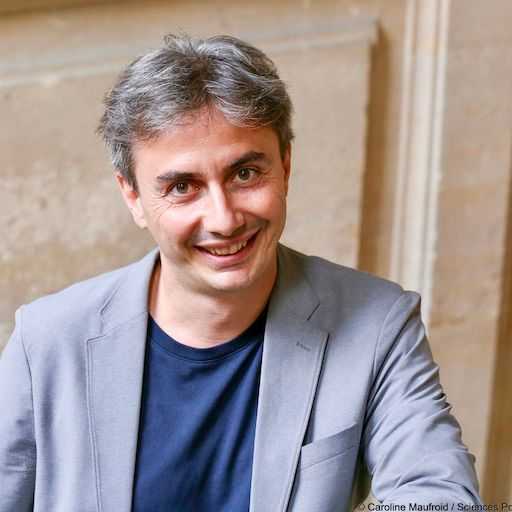
Emeric Henry is a Professor and Head of the Department of Economics at Sciences Po. He holds a PhD in Economics from Stanford University and a Master's in Management Science & Engineering, alongside a Master's in Statistics and Economics from ENSAE. His research focuses on the Economics of Innovation, Political Economy, and Law and Economics, employing theoretical, experimental, and empirical methods. He has held roles including Scientific Director of Sciences Po's Master's and PhD programs (2013-2019) and is a Research Fellow at the Centre for Economic Policy Research (CEPR). Key awards include the ANR Chaire d'Excellence Junior (2009), Deutsche Bahn Prize (with Yann Algan), and Fulbright/Schultz Scholarships. His work has been published in top journals like the Journal of Political Economy and American Economic Review. Recent research explores topics such as social norms, fake news dynamics, and state-building impacts, reflecting his interdisciplinary approach to understanding institutional and policy challenges. His academic leadership includes directing research clusters and policy analysis initiatives. Collaborations often address innovation spillovers, gender promotion gaps, and electoral sentencing cycles, emphasizing both theoretical rigor and real-world applicability.
Farzad Saidi is a Research Professor at the Halle Institute for Economic Research (IWH) since June 2022 and holds a Professorship at the University of Bonn's Institute for Macroeconomics and Econometrics. His research focuses on corporate finance, banking, monetary policy, and financial intermediation. He explores topics such as bank networks' role in information sharing, the impact of negative interest rates on lending, and the interplay between social preferences and pandemic dynamics. His work has been published in top journals like the Journal of Financial Economics and Review of Financial Studies . His academic affiliations include dual roles at the IWH and University of Bonn, with a focus on macroeconomic and financial research. His recent studies examine regulatory policies in insurance markets, the effects of monetary policy on credit supply, and the implications of data-driven decision-making in firms. He actively contributes to policy-relevant research on financial stability, labor markets, and systemic risk. Notable contributions include analysis of bank behavior under negative rates, the effects of regulatory changes on insurance industries, and the role of social preferences in mitigating health externalities during pandemics. His research integrates theoretical frameworks with granular microdata, addressing both historical and modern financial crises.