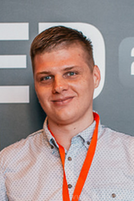
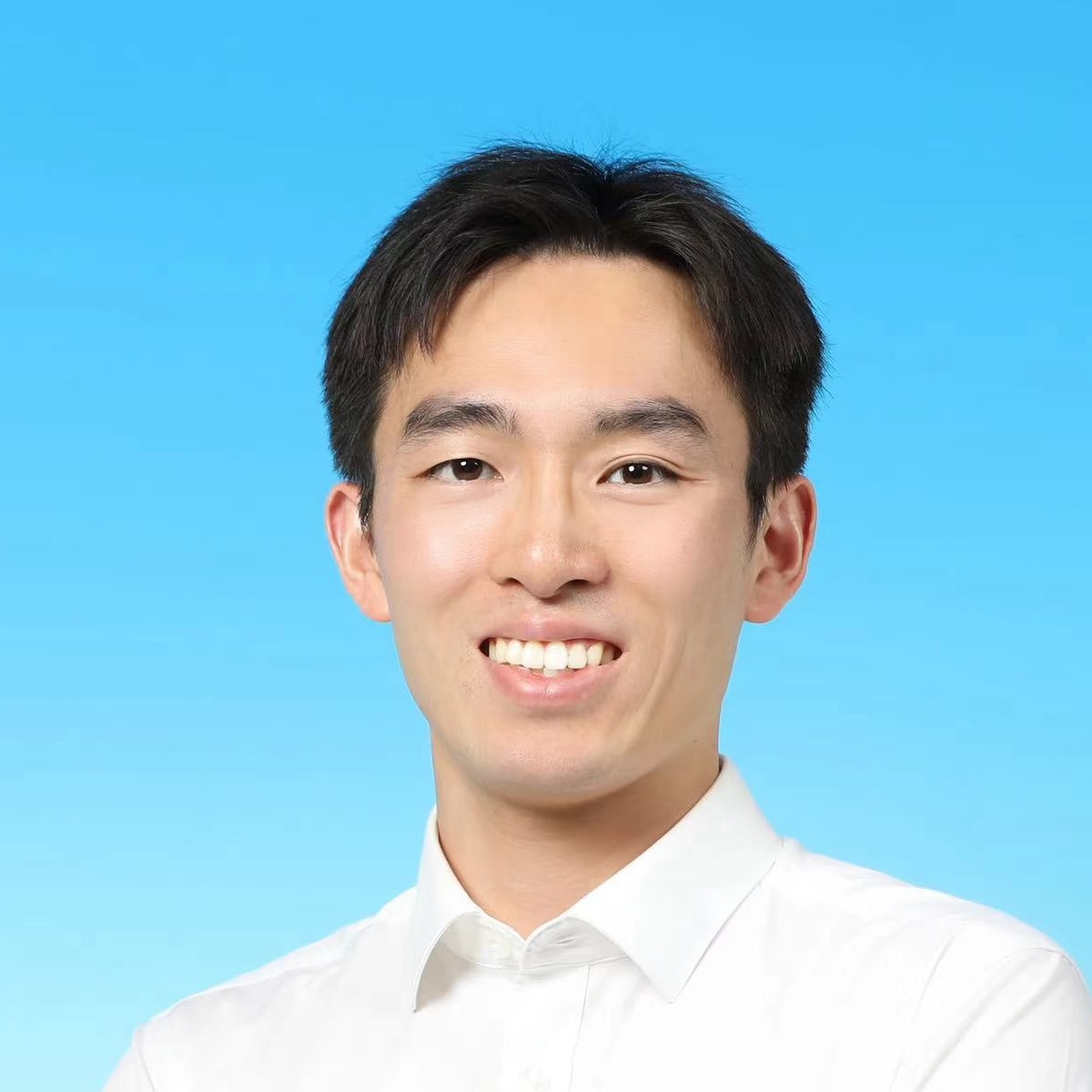
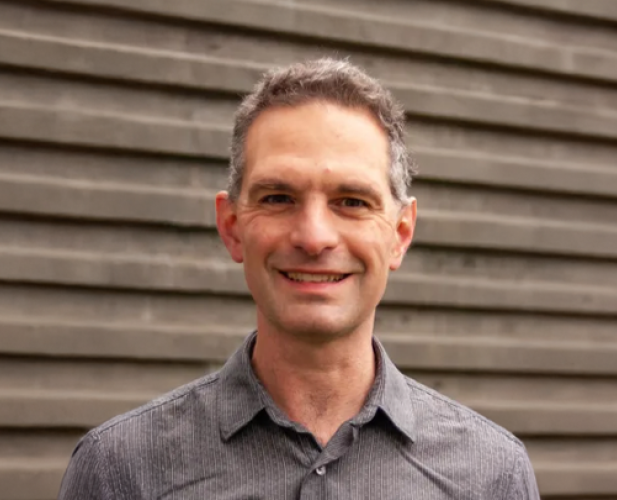
Róbert Tóth is an Assistant Professor at the University of Debrecen's Faculty of Informatics, Department of Information Technology. His work focuses on enhancing spatial abilities through emerging technologies, including gamification and augmented reality. Contact details: toth.robert@inf.unideb.hu, Office: 2nd floor, I228 Faculty of Informatics building. Research interests include: Spatial skill assessment and training using 3D modeling and interactive tools Integration of gamification and augmented reality in educational contexts Development of open-source software frameworks for cognitive training (e.g., viskillz-blender) Analysis of transportation data (GTFS/RT) and geospatial visualization techniques Optimization of educational systems and Smart Campus services Recent publications emphasize spatial reasoning development, gamified learning environments, and efficient handling of geospatial data through Python-based tools and Blender integrations. His work bridges software engineering, educational technology, and human-computer interaction.
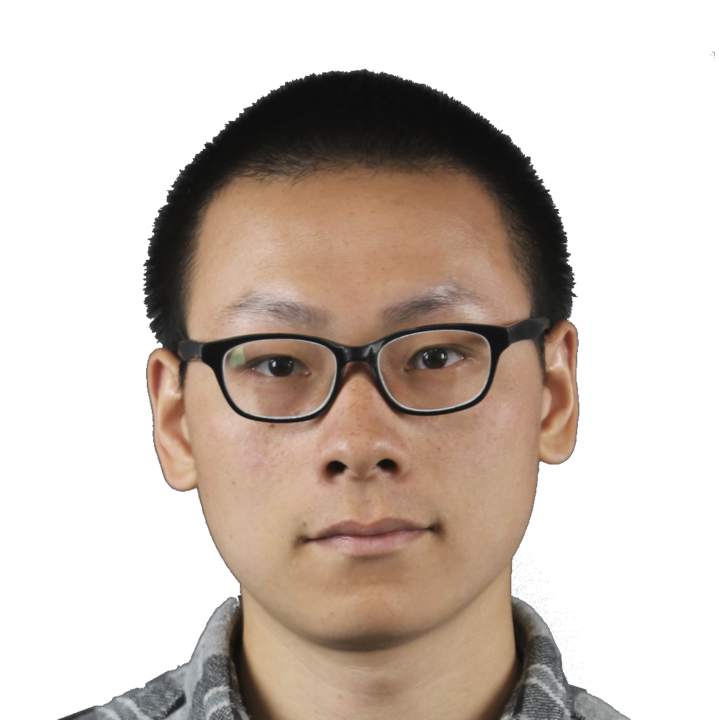
Zhenzhang Ye is a researcher affiliated with the Computer Vision Group at the Technical University of Munich (TUM) , part of the TUM School of Computation, Information and Technology. His work focuses on Photometry-Based Reconstruction , Optimization , and Geometry Processing , with additional interests in Visual SLAM , Deep Learning , and Biomedicine . Research Interests : Optimization techniques, Photometry-Based Reconstruction, and geometric processing for computer vision tasks. Publications : Active contributor to conferences like CVPR, AISTATS, AAAI, and ICCV, with recent works on 3D human motion prediction, hypergradient estimation, and photometric stereo. Contact: yez@in.tum.de
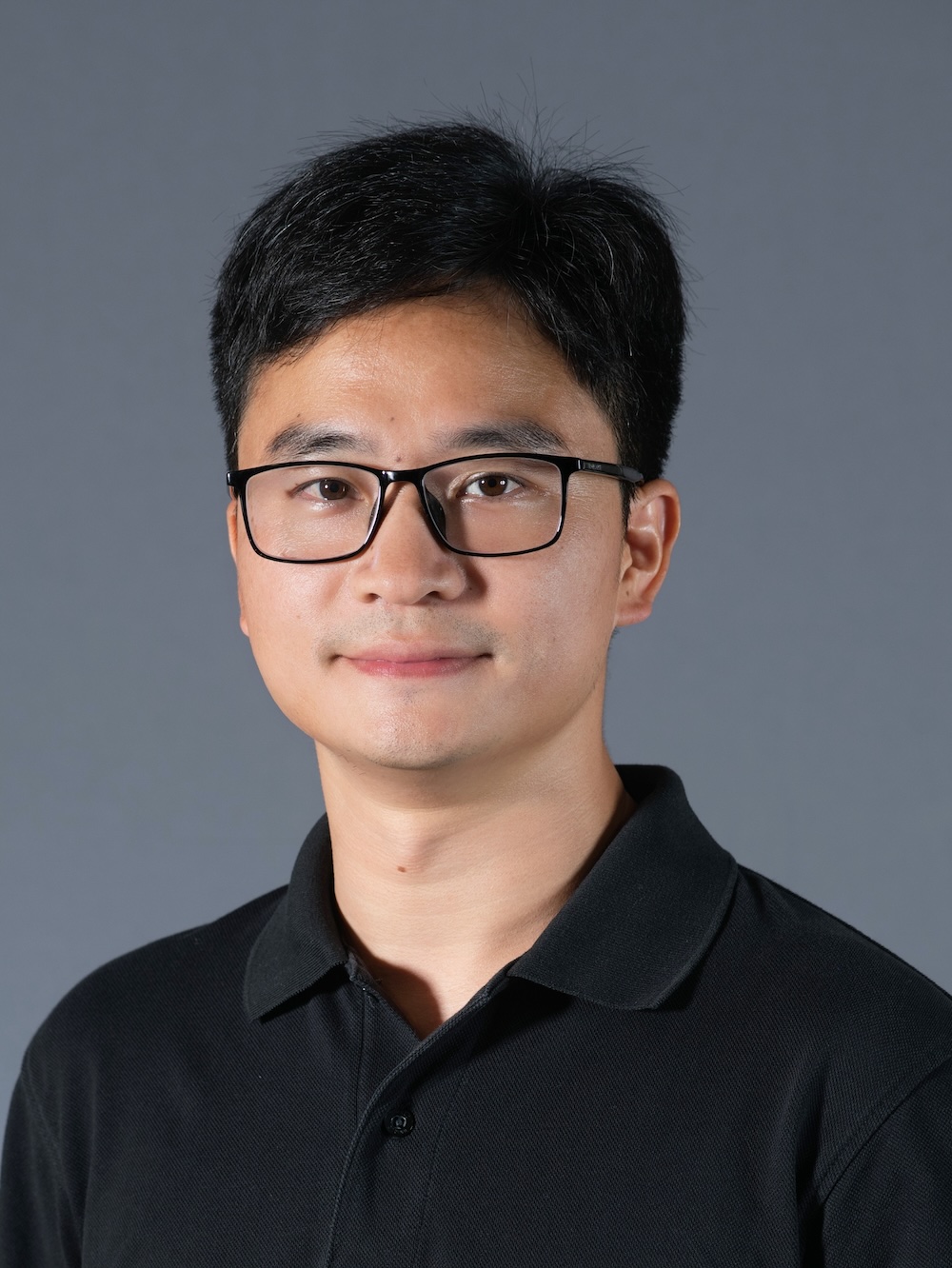
Nils Daniel Meyer-Kahlen is a Postdoctoral Researcher at Aalto University's Department of Information and Communications Engineering in Espoo, Finland. Affiliated with the Virtual Acoustics research group and Aalto Acoustics Lab, his work bridges theoretical audio engineering with practical virtual reality applications through cutting-edge spatial audio research. His research focuses on room acoustics modeling, binaural rendering, and perceptual evaluation in virtual environments. Key interests include blind estimation of acoustic parameters, machine learning applications for audio synthesis, and the development of transfer-plausible audio for augmented reality. He investigates how humans perceive spatial audio cues and develops methods to improve authenticity in mixed reality through psychoacoustic validation. Recent publications reveal strong trends in deep learning for room impulse response generation, novel reverberation techniques like Dark Velvet Noise, and perceptual evaluation frameworks. His work consistently addresses virtual reality audio challenges including motion-to-sound latency, room transition rendering, and the impact of early reflections on spatial perception. As part of Aalto's Acoustics Lab team, Dr. Meyer-Kahlen contributes to Finland's leading spatial audio research hub known for chamber music hall studies, sauna acoustics exploration, and open dataset creation like the multi-room transition energy decay collection. The lab maintains strong industry collaborations while advancing fundamental audio science.
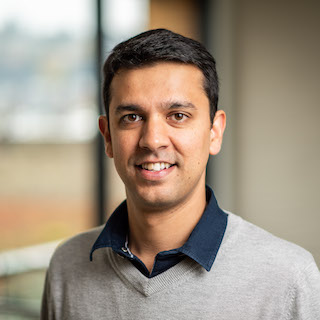
Matias Turkulainen is a Doctoral Researcher at the Department of Computer Science , Aalto University. His research focuses on advanced 3D reconstruction techniques using smartphones, particularly leveraging Gaussian splatting and geometric priors for indoor environments. Email: matias.turkulainen@aalto.fi | Phone: +358504760565 Research Interests: Computer Vision 3D Reconstruction Gaussian Splatting Geometric Modeling Smartphone-based Sensing Recent Publication Trends (2024-2025): Focus on Gaussian splatting algorithms with applications in indoor room reconstruction, depth/normal priors for meshing, and motion compensation techniques. Key themes include real-time rendering, geometric priors, and dynamic camera motion analysis.
Dr. Marcel Köster is a researcher affiliated with the Ubiquitous Media Technology Lab at the German Research Center for Artificial Intelligence (DFKI) and the Saarland Informatics Campus. His work focuses on GPGPU computing, particle simulations, compilers, and optimization techniques. Email: Marcel.Koester@dfki.de Phone: +49 681 85775 7750 Location: Gebäude D3 1, Room 0.13, Saarbrücken Research Interests Dr. Köster's research integrates GPU computing with simulation algorithms and compiler optimization. He contributes to advancements in parallel processing, domain-specific languages, and scientific visualization through both theoretical exploration and practical implementations. His publications highlight innovative applications of GPU acceleration to heuristic optimization, state generation, and particle simulations. These works demonstrate expertise in thread compaction, shared memory utilization, and warp scheduling. Teaching Experience Dr. Köster has taught multiple courses at HBK Saar, including: Artificial Intelligence (Summer 2019) Grundlagen der Medieninformatik (Winter 2016/17) Physical Simulations on Media Facades (Winter 2015/16) Core Lecture: Compiler Construction (Winter 2013/2014)
Kai Han is an Assistant Professor at The University of Hong Kong's School of Computing and Data Science, where he directs the Visual AI Lab. His research focuses on computer vision, machine learning, and artificial intelligence with specific interests in open-world learning, 3D vision, generative AI, and foundation models. He aims to achieve principled visual understanding and build reliable AI systems that close the intelligence gap between machines and humans. Dr. Han's research interests span multiple areas in visual AI, with particular emphasis on developing methods for open-world visual understanding. His work addresses fundamental challenges in category discovery, visual correspondence, 3D reconstruction, and generative modeling. He has made significant contributions to novel category discovery, open-set recognition, and visual correspondence problems, with his AutoNovel framework being particularly influential in the field. His current research explores the intersection of generative models and visual understanding, particularly focusing on how foundation models can be leveraged for comprehensive visual analysis. His publication record demonstrates a clear evolution from traditional computer vision problems toward more challenging open-world scenarios and generative approaches. Early work focused on 3D reconstruction of transparent and mirror surfaces, while more recent publications explore category discovery, visual correspondence, and generative AI. The trend shows increasing focus on foundation models, large language model integration with vision systems, and creating more robust visual understanding systems that can handle real-world open-set scenarios. Best Paper Runner-Up Award at CVPR Workshop on Continual Learning in Computer Vision, 2022 Outstanding Reviewer for ICCV 2021 (top 5%) Outstanding Reviewer for CVPR 2021 Outstanding Reviewer for CVPR 2020 Travel Award, ICLR 2020 Doctoral Consortium Travel Grant, ICCV 2017 Dr. Han actively mentors PhD students and postdocs, with numerous students appearing as first authors on his publications. His lab has secured multiple funding opportunities including HKU-PS, HKPFS, PGS, HKU-BICI, and HKU-ASTRI scholarships. He serves as Area Chair for major conferences including CVPR 2026, ICLR 2026, and AAAI 2026, demonstrating his standing in the research community. His lab, the Visual AI Lab, focuses on creating robust visual understanding systems that can handle real-world scenarios beyond closed-set recognition.
Michal Španěl is an Associate Professor in the Department of Computer Graphics and Multimedia at the Faculty of Information Technology, Brno University of Technology. His academic work centers on visual computing with emphasis on practical implementations and system architectures. His research spans Computer Graphics , Virtual Reality , and 3D Visualization , focusing on real-time rendering techniques, scientific visualization frameworks, and multimedia system design. Key methodologies include GPU programming, interactive visualization pipelines, and cross-platform graphics applications. Dr. Španěl maintains active scholarly identifiers including ORCID iD 0000-0003-0193-684X, ResearcherID G-9639-2016, and Scopus Author ID 22836945200 for tracking his academic contributions.
Voicu Popescu is an Associate Professor in the Department of Computer Science at Purdue University's College of Engineering. His research focuses on Virtual Reality (VR), Augmented Reality (AR), and Mixed Reality (MR) applications in education and surgical telementoring. Academic Rank: Associate Professor University: Purdue University School: College of Engineering Department: Computer Science Email: popescu@purdue.edu Research Interests Prof. Popescu explores the intersection of immersive technologies with STEM education and medical training . His work addresses challenges in haptic feedback , visibility computation , and collaborative XR systems , aiming to enhance user experience and safety in virtual environments. Key Article Trends Recent publications emphasize XR in AI education , dynamic redirection techniques , and cloud-based VR systems . Themes include equitable access (e.g., Buenas study) and technical innovations for real-time rendering in resource-constrained devices. Grants & Projects Collaborative Research: CISE-MSI (2023) HCC Small Grant (2022) These projects highlight his focus on democratizing XR technologies and improving surgical telementoring systems.
Tingting Zhang is a Professor at Mid Sweden University's Department of Computer and Electrical Engineering (DET), affiliated with the STC Research Centre. Her work focuses on wireless sensor networks, industrial IoT, and privacy-preserving protocols in vehicular and IoT networks. Research spans VANETs, machine learning for anomaly detection, light field imaging, and secure communication systems. Current projects include PLENOPTIMA, COINS, DAWN, and Smart Industry Sweden. Publications emphasize network reliability, security frameworks for IoT/VANETs, and machine learning applications in sensor networks. She has contributed to patents in wireless communication and video noise reduction. Recent work explores cross-layer optimization, privacy-preserving protocols, and GPU-accelerated light field rendering. Collaborations include institutions in Sweden, Finland, and China.
Aniruddha Kembhavi is an Affiliate Associate Professor at the University of Washington's Computer Science & Engineering department and currently serves as Director of Science Strategy at Wayve AI in London, UK. Previously, he led computer vision efforts as Senior Director at Allen Institute for AI (AI2) in Seattle and contributed to Microsoft's Image and Video Search division. His research spans 20+ years in Computer Vision , Robotics , and Embodied AI , focusing on open-source frameworks like AI2-THOR and Molmo. His work emphasizes procedural environment generation , vision-language integration , and 3D asset creation , with large-scale datasets such as Objaverse becoming foundational in 3D computer vision. CVPR 2025 Best Paper (Honorable Mention) CVPR 2023 Best Paper Winner Neurips 2022 Outstanding Paper CoRL 2024 Outstanding Paper IROS 2024 Best Mobile Manipulation Paper ICRA 2024 Best Paper Winner Allen Institute Test Of Time Award 2020 NVIDIA Pioneer Award 2018 His recent publications analyze vision-language models , 3D generation evaluation , and diffusion architectures for unified generation. He actively contributes to community-building as Program Chair for ICCV 2025 and Senior Area Chair for CVPR 2024.
Anyi Rao is an Assistant Professor at the Hong Kong University of Science and Technology (HKUST) where he leads the Multimedia Creativity Lab (MMLab@HKUST) and serves as Associate Director of the HKUST Media Intelligence Research Center. He received his Ph.D. from the Chinese University of Hong Kong and completed postdoctoral research at Stanford University. His research explores human-AI collaboration for creativity, focusing on understanding, editing, and creating art, media, and film. Research Interests: Rao's work centers on developing AI tools that enhance human creativity in visual media production. Key areas include: Controllable generative models for image and video synthesis AI-assisted cinematography and virtual production tools Multimodal understanding of films and creative content Human-AI collaborative workflows for artistic creation His research has produced influential tools like ControlNet and AnimateDiff used by industry leaders including Netflix and Amazon. Publication Trends: Rao's recent publications demonstrate a strong focus on diffusion models, controllable generation, and video understanding systems. His work consistently bridges technical innovation with practical applications in media production, showing increasing emphasis on real-time creative tools and filmmaker-AI collaboration paradigms. Awards and Honors: Forbes 30 Under 30 Asia (2025) Rising Star Award, World AI Conference (2024) Marr Prize (Best Paper), ICCV (2023) Magic Grant, Brown Institute for Media Innovation (2023) Hong Kong PhD Fellowship (2021) Academic Activities: Rao actively recruits students for his research group and has secured multiple grants including Amazon Video Research Fund and Tencent Rhino-Bird Grant. He organized the SIGGRAPH/CVPR Creative Visual Content Workshops and curated the Hong Kong AI Film Festival. He serves on program committees for major conferences including CVPR, ICLR, and SIGGRAPH Asia.
Jens Behley is a Lecturer (Privatdozent) at the Institute of Geodesy and Geoinformation, University of Bonn, where he actively teaches graduate courses in robotics and computer vision while leading cutting-edge research in 3D perception. His work bridges theoretical advances with real-world agricultural and automotive applications, focusing on robust algorithms for unstructured environments. Behley's research centers on 3D point cloud processing, semantic segmentation, and SLAM systems, with specialized expertise in agricultural robotics for crop phenotyping and autonomous vehicle navigation. He develops novel techniques for plant organ-level analysis, fruit shape completion, and radar-based localization, emphasizing solutions that function under real-field conditions with sensor noise and dynamic changes. His methodologies frequently integrate deep learning with geometric computer vision to achieve precision in challenging outdoor settings. Analysis of his recent publications reveals a dominant trend toward neural implicit representations (e.g., Gaussian Splatting) and diffusion models for 3D scene understanding, alongside continued innovation in LiDAR processing for agricultural robotics. Key thematic clusters include plant phenotyping (18% of recent work), neural mapping techniques (24%), and robust sensor fusion for autonomous systems (31%), with growing emphasis on generative models for data synthesis. Scientific Awards Outstanding Reviewer at IEEE Robotics and Automation Letters (RA-L), 2024 Outstanding Reviewer at European Conference on Computer Vision (ECCV), 2024 Best Agri-Robotics Paper Award for “BonnBeetClouds3D...” at IROS, 2024 Best Paper Award in Workshop “Agricultural Robotics for Sustainable Futures” at IROS, 2024 Best Paper Award Second Place in Workshop “AI and Robotics For Future Farming” at IROS, 2024 Outstanding Reviewer at CVPR, 2024 Finalist Best Paper Award in Service Robotics at ICRA, 2024 Best Paper for “KISS-ICP...” by RA-L, 2023 Honorable Mention for “High Precision Leaf Instance Segmentation...” by RA-L, 2023 Outstanding Reviewer at CVPR, 2023 Outstanding Reviewer at ECCV, 2022 Finalist IROS Best Paper Award on Agri-Robotics, 2022 Outstanding Reviewer at RA-L, 2022 Outstanding Reviewer at ICRA, 2022 Outstanding Reviewer at ICCV, 2021 Faculty Award for Geodesy from Agricultural Faculty of University of Bonn, 2021 Outstanding Reviewer at CVPR, 2021 Finalist Best System Paper at RSS, 2020 Diplomarbeitspreis der Bonner Informatik Gesellschaft e.V., 2009 Behley actively mentors students through advanced coursework including “Machine Learning for Robotics and Computer Vision” and “Techniques for Self-Driving Cars,” though specific advisees aren't documented. His research is supported by extensive collaborations with Prof. Cyrill Stachniss's robotics group at Bonn, with publications appearing in top venues like RA-L, ICRA, and CVPR. Current projects focus on neural scene representations for agricultural robotics and robust localization in changing environments, with datasets like BonnBeetClouds3D establishing new benchmarks in plant phenotyping.
Togan Tong serves as Associate Professor in the Department of Building Information at Yıldız Technical University's Faculty of Architecture, where he has maintained continuous academic service since 1992. His expertise spans computational design methodologies and immersive technology applications within architectural practice and education. His educational foundation includes: Bachelor of Architecture from Yıldız University (1988) Master of Architecture in Building Science from Yıldız Technical University (1990) Ph.D. in Building Information from Istanbul Technical University (2000) Research initiatives focus on Architectural Computing , Building Information Modeling , and Immersive Technologies , with particular emphasis on human-computer interaction in design environments. Current projects explore VR/AR interfaces for architectural modeling, computational space planning algorithms, and game-based historical reconstruction systems. Publication analysis reveals a pronounced shift toward immersive educational applications since 2020, with significant contributions in VR ergonomics, spatial cognition studies, and BIM integration methodologies. His work bridges technical computing and architectural pedagogy through systematic reviews and empirical interface studies. Academic mentorship includes supervision of 9 theses across architectural computing disciplines. Professional activities extend to Digital Design Education Consultancy for the Istanbul Metropolitan Branch of the Chamber of Architects, influencing curriculum development at institutional levels. Operational activities center around the YTU Bot Group research collective, utilizing the university's digital design infrastructure for advanced visualization projects and computational prototyping in architectural contexts.
Markus Wacker serves as Professor of Computer Graphics at the Faculty of Computer Science and Mathematics, Dresden University of Applied Sciences (HTW Dresden). His office is located in room Z348 with direct contact via +49 351 462 2684. His research focuses on visual computing disciplines requiring: Real-time rendering techniques 3D animation pipelines Interactive game systems Digital compositing workflows Media production methodologies Spatial visualization frameworks Professor Wacker teaches core modules across Media Informatics and Applied Computer Science programs including Computer Graphics/Visualization II, Advanced Computer Animation, and Interaction/Game Techniques for undergraduate and graduate students in semesters 2-7.
Steve Marschner is a Professor of Computer Science at Cornell University and Director of Graduate Studies for the Computer Science department. He is also a part-time Distinguished Graphics Researcher at NVIDIA Research. His research focuses on computer graphics and vision, particularly on how optics and mechanics determine the appearance of materials. Marschner received his Ph.D. in Computer Science from Cornell University in 1998. His thesis was titled "Inverse Rendering for Computer Graphics" and was advised by Donald P. Greenberg, Charles Van Loan, and Leonard Gross. He also holds a Sc.B. in Mathematics-Computer Science from Brown University (1993). His research spans realistic rendering, material models (both optical and mechanical), appearance capture, simulation, and computational photography. Marschner's work addresses fundamental questions about how to make objects appear to be made from specific materials and how to use cameras to measure information needed for creating realistic images. His research has applications in film production, virtual reality, and manufacturing. Marschner's recent publications demonstrate a strong focus on advanced rendering techniques, particularly in differentiable rendering, wave optics, and the appearance modeling of complex materials like hair, fur, and woven fabrics. His work increasingly integrates machine learning approaches with traditional graphics techniques, while maintaining a strong foundation in physical optics and material science. Marschner has received numerous prestigious awards recognizing his contributions to computer graphics: ACM Fellow (2021) SIGGRAPH Academy member (2018) SIGGRAPH Computer Graphics Achievement Award (2015) Sloan Research Fellowship (2006) NSF CAREER Award (2004-2009) Academy of Motion Picture Arts and Sciences Technical Achievement Award (2003) Marschner has advised numerous Ph.D. and Master's students, many of whom have gone on to successful careers in academia and industry. His research has been supported by the National Science Foundation, Autodesk, Google, and Adobe. He has served in leadership roles for major conferences including as Technical Papers Chair for SIGGRAPH Asia 2015 and Papers Committee Member for multiple SIGGRAPH conferences. His work is conducted through the Program of Computer Graphics at Cornell University, where he collaborates with researchers working on various aspects of computer graphics, vision, and appearance modeling. Marschner also maintains a strong industry connection through his part-time role at NVIDIA Research, focusing on real-time graphics applications.