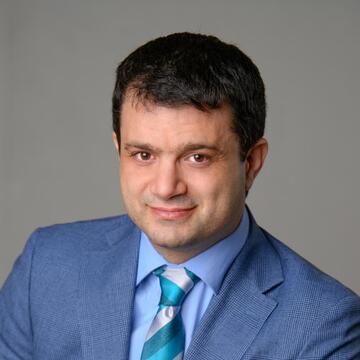
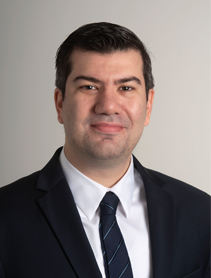
Luca Mottola is a Full Professor at Politecnico di Milano and Senior Researcher at RI.SE Sweden. He leads the Networked Embedded Software Lab (NESLab), focusing on next-generation IoT, battery-less systems, and mobile robotics. His work bridges embedded computing, wireless networks, and cyber-physical systems, with applications in smart cities and space robotics. Education: No explicit details provided in texts. Research interests include energy-harvesting IoT, drone communication, and real-time systems. Notable awards include the ACM SENSYS Test of Time Award (2022) and multiple Best Paper Awards at top conferences like MOBICOM and RTCSA. Grants/Projects: Overseen projects on battery-less IoT, drone localization, and energy-efficient systems. Editorial roles include IEEE Transactions on Mobile Computing and ACM Transactions on Sensor Networks. Labs/Teams: NESLab, FlyZone Testbed for aerial drones, and collaborations with NXP Technologies, TU Graz, and USC.
Damir Isovic is an Associate Professor and Vice-Chancellor for Internationalization at Mälardalen University's Academy of Innovation, Design and Technology. Previously, he served as Dean of the School of Innovation, Design and Engineering. His roles include leadership in academic administration and participation in national boards. He holds a PhD and has extensive international teaching experience. Research focuses on real-time systems, embedded systems design, and scheduling algorithms. Notable contributions include seminal work in real-time scheduling recognized by the IEEE Technical Community on Real-Time Systems. He has organized major conferences and delivered keynotes globally. His publications emphasize hybrid scheduling approaches, real-time operating systems (RTOS), media processing in resource-constrained systems, and MPEG standards. Recent work integrates memetic algorithms with fuzzy controllers and explores multi-core scheduling fairness. His research bridges theoretical scheduling models with practical embedded system implementations. No scientific awards explicitly listed in the text. Advising activities include supervising PhD students, though specific names are not provided. Lab affiliations include the Division of Networked and Embedded Systems, where he develops frameworks like GENESIS for embedded system engineering. His work emphasizes cross-disciplinary collaboration and industry partnerships in education and technology development.
Associate Professor Darrin Verhagen is an award-winning sound designer and composer at RMIT University's School of Design, where he teaches in the Sound Design specialization within the Digital Media Program and directs the Audiokinetic Experiments (AkE) Lab. His academic work bridges creative practice with scientific inquiry into multisensory perception. Verhagen's research centers on the neurobiology of aesthetic experience, particularly exploring how sound interacts with vision, movement, and vibration. His work in the AkE Lab utilizes motion simulators, 4D cinema seating, and light to create installations that investigate the relationship between hearing, vision, movement and vibration. His academic background includes postgraduate research on musical extremes - lowercase sound for his Masters and Noise for his Doctorate. His creative output spans sound design for contemporary dance, theatre, installation, film, television and computer games. Verhagen has released over 20 albums internationally and performs audiovisual live shows globally. He was founder and curator of Dorobo records, which showcased Australian sound art for 15 years. Industry collaborations include work with Melbourne Theatre Company, Malthouse, Chunky Move, Australian Dance Theatre, and others. Notable awards include multiple Green Room Awards for Sound Design, Australian Academy of Cinema & Television Arts award finalist status, APRA Art Music awards finalist for experimental music, RMIT Research Award for technical innovation, and RMIT Teaching Award for excellence in teaching practice. Verhagen's supervision projects reveal a trajectory toward increasingly sophisticated explorations of sound in relation to space, perception, and human experience, with recent work focusing on transdisciplinary design, spatial sound applications, distributed audio systems, and vocal ecology. His work consistently bridges artistic practice with technological innovation and scientific inquiry into perceptual phenomena.
Mustafa Hajij is an Assistant Professor in the Data Science program at the University of San Francisco. He holds a PhD in Mathematics from Louisiana State University, an MS in Computer Science, and completed postdoctoral training at University of South Florida and Ohio State University. Previously, he served as Assistant Professor at Santa Clara University and as an AI Research Scientist at KLA Corporation. His research develops foundational frameworks for topological deep learning, including cell complex neural networks and geometric learning architectures that operate beyond graph domains. He leads the NSF-funded project 'A Unifying Deep Learning Framework Using Cell Complex Neural Networks' (DMS-2134231, $547,626). Recent publications establish new paradigms for topological representation learning, including combinatorial complexes and simplicial networks, with applications in computational biology, 3D vision, and drug discovery. He organized the ICML Topological Deep Learning Challenges and develops open-source tools like TopoX for topological learning.
Shashi Raj Pandey serves as Assistant Professor in the Department of Electronic Systems at Aalborg University's Technical Faculty of IT and Design, Denmark. His research is anchored in the Connectivity section and Connectivity Classique-Center for Classical Communication in the Quantum Era, with office location at Fredrik Bajers Vej 7C, C1-111, 9220 Aalborg Øst. His core research spans Network Economics, Game Theory, and Wireless Networks, with specialization in Decentralized Machine Learning and Semantic/Goal-oriented Communications. Current work integrates Digital Twin technologies with 6G systems for industrial automation and earth observation, emphasizing resource-efficient protocols for Internet of Things and edge intelligence applications. Recent publications (2024-2025) reveal a clear trajectory toward AI-6G convergence, featuring semantic communications for satellite imaging, game-theoretic network resource allocation, and digital twin implementations for autonomous systems. Key themes include communication efficiency in distributed learning and physical-digital world integration. Notable recognitions include: Best PhD Thesis Nominee (2021) Excellent Paper at Korea Software Congress, KIISE 2021 Student Best Paper Award at APNOMS 2019 Best Paper at Korea Software Congress, KIISE, 2018 Brain Korea 21st Century Plus Fellowship Academic service includes external PhD examination for EU SNS projects and peer review for premier conferences (AAAI, ICLR, ICML). His lab work within the Connectivity Classique-Center explores classical communication frameworks applicable to quantum-era networks, with focus on semantic information theory and decentralized network architectures.
George Bosilca is a Research Professor at the University of Tennessee, Knoxville, affiliated with the Department of Electrical Engineering and Computer Science and the Innovative Computing Laboratory. He holds a PhD in Computer Science (University of Paris XI, 2004) and an MS in Math and Computer Science (University of Paris XI, 1999). His research focuses on distributed algorithms, parallel programming paradigms, performance modeling/optimization, and resilience in programming models. He contributes to exascale computing initiatives through projects like PaRSEC and Open MPI. Key research areas include task-based runtimes, MPI standardization for exascale systems, and fault-tolerant distributed computing. His work emphasizes scalable and portable constructs for high-performance applications. Bosilca is involved with the Innovative Computing Laboratory (ICL) and collaborates on projects like the EPEXA ecosystem and Argobots threading framework. Recent publications highlight advancements in asynchronous many-task systems, GPU-accelerated collective operations, and resilience strategies for HPC platforms. His contributions span theoretical frameworks and practical implementations, bridging algorithmic innovation with real-world HPC challenges.
Hokeun Kim is an Assistant Professor in the School of Computing and Augmented Intelligence (SCAI) at Arizona State University (ASU), part of the Ira A. Fulton Schools of Engineering. He previously held positions at Hanyang University (2021-2023) and worked in industry roles at Google, LinkedIn, and HP Labs. His research focuses on cyber-physical systems, IoT security, and computer architecture, with a particular emphasis on safety and security aspects of time-sensitive systems. Education: Ph.D. in EECS, University of California, Berkeley (2017) M.S. in EECS, Seoul National University (2012) B.S. in Computer Science and Engineering, Seoul National University (2010) Research Interests: Kim’s work spans secure IoT frameworks, real-time embedded systems, and edge computing. He develops tools like the Secure Swarm Toolkit (SST) and Lingua Franca, addressing challenges in distributed system security, interoperability, and performance. Key Contributions: Authored over 30 peer-reviewed publications in top venues like IEEE Transactions, ACM Conferences, and DATE. Received the ACM/IEEE Best Paper Award (IoTDI 2017) and IEEE Micro Top Picks Honorable Mention (2017). Active in organizing conferences (e.g., DATE, FDL) and serves on technical committees for top journals/conferences. Teaching: Courses include Computer Architecture I/II, Real-Time Embedded Systems, and IoT design at both undergraduate and graduate levels.
Tania Cerquitelli is a Full Professor in the Department of Control and Computer Science (DAUIN) at Politecnico di Torino, where she leads research in data science, concept-drift management, and inclusive AI technologies. She is a member of SmartData@PoliTO, the GEDI Observatory for Gender Equality, and serves in leadership roles related to social affairs and community policies at the university level. She also acts as a scientific advisor for the partnership with Accenture. Her research interests span Data Science , Concept-Drift Management , Database Systems , Conversational Data Science , and Industry 4.0 . She applies AI and machine learning to industrial, societal, and ethical challenges, particularly in promoting inclusive communication and gender equality in research. The most recent publications highlight her work in explainable AI, concept drift detection, multimodal diagnostics, and AI for social good. Her research integrates machine learning, natural language processing, and computer vision to address real-world problems in manufacturing, healthcare, agriculture, and education. She is an Associate Editor for several prestigious journals including Expert Systems with Applications , Computer Networks , Future Generation Computer Systems , and Knowledge and Information Systems . She has served on the program committees of major conferences such as ECML PKDD, EDBT/ICDT, and ACM KDD, and has been a reviewer and selection committee member for ETH Zurich and EMPA. She actively supervises PhD students and teaches a wide range of courses including Data Science and Database Technologies, Business Intelligence for Big Data, and Gender and Diversity in Research. She is involved in multiple national and international research projects such as E-MIMIC, WEBFARE, and EnABLES, focusing on inclusive AI, smart data, and industrial applications. Her lab affiliations include the DBDM - Database and Data Mining Group (DAUIN) and the Interdepartmental Center SmartData@PoliTO - Big Data and Data Science Laboratory , where she contributes to advancing data science methodologies and their societal impact.
Mohamed Sarwat is an Associate Professor at Arizona State University specializing in databases , spatial data management , and recommender systems . His research focuses on GeoSpark —a cluster computing framework for spatial data—and its extensions like GeoSparkViz for visualization and GeoSparkSim for traffic simulation. Key Contributions: LARS* (Location-Aware Recommender System), Horton* (Graph Reachability), Sindbad (GeoSocial Platform), and Riso-Tree (Graph Database Indexing) Research Themes: Integration of spatial/temporal data with machine learning, efficient indexing for big geospatial datasets, and scalable frameworks for mobility data science His work spans collaborations with 23+ co-authors across institutions like University of Minnesota, University of Melbourne, and University of Salzburg. Current projects emphasize GeoTorchAI —a spatiotemporal deep learning system—and mobility data science infrastructure.
Yan Zhang is a scientific leader at Meshcapade and a guest lecturer at ETH Zurich's Computer Vision and Learning Group (VLG). He previously served as a postdoctoral researcher at ETH Zurich (2020-2023) and research intern at Max Planck Institute for Intelligent Systems (2018-2020). His research focuses on generative human foundation models, human motion and behavior synthesis, 3D human perception, and applications in AR/VR, embodied AI, and interactive avatars. He has pioneered methods for scene-conditioned motion generation, contact-aware reconstruction, and egocentric interaction modeling. His recent publications (2025-2020) span Real-time motor models for avatars (PRIMAL, ICCV'25) Diffusion architectures for motion (RoHM, CVPR'24) Scene-population algorithms (Odysseus, CVPR'22) Physics-aware reconstruction (EgoHMR, ICCV'23) Whole-body grasping models (SAGA, ECCV'22) Multi-modal datasets (EgoBody, ECCV'22) Scientific recognition includes the Qualcomm Innovative Fellowship Europe 2023 . He organized workshops at CVPR'25, ECCV'24, and ECCV'22, and served on senior program committees (AAAI'26) and area chairs (CVPR'25). As co-supervisor, he mentored student projects on diffusion-based hand motion capture, 3D pose estimation, body-scene interaction, and mixed reality navigation at ETH Zurich (2020-2023). His work bridges computer vision, machine learning, and computer graphics to advance human-centric AI systems.
Maria Paz Linares Herreros is a Lecturer at the Universitat Politècnica de Catalunya (UPC), affiliated with the School of Mathematics and Statistics (FME) and the Department of Statistics and Operations Research. She is a member of the IMP (Information Modeling and Processing) research group and collaborates with inLab FIB on intelligent transportation systems. Research interests: Transportation systems, smart cities, traffic simulation, data-driven modeling, environmental impact assessment Specializes in applying machine learning and simulation to urban mobility challenges Her recent publications focus on: Parking availability prediction using deep learning Traffic emission modeling linked to urban policies Dynamic ride-sharing system optimization Integration of IoT data in transportation planning Scientific recognition: Recipient of the IV International Award on Transport Infrastructure Management Research (2018) Active contributor to projects like CitScale and Virtual Mobility Lab Collaborator in European initiatives like KIC Urban Mobility
Dr. Hakki Erhan Sevil is an Associate Professor in the Department of Intelligent Systems and Robotics at the University of West Florida, within the Hal Marcus College of Science and Engineering. He holds a Ph.D. in Mechanical Engineering from the University of Texas at Arlington and has extensive research experience in robotics, intelligent systems, and autonomous control. His work spans theoretical and applied domains, focusing on resilient and intelligent robotic systems. Ph.D., Mechanical Engineering, University of Texas at Arlington M.S., Mechanical Engineering, Izmir Institute of Technology B.S., Mechanical Engineering, Izmir Institute of Technology Dr. Sevil's research interests lie at the intersection of robotics, artificial intelligence, and control systems. He specializes in autonomous navigation, fault detection and isolation (FDI), multi-agent coordination, computer vision, and bio-inspired computational methods. His work emphasizes real-world implementation in unmanned and self-sustained systems, particularly in challenging environments. His recent publications and projects highlight a strong trend toward intelligent, resilient, and distributed robotic systems. Themes include entropy-based behavior modeling for UAV swarms, assistive robotics for household tasks, post-disaster damage assessment using aerial vision, and advanced guidance for GPS-denied navigation. These reflect a multidisciplinary approach combining machine learning, control theory, and robotics engineering. 2024 Faculty Excellence in Teaching Award, UWF 2024 Faculty Excellence in Undergraduate Research Mentoring Award, UWF DURIP Grant ($478,000) from ONR (with IHMC) USDA Grant ($728,000) with New Mexico State University US Air Force SBIR/STTR Grant ($110,000) with Catalano Aerospace AFWERX Funding for Distributed Behavior Research Dr. Sevil actively mentors Ph.D. and M.S. students and leads the Sevil Research Group, which has secured multiple internal and external grants from NSF, NASA, ARL, ONR, and USDA. He has served as PI and Co-PI on funded projects and advises student teams that have won national awards. His lab, the Intelligent Systems and Robotics Lab, is highlighted in university communications and national challenges. The group collaborates with IHMC, NMSU, and industry partners, fostering innovation in autonomous systems. The Sevil Research Group operates within the Intelligent Systems and Robotics Lab at UWF, conducting cutting-edge research in autonomous navigation, swarm intelligence, and resilient robotics. The lab collaborates with the Institute for Human and Machine Cognition (IHMC), New Mexico State University, and private aerospace firms. It supports student-led projects, participates in national robotics challenges, and maintains active GitHub repositories for open research dissemination.
Andrew J Whelton is a Professor of Civil and Construction Engineering at Purdue University's College of Engineering, with concurrent appointments in Sustainability Engineering and Environmental Engineering. He serves as Director of the Healthy Plumbing Consortium and Lead for the Center for Plumbing Safety, focusing on water quality, chemical contamination, and public health in building plumbing systems. Professor, Civil and Construction Engineering Professor, Sustainability Engineering Professor, Environmental Engineering Director, Healthy Plumbing Consortium Lead, Center for Plumbing Safety His research spans environmental engineering and public health, with key themes including chemical contamination from plastic pipe degradation, post-disaster water system recovery, wildfire-related water quality impacts, and microbial risks in premise plumbing. Recent work addresses crises like the East Palestine chemical spill and Maui wildfires, while also developing predictive models for water quality and evaluating sustainable infrastructure materials. Scientific awards and recognitions include: Rapid Response Research (RAPID) Grants from NSF for disaster-related studies Environmental Protection Agency (EPA) support for building water quality programs Leadership in interdisciplinary consortia focused on plumbing safety Development of novel tools for water quality monitoring and remediation His publications reveal trends in: Chemical leaching from plastic piping materials Environmental justice in water contamination crises Integration of machine learning for water quality prediction Microbial ecology in stagnant plumbing systems Policy recommendations for disaster response Sustainable material innovation for infrastructure
Johannes Bjerva is a Full Professor at Aalborg University's Department of Computer Science (Campus Copenhagen), leading the Copenhagen branch and conducting interdisciplinary NLP research integrating linguistic typology. His work focuses on low-resource languages, language model security, and societal AI impact. PhD (University of Groningen, 2017): Thesis on multitask/multilingual lexical modeling M.A. & B.A. in Computational Linguistics (Stockholm University) Research interests span linguistically-informed NLP , language model security , and low-resource language technology . Current projects include the DFF Sapere Aude grant (2025) for language model detection security and the LM2-SEC project (2025–2030). His 2024 ACL paper on embedding inversion security and 2024 EMNLP paper on typological diversity exemplify recent work. Scientific awards include: 2021: Teacher of the Year (AAU Computer Science) 2019: Google Cloud research credits 2022: Carlsberg Semper Ardens (5M DKK) 2024: Novo Nordisk Data Science grant (~10M DKK) Supervision includes 8 PhD students across projects like CreoleVal and HiFi-KPI . He serves on the Industrial Researcher Committee at Innovation Fund Denmark and is a member of Det Unge Akademi (2023–2028).
Enrico Macii is a Full Professor at the Politecnico di Torino, affiliated with the Interuniversity Department of Regional and Urban Studies and Planning (DIST) and the Department of Control and Computer Engineering (DAUIN). He leads the Electronic Design Automation (EDA) research group and holds key roles as Scientific Advisor for the Politecnico-STMicroelectronics partnership and Scientific Contact for the European Chips Joint Undertaking. Research Interests: His work spans digital circuits and systems, energy efficiency, smart cities, Industry 4.0, and smart manufacturing. He focuses on embedded and cyber-physical systems, low-power design, neuromorphic computing, AIoT, and sustainable urban development. Recent Publications: His recent research demonstrates strong trends in edge AI, neuromorphic computing, and smart energy systems. Articles highlight innovations in low-power hardware acceleration, federated learning, physics-informed AI, and digital twin applications for urban and industrial systems. There is a clear emphasis on deploying AI efficiently on constrained devices and integrating physical models with machine learning. J. William Fullbright Fellowship (1993) Best paper award IEEE European Design Automation Conference (1996) Best paper award ACM/IEEE Great Lakes Symposium on VLSI (2008) DAC Service Award (2014) IEEE Fellow (2006) DATE Fellow (2014) Advising and Grants: He has supervised over 25 PhD students in computer engineering, AI, and urban systems. His research is funded by major EU programs (Horizon 2020, PNRR, KDT JU), national (PRIN, FAR), and regional grants, as well as industrial contracts with STMicroelectronics, Michelin, and Cefriel. He leads numerous high-impact projects in smart manufacturing, energy efficiency, and digital twins. Labs and Teams: He is a core member of the EDA Group, an interdepartmental research team at Politecnico di Torino focusing on VLSI-CAD, bioinformatics, smart cities, and Industry 4.0. He also contributes to IAM@PoliTo (Integrated Additive Manufacturing) and leads multiple EU and national research consortia.