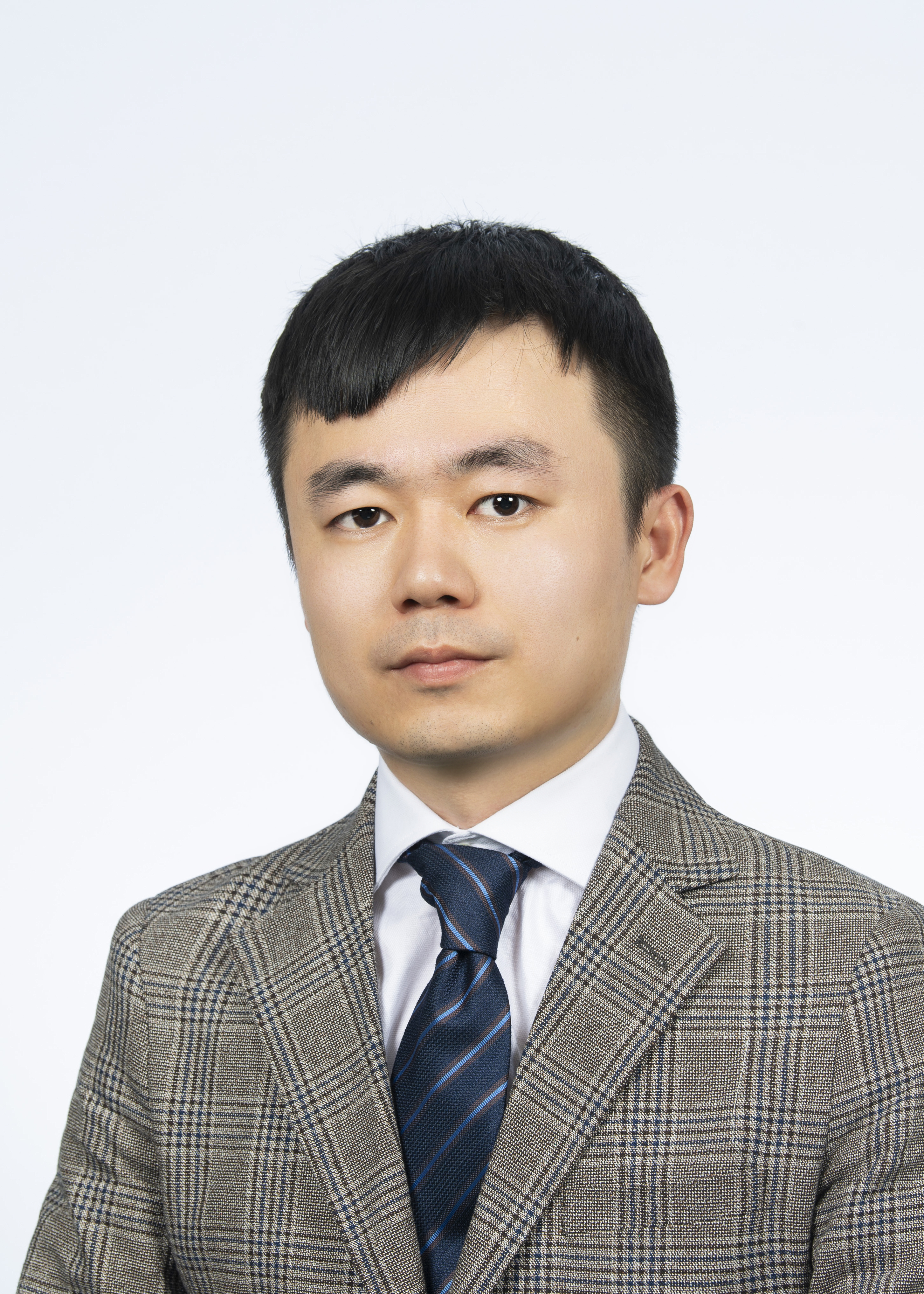
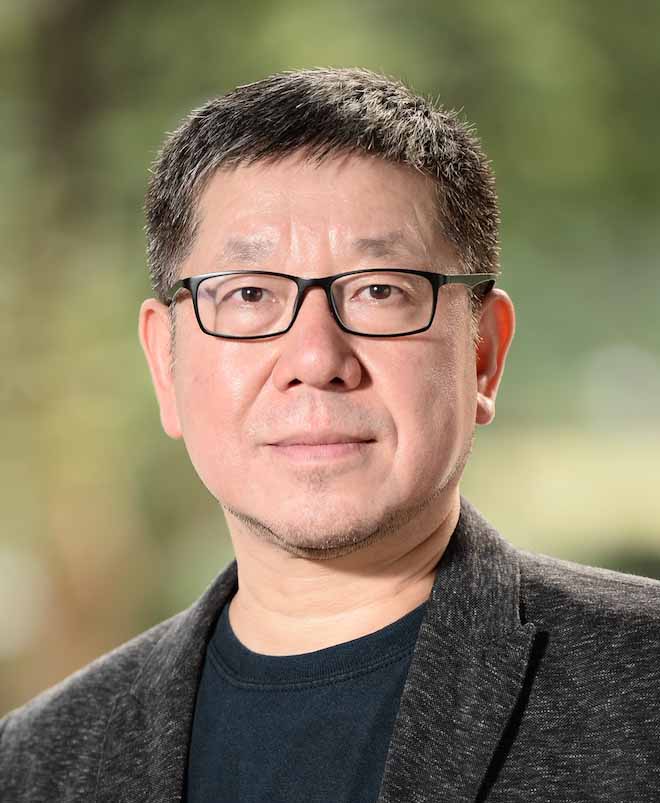
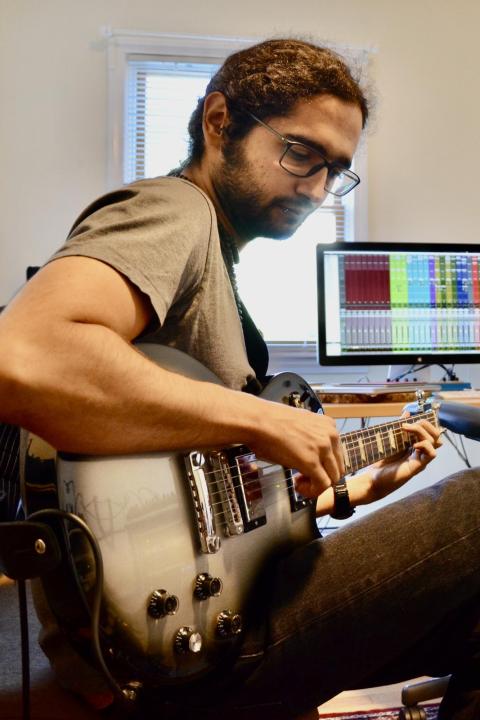
Dr. Hang Dai is transitioning to a Full Professor position at Wuhan University after serving as Honorary Research Fellow at the University of Glasgow's School of Computing Science. His research spans computer vision, medical image analysis, and autonomous driving systems. With over 26 publications, he develops deep learning methods for 3D segmentation, object detection, and video enhancement. Research areas include: Advanced 3D semantic segmentation for LiDAR data Semi-supervised medical image analysis Multi-modal fusion for autonomous vehicles Current projects focus on certainty-guided contrastive learning for medical imaging and attention mechanisms for depth super-resolution.
Markus Steinberger is an Associate Professor at Graz University of Technology (TU Graz), leading the GPU Computing and Visualization Group at the Institute for Computer Graphics and Vision. He holds a PhD (2013) and Habilitation (2020) in Computer Science from TU Graz. His research focuses on GPU scheduling, parallel computing, real-time rendering, and procedural content generation. He has held roles including Assistant Professor (2015–2021) and Director of Cloud Rendering at Huawei (2021–present). Education: MSc (2010), PhD (2013), Habilitation (2020) in Computer Science from TU Graz PostDoc and Research Positions: NVIDIA (2013–2014), Max Planck Institute (2015–2017) Research interests include dynamic resource scheduling, GPU algorithms, and high-performance visualization. His work has been recognized with awards such as the GI Dissertation Prize (2014), Eurographics Best Paper (2021), and the Heinz Zemanek Prize. Key Projects: Cloud-native rendering, procedural planet rendering, and GPU-optimized algorithms Advising includes PhD student Karl Haubenwallner. His lab explores cutting-edge techniques in real-time graphics and parallel computing.
Zhang Jun is a Full Professor of Physics and Mathematics and Co-director of the Applied Math Lab at the Courant Institute, New York University (NYU), USA. He also serves as Co-director of the NYU-ECNU Joint Physics Research Institute in Shanghai, China, and holds an Affiliated Professorship at NYU Shanghai. His research focuses on experimental fluid physics, particularly fluid-structure interactions in biological and geophysical contexts, including bio-locomotion, flapping wings, and continental dynamics. Zhang has authored over 290 invited talks and peer-reviewed papers in journals like Nature and Physical Review Letters. He received the 2017 APS Fellow award for pioneering work in fluid-structure interactions. Beyond academia, he is a freelance illustrator with plans to publish a book of sketches. Education: PhD in Physics (1994), Niels Bohr Institute, University of Copenhagen PhD Candidate (1990-1991), Hebrew University of Jerusalem BSc in Physics (1985), Wuhan University Research Interests: Zhang’s work bridges physics, biology, and geophysics, exploring phenomena like flapping wing aerodynamics, animal locomotion, and Earth’s core-mantle interactions. His experiments often use novel fluid dynamics setups to model natural systems. Awards: APS Fellow (2017) Milton Van Dyke Award (2014) Antarctica Service Medal (2015) Labs & Teams: Co-directs the Courant Institute’s Applied Math Lab, specializing in fluid dynamics experiments. Collaborates with institutions globally, including NYU Shanghai and Aix-Marseille University.
Khai Chiong is an Assistant Professor at the Naveen Jindal School of Management (Marketing Area) of the University of Texas at Dallas . His research focuses on Quantitative Marketing , Machine Learning , Econometrics , Networks , and Empirical Industrial Organization . Education: PhD in Economics, California Institute of Technology (2015) BA, University of Cambridge (2010) His work bridges empirical industrial organization and machine learning , with a focus on dynamic discrete-choice models , graphical models , and network stability . He has developed drift-diffusion models to analyze mobile advertising response times and contributed to AI-driven hiring systems and procurement network analysis . Scientific Awards: Excellence in Teaching Award, Caltech (2014) John O. Ledyard Prize for Best Third Year Paper, Caltech (2013) Cambridge Commonwealth Trust Scholarship (2007-2010) AMA AI SIG Award for Best AI in Marketing Paper (2024) His publications demonstrate a trend of integrating statistical decision frameworks (e.g., minimax-regret ) with marketing applications such as A/B testing optimization , AI hiring tools , and retail behavior analysis . He also explores econometric methods for high-dimensional data and network theory in industrial organization .
Martin Graham is a Researcher at Edinburgh Napier University, affiliated with the School of Computing Engineering and the Built Environment and the Centre for Algorithms, Visualisation and Evolving Systems. With a PhD completed between 1998-2002 under Prof Jessie Kennedy, his career spans over two decades of research in information visualization. His research interests focus on information visualization with specialization in taxonomic visualization, genomic data representation, cybersecurity visualization, and techniques for visualizing multiple overlapping classification hierarchies. Graham has consistently applied visualization techniques to help domain experts explore complex data across biology, genomics, and security domains. His work bridges theoretical visualization concepts with practical applications through numerous Knowledge Transfer Partnership projects. Graham's publication record shows an evolution from foundational work on taxonomic visualization to diverse applications in genomics (VIPER, Helium), cybersecurity (Pianola, Security Visualisation), and biodiversity (Vesper). His recent work continues to advance visualization techniques for complex data analysis problems, with his latest publication in 2021 focusing on insider threat detection systems. As a supervisor, he has mentored PhD students including Alan Melville for the project 'An investigation into visual graph comparison' (2007-2014), serving as Second Supervisor. His research has been supported by significant funding including Innovate UK (£184,993 for Security Visualisation 2018-2022), Biotechnology and Biological Sciences Research Council (£104,072 for VESpeR 2012-2014), and Scottish Funding Council projects totaling over £20,000. Graham has collaborated extensively with Prof Jessie Kennedy throughout his career, co-authoring numerous publications and projects. His work demonstrates a consistent thread of developing practical visualization tools that address real-world data exploration challenges across multiple scientific domains.
Spyros Vosinakis is an Associate Professor in the Department of Product and Systems Design Engineering at the University of the Aegean , Greece. He leads the Interactive Systems Design Laboratory and specializes in Virtual Reality (VR), Augmented Reality (AR), and their applications in education, cultural heritage, and serious games. Education: BSc in Informatics, University of Piraeus, Greece MSc in Computer Graphics & Virtual Environments, University of Hull, UK PhD in Informatics, University of Piraeus, Greece (2003) Research Interests: Focuses on immersive technologies for cultural heritage dissemination, natural user interfaces, and adaptive virtual environments. His work bridges digital humanities with interaction design, emphasizing embodied interaction and accessibility. Recent projects include VR applications for archaeological sites like Delphi, and AR installations for intangible heritage preservation. Publications: Over 70 peer-reviewed papers in journals like Virtual Reality , British Journal of Educational Technology , and International Journal of Computational Methods in Heritage Science . Themes include interaction design in VR, serious games for STEM education, and ethical representation of cultural heritage. Grants & Projects: Principal investigator in 11 R&D projects (3 as coordinator). Collaborates with UNESCO, EU initiatives, and museums on digital heritage preservation. Current work includes XR applications for industrial heritage and accessibility in virtual museums. Labs & Teams: Directs the Interactive Systems Design Laboratory , fostering interdisciplinary projects in HCI, game design, and heritage technology. Advises on industrial partnerships for AR/VR solutions in education and tourism.
Holger Kumke is a Researcher at the Chair of Cartography and Visual Analytics at the Technical University of Munich . His responsibilities include teaching, research management, and technical administration of labs and systems. Specializes in 2D/3D cartography, AR/VR/MR, and thermal infrared data visualization. Developed tools like Cartography Playground for interactive geospatial education. Organized major conferences including LBS 2022 and PFGK18 . His publications focus on archaeological 3D modeling, urban thermal visualization, and GIS uncertainty analysis. He supervises academic theses and manages geospatial infrastructure.
Dr. Franck Patrick Vidal is an Honorary Professor at Bangor University's School of Computing and Engineering, with additional affiliations at the Science and Technology Facilities Council. He holds a PhD in Computer Science and has extensive experience in medical imaging, visualization, and simulation. His research focuses on X-ray imaging, computed tomography (CT), and high-performance computing applications in medical physics. He has contributed to developing open-source tools like gVirtualXray for real-time X-ray simulations and has been involved in projects addressing large-scale emergency response visualization (RAMPVIS). Education includes a PhD from Bangor University (2008), a Master's from Teesside University (2002), and a Postgraduate Certificate in Higher Education (2016). He has held roles such as Senior Lecturer and Postdoctoral Research Fellow at institutions like Inria and CEA Saclay. His research interests span medical imaging technologies, optimization algorithms, and the application of artificial intelligence to healthcare. Notable awards include the 'Best Poster Presentation' and the 'David Duce Prize'.
David Cardona is an Assistant Professor in the Electronic Production and Design (EPD) department at Berklee College of Music, where he teaches courses in music technology and electronic production. His work bridges music, engineering, and interactive media, with a strong focus on accessibility and alternative methods for creative expression. His research and creative interests include interactive media, immersive audiovisual experiences, sound design, AI applications in music, game engines, 3D graphics, and the development of adaptive controllers for artists with disabilities. He explores how motion sensors, computer vision, and real-time systems can transform musical performance and artistic engagement. The recent publications and presentations highlight a consistent trend in human-centered technological innovation for inclusive art-making, particularly through sensor-based interfaces and assistive creative tools. These works reflect deep integration of technical expertise with socially impactful design principles. Grammy nomination: Best World Music Album category for Deran by Bombino, engineer, 2019 Harvard Innovation Labs’ Spark Grant for startup, Adaptive Art Technologies, 2022 David Cardona advises creative projects and leads initiatives centered on accessible music technology. His grant from Harvard Innovation Labs supports his startup Adaptive Art Technologies , which develops tools enabling people with disabilities to create art. While formal student advisees are not listed, he mentors students through courses and creative collaborations in EPD. He leads the development of innovative installations such as DisOrgan , featured at the Hirshhorn Museum during the 2023 Sound Scene festival, and conducts research through his startup Adaptive Art Technologies. His work often involves interdisciplinary teams combining musicians, engineers, designers, and accessibility experts to build inclusive creative systems.
Professor Greg Maguire is a faculty member at Ulster University , holding the Professor of Animation role within the Belfast School of Art under the Faculty of Arts, Humanities & Social Sciences. His work bridges academia and industry, focusing on sustainable animation ecosystems through partnerships with organizations like Digital Northern Ireland 2020 , Northern Ireland Screen , and the Visual Effects Society (USA) . He pioneered the Toody Threedy animation cluster to connect students, researchers, and studios globally. Research Focus : Facial animation, AI-driven character modeling, and industry-academia collaboration Industry Leadership : R&D Supervisor at Lucasfilm Animation, Technical Animation Supervisor at Walt Disney Feature Animation His recent publications with colleagues explore deep learning for facial animation and spectral mesh processing , emphasizing technical rigor and artistic innovation. He contributed to Academy Award-nominated visual effects in Harry Potter and the Prisoner of Azkaban and Avatar , maintaining Ulster University's status as a hub for applied creative technology research.
Jos Roerdink is a Professor at the Bernoulli Institute within the Faculty of Science and Engineering at the University of Groningen , Netherlands. His research spans multiple disciplines including computer science, mathematical morphology, data visualization, and neuroscience, with a focus on algorithm development and applications in medical imaging and astronomical data analysis.
Ke Huo is a researcher focused on advanced interactions in Augmented Reality (AR) , Robotics , and Sensor Systems . His work bridges physical and digital environments through innovative tools like GhostAR , V.Ra , and iSoft , enabling intuitive authoring of context-aware applications. Research Interests : Augmented Reality (AR) systems for collaborative task planning Soft sensor technology with multimodal sensing Context-aware robotics and IoT integration 3D design ideation in mixed reality Autonomous driving decision-making frameworks Publication Trends : 2014–2024: 15+ papers on AR, sensor design, and human-robot collaboration Key venues: UIST , CHI , Sensors , ACM DIS Collaborations with Karthik Ramani, Yuanzhi Cao, and Sang Ho Yoon
Andrzej Skalski serves as a Professor and Deputy Head of the Department of Metrology and Electronics within the Faculty of Electrical Engineering, Automatics, Computer Science and Biomedical Engineering at AGH University of Science and Technology in Kraków. He actively participates in the Biomedical Engineering Discipline Council and maintains his primary workplace in Building B-1, Room 206, with contact via skalski@agh.edu.pl. His research spans Medical Imaging, Computer Vision, and Mixed Reality applications in healthcare, with concentrated expertise in medical image segmentation, surgical navigation systems, and 3D visualization techniques. Recent work demonstrates innovative integration of deep learning for vascular structure analysis, development of cloud-based diagnostic platforms like DECODE, and implementation of extended reality solutions for surgical precision and anatomy education. His scholarship bridges engineering principles with clinical practice to solve complex biomedical challenges. Analysis of his 2024-2026 publications reveals dominant trends in markerless surgical navigation, noninvasive vascular disease management, and educational technology for anatomy instruction. Key thematic clusters include: (1) Deep learning-driven segmentation of vascular and fracture structures in CT/X-ray data, (2) Mixed reality frameworks for surgical guidance and biopsy procedures, and (3) Systematic evaluations of digital versus traditional methods in medical education. These works consistently emphasize clinical applicability and technological innovation. Dr. Skalski leads collaborative initiatives including the DECODE platform for peripheral artery disease management and the PENGWIN 2024 Challenge for pelvic fracture segmentation benchmarking. His leadership in the Biomedical Engineering Discipline Council underscores institutional influence, while his extensive publication record indicates active supervision of graduate researchers despite no explicit student listings in available records. Current projects focus on WebGL-based medical visualization and mixed reality surgical navigation systems.
ÖMER ÇAKIR is a Lecturer at the College of Engineering , Karadeniz Technical University , Department of Computer Engineering. His work spans computer graphics, software engineering, and signal processing. Education: Undergraduate (2001) and Postgraduate (2004) in Computer Engineering at Karadeniz Technical University. Academic Positions: Lecturer (2002–Present), Research Assistant (2001–2002). Research focuses on Computer Graphics , Signal Processing , and Optimization Algorithms . His conference papers address topics like virtual surgery simulations , fractured object reassembly , and TDOA-based localization . Key publication trends include parallel computing , 3D reconstruction , and PSO optimization . He has contributed to 13 peer-reviewed conferences. His contact email is cakiro@ktu.edu.tr , and he teaches BİLGİSAYAR GRAFİKLERİ-I and DATA STRUCTURES .
Jona Ballé is an Associate Professor in the Electrical and Computer Engineering department at New York University's Tandon School of Engineering. His research focuses on developing efficient representations of visual media through machine learning and end-to-end optimization techniques. Dr. Ballé's research interests center on visual media compression, spanning still images, video, augmented reality, virtual reality, plenoptic imaging, and holographic imaging. His work bridges information theory, computer vision, and machine learning to develop perceptually optimized compression algorithms. He has made significant contributions to understanding the relationship between human visual perception and image statistics, which has led to improved compression results and ultimately contributed to the JPEG AI standard finalized in 2025. His recent publications demonstrate a strong trend toward Wasserstein distortion metrics, neural compression architectures, and rate-distortion optimization. These works span computer vision, information theory, and signal processing domains, with applications in both traditional and emerging visual media formats. His research shows consistent innovation in developing perceptually relevant metrics that balance fidelity and realism in compressed media. Contributed to JPEG AI standard (2025) Co-organizer of Challenge on Learned Image Compression (CLIC) since 2018 Program committee member of Data Compression Conference (DCC) since 2022 Reviewer for top-tier publications including NeurIPS, ICLR, ICML, and IEEE Transactions journals Dr. Ballé has advised numerous graduate students who have co-authored significant publications with him, particularly in the areas of neural compression and perceptual metrics. His research has been supported by institutions including the Simons Foundation. He maintains active collaborations across academia and industry, with his work at Google (2017-2024) directly informing his current academic research. His laboratory focuses on developing open-source implementations of advanced compression techniques, with notable GitHub repositories including Wasserstein Distortion implementation in PyTorch and CoDeX (Learned data compression in JAX), demonstrating his commitment to reproducible research and community engagement.