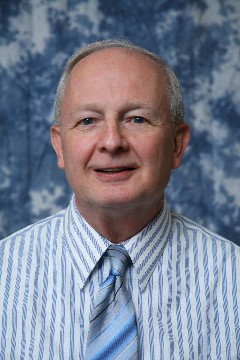
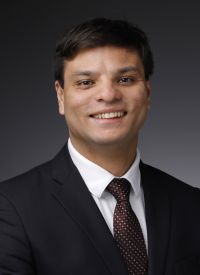
Brian Hanley is a Reader in Sport and Exercise Biomechanics at Leeds Beckett University , affiliated with the Carnegie School of Sport and Centre for Sports Performance . He lectures on biomechanics of health, sports injury, and human gait. Education: Applied Physiology, Carlow Institute of Technology First-class Honours in Sport and Exercise Science, Leeds Metropolitan University PhD, Leeds Beckett University (Biomechanical Analysis of Elite Race Walking) First-class Honours in Psychology, Open University Brian's research focuses on track and field athletics , with emphasis on biomechanics of technique, pacing strategies, athlete development, sports technology, and training methods. He specializes in distance running and race walking , particularly analyzing real-world data from elite competitions. His recent publications explore diverse topics including gait parameter validity, footstrike patterns, pacing optimization in 400m/1500m events, kinematic differences in 10,000m runners, and the impact of super shoes on marathon performance. These studies highlight his expertise in translating lab-based findings to field applications. Brian serves as an external consultant for European Athletics on high-performance development programs and collaborates with elite athletes globally. His work bridges academic research with practical coaching applications, notably through the Centre for Human Performance at Leeds Beckett.
Prof. Dr.-Ing. Katharina Schmitz serves as Institute Director and Vice Dean at the Institute for Fluid Power Drives and Systems, RWTH Aachen University. Her leadership within the Production Technology Cluster and extensive contributions to fluid power engineering establish her as a leading authority in mechanical engineering research and education. Her research spans fluid power systems, hydraulic component design, tribology, and physics-informed machine learning applications. She pioneers sustainable propulsion solutions through bio-hybrid fuels research while addressing fundamental challenges in polymer material behavior under hydraulic stresses. Current work focuses on carbon-neutral heavy-duty transportation, physics-based neural networks for lubrication modeling, and advanced control systems for electro-hydraulic actuators. Analysis of her 15 most recent publications reveals a dominant trend toward integrating physics-based modeling with deep learning to solve complex engineering problems. Her team consistently develops novel frameworks for cavitation prediction, flow rate determination, and material compatibility assessment - significantly advancing fluid power system reliability, efficiency, and digitalization. Scientific recognition includes: GfT Förderpreis 2023 for experimental and simulative investigation of partially hydrostatic relieved contacts in variable speed axial piston machines As head of the Institute for Fluid Power Drives and Systems, she leads cutting-edge research in sustainable fluid power technologies. The institute maintains strong industry partnerships while driving innovation in hydraulic component design, digital twins for condition monitoring, and next-generation propulsion systems through its position within RWTH Aachen's Production Technology Cluster.
Eunhee Kim is a Professor in the Department of Defense Systems Engineering at Sejong University. She holds a Ph.D. in Mechanical Engineering from KAIST and has extensive industry experience in radar systems development. 1995 B.S. in Precision Engineering, KAIST 1997 M.S. in Mechanical Engineering, KAIST 2004 Ph.D. in Mechanical Engineering, KAIST Her research focuses on Radar Systems , Waveform Design , and MIMO Radar signal processing. She has contributed to projects involving space object tracking, airborne radar systems, and automotive radar optimization. Recent publications highlight her work on Machine Learning integration for Energy Forecasting and advanced MIMO Array Designs for improved radar resolution. She leads the Defense Radar Technology Laboratory, specializing in Phased Array Radar and Broadband Noise Radar systems. Patents include vehicle camouflage netting and RF-based positioning systems. Collaborations with agencies like Agency for Defense Development and companies such as LIG Nex1 and Hanwha Systems are prominent in her career.
Professor Francesco Pilla is a Full Professor of Smart and Sustainable Cities at University College Dublin's School of Architecture, Planning and Environmental Policy, where he also serves as Co-Director of the Spatial Dynamics Lab. Previously, he held positions as MSc Director (2018-2019) and Undergraduate Director for the School of Architecture. With over 15 years of experience in GIS modeling and spatial data analysis, Professor Pilla's work bridges technology, urban planning, and community engagement to create more sustainable cities. Professor Pilla's research focuses on developing geospatial analysis tools and environmental pollution models (air, noise, water) using GIS platforms to facilitate interoperability between research teams and end users. His approach integrates environmental pollution models with pervasive and community sensing applications for calibration and validation. A key innovation in his work is the integration of co-design principles through Living Labs in urban planning and citizen science initiatives to improve city life from an environmental perspective. His recent publications reveal a strong focus on urban sustainability challenges, with significant contributions to air quality monitoring, sustainable transportation, climate adaptation, and citizen science methodologies. His work increasingly incorporates advanced AI techniques, including large language models and machine learning algorithms, to analyze urban systems and develop data-driven solutions for complex environmental problems. The research demonstrates a clear trend toward integrating diverse data sources and developing practical tools for urban governance and planning. Haagen-Smit Prize (2024) - Recognizing outstanding papers published in Atmospheric Environment Best eMobility Project - Electric Vehicle Awards 2024 All Ireland community & council awards - Best Community Transport Initiative 2024 Academic research award: tipping point for action from Financial Times (2023) Professor Pilla leads numerous significant research projects including iSCAPE (H2020-SC5) as Coordinator, OPERANDUM (Principal Investigator for UCD) focusing on flood risk reduction with nature-based solutions, WeCount (Principal Investigator for UCD), and Connecting Nature (Principal Investigator for UCD). He has also secured funding through SFI Investigator grants for 'Scalable, Privacy-Enhanced Analytics for sharing mobility systems' and several Environmental Protection Agency projects. His collaborative work extends to partnerships with MIT through Fulbright/EPA TechImpact awards and IBM through Faculty Awards. At the Spatial Dynamics Lab, Professor Pilla oversees research that combines geospatial analysis, environmental monitoring, and community engagement. His innovative 'Bike Library' initiative, which has expanded to multiple schools in Dublin, exemplifies his commitment to translating research into practical community solutions. The lab's work integrates advanced sensing technologies, GIS platforms, and citizen science to address urban environmental challenges through collaborative approaches.
Carlos Cifuentes is an Associate Professor in Human-Robot Interaction at the Bristol Robotics Laboratory (BRL) , part of the University of the West of England (UWE Bristol) . He also serves as the Deputy Director of the VIVO Hub , a £13.4M UK-funded research initiative (2024-2030) focused on robotics for rehabilitation and healthcare. His research spans Human-Robot Interaction , Rehabilitation Robotics , Healthcare Robotics , and Socially Assistive Robotics , with applications for conditions such as cardiac diseases , post-stroke recovery , spinal cord injuries , cerebral palsy , Parkinson's disease , musculoskeletal disorders , and autism spectrum disorder (ASD) . Carlos has over 15 years of experience and 200+ publications in robotics for rehabilitation and assistive technologies. His recent work explores smart walkers with multimodal feedback, soft prosthetics using polymeric optical fiber sensors , and machine learning models for fatigue and stress estimation. He also investigates inclusive design for social robots in global contexts , including a CASTOR Robot for ASD therapy and collaborative design processes with Colombian communities. Carlos serves as an Associate Editor for IEEE Robotics and Automation Magazine (since 2021), ICRA , and IROS (since 2023). He leads projects integrating wearable sensors , deep learning , and haptic feedback to enhance mobility, autonomy, and quality of life for individuals with disabilities. As Deputy Director of the VIVO Hub, he focuses on long-term deployment of robotic systems in real-world healthcare settings, emphasizing collaboration with clinicians , caregivers , and neurodiverse communities . His work bridges robotics , biomedical engineering , and human-centered design .
Vladan Koncar is a Full Professor and Research Supervisor at École Nationale Supérieure des Arts et Industries Textiles (ENSAIT), where he directs the GEMTEX laboratory and international relations. His research spans smart textiles, e-textiles, wearable sensors, and energy-harvesting systems, with applications in healthcare, military, and environmental monitoring. Research Interests: Koncar's work focuses on three primary themes: (1) Smart textile design for medical/safety applications; (2) Energy harvesting via textile NFC antennas and metamaterials; (3) Standardization of e-textile reliability and testing. His innovations include textile-based ECG monitors, airflow sensors, and photodynamic therapy fabrics. Projects & Grants: He coordinates major EU initiatives (e.g., ETEXWeld, MAPICC 3D) and industrial collaborations with Petit Bateau and @Health. Key projects involve developing instrumented textiles for healthcare, dynamic lighting systems, and filtration monitoring. Honors: Ordre des Palmes Académiques, Chevalier (French Prime Minister Award, 2019) IPC Golden Gnome & Rising Star Awards (2021-2022) Doctor Honoris Causa (Gheorghe Asachi University, 2010) Annual PEDR Award for PhD supervision since 1995 Labs & Teams: Leads the Human Centered Design Group at GEMTEX, specializing in textile-electronics integration. The lab focuses on structural health monitoring, smart composites, and washable e-textile systems.
George Shaker is an Adjunct Associate Professor in the Department of Electrical and Computer Engineering at the University of Waterloo, Canada, and Lab Director of the Wireless Sensors and Devices Laboratory at the Schlegel-UW Research Institute for Aging. He is also Chief Scientist at Spark Technology Labs. His research focuses on wireless sensor technologies for healthcare, autonomous systems, and IoT. He earned his bachelor's from Cairo University and master's/PhD from the University of Waterloo. Education: Bachelor’s degree, Cairo University, Egypt Master’s degree, University of Waterloo, Canada PhD, University of Waterloo, Canada Research Interests: Dr. Shaker’s work spans advanced wireless sensor systems for healthcare monitoring, UAVs, and automotive applications. His lab developed the MIRADA initiative for aging populations and pioneered radar-based non-invasive glucose monitoring. Key areas include mm-wave radar, antenna design, bioelectromagnetics, and machine learning integration. He has co-authored over 200 publications and holds 35+ patents, collaborating with companies like Google, Apple, and Toyota. Recent Article Trends: His 2025 work emphasizes AI-driven radar systems for activity recognition, bio-sensing metasurfaces, and UAV classification using digital twins. Projects include 4D radar imaging, low-cost milk quality monitoring, and smart furniture for cardiac health. Awards: IEEE AP-S Best Paper Award IEEE MTT-S Graduate Fellowship arXiv Top Downloaded Medical Article URSI Young Scientist Award Multiple student awards (see full list above) Advising & Grants: He advises graduate students in ECE and has led projects funded by NSERC and industry partners. His students have won Velocity Fund, NASA Tech Briefs, and Canadian Space Agency awards. Collaborates with over 40 companies including Amazon, Microsoft, and Medella Health. Labs & Initiatives: Leads the Wireless Sensors & Devices Lab and co-founded MIRADA, a smart apartment for aging healthcare. Active in Spark Labs for wireless innovation.
Dr. Cameron N. Riviere is a Research Professor at Carnegie Mellon University (CMU), affiliated with the Robotics Institute, Department of Biomedical Engineering, and Department of Mechanical Engineering. He also holds an Adjunct Professorship at the University of Pittsburgh’s Department of Rehabilitation Science and Technology. His research focuses on surgical robotics, medical devices, and control systems, emphasizing minimally obtrusive robotic systems for microsurgery and minimally invasive surgery. Key projects include the Micron handheld tremor-canceling device and the HeartLander cardiac robot. Education: B.S. in Aerospace and Ocean Engineering from Virginia Tech (1989), Ph.D. in Mechanical Engineering from Johns Hopkins University (1995). Research Interests: Medical robotics, rehabilitation robotics, control systems, human-machine interfaces for biomedical applications, and physiological motion compensation. Recent work includes development of robotic systems for retinal surgery, cardiac therapy, and assistive technologies for individuals with movement disorders. Awards Best Paper of 2016 (IEEE/ASME Transactions on Mechatronics) Finalist for Best Medical Robotics Paper (IEEE ICRA 2016) Best Paper (IEEE MFI 2015, IROS 2014) Advising and Grants: Mentor to PhD students (e.g., Arpita Routray) and masters students (e.g., Aditti Ramsisaria). Projects include the HeartLander epicardial therapy robot and advanced tracking systems for handheld surgical tools. Collaborates with institutions like Mayo Clinic and NIH-funded initiatives. Labs: Director of the Surgical Mechatronics Laboratory at CMU’s Robotics Institute, focusing on interdisciplinary development of robotic systems for clinical applications.
Dennis Akos is a Professor in the Department of Aerospace Engineering Sciences at the University of Colorado Boulder. He is affiliated with the Research and Engineering Center for Unmanned Vehicles (RECUV) and the Colorado Center for Astrodynamics Research (CCAR). His research focuses on RF signal processing, RF interference mitigation, integrated navigation systems, and VHF modulation. He holds a Ph.D. in Electrical and Computer Engineering from Ohio University (1997), with earlier degrees from the same institution. His professional experience includes roles at Stanford University’s GPS Laboratory and the Lulea Institute of Technology. He has received notable awards such as the Institute of Navigation Fellow (2022), Thurlow Award (2009), and multiple best paper awards. His work emphasizes GNSS security, spoofing detection, and low-cost receiver solutions. Recent articles highlight advancements in GNSS RFI localization, Android device navigation, and software-defined radio applications. His lab explores innovations in space situational awareness, multi-sensor PVT solutions, and interference-resistant systems. Collaborative projects leverage crowdsourced smartphone data to enhance GNSS reliability. Awards: Fellow of the Institute of Navigation, Thurlow Award, Samuel M. Burka Award, and FAA Excellence in Aviation Research. Grants/Advising: Advising on GNSS security and Android-based navigation systems; involved in federally funded research on interference mitigation and satellite clock stability. Labs/Teams: Leads research at RECUV and CCAR, focusing on unmanned systems and astrodynamics challenges.
Gabriel Zucman is a Summer Research Professor in the Department of Economics at the University of California, Berkeley, and the Summer School Director of the James M. and Cathleen D. Stone Center on Wealth and Income Inequality. He holds a PhD from the Paris School of Economics (2013) and previously taught at the London School of Economics before joining Berkeley in 2015. His research focuses on global wealth dynamics, taxation, and income inequality, with an emphasis on addressing tax evasion, profit shifting by multinational corporations, and designing equitable fiscal policies. Key research areas include the macro-distributional impacts of globalization, the taxation of ultra-high-net-worth individuals, and the reform of international tax systems. Zucman has co-authored landmark works like the World Inequality Report , analyzing global wealth disparities and proposing policy solutions. His 2023 John Bates Clark Medal underscores his influence in the field of economics. Awards: John Bates Clark Medal (2023) Key Contributions: Co-founder of the World Inequality Lab, director of the Stone Center, and advocate for progressive taxation frameworks. His recent work emphasizes minimum taxation standards, real-time inequality tracking, and combating offshore wealth evasion. Zucman's interdisciplinary approach bridges theory and policy, influencing debates on global fiscal equity and economic justice.
Syed Hashsham is a Professor in the Department of Civil and Environmental Engineering at Michigan State University (MSU), with an adjunct appointment in the Center for Microbial Ecology and Plant, Soil, and Microbial Sciences. His research focuses on microbial community dynamics, field-deployable genetic testing tools, and environmental biotechnology processes. He leads the NIEHS Superfund Research Center’s Project 4 on dioxin remediation and has pioneered innovations like the Gene-Z handheld genetic analyzer and antimicrobial resistance gene screening chips. Education: Ph.D. in Environmental Engineering (University of Illinois, 1996), M.S. in Environmental Science (IIT Bombay, 1986), B.S. in Civil Engineering (Aligarh Muslim University, 1984). Research interests include microbial community stability, bioremediation of chlorinated solvents, and development of low-cost diagnostic tools. His work bridges environmental engineering and microbiology, with applications in water safety, soil remediation, and public health. Over 150 peer-reviewed publications and numerous grants from NIH, EPA, and other agencies highlight his impact. Notable awards include the MSU Distinguished Faculty Award (2011) and the Withrow Distinguished Scholar Award (2007). He teaches courses like Biological Processes in Environmental Engineering (ENE804) and advises on capstone projects. His lab has produced pioneering technologies for real-time microbial detection and environmental monitoring. Grants and collaborations span multi-million-dollar projects with the NIEHS, USDA, and U.S. Army. His team includes postdocs, PhD students, and visiting scholars working on topics like gut microbiome-host interactions and ARG dissemination via biofilms.
Konrad Kowalczyk is an Associate Professor at AGH University of Science and Technology in Krakow, Poland, where he heads the Signal Processing Group within the Faculty of Computer Science, Electronics and Telecommunications. With extensive international experience from institutions including Queen's University Belfast, Stanford University, and Fraunhofer Institute, he has established himself as a leading researcher in audio and speech signal processing. His academic journey includes B.Eng. and M.Sc. degrees from AGH University (2005), a Ph.D. from Queen's University Belfast (2009), and a Habilitation in ICT from AGH University (2020). B.Eng. and M.Sc. in Electronics and Telecommunications, AGH University of Krakow (2005) Ph.D. in Electronics, Queen's University Belfast, UK (2009) Habilitation (D.Sc.) in Information and Communication Technology, AGH University of Krakow (2020) Kowalczyk's research spans multiple cutting-edge areas in audio processing, with particular focus on speech and audio signal processing enhanced by machine learning techniques. His work integrates deep neural networks with traditional signal processing methods to address challenges in array signal processing , speech enhancement , and speaker recognition . The research group he leads explores innovative applications in distributed signal processing for IoT , acoustic event detection , and spatial audio rendering , bridging theoretical advances with practical implementations. His recent publications demonstrate a clear trend toward integrating deep learning with traditional signal processing techniques, particularly in speaker diarization, source separation, and robust speech recognition. The research increasingly focuses on real-world applications requiring reverberation-robust processing , distributed microphone array systems , and end-to-end neural architectures that can operate in challenging acoustic environments. There's a noticeable shift toward more complex, integrated systems that combine multiple signal processing tasks. Stanislaw Staszic Medal for best graduate of AGH (2005) IEEE Best Student Paper Contest finalist (2007) AES Student Technical Paper Award winner (2008) Best Student Paper Award at IWAENC conference (2014) Best Paper Awards at IEEE SPA conferences (2016, 2019) Polish Ministry of Science Scholarship for Distinguished Young Scientists (2016-2019) Prime Minister Award for outstanding scientific achievements (2020) As Principal Investigator, Kowalczyk leads multiple significant research projects including "Acoustic Intelligence" (2024-2028) funded by National Science Center, and "Deep extraction for robust speech recognition" (2023-2028). He has successfully secured funding from prestigious programs including First TEAM from the Foundation for Polish Science, and EU FP7 projects. His research group actively supervises Ph.D., M.Sc., and B.Eng. students, with strong connections to international institutions including Aalto University and IEEE Signal Processing Society. The research output includes numerous journal publications, conference papers, patents, and software implementations that have advanced the field of audio signal processing. Kowalczyk leads the Signal Processing Group at AGH University, which focuses on developing innovative solutions for speech and audio processing challenges. The group maintains strong collaborations with international institutions including Aalto University (Finland), and participates in European research initiatives. Their work spans theoretical development through practical implementation, with applications ranging from medical voice assistants to distributed acoustic sensor networks.
Prof. Dr.-Ing. Philipp Lensing serves as a Professor in the Faculty of Engineering and Computer Science at Osnabrück University of Applied Sciences. His academic work focuses on cutting-edge developments in virtual and augmented reality systems, computer graphics, and game programming. His research interests span Virtual Reality , Augmented Reality , Mixed Reality , Game Programming , Computer Graphics , and Natural User Interfaces . Prof. Lensing has pioneered work in real-time global illumination techniques, avatar calibration systems, and the integration of virtual content with real environments. His research has been applied across diverse domains including landscape planning, physics education, medical rehabilitation, and industrial engineering. Prof. Lensing's recent publications reveal a strong trend toward practical applications of VR/AR technologies in scientific, educational, and industrial contexts. His work increasingly focuses on multimodal interaction, haptic feedback systems, and the integration of VR with complex scientific instrumentation like scanning probe microscopy. He has supervised numerous student projects focused on VR/AR applications, game development, and 3D modeling. His teaching includes courses on Computer Graphics, 3D Game Programming, Virtual and Augmented Realities, and 3D Modeling and Animation. Prof. Lensing leads several research projects including GROWTH (funded by BMBF), VRnano (BMBF), VRFlow Suite, VR-Physio-BOX, and MoDal-MR, all exploring innovative applications of immersive technologies in various practical contexts.
Dr. Richard Molyet is a Senior Lecturer and Undergraduate Director in the Department of Electrical Engineering and Computer Science at the University of Toledo's College of Engineering. After retiring as Associate Professor in 2002, he returned to academia in 2005 as Visiting Professor and transitioned to Associate Lecturer in 2008. Education: Ph.D. in Engineering Science (1981) from University of Toledo His research spans Automatic Control , Robotics , Smart-Grid Systems , and Biomedical Applications . Recent publications focus on deep learning for medical diagnostics and hybrid power network optimization , while earlier work explored repetitive control algorithms and microprocessor-based motion analysis . Scientific Recognition: IEEE Third Millennium Medal (2000) IEEE-USA Professional Achievement Award (2002) University of Toledo Outstanding Teacher Award (2016) Currently advising 3 PhD students and multiple Master’s candidates, Dr. Molyet has served on numerous academic committees since the 1980s. He maintains an active role in IEEE Toledo Section's executive board for 39 years .
Dr. Davi V. Q. Rodrigues is an Assistant Professor in the Department of Electrical and Computer Engineering at the University of Texas at El Paso (UTEP). His research focuses on microwave/millimeter-wave circuits and signal processing for radar, communication systems, and smart living applications. He holds a B.S. in Communications Engineering from the Military Institute of Engineering (Brazil) and a Ph.D. in Electrical Engineering from Texas Tech University. Prior to academia, he served in the Brazilian Navy and Army, and worked at Uhnder, Inc., Abbott Laboratories, and Dell Technologies. His work emphasizes radar-based smart home, healthcare, and autonomous systems, with contributions in structural health monitoring, human activity recognition, and joint communication-sensing technologies. Dr. Rodrigues has received prestigious awards including the 2022 IEEE MTT-S Tom Brazil Fellowship and the 2023 Texas Tech Horn Distinguished Professors Award. His research group, the Microwave Circuits & Sensing Systems Group, develops algorithms and hardware for biomedical sensing, non-contact health monitoring, and 6G-enabled applications. He actively seeks motivated graduate students interested in radar systems, signal processing, and wireless technologies. Education: B.S., Communications Engineering, Military Institute of Engineering (2017) Ph.D., Electrical Engineering, Texas Tech University (2023) Research Interests: Microwave/mm-wave radar systems Human activity monitoring and gesture recognition Structural health monitoring 6G/ B5G communication-sensing fusion Passive and opportunistic RF sensing His publications span radar-based smart living solutions, biomedical sensors, and reconfigurable intelligent surfaces (IRS). He is an IEEE MTT-S member and has contributed to industry partnerships through collaborations with Uhnder and Dell Technologies. Current projects integrate AI-driven radar signal analysis and low-cost sensor networks for healthcare and infrastructure monitoring.