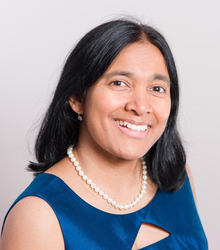
Krishni Wijesooriya is a Professor of Radiological Physics at the University of Virginia , holding a Ph.D. from the College of William and Mary (1999). Her research focuses on Medical Physics and Radiation Oncology , particularly on techniques for tumor localization, motion correction, and patient safety improvements in radiation therapy. Ph.D., 1999, College of William and Mary Professor of Radiological Physics, University of Virginia Her work spans Radiation Therapy innovation, including Monte Carlo algorithms for lymphocyte dose prediction, real-time MLC monitoring software for Varian Linacs, and novel diagnostic imaging tools complementary to CT/MRI/PET. She also contributes to global oncology projects in SAARC countries and Africa. Recent publications include developments in Immune Cell Sparing (2025) and Phylogenetic Studies of Sri Lankan fish species (2021–2024). Key collaborations appear in Lancet Oncology , Advances in Radiation Oncology , and PLoS Computational Biology . Her email is kw5wx@virginia.edu .
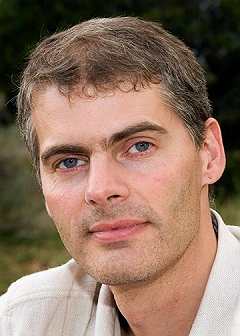
Benjamin C. Pierce serves as the Henry Salvatori Professor of Computer and Information Science in the School of Engineering and Applied Science at the University of Pennsylvania. He is a Fellow of the ACM with extensive editorial experience, having served as co-Editor in Chief of the Journal of Functional Programming and Managing Editor for Logical Methods in Computer Science. His research spans programming languages, type systems, language-based security, formal verification, differential privacy, and synchronization technologies. Pierce is renowned for developing foundational frameworks in bidirectional transformations (lenses), property-based testing, and differential privacy verification. His work bridges theoretical computer science with practical implementation, particularly evident in his development of the Unison file synchronizer and the Clowdr virtual conference platform. The trends in his recent publications reveal a sustained focus on verification techniques for privacy-preserving systems, particularly differential privacy, alongside continued innovation in bidirectional data transformations and property-based testing methodologies. His work increasingly integrates formal verification with practical implementation concerns. Fellow of the ACM Pierce has mentored numerous researchers through PLMW (Programming Languages Mentoring Workshop) events and has served on numerous program committees for major conferences including POPL, PLDI, and ICFP. His editorial work has significantly shaped the programming languages research community through his leadership roles in key journals. He leads development of the Unison file synchronizer, a cross-platform tool used worldwide, and co-developed the Clowdr virtual conference platform that gained prominence during the pandemic. His work demonstrates a consistent pattern of creating practical tools grounded in deep theoretical foundations.
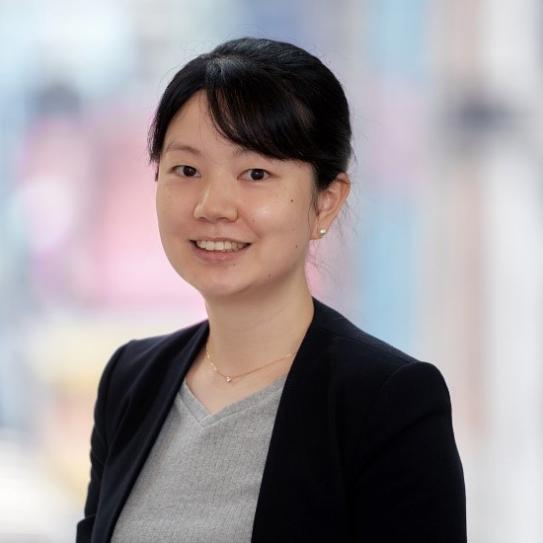
Qianru Guo serves as an Adjunct Professor in the Department of Civil and Urban Engineering at NYU's Tandon School of Engineering, while maintaining her primary role as Senior Consulting Engineer at Simpson Gumpertz & Heger Inc. (SGH) with over 10 years of specialized experience in performance-based fire protection design and structural fire engineering. Her academic credentials include: Ph.D. in Structural Engineering from University of Michigan, Ann Arbor M.S. in Civil Engineering and Mechanical Engineering from University of Michigan, Ann Arbor B.S. in Civil Engineering from Tongji University, Shanghai, China Dr. Guo's research pioneers the integration of probabilistic methodologies with structural fire engineering, focusing on reliability analysis of fire-exposed structures through advanced computational techniques. Her work develops inverse modeling for heat release rate determination, stochastic finite element methods for fire resistance evaluation, and performance-based design frameworks that redefine safety standards. She addresses critical gaps in predicting structural behavior under fire by quantifying uncertainties in material properties, fire scenarios, and structural responses. Analysis of her publication trajectory reveals consistent methodological evolution from fundamental reliability theory (2011-2013) toward practical performance-based design applications (2014-2018). Her research consistently bridges computational mechanics with fire safety engineering, emphasizing probabilistic safety assessment and code-compliant reliability calibration across residential and commercial structures. Based at 6 MetroTech Center, 4th Floor, Brooklyn, NY 11201, her professional activities integrate academic research with real-world engineering practice to advance fire-resilient infrastructure design.
Myra B. Cohen is a Professor and the Lanh and Oanh Nguyen Chair in Software Engineering within the Department of Computer Science at Iowa State University's College of Engineering. She previously served as a Susan J. Rosowski Professor at the University of Nebraska-Lincoln and leads the LaVA-OPs Laboratory for Variability-Aware Assurance and Testing of Organic Programs. Her research spans software testing of highly-configurable systems, search-based software engineering, combinatorial design applications, and synergies between software engineering and synthetic biology. She investigates assurance techniques for self-adaptive systems through bio-inspired algorithms and examines software testing representations of natural processes like chemical reaction networks. Her 15 most recent publications demonstrate strong focus on cyber-physical systems (particularly drone safety), biological computing, and configuration-aware testing. These works reveal interdisciplinary trends combining software engineering with synthetic biology, emphasizing real-world applications in autonomous systems and computational biology. NSF CAREER Award AFOSR Young Investigator Award ACM Distinguished Scientist Best Student Paper Award at SPLC 2019 ACM Distinguished Paper Award at ASE 2020 Best Paper Award at GI@ICSE 2021 Professor Cohen advises PhD students Salil Purandare, Md Obaidul Kabir, and Michael Gerten, with research focusing on cyber-physical systems and biological software applications. She leads multiple significant projects including the DOE-funded Dependable, Explainable, Reusable, AI-Driven Computational Biology initiative and blockchain fault tolerance research. Her LaVA-OPs laboratory develops assurance techniques for highly-configurable and self-adaptive programs through bio-inspired algorithms.
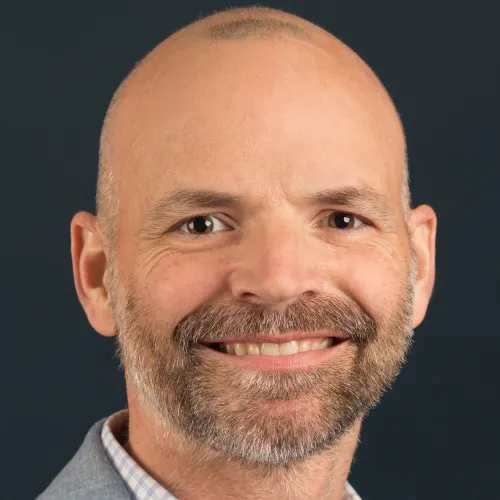
Matthew Lease is a Professor at the School of Information, University of Texas at Austin, where he serves as Director of Doctoral Studies and Assistant Graduate Advisor. He is a Distinguished Member of the Association for Computing Machinery (ACM), a Senior Member of the Association for the Advancement of Artificial Intelligence (AAAI), and an Amazon Scholar. Lease co-directs the $20M NSF-Simons AI Institute for Cosmic Origins (CosmicAI) and is a faculty founder and leader of UT's Good Systems, an eight-year, $20M university-wide Grand Challenge aimed at designing responsible AI technologies. In 2023-2024, he was invited four times to address the Texas Legislature on responsible AI. Ph.D. Computer Science, Brown University, 2010 M.Sc. Computer Science, Brown University, 2004 B.Sc. Computer Science, University of Washington, 1999 Lease directs the UT Austin Laboratory for Artificial Intelligence and Human-Centered Computing (AI&HCC), where his research spans artificial intelligence modeling and human-computer interaction design. His work focuses on creating novel datasets, building AI models, and evaluating both model performance and their impact on end-users. When automated AI falls short, his team designs human-in-the-loop approaches, leveraging AI model explanations and creative user interfaces. To promote fair AI, they focus on better annotation techniques to avoid bias and develop modeling strategies to mitigate dataset biases. Their work tackles real-world problems as part of UT Austin's Good Systems Grand Challenge, with an ongoing emphasis on content moderation—exploring automated, human-in-the-loop, and human-safe practices to combat disinformation, hate speech, and online polarization. Lease's recent publications (2021-2024) demonstrate a strong focus on human-centered AI, particularly in the areas of fair and explainable AI, content moderation, fact-checking, and crowdsourcing. His research integrates technical AI development with human factors considerations, emphasizing the importance of designing AI systems that work effectively with human users. The publications reveal a consistent theme of addressing bias in AI systems, improving human-AI collaboration, and developing methods to ensure the ethical deployment of AI technologies in sensitive domains like content moderation and misinformation detection. His work shows progression from foundational techniques in crowdsourcing and human computation toward more sophisticated approaches that consider psychological impacts and ethical implications. 2024 Test of Time Paper Award, AAAI Conference on Human Computation and Crowdsourcing (HCOMP) 2024 Most Influential Paper Award, IEEE/ACM International Conference on Automated Software Engineering (ASE) 2024 Best Paper Honorable Mention, ACM Conference on Computer Supported Cooperative Work (CSCW) 2022 Best Student Paper, Conference on Information Systems and Technology (CIST) 2020 Conference Award Track, Journal of Artificial Intelligence Research (JAIR) 2019 Best Student Paper, European Conference for Information Retrieval (ECIR) Early Career awards from DARPA, NSF, and IMLS Lease has secured significant funding for his research, including the $20M NSF-Simons AI Institute for Cosmic Origins and the $20M Good Systems Grand Challenge. His lab, AI&HCC, has developed numerous tools and methodologies for human-AI collaboration, particularly in the context of content moderation and fact-checking. He has advised numerous students who have gone on to publish in top-tier conferences and journals in AI, HCI, and NLP. Lease actively collaborates with industry partners including Amazon, where he serves as an Amazon Scholar, and has served on advisory boards for JASIS&T, Texas Advanced Computing Center (TACC), and UT Austin-Amazon Science Hub. His research has led to practical tools like SQUARE for aggregating crowd responses and methods for transparent AI evaluation. Lease leads the UT Austin Laboratory for Artificial Intelligence and Human-Centered Computing (AI&HCC), which has developed innovative approaches to human-AI collaboration. The lab's work on content moderation addresses critical challenges in online safety, including the psychological well-being of content moderators who face traumatic material. Their research on fair and explainable AI has produced methods for detecting toxic speech while maintaining accuracy across demographic groups. The lab actively collaborates with fact-checking organizations through co-design processes to create tools that meet real-world needs. As part of UT Austin's Good Systems initiative, the lab is developing AI technologies that prioritize human values and social responsibility from the outset of the design process.
Mostafa Mostafa, Ph.D., serves as Associate Professor and Chair of the Division of Computing at McKendree University. His academic leadership spans cybersecurity, network systems, and database technologies with significant contributions to critical infrastructure protection and educational innovation. His educational background includes: Ph.D., Computer Science and Engineering, University of Louisville, December 2003 M.S., Computer Science, University of Louisville, May 1999 Advanced Professional Certificate in Computer Systems and Applications, American University in Cairo, May 1992 Bachelor of Accounting, Cairo University, May 1989 Dr. Mostafa's research focuses on SCADA security for critical infrastructure, bandwidth pricing economics , and spatial database quality . His work bridges theoretical models with practical applications in industrial control systems and network resource management, demonstrating expertise in both cybersecurity protocols and educational methodologies including game-based software engineering instruction. His publication record (2002-2012) reveals consistent contributions to securing industrial networks and optimizing resource allocation, with increasing emphasis on applied frameworks for spatial data quality and security threat mitigation in critical infrastructure systems. Recognition includes: Dean Citation, 2003, University of Louisville Who is Who among American Ph.D. Students, 2003 As Principal Investigator, he secured $117,000 in competitive funding including a $100,000 Department of Homeland Security grant (2006-2007) for SCADA security in chemical plants and a $17,000 Kentucky Real Estate Commission grant (2008-2009) for website infrastructure. He mentored two master's students to completion on spatial database frameworks and SCADA intrusion detection systems, demonstrating commitment to both research and student development.
Michael Philippsen is a Professor at the Department of Computer Science at Friedrich-Alexander-Universität Erlangen-Nürnberg (FAU), where he leads the Chair of Programming Systems (Lehrstuhl für Informatik 2). His research spans software engineering, programming languages, high-performance computing, and machine learning applications. He has directed multiple significant research projects including Holoware (software visualization in VR/AR), ORKA (OpenMP for FPGAs), and CS4MINTS (computer science education initiatives). Prof. Philippsen's research focuses on improving software quality and developer productivity through innovative approaches. His work in software testing includes novel methods for detecting flaky tests using version history and test execution data. In compiler research, he has pioneered automated testing techniques and optimization methods, particularly for FPGA acceleration using OpenMP extensions. His Holoware project revolutionized software visualization by applying city metaphors in virtual reality to enhance program comprehension. Additionally, he has made significant contributions to machine learning applications in software engineering, including few-shot out-of-domain detection in natural language processing systems. His publication record demonstrates a strong trend toward interdisciplinary research bridging traditional software engineering with emerging technologies. A significant portion of his recent work focuses on optimizing compiler techniques for heterogeneous architectures, particularly FPGA acceleration through OpenMP extensions. His research in software visualization has produced award-winning work on layered software city metaphors that significantly improve program comprehension compared to traditional visualization techniques. The consistent theme across his work is applying practical, measurable solutions to real-world software engineering challenges. Best Paper Award for 'Multipurpose Cacheing to Accelerate OpenMP Target Regions on FPGAs' (2023) Best Paper Award for 'A Layered Software City for Dependency Visualization' (2020) Prof. Philippsen has secured substantial research funding from the German Federal Ministry for Economic Affairs and Energy (BMWE), the Bavarian State Ministry of Science and the Arts (StMWK), and the Fraunhofer Society. His projects often involve industry collaboration to ensure practical applicability. He has supervised numerous student theses contributing to his research in compiler testing and software visualization. His research group maintains specialized laboratories for VR/AR software visualization, FPGA acceleration, and educational tool development as part of the CS4MINTS project.
Owolabi Legunsen is an Assistant Professor in the Department of Computer Science at Cornell University's College of Engineering. His research focuses on software engineering with particular emphasis on software testing and runtime verification. He maintains an active teaching schedule with courses including Runtime Verification (taught Fall 2020, Spring 2022-2025) and Software Testing (taught Spring 2021, Fall 2021-2023, Fall 2025). Dr. Legunsen's research interests center around improving software reliability through advanced testing methodologies. His work spans runtime verification, where he develops techniques to monitor software behavior during execution, and regression test selection, where he creates methods to optimize the testing process as software evolves. His research also extends to cloud systems configuration testing and inline testing approaches. He is part of Cornell's growing Software Engineering Group and maintains an active research program with numerous publications in top-tier software engineering conferences. His recent publications show a clear trend toward making runtime verification more efficient and practical for real-world software testing scenarios. The research spans foundational verification techniques, tool development for practical application, and empirical studies examining overheads and effectiveness in different contexts. His work increasingly integrates evolution-aware approaches that account for how software changes over time. ACM SIGSOFT Distinguished Paper Award (ISSTA 2024) ACM SIGSOFT Distinguished Paper Award (ISSTA 2023) ACM SIGSOFT Distinguished Paper Award (ASE 2016) Dr. Legunsen actively mentors PhD students and postdocs, with several co-authored publications indicating strong student involvement in his research program. His work has been supported by research grants that enable his investigations into software testing and verification techniques. He regularly serves on program committees for major software engineering conferences including ICSE, FSE, ASE, and ISSTA, demonstrating his standing in the research community. Dr. Legunsen maintains close collaborations with researchers at multiple institutions, particularly in the areas of cloud systems and configuration testing. His research group develops practical tools like TraceMOP for explicit-trace runtime verification, ExLi for inline-test generation in Java, and pytest-inline for Python testing. These tools bridge theoretical research with practical application, allowing his techniques to be evaluated in real-world settings and adopted by practitioners.
Dr. Aitor Arrieta is a permanent full-time Lecturer and Researcher at Mondragon University in Spain. His research focuses on software engineering and testing methodologies for complex systems including Cyber-Physical Systems, AI-based systems, and Generative AI models. He maintains strong industry collaborations with companies like Orona and Developair to address real-world engineering challenges. Research interests span: AI system validation and safety testing Metamorphic testing techniques Autonomous vehicle verification Large Language Model bias/fairness analysis Search-based software engineering His recent publications demonstrate a focus on developing automated testing tools for AI systems, particularly in safety-critical domains. Awarded Best Paper at the 15th International Symposium on Search-Based Software Engineering. Active in European research projects: InnoGuard: Generative AI for autonomous cyber-physical systems TRUST4AI: Trustable AI-driven internet search
Dr. Burak Kizilkaya is a Lecturer in Computer Networking at the University of Glasgow's School of Computing Science, holding a PhD in Electrical and Electronics Engineering from the same institution (2023). His doctoral research focused on "Task-Oriented Joint Design of Communication and Computing for Internet of Skills" with applications in 5G-based teleoperation systems. His research spans four key areas: Telerobotics and Autonomous Systems for nuclear sites and healthcare 5G/6G wireless communications for real-time control systems Cybersecurity in human-robot interaction Smart cities and IoT applications for energy efficiency His publication trends show strong focus on teleoperation security (2023-2025), haptic communications (2023), and smart grid applications (2025), with interdisciplinary work bridging robotics, networking, and cybersecurity. Recent publications demonstrate increasing industry relevance in nuclear robotics, virtual power plants, and VR education. Dr. Kizilkaya actively supervises PhD students in robotics, immersive technologies, and cyber-physical systems, seeking candidates with backgrounds in computer/electrical engineering or computer science. He leads the Netlab (Networked Systems Research Laboratory) and collaborates with the Communications, Sensing and Imaging Hub. His work integrates practical applications in healthcare robotics, nuclear environments, and smart city infrastructure, with emphasis on real-world implementation of theoretical frameworks developed in his research.
Diego Calvanese is a Visiting Professor at Umeå University's Department of Computing Science and holds a full professorship at the Free University of Bozen-Bolzano, Italy. His research focuses on AI for data management, including virtual knowledge graphs (VKG), ontology-based data access (OBDA), and formal methods like description logics. He is part-time at Umeå, balancing roles with his primary position in Italy. Calvanese has received prestigious awards including the AAAI Classic Paper Award (2021), EurAI Fellow (2015), and ACM Fellow (2019). He supervises three doctoral students at Umeå and has authored over 350 publications, with an h-index of 71. His work emphasizes data integration, geospatial systems, and ethical AI applications. Key Roles: Associate Programme Chair (IJCAI 2025), Programme Chair (IJCAI-ECAI 2026), Head of AI for Data Management Research Group Research Interests: Knowledge representation, graph data management, explainable AI, and telemonitoring systems like reCOVeryaID. His research group develops tools like Ontop, a VKG system enabling seamless data access across heterogeneous sources. Current projects include geospatial data integration and temporal OBDA frameworks. Calvanese has served on over 150 program committees and editorial boards, including Artificial Intelligence and JAIR. His work bridges technical advancements with societal impacts, addressing AI's role in healthcare, climate, and democracy.
Michael Hofbaur is a full Professor at the University of Klagenfurt, where he works in the Institute for Intelligent Systems Technologies within the Faculty of Technical Sciences. His office is located at Lakesidepark Haus B04, Ebene 2, Raum B04.2.206, and he can be contacted at michael.hofbaur@aau.at. Professor Hofbaur has established himself as a leading researcher in robotics with particular expertise in human-robot collaboration, safety systems, and formal verification methods for robotic applications. His research interests focus on the intersection of robotics, safety engineering, and human factors. Professor Hofbaur has made significant contributions to the field of robot safety, particularly in developing methods for safe human-robot collaboration without physical barriers. His work spans multiple dimensions of robotics including kinematic analysis, motion planning, sensor integration, and formal verification techniques to ensure system reliability. He has published extensively on topics such as obstacle avoidance strategies, proximity perception systems, and methods to enhance flexibility in collaborative workspaces while maintaining safety standards. Analysis of his recent publications reveals a clear trend toward integrating formal verification methods with practical robotics applications, particularly focusing on safety-critical aspects of human-robot interaction. His research increasingly incorporates advanced sensing technologies like radar and capacitive proximity sensors to create more intelligent and responsive robotic systems. The work demonstrates a progression from theoretical kinematic analyses toward practical implementations in industrial and collaborative settings, with a consistent emphasis on safety assurance throughout. Professor Hofbaur's research portfolio includes numerous projects related to robotic safety, formal verification, and human-robot collaboration, though specific awards directly attributed to him are not listed in the available materials. His work appears to have significant practical applications in industrial automation and collaborative robotics settings. While specific information about his students and advising activities isn't provided in the available materials, his extensive publication record spanning over two decades suggests he has likely supervised numerous graduate students and postdoctoral researchers. His research activities indicate involvement in both theoretical and applied projects, potentially including collaborations with industry partners given the practical nature of many of his publications. Based on his departmental affiliation and research focus, Professor Hofbaur is likely associated with robotics laboratories at the University of Klagenfurt that specialize in human-robot interaction, safety systems, and formal verification of robotic workflows. These facilities likely include experimental setups for testing collaborative robots, sensor integration systems, and simulation environments for verifying robotic behaviors before physical implementation.
Simin Nadjm-Tehrani is a Professor and Head of Unit at Linköping University's Department of Computer and Information Science (IDA), leading the Real-time Systems Laboratory (RTSLAB) since 2000. She holds a PhD in Computer Science from Linköping University (1994) and previously served as a full professor at the University of Luxembourg (2006–2008). Her research focuses on cybersecurity, dependability in distributed systems, and formal methods for safety-critical applications. Key research areas include adaptive anomaly detection in critical infrastructures, energy-efficient protocols, and formal analysis of safety protocols. She leads the NEST-project on AI for cyber attack identification and contributes to the Wallenberg AI, Autonomous Systems and Software Program (WASP). Her work addresses challenges in smart grids, edge computing, and secure communication protocols. Publications emphasize practical applications of formal verification in tree ensembles, SCADA systems, and avionics. She organized the 2019 CRITIS conference and collaborates with industry on edge computing benchmarks and secure IoT architectures. Her educational contributions include curriculum design for problem-based learning (PBL) and gender equity initiatives in computer science. Professional roles include leadership in the Software and Systems (SAS) division at IDA, where she oversees interdisciplinary projects combining safety and security constraints. Current efforts target resilient information systems for societal functions like energy and transportation.
André de Matos Pedro is an Assistant Professor in the Department of Computer Science at the University of Beira Interior. He teaches courses including Teoria da Computação (Theory of Computation), Programação Funcional (Functional Programming), and Segurança e Fiabilidade de Software (Software Security and Reliability). His research focuses on formal methods, runtime verification, and programming language theory. His publication record shows consistent focus on formal verification methods applied to real-time and embedded systems. Recent work emphasizes runtime monitoring frameworks, SAT/SMT-based verification techniques, and applications in safety-critical domains like autopilot systems. The research trajectory demonstrates increasing emphasis on practical applications of temporal logic and co-simulation testing platforms.
Sergios Gatidis is a prominent researcher in the Department of Diagnostic and Interventional Radiology at the Faculty of Medicine, Eberhard Karls University of Tübingen. His work bridges medical imaging and artificial intelligence, with a particular focus on MRI and PET/CT applications. He has established himself as a key collaborator in numerous multi-institutional research projects, frequently working with Thomas Küstner, Bin Yang, and Konstantin Nikolaou. Dr. Gatidis's research centers on applying deep learning techniques to solve critical challenges in medical imaging. His work spans biological age estimation from MRI scans, motion correction in MRI, lesion segmentation in PET/CT imaging, and the application of large language models to radiology reports and hospital course documentation. He has made significant contributions to the autoPET challenge for automated lesion segmentation and has developed novel approaches for attention-aware image registration and reconstruction. His publication record shows a clear evolution from foundational work in motion correction and image reconstruction (2016-2018) to increasingly sophisticated AI applications, with a recent strong focus on large language models for medical text processing (2023-2025). The breadth of his work demonstrates expertise spanning technical aspects of medical imaging physics to clinical applications of AI. His recent publications indicate active research in several key areas: (1) development of foundation models for medical imaging interpretation, (2) robust evaluation frameworks for medical AI systems, and (3) practical clinical integration of AI tools for radiology workflow enhancement. These trends reflect the broader field's movement toward more comprehensive, clinically validated AI solutions. Though no specific awards are listed in the available publications, his consistent presence as a key contributor to high-impact medical imaging research suggests recognition within the field. His work appears regularly in top journals including IEEE Transactions on Medical Imaging, Nature Machine Intelligence, and Medical Image Analysis. Dr. Gatidis actively collaborates across disciplines, working with computer scientists developing novel AI architectures and clinicians implementing these tools in real-world settings. His recent work on MedHELM and CheXagent demonstrates commitment to creating evaluation frameworks and practical tools that address real clinical needs while maintaining scientific rigor.