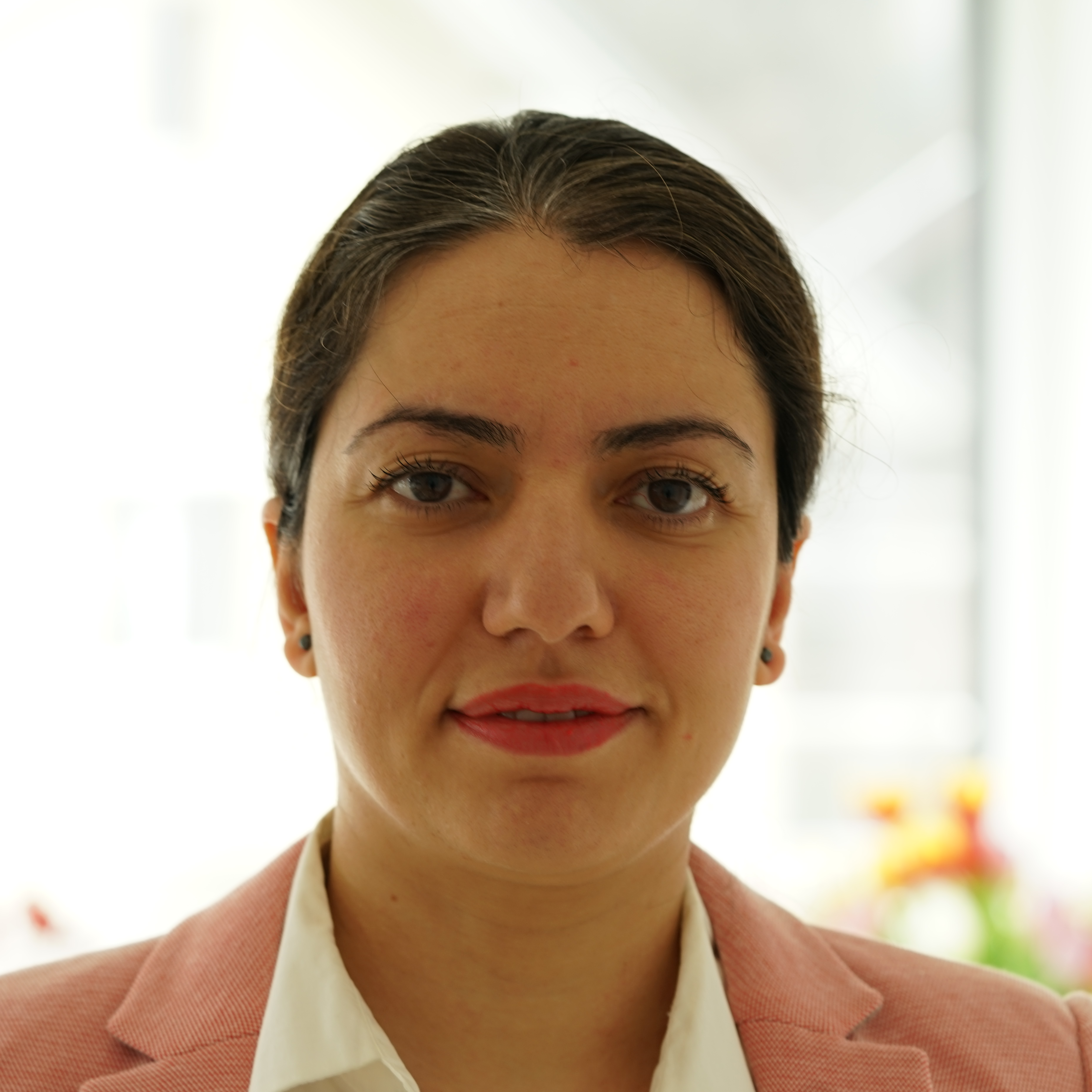
Masoumeh Ebrahimi is an Associate Professor at KTH Royal Institute of Technology, Division of Electronics and Embedded Systems, and holds an Adjunct Professor position at the University of Turku, Finland. She leads research in hardware acceleration, neural architecture search, and fault-tolerant systems. Her work bridges machine learning, embedded systems, and network-on-chip (NoC) design. Research Interests: Hardware-Accelerated Machine Learning 6G Network Architectures Fault-Tolerant Computing High-Performance GPU Systems Network-on-Chip (NoC) Design Federated Learning Key Projects: Co-supervisor of Hui Chen’s postdoc project Generalizing hardware acceleration for nonlinear functions . Active in Digital Futures, a cross-disciplinary center focusing on societal challenges using digital tech. Collaborates on edge computing, 6G networks, and resilient embedded systems. Labs & Teams: Core member of KTH’s Digital Futures initiative, advancing AI accelerators and next-gen communication systems. Engaged in EU-funded projects on NoC reliability and federated learning frameworks.
Riccardo Bettati is a Professor and Associate Department Head in the Department of Computer Science & Engineering at Texas A&M University, part of the College of Engineering. He holds a Ph.D. from the University of Illinois at Urbana-Champaign (1994) and a DipInf. from ETH Zurich. His research focuses on distributed real-time systems, scheduling algorithms, communication protocols, and security, particularly in privacy and anonymity. He directs the Texas A&M University Center for Information Assurance and Security. Education: Ph.D. in Computer Science (UIUC), DipInf. in Computer Science (ETH Zurich). Research Interests: Distributed real-time systems, scheduling, communication security, privacy in networks, and cyber-physical systems. Notable projects include NetCamo, RT-ARM, and VTech. He has received awards like the Chevron Faculty Fellowship (2008-2009) and Best Paper at EuroMicro (2006). Recent publications span cybersecurity, IoT security, and side-channel attack countermeasures. He teaches courses on operating systems, computer systems, and cryptocurrencies. His work emphasizes secure networked systems and resilience against modern threats.
Jyh-Charn 'Steve' Liu is a Professor in the Department of Computer Science & Engineering at Texas A&M University, affiliated with the College of Engineering. His research focuses on real-time distributed systems, cyber-physical security, and interdisciplinary applications such as mathematical expression analysis and GNSS spoofing mitigation. Education: Ph.D., Electrical & Computer Engineering, University of Michigan (1989) M.S., Electrical Engineering, National Cheng Kung University (1981) B.S., Electrical Engineering, National Cheng Kung University (1979) Research Interests: Real-time distributed computing systems Cyber-physical systems security Behavior modeling and simulation Mathematical expression analysis and tools for STEM education GNSS spoofing detection and mitigation Blockchain-based supply chain management Key Publications Trends: Recent work emphasizes AI-driven solutions for mathematical document processing (e.g., LaTeX conversion from images), cybersecurity in navigation systems, and interdisciplinary applications like STEM education tools. Early-career contributions include real-time scheduling algorithms and embedded systems design. Awards: Senior Member, IEEE Computer Society (2014) Nominated for ACM Eugene L. Lawler Award (2013) Conference leadership roles (RTAS 2006/2007) Lab & Collaborations: Leads the Real Time Distributed Systems Lab, exploring areas such as verifiable credentials, urban navigation systems, and medical image analysis. Collaborates on projects like DIME (mathematical expression tool) and MOP (mathematical PDF labeling).
Dr. Huy Truong-Ba is a Lecturer at Queensland University of Technology (QUT), affiliated with the School of Mechanical, Medical and Process Engineering and the Centre for Data Science. He holds a Doctor of Philosophy from QUT. His research focuses on reliability and degradation modeling, maintenance optimization, and engineering asset management, with expertise in Markov decision processes and condition-based maintenance strategies. His academic journey includes roles as an Associate Supervisor for multiple PhD projects, such as 'Dispatch Optimisation for Concentrating Solar Tower Power Plant Under Uncertainty' and others in solar energy systems and mechanical engineering. He has collaborated with institutions like the Asset Institute and contributed to interdisciplinary projects in energy systems and transportation. Research interests span mechanical engineering, manufacturing engineering, and engineering practice, with a strong emphasis on applying data-driven methods to optimize maintenance and asset management. His work often integrates statistical modeling and stochastic optimization to address challenges in energy infrastructure, solar power, and industrial equipment degradation. Key collaborations involve Associate Professor Michael Cholette and Professor Tommy Chan, focusing on solar thermal systems, rail infrastructure maintenance, and material degradation under high-temperature conditions. Dr. Truong-Ba's contributions bridge theoretical models with practical applications, driving advancements in sustainable energy and infrastructure resilience.
Juan Bazerque Giusto is a Visiting Assistant Professor at the Department of Electrical and Computer Engineering, University of Pittsburgh, within the Swanson School of Engineering. He holds a B.Sc. in Electrical Engineering from Universidad de la República (Uruguay), and M.Sc. and Ph.D. degrees from the University of Minnesota. His research focuses on machine learning, stochastic optimization, and networked systems, with emphasis on reinforcement learning, swarm robotics, and power systems optimization. Education: B.Sc., Electrical Engineering, Universidad de la República, 2003 M.Sc., Electrical and Computer Engineering, University of Minnesota, 2010 Ph.D., Electrical and Computer Engineering, University of Minnesota, 2013 His work bridges theoretical advancements in optimization and signal processing with practical applications in robotics, energy systems, and wireless networks. Notable contributions include multiagent systems for mobile infrastructure, safe reinforcement learning algorithms, and sparse kernel-based methods for signal recovery. Publications: Over 15 peer-reviewed articles in IEEE Transactions and top conferences, emphasizing interdisciplinary research in reinforcement learning, distributed optimization, and cognitive networks. Recent work explores networked robotics and energy-efficient datacenter management. Awards: University of Minnesota Master Thesis Award (2009-2010) Best Paper Award at ICCRON 2007 Professional Experience: Previously served as Assistant Professor at Universidad de la República (Uruguay) before relocating to the U.S. in 2022.
Teresa Olivares Montes is a faculty member at the University of Castilla-La Mancha, where she serves as a Profesor Contratado Doctor in the Department of Systems Informatics. She has been actively contributing to research and education since completing her PhD in Computer Engineering at the same institution. Her academic career includes international research experiences in Hong Kong, Ireland, and the UK, reflecting a strong global engagement. PhD in Computer Engineering, University of Castilla-La Mancha (2003–present) Licentiate in Computer Science, University of Granada Diploma in Computer Science, University of Granada Her research focuses on Internet of Things (IoT), low-power wireless communication protocols, energy-efficient networking, and smart systems for applications in healthcare, agriculture, education, and Industry 4.0. She has published extensively in high-impact journals such as IEEE Transactions on Instrumentation and Measurement, IEEE Internet of Things Journal, and Computer Networks. Her recent work emphasizes practical, low-cost IoT solutions for environmental monitoring (e.g., glyphosate detection, agrochemical drift) and digital twin development for smart campuses. The analysis of her recent publications (2020–2025) reveals a consistent trend toward applied IoT systems integrating sensor networks, machine learning, and human-centered design. Her work spans domains including public health (MosquIoT), environmental protection (DriftGLY, SpectroGLY), smart education (WIoTED), and industrial efficiency (OperaBLE). These projects demonstrate a strong interdisciplinary approach, combining computer science fundamentals with real-world societal and industrial challenges. No formal scientific awards are listed in the provided text. Teresa Olivares Montes has contributed to academic service, notably as a member of the Equality Commission at her department since 2017. While no specific grants are detailed beyond a 1996 training contract, her sustained publication record suggests ongoing research funding. She collaborates with a broad network of researchers across Spain and internationally. She has also contributed to educational initiatives, including mentoring program coordination across multiple degrees. She is involved in several research initiatives related to smart environments, including smart homes, smart campuses, and smart worker systems. Her lab or team likely focuses on IoT protocol design, wireless sensor networks, and embedded systems for sustainable and socially responsible applications.
Ioannis Milis is a Professor at the Department of Informatics, Athens University of Economics and Business (AUEB), part of the School of Information Sciences and Technology. He holds a BS in Electrical Engineering from Democritus University of Thrace (1983) and a PhD in Computer Science from AUEB (1989). His research focuses on algorithms, computational complexity, and optimization for computer/communication networks, combinatorial optimization, graph theory, and game theory. He has conducted postdoctoral research at LRI (1992-94), INRIA-Sophia Antipolis (1994-95), and NTUA as a Marie Curie fellow (1995-96). His teaching includes courses on Algorithms, Advanced Algorithms, and Topics in Algorithms at both undergraduate and graduate levels. He co-authored a textbook on Distributed Systems with Java (2005). His conference involvement includes organizing the Athens Colloquium on Algorithms and Complexity (ACAC) since 2006, the Euro-Par 2012 conference, and the ISCO 2012 symposium. His research has addressed scheduling algorithms, energy-efficient computing, and combinatorial optimization problems in networks.
Brendan Jackman is a Lecturer in the Department of Computing and Mathematics at South East Technological University (SETU), where he contributes to the Automotive Control Group. His work bridges computer science and automotive engineering, focusing on embedded and real-time systems for intelligent vehicles. His research interests include: Automotive control systems and embedded software In-vehicle networks (CAN, FlexRay, OSEK) Model-driven architecture and UML for automotive software Advanced Driver Assistance Systems (ADAS) Fuzzy logic and intelligent control systems Automotive diagnostics and ODX standards His publications from 2005 to 2018 reveal a strong focus on real-time automotive software, network integration, and intelligent diagnostics. Key themes include timing modeling, migration from CAN to FlexRay, and model-based development using UML and MDA. His work often appears in SAE Technical Papers and IEEE conferences, indicating strong industry and academic engagement. Brendan Jackman has supervised at least five research projects, reflecting his role in mentoring students in automotive software and control systems. His research has practical applications in adaptive cruise control, power steering, and diagnostic gateways. He has contributed to software integration frameworks that improve vehicle software quality and interoperability across OEMs. He is actively involved in teaching and research, with no indication of retirement or part-time status. His ORCID profile and institutional page confirm ongoing academic activity.
Dr. Hanane El-Raoui is a Lecturer in Management Science at the University of Strathclyde, affiliated with the Strathclyde Business School. Her research focuses on interdisciplinary applications of optimization, behavioral modeling, and AI to enhance occupational safety and supply chain efficiency. She holds a PhD from the University of Granada (2022) in Models and Computational Intelligence for Food Supply Chain Delivery. Her work integrates behavioral and cognitive sciences, Bayesian statistics, and machine learning to predict human behavior in safety contexts. Key projects include agent-based modeling for decision-making processes and serious games for risk preference elicitation. She co-leads the EPSRC-funded project on sustainable garment operations (2022–2026). El Raoui’s recent research emphasizes smart factory safety via spatio-temporal worker movement analysis and digital twin technologies. She received the 2025 FAIM Sullivan Best Paper Award for contributions to circular business models. Her advisory roles include managing grants and overseeing PhD student development in organizational safety and efficiency.
G. Homem de Almeida Correia is an Assistant Professor at Delft University of Technology, specializing in Transport, Mobility, and Logistics within the Civil Engineering & Geosciences department. His work focuses on automated vehicles, sustainable transportation systems, and IoT applications in logistics. He holds a PhD and Dr.ir. degree, though specific institutional details are not provided. Key roles include editorial work for the Journal of Advanced Transportation (2020-2022), consultancy for the eHubs project (2020-2022), and keynote speaking at international conferences such as EAI SmartCity 2021. Research interests span automated vehicle systems, mobility-as-a-service, and demand-responsive logistics. Notable contributions include optimizing shared automated vehicle services and railway traffic management strategies. He has supervised 5 academic works and contributed to datasets like the Urban Dynamics Educational Simulator (UDES). Collaborations involve institutions across multiple countries, emphasizing global transportation challenges.
Erdal Erel is a Professor of Operations Management (OM) and currently serves as the Vice Rector in charge of administrative and financial affairs at Bilkent University's Faculty of Business Administration. He holds a B.S. in Industrial Engineering from Istanbul Technical University (1981), an M.S. from Stanford University (1983), and a Ph.D. from Virginia Polytechnic Institute and State University (1987). His academic career has been dedicated to advancing research in Production Operations Management, focusing on manufacturing systems design, assembly/disassembly line balancing, scheduling, and project management. Erel's educational background includes: B.S. in Industrial Engineering, Istanbul Technical University (1981) M.S. in Industrial Engineering, Stanford University (1983) Ph.D. in Industrial Engineering and Operations Research, Virginia Polytechnic Institute and State University (1987) His research interests span several critical areas of operations management, including manufacturing systems design, assembly and disassembly line balancing, scheduling and sequencing methodologies, and project management. He has made significant contributions to robust optimization techniques applied to time-cost trade-offs and stochastic modeling in production systems. His work emphasizes practical solutions for complex operational challenges through advanced algorithms like ant colony optimization and beam search methods. Erel's publications reflect a focus on optimization in production systems, scheduling algorithms, and decision models under uncertainty. His research bridges theoretical advancements with real-world applications in manufacturing and service industries, addressing issues such as cost minimization, robust scheduling, and efficiency improvements in assembly line operations. Erel has contributed extensively to his field but no specific scientific awards are mentioned in the provided text. No specific information about advising students or grants is provided in the text. Erel's involvement in collaborative projects, including work with colleagues like I. Sabuncuoglu and J.B. Ghosh, highlights his role in interdisciplinary research teams focused on operational efficiency and advanced manufacturing technologies.
Dr. Fehmi Tanrısever is an Associate Professor at Bilkent University's Faculty of Business Administration. He specializes in Operations Management and Finance, with research focusing on commodity risk management, start-up operations, and the interface between operational and financial decisions. He previously served at Eindhoven University of Technology until 2013 and holds a PhD from the University of Texas at Austin. Education: PhD in Supply Chain and Operations Management, McCombs School of Business, University of Texas at Austin (2009) Research Interests: Commodity Risk Management Operations-Finance Interface Start-up Operations Supply Chain Finance Fintech Energy Operations His work bridges operational decisions with financial implications, particularly in energy markets and pandemic scenarios. Publications Trends: Recent work emphasizes pandemic management strategies, energy market optimization, and financial hedging mechanisms. Papers often combine stochastic modeling with real-world applications in supply chain resilience and policy design. He is a Senior Editor for Production and Operations Management and has advised on energy market reforms like the Turkish Day-Ahead Electricity Market. No formal student advisees are listed in the provided materials.
Assoc. Prof. Balázs Vass is an Associate Professor at University Babeș-Bolyai (Cluj-Napoca, Romania) and holds a Marie Skłodowska-Curie Postdoctoral Fellowship for his QoSeRM project. Previously, he conducted postdoctoral research at Budapest University of Technology and Economics (BME) under Gábor Rétvári and visited institutions in Vienna, Jerusalem, and Bucharest. His research focuses on network resiliency, programmable packet scheduling, and discrete optimization in backbone networks. Education: BSc/MSc in Mathematics/Applied Mathematics (ELTE University), PhD in Future Internet Research at BME under János Tapolcai. Postdoctoral work included collaborations with Stefan Schmid (TU Berlin), David Hay (Hebrew University), and Costin Raiciu (UPB). Research priorities include disaster-aware network design, SRLG-disjoint path algorithms, and compiling packet programs for reconfigurable switches. Recent grants include a Romanian Young Teams grant (2025) and a Marie Curie fellowship (2024-2026). Teaching responsibilities at UBB include courses on algorithms, data structures, and communication networks. Supervises PhD students Zoltán Tasnádi and Nándor Bándi, with student advisees winning multiple awards at national informatics competitions. Key projects: SMR-A-DRT (disaster-resilient routing), QoSeRM (QoS optimization), and contributions to frameworks like eFRADIR for network resilience. Active in conference organizing (INFOCOM TPC since 2023) and journal reviewing (ToN, TNSM).
Yuzhuo Jing is a fifth-year Computer Science Ph.D. student in the OrderLab at the University of Michigan, advised by Prof. Ryan Huang. Previously, they were a Ph.D. student at Johns Hopkins University (2020-2023) and earned a B.E. in Computer Science from ShanghaiTech University in 2020. Education: B.E. in Computer Science, ShanghaiTech University (2020) Ph.D. in Computer Science (ongoing), University of Michigan Former Ph.D. student, Johns Hopkins University (2020-2023) Research focuses on building robust and reliable systems within computer systems, operating systems, and programming languages. Their work on Operating System Support for Auxiliary Executions (OSDI'22) and BORA (SC'20) highlights contributions to system security, distributed computing, and high-performance system reliability. Scientific Contributions: OSDI'22 paper on auxiliary execution support SC'20 paper on BORA for distributed reliability They have also contributed to teaching, including a course on Reliable Programming with Rust at Johns Hopkins University (Intersession 2023) and serving as a teaching assistant for CS318/418/618 Operating System at JHU (Sep. 2020).
Vardges Melkonian is an Associate Professor in the Department of Mathematics at Ohio University, part of the College of Arts and Sciences. His academic work bridges theoretical and applied mathematics, with a strong emphasis on optimization and algorithmic problem-solving. Research Interests: Dr. Melkonian specializes in combinatorial optimization, network design, approximation algorithms, and applications of operations research. His research integrates mathematical programming and discrete modeling to solve complex real-world scheduling and allocation problems. These interests are reflected in his extensive publication record spanning sports leagues, hybrid work, exercise routines, and social partitioning. Publication Trends: Over the past decade, his scholarly output has consistently focused on developing integer programming and optimization models for diverse domains—from recreational puzzles like KenKen to large-scale logistical challenges in manufacturing and public policy. His work demonstrates a unifying theme: transforming practical problems into formal mathematical frameworks for efficient solution. Scientific Awards: No awards are mentioned in the provided text. Advising and Grants: The available information does not list any students or grant funding. However, his research contributions suggest active engagement in academic mentorship and potential involvement in funded projects, though specifics are not disclosed. Labs and Research Teams: There is no mention of specific labs, research groups, or collaborative teams associated with Dr. Melkonian in the provided content.