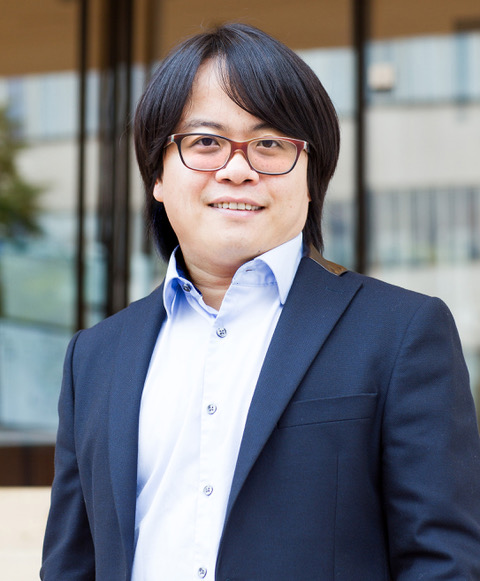
Univ.-Prof. Torsten Möller, PhD is a Professor at the University of Vienna and serves as Head of the Research Group Visualization and Data Analysis and Head of the Research Network Data Science. His work spans data visualization, visual analytics, and human-computer interaction, with a focus on biomedical, environmental, and societal data applications. Academic rank: Professor Research group: Visualization and Data Analysis Network: Data Science Email: torsten.moeller@univie.ac.at Research interests include: Visual data analysis for complex systems Interdisciplinary applications in climate science and medicine Human-computer interaction in data exploration Image processing and computer graphics Recent publication trends show expertise in: Visualizing climate change and pandemic data Multi-volumetric and network analysis Algorithmic transparency and user-centered design Interdisciplinary collaborations (e.g., astrophysics, medical imaging) Statistical and uncertainty visualization Design frameworks for visualization recommendation Teaching includes courses in: Computer graphics and visualization Image processing and analysis Human-computer interaction Data analysis projects Doctoral research seminars
Hui Pan is a distinguished academic holding dual positions as Nokia Chair in Data Science and Professor of Computer Science at the University of Helsinki, and Chair Professor of Computational Media and Arts at the Hong Kong University of Science and Technology (HKUST). His research spans networking, mobile computing, augmented reality, and computational social science. He earned his Ph.D. in Computer Science from the University of Cambridge in 2007. His work bridges social networks with mobile systems, pioneering fields like mobile social networks and opportunistic forwarding algorithms. Research interests include data science, complex networks, and innovative applications of augmented reality. His recent publications focus on low-latency AR frameworks, blockchain for computation offloading, and mobile web visualization. He has received prestigious awards, including IEEE Fellow (2018), ACM Distinguished Scientist (2016), and the Nokia Chair Endowment (2017). He has supervised over 15 PhD and 12 MPhil graduates, with 13 current Ph.D. students and 2 MPhil students. His editorial roles include Associate Editorships at IEEE Transactions journals and guest editorships at top venues like IEEE JSAC and ACM Transactions. He has organized conferences such as WWW Track Chair and ExtremeCom General Chair.
Markus Vincze is an Associate Professor at the Institute of Automation and Control Engineering (ACIN) at Vienna University of Technology (TU Wien). He founded the Vision for Robotics (V4R) group in 1996 to advance robotic perception, particularly in real-world environments and homes. His work focuses on cognitive computer vision techniques for robotics. Education: Diplom in Mechanical Engineering (1988) and PhD (1993) from TU Wien; M.Sc. (1990) from Rensselaer Polytechnic Institute. V4R coordinates EU projects like ActIPret, robots@home, HOBBIT, and national initiatives like vision@home. Markus has edited a book on Robust Vision with Gregory Hager and authored 62 peer-reviewed journal articles and over 400 reviewed publications. His recent research explores zero-shot 6D pose estimation, sim-to-real transfer, and transparent object detection. Markus has served as program chair for ICRA 2013 and organized HRI 2017 in Vienna. He has advised numerous students and secured grants from the Austrian Academy of Sciences for work at HelpMate Robotics and Yale's Vision Laboratory. The V4R group leads innovations in robotic vision, including frameworks for synthetic data generation (Unrealgensyn), depth completion (CAGT), and educational robotics applications for sustainability. Their work spans household robotics (RH3), agricultural robotics (EdgeSoil), and human-robot collaboration.
Johannes Brandstetter is an Associate Professor at the Institute for Machine Learning at Johannes Kepler University Linz (JKU) where he leads the "AI for data-driven simulations" research group. He is also Co-founder and Chief Scientist at Emmi AI, bridging academic research with industrial applications in AI-driven physics simulation. Brandstetter earned his PhD after working at CERN's CMS experiment on Higgs boson physics. In 2018, he transitioned to machine learning, joining Sepp Hochreiter's research group in Linz. From 2021-2023, he worked at the Amsterdam Machine Learning Lab under Max Welling and Microsoft Research, developing expertise in Geometric Deep Learning and neural surrogates for partial differential equations. He returned to JKU in October 2023 to establish his own research group. His research spans Machine Learning, Deep Learning, and Physics-Informed Machine Learning with focus areas including Neural PDE solvers, Computational Fluid Dynamics, and Climate Modeling. Brandstetter believes AI is poised to revolutionize industrial-scale simulations, potentially saving thousands of compute hours across engineering domains. His work integrates computer vision, numerical simulation, and engineering components to advance data-driven approaches. Recent publications reveal a strong trend toward foundation models for scientific applications, particularly in atmospheric modeling (Aurora), geometric deep learning, and neural surrogates for complex physical systems. His interdisciplinary work spans computer vision, climate science, computational physics, and engineering, demonstrating the versatility of his research approach. Principal Investigator for "AlKa-DL: Alpine karst spring discharge prediction" (FWF-funded, 2024-2027) Principal Investigator for Cluster of Excellence "Bilateral Artificial Intelligence" (FWF-funded, 2024-2029) Co-PI for "Fast, efficient and flexible CFD simulation through generative AI" (FFG-funded, 2025-2026) As an educator and researcher, Brandstetter actively engages with the scientific community through invited talks at major conferences including presentations on "Closing the Gap Between Scientific Foundation Models and Real-World Applications" (March 2025) and "Scientific Machine Learning for Science and Engineering" (February 2025).
Sylvain Lefebvre is a permanent researcher at INRIA (Institut National de Recherche en Informatique et en Automatique) in France, where he leads the MFX research team since 2018. Previously, he was part of the ALICE group at INRIA Nancy (2009-2018) and the REVES team in Sophia Antipolis (2006-2009). His career includes a postdoctoral position at Microsoft Research Seattle (2005) following his PhD at INRIA Rhones-Alpes under Fabrice Neyret. His educational background includes a PhD in Computer Graphics from Université Joseph Fourier (Grenoble) in 2005, preceded by a Master in Computer Graphics from INP Grenoble in 2001. His habilitation thesis focused on Runtime Texture Synthesis. Lefebvre's research centers on simplifying content creation for highly detailed patterns, structures, and shapes with applications spanning Computer Graphics to additive manufacturing. He develops fast, controllable by-example synthesis approaches that generate content while enforcing user-specified constraints. His work addresses computational challenges through novel data structures and algorithms optimized for GPUs and FPGAs, including his Silice programming language. The ERC-funded ShapeForge project (2012-2017) advanced shape generation for 3D printing, leading to the IceSL software for digital modeling and fabrication. Analysis of his 15 most recent publications reveals a strong focus on additive manufacturing optimization, with recurring themes in structural integrity, material efficiency, and geometric algorithms. His work bridges computer graphics theory with practical fabrication constraints, particularly in microstructure design, slicing techniques, and mechanical metamaterials. The interdisciplinary nature spans computer science, materials engineering, and robotics. EUROGRAPHICS Young Researcher Award (2010) ERC Starting Grant for ShapeForge project (2012) Lefebvre has advised over 25 PhD students and interns including Marco Freire, Thibault Tricard, and Jimmy Etienne. His ShapeForge project received significant ERC funding, supporting research in computational fabrication. He serves on numerous program committees including SIGGRAPH, Eurographics, and SIGGRAPH Asia, reflecting his leadership in the computer graphics community. As leader of the MFX team since 2018, Lefebvre directs research in computational fabrication, focusing on IceSL software development for 3D printing workflows. The team integrates computer graphics techniques with manufacturing constraints, developing tools that simplify complex object design and fabrication while addressing real-world challenges in material usage and structural integrity.
Dr. Alexander Plopski is an Assistant Professor at the Institute of Visual Computing, Technische Universität Graz. His research focuses on advancing augmented reality (AR) technologies, human-computer interaction (HCI), and optical display systems. He holds a PhD, M.Sc., and BSc in relevant fields. His work emphasizes perceptual optimization in AR displays, eye tracking integration, and accessibility solutions for color vision deficiencies. Key research areas include gaze-contingent AR interfaces, light field manipulation for extended reality, and multimodal interaction techniques. Notable contributions include the development of the 'guitARhero' interactive AR guitar tutorial system and studies on focal distance effects in optical see-through displays. His publications span topics from AR display calibration to gesture recognition using radar sensing. He has explored applications in industrial training, medical AR, and robotic telemanipulation. His work often bridges theoretical perceptual studies with practical system implementations, aiming to enhance user experience and accessibility in AR/VR environments.
Craig Gotsman is a Professor and Dean at the Ying Wu College of Computing, New Jersey Institute of Technology. He previously held roles at Cornell Tech, Technion, ETH Zurich, and MIT. His research focuses on computational geometry, computer graphics, and 3D animation. Ph.D. in Computer Science, Hebrew University of Jerusalem (1991) His work spans geometric modeling, mesh processing, and applications in animation and visualization. Recent research trends include gaze correction in video conferencing, mesh parameterization, and spectral compression techniques. Notable awards include Fellowships in the US National Academy of Inventors and the Academy of Europe, multiple best paper awards, and the Technion's Hewlett Packard Chair in Computer Engineering. Gotsman has mentored over 50 postgraduate students and holds ten US patents. He co-founded three companies: Virtue 3D Inc. (acquired by NVIDIA), Estimotion Inc. (now ITIS Israel Ltd.), and CatchEye.
Christian Timmerer is a Professor at the Institute of Information Technology, Alpen-Adria-Universität Klagenfurt. His research focuses on adaptive video streaming , energy efficiency , MPEG standardization , and quality of experience (QoE) , with significant contributions to HTTP Adaptive Streaming (HAS), multi-codec optimization, and immersive media systems. Email: christian.timmerer@aau.at Office Hours: Monday 3:00-4:00 PM (by appointment) Projects: CD-Labor ATHENA, GAIA, SPIRIT His research integrates machine learning and generative AI to enhance video encoding, super-resolution, and voice dubbing, while prioritizing sustainability through energy-aware algorithms and open-source tools like GREEM and VEED. Current work emphasizes latency reduction and dynamic bitrate adaptation in live streaming environments. Recent publications address VVC optimization , multi-resolution encoding , and perceptual quality modeling , reflecting interdisciplinary efforts in networking , computer vision , and human-computer interaction . Awards include leading funded projects on adaptive streaming and green video systems.
Prof. Hermann Hellwagner is a Full Professor at the Department of Information Technology, University of Klagenfurt. He has held roles such as Vice President (Natural and Technical Sciences) at the Austrian Science Fund (FWF) and Vice Dean of the Faculty of Technical Sciences. His research focuses on multimedia communication, network engineering, and future internet architectures. Notable projects include work on adaptive streaming, edge computing, and drone networks. He holds a Ph.D. in Systolic Architectures from the University of Linz (1988). Research interests span distributed multimedia systems, information-centric networking (ICN), and optimizing video streaming quality-of-experience (QoE). Recent work emphasizes edge computing solutions for low-latency streaming and dynamic codec adaptation. His contributions include frameworks like ALPHAS and MEDUSA for bitrate optimization, and studies on point cloud streaming in augmented reality. Publications (2021–2025) highlight advancements in edge-assisted streaming, hybrid P2P-CDN architectures, and transcoding techniques. His work often bridges theoretical models with real-world implementations, addressing challenges in latency, cost, and device adaptability. Current projects involve 6DoF video streaming and multi-robot system optimization. Labs/Teams: Part of the Institute of Information Technology (ITEC), Klagenfurt. Collaborates on EU-funded projects and industry partnerships in 5G edge computing and drone networks. Active in standards groups for HTTP adaptive streaming protocols.
Michal Piovarci is a Researcher (Postdoc) at ETH Zurich's Computational Design Lab led by Bernd Bickel. He holds a Ph.D. from USI Lugano (2020) under Piotr Didyk, receiving the Eurographics PhD Award for his thesis on Perception-Aware Computational Fabrication. His research focuses on computer graphics, computational fabrication, and haptic/appearance reproduction, emphasizing perception-driven solutions. Education: Ph.D., USI Lugano (2020) Previous postdoc at ISTA's Visual Computing Group Research interests include 3D Printing Innovations Haptic Feedback Systems Material Perception Modeling Directional Surface Design Professional Activities: Area chair at ACM Symposium on Computational Fabrication (2024), program committee roles at SIGGRAPH, SAP, and Eurographics. Organized Computational Fabrication Seminars (2021-2022). Grants: SNSF Project Funding (CHF 1M, 2025-2029) and FWF Lise Meitner Grant (2022-2023). Teaching: Taught Scientific Machine Learning for Design (ETH Zurich, 2024) Computational Fabrication (TU Wien, 2022)
Michael Wimmer is a Full Professor at TU Wien, leading the Rendering and Modeling Group and directing the Center for Geometry and Computational Design. He holds a M.Sc. (1997) and Ph.D. (2001) from TU Wien. His research focuses on real-time rendering, procedural modeling, computational design, and point-based graphics. He has co-authored over 200 papers and the book *Real-Time Shadows*. He serves as Co-Editor-in-Chief of Computer Graphics Forum , chairs SIGGRAPH Asia 2025, and received the Eurographics Outstanding Technical Contributions Award (2023). Education: M.Sc. in Computer Science (1997), TU Wien Ph.D. in Computer Science (2001), TU Wien Research Interests: Real-time rendering and visualization Procedural modeling and computational design Point-based graphics and neural rendering Applications in computer games and urban environments Awards: Eurographics Outstanding Technical Contributions Award (2023) Wolfgang Straßer Award (Best Paper, 2022) Eurographics Fellow (2018) Outstanding Service Award (2012) Advising & Grants: Coordinator of the Special Research Programme Advanced Computational Design Key researcher at VRVis Research Center Labs & Teams: Rendering and Modeling Group Center for Geometry and Computational Design
Leif Kobbelt is a Full Professor of Computer Science and Head of the Visual Computing Institute at RWTH Aachen University . He previously held academic positions at the Max-Planck-Institute for Computer Science, University of Erlangen-Nürnberg, and University of Wisconsin-Madison. Diploma in Computer Science (1992), Karlsruhe Institute of Technology PhD in Computer Science (1994), Karlsruhe Institute of Technology His research focuses on computer graphics and geometry processing , with specific interests in 3D reconstruction, quad mesh generation, real-time rendering, and geometric modeling algorithms. He has pioneered techniques for efficient mesh processing, anisotropic geodesic computation, and procedural facade visualization. Recent publications analyze nonlinear constraints in geometric modeling, quad layout optimization, and real-time rendering techniques. Key themes include mesh parameterization, multiresolution analysis, and computational geometry for interactive applications. Scientific recognitions include: 2014 Gottfried Wilhelm Leibniz Prize (Germany's most prestigious research award) 2013 ERC Advanced Grant (ACROSS project) 2008 Eurographics Fellow 2004 Eurographics Outstanding Technical Contribution Award 2000 Heinz-Maier-Leibnitz Award He leads major research initiatives like the excellence clusters UMIC (€40M) and AICES (€15M), and the ERC-funded ACROSS project (€2.5M, 2014-2018). He serves as principal investigator and reviewer for international journals and organizations.
Helmut Hlavacs is a Professor at the Faculty of Computer Science, leading the Research Group on Education, Didactics, and Entertainment Computing. His expertise spans serious games, game design, virtual reality, and health informatics. He has contributed to over 218 publications since 2005, focusing on topics like hedonic experiences in gaming, VR applications in therapy, and AI-driven behavior trees. His work intersects technology, education, and healthcare, with notable projects such as Conquer Catharsis (VR anxiety treatment) and PhyLab (VR physics experiments). Hlavacs has secured research funding for initiatives like Programmieren lernen durch Computerspielentwicklung and Dig-Equality FF , emphasizing digital equity and education. In 2019, he won the Best Poster Award at IFIP for his work on health data from serious games. Research Interests: Serious Games for health and education Virtual Reality applications in therapy and learning Game design methodologies and AI-driven NPC behavior Psychological impacts of gaming and digital consumption Procedural content generation for games Key Projects: Programmieren lernen durch Computerspielentwicklung (2008): Game-based learning for programming skills Dig-Equality FF (2020-2021): Digital competence promotion for equity TP1 PRECIOUS (2013-2016): VR conferencing and stress management Grants and Advising: Hlavacs has advised on projects involving AI in military command systems, VR therapy for anxiety disorders, and participatory design of social media literacy tools. He collaborates internationally on topics like gamification for behavior change and multicultural health interventions. Labs/Teams: His research group focuses on Serious Storytelling and Entertainment Computing , developing tools like the Prototypical game framework and InvisibleSound for blind musicians. Current work includes FiGHT (a web-based tool for eating disorder communication) and OutSmart! (a serious game for social media literacy).
Dieter Schmalstieg is the Alexander von Humboldt Professor of Visual Computing at the University of Stuttgart and an adjunct professor at Graz University of Technology. He leads research in augmented reality (AR), virtual reality (VR), and visualization, with contributions to tracking, rendering, and medical applications. His work spans academia and industry, with over 400 publications and numerous awards, including the IEEE ISMAR Career Impact Award and Fellow of the IEEE. Education: PhD (1997), Habilitation (2001) from Vienna University of Technology. Research: Focuses on AR/VR systems, medical visualization, and real-time graphics. Key projects include the Christian Doppler Laboratory for Handheld AR and collaborations with Qualcomm and VRVis. Awards: START Prize (2002), IEEE Technical Achievement Award (2012), Humboldt Professorship (2023). His teaching includes courses on computer graphics, VR, and real-time rendering. He has advised over 30 PhD students, many of whom hold academic or industry leadership roles. Current research explores situated analytics, mixed reality telepresence (MRUnion), and AR applications in mining and medicine (MiReBooks).
Hans-Peter Seidel is a leading academic in computer graphics, serving as Director of the Max Planck Institute for Informatics and Full Professor at Saarland University since 1999. Previously held roles include Full Professor at University of Erlangen (1992–1999) and Assistant Professor at University of Waterloo (1989–1992). Holds a PhD in Mathematics (1987) and Habilitation in Informatics (1989) from University of Tübingen. Research focuses on 3D image analysis, digital geometry processing, visual computing, and free viewpoint rendering. Key achievements include pioneering work in surface editing, motion capture, and multi-view video processing. Has organized major conferences like Eurographics and SIGGRAPH, serving as editor for journals including IEEE TVCG and Computer Aided Geometric Design. Recipient of the Eurographics Distinguished Career Award (2012), Gottfried Wilhelm Leibniz Prize (2003), and numerous fellowships. Led initiatives such as the Cluster of Excellence on Multimodal Computing and Interaction (M2CI) and the Max Planck Center for Visual Computing and Communication (MPC-VCC). Active in academic leadership roles including Eurographics Chair and DFG committees. Publications span over 30 SIGGRAPH and 50 Eurographics contributions, with an h-index of 62 and 14,000+ citations. Recognized as a top-cited researcher in computer graphics. Current research explores advanced visualization techniques and geometric modeling innovations.