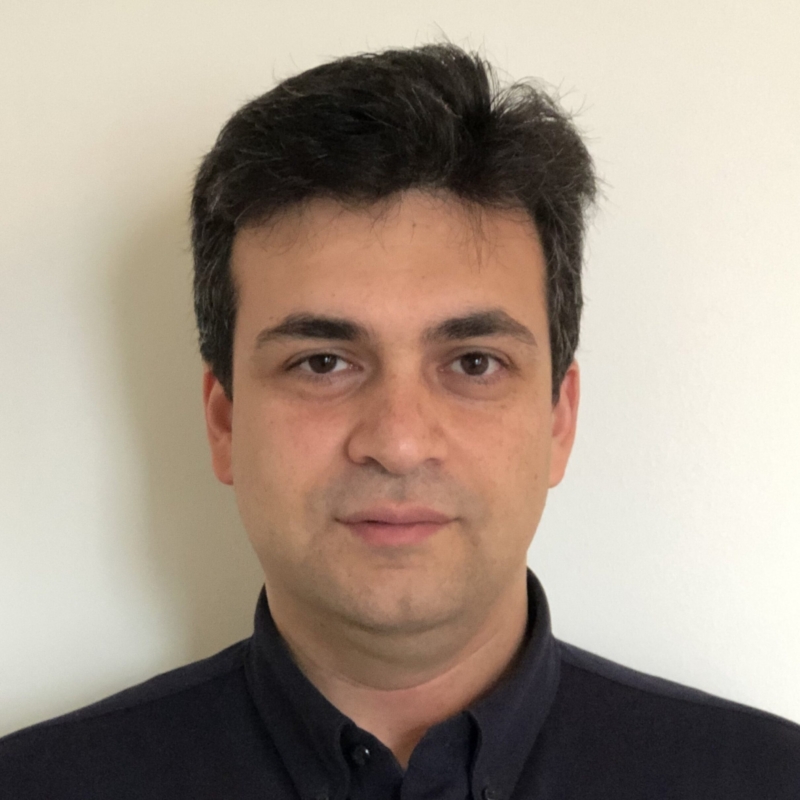
Elena De Momi is an Assistant Professor in the Electronic Information and Bioengineering Department at Polytechnic University of Milan, where she co-founded the Neuroengineering and Medical Robotics Laboratory in 2008 and leads the Medical Robotics section. She also serves as Specialty Chief Editor for Biomedical Robotics at Frontiers in Robotics and AI. Her educational background includes: MSc in Biomedical Engineering (2002) PhD in Bioengineering (2006) Dr. De Momi's research focuses on medical robotics, neuroengineering, and computer-assisted surgery. She pioneers autonomous robotic systems for minimally invasive procedures, integrating computer vision, machine learning, and surgical expertise to enhance precision in interventions like fetoscopy and neurosurgery. Her work bridges engineering innovation with clinical applications to address challenges in surgical navigation and human-robot collaboration. Analysis of her 2023 publications reveals dominant trends in medical image processing for fetal surgery, kinematic analysis of movement under gravitational forces, and AI-driven surgical assistance systems. Key advancements include deep learning for placental vessel segmentation, real-time stereo depth estimation during operations, and gesture-based autonomous camera control—highlighting her focus on practical robotics solutions for complex surgical environments. She directs the Medical Robotics section within the Neuroengineering and Medical Robotics Laboratory, driving research on surgical robotics platforms, intra-operative imaging systems, and human-robot interaction frameworks for clinical deployment.
Ida Nilstad Pettersen serves as Professor in Design for Sustainability Transitions at the Department of Design, Faculty of Architecture and Design, Norwegian University of Science and Technology (NTNU). She coordinates the department's strategic area 'Design for Sustainability' and holds a PhD (2013) in design for sustainability. Previously, she served as Deputy Head of Department and leader of the PhD programme in Design (PHDESIG). Her educational background culminates in a doctoral degree focused on sustainability transitions, with research spanning social practice theory, more-than-human approaches, and participatory design methodologies. Current projects include ClimaGen (2025-2028) under Horizon Europe and Det grønne Gløs/Rewilding Campus (2023-). Research interests center on sustainability transitions, examining consumption patterns, urban development, and human-nature relations through interdisciplinary lenses. Her work integrates social practice theory with experimental co-creation methods to explore alternative living/working models and urban futures. Key themes include circular economy implementation, inclusive urban natures, and more-than-human design approaches that challenge anthropocentric perspectives. Recent publications demonstrate strong thematic continuity in sustainability transitions research, with increasing focus on more-than-human theories (38% of 2023-2025 works), circular economy applications (29%), and urban transformation (23%). Her methodological signature combines participatory design with critical discourse analysis, often examining tensions between policy ambitions and everyday practices. Coordinates NTNU's strategic 'Design for Sustainability' initiative Teaches TPD4210 Sustainability Transitions (course coordinator) Supervises Master's/PhD theses in design theory and sustainable design She leads interdisciplinary collaborations across EU Horizon projects and national RCN initiatives, with recent work emphasizing co-creative methodologies for urban sustainability. Her 'Rewilding Campus' project exemplifies experimental approaches to integrating ecological processes into institutional landscapes through participatory design.
Ernst Gunnar Gran is Associate Professor at the Department of Information Security and Communication Technology at the Norwegian University of Science and Technology (NTNU), where he heads the communication technology discipline. He also holds an adjunct research scientist position at Simula Research Laboratory, where he headed the Cloud department until December 2016. His research spans high performance computing (HPC), HPC interconnection networks, enterprise data centre networks, cloud computing, and data-intensive processing in multi-clouds. He serves as the Scientific Leader of Communication Technologies in the RCN-funded infrastructure project eX3 (Experimental Infrastructure for Exploration of Exascale Computing) and has significant experience with both RCN-funded and EU-funded research projects, including the H2020 project Melodic (Multi-cloud Execution-ware for Large-scale Optimised Data-Intensive Computing). Gran received his M.Sc. and Ph.D. degrees in computer science from the Department of Informatics, University of Oslo, in 2007 and 2014, respectively. Both theses focused on different aspects of resource management in high performance interconnection networks. He previously headed the RCN-funded project ERAC (Efficient and Robust Architecture for Big Data Clouds) and led the design, implementation, and deployment of the multi-homed IP-based research testbed NorNet Core. Gran also has several years of experience as a system administrator and scientific programmer. His research interests center on the intersection of high performance computing and networking, with particular focus on anomaly detection in time series data, HPC interconnection networks, network virtualization, and cloud computing infrastructure. His work demonstrates a consistent evolution from fundamental networking research to applied solutions for modern computing challenges, particularly in IoT security and smart home applications. His recent publications show a strong emphasis on developing lightweight, real-time anomaly detection systems using deep learning techniques. Analysis of his publication trends reveals a clear progression from traditional HPC networking research toward time series anomaly detection applications, particularly for IoT systems. His 15 most recent publications show dual focus areas: approximately 60% concentrate on anomaly detection methods for time series data (particularly for IoT applications), while the remaining 40% maintain his foundational work in HPC networking, virtualization, and cloud infrastructure. This evolution demonstrates his ability to adapt core networking expertise to emerging application domains while maintaining technical depth. While no specific scientific awards are mentioned in the provided text, Gran's leadership roles in significant research projects (eX3, Melodic, ERAC) indicate recognition of his research capabilities within the academic and research funding communities. His position as Scientific Leader of Communication Technologies in the RCN-funded eX3 project further demonstrates his standing in the Norwegian research community. Gran's teaching responsibilities include serving as course coordinator for DCSG1006 Data Communication and Networks, DCSG2001 Interconnected Networks and Network Security, and Networks: Administration, Programming and Security. His research leadership extends to significant grant-funded projects, including the RCN-funded eX3 infrastructure project and the EU H2020 Melodic project. His previous leadership of the ERAC project and the NorNet Core research testbed demonstrates sustained ability to secure and manage substantial research funding. His laboratory and team affiliations include the Department of Information Security and Communication Technology at NTNU, where he heads the communication technology discipline, and Simula Research Laboratory, where he maintains an adjunct position. The NorNet Core research testbed, which he led the development of, represents a significant infrastructure contribution to the networking research community. His current work with the eX3 project suggests ongoing involvement in experimental infrastructure for exascale computing exploration.
Benjamin James Knox serves as an Adjunct Associate Professor at the Norwegian University of Science and Technology (NTNU), with his work based at the Gjøvik campus. His research bridges cybersecurity with cognitive science, focusing on human factors in cyber defense operations. He maintains an active research profile with numerous publications through NTNU's institutional repository. Dr. Knox's research interests center on the intersection of human cognition and cybersecurity, with significant contributions in cognitive agility for cyber operators, neuroergonomic approaches to threat identification, and the psychological dimensions of cyber warfare. His work explores how cognitive processes, emotional states, and team dynamics influence cyber situational awareness and decision-making in high-stakes environments. Recent research has expanded into extended reality training environments, individual risk assessment for cybersecurity personnel, and the application of digital twins for critical infrastructure protection. His publication record demonstrates consistent output across multiple high-impact venues including Frontiers in Education, IEEE Access, and Lecture Notes in Computer Science. Dr. Knox frequently collaborates with researchers across European institutions, particularly in Norway, Lithuania, and Germany, indicating strong international research networks. His work with NATO Science and Technology Organization highlights the strategic relevance of his research to defense applications. While specific laboratory affiliations aren't detailed in the available information, his publications suggest involvement with cyber defense simulation environments and neuroergonomic testing facilities. His recent focus on extended reality and digital twin technologies indicates engagement with advanced simulation platforms for cybersecurity training.
Ståle Andreas Skogstad is a Research Fellow at the University of Oslo , affiliated with the Department of Informatics under the Faculty of Mathematics and Natural Sciences . His research focuses on real-time digital filter design , motion capture technologies , and human-computer interaction in musical contexts.
Sushmit Dhar serves as an Associate Professor in the Department of Automation and Process Technology at UiT The Arctic University of Norway, focusing on control engineering and automation solutions for Arctic maritime challenges. His work bridges theoretical control methods with practical applications in extreme environments. His research spans: Classical and modern control methods (PID, LQR, MPC) State estimation and Kalman filtering Physics-Informed Neural Networks and Reinforcement Learning for decision support IoT-based automation for maritime operations Marine icing phenomena and sea spray measurement Recent publications demonstrate cutting-edge work in marine icing prediction using LiDAR and capacitive sensors, Arctic road safety systems, and optimization of maritime operations. His research integrates advanced sensing technologies with data-driven modeling to address safety challenges in cold climates, particularly through sea spray measurement innovations and route planning algorithms for fishing vessels and search-and-rescue operations. Dr. Dhar actively contributes to collaborative initiatives: Member of the Sustainable Technology and Safety (STS) research group Member of the IR, Spectroscopy, and Numerical Modelling Research Group Key participant in the SPRICE project (Multidisciplinary approach for spray icing modelling and decision support) His teaching portfolio includes foundational courses in Linear Systems (AUT-2604) and Control Engineering (AUT-2801) for Automation Engineering undergraduates, preparing students for technical challenges in Arctic engineering contexts.
Xu Sun is a Postdoctoral Fellow at the Department of Industrial Engineering, UiT The Arctic University of Norway, Campus Narvik. His research bridges logistics, sustainability, and digital innovation within Industry 4.0/5.0 frameworks, with a focus on practical applications in Norwegian contexts including electric vehicle infrastructure and pandemic response. His research portfolio spans Reverse Logistics, Sustainable Logistics, Closed-Loop Supply Chains, Digital Twins, and Industry 5.0 integration. Key themes include applying generative AI to logistics network design, optimizing charging infrastructure for electric trucks, and developing digital twins for circular economy systems. His work emphasizes multi-objective decision-making to balance environmental, social, and economic sustainability in logistics operations. Analysis of Xu Sun's publication trends reveals a strategic shift toward human-centric digital solutions in logistics. Recent works integrate generative AI, digital twins, and simulation to address Industry 5.0 challenges, with notable emphasis on electric mobility infrastructure (2024-2025) and pandemic-related logistics (2021-2022). His research consistently employs case studies from Norway, demonstrating practical applicability while advancing theoretical models for sustainable supply chains. No scientific awards were documented in the source material. While specific student advising details are absent from the profile, Xu Sun's collaborative publication record indicates active mentorship within research teams. His projects frequently involve multi-institutional partnerships and industry engagement, though explicit grant information is not provided in the available text. Xu Sun contributes to the ArcLog research group's Intelligent Manufacturing and Logistics team and leads the 'Industry 5.0 enabled Smart Logistics' project. His work leverages tools like AnyLogic simulation and digital twin technology to develop human-centered logistics solutions, with physical operations based in Campus Narvik office D2150.
Nikhil Jayakumar serves as a Research Fellow in the Department of Physics and Technology at UiT The Arctic University of Norway, Tromsø, and is an active member of the Optical Nanoscopy research group. His work bridges photonics and biomedical imaging through innovative waveguide-based microscopy platforms. Dr. Jayakumar's research centers on optical waveguides and interference microscopy , with core expertise in developing label-free imaging systems. His work on multi-moded high-index contrast waveguides (2022) achieved unprecedented contrast in microscopy, while dynamic speckle illumination techniques (2022-2023) enabled new approaches to quantitative phase imaging. The 2025 aluminum oxide waveguide platform represents a significant advancement in low-background on-chip microscopy. His publication record shows consistent output in top optics journals since 2019, with 15 articles demonstrating expertise in waveguide design, speckle-based imaging, and quantitative phase microscopy. Current work focuses on integrating waveguide technology with microfluidics for live-cell nanoscopy applications. Dr. Jayakumar collaborates extensively within the Optical Nanoscopy group, contributing to projects that combine photonics, computational imaging, and biomedical applications. His research has practical implications for drug delivery characterization (liposome studies) and cellular dynamics analysis.
Gitta Astrid Hildegard Kutyniok is a Professor in the Department of Physics and Technology at UiT The Arctic University of Norway. Her research spans machine learning, applied mathematics, and signal processing, with a focus on theoretical foundations and practical applications.
Thomas Dreibholz is a Chief Research Engineer at Simula Metropolitan's Center for Resilient Networks and Applications. He specializes in cyber sovereignty, network security, and internet testbeds, with extensive work on distributed systems, cloud computing, and 5G networks. Affiliation: Simula Metropolitan, Oslo, Norway Research Focus: Multi-path transport protocols, network resilience, and privacy-preserving frameworks His research explores the intersection of network security, cloud/fog computing, and next-generation communication protocols. Recent work includes HiPerConTracer for network analysis, privacy-aware fog platforms , and multi-layered federated learning security . He contributes to testbed development, including the NorNet infrastructure for real-world multi-path transport research. Publications reflect expertise in multi-path TCP , 5G network optimization , and cloud/fog security . He has delivered invited talks at institutions like Hainan University and Princeton University, emphasizing open-source testbed deployment and educational outreach.
Emilio Ruiz Moreno is a Postdoctoral Fellow at Simula Metropolitan's Department of Signal and Information Processing for Intelligent Systems. His work focuses on signal processing, machine learning, and real-time data analysis. Current Affiliation: Simula Metropolitan Center, Oslo, Norway Academic Role: Research Fellow (Signal Processing & Machine Learning) Research Interests: Emilio specializes in trajectory prediction, kernel regression, and zero-delay signal reconstruction. His work addresses challenges in motion-capture sensor data analysis, quantized signal tracking, and multivariate time-series processing for intelligent systems. Key applications include human-computer interaction and biomedical signal modeling. Publications (2021-2025): His research spans statistical signal processing (vector autoregressive models, kriging), adaptive kernel regression, and parallelizable learning frameworks. Technical reports and journal papers emphasize real-time performance and mathematical rigor. Laboratory Affiliation: Works within Simula Metropolitan's Signal and Information Processing for Intelligent Systems department, collaborating on interdisciplinary projects involving artificial intelligence and sensor technology.
Akriti Sharma serves as a Postdoctoral Fellow in the Department of Validation Intelligence for Autonomous Software Systems at Simula Research Laboratory, specializing in artificial intelligence applications for medical diagnostics and maritime engineering. Her core research interests span: Medical Image Analysis for human embryo development in IVF procedures Computer Vision using deep learning architectures (YOLO) for embryo cleavage detection Transfer Learning techniques applied to maritime shaft power prediction Explainable AI frameworks for clinical decision support systems Energy efficiency optimization in shipping through sensor data analysis From 2022-2025, her publication trajectory shows progression from embryo cell tracking automation to cross-domain transfer learning applications. Early work focused on time-lapse video analysis for cleavage timing prediction, evolving toward AI-driven embryo quality assessment and maritime power forecasting, demonstrating consistent innovation in real-world AI deployment. No scientific awards or honors were documented in the source material. Information regarding student advisement, research grants, or educational background was not provided in the available text. As part of Simula's Validation Intelligence for Autonomous Software Systems department, she contributes to developing rigorous validation methodologies ensuring safety and reliability in autonomous AI systems across healthcare and maritime sectors.
Professor Maths Halstensen is a distinguished faculty member in the Department of Electrical Engineering, Information Technology and Cybernetics at the University of South-Eastern Norway (USN), Faculty of Technology, Natural Sciences and Maritime Sciences, Campus Porsgrunn. With a career spanning over two decades since his 2002 PhD, he has established himself as a leading expert in chemometrics and process analytical technology, maintaining continuous research output through 2019 with significant contributions to industrial monitoring systems. His academic journey includes: PhD in Acoustic Chemometrics from NTNU (2002) MSc in Process Automation from Telemark University College (1997) BSc in Industrial Electronics from Gjøvik University College (1995) Professor Halstensen's research program centers on developing multivariate data analysis techniques for industrial process monitoring, with particular emphasis on: Acoustic chemometrics for multiphase flow characterization CO2 capture process optimization using spectroscopic methods Real-time monitoring of scale deposition in pipelines Multivariate regression modeling for energy and process prediction Raman and NIR spectroscopy applications in industrial settings His work bridges theoretical chemometrics with practical industrial implementations, focusing on solutions for metallurgy, chemical processing, and carbon capture sectors. Analysis of his 15 most recent publications reveals a dominant focus on carbon capture technologies (60% of recent work), particularly equilibrium measurements in ammonia-CO2 systems and real-time monitoring of absorption processes. His research demonstrates consistent application of multivariate modeling to solve industrial challenges, with strong emphasis on sensor development and practical implementation. Key methodological contributions include acoustic chemometric approaches for velocity measurement and novel calibration techniques for complex industrial mixtures. As leader of the ACRG Laboratory, Professor Halstensen directs research in: Acoustic sensor development for industrial environments Spectroscopic monitoring system integration Multivariate data analysis for process optimization Real-time control system implementation His teaching encompasses BSc, MSc, and PhD levels with focus on practical engineering skills. The research group benefits from institutional support through USN's strategic focus on 'Energy, climate and the environment,' with likely connections to Research Council of Norway funding and EU research programs. Professor Halstensen maintains active industry collaborations through his applied research on process monitoring solutions for energy-intensive industries.
Amir Taheri is a Senior Researcher at NORCE Norwegian Research Centre in Stavanger, Norway, operating within the Energy and Technology division and leading the Well Operations and Risk Management research group. His work addresses critical energy transition challenges through Carbon Capture, Utilization and Storage (CCUS), Hydrogen, and well integrity research. Dr. Taheri's research spans CO2 storage in saline aquifers with focus on convective mixing processes, well construction/intervention technologies, and barrier remediation systems. His experimental work includes developing granite-based geopolymers, glass-based remediation fluids, and nanosealant technologies for microannulus repair. The research directly impacts well integrity in CCUS operations and hydrogen infrastructure development, with strong emphasis on experimental validation of novel materials and measurement systems. Recent publications (2023-2025) reveal a clear trend toward field-applicable solutions for well barrier challenges. Key themes include experimental validation of geopolymer systems, glass-based annular remediation fluids, pipe viscometer advancements for real-time monitoring, and microannulus repair using nanosealants. These works bridge laboratory findings with practical field implementation, addressing industry needs for reliable well integrity solutions in energy transition contexts. The Well Operations and Risk Management group conducts cutting-edge experimental studies using specialized equipment like Hele-Shaw cells and pipe viscometers. Their work supports Norway's energy sector through NORCE's applied research model, focusing on practical solutions for CO2 storage, hydrogen deployment, and sustainable well operations. The group maintains strong industry connections through SPE conferences and collaborative projects with energy operators.
Sanu Vamanchery Mana serves as an Associate Professor at the Department of Game Education within the Faculty of Film, TV and Games at the University of Inland Norway. Based at the Hamar campus in Room 2N3329 (Biohuset, Holsetgata 22, N-2317 Hamar), he contributes to the Game School's educational mission through his expertise in digital media production and 3D technologies. Dr. Mana's research focuses on practical applications of 3D modeling software, particularly Blender, with emphasis on making complex technical processes accessible to students and practitioners. His work bridges theoretical knowledge with industry-relevant skills in game development and digital content creation. The Game School where he teaches is recognized for its hands-on approach to game education within Norway's academic landscape. His scholarly publications demonstrate consistent focus on practical 3D content creation techniques, specifically through the Blender platform. Both publications address fundamental aspects of 3D production pipelines that are essential for modern game development education, with particular attention to material design, lighting techniques, and rendering workflows. As part of the University of Inland Norway's Faculty of Film, TV and Games, Dr. Mana contributes to a program structure designed to prepare students for careers in the rapidly evolving gaming industry through specialized technical training and creative development.