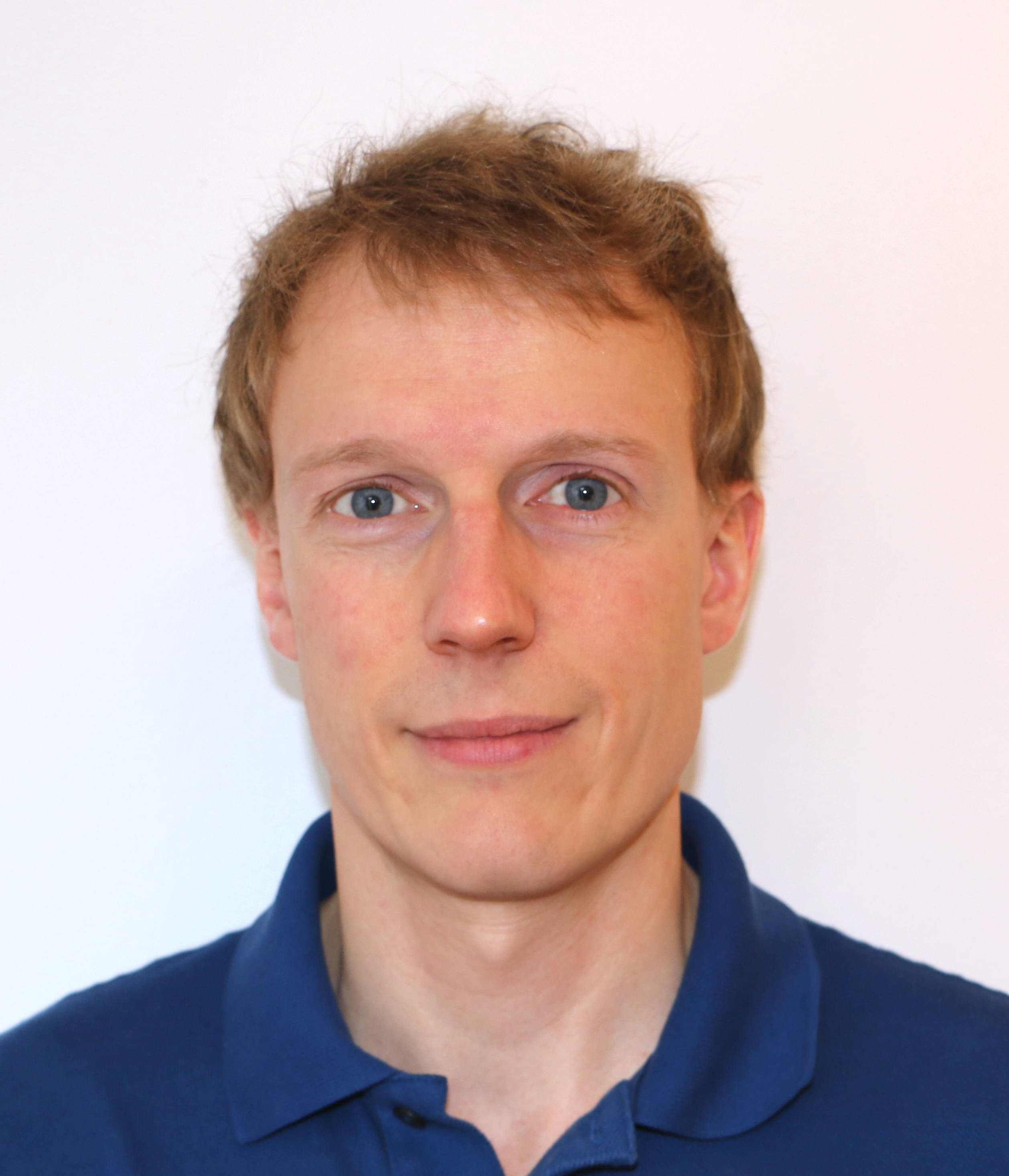
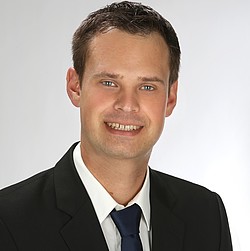
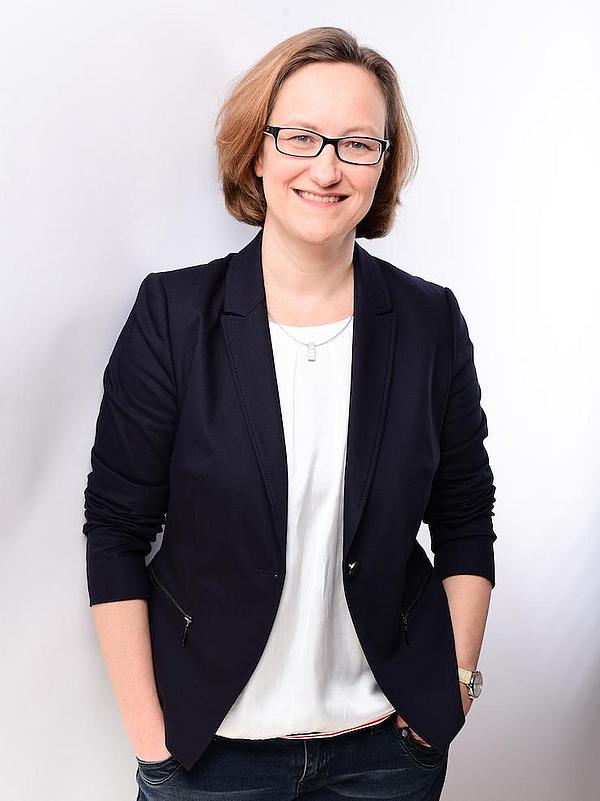
Alessandro Aliakbargolkar is a Professor at the Department of Space Systems Design under the School of Aerospace Engineering at Skolkovo Institute of Science and Technology (Skoltech). His research focuses on Federated Satellite Systems, CubeSat constellations, and Spacecraft Systems Architecture, with applications in Earth observation, messaging services, and networked satellite systems. He has an extensive publication record in these areas, including work on technology roadmapping and digital twin implementation. Key Research Areas: Satellite federation and resource sharing CubeSat constellation design Network performance optimization Integration of systems engineering models with AI Selected Trends: Recent work explores digital twin technologies for CubeSats, federated satellite network analysis, and large language model applications in spacecraft design. Publications often combine theoretical frameworks (e.g., network theory) with practical implementations (e.g., LoRa-based messaging services). ORCID Profile: 0000-0001-5993-2994
Dr. Andrea Bastoni is a Postdoctoral Researcher and Research Fellow at the Chair of Cyber-Physical Systems in Production Engineering at Technical University of Munich (TUM), Faculty of Mechanical Engineering. He is also the CTO and co-founder of Minerva Systems , developing operating system solutions for AI-ready embedded applications. His expertise spans real-time operating systems, cyber-physical systems, and predictable system design for heterogeneous platforms. His research focuses on enhancing predictability of memory hierarchies in complex SoCs through techniques like memory bandwidth regulation and cache partitioning. This work has industrial applications in safety-critical domains such as avionics and railways, where he contributes to certifiable hypervisors and operating systems. As former Software Architect of the PikeOS hypervisor at SYSGO GmbH (2012-2020), he specialized in DO-178C, IEC 61508, and EN 50128 standards. His academic background includes a Ph.D. in Computer Engineering from the University of Rome Tor Vergata (2007-2011), where he developed LITMUS^RT as part of UNC's Real-Time Systems Group during a visiting researcher period (2009-2010). His publications reflect ongoing work on Multicore Real-Time Scheduling , Mixed-Criticality Task Isolation, and Arm DynamIQ shared unit analysis. He actively participates in program committees for conferences like RTSS, DSN, and DATE.
Jun.-Prof. Dr. Christian Krupitzer is a Tenure Track Professor in Food Informatics at the University of Hohenheim's Institute of Food Science and Biotechnology, part of the Faculty of Natural Sciences. He leads the Department of Food Informatics and is a member of the Computational Science Hub (CSH). His research focuses on self-adaptive software systems, machine learning (especially edge computing), IoT technologies, and software engineering applied to food processing and agricultural systems. Education: PhD in Business Information Systems (Dr. rer. pol.), University of Mannheim (2018) M.Sc. and B.Sc. in Business Information Systems, University of Mannheim (2010–2012) High School Diploma (Abitur) from Wilhelmi-Gymnasium Sinsheim (2007) Research Interests: Krupitzer’s work integrates computational methods with food science, emphasizing adaptive systems for food quality monitoring, IoT in agriculture, and machine learning for predictive analytics. He explores edge computing’s role in real-time decision-making and secure group communication schemes for IoT networks. Publications: His recent work spans predictive maintenance in Industry 4.0, digital twins in food systems, and blockchain applications in supply chain authentication. The articles highlight trends in interdisciplinary approaches combining AI, IoT, and domain-specific challenges in food production and logistics. Awards: No scientific awards explicitly listed in the provided materials. Grants & Advising: While specific grants are unmentioned, his roles as department head and tenure-track professor suggest involvement in research funding. No formal advisee list provided, though his team includes postgraduate researchers like Dana Jox, Daniel Einsiedel, and others. Labs & Teams: Leads the Food Informatics department and collaborates with the Computational Science Hub. His team focuses on developing innovative solutions for food systems through computational methods.
Nicole Megow is a Professor holding the chair for Combinatorial Optimization in the Faculty of Mathematics and Computer Science at the University of Bremen since 2016. She is affiliated with several research clusters including Humans on Mars Initiative, Minds, Media, Machines, and Dynamics in Logistics. Her academic journey includes positions at TU Berlin, Max Planck Institute for Informatics, TU Darmstadt, and TU Munich. Professor Megow's research focuses on mathematical optimization, algorithm design and analysis, and operations research. Her specific interests span combinatorial and discrete optimization, efficient algorithms, scheduling theory, resource allocation, packing problems, network design, routing, and uncertainty models including online, stochastic, robust, and explorable approaches. Her work bridges theoretical foundations with practical applications in logistics and decision-making systems. Her recent publications demonstrate a strong trend toward integrating prediction models with traditional optimization frameworks, particularly in scheduling and matching problems. She has made significant contributions to understanding the role of uncertainty in optimization problems, developing algorithms that work effectively with incomplete or uncertain information. Her work spans multiple prestigious venues including Mathematical Programming, Algorithmica, SODA, STACS, and NeurIPS. Dissertation Award by the German Operations Research Society (2007) Berlin Science Award for Young Researchers (2013) Heinz Maier-Leibnitz Prize (2013) Listed among Germany's top 40 researchers below 40 (Capital, 2014, 2015) Professor Megow actively supervises PhD students and postdocs, including Max Stahlberg, Joes Biburger, Sarah Morell, Bart Zondervan, Zhenwei Liu, and Alexander Lindermayr. She serves on numerous program committees for major conferences including SODA, IPCO, and STOC, and holds editorial positions for several prestigious journals. Her current research projects include Optimization under Explorable Uncertainty (DFG funded), How robots learn how to use structure (seed grant from MMM research cluster), and Scheduling Invasive Multicore Programs Under Uncertainty (within TCRC 89).
Daniel J. Abadi is a prominent researcher in database systems at Yale University. With over two decades of impactful research, he has made significant contributions to the fields of distributed databases, transaction processing, and column-oriented database systems. His work bridges theoretical foundations with practical implementations that have influenced both academia and industry. Dr. Abadi's research primarily focuses on database system architecture, with particular emphasis on: Distributed and geo-replicated database systems High-performance transaction processing Column-oriented and analytical database systems Stream processing and real-time analytics Cloud and serverless database technologies Integration of machine learning with database systems His recent work shows a continued focus on addressing scalability challenges in modern database systems, with particular attention to multi-region transaction processing, automated data management, and the integration of machine learning techniques. The trend in his publications indicates a strong emphasis on practical, deployable systems that solve real-world problems faced by industry. Dr. Abadi has been instrumental in several major research initiatives and reports that have shaped the direction of database research, including the Seattle Report and the Cambridge Report on Database Research. Throughout his career, Dr. Abadi has mentored numerous students and collaborated extensively with leading researchers in the field. His work has received significant recognition through widespread citations and adoption of his ideas in both academic and industrial database systems.
Markus König is a Professor of Informatics in Civil Engineering at Ruhr University Bochum, where he has been researching and teaching since October 2009. His work focuses on Building Information Modeling (BIM), digital construction technologies, and civil engineering informatics, with significant contributions to the development and implementation of digital methods in German construction industry. Dr. König earned his degree in civil engineering with a focus on applied computer science at Leibniz University Hannover, where he also completed his doctorate on cooperative building planning at the Institute for Building Informatics. He subsequently held a junior professorship for Theoretical Methods of Project Management at Bauhaus University Weimar before joining Ruhr University Bochum. His research spans multiple cutting-edge areas including Building Information Modeling (BIM), construction process simulation, tunneling informatics, infrastructure asset management, and the application of artificial intelligence and computer vision in civil engineering. As chair of the Building Informatics Working Group from 2012-2016, he played a key role in developing the first national BIM curriculum for German universities and serves as editor of the book 'Building Information Modeling: Technological Foundations and Industrial Practice.' Analysis of his recent publications reveals a strong trend toward semantic technologies, digital twins, automated compliance checking, and the integration of AI in construction processes. His work increasingly focuses on information containers, ontology development, and the application of large language models to infrastructure data, reflecting the evolving landscape of digital construction. Dr. König's significant contributions to digital construction have been recognized with prestigious awards: Lower Saxony-Bremen Construction Industry Award (2017) for 'services in the development and introduction of digital construction in Germany' Konrad Zuse Medal (2020) While specific details about his advising and grant activities aren't explicitly mentioned in the provided text, his extensive publication record with numerous co-authors suggests active supervision of doctoral students and research staff. His involvement in multiple collaborative research projects is evident from his publication history. At Ruhr University Bochum, Professor König leads a research group focused on civil engineering informatics, with particular emphasis on BIM, digital construction technologies, and their application across the building lifecycle. His team appears to work at the intersection of computer science and civil engineering, developing innovative solutions for construction process optimization, infrastructure management, and digital transformation of the AEC industry.
Prof. Dr.-Ing. habil. Gero Mühl is a W2-Professor at the University of Rostock, where he holds the chair for "Architecture of Application Systems" since October 2009. His academic journey includes positions as a Heisenberg Fellow at the Technical University of Berlin (2009), postdoctoral research at TU Berlin (2002-2009), and doctoral studies at TU Darmstadt where he received his Dr.-Ing. degree with distinction in 2002. He completed dual Diplomas in Computer Science (Dipl.-Inform.) and Electrical Engineering (Dipl.-Ing.) from FernUniversität in Hagen in 1998. Prof. Mühl's research focuses on Self-Organizing Distributed Systems , with particular expertise in distributed systems, distributed algorithms, event-based systems, middleware, energy-efficient systems, organic computing, sensor networks, web services, and electronic commerce. His work bridges theoretical foundations with practical implementations in real-world distributed environments. His recent publications show a strong trend toward time-sensitive networking, content-based publish/subscribe systems, and P4 programmable data planes. These works address critical challenges in industrial communication, real-time systems, and network reliability. His research group has made significant contributions to making distributed systems more autonomous, reliable, and efficient. Scientific awards and recognitions include: Nomination for the Berlin Science Award for Young Scientists (2008) Heisenberg Fellowship by the German Research Foundation (DFG) (2008) Best paper award in System Software and Security at SAC 2015 Prof. Mühl has been actively involved in numerous research projects and collaborations, particularly focusing on self-organizing and self-stabilizing systems. His work on the REBECA publish/subscribe middleware represents a significant contribution to autonomous distributed systems. He has supervised numerous students and researchers, contributing to the development of the next generation of computer scientists specializing in distributed systems. His laboratory at the University of Rostock focuses on practical implementations of self-organizing distributed systems, with current projects investigating time-sensitive networking, publish/subscribe systems, and energy-efficient distributed computing. The team combines theoretical analysis with practical system development to address real-world challenges in industrial and commercial applications of distributed systems.
Patrick Henkel is a Professor at the Technical University of Munich (TUM) affiliated with the TUM School of Engineering and Design and the Chair of Communication and Navigation. He holds a professorship in Satellite Geodesy under Prof. Hugentobler. His research focuses on advanced positioning technologies, including Global Navigation Satellite Systems (GNSS), autonomous systems, and sensor fusion. He develops algorithms for precise positioning in challenging environments such as urban areas, alpine regions, and indoor spaces. His work also extends to environmental applications, such as snow hydrology and climate monitoring using GNSS signals. Henkel’s contributions include innovations in real-time kinematic (RTK) positioning, UAV navigation, and multi-sensor integration for robotics and autonomous vehicles. His research is supported by collaborations with industry and academic partners, addressing both theoretical and applied challenges in geodesy and navigation. Henkel leads projects on GNSS signal processing, satellite-based environmental monitoring, and autonomous driving technologies. He has contributed to the Galileo HAS service and developed methodologies for snow water equivalent estimation using multi-frequency GNSS signals. His expertise spans hardware-software co-design for navigation systems and algorithm optimization for high-precision positioning in dynamic environments. He actively publishes in top-tier journals and conferences, with a focus on advancing the reliability and accuracy of navigation systems across various domains. His advising and grants include funding for projects on sensor fusion, UAV-based measurements, and satellite receiver development. He collaborates with teams at TUM’s Navigation Lab and the Professur für Satellitengeodäsie, contributing to both academic and industrial applications. His work on low-bandwidth RTK dissemination and laser-tracker verified UAV positioning highlights his commitment to bridging theoretical advancements with real-world implementation.
Akash Kumar is a Professor at Ruhr University Bochum, Germany, with affiliations to multiple institutions including TU Dresden and National University of Singapore. His research focuses on computer architecture, hardware acceleration, and approximate computing, with a strong emphasis on FPGA-based systems and neural network optimization. He has contributed extensively to embedded systems, mixed-criticality systems, and security in emerging technologies like reconfigurable nanodevices. His work spans cross-layer approximation methodologies, graph neural networks, and energy-efficient processing for edge AI. Collaborations with industry and academia highlight his leadership in VLSI design and secure hardware implementations. Notable contributions include frameworks for bounding time in mixed-criticality systems and resilient logic locking techniques. Research interests include hardware-software co-design, real-time systems, and efficient neural network architectures. His publications in top-tier conferences (DAC, DATE, FCCM) and journals (IEEE Trans. CAD, ACM TECS) underscore his impact in the field.
Giorgio Ferrari is a Full Professor for Mathematical Finance at the Institute for Mathematical Economics (IMW), Faculty of Economics, Bielefeld University. His research bridges stochastic control theory with applications in economics, finance, actuarial science, and epidemiology. Education: B.Sc. and M.Sc. in Physics and Mathematical Physics from the University of Rome La Sapienza, Ph.D. in Mathematics for Economic-Financial Applications (2012). Academic Appointments: Post-Doctoral Researcher (2012–2015), Substitute Full Professor (2015), Junior Professor (W1) (2016–2017), Associate Professor (2017–2023), and Full Professor (2023–present) at Bielefeld University. Research Interests focus on Singular Stochastic Control , Optimal Stopping , and Stochastic Games , with applications to economic policy, financial markets, and epidemic modeling. His work extends to Mean-Field Games for large-scale strategic interactions and Free-Boundary Problems for investment decision-making under uncertainty. Scientific Contributions include groundbreaking publications in Stochastic Processes and their Applications , Mathematical Finance , and SIAM Journal on Control and Optimization . His research projects, such as the DFG SFB 1283 subproject C4 and the Research Training Group 2865 , address uncertainty in dynamic economies through game-theoretic and stochastic frameworks. Notable Awards: AMASES Best Young Researcher Paper (2014), YITP Research Prize (2017), and multiple research fellowships from the University of Padova. Leadership: Director of the Bielefeld Graduate School in Theoretical Sciences (2023–present) and Principal Investigator in major DFG-funded initiatives.
Prof. Serge A. Shapiro is a Full Professor of Geophysics at Freie Universität Berlin since 1999 and Director of the PHASE consortium since 2004. He holds a Diploma in Applied Geophysics from Lomonosov Moscow State University (1982), a PhD from the Moscow Research Institute of Geosystems (1987), and a Habilitation from Karlsruhe University (1995). His research focuses on seismogenic processes, induced seismicity, rock physics, and subduction zone dynamics, with applications to geothermal energy, CO2 storage, and hydraulic fracturing. Education: Diploma in Applied Geophysics, Lomonosov Moscow State University (1982) PhD in Geophysics, Moscow Research Institute of Geosystems (1987) Habilitation, Karlsruhe University (1995) Research Interests: Induced seismicity from fluid operations CO2 storage and hydraulic fracturing risks Seismic hazard assessment Rock physics under stress Key Contributions: Developed the Seismogenic Index Model for induced earthquakes Pioneered DAS-based seismic monitoring techniques Advanced understanding of fault stability and pressure diffusion effects Awards: Virgil Kauffman Gold Medal (2013) for work in microseismic monitoring and rock physics Grants & Projects: PHASE consortium leader (2004–present) Utah FORGE EGS project advisor Labs/Teams: Seismology Group, Freie Universität Berlin PHASE university consortium
Karin Jacobs is a Professor in the Department of Physics at Saarland University, where she leads the research group for soft matter physics within the Faculty of Natural Sciences and Technology. Her work bridges experimental physics and applied materials science, focusing on interfacial phenomena, thin films, and functional materials. Research Interests: Her group investigates the stability of coatings, properties of simple and complex fluids, and the adhesion of biomolecules on surfaces. Using advanced experimental techniques such as atomic force microscopy (AFM), ellipsometry, surface plasmon resonance spectroscopy, optical microscopy, and ultra-high vacuum (UHV) methods like photoelectron spectroscopy, her team probes nanoscale and microscale interactions at solid-liquid and solid-gas interfaces. The research spans fundamental and applied domains, including the synthesis and characterization of graphene and boronitrene, production of water-in-water vesicles using hydrophobins, and bacterial adhesion studies. These investigations are often linked to industrial applications in the paint, semiconductor, and biomedical sectors. Publication Trends: Over the past 15 years, her publications reflect a consistent focus on surface physics and soft matter. Key themes include graphene synthesis via liquid precursor deposition (including unconventional sources like fingerprints), interfacial rheology, biopolymer adsorption, and quantitative imaging analysis. The interdisciplinary nature of her work is evident in the combination of physics, chemistry, and biological interfaces. Scientific Awards: No specific awards are mentioned in the provided text. Advising and Grants: As head of an active research group, Prof. Jacobs supervises graduate students and postdoctoral researchers, though specific names are not listed. Her collaborations with theoretical groups and external institutions (e.g., University of Augsburg) suggest participation in joint grants and funded projects, particularly in nanomaterials and surface science. The applied orientation of her research indicates engagement with industry partners in coatings and semiconductor technologies. Labs and Teams: The Jacobs Group operates a well-equipped experimental laboratory at Campus E2 9, Saarland University, specializing in surface analysis and soft matter characterization. The team includes researchers working on biofilms, microfluidics, and functional materials, supported by technical and administrative staff.
Prof. Dr. sc. techn. ETH Oliver Staadt is Full Professor of Computer Science and Chair of Visual Computing at the University of Rostock , Germany. Since 2023 he also serves as Director of the Institute for Visual and Analytic Computing within the Faculty of Computer Science and Electrical Engineering . Previously he was Dean (2016–2018) and Vice Dean (2010–2016) of the same faculty. Education Ph.D. in Computer Science, ETH Zürich (2001) M.Sc. in Computer Science, TU Darmstadt (1994) Research Interests Prof. Staadt’s research spans virtual and augmented reality , computer graphics , visualization , telepresence , immersive analytics , and human–computer interaction . A particular focus lies on real-time rendering and display technologies for large high-resolution display systems, depth-image enhancement for RGB-D sensors, and interaction techniques that leverage spatial cognition and eye-tracking. His work is frequently applied to collaborative settings and microgravity environments, including experiments aboard parabolic flights and the International Space Station. Recent Publication Trends Between 2019 and 2021 his output centers on foveated rendering , AR viewpoint guidance , collaborative analytics on wall-sized displays , and embodied interaction metaphors . Earlier work addressed bandwidth-efficient telepresence, depth-image filtering, and physically-based animation. The corpus reveals a steady evolution from fundamental graphics algorithms toward applied immersive systems. Scientific Awards & Honors Fellow of the Eurographics Association Associate Editor, IEEE Transactions on Visualization and Computer Graphics (past) Associate Editor, Computers & Graphics (past) Associate Editor, Computer Animation and Virtual Worlds (past) Associate Editor, Frontiers in Virtual Reality (current) Chair, Expert Group on Virtual & Augmented Reality, German Informatics Society (2013–2020) Advising & Funding He has successfully supervised more than ten PhD graduates whose dissertations range from collision detection and physically-based animation to 3D interaction in microgravity and predictive user modeling. Current PhD researchers include Bipul Mohanto, Mana Takhsha, and Sven Kluge. His projects are supported by national and EU programs such as EVOCATION, SMOOTH, ARGuide, 3DPick, DIVA, and Telepresence. Labs & Teams Prof. Staadt leads the Visual Computing Group at Rostock, operating state-of-the-art facilities including large tiled display walls, VR/AR laboratories, and motion-capture systems. The institute hosts interdisciplinary collaborations with partners in visualization, computer vision, psychology, and aerospace engineering.
Heiko Falk is a Professor and Head of the Institute of Embedded Systems at Technische Universität Hamburg (TUHH). His roles include serving as Workshop Chair for the 2024 Embedded Systems Week (ESWEEK), Scientific Coordinator for the B.Sc. and M.Sc. Computer Science programs, and Deputy Head of the Board of Examiners for Computer Science and Engineering. His research focuses on real-time systems, compiler optimizations, and worst-case execution time (WCET) analysis. Key areas include multi-core architectures, cache management, energy efficiency, and hardware/software co-design. Falk's work emphasizes practical compiler techniques for improving real-time performance, such as WCET-aware memory allocation, dynamic SPM optimization, and event-driven scheduling. His publications analyze shared cache interference, preemptive/non-preemptive scheduling, and DMA-aware optimizations. Recent work explores multi-objective trade-offs between WCET, energy consumption, and code size in embedded systems. No scientific awards are explicitly listed, but his contributions to WCET benchmarking (e.g., haRTStone project) and compiler frameworks demonstrate significant impact in the field. Advising and grants: No formal advisees are listed in the provided texts. Falk's work is supported through projects like teamplay, focusing on cyber-physical systems optimization. Labs/Teams: His group operates within TUHH's Institute of Embedded Systems, collaborating on projects addressing real-time system challenges in multi-core environments.
Prof. Dr. Tobias Brandt serves as a Full Professor and Chair of Digital Innovation and the Public Sector at the University of Münster's School of Business and Economics. His academic journey includes roles as Assistant Professor at Rotterdam School of Management (2016-2021) and Research Assistant at the University of Freiburg (2011-2015). He co-founded Geospin GmbH in 2016 and holds memberships in VHB, INFORMS, and AIS. Research Interests: Brandt focuses on digital innovation in public sectors, sustainable urban systems, e-government, and platform ecosystems. His work bridges information systems and operational research to address challenges in mobility, energy, and public service delivery. Recent projects include developing tools for sustainable urban planning, digital platforms for elderly care, and leveraging AI for crisis management. Notable Projects: Current initiatives include the PIONEER II Master's program on public innovation, SMARD-Gov (LLMs for government decision-making), and comuneo (digital sustainability management platform). Completed projects include INNO4S (integrating sustainability in business education) and studies on pandemic-driven digitalization in public administration. Awards: RSM Teaching Award (2020), Daniel H. Wagner Prize (2020), IBM Faculty Award (2016). Grants: €5M+ secured from EU Erasmus+, DFG, and German Federal Ministry of Research. Labs/Teams: Leads the Chair of Digital Innovation & Public Sector, collaborating with ERCIS (European Research Center for Information Systems). Active in GovTech and digital sustainability initiatives.