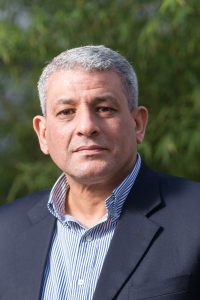
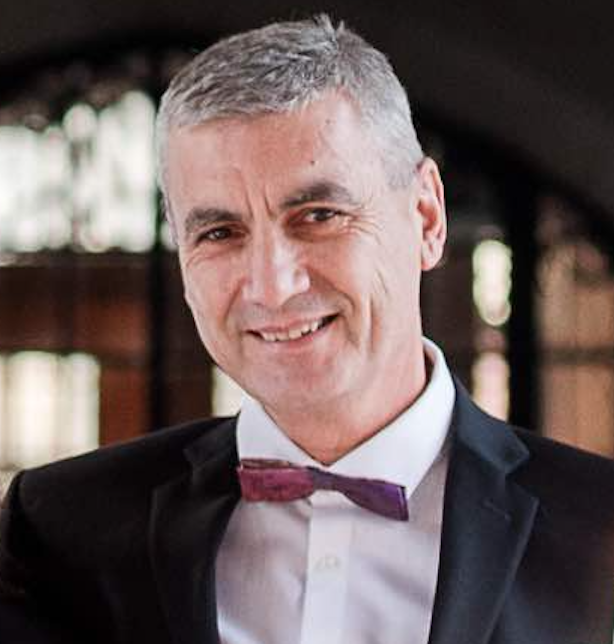
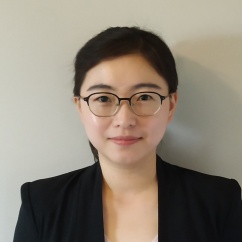
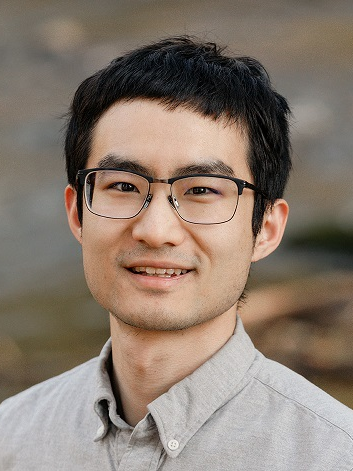
Professor Ihab Ilyas is a leading figure in data management and machine learning at the Cheriton School of Computer Science , University of Waterloo , where he holds the Thomson Reuters Research Chair in Data Quality . He is currently on leave from the university, serving as a Distinguished Engineer, Proactive Intelligence at Apple Inc . His research focuses on data cleaning , large-scale data integration , knowledge graphs , and machine learning applications in data quality . He has pioneered systems like HoloClean and Saga , with commercial impacts through co-founded startups Inductiv (acquired by Apple) and Tamr . PhD in Computer Science from Purdue University Co-founder of Inductiv (acquired by Apple) Co-founder of Tamr Research Interests include: Probabilistic and uncertain data management Machine learning for data quality and enrichment Big data systems and information extraction Knowledge graph construction and optimization Scientific Awards and Recognitions include: Fellow of the Royal Society of Canada (2024) C.C. Gotlieb Computer Award (2024) IEEE Fellow (2021) ACM Fellow (2020) Cheriton Faculty Fellowship (2013-2016) Ontario Early Researcher Award
Ming Hu is a Professor and University of Toronto Distinguished Professor of Business Operations and Analytics at Rotman School of Management, University of Toronto. He serves as Area Coordinator for the Operations Management & Statistics Area and holds editorial leadership roles including Editor-in-Chief of Naval Research Logistics and Associate Editor for multiple top journals. MS in Applied Mathematics, Brown University (2003) PhD in Operations Research, Columbia University (2009) His research focuses on sharing economy , social operations , and platform economics , examining how operational decisions can maximize societal benefit. Key areas include crowdfunding , two-sided markets , crowdsourcing , and group buying , with applications to DEI , sustainability , and AI-empowered operations . Recent work analyzes spatial operations in delivery systems, algorithmic fairness , and climate change adaptation in agricultural supply chains. His publications span top journals like Management Science and Operations Research , covering topics from blockchain traceability to quantum-inspired optimization . Scientific recognitions include: Wickham Skinner Early-Career Research Award (2016) Best Operations Management Paper in Management Science (2017) 2018 Poets & Quants Best 40 Under 40 MBA Professors As an Amazon Scholar (2022–) and Chair of Chain Analytics Institute (2023–), he bridges academic research with industry applications in AI-driven logistics and sustainable operations.
Dr. Tarek Sayed is a Professor at the University of British Columbia's Department of Civil Engineering within the Faculty of Applied Science. He specializes in Transportation Engineering, focusing on road safety analysis, traffic operations, and Intelligent Transportation Systems (ITS). He serves as the Director of the Bureau of Intelligent Transportation Systems and Freight Security (BITSAFS-Engineering) and Editor of the Canadian Journal of Civil Engineering . His research addresses three core areas: improving road safety evaluation techniques, enhancing safety through traffic operations and highway design analysis, and advancing ITS technologies. Notable contributions include frameworks for safety-audits of infrastructure projects like the Sea to Sky Highway and methodologies for evaluating transit signal priority systems in Vancouver. He has authored/co-authored over 250 publications and supervised 60 graduate students. Key Roles: Professor, BITSAFS Director, Journal Editor Awards: Tier 1 Canada Research Chair, Wilbur Smith Award, Sandford Fleming Award, Prince Michael International Road Safety Award Consulting: Global projects in traffic safety and ITS for agencies like ICBC, FHWA, and Ashghal His research integrates Bayesian statistical methods, extreme value theory, and machine learning to model traffic conflicts, pedestrian behavior, and safety interventions. Current projects include real-time safety optimization using autonomous vehicle data and analyzing shared space interactions between cyclists and pedestrians. Dr. Sayed chairs national/international committees, including the U.S. Transportation Research Board’s safety data committee. His work bridges academia and practice, influencing policy and infrastructure investment decisions worldwide.
Maher Elshakankiri is an Assistant Professor, Teaching Stream at the University of Toronto's Faculty of Information. He holds a Ph.D. in Computer Engineering from Ain Shams University (Egypt), followed by a postdoctoral fellowship at the University of Regina. His research focuses on IoT, Wireless Sensor Networks (WSN), and pedagogical integration of technology and gaming. He has supervised over 100 student projects and authored a book on WSNs. Education: Ph.D. in Computer Engineering, Ain Shams University, Egypt M.Eng., B.Eng. in Engineering, Ain Shams University, Egypt Postdoctoral Fellowship, University of Regina, Canada Research Interests: IoT in healthcare, agriculture, and sports Active learning classrooms and technology in education Wireless communication protocols (V2V, UAV, RFID) Leadership & Grants: Director, Bachelor of Information (BI) Program (2024–present) Coordinator, Information Systems and Design (ISD) Concentration (2023) SSHRC Grant: 'Gaming in teaching towards a more inclusive class' (2022–2023) Professional Activities: Member, SCC IoT & Digital Twins Standards Committee Reviewer for journals including Wireless Networks , Telematics and Informatics , and Computational Intelligence Technical Program Committee member at multiple conferences Teaching: Courses include INF1340 (Programming for Data Science), INF1005/1006 (IoT Workshops), and INF452 (Information Design Coding).
Oana Balmau is an Assistant Professor in the School of Computer Science at McGill University, where she leads the Data-Intensive Storage and Computer Systems Laboratory (DISCS Lab). She also holds a status-only appointment at the University of Toronto and serves as a working group chair for MLPerf Storage. Her research focuses on creating storage infrastructure that enables fast and energy-conscious insights from data, with particular emphasis on storage and persistent memory technologies for machine learning, data science, and edge computing workloads. Dr. Balmau's research interests span computer systems, with specific focus on: Design and implementation of efficient key-value stores Storage systems for machine learning workloads Edge computing infrastructure Persistent memory technologies Performance optimization of data-intensive systems Her recent work has led to significant contributions in storage benchmarking through the MLPerf Storage benchmark and in edge computing frameworks. The MLPerf Storage benchmark has become an industry standard for evaluating storage performance in machine learning environments, while her work on hierarchical edge computing addresses security and performance challenges in distributed edge environments. Her publications show consistent high-impact contributions to top systems venues, with recent work focusing on processing-in-memory virtualization, stream processing reconfiguration, and efficient data preprocessing pipelines. Dr. Balmau has received numerous awards for her research, including: SEC 2024 Best Paper Award for "Falcon: Live Reconfiguration for Stateful Stream Processing on the Edge" MLCommons Hero Award 2023 for leadership as MLPerf Storage working group chair ACM SIGOPS Dennis M. Ritchie Doctoral Dissertation Award 2021 Honorable Mention CORE John Makepeace Bennett Award 2021 for the best Computer Science doctoral dissertation in Australia and New Zealand USENIX ATC 2019 Best Paper Award for "SILK: Preventing Latency Spikes in Log-Structured Merge Key-Value Stores" As an educator, Dr. Balmau teaches courses on advanced computer systems, operating systems, and principles of computer systems design at McGill University. She has served on program committees for top systems conferences including SOSP, SIGMOD, FAST, and EuroSys, and has co-organized workshops on resource-efficient machine learning and edge computing. She leads the DISCS Lab, which focuses on two main research directions: Systems for ML (including the MLPerf Storage benchmark) and Edge computing (including frameworks for fast and secure edge computing in hierarchical edge environments).
Furkan Alaca is an Assistant Professor at Queen's University's School of Computing, part of the Faculty of Arts and Science. His research focuses on user authentication systems, addressing security and usability challenges. He holds a Ph.D. (2018) in Computer Science from Carleton University, an M.A.Sc. (2012) in Electrical and Computer Engineering, and a B.Eng. (2010) in Communications Engineering, all from Carleton University. His academic career includes teaching roles at Queen's University and the University of Toronto Mississauga, where he taught courses such as Cryptography, Cybersecurity, and Discrete Mathematics. He is affiliated with Queen's Security Research Group and Computer Security Research Lab. Research interests include computer and internet security, usable security, authentication mechanisms, and systems security. He has contributed to advancements in web authentication frameworks, malware analysis, and privacy-preserving technologies. His work spans conferences like IEEE and ACM, with notable publications in cybersecurity, machine learning, and network efficiency. Current teaching includes CISC 447 (Introduction to Cybersecurity) and CISC 468 (Cryptography). He has advised on courses ranging from undergraduate programming to graduate-level security topics.
Dr. Frank Rudzicz is an Associate Professor in the Faculty of Computer Science at Dalhousie University. His research lies at the intersection of artificial intelligence, natural language processing, and healthcare, with a focus on developing machine learning systems that improve clinical decision-making, patient outcomes, and accessibility in medicine. He holds a BSc from Concordia University (2004), an MEng from McGill University (2006), and a PhD from the University of Toronto (2011). His research interests include Natural Language Processing, Machine Learning, Healthcare, Speech Technologies, Explainable AI, and Fairness in ML. Dr. Rudzicz's recent publications span a wide range of topics, including Alzheimer's detection through speech analysis, surgical outcome prediction, mental health monitoring, privacy in AI, and the application of large language models in clinical settings. His work consistently emphasizes ethical AI, patient privacy, and real-world clinical integration. He has received several awards, including a Best Paper award at EMNLP 2020, a Best Student Paper award at ICASSP 2021, and the ISCA Best Student Paper award in 2013. His research has been published in top-tier journals such as Nature Scientific Reports , JAMA Network Open , IEEE Access , and Frontiers in Human Neuroscience , as well as leading conferences including NeurIPS, ACL, ICML, and Interspeech. Dr. Rudzicz supervises a dynamic research group working on AI for health, with active projects in voice-based diagnostics, ambient clinical documentation, explainable AI for surgery, and wearable-based monitoring for chronic diseases. He collaborates widely across disciplines, including with clinicians, neuroscientists, ethicists, and public health experts. He is also involved in major initiatives such as the Genetics Navigator study and Bridge2AI-Voice, aiming to build ethically sourced, diverse biomedical datasets. His lab actively explores the societal implications of AI in healthcare, including fairness, trust, and resistance to malicious fine-tuning.
Ke Wang is a Professor in the School of Computing Science at Simon Fraser University . His research focuses on Data Mining , Database Systems , Data Privacy , and Graph and Network Data . He holds a Ph.D. and M.Sc. from the Georgia Institute of Technology (1986 and 1984, respectively). Teaching includes courses like Database Systems II , Introduction to Data Mining , and Special Topics in Databases . He has advised numerous students and alumni, many of whom now work in tech, academia, and industry. Notable awards include the 2013 Faculty of Applied Sciences Research Excellence Award and the ECIR 2019 Best System Paper . His work emphasizes privacy-preserving techniques and has led to contributions like the Introduction to Privacy-Preserving Data Publishing textbook. He has served as a conference chair for major data mining events like SDM 2015/2016 and holds editorial roles in journals like ACM TKDD. His lab, the Database and Data Mining Laboratory , focuses on actionable solutions for real-world data challenges.
Bilal Farooq is an Associate Professor and Program Director for the Master of Engineering in Interdisciplinary Engineering (MEIE) at Toronto Metropolitan University, holding the Canada Research Chair in Disruptive Transportation Technologies and Services within the Department of Civil Engineering. His educational background includes a PhD from the University of Toronto (2011), MASc from Lahore University of Management Sciences (2004), and BSc from the University of Engineering and Technology (2001). Dr. Farooq's research pioneers disruptive transportation solutions through cyber-physical systems, AI/machine learning applications, behavioral modeling, and optimization techniques. His work specifically targets on-demand multimodal systems, sustainable urban transportation, urban air mobility, automated vehicles, and extended reality applications, addressing critical urban mobility challenges with human-centered approaches. Analysis of his recent publications reveals a strong trend toward quantum-enhanced computational methods, privacy-preserving federated learning frameworks, and sustainability-focused decarbonization strategies across transportation domains, with increasing emphasis on human factors and real-world implementation. Notable scientific awards include: Ontario Early Researcher Award (2018) Canada Research Chair (2017) MassMotion Academic Pedestrian Modelling Project of the Year (2016) Québec Early Researcher Award (2014) Dr. Farooq actively supervises graduate students and secures significant research funding through his Canada Research Chair position and Early Researcher Awards. He directs the Laboratory of Innovations in Transportation (LiTrans), which develops interdisciplinary solutions integrating mathematics, engineering, computer science, and economics to address emerging transportation challenges. LiTrans focuses on disruptive transportation technologies, complete streets design, cyber-physical systems, pedestrian dynamics, resilience, and climate change impacts, collaborating with industry and government partners to translate research into practical urban mobility innovations for smart cities worldwide.
About Marin Litoiu is a Professor at York University, holding dual affiliations in the Department of Electrical Engineering and Computer Science at the Lassonde School of Engineering and the School of Information Technology in the Faculty of Liberal Arts and Professional Studies. He is a Fellow of the Canadian Academy of Engineering and a recipient of the 2020 IBM Faculty of the Year Award. His research focuses on cloud computing, self-adaptive systems, DevOps, IoT, and machine learning-driven performance engineering. Research & Awards Litoiu leads the Dependable Internet-of-Things Applications (DITA) program, funded by NSERC, and co-founded Bitnobi Inc., acquired by Myant. His notable awards include the CASCON 2019 Most Influential Paper Award and Best Paper Awards at multiple conferences. His work emphasizes practical applications of adaptive systems, cybersecurity, and smart infrastructure integration. Grants & Projects NSERC CREATE Program: $1.65M for the DITA program (2018) York Innovation, TIAP, NSERC, and OCI-funded Bitnobi incubation Leadership in multiple CASCON workshops on cloud computing and AIOps Labs & Teams Litoiu’s lab has produced impactful startups like Bitnobi and pioneered research in self-driving systems, edge computing, and AI-driven operations. His team collaborates with industry partners like IBM and explores cutting-edge topics such as LLMs in performance optimization and fault detection.
Dr. Yujie Tang is an Assistant Professor in the Faculty of Computer Science at Dalhousie University, Canada, where she has been serving since September 2022. Prior to this, she was an Assistant Professor at Algoma University (2019–2022) and a Post-Doctoral Fellow at the University of Waterloo (2017–2019). Her academic journey includes a PhD from the University of Waterloo and earlier degrees from Harbin Institute of Technology and Lanzhou Jiaotong University. PhD – University of Waterloo (2017) M.E. – Harbin Institute of Technology, Shenzhen, China B.E. – Lanzhou Jiaotong University, Lanzhou, China Her research focuses on intelligent networking and computing technologies for future IoT and 5G/6G systems. Key areas include Internet of Vehicles (IoV), AI-empowered edge computing, resource management in heterogeneous networks, software-defined networking, and UAV-assisted communications. She employs machine learning and optimization techniques to design energy-efficient and high-performance network protocols. The most recent publications reflect a strong trend in applying AI and machine learning to solve complex problems in vehicular networks, edge caching, and spectrum management. Her work spans top-tier IEEE journals such as IEEE Transactions on Vehicular Technology , IEEE Internet of Things Journal , and IEEE JSAC , with a clear emphasis on real-world deployable solutions for next-generation wireless systems. Faculty Research Startup Fund, Dalhousie University, 2022 NSERC Discovery Grant, 2021–2026 Algoma University Research Fund, 2021 Faculty Research Startup Fund, Algoma University, 2019 Best Speaker Award, University of Waterloo, 2017 Faculty of Engineering Award (4 times), University of Waterloo, 2013–2017 University of Waterloo Graduate Scholarship, 2013–2015 International Doctoral Student Award, 2012–2016 Graduate Research Studentship (twice), 2011–2012 Provost Doctoral Entrance Award for Women, 2011 Dr. Tang actively supervises graduate and undergraduate students and has secured competitive research grants, including the NSERC Discovery Grant. She serves on the technical program committees of major IEEE conferences such as INFOCOM, GLOBECOM, and ICC, and regularly reviews for top journals like IEEE JSAC , IEEE TWC , and IEEE TVT . She currently leads a research group focusing on B5G/6G networks, IoV, and edge computing, and she is actively recruiting new students and visiting scholars. Her research group operates within the Faculty of Computer Science at Dalhousie University, where she leads projects in intelligent resource management, AI-driven networking, and integration of space-air-ground networks. She is a member of IEEE, IEEE Communications Society, and IEEE Vehicular Technology Society.
Sahar Pirooz Azad is an Assistant Professor in the Department of Electrical and Computer Engineering at the University of Waterloo. She holds a PEng designation and specializes in power systems engineering, particularly in HVDC systems and grid stability. Previously, she served as an Assistant Professor at the University of Alberta (2015–2017) and conducted postdoctoral research at the University of Toronto’s CAPE Centre and KU Leuven in Belgium. Her research focuses on enhancing power grid stability through advanced control schemes for HVDC grids, converter modeling, and fault protection mechanisms. Dr. Azad’s work addresses challenges in multi-terminal HVDC systems, offshore wind grid integration, and multi-vendor system compatibility. She has taught courses like Power System Protection and Relaying (ECE 765) and Electromechanical Energy Conversion (ECE 260), reflecting her expertise in both theoretical and applied electrical engineering. Her recent publications emphasize innovative protection schemes for HVDC grids, fault detection algorithms using signal processing (e.g., Hilbert-Huang Transform), and robust controller designs for multi-vendor VSC systems. These contributions aim to improve grid reliability, fault resilience, and renewable energy integration efficiency. Dr. Azad is actively recruiting graduate students and holds Sole-Supervisory Privilege Status (SSPS) at Waterloo. Her research has been supported by European Commission-funded projects like MEDOW and leverages interdisciplinary approaches to tackle modern grid challenges.
Tianzheng Wang is an Associate Professor and Director of the Dual-Degree and Partnerships Programs at the School of Computing Science, Simon Fraser University. His research focuses on database systems, transaction processing, parallel and distributed computing, and embedded systems. He holds a PhD in Computer Science from the University of Toronto (2017) and a BSc in Computing from Hong Kong Polytechnic University (2012). Research Interests: Database systems optimized for modern hardware, parallel programming, synchronization, and distributed architectures. His work emphasizes high-performance transaction processing and efficient indexing techniques, with applications in cloud and embedded systems. Awards: ACM SIGMOD Best Paper Award (2025), IEEE TCSC Early Career Award (2019), and multiple distinguished reviewing recognitions (SIGMOD/VLDB 2021-2024). His research has been integrated into systems like Amazon Redshift and DragonflyDB. Teaching: Leads courses such as CMPT 454 (Database Systems II), CMPT 300 (Operating Systems), and special topics in databases. Actively mentors graduate and undergraduate students in research projects. Labs & Collaborations: Heads the Data-Intensive Systems Lab, part of SFU's Data Science and Systems groups. Collaborates on tools like PiBench for persistent memory benchmarking and contributes to open-source projects like CoroBase and Tabular.
Andrew Warfield is an Adjunct Professor in the Department of Computer Science at the University of British Columbia (UBC) and a Senior Principal Engineer at Amazon. His research focuses on computer systems software, including virtualization, distributed storage, security, and high-availability systems. He previously held roles as Associate Professor at UBC, CTO at Coho Data, and Technical Director at Citrix Systems. His work has led to projects like Remus (high-availability replication), Tralfamadore (execution analysis), and secure hypervisor development with Xen. Warfield's education includes a PhD from the University of Cambridge's Computer Laboratory, where he researched I/O device virtualization under Steven Hand. He has held visiting roles at Intel Research Cambridge and internships at AT&T Research and Nortel Networks. Research Grants: Supported by Intel Research, NSERC, Network Appliance, and the Communications Security Establishment. Professional Activities: Technical Advisory Board Member at Teradici, and involvement in program committees for conferences like HotOS, EuroSys, and FAST. His research emphasizes practical systems, aiming to bridge the gap between theoretical computer science and real-world applications. Notable contributions include innovations in storage for virtualized environments, secure hypervisor architectures, and disaster-tolerant systems like SecondSite. Warfield is affiliated with UBC's Department of Computer Science and maintains active collaboration with industry partners. Though currently not actively recruiting students, his prior mentorship has influenced many in systems research.
Dr. Majid Pahlevani is an Assistant Professor at the Department of Electrical and Computer Engineering, Queen's University, affiliated with the Smith School of Engineering. He holds a Ph.D. from Queen's University (2012) and has prior roles as an Assistant Professor at the University of Calgary (2016–2019) and Chief R&D Engineer/VP of Technology at SPARQ Systems, Inc. (2011–2016). His research focuses on power electronics, renewable energy systems, smart grids, and energy storage, with a lab environment emphasizing interdisciplinary collaboration. He has authored over 130 publications, holds 50 U.S. patents, and serves as an Associate Editor for the IEEE Journal of Emerging and Selected Topics in Power Electronics. Education: Ph.D. (2012) – Queen's University; B.Sc./M.Sc. (2002) – Isfahan University of Technology. Research Interests: Power Electronics Technology, Renewable Energy Systems, Micro-Grids, Smart-Grids, Electric Vehicles, Energy Storage Systems, Solar Technology, LED Technology. His lab, ePOWER Lab, engages in industrial projects across these domains, fostering teamwork and cross-disciplinary innovation. Scientific Awards: Includes the Early Research Excellence Award (Alberta), Research Achievement Award (University of Calgary), Teaching Achievement Award, and IEEE Canada's Research Excellence Award. Current Supervision: Postdoctoral Fellows Laleh Saleh Ghadimi, Sergey Dayneko, and Pavel Linkov (2022). He leads the ePOWER Lab, collaborating with industry partners like Freescale Semiconductor and SPARQ Systems. Affiliations: Member of the IEEE Power Electronics Society and the Queen's Centre for Energy and Power Electronics Research.