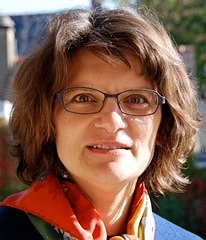
Solal Pirelli serves as a Lecturer at the Swiss Federal Institute of Technology Lausanne (EPFL), affiliated with the School of Computer and Communication Sciences (IC) and the Institute of Electrical Engineering (SIN). His primary responsibilities center on teaching within the Computer Science curriculum, specifically through the Embedded Systems Laboratory (ENS) under SIN-ENS. His academic focus spans Computer Science and Electrical Engineering, with specialized expertise in embedded systems development, hardware-software co-design, and real-time computing. This specialization aligns with the research priorities of EPFL's Embedded Systems Laboratory, which emphasizes low-power architectures, cyber-physical systems, and IoT security frameworks. No scientific awards or honors were documented in the available institutional records. Professional mentorship activities and research grant involvement are not explicitly referenced in current administrative profiles. His appointment status as an "Invited guest" suggests a non-permanent teaching role without indication of doctoral student supervision. He operates within the Embedded Systems Laboratory (ENS) at SIN, contributing to EPFL's integrated circuit design initiatives and embedded computing education programs through the Computer Science teaching division.
Dr Kai Li Lim is the St Baker Fellow in E-Mobility at the Dow Centre for Sustainable Engineering Innovation , part of the Faculty of Engineering, Architecture and Information Technology at The University of Queensland (UQ) . Specializing in data engineering , telematics , and autonomous vehicle systems , his research examines electric vehicle (EV) usage patterns , charging reliability , and spatiotemporal data analysis to inform policy and sustainable transport strategies. Education : BEng (Hons) in Electronic and Computer Engineering (University of Nottingham), MSc in Computer Science (Lancaster University), PhD in Artificial Intelligence and Robotics (The University of Western Australia, funded by Australian Government Research Training Programme). Research Interests include: Electric vehicle telematics and data analytics Computer vision and deep learning for autonomous navigation Policy development for sustainable transport Infrastructure planning for EV and hydrogen systems Integration of cloud computing and IoT in mobility solutions Publication Trends reveal a focus on EV charging behaviors , data platform architectures , and autonomous driving frameworks , with recent work addressing regional emission disparities , modular safety systems , and online assessment integrity . Scientific Awards : St Baker Fellow in E-Mobility, Visiting Fellowship at UC Davis Electric Vehicle Research Center, Australian Government Research Training Programme (PhD funding). Supervision and Grants : Available for supervision, Dr Lim has secured funding from Energy Consumers Australia , iMove CRC , and Australian Urban Research Infrastructure Network (AURIN) for projects on EV charging incentives, freight emissions modeling, and longitudinal vehicle data databases. Labs and Collaborations : Collaborates with UC Davis Electric Vehicle Research Center , UQ School of Civil Engineering , and UQ School of Electrical Engineering and Computer Science . Leads the UQ Teslascope Project and contributes to the Green Australian Vehicle Ownership (GreenAVO) Capability for AURIN .
Sudeep Pasricha is a Professor in the Department of Electrical and Computer Engineering at Colorado State University's Walter Scott Jr. College of Engineering, serving as Chair of Computer Engineering and Director of the Embedded, High Performance, and Intelligent Computing (EPIC) Laboratory. His educational background includes: B.E. in Electronics and Communication Engineering from Delhi Institute of Technology, India (2000) Ph.D. in Computer Science from the University of California, Irvine (2008) Prof. Pasricha's research centers on innovative software algorithms, hardware architectures, and hardware-software co-design techniques for energy-efficient, fault-tolerant, real-time, and secure computing. His work drives advancements in embedded systems, IoT, and cyber-physical systems through rigorous interdisciplinary approaches that bridge theoretical innovation with practical implementation challenges. His exceptional contributions have been honored with prestigious awards including: George T. Abell Outstanding Research Faculty Award IEEE-CS/TCVLSI Mid-Career Research Achievement Award IEEE/TCSC Award for Excellence for a Mid-Career Researcher AFOSR Young Investigator Award ACM Technical Leadership Award ACM SIGDA Distinguished Service Award With over 250 peer-reviewed publications yielding seven best paper awards and six nominations, Prof. Pasricha has filed multiple patents and co-authored influential books and book chapters. His academic leadership extends to editorial roles as Vice Chair of ACM SIGDA, Steering Committee Chair for IEEE Transactions on Sustainable Computing, and Senior Associate Editor for ACM Journal on Emerging Technologies in Computing Systems, alongside extensive conference organization spanning 150+ events. At CSU's EPIC Laboratory, he leads cutting-edge research on intelligent computing architectures that address critical challenges in energy efficiency, security, and real-time performance across emerging technology domains.
Ramon Canal is a Professor at the Universitat Politècnica de Catalunya (UPC), affiliated with the Barcelona School of Informatics and the Computer Architecture Department. He has served as Vice Dean of postgraduate studies and leads the VirtuOS (Virtualization and Operating Systems) research group. His academic background includes BSc, MSc, and PhD from UPC, with thesis supervision by Antonio González (UPC) and James E. Smith (University of Wisconsin-Madison). He completed sabbaticals at Harvard University (2006-2007) and University of Cyprus (2019-2020). Education: PhD, MSc, BSc in Computer Engineering (UPC) Research focus: Microarchitecture security, reliability across circuit/system levels, cloud optimization Recent publications address privacy in IoT, secure hardware accelerators, and safety-critical systems. His work contributes to the DRAC project (2019-2022), Red-RISCV network, and Horizon's Vitamin-V project. Awards include HiPEAC Paper Awards, IEEE Senior Member status, Fulbright recognition, and multiple education excellence accolades. Scientific Honors HiPEAC Paper Award (ISCA-44, 2017) IEEE Senior Member (2016) Best Paper Nominee (ICCD-32, 2014) UPC Outstanding PhD Award supervision (2011) He advises current MSc students and has mentored multiple PhD graduates. Professional activities span academic leadership, research collaborations with Barcelona Supercomputing Center (BSC), and technical contributions to reliability analysis frameworks like RECIPE and FRACTAL.
Iza Marfisi is a Professor at the University of Le Mans where she became a University Professor in 2024 and was appointed Head of the IEIAH (Computer Environments for Human Learning) team in 2025. She works within the Claude Chappe Institute of Computer Science, focusing on developing educational technologies that empower teachers to create their own digital learning tools. Her research bridges computer science and educational theory to enhance teaching practices through accessible technology solutions, with particular emphasis on making advanced tools usable for non-technical educators. Marfisi's research spans Educational Technology, Serious Games for Education, Mobile Learning, and Extended Reality (XR), with a consistent focus on teacher-centered design. She develops "no-code" authoring tools enabling educators to create custom digital learning experiences deployable across various hardware platforms. Her work specifically targets situated learning with mobile devices, human-computer interactions for learning, and educational applications of mixed and extended reality. This approach democratizes access to advanced educational technologies by removing technical barriers for teachers. Analysis of her recent publications reveals a clear evolution from foundational mobile learning frameworks toward increasingly sophisticated integration of mixed reality and artificial intelligence in educational contexts. Her 2024-2025 work shows particular emphasis on generative AI for educational activity design, immersive pharmacology learning, and collaborative frameworks that connect multiple learning technologies. The publications consistently emphasize practical teacher needs, with many studies conducted in authentic educational settings rather than controlled laboratory environments. Marfisi actively supervises doctoral research across multiple dimensions of educational technology. Her current advisees explore artificial intelligence for mixed reality activity creation, mixed reality for professional training, free software approaches to serious games, and innovative interaction techniques for collaborative learning. Previous students have investigated mixed reality for fraction learning, educational game indexing systems, and mobile educational game design models. Her supervision portfolio demonstrates both depth in specific technical areas and breadth across the educational technology landscape. As Head of the IEIAH team at LIUM since 2025, Marfisi leads a research group focused on computer environments for human learning. She also serves on the Board of Directors for both the Serious Game Society and the IKIGAI association (Games for citizens), and was elected Deputy Director of Research at the Claude Chappe Institute of Computer Science since 2018. Her leadership extends to communications management for the IEIAH team and participation in the LIUM Laboratory Council (2022-2024), demonstrating significant institutional impact beyond her direct research contributions.
Milionis Apostolos is a Professor in the Department of Digital Systems at the University of Piraeus, part of the School of Information and Communication Technologies. He has been teaching in the Department's Undergraduate and Postgraduate programs since 2005. He earned his diploma from the Department of Computer Engineering and Informatics at the University of Patras in 1994 and completed his PhD at the Department of Electrical and Computer Engineering of the National Technical University of Athens in 1999. Professor Milionis specializes in Distributed and Embedded Systems with extensive research in distributed computing architectures, embedded telecommunications, intelligent pervasive systems, and real-time applications. His work spans both theoretical and practical implementations including satellite communications and industrial HPCN applications. He has developed innovative applications such as a digital companion for autonomous navigation for the blind using smartphones. He has served as Scientific Director of the research project T1ΕΚ-593 MANTO and the authorship project KALLIPOS+ 556 "Embedded Systems". His industry experience includes positions as R&D Manager and Technical Director of Network Systems, along with service as a Scientific Associate at the Telecommunications Laboratory and NTUA's Research and Development Center. Scholarship from the Hellenic Republic for first place in his year Scholarship from the Hellenic Republic for second place in his year Scholarship from the Bodossaki Foundation for doctoral thesis preparation Professor Milionis has managed numerous significant research projects including ESA SATWAYS, HTCI A/2, MIKRO2-16/En-IV, ESPRIT EROPPA, INNO-TTN, and PAVE MediaGate. He has served on Project Coordination Committees for ICT-FET ATRACO, CELTIC IMPULSE/GENIO, Eurostars Z-Phone/NetHomEra, ENIAC END, AAL PeerAssist, and Tender III/98/028 Tetramed projects. He has also evaluated research programs for the GSRT and the Hellenic National Research Council. He has over 90 publications in international scientific journals and conferences, and developed widely implemented software for an ATM device driver for the PowerQUICC-II communications processor architecture.
Dr. Marika Karbstein is a Researcher at the Zuse Institute Berlin (ZIB), where she has been employed since April 2006. Affiliated with the DFG Research Center Matheon "Mathematics for key technologies" from 2006-2014, she earned her doctoral degree in Mathematics from Technische Universität Berlin in 2013. Her work bridges theoretical optimization and practical public transport applications. Her academic background includes: 1999-2005: Studies of Applied Mathematics (Wirtschaftsmathematik) at Technische Universität Berlin 2003-2006: Student assistant at Konrad-Zuse-Zentrum Berlin 2013: Doctoral degree in Mathematics (Dr. rer. nat), Technische Universität Berlin Dr. Karbstein specializes in mathematical optimization for public transport systems, focusing on strategic planning, service design, and passenger behavior modeling. Her research integrates timetabling, line planning, and passenger routing through advanced integer programming and network optimization techniques. She develops practical solutions for infrastructure design, crew scheduling, and fare planning, emphasizing real-world applicability in urban transport networks. Her methodology combines theoretical rigor with implementation-focused approaches to improve system efficiency and user experience. Her publication record shows consistent innovation in periodic timetable optimization and integrated transport modeling. Early work established foundations in Steiner tree problems for transport networks, evolving into sophisticated frameworks for passenger routing and line planning. Recent contributions emphasize direct connections and transfer minimization, reflecting industry needs for seamless passenger journeys. The research demonstrates strong interdisciplinary connections between operations research, computer science, and transportation engineering. Her scientific recognition includes: Diploma Thesis Award of the German Operations Research Society (2006) Runner-Up for Richard-Rado-Prize (2014) Dissertation Award of German Operations Research Society (2014) VBKI Wissenschaftspreis (2014) Tucker Prize Finalist (2015) Best Paper Award at ATMOS 2013 As a core member of the DFG Research Center Matheon, Dr. Karbstein contributed to major collaborative projects funded by the German Research Foundation. Her work with Ralf Borndörfer at ZIB has led to practical implementations including Potsdam's 2010 line plan optimization. While specific grants aren't detailed, her research has been sustained through institutional support at ZIB and Matheon's interdisciplinary framework. She actively collaborates with transport operators to translate theoretical advances into operational improvements. Dr. Karbstein operates within ZIB's renowned applied mathematics environment, leveraging its high-performance computing resources. Her work extends through Matheon's consortium connecting Berlin's mathematics community. Current research focuses on integrating passenger behavior models with real-time scheduling systems, advancing the frontier of data-driven transport optimization.
Associate Professor Wayne Wobcke is a faculty member in the School of Computer Science and Engineering at the University of New South Wales (UNSW), where he has been employed since 2002. His academic career includes previous positions at the University of Sydney until 1998, British Telecom Labs in the UK for three years, and the University of Melbourne for one year. He holds a PhD in Computer Science from the University of Essex (1989), an MSc from the University of Queensland (1985), and a BSc (Hons) in Mathematics/Computer Science from the University of Queensland (1984). Dr. Wobcke's research spans both theoretical and practical aspects of artificial intelligence and data science. His work encompasses intelligent agents, data mining, agent-based modeling, dialogue management, personal assistants, recommender systems, and computational social science. He has collaborated extensively with industry through three Cooperative Research Centres (Smart Internet Technology CRC, Smart Services CRC, and Data to Decisions CRC), where he served as a Programme Manager and Project Leader for over 10 years. Notable achievements include developing a voice-controlled mobile application for email and calendar interaction (a precursor to Apple's Siri) and deploying a people-to-people recommender system for online dating on one of Australia's largest dating sites. His recent research focuses on data science in humanitarian contexts and machine learning applications in official statistics, conducted in collaboration with BPS (Statistics Indonesia) and STIS (Politeknik Statistika, Indonesia). His publication record shows a consistent trajectory of impactful research, with recent work concentrating on poverty targeting, domain adaptation, natural language processing for recommender systems, and political opinion mining. Scientific Awards: Best Paper Nomination, 11th Workshop on Argument Mining (2024) UNSW Arc Postgraduate Research Supervisor Award (2017, 2018) AAAI Deployed AI Application Award, Twenty-Sixth Annual Conference on Innovative Applications of Artificial Intelligence (2014) Best application paper runner up, 17th Pacific-Asia Conference on Knowledge Discovery and Data Mining (2013) Dr. Wobcke has successfully supervised numerous research students, with Irwan Rahadi currently working on 'Causal Modelling and Machine Learning for Official Statistics'. His grant portfolio includes significant funding from the Australian Research Council and various Cooperative Research Centres, totaling over $3.7 million since 2003. He teaches COMP9414 Artificial Intelligence and COMP9727 Recommender Systems at UNSW.
David Hovemeyer is an Associate Teaching Professor at the Whiting School of Engineering, Johns Hopkins University . He holds a PhD (2005) and MS (2001) in Computer Science from the University of Maryland and a BA (1994) from Earlham College. Prior to joining JHU in 2019, he taught at Vassar College and York College of Pennsylvania. Education : PhD, MS, and BA in Computer Science Research : Focuses on static analysis , systems software , and computer science education Projects : FindBugs, CloudCoder, ProgSnap2, FunWithSound His recent work includes frameworks for declarative autograders , formats for programming process data , and tools for educational software development . He has been recognized with Excellence in Teaching Awards and contributes to open-source educational platforms like GitHub. Scientific Awards : 2024 Whiting School Teaching, Advising, and Mentoring Award Excellence in Teaching Award (multiple years) David maintains an active role in the academic community through peer instruction , programming contests, and recommendation letter advising . He also develops tools like FreePoll and Declarative Autograder Framework to enhance teaching efficiency.
Roman Franz Froschauer is a Professor of Production Informatics at the Upper Austria University of Applied Sciences, Research Center Wels. Since 2018, he has served as Director of Studies for the Master's program in Robotic Systems Engineering and leads the Smart Automation & Robotics research group. His career spans academic and industrial roles, including senior software development and project management at AlpinaTec Technical Products GmbH (2010-2016). Education: Ph.D. in Computer Science (2010) from Johannes Kepler University Linz; Master's in Industrial Informatics (2005) from Upper Austria University of Applied Sciences. Research Areas: Software engineering for intelligent automation systems, human-robot interaction (HRI), control systems, and applications of IEC 61499 standards. His work focuses on proactive collaboration, trajectory planning, and user-centered design for assistive robots in office and industrial settings. Scientific Activities: Active in peer-review, conference organization, and technology development. Projects include VRoboCoop (human-robot trust), MARIE (office robotics), and Autility (automated utility vehicles). Key Contributions: Frameworks for modular manufacturing (PlugBot), skill-based engineering, and intralogistics automation (ATLAS).
Sandrine Blazy is a Professor in the Computer Science Department at the University of Rennes, France. She is a member of CELTIQUE (also referred to as Epicure), a joint project-team with Inria Rennes Bretagne Atlantique and the IRISA laboratory. Since 2021, she has served as deputy director of the IRISA CNRS UMR 6074 laboratory and will be the general chair for POPL 2026, which will be held in Rennes. She is also a member of the editorial board of the LMCS journal. Dr. Blazy completed her PhD at CNAM (Conservatoire National des Arts et Métiers) in 1993 with a thesis titled "La spécialisation de programmes pour l'aide à la maintenance du logiciel" (Program Specialization for Software Maintenance Assistance). She later completed her Habilitation à diriger des recherches (HDR) in 2008 at the University of Évry Val d'Essonne with a thesis titled "Sémantiques formelles" (Formal Semantics). Her research focuses on the formal verification of program transformations and semantic properties of programming languages, particularly in the context of the CompCert compiler and Verasco static analyzer. She develops mechanized semantics using the Coq (or Rocq) proof assistant to ensure software correctness and security. A prime application domain of her work is software security, including constant-time programming for cryptographic applications and software obfuscation techniques. Her teaching includes mechanized semantics (in Coq), functional programming (in OCaml), formal methods (using Why3), and software vulnerabilities. Dr. Blazy's publication record from 2019-2025 shows a sustained focus on verified compilation techniques, particularly in preserving security properties during compilation. Her work bridges theoretical formal methods with practical compiler implementation, resulting in tools that have real-world impact in safety-critical systems. She has made significant contributions to the CompCert formally verified compiler project, with particular attention to constant-time preservation for cryptographic applications and JIT compilation verification. Her scientific achievements have been recognized with several major awards: CNRS Silver Medal (2023) Lucas Award from Formal Methods Europe (2023) ACM SIGPLAN Programming Languages Software Award for CompCert (2022) ACM Software System Award for CompCert (2021) Dr. Blazy has been actively involved in the programming languages research community, serving on numerous program committees for major conferences including POPL, ICFP, PLDI, and CPP. She has mentored students and contributed to education through teaching mechanized semantics and formal methods. Her work with the CompCert compiler has led to practical applications in safety-critical systems, with industry collaborations documented in publications like "CompCert: Practical experience on integrating and qualifying a formally verified optimizing compiler" (ERTS 2018). She leads research within the CELTIQUE project team, which focuses on developing trustworthy software using deductive verification. Her team works on advancing the state of the art in formal verification of compilers and static analyzers, with applications in security-critical domains including cryptographic implementations and safety-critical embedded systems.
Berta María Guijarro Berdiñas is a Researcher in the Department of Computer Science and Artificial Intelligence at the University of A Coruña , Spain. She is affiliated with the Laboratory for Research and Development in Artificial Intelligence and teaches courses like Machine Learning , Development of Intelligent Systems , and Programming at both undergraduate and postgraduate levels. Research Focus: Her work lies at the intersection of Artificial Intelligence , Machine Learning , and Knowledge-Based Systems . Key contributions include frugal learning (limited data), anomaly explanation , and distributed learning for edge devices. She applies these to areas like health informatics , forest fire management , and human-robot interaction . Recent Publications span explainable AI , anomaly detection , multi-agent systems , and low-power machine learning . Her articles appear in top venues like Expert Systems with Applications and IEEE Transactions on Neural Networks and Learning Systems . Grants & Projects include EU-funded initiatives, Spanish Ministry of Science grants, and regional collaborations. She focuses on AI for healthcare , smart systems , and distributed learning .
Dr. José Luis Calvo Rolle serves as a Professor in the Department of Industrial Engineering at the School of Engineering, Universidade da Coruña (UDC), specializing in Systems Engineering and Automation. His research focuses on intelligent control systems, fault detection, and virtual instrumentation within the Cybernetic Science and Technology Research Group. Teaches across multiple programs including Master's in Industrial Computing and Robotics, Textile Technology, and Occupational Risk Prevention Coordinates thesis supervision across Industrial Engineering and related disciplines His research spans intelligent control systems and optimization, with significant contributions in virtual sensors, fault detection, and AI-driven modeling for industrial applications. Current projects integrate machine learning with industrial processes for naval construction, wastewater treatment, and precision livestock farming, demonstrating cross-disciplinary impact from energy systems to agricultural technology. Recent publications reveal strong trends in applying deep learning to industrial metaverse frameworks, wastewater optimization, and livestock monitoring systems. His work bridges theoretical control engineering with practical implementations in energy management, naval manufacturing, and sustainable agriculture, frequently utilizing dimensionality reduction and one-class classification techniques. Dr. Calvo Rolle actively mentors students through thesis supervision across multiple engineering disciplines and coordinates research projects with diverse funding sources including the European Commission, Spanish National Research Agency, and industrial partners like Navantia and Telefónica. His laboratory work centers on the Cybernetic Science and Technology Research Group, developing testbeds for industrial automation, virtual instrumentation, and AI-driven monitoring systems. Current initiatives include digital twin implementations for naval manufacturing and smart energy management systems.
Prof. Dr.-Ing. Robert Baumgartl is a faculty member at the Dresden University of Applied Sciences , affiliated with the Faculty of Computer Science/Mathematics . He teaches courses on Operating Systems , Real-Time Systems , and Information Security , with a focus on practical implementations and system-level programming. Research Interests: Real-time task scheduling and resource management Operating system design and optimization Embedded systems and hardware-software co-design Security protocols for distributed systems Low-level programming with Rust and safety-critical applications Contact: Room Z357, HTW Dresden. Office hours: Thursdays, 10:00-11:00 a.m. (SS 2025). Email: robert.baumgartl@htw-dresden.de .
Prof. Dr.-Ing. Holger Blume serves as Vice President for Research and Transfer at Leibniz University Hannover while maintaining his academic position as Professor in the Architectures and Systems Section within the Faculty of Electrical Engineering and Computer Science. He holds multiple leadership positions including Chairperson of the Research Commission and Central Ethics Committee, Executive Board member of eNIFE (Leibniz Research Initiative for Neurosciences), and membership in both the Laboratory of Nano and Quantum Engineering and L3S Research Centre. His research interests span computer architecture, hardware design, signal processing, AI accelerators, hearing aid technology, and biomedical engineering. His work bridges theoretical computer science with practical applications in automotive systems, medical devices, and quantum engineering. Professor Blume's research demonstrates strong interdisciplinary connections between electrical engineering, computer science, and biomedical applications, with particular emphasis on hardware-oriented solutions for real-world problems. Analysis of his recent publications (2023-2025) reveals a strong focus on hardware acceleration for AI and signal processing applications, particularly in automotive radar/LiDAR systems and hearing aid technology. His work shows consistent innovation in RISC-V processor design, specialized hardware for mathematical functions, and biomedical applications of engineering principles. The research demonstrates a clear trajectory toward energy-efficient, specialized computing architectures for specific application domains. As Vice President for Research and Transfer, Professor Blume oversees significant research initiatives at Leibniz University Hannover, which hosts multiple Clusters of Excellence including PhoenixD (Photonics, Optics, and Engineering), QuantumFrontiers, and Hearing4all. The university participates in numerous collaborative research centers and junior research groups funded by DFG, BMBF, and EU programs. Professor Blume is actively involved in multiple research facilities including the Laboratory of Nano and Quantum Engineering and the L3S Research Centre. His work connects with Leibniz University's research focuses on optical technologies, quantum optics and gravitational physics, and biomedical research and technology. His leadership positions indicate strong involvement in shaping the research strategy and ethical framework of the university's scientific endeavors.


.JPG)