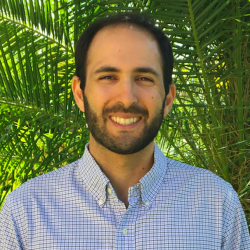
Xinjie (Cynthia) Ma is an Assistant Professor in the Department of Accounting at the University of Iowa's Tippie College of Business. Previously, she held a Visiting Assistant Professor position at the University of Iowa in 2025. Her research bridges financial accounting with advanced technologies, focusing on corporate disclosure mechanisms, human capital valuation, and AI/NLP applications in capital markets. She earned her PhD in Accounting from Temple University in 2021. Research Expertise : Financial accounting, CSR strategy alignment, human capital analytics, and machine learning applications Publications : 2023 Review of Accounting Studies paper on CSR-performance alignment, 2022 The Accounting Review article on text-based investment opportunity sets Teaching : Instructed graduate Financial Statement Analysis at National University of Singapore (2021-2025), undergraduate Managerial Accounting at Temple University (2019) Academic Affiliation : Tippie College of Business Her recent work analyzes how textual disclosures in 10-K filings inform investment decisions and explores labor demand dynamics through real-time market data. Currently, she's developing machine learning models to predict startup innovation potential and examining managerial communication patterns in earnings calls. Email: xinjie-ma@uiowa.edu
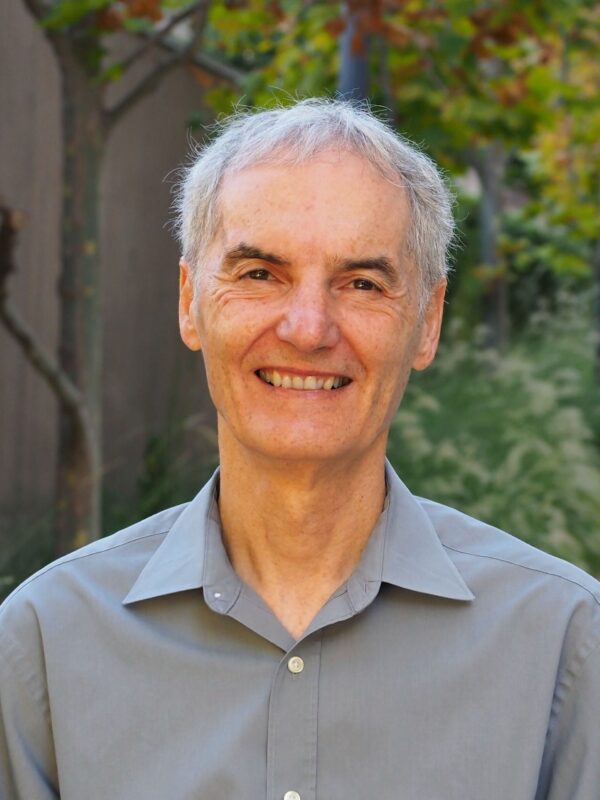
René Jr Landry is a full Professor in the Department of Electrical Engineering at École de technologie supérieure (ETS), Université du Québec, specializing in Global Navigation Satellite Systems (GNSS), avionics, and wireless communication technologies. His academic journey includes a B.Ing. from Polytechnique Montréal, M.Sc. from University of Surrey (UK), and Ph.D. from SupAréo in Toulouse. He maintains active research leadership through two key laboratories: LASSENA (Laboratory of Space Technologies, Embedded Systems, Navigation and Avionics) and LACIME (Communications and Microelectronic Integration Laboratory). His research spans critical aerospace navigation domains including GNSS signal processing, inertial navigation systems, software-defined radio for avionics, radio frequency interference mitigation, and indoor positioning technologies. Landry's work addresses real-world challenges in satellite navigation robustness, precision positioning in urban/denied environments, and next-generation avionic system security. His current projects focus on blockchain-enhanced IoT security, AI-driven GNSS disruption analysis, and adaptive RF front-ends for multi-band avionics applications. Analysis of his recent publications reveals strong emphasis on resilient positioning systems through multi-constellation integration (particularly Iridium-NEXT), blockchain applications for navigation security, and explainable AI techniques for GNSS signal quality assessment. His work increasingly bridges traditional navigation engineering with cutting-edge security and machine learning paradigms. 2014 Prix d'excellence du c.a. pour les services à la collectivité Landry has supervised over 100 graduate students across doctoral, master's, and research projects since 2005, with current supervision extending through Summer 2025. His research funding supports multiple industry partnerships focused on avionics certification, software-defined radio implementations, and next-generation navigation systems. The LASSENA laboratory under his leadership develops certified avionic products from open-source SDR platforms and advances multi-sensor fusion techniques for challenging navigation environments. His research infrastructure includes specialized facilities for GNSS signal simulation, avionics hardware testing, and multi-sensor integration. Current work emphasizes flight-tested validation of RF front-end technologies, blockchain-secured navigation data, and real-time interference mitigation systems for aviation applications.
Justin Sirignano is a Professor of Mathematics at the University of Oxford, affiliated with the Mathematical Institute. His research bridges Applied Mathematics, Machine Learning, and Financial Mathematics, developing novel mathematical frameworks and computational methods. Education: B.A. in Mathematics, Princeton University PhD in Mathematics, Stanford University Chapman Fellow, Imperial College London His research focuses on theoretical and applied aspects of machine learning, particularly in mean-field analysis of neural networks , deep learning for PDEs/SDEs , and scientific machine learning . He has pioneered methods for solving complex financial and scientific problems using data-driven approaches. His recent publications emphasize recurrent neural networks, reinforcement learning, and PDE closure models with applications in turbulence simulation and hypersonic flows. These works span numerical methods, optimization, and stochastic processes. Scientific Awards: 2014 SIAM Financial Mathematics and Engineering Conference Paper Prize Grants & Collaborations: He has secured over $16.5 million in funding from agencies like ONR, NSF-EPSRC, and DoE. His PhD students hold positions at J.P. Morgan, Bank of America, and other institutions. Labs & Teams: He leads research groups in Machine Learning and Mathematical Finance at Oxford, collaborating with institutions like Notre Dame, Boston University, and UIUC.
Alexander J Sundermann serves as an Assistant Professor in the Department of Epidemiology at the University of Pittsburgh School of of Public Health. His research focuses on leveraging pathogen genomic surveillance and machine learning to revolutionize infection prevention practices in healthcare settings, with demonstrated impacts on outbreak detection accuracy and intervention speed. Education: 2013: BS in Microbiology, University of Rochester 2014: MPH in Infectious Diseases and Microbiology, University of Pittsburgh 2022: DrPH in Epidemiology, University of Pittsburgh Dr. Sundermann's work centers on whole-genome sequencing of pathogens to detect healthcare-associated transmission invisible to traditional methods. His research demonstrates how genomic surveillance reveals hidden outbreaks of vancomycin-resistant Enterococcus (VRE) and mucormycosis, directly linking colonization to clinical outcomes like ICU admission and mortality. He pioneers machine learning tools that analyze electronic health records to identify transmission routes, creating more efficient outbreak investigation frameworks across hospital networks. His publication portfolio (2019-2025) shows a clear trajectory toward integrated genomic-clinical surveillance systems, with recent work quantifying clinical and economic impacts while addressing implementation barriers. This interdisciplinary approach bridges epidemiology, genomics, and data science to transform infection prevention protocols. Scientific Awards: No awards listed in available information. Advising and Grants: While specific advisees and grant details aren't provided, his multi-institutional collaborations suggest active mentorship within genomic epidemiology research teams. His work with the National Healthcare Safety Network indicates engagement with major public health surveillance infrastructure. Labs and Teams: Dr. Sundermann leads cross-functional teams including microbiologists, data scientists, and clinicians across multiple healthcare systems. His UPMC outbreak investigations and national linen contamination studies demonstrate operational frameworks for real-time genomic surveillance implementation in complex hospital environments.
Yuanbo Xiangli is a postdoctoral researcher at Cornell University , advised by Prof. Noah Snavely. Previously, he obtained his Ph.D. from the Multimedia Lab in the Department of Information Engineering at the Chinese University of Hong Kong (CUHK) , supervised by Prof. Dahua Lin. His research focuses on 3D computer vision and deep generative modeling for urban scene reconstruction. 3D scene reconstruction from sparse images Neural rendering and Gaussian splatting Deep generative modeling for urban environments Multi-source geospatial data processing City-scale modeling and synthetic datasets His recent work includes advanced NeRF extensions (BungeeNeRF, GridNeRF), Gaussian splatting enhancements (GSDF, Scaffold-GS), and urban scene datasets (MatrixCity, OmniCity). A pioneer in combining classical vision techniques with modern deep learning approaches. ICLR 2020 Spotlight Award Collaborates with leading researchers in photorealistic rendering, including Noah Snavely and Dahua Lin. Develops systems enabling efficient 3D reconstruction from diverse data sources like satellite imagery and street-level panoramas.
Gabriele Facciolo is a Professor at the Centre Borelli, ENS Paris-Saclay, France. He is a Senior Member of the Institut Universitaire de France (IUF) and holds an Innovation Chair (2025). His research focuses on image and video processing, remote sensing, and super-resolution techniques. Current affiliations: Centre Borelli (ENS Paris-Saclay), Institut Universitaire de France His research explores advanced algorithms for satellite stereo pipelines, real-time deblurring, denoising, and explainable AI systems for legal evidence enhancement. He coordinates projects like ANR SURECAVI (Super-resolution for visible camera systems) and ANR IMPROVED (video enhancement for judicial use), with recent work on Gaussian Splatting for Earth Observation and multi-date satellite super-resolution. Notable scientific achievements include the IGARSS 2025 Top 10 Student Paper Award and leadership in projects funded by ANR (€890k) and Prime Minister's entities (SGDSN/ANSSI). His work bridges computational imaging, defense applications, and digital forensics. Project leadership: SURECAVI, IMPROVED, BOFOR Key technologies: GPU acceleration, real-time processing, optical flow estimation, RPC refinement Gabriele actively contributes to open-source tools like S2P (Satellite Stereo Pipeline), MGM (MultiGlobal Matching), and OMNIflip. He teaches in the Master MVA program and collaborates across institutions (ENPC, UPF).
Vinod M. Vokkarane is a Professor in the Department of Electrical and Computer Engineering at the University of Massachusetts Lowell, where he serves as Director of the Center for Smart Cyber-Physical Systems (SCyPS) and Director of Advanced Computer Network Labs. Previously, he was an Associate Professor at University of Massachusetts Dartmouth from 2004 to 2013 and a Visiting Scientist at MIT's Research Laboratory of Electronics from 2011 to 2014. His extensive research portfolio spans multiple domains of advanced networking and cyber-physical systems. Dr. Vokkarane earned his educational foundation with a B.S. from University of Mysore, India (1999), followed by an M.S. (2001) and Ph.D. (2004) in Computer Science from the University of Texas at Dallas. His dissertation focused on optical burst-switched networks, establishing the foundation for his future research trajectory. His research interests center on Cyber-Physical Systems, Network Optimization, Reliability, Smart Grids, and Cyber-Security, with particular expertise in the design, analysis, and modeling of architectures, protocols, and algorithms for ultra-high speed networks including Optical networks, Grid/Cloud networks, and Big-data networks. His work bridges theoretical foundations with practical implementations, often addressing critical challenges in network reliability, security, and efficiency. His research has received significant recognition through numerous best paper awards and substantial external funding. Analysis of his recent publications reveals a clear evolution toward increasingly sophisticated integration of cyber-physical systems with power infrastructure, particularly in the areas of grid resilience and observability. His work has expanded from fundamental optical networking research to address critical infrastructure challenges, with a growing emphasis on machine learning applications for network optimization and power system monitoring. The recent focus on PMU networks, disaster resilience, and cyber restoration demonstrates his strategic pivot toward addressing national security and critical infrastructure protection challenges. UMass Dartmouth Scholar of the Year Award (2011) UMass Dartmouth Chancellor's Innovation in Teaching Award (2010-11) University of Texas at Dallas Computer Science Dissertation of the Year Award (2003-04) Multiple Best Paper Awards including IEEE GLOBECOM 2005, IEEE ANTS 2010, ONDM 2015, ONDM 2016, and IEEE ANTS 2016 Texas Telecommunications Engineering Consortium Fellowship (2002-03) Dr. Vokkarane has successfully mentored numerous graduate students who have contributed significantly to his research projects, with several going on to successful careers in academia and industry. His research has been consistently supported by major funding agencies including NSF, DOE, and USMC, with recent projects totaling over $5 million in funding. Current projects include Unified Post-Disaster Restoration Planning for Cyber-Physical Power Distribution Systems (ONR, $550K), CyberCARE: Northeast University Cybersecurity Center (DOE, $3.5M), and Flexible Spectrum Allocation in Next-Generation Optical Networks (NSF, $350K). He leads the Center for Smart Cyber-Physical Systems (SCyPS) and Advanced Computer Network Labs at UMass Lowell, where his research teams work on cutting-edge problems in network architecture, cyber-physical security, and infrastructure resilience. His labs collaborate extensively with national laboratories and industry partners to translate theoretical advances into practical solutions for real-world infrastructure challenges.
Ghassan AlRegib is the John and Marilu McCarty Chair Professor in the School of Electrical and Computer Engineering at Georgia Institute of Technology. He directs the Omni Lab for Intelligent Visual Engineering and Science (OLIVES), the Center for Energy and Geo Processing (CeGP), and previously led Georgia Tech's MENA initiatives (2015-2018). His research spans machine learning, image processing, and seismic interpretation with real-world applications in autonomous vehicles, medical imaging, and subsurface analysis. His research focuses on trustworthy AI systems through three pillars: enhancing interpretability, improving robustness/generalizability, and tackling domain-specific challenges. Key interests include human-in-the-loop frameworks, uncertainty quantification, explainable AI, and physics-driven learning. The OLIVES lab pioneered modern machine learning applications in seismic interpretation and developed open-source datasets for geological fault analysis. Dr. AlRegib's scientific contributions include over 270 publications, multiple U.S. patents, and leadership roles as Technical Program co-Chair for ICIP 2020/2024. His work demonstrates significant impact through awards like the IEEE Fellow designation (2022) and multiple best paper awards at premier conferences. IEEE Fellow (2022) 2023 EURASIP Best Paper Award 2019 ICIP Best Paper Award 2017 Denning Faculty Award for Global Engagement CSIP Research & Service Awards (2003) He has advised numerous PhD students including Dr. Ashraf Alattar (now Auburn professor) and Dr. Zhiling Long (Kennesaw State faculty). His lab structure emphasizes collaborative teams comprising postdocs, senior/junior PhD students, and undergraduates working on high-impact problems from autonomous systems to medical diagnostics. Current research thrusts include trustworthy neural networks, human-in-the-loop frameworks, and deployment of machine learning in seismic interpretation and ophthalmology.
Aniello Murano is a Professor of Computer Science at the Department of Electrical Engineering and Information Technologies , University of Naples Federico II. He serves as Scientific Director of the ASTREA (Automated Strategic Reasoning) Laboratory and leads cutting-edge research in Artificial Intelligence, Strategic Reasoning, Multi-Agent Systems , and Formal Verification . Research Interests : Strategic reasoning under perfect/imperfect information, specification/verification/synthesis of reactive systems, temporal/modal logics, automata theory, parity games, game theory, mechanism design, and formal languages. Notable Projects : PNRR Research Unit Coordinator (2023-2025) on Resilient AI, PRIN 2020 Unit Coordinator (RIPER: Resilient AI-Based Self-Programming and Strategic Reasoning), H2020-MSCA SEAL (Principal Coordinator). Awards & Honors : JPMorgan Faculty Research Award (2022), Royal Society Award (2016), Best Paper PRIMA (2015), INDAM Project Leader (2023), Italian Scientific Habilitation (2017-2018). Students & Postdocs : Supervised 6 PhD students (e.g., Silvia Stranieri, Vadim Malvone) and mentored postdocs such as Munyque Mittelmann and Bastien Maubert. Laboratory : Leads ASTREA Lab, focusing on automated strategic reasoning and resilient AI systems.
Mark S. Handcock is a Distinguished Professor in the Department of Statistics and Data Science at the University of California, Los Angeles (UCLA), where he leads research at the intersection of statistical methodology and applied problems in social sciences, epidemiology, and environmental science. His work bridges theoretical statistics with real-world challenges through innovative methodological development. His primary research interests encompass statistical models for social networks, network inference, methodology for hard-to-reach population surveys, spatial processes, demography, and environmetrics. Handcock has pioneered advances in exponential-family random graph models (ERGMs) and developed foundational R packages like ergm and tergm within the statnet suite, enabling sophisticated network analysis across disciplines. Analysis of his recent publications (2023-2025) reveals three dominant research thrusts: (1) Antarctic sea ice modeling using Bayesian reconstruction and temporal variability analysis, (2) epidemiological modeling of infectious disease transmission dynamics (particularly COVID-19), and (3) methodological innovations in network inference and causal analysis over stochastic networks. His work consistently integrates advanced computational statistics with domain-specific applications in climate science, public health, and social systems.
Marc Sachon is a Full Professor and Director of the Department of Operations, Information, and Technology at IESE Business School, University of Navarra . He serves as Academic Director for Advanced Management Programs (AMP) and specialized courses like Successful Change Management and Industry 4.0 . His leadership extends to the annual IESE Automotive Industry Conference (since 1986) and consulting engagements with global firms such as BMW Group , Phoenix Group , and Traton Group . PhD in Industrial Engineering and Engineering Management from Stanford University MBA from IESE Business School Master's in Aerospace Technology from University of Stuttgart His research focuses on operations strategy , particularly in the automotive industry , and the impact of Industry 4.0 on manufacturing and logistics. He explores how digital transformation reshapes value chains, emphasizing human-machine collaboration and supply chain resilience. His work spans academic journals like IEEE Transactions and business publications like IESE Insight , with case studies on companies such as Porsche and Netflix . Professor Sachon has received multiple teaching awards and maintains an active consulting practice across industries including airlines , pharmaceuticals , and logistics . He previously worked at Airbus and IBM , and currently advises a mobility startup board. His recent publications highlight trends in electric mobility , 3D printing , and supply chain sustainability .
Associate Professor Dan Dongseong Kim is Deputy Director of UQ Cybersecurity and an Associate Professor at The University of Queensland (UQ), Australia. Previously, he held permanent academic positions at The University of Canterbury (UC), New Zealand (2011-2018) as a Senior Lecturer and Lecturer. His research focuses on Cybersecurity and Dependability for AI, IoT, Autonomous Vehicles, Cloud Computing, and Moving Target Defenses (MTD). Doctor of Philosophy in Computer Engineering from Korea Aerospace University Postdoctoral Research at Duke University (2008-2011) Visiting Scholar at University of Maryland (2007) Dan's work explores Graphical Security Models , Moving Target Defense for proactive resilience, and AI-Driven Cybersecurity with emphasis on adversarial robustness and interpretable models. His recent publications (2024-2025) span journals like IEEE Transactions on Dependable and Secure Computing and conferences such as DSN , addressing automated defense, evolving attacks, and hardware-aware security frameworks. He has advised 15 Ph.D. graduates, including researchers now at institutions like RMIT University, La Trobe University, and CSIRO's Data61. Current supervision includes projects on Automated Penetration Testing , AI-Based Intrusion Response , and Moving Target Defense . Dan's research is funded by agencies including the Republic of Korea's Agency for Defence Development and US Army Research Lab . His professional roles include Associate Editor for IEEE Communications Surveys and Tutorials and Steering Committee Chair for IEEE PRDC .
Robert M. Weikle, II is a Professor in the Charles L. Brown Department of Electrical and Computer Engineering at the University of Virginia, with a courtesy appointment in the Department of Physics. He earned his B.S. from Rice University (1986), M.S. (1987), and Ph.D. (1992) in Electrical Engineering from Caltech, followed by postdoctoral work at Chalmers University of Technology (1992). His research focuses on millimeter-wave and terahertz electronics , applied electromagnetics, integrated antennas, low-noise sensors, and heterogeneous integration of compound semiconductors. His work bridges electronics and photonics for spectrum access, with applications in astronomy, spectroscopy, and metrology. He has published extensively on micromachined silicon substrates, superconducting materials, and emerging technologies. Scientific Awards: IEEE Microwave Prize (1993) David A. Harrison III Award (1999) University of Virginia All-University Outstanding Teaching Award (2000) Edlich-Henderson Innovator of the Year (2016) Fulbright Scholar (2001) As Chief Technology Officer and co-founder of Dominion Microprobes, Inc., he commercializes micromachined wafer probes for high-frequency metrology. His lab, located in E220 Thornton Hall and the Jesse W. Beams Physics Building, has produced 15+ recent publications on submillimeter-wave devices, THz probes, and calibration techniques.
Mannes Poel is a researcher specializing in Datamanagement & Biometrics with a focus on applied machine learning. His work spans healthcare analytics, sensor technology optimization, and meta-learning frameworks for missing data. ORCID: 0000-0002-3813-9732 Active Domains : Artificial Intelligence, Medical Predictive Modeling, Industrial Sensor Analytics Collaboration Network : Interdisciplinary work with institutions in healthcare (e.g., Diagnostics journal) and engineering (e.g., IEEE MEMS conference) Scientific Achievements : Best paper award at Intetain 2107 (2017) Research Trends : His recent publications (2024-2025) emphasize explainable AI for missing data in clinical contexts and machine learning-enhanced sensor systems for industrial fluid dynamics. These works combine traditional ML with real-time data processing and cross-domain model adaptation.
Professor Thanos Papadopoulos is a faculty member at the University of Kent , serving as Deputy Dean and Head of the Department of Analytics, Operations & Systems. He is affiliated with the Centre for Logistics and Sustainability Analytics (CeLSA) . PhD : Warwick Business School, University of Warwick MSc : Informatics, Athens University of Economics and Business Diploma : Computer Engineering and Informatics, Patras University His research focuses on Operations and Information Management , with emphasis on digital technologies in supply chains , resilience , and sustainability . Recent work explores AI, metaverse, and data-driven strategies. He has authored 150+ peer-reviewed publications and collaborates with journals like British Journal of Management as Associate Editor. Awards include Stanford's Top 2% Researchers and Clarivate Highly Cited distinctions. Professor Papadopoulos supervises students in supply chain management , big data , and sustainability . His projects address geopolitical disruptions and digital transformation in manufacturing and retail.