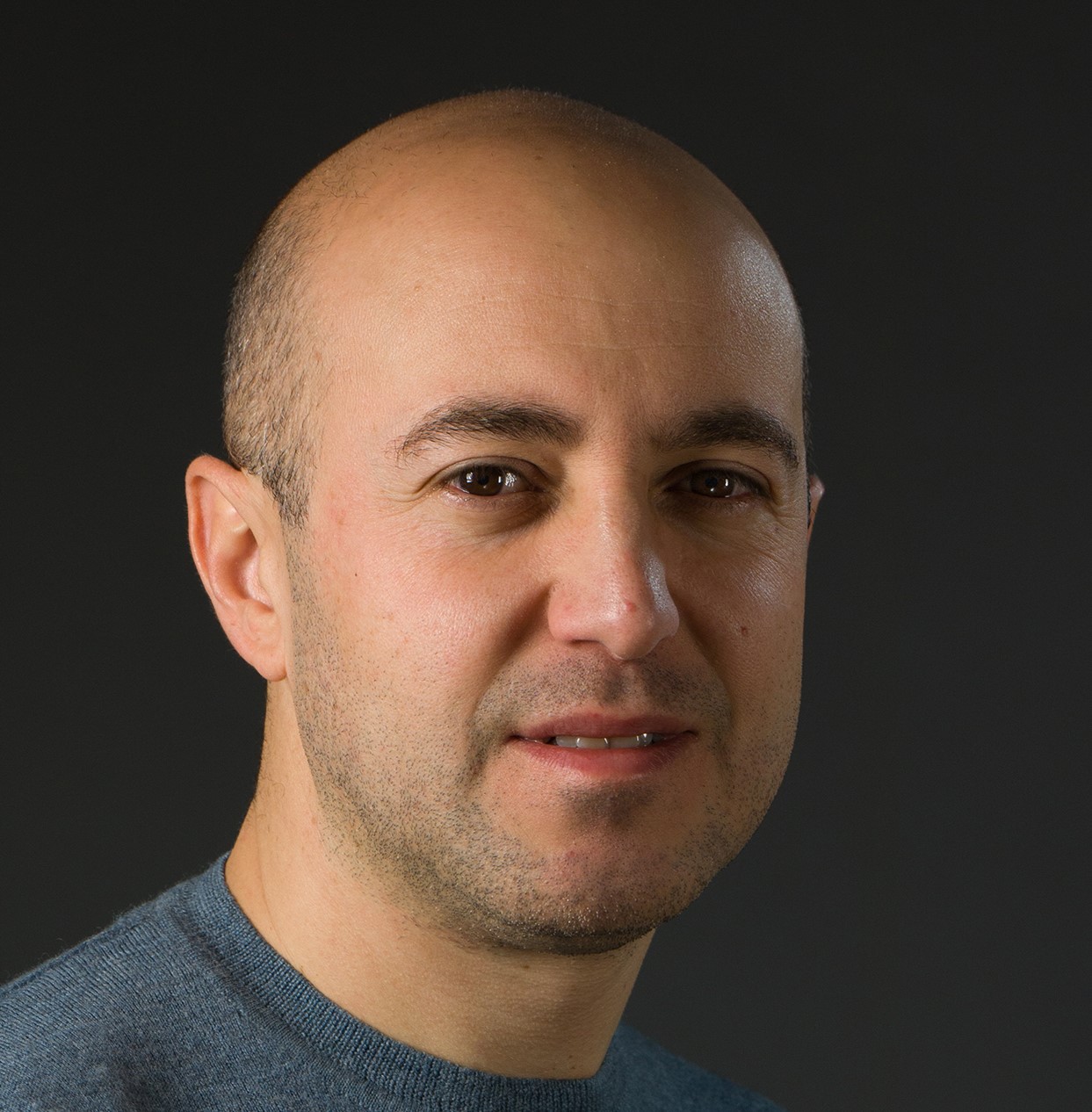
Christian Rupprecht is an Associate Professor at the Department of Computer Science, University of Oxford, specializing in computer vision and machine learning. His research focuses on unsupervised learning, 3D reconstruction, and visual understanding. His work includes contributions to conferences such as GCPR'25, ICCV'25, and CVPR'25, with papers spanning topics like correspondence estimation, animal pose modeling, and synthetic data generation. He leads projects within the prestigious Visual Geometry Group (VGG). Notably, his paper VGGT received the Best Paper Award at CVPR'25. His research integrates deep learning and geometric modeling, emphasizing robustness and generalization in visual systems. Best Paper Award at CVPR'25
Adriana Tapus is a Full Professor at ENSTA Paris, affiliated with Institut Polytechnique de Paris, leading the Autonomous Systems and Robotics Laboratory (SAR) within the Computer Science and Systems Engineering Unit (U2IS). She holds an HDR (Habilitation) and a PhD from EPFL, Switzerland, with postdoctoral experience at USC. Her research focuses on socially assistive robotics, human-robot interaction (HRI), and personalized therapy for individuals with physical/cognitive impairments. She directs the IP Paris Doctoral School and coordinates national/international projects like the EU-funded ENRICHME and SWEET. Education: PhD in Mobile Robotics, EPFL (2005) Habilitation (HDR), ENSTA Paris (2011) M.S. Computer Science, University Joseph Fourier Engineer, Politehnica University of Bucharest Research Interests: Tapus pioneers socially assistive robotics, integrating machine learning, human modeling, and multimodal communication (verbal/non-verbal/para-verbal). Her work addresses adaptive therapies for vulnerable populations using robotics, physiological data interpretation, and context-aware interaction. Key themes include: Human-robot cooperation and trust Emotion recognition and expression Personalized rehabilitation systems AI ethics and human-centered design Publications: Over 150 articles, with recent work exploring humor in HRI, teleoperation trust models, and cross-cultural intelligent vehicles. Notable 2025 contributions include studies on robot laughter efficacy and multimodal facial expression frameworks. Awards: 2025: 4 IROS papers accepted 2016: 25 Women in Robotics recognition 2010: Romanian Academy Award Multiple conference best paper awards (RO-MAN, ICRA, etc.) Advising & Grants: Supervised over 20 PhD students and led projects like EU Horizon 2020 ENRICHME. Current students focus on teleoperation dynamics, robot humor, and haptic interfaces. Active in editorial roles (IJSR, THRI) and conference organization (HRI General Chair 2019). Labs/Teams: Founder of RoboticsByDesign lab and co-initiator of the Hi! Paris interdisciplinary AI center. The SAR lab develops systems for healthcare, education, and human-robot collaboration.
Chao Liu is a Research Scientist at CNRS (French National Center for Scientific Research) since 2008, affiliated with the DEXTER team and the Department of Robotics, LIRMM at University of Montpellier, France. He earned his Ph.D. in Electrical & Electronic Engineering from Nanyang Technological University, Singapore (2006). Current research focuses on surgical robotics , haptics , teleoperation , and nonlinear control theory with applications in computer vision. His work addresses challenges in robotic-assisted telesurgery, including: Stable and transparent human-robot interaction through wave variable compensators and passivity filters Physiological motion compensation using spatio-temporal LSTM and dual Kalman filters EMG-based motion recognition for surgical skill assessment 3D soft-tissue reconstruction with stereo-endoscopes and deep learning Dr. Liu leads European and French projects like: TS2RT (CNRS-funded): Safer teleoperation with motion compensation ROBACUS (ANR-funded): Needle positioning with MPC control HaTUMoCo (CNRS-funded): Haptic teleoperation with uncertainty handling ARAKNES (EU-funded): Microrobotic systems for endoluminal surgery Scientific honors include Senior Member of IEEE and Member of Sigma Xi . He supervises Ph.D. and Master's students working on topics such as concentric tube robot optimization, haptic teleoperation, and EMG-based force estimation. Dr. Liu serves on IEEE Technical Committees for Telerobotics and Haptics , and as Technical Editor of IEEE/ASME Transactions on Mechatronics.
Jean Ponce is a Professor at Ecole Normale Supérieure - PSL and a Global Distinguished Professor at New York University's Courant Institute and Center for Data Science. He serves as Scientific Director of PRAIRIE Interdisciplinary AI Research Institute and co-founded Enhance Lab, commercializing super-resolution imaging software. His research focuses on computer vision, machine learning, robotics, and image processing. Ponce has held roles at Inria, MIT, Stanford, and the University of Illinois, and is an IEEE and ELLIS Fellow. He has served as chair of major conferences like CVPR, ECCV, and ICCV, and authored the textbook 'Computer Vision: A Modern Approach.' Research interests include statistical models for exoplanet detection, neural networks for 3D reconstruction, and self-supervised learning. His work combines theoretical foundations with practical applications in astrophysics, robotics, and imaging. Notable awards include the IEEE CVPR Longuet-Higgins Prize (2016, 2020) and ICML Test-of-Time Award (2019). Key projects include Enhance Lab's high dynamic range imaging and PRAIRIE's interdisciplinary AI initiatives. Ponce's articles explore cutting-edge topics like neural object priors, geodesic motion planning, and satellite image analysis. His contributions bridge academic research and industrial applications, emphasizing both fundamental theory and real-world impact.
Stéphane Doncieux is a University Professor in Computer Science at Sorbonne University, where he is affiliated with the Institute of Intelligent Systems and Robotics (ISIR), a joint research laboratory with CNRS. Since January 2024, he has served as Director of ISIR, following a term as Deputy Director from 2019 to 2023. He leads the ASIMOV research team and is based at the Pierre and Marie Curie Campus in Paris. His primary research interests lie in cognitive and developmental robotics, with a strong focus on open-ended learning, evolutionary algorithms, and adaptive systems. He investigates how robots can autonomously learn diverse skills through mechanisms such as novelty search, quality-diversity optimization, and intrinsic motivation. His work bridges theoretical foundations in artificial life and practical applications in robotic manipulation, perception, and control. The recent publications highlight a consistent trend in advancing robotic learning under sparse rewards and in open-ended environments. Key themes include quality-diversity optimization for grasping, state representation learning, sim-to-real transfer, and the development of behavioral repertoires. These works are published in high-impact journals such as IEEE Transactions on Robotics, Evolutionary Computation, and Frontiers in Robotics and AI. Coordinator, DREAM FET H2020 project (2015–2018) Principal Investigator, ANR projects on Creative Adaptation by Evolution, Learning Movement Skills, and Grasping with Multimodal Feedback Involved in European initiatives including VeriDREAM and HumanE-AI-Net He has supervised numerous PhD and Master’s students, including Leni Le Goff, Giuseppe Paolo, Alban Laflaquière, and Achkan Salehi, often in collaboration with leading researchers like Olivier Sigaud and Jean-Baptiste Mouret. He teaches computer science and robotics at both undergraduate and graduate levels at Sorbonne University. Doncieux has been instrumental in shaping research directions in evolutionary and developmental robotics, notably through his leadership in the IEEE Task Force on Evo-Devo-Robotics and his editorial contributions. His lab, ASIMOV, fosters interdisciplinary research integrating computer science, neuroscience, and engineering to create more autonomous and intelligent robotic systems.
Kiwon Um is a tenured Assistant Professor in the Computer Graphics group at Télécom Paris, France, since October 2019. He focuses on physics-based simulations and data-driven approaches using deep learning, with an emphasis on human visual perception in computer graphics and engineering applications. Education: Ph.D. in Computer Science and Engineering from Korea University His research explores effective simulation of natural phenomena through refined data utilization and develops reliable data acquisition methods for machine learning. He also investigates perceptual evaluation of simulations to advance numerical method understanding. Recent work trends include: (1) turbulence modeling with machine learning integration, (2) elastic material simulation stability, (3) fluid dynamics optimization, and (4) differentiable physics frameworks. His publications range from 2008 to 2025, covering topics like SPH solvers, porous shell simulations, and numerical method validation.
Paul-Eric DOSSOU is a Researcher at ICAM’s Grand Paris Sud campus, specializing in Societal and Technological Transitions of Companies. His work focuses on Industry 5.0, decision-aided systems, logistics optimization, and digital twin applications. He leads projects like Plateforme Life, Urban Logistics, and Healthcare 4.0, aiming to enhance SME efficiency through sustainable digital transformation. Expertise includes AI-driven supply chain management, cybersecurity for legacy systems, and robotic solutions for archaeology. He collaborates with industry partners to bridge theoretical research and practical applications, emphasizing human-centric automation and environmental sustainability. Contact: paul-eric.dossou@icam.fr | Mobile: +33 6 17 81 33 43 Research contributions span over 30 peer-reviewed articles since 2003, addressing topics from energy audits in the nautical industry to multi-agent systems in supply chain optimization.
Vassilis Christophides is a Professor of Computer Science at the University of Crete and holds an advanced research position at Inria Paris, where he leads work in the MiMove team. His research spans databases, web information systems, big data processing, and IoT analytics, with a strong emphasis on entity resolution, data integration, and scalable data mining. He has supervised numerous research projects funded by the European Union and the Greek State, and has published over 130 articles in top-tier conferences and journals. Research Interests: His primary research areas include Databases, Web Information Systems, Big Data Processing and Analytics, and Information Systems for the Internet of Things. He also focuses on entity resolution, knowledge graphs, streaming data, and explainable AI, particularly in the context of anomaly detection and fairness-aware data systems. His recent work explores hybrid attention models for entity alignment and causal analysis in time series classification. Recent Research Trends: Analysis of his recent publications (2021–2025) reveals a strong focus on entity resolution with fairness constraints, explainable anomaly detection, and adaptive scheduling in IoT edge analytics. He also investigates deepfake detection, crop type mapping using satellite data, and structural bias in knowledge graphs, demonstrating a broad and impactful research portfolio at the intersection of data management and machine learning. Scientific Awards: 2004 SIGMOD Test of Time Award Best Paper Award, ISWC 2003 Best Paper Award, ISWC 2007 Advising and Grants: While specific student names are not listed in the provided texts, Christophides has co-authored numerous papers with researchers such as Vasilis Efthymiou, Ioannis Tsamardinos, and Nikolaos Myrtakis, suggesting active mentorship. He has been the scientific coordinator of multiple EU and national research projects, indicating substantial grant leadership and project management experience. Labs and Teams: He is affiliated with the MiMove team at Inria Paris, a research group focused on mobility and data-intensive systems. His work bridges academic and applied research, leveraging Inria’s infrastructure for large-scale data experimentation and innovation in IoT and edge computing environments.
Kévin Bailly is a Lecturer at Sorbonne University, affiliated with the Institute of Intelligent Systems and Robotics (ISIR) and part of the Machine Learning and Artificial Intelligence (MLIA) team. His research focuses on computer vision, deep learning, and their applications in facial expression recognition, neural network optimization, and medical imaging. Dr. Bailly's research interests span multiple areas including: Computer Vision and Image Analysis Deep Learning and Neural Network Optimization Facial Expression and Action Unit Recognition Model Compression and Quantization Techniques Medical Applications of Artificial Intelligence His recent publications demonstrate a strong focus on neural network optimization, with particular emphasis on quantization, pruning, and compression techniques that maintain model performance while reducing computational requirements. His work spans both theoretical advancements in deep learning and practical applications in healthcare, human-computer interaction, and affective computing. He has developed novel approaches like PowerQuant for non-uniform quantization, RULe for real-time face alignment in degraded conditions, and RED++ for data-free pruning of deep neural networks. Dr. Bailly has published extensively in top-tier venues including ICLR, NeurIPS, IEEE TPAMI, and IEEE TAC, with a consistent output of high-impact research from 2022-2024. His work bridges theoretical computer vision with practical applications, particularly in medical diagnostics and human-computer interaction systems. He actively collaborates with researchers across multiple institutions, including Arnaud Dapogny, Edouard Yvinec, and Matthieu Cord, and has contributed to interdisciplinary projects that apply AI techniques to medical domains such as fracture classification and obstetrics.
François Goulette is a Professor and Deputy Director of the Computer Science and Systems Engineering Unit (U2IS) at ENSTA Paris, part of Institut Polytechnique de Paris. His research focuses on 3D point cloud processing, LiDAR perception, and autonomous systems within the Robotics Center (CAOR). His primary research interests lie in 3D point cloud processing , LiDAR perception , and autonomous systems . His work spans fundamental algorithm development to practical applications in autonomous driving, cultural heritage digitization, and robotics. He has made significant contributions to domain generalization of LiDAR perception, semantic segmentation of 3D point clouds, and point cloud registration techniques. The analysis of his recent publications reveals a strong focus on domain generalization for LiDAR perception systems, with multiple papers addressing challenges in 3D semantic segmentation across different environments. His work combines multi-scale architectures , unsupervised learning , and dataset creation to advance the state-of-the-art in autonomous systems perception. The research spans both theoretical algorithm development and practical applications in urban environments. François Goulette leads research activities within the Robotics Center (CAOR) at ENSTA Paris. His team develops advanced techniques for 3D environment understanding, with applications in autonomous vehicles, cultural heritage preservation, and industrial robotics. The research combines computer vision, machine learning, and robotics to solve challenging problems in 3D perception and scene understanding.
Sidonie Christophe is a Senior Researcher (Directrice de Recherche, DR1) at UMR LASTIG, a joint research unit of Université Gustave Eiffel, IGN-ENSG, and EIVP. She serves as co-director of the LASTIG laboratory and leads research in geovisualization, map design, and interactive spatial data exploration. She also holds a part-time advisory role (60%) at the French Ministry of Higher Education and Research in the domain of digital technology, environment, climate, and sustainable urban development. PhD in Geographic Information Sciences Senior Researcher, DR1, MTECT Co-Director, LASTIG Laboratory (since 2021) Former Team Leader, GEOVIS (Geovisualization, Interaction, and Immersion) Advisor, Environment and Urban Climate, French Ministry of Higher Education & Research Her research centers on innovative methods for 2D/3D and nD geospatial data visualization, with a focus on enabling spatio-temporal understanding through visual and non-visual spatial thinking. Her work integrates principles from geographic information science, human-computer interaction, and computer graphics. Key areas include urban climate visualization, tactile and augmented reality for accessibility, expressive cartographic rendering, and cognitive aspects of map design. She investigates how aesthetic and semiotic choices impact map comprehension and utility. The 15 most recent publications reflect a strong trend in interactive and accessible geovisualization, particularly for urban and environmental applications. Topics include neural map style transfer, 3D urban climate analysis, tactile maps for the visually impaired, augmented reality in geography, and visual analytics for crisis and climate data. There is a consistent emphasis on user-centered design, interdisciplinary integration, and the development of tools for decision-making under uncertainty. Scientific Recognition and Service: Invited speaker at major conferences (IEEEVIS, AGILE, ICC, CPGIS) Co-organizer of international workshops (e.g., GeoVIS, ISPRS AR/VR sessions) Leader of national research projects (ANR ORACLES, ANR ACTIVmap, ANR ECOCIM) Recipient of international mobility grants (AMICI I-SITE FUTURE) Contributor to national glossaries and research strategy (e.g., French photogrammetry glossary) Advising and Grants: Sidonie Christophe actively supervises PhD students and postdoctoral researchers, including Markie Jiang, Maria-Jesus Lobo, and Alexandre Mielniczek. She leads or participates in multiple funded research projects such as ANR ORACLES (marine flooding visualization), ANR ACTIVmap (tactile 3D maps), and ANR ECOCIM (eco-design of city information models). Her advisory role at the MESR involves shaping national research strategy in digital and environmental sciences. Labs and Research Teams: She is a core member of the GEOVIS team (Geovisualization, Interaction, and Immersion) at LASTIG and previously served as its leader. As co-director of LASTIG, she plays a central role in the leadership and strategic direction of the entire laboratory, which comprises over 100 researchers across four teams: ACTE, GEOVIS, MEIG, and STRUDEL.
François Brémond is a Research Director (DR1) at INRIA Sophia Antipolis, where he leads the STARS research team, which he founded on January 1, 2012. He was previously head of the PULSAR team starting September 2009. He is also a co-founder of the CoBTeK team at Nice University in collaboration with Nice Hospital, focusing on behavioral disorders in elderly patients with dementia. His research is centered on dynamic scene interpretation using video and sensor data, with applications in surveillance, healthcare, transportation, and ambient intelligence. Research Interests: Computer Vision: video processing, object detection and tracking, motion analysis, pattern recognition Cognitive Vision: video understanding, scene understanding, event recognition, behavior analysis, multi-sensor fusion, multimedia interpretation Machine Learning: deep learning architectures, self-attention, knowledge distillation, contrastive learning, self-learning, lifelong learning, knowledge-based systems, spatio-temporal reasoning Autonomous Systems: real-time systems, system evaluation, parameter tuning, system design, 3D visualization His work bridges low-level pixel data with high-level semantic behavior modeling, enabling systems to detect and interpret complex human and vehicle activities in real-world environments. Applications include crowd monitoring, fraud detection, airport operations, homecare for the elderly, and biological monitoring. He has authored or co-authored over 200 scientific papers and has (co-)supervised 18 PhD theses. He has participated in 12 European projects (e.g., FP6, FP7), 12 French national projects (ANR, DGE), and numerous industrial collaborations with companies such as Thales, SNCF, RATP, STMicroelectronics, and Alstom. He also serves as an expert reviewer for ANR and the European Commission. Scientific Leadership and Technology Transfer: Co-founder of Keeneo (acquired by Digital Barriers), Ekinnox, and Neosensys — startups in intelligent video monitoring and business intelligence Reviewer for top-tier journals (PAMI, CVIU, AIJ) and conferences (CVPR, ICCV, AVSS) Contributor to the ARDA workshops on video event ontology He has taught numerical classification at Nice University and video understanding at a Master’s level engineering school. His research program emphasizes generic, scalable systems for behavior modeling and long-term activity mining. Research Projects: Stress ID dataset (ECG and video for stress detection) Toyota Smarthome (Activities of Daily Living) SafEE2 (Homecare for elderly with autonomy loss) Praxis dataset (RGB-D upper-body gestures) GER'HOME, CARETAKER, RATP Project, ETISEO, AVITRACK, CASSIOPEE, ADVISOR, PASSWORDS
Nicolas RAGOT is an Associate Professor at CESI, affiliated with the Engineering and Numerical Tools department. He teaches Digital and embedded electronics, Microcontroller programming, System control, and Sensors at the Bachelor and Master levels. His research focuses on Environment perception for robotics and Computer vision, particularly in unconventional applications. He leads or collaborates on major research programs including ROJUNACO (2023–2025), FUSION (2023–2027), OASIS (2022–2024), and COLIBRY (2021–2024), all addressing robotics, digital twins, and industrial automation. He co-supervises PhD students Y. Feddoul, S. Ouarab, and S. Choudhary. His work spans smart mobility, assistive technologies, and energy-efficient systems. He is a member of the Secure Electronic Transactions (TES) competitiveness cluster's expert committee. Education: PhD in Computer Vision (University of Rouen, 2009), Master in Electrical Engineering (University of Paris XI, 2003), Engineering diploma (ESIGELEC, 1999). Research interests emphasize robot perception, human-robot collaboration, and extended reality integration. His publications span object detection, SLAM algorithms, and smart wheelchair systems. Current projects emphasize industrial robotics, digital twins, and real-time 3D reconstruction. Advising and grants include leadership roles in multiple research programs and co-supervision of three PhDs. His lab work focuses on Engineering and Numerical Tools, with contributions to CESI LINEACT's collaborative robotics initiatives.
Slim Essid is a Full Professor at Télécom Paris, leading the Audio Data Analysis and Signal Processing (ADASP) group. He holds a Doctorat (Ph.D.) and Habilitation from Université Pierre et Marie Curie (UPMC). With 15+ years of research experience, he has advised 15 PhD graduates and currently co-advises 10 others. His work focuses on machine learning, signal processing, and multimodal systems, publishing over 150 peer-reviewed papers. He serves as a reviewer for top journals/conferences (e.g., IEEE Transactions) and research funding agencies. Education: State Engineering Degree, École Nationale d’Ingénieurs de Tunis (2001) M.Sc. (D.E.A.) in Digital Communication Systems, École Nationale Supérieure des Télécommunications, Paris (2002) Ph.D., Université Pierre et Marie Curie (2005) Habilitation (HDR), UPMC (2015) Research Interests: Multimodal learning, self-supervised representations, audio-visual segmentation, music structure analysis, domain generalization, and speech enhancement. Recent publications highlight innovations like TACO (training-free sound-prompted segmentation) and CLOUDS (domain-generalized semantic segmentation framework using foundation models). His work bridges audio processing with vision and language models, emphasizing unsupervised/zero-shot approaches. Key achievements include state-of-the-art methods in sound event detection, speaker diarization, and music segmentation. He collaborates with 14 post-docs and leads projects funded by French/EU agencies.
Hadi EL ZEIN is a Researcher affiliated with the Université Technologique de Troyes (UTT). His work focuses on intelligent transportation systems, wireless sensing technologies, and healthcare applications leveraging machine learning. He specializes in human activity recognition using Wi-Fi signals and deep learning models, with notable contributions to fall detection and driver drowsiness alert systems. His research integrates real-time processing, signal analysis, and lightweight neural networks for practical deployment in smart environments. Recent publications highlight advancements in applying convolutional neural networks (CNN) to analyze wireless channel state information (CSI) for health monitoring and transportation safety. Contact: hadi.el_zein@utt.fr