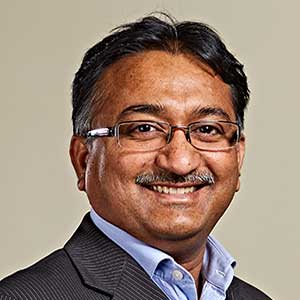
Samir Dani is a Professor of Operations and Supply Chain Management at Keele University’s Keele Business School. He holds Chartered Manager status and is a Fellow of multiple professional bodies, including the Higher Education Academy and Chartered Institute of Logistics and Transport. Prior to academia, he worked in India’s automotive industry. His research focuses on supply chain resilience, sustainability, food logistics, and Industry 4.0 technologies like AI and Blockchain. Affiliations: Keele University (current), University of Huddersfield (2014–2019), Loughborough University (2005–2008) Leadership: Former Head of Logistics, Marketing, Hospitality, and Analytics Department at University of Huddersfield Industry Engagement: £5M Leeds City Region LEP Supply Chain Program, UK-India trade advisory roles Research Interests: Supply chain risk and resilience Food supply chain sustainability AI, IoT, and Blockchain applications Industry 4.0 transformations Recent Article Trends: Focus on climate action impacts, blockchain trust mechanisms, and SME net-zero strategies. His work bridges academic theory with industry challenges, emphasizing technology adoption and sustainability. Awards: Prix des Associations (2015), UK Top 100 Logistics Professional (2017/18) Grants: £800K+ from EPSRC, IMCRC, and KTP Advisory Roles: Editorial Board member of Supply Chain Management: An International Journal, Academic Review Board member of International Journal of Operations and Production Management.
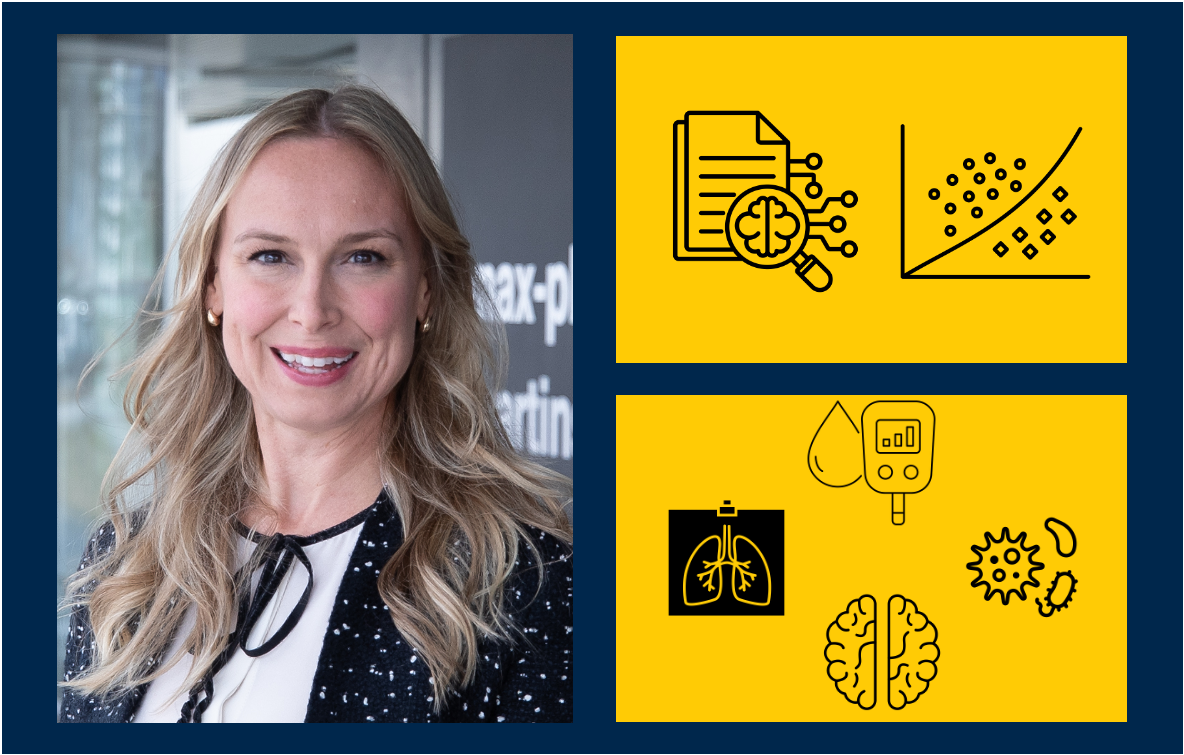
Jenna Wiens is an Associate Professor of Computer Science and Engineering at the University of Michigan's College of Engineering. She serves as Associate Director of the Artificial Intelligence Lab and co-Director of AI & Digital Health Innovation. Leading the MLD3 research group, her work focuses on machine learning and AI applications for healthcare data. PhD from MIT (2014) under John Guttag NSF CAREER Award recipient (2016) Humboldt Foundation Carl Friedrich von Siemens Award (2024) Her research addresses four key technical thrusts: Time-series analysis for predicting clinical outcomes Robust machine learning against spurious correlations Decision-making with causal inference and offline reinforcement learning Human-AI collaboration frameworks Notable methodological contributions include the FIDDLE preprocessing pipeline for clinical time-series data, foundational work on survival analysis, and novel approaches to model selection in healthcare reinforcement learning. Her work has led to real-world AI deployments in infection prevention and patient risk stratification. Scientific honors include: Forbes 30 Under 30 (2015) MIT Tech Review 35 Innovators Under 35 (2017) Sloan Research Fellowship in Computer Science (2020) Sarah Goddard Power Award (2023) Wiens collaborates with clinicians across disciplines, emphasizing clinician-in-the-loop AI systems and ethical implementation in healthcare workflows.
Ming Hu is a Professor and University of Toronto Distinguished Professor of Business Operations and Analytics at Rotman School of Management, University of Toronto. He serves as Area Coordinator for the Operations Management & Statistics Area and holds editorial leadership roles including Editor-in-Chief of Naval Research Logistics and Associate Editor for multiple top journals. MS in Applied Mathematics, Brown University (2003) PhD in Operations Research, Columbia University (2009) His research focuses on sharing economy , social operations , and platform economics , examining how operational decisions can maximize societal benefit. Key areas include crowdfunding , two-sided markets , crowdsourcing , and group buying , with applications to DEI , sustainability , and AI-empowered operations . Recent work analyzes spatial operations in delivery systems, algorithmic fairness , and climate change adaptation in agricultural supply chains. His publications span top journals like Management Science and Operations Research , covering topics from blockchain traceability to quantum-inspired optimization . Scientific recognitions include: Wickham Skinner Early-Career Research Award (2016) Best Operations Management Paper in Management Science (2017) 2018 Poets & Quants Best 40 Under 40 MBA Professors As an Amazon Scholar (2022–) and Chair of Chain Analytics Institute (2023–), he bridges academic research with industry applications in AI-driven logistics and sustainable operations.
Khuzaima Daudjee is a Professor and David R. Cheriton Faculty Fellow in the Cheriton School of Computer Science at the University of Waterloo. His research focuses on systems-oriented problems at the intersection of systems and data management, particularly building large-scale systems, storage infrastructure in the cloud, and modern hardware applications. He leads projects in distributed database systems, elastic scaling, and resource optimization. His recent work includes Caerus (geo-replicated transactions), Tiresias (predictive storage), and MorphoSys (automatic physical design metamorphosis). Daudjee has chaired major conferences including ICDE 2026 and serves on editorial boards for VLDB, SIGMOD, and IEEE TKDE journals. His awards include ACM Distinguished Scientist and multiple best paper awards. Educational initiatives include developing distributed systems teaching materials and supervising graduate students across database and distributed systems domains. His industry collaborations involve cloud infrastructure optimization and scalable data processing frameworks.
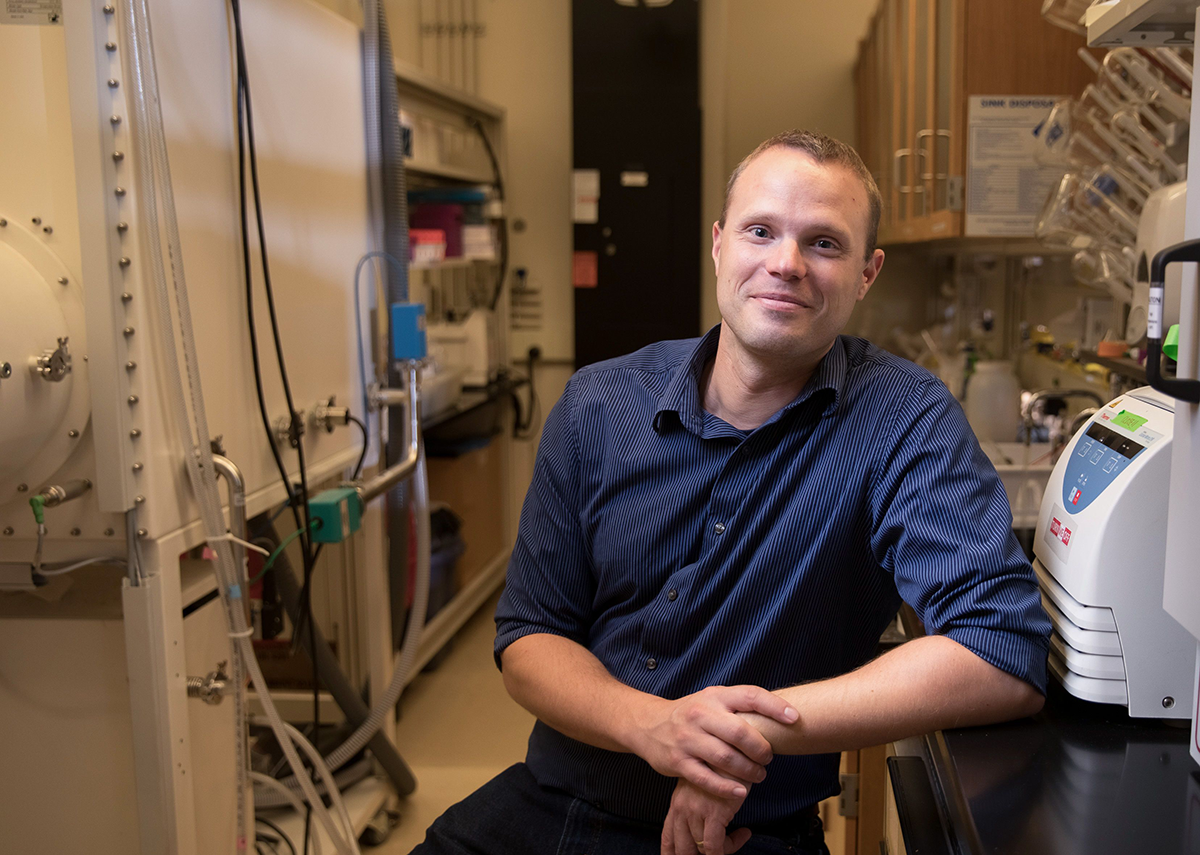
Bradley D. Olsen is a full professor in the Department of Chemical Engineering at the Massachusetts Institute of Technology (MIT), where he leads research at the intersection of polymer science, soft matter physics, and bioengineering. His work focuses on designing materials for critical applications in biotechnology, hemostasis, and sustainable polymer development while advancing fundamental understanding of polymer network mechanics and self-assembly. Education: Ph.D. in Chemical Engineering, University of California Berkeley (2007) S.B. in Chemical Engineering, Massachusetts Institute of Technology (2003) Olsen's research spans protein-based materials, block copolymer phase behavior, and mechanochemical hydrogels. He has pioneered methods for quantifying polymer network topology, developing hemostatic nanoparticles, and creating bio-inspired materials for selective biomolecular transport and medical applications. His recent publications emphasize data-driven approaches to polymer characterization and educational outreach in materials science. Scientific Awards: American Physical Society (APS) Fellow (2023) Fulbright Amazonia Scholar (2023) Alexander and I. Michael Kasser Chair in Chemical Engineering (2021) ACS Macro Letters Young Investigator Award (2021) MIT Committed to Caring Honor (2019) AIChE Owens Corning Early Career Award (2019) APS Dillon Medal (2018) Kavli Emerging Leader in Chemistry (2017) ACS Polymer Division Fellow (2016) Camille Dreyfus-Teacher Scholar (2015) Alfred P. Sloan Research Fellow (2014) NSF Career Grant (2013) NIH Postdoctoral Fellowship (2008-2009) Hertz Fellow (2003-2007) Barry M. Goldwater Scholarship (2002) Olsen has received significant grant support including NSF Career (2013) and AFOSR (2012) awards. His teaching activities include innovative international outreach like the 2025 soccer-themed science camp in Brazil. The Olsen Group at MIT explores advanced materials with applications ranging from trauma care to sustainable polymers.
Dr. Scarlett Raine is a Lecturer in the School of Electrical Engineering and Robotics at Queensland University of Technology (QUT), where she serves as a Chief Investigator at the QUT Centre for Robotics and an Associate Investigator at the QUT Centre for Data Science and QUT Centre for Environment and Society. Her work focuses on applying Artificial Intelligence to automate underwater image analysis for marine ecosystem monitoring.
Mark Lewis is the Kennedy Chair in Mathematical Biology at the University of Victoria, holding joint appointments in the Departments of Mathematics and Statistics and Biology. His research focuses on spatial ecology and mathematical modeling, addressing ecological challenges such as animal movement, invasive species, and disease dynamics. Lewis earned his D.Phil. in Mathematical Biology from the University of Oxford and has been elected a Fellow of the Royal Society UK. His work integrates mathematical analysis, field studies, and interdisciplinary approaches to solve ecological problems. Current projects include modeling polar bear populations, cyanobacteria dynamics, and the impact of climate change on wildlife. Lewis supervises students across both UVic and his former University of Alberta lab. Education: D.Phil. in Mathematics (Mathematical Biology), University of Oxford Awards: Royal Society Fellowship, CRM-Fields-PIMS Prize, and Okubo Prize Key Research Areas: Animal movement modeling, aquatic ecology, wildlife disease, and invasive species management Publications highlight his contributions to understanding disease spread, parasite dynamics, and ecological responses to environmental changes. Lewis collaborates widely, applying mathematical tools to real-world conservation and health challenges.
Subodha Kumar is the Paul R. Anderson Distinguished Chair Professor of Statistics, Operations, and Data Science at Temple University’s Fox School of Business. He serves as the Founding Director of the Center for Business Analytics and Disruptive Technologies and has a secondary appointment in Information Systems. His roles include Ph.D. Program Concentration Director for Operations and Supply Chain Management. With over 240 publications, he ranks #1 globally in Information Systems Research publishing and holds a robotics patent. His research focuses on AI, blockchain, healthcare analytics, and cybersecurity, with notable contributions to digital transformation and operations management. Awards include the INFORMS ISS Distinguished Fellow and POMS Fellow. He advises major journals like Production and Operations Management and organizes conferences like POMS 2018. Media mentions span NYT, WSJ, and CBS. Education: University of Washington faculty Texas A&M University faculty Research Interests: Dr. Kumar explores AI applications, blockchain in fintech, healthcare system optimization, and supply chain analytics. He investigates cybersecurity’s operational impacts and data mining strategies. His work bridges theory and practice, addressing challenges in digital transformation and platform economies. Publications Trends: Recent work emphasizes digital platforms (e.g., blockchain adoption, telemedicine impact), organizational behavior (real-time feedback systems), and healthcare operations (personalized treatment algorithms). He frequently collaborates internationally, with studies appearing in Management Science, Information Systems Research, and Decision Sciences. Awards & Recognition: Changjiang Scholars Chair (China) ISB Visiting Professorship POMS Executive Editor Grants & Labs: Secured NIH grants for health analytics projects. Leads Temple’s analytics center fostering industry partnerships. Active in editorial roles (e.g., Production and Operations Management Journal Deputy Editor). Teaching: Offers courses in data science, optimization methods, and innovation entrepreneurship at graduate/undergraduate levels.
Aditya Parameswaran is an Associate Professor in the Electrical Engineering and Computer Sciences (EECS) department at the University of California, Berkeley. He co-directs the EPIC Data Lab and the Police Records Access project, focusing on simplifying data science at scale through human-in-the-loop systems, LLM-powered tools, and scalable data systems. His research spans database systems, human-computer interaction, and machine learning, with notable contributions in tools like Lux, Modin, and DataSpread. Education : PhD in Computer Science from Stanford University (2013) BTech in Computer Science and Engineering from IIT Bombay (2007) Research Interests : Parameswaran's work centers on empowering end-users with intuitive data tools. Recent projects include LLM-powered systems for document processing (DocETL, TWIX), proactive data systems, and benchmarking frameworks. He emphasizes democratizing data science through low/no-code solutions and improving production ML workflows. Articles Trends : His recent work (2023–2025) prioritizes LLM integration into data systems, focusing on robust pipelines, assertion generation (SPADE), and debugging tools (RAGGY). Earlier contributions include visualization recommendation (Lux), scalable dataframes (Modin), and spreadsheet optimization (DataSpread). Awards : Recipient of the VLDB Early Career Award (2019), Sloan Research Fellowship (2020), NSF CAREER Award (2017), and multiple best paper/demonstration awards at top venues like SIGMOD and VLDB. Advising & Grants : Guides over 20 PhD/postdoc alumni, many now in academia (e.g., Madelon Hulsebos at CWI) and industry leadership roles. Active in securing grants (e.g., NSF, Army Research Office) and industry partnerships (e.g., Snowflake, LangChain). Labs/Teams : Leads the EPIC Data Lab, focusing on agentic data systems, and co-founded Ponder (acquired by Snowflake). Collaborates on the Police Records Access initiative, building transparency tools for public records.
Dr Andrew Rhead is a Senior Lecturer in the Department of Mechanical Engineering at the University of Bath, specializing in aerospace composites and damage tolerance analysis. His research focuses on impact damage detection, failure mechanism modeling, and Non-Destructive Evaluation (NDE) techniques for composite structures. MSci in Mathematical Sciences (Dynamical Systems) - University of Bristol (2006) PhD in Composite Damage Tolerance - University of Bath (2009) His work develops computationally efficient analytical models for compression after impact (CAI) strength prediction in composite laminates, surpassing traditional finite element methods. Key projects include hydrogen storage systems for aircraft, cryogenic composite testing, and steered fiber manufacturing optimization. Active in 10 projects including ASPIRE and HyFIVE Collaborates with Airbus, GKN Aerospace, and EPSRC Research trends show emphasis on sustainable aviation materials, structural battery integration, and advanced testing methodologies. Current affiliations include the Institute for Mathematical Innovation (IMI) and Centre for Integrated Materials, Processes & Structures (IMPS).
Zhi Da is the Howard J. and Geraldine F. Korth Chair in Finance and Professor of Finance at the University of Notre Dame , Mendoza College of Business, Department of Finance. He completed his Ph.D. in Finance at Northwestern University’s Kellogg School of Management (2006), preceded by an M.Sc. in Financial Engineering from the National University of Singapore (2001) and a B.B.A. with First-Class Honors (1999) from the same institution. Holding editorial roles at Journal of Finance , Management Science , Review of Financial Studies and several other top journals, he is a leading voice in empirical finance research. Education Ph.D. in Finance, 2006 – Kellogg School of Management, Northwestern University M.Sc. in Financial Engineering, 2001 – National University of Singapore B.B.A. (1st Class Honors), 1999 – National University of Singapore Research Interests Zhi Da’s scholarship sits at the intersection of asset pricing , behavioral finance , and market microstructure . He investigates how investor attention, institutional trading, liquidity frictions, and information flows jointly determine the cross-section of expected returns. His work delves into retail margin trading, the role of pension-fund flows in exchange-rate dynamics, the informational content of SEC filings, and the efficiency of short-selling mechanisms. By combining large-scale data analytics, textual analysis, and structural modeling, he uncovers novel predictors of returns ranging from presidential approval ratings to real-time attention measures. Recent projects explore fractional trading ’s impact on price efficiency, hedging demand as a driver of intraday momentum, and the hidden effort problem in delegated portfolio management. These themes collectively advance our understanding of limits to arbitrage and the formation of extrapolative beliefs. Publication Landscape Spanning 2025 back to 2009, his 15 most recent articles in Journal of Finance , Review of Financial Studies , Management Science , Journal of Financial Economics , and Journal of Financial and Quantitative Analysis converge on three broad motifs: (1) micro-level trading frictions—liquidity costs, margin requirements, and short-selling constraints; (2) macro-finance linkages—exchange rates, fiscal policy, and global capital flows; and (3) information economics—attention allocation, media analytics, and regulatory disclosures. The collective evidence demonstrates that seemingly small trading or informational frictions aggregate into large, persistent cross-sectional return predictability. Honors and Awards 2017 William F. Sharpe Award for Best Paper, Journal of Financial and Quantitative Analysis Lead-article distinctions in Journal of Finance , Review of Financial Studies , and Management Science Featured coverage in SmartMoney and CNBC Teaching & Mentorship At Notre Dame’s Mendoza College, Professor Da teaches Investments (undergraduate and MBA) and Fixed Income Securities , integrating cutting-edge research insights into the curriculum. While specific advisees are not listed, his extensive co-author network (22+ recurring collaborators) attests to a vibrant mentoring environment. Laboratory & Data Resources He publicly distributes the NAT (Net Arbitrage Trading) dataset, a stock-quarter panel of arbitrage positions used in Chen, Da & Huang (2019). This resource has become a standard tool for researchers studying arbitrage capital movements.
Dr. Tarek Sayed is a Professor at the University of British Columbia's Department of Civil Engineering within the Faculty of Applied Science. He specializes in Transportation Engineering, focusing on road safety analysis, traffic operations, and Intelligent Transportation Systems (ITS). He serves as the Director of the Bureau of Intelligent Transportation Systems and Freight Security (BITSAFS-Engineering) and Editor of the Canadian Journal of Civil Engineering . His research addresses three core areas: improving road safety evaluation techniques, enhancing safety through traffic operations and highway design analysis, and advancing ITS technologies. Notable contributions include frameworks for safety-audits of infrastructure projects like the Sea to Sky Highway and methodologies for evaluating transit signal priority systems in Vancouver. He has authored/co-authored over 250 publications and supervised 60 graduate students. Key Roles: Professor, BITSAFS Director, Journal Editor Awards: Tier 1 Canada Research Chair, Wilbur Smith Award, Sandford Fleming Award, Prince Michael International Road Safety Award Consulting: Global projects in traffic safety and ITS for agencies like ICBC, FHWA, and Ashghal His research integrates Bayesian statistical methods, extreme value theory, and machine learning to model traffic conflicts, pedestrian behavior, and safety interventions. Current projects include real-time safety optimization using autonomous vehicle data and analyzing shared space interactions between cyclists and pedestrians. Dr. Sayed chairs national/international committees, including the U.S. Transportation Research Board’s safety data committee. His work bridges academia and practice, influencing policy and infrastructure investment decisions worldwide.
Michele Zorzi is a Professor of Telecommunications at the School of Engineering, University of Padova, Italy, where he has held a faculty position since 2003. He leads the SIGNET (Signal processing and Networking) Research Group, focusing on cutting-edge wireless networking challenges including mmWave communications and underwater networks. His extensive publication record exceeds 600 papers in top-tier journals and conferences, reflecting significant contributions to the field through both theoretical and experimental work. He received his Laurea Degree (1990) and Ph.D. (1994) in Electrical Engineering from the University of Padova. Prior academic appointments include Politecnico di Milano (1993-1996), University of California San Diego (1995-1998), and University of Ferrara (1998-2003), where he progressed from Associate Professor to full Professor. His educational trajectory demonstrates deep roots in Italian academia with international exposure. Professor Zorzi's research spans wireless communications and networking, with current emphases on mmWave networking for vehicular systems, underwater acoustic/optical communications, non-terrestrial networks, and AI-driven networking solutions. His group conducts experimental validations including at-sea trials for underwater systems and testbeds for vehicular networks. Key projects include PRATA for predictive QoS in autonomous driving and IoT-based environmental monitoring of the Venice Lagoon, demonstrating practical applications of theoretical work. Analysis of his 2022-2025 publications reveals strong trends in applying artificial intelligence to networking challenges across diverse environments. There is significant emphasis on vehicular networks (predictive QoS, teleoperated driving), underwater systems (acoustic/optical communications, AUV swarms), and satellite networks (Starlink integration, NTN security). Experimental validation in real-world scenarios like the Venice Lagoon monitoring project and underwater sea trials characterizes his applied research approach. His scientific accolades include: IEEE Fellow (2007) IEEE Communications Society Best Tutorial Paper Award (2008, 2019) Stephen O. Rice Best Paper Award (2018) Multiple best paper awards at IEEE conferences (2005-2020) As principal investigator for numerous European and US research projects plus 20+ industry-funded initiatives, Professor Zorzi has mentored over 35 PhD students and post-docs. Graduates now hold prominent positions at institutions including Stanford, UCSD, CTTC, and Huawei. His SIGNET group maintains active international collaborations and contributes to open-source networking tools via GitHub, demonstrating commitment to community engagement. The SIGNET Research Group, housed within the Department of Information Engineering, operates specialized experimental facilities for mmWave and underwater communications. Current initiatives include AI-based predictive QoS frameworks for vehicular networks, underwater optical communication systems using ultraviolet light, and large-scale IoT deployments for environmental monitoring. The group's GitHub presence indicates strong open-science practices, while recent sea trials confirm hands-on experimental capabilities beyond theoretical work.
Zhuoyue Zhao is an Assistant Professor in the Department of Computer Science and Engineering at the University at Buffalo, School of Engineering and Applied Sciences. His office is located at 338I Davis Hall, Buffalo, NY 14260, and he can be reached at zzhao35@buffalo.edu or by phone at (716) 645-4735. Dr. Zhao received his PhD in Computer Science from the University of Utah in 2021, where he was advised by Prof. Feifei Li and Prof. Jeff Phillips. Prior to that, he earned his BS in Computer Science from Shanghai Jiao Tong University in 2016, where he was part of the prestigious ACM Class. During his undergraduate studies, he conducted research under Prof. Kenny Zhu and spent Fall 2015 as a research assistant at Hong Kong Polytechnic University supervised by Prof. Eric Lo. Dr. Zhao's research focuses on database management systems, with specific emphasis on traditional and approximate query processing, query optimization, database systems on modern hardware, transaction processing, indexing, and storage. His work bridges theoretical foundations with practical implementations, often resulting in systems that address real-world database challenges. He has made significant contributions to probabilistic query processing, transaction scheduling, and learned indexing techniques. His recent publications demonstrate a clear trajectory toward optimizing database performance in hybrid transactional/analytical processing environments. His research increasingly integrates systems techniques with machine learning approaches, particularly in the area of learned indexes. There's also a strong focus on making database operations more efficient through innovative scheduling mechanisms and query processing techniques that can handle concurrent updates. Google PhD Fellowship (2019-2021) Best Paper Award at SIGMOD 2016 for "Wander Join: Online Aggregation via Random Walks" Best Paper Award at SIGMOD 2025 for "Low-Latency Transaction Scheduling via Userspace Interrupts" Dr. Zhao currently advises several PhD students including Yunnan Yu, Congying Wang, Gaoxiang Liu (co-advised with Prof. Ziming Zhao), and Zhuoran Li. He has successfully guided MS student Nithin Sastry Tellapuri to graduation (Fall 2023), who is now employed at AirPay. His research is supported by significant funding including an NSF CAREER award (#2339596) totaling $599,977 for research on "Speedy and Reliable Approximate Queries in Hybrid Transactional/Analytical Systems" (2024-2029) and an unrestricted Google gift of $30,000 (2021). Dr. Zhao leads the ADBLab research group at UB, where students work on cutting-edge database systems research. His lab focuses on building practical database systems that address real-world challenges in query processing, transaction management, and indexing. The lab maintains strong connections with industry partners and regularly contributes to open-source database projects.
Prof. Michael Moor is a tenure-track Assistant Professor for Medical AI at ETH Zurich's Department of Biosystems Science and Engineering in Basel. Previously, he conducted postdoctoral research at Stanford University under Prof. Jure Leskovec, focusing on medical foundation models. His work spans causal learning, multimodal AI, and sepsis prediction. Moor holds an MD from the University of Basel and a PhD from ETH Zurich's Machine Learning and Computational Biology Lab under Prof. Karsten Borgwardt. Research Interests: Generalist medical AI models Multimodal medical reasoning Zero-shot and few-shot learning Clinical causal inference Retrieval-augmented language models Sepsis prediction systems Key Achievements: Published foundational work in Nature (2023) on generalist medical AI Developed Med-Flamingo multimodal model (2023) Zero-shot causal learning framework accepted to NeurIPS 2023 (Spotlight) International sepsis prediction study with 156k ICU patients (2023) Lab Activities: Leads ETH's Medical Foundation Models group, collaborating with Stanford HAI and NASA Ames. Active in creating medical AI benchmarks like AgentClinic and developing retrieval-augmented systems like Almanac.