

Wilfried Sieg serves as the Patrick Suppes Professor of Philosophy at Carnegie Mellon University within the Dietrich College of Humanities and Social Sciences, where he has been a core faculty member since 1985. He previously held appointments at Columbia University (1977-1985) and co-founded CMU's interdisciplinary Pure and Applied Logic program. His educational background includes: Ph.D. in Philosophy, Mathematical Logic, and Foundations of Mathematics from Stanford University (1977) M.S. in Mathematics and Logic from Westfälische-Wilhelms-Universität, Münster (1971) B.S. in Mathematics and Physics from Freie Universität, Berlin (1969) Sieg's research fundamentally explores the Foundations of Mathematics through proof theory, with significant contributions to the History of Modern Logic and Philosophy of Mathematics. His work critically examines Hilbert's Program, Gödel's incompleteness theorems, and the historical development of computability concepts. He emphasizes the dialectic between mathematical practice and philosophical reflection, revealing how foundational positions shape and are shaped by mathematical developments. Analysis of his recent publications shows a sustained trajectory from historical-philosophical investigations toward computational implementations, particularly through the AProS project. This evolution reflects growing integration of proof-theoretic insights with automated reasoning systems, focusing on heuristic search algorithms and cognitive modeling of mathematical reasoning. Sieg directs the Laboratory for Symbolic & Educational Computing (LSEC), which develops pedagogical tools like the AProS proof tutor. His grant-funded projects include editorial work on Hilbert, Gödel, and Bernays supported by the German National Science Foundation, Sloan Foundation, and National Endowment for the Humanities, alongside NSF-funded development of web-based logic education. He has advised numerous graduate students through research seminars while maintaining active collaboration with computer science and mathematics departments.
جستجوی استاد راهنمای دانشگاهی
برای مسیر پژوهشیتان، استاد راهنما، استاد دانشگاه و پژوهشگر مناسب را پیدا کنید و با آنها ارتباط بگیرید.
نمایش ۱-۶ از ۶ استاد راهنما
اطلاعات پروفایلها از صفحات عمومی دانشگاهها گرفته شده و ممکن است بهروز نباشد.
Michael Ian Shamos is a Distinguished Career Professor at Carnegie Mellon University's School of Computer Science, with appointments in the Language Technologies Institute and Software and Societal Systems Department. His career spans academia, law, and technology entrepreneurship, with expertise in experimental mathematics, artificial intelligence, and legal aspects of technology. Dr. Shamos earned his educational credentials through an impressive multidisciplinary path: A.B. in Physics from Princeton University (1968) under John Wheeler M.A. in Physics from Vassar College (1970) M.S. in Technology of Management from American University (1972) M.S. and M.Phil. in Computer Science from Yale University (1973-1974) Ph.D. in Computer Science from Yale University (1978) J.D. from Duquesne University (1981) His research interests bridge multiple domains with exceptional depth. In experimental mathematics, he develops computational systems that automatically generate and prove novel mathematical theorems, particularly in number theory, having contributed hundreds of new results to the field. As a leading expert in electronic voting security, he has examined over 120 voting systems for seven states and testified before Congress multiple times. His work uniquely integrates legal expertise with technical knowledge, especially regarding intellectual property in the digital age. He directs the M.S. in Artificial Intelligence and Innovation program at CMU, advising 74 students in this cutting-edge field. His publication trajectory reveals an evolution from foundational computational geometry (co-authoring the seminal "Computational Geometry: An Introduction") to contemporary issues in voting security and experimental mathematics. The consistent thread is applying computational methods to solve real-world problems with careful attention to legal and societal implications. His notable recognitions include: Industry Service Award of the Billiard and Bowling Institute of America (1996) Black and White Scotch Achiever's Award for contributions to bagpipe musicography (1991) As an educator and mentor, Dr. Shamos directs the M.S. in Artificial Intelligence and Innovation program and teaches courses including "AI & Future Markets" and "The Law of Computer Technology." He has served as an expert witness in over 360 legal cases involving computer technology and has been a statutory examiner of computerized voting systems for Pennsylvania since 1980. His extensive industry experience includes founding technology companies and serving as General Counsel for an AI company. Dr. Shamos is actively involved with the Universal Library project, which has scanned over 1.5 million books. He also serves as faculty advisor to the Carnegie Mellon Pool Team and is Curator of The Billiard Archive, reflecting his deep commitment to preserving billiards history alongside his academic pursuits.

Cayden Codelمشاهده پروفایل
پژوهشگر
Cayden Codel is a Researcher at Carnegie Mellon University's Computer Science Department , focusing on programming languages and formal verification. His work bridges theoretical logic with practical applications in automated reasoning and constraint solving. Research Interests: Programming Languages, Formal Verification, Satisfiability (SAT) Solvers, Satisfiability Modulo Theories (SMT), Automated Theorem Proving, Machine Learning Institution: Carnegie Mellon University (CMU) His publications emphasize formal verification for logical systems, SMT/SAT solvers , and reinforcement learning applications. Articles from 2024-2019 reveal a trajectory from foundational logic to real-world dataset design (e.g., Minecraft-based AI research). Thesis Advisors: Marijn Heule, Jeremy Avigad Contact: ccodel@andrew.cmu.edu
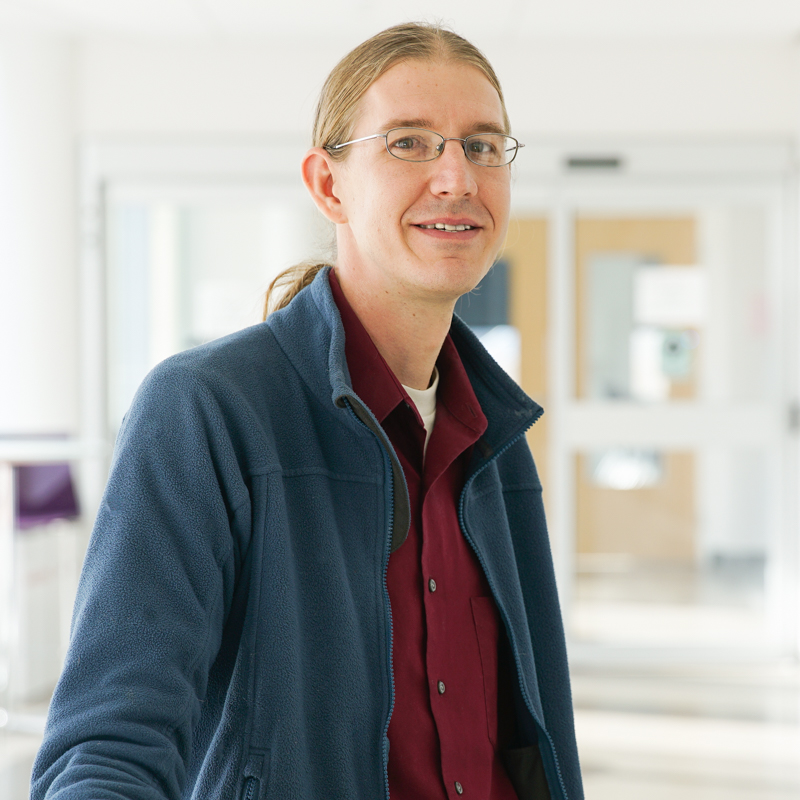
Charlie Garrodمشاهده پروفایل
دانشگاهی
Charlie Garrod is an Associate Teaching Professor in the Software and Societal Systems Department within Carnegie Mellon University's School of Computer Science. His academic career focuses primarily on undergraduate computer science education and related areas such as teaching assistant and faculty mentorship. Institution: Carnegie Mellon University School: School of Computer Science Department: Software and Societal Systems Department Position: Associate Teaching Professor Dr. Garrod received his B.S. in Computer Science from Harvey Mudd College in 2001 and completed both his M.S. and Ph.D. in Computer Science at Carnegie Mellon University in 2006 and 2008, respectively. His educational background laid the foundation for his expertise in distributed database systems and software engineering education. His research interests center around computer data management systems, with particular emphasis on the performance, scalability, and power management of highly scalable distributed systems. As a teaching professor, his research program is intentionally focused on undergraduate and Master's student research projects rather than large-scale independent research. His work bridges theoretical computer science with practical applications in transportation information systems, mobile location services, and database scalability. Dr. Garrod's publication history reveals a strong trajectory in distributed systems and database technologies, with recent work shifting toward educational topics such as mentoring teaching assistants. His publications span prestigious venues including ACM Transactions on Algorithms, VLDB, ICDE, and SIGCHI, with his work on the Tiramisu transportation system earning a CHI 2011 Honorable Mention. His research demonstrates consistent contributions to database caching, query optimization, and consistency management for web applications. CHI 2011 Honorable Mention for 'Field Trial of Tiramisu: Crowd-Sourcing Bus Arrival Times to Spur Co-Design' As an educator, Dr. Garrod has mentored numerous students through formal courses and undergraduate research projects. He has developed and taught a wide range of courses including software design and engineering, algorithms and data structures, theoretical computer science, distributed systems, and databases. His teaching philosophy emphasizes practical application of theoretical concepts, with a focus on preparing students for real-world software engineering challenges. He has been actively involved in developing pedagogical approaches for computer science education, particularly in the mentorship of teaching assistants. Dr. Garrod maintains an active teaching schedule, currently instructing courses such as 15-210 Parallel and Sequential Data Structures and Algorithms, 17-480/17-780 API Design, and 07-070 Teaching Techniques for Computer Science. His extensive teaching portfolio demonstrates deep commitment to computer science education across multiple institutions and course levels.

Jessica Cantlon is the Ronald J. and Mary Ann Zdrojkowski Professor of Developmental Neuroscience/Psychology at Carnegie Mellon University's Dietrich College of Humanities and Social Sciences. She leads the Concepts, Actions, and Objects Lab and the Kid Neuro Lab, focusing on the neural and cognitive foundations of quantitative reasoning in humans and non-human primates. Her research employs behavioral and neuroimaging techniques to explore how numerical and spatial concepts develop in children and how these relate to evolutionary processes. Key research themes include cross-species comparisons of numerical processing (e.g., studies on rhesus monkeys and olive baboons), the role of the intraparietal sulcus (IPS) in numerical cognition, and the impact of environmental and gender factors on mathematical development. She has contributed to debates on core knowledge theories, semantic frameworks, and the evolution of human intelligence. Her work bridges developmental psychology, cognitive neuroscience, and comparative psychology, with implications for education and public health policy. Her labs emphasize interdisciplinary approaches, combining fMRI studies with behavioral experiments to understand how abstract concepts emerge from neural systems. Current projects investigate recursive pattern processing, hierarchical reasoning, and the neural basis of mathematical learning from naturalistic environments like educational videos.

Lenore Blum is a Professor at the Department of Computer Science within the School of Computer Science at Carnegie Mellon University . She has held significant roles such as Founding Director of Project Olympus and Co-Director of the NSF-ITR ALADDIN Center . Her career spans institutions including UC Berkeley, Mills College, ICSI, and MSRI. Research Interests : Blum's work bridges computational complexity and real computation, focusing on algorithms over continuous domains, polynomial equation solving, and transfer principles between discrete and continuous models. She also advocates for diversity in STEM through initiatives like Women@SCS and Expanding Your Horizons . Scientific Awards : Recognized with an NSF Career Advancement Award, AAAS Fellowship (1979), and an honorary Doctor of Laws from Mills College (1999). Grants & Outreach : Led the NSF-funded ALADDIN Center for algorithm adaptation and co-founded the Association for Women in Mathematics. Her outreach includes organizing symposia on mathematics' societal impact and advising the President's Diversity Advisory Council at CMU.