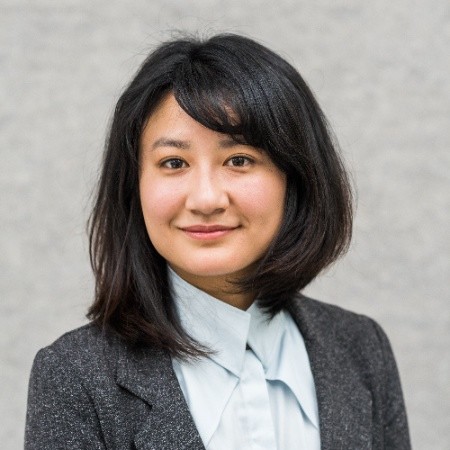
Weijia Song is a Lecturer in Real Estate and Practicum Coordinator at Harvard University's Graduate School of Design (GSD). She holds a Master of Science in Real Estate Development from MIT and a Bachelor of Architecture from Rice University, and is a Registered Architect in both California and New Zealand. Her professional career includes founding Collective Operations (CO-), a real estate development and architecture firm focused on residential, commercial, and urban infrastructure projects in the US and New Zealand. CO- has secured over $500M in funding and developed 800+ multifamily units in the Bay Area. Prior roles include Associate Architect at SHoP Architects (NY) and Ricardo Bofill Taller de Arquitectura (Barcelona), followed by Senior Project Manager at Eden Housing (CA). Current academic activities include teaching Master in Real Estate Practicum Prep (Spring 2025) and leading the Connecting Gilman Square housing/green space development project (Spring 2024).
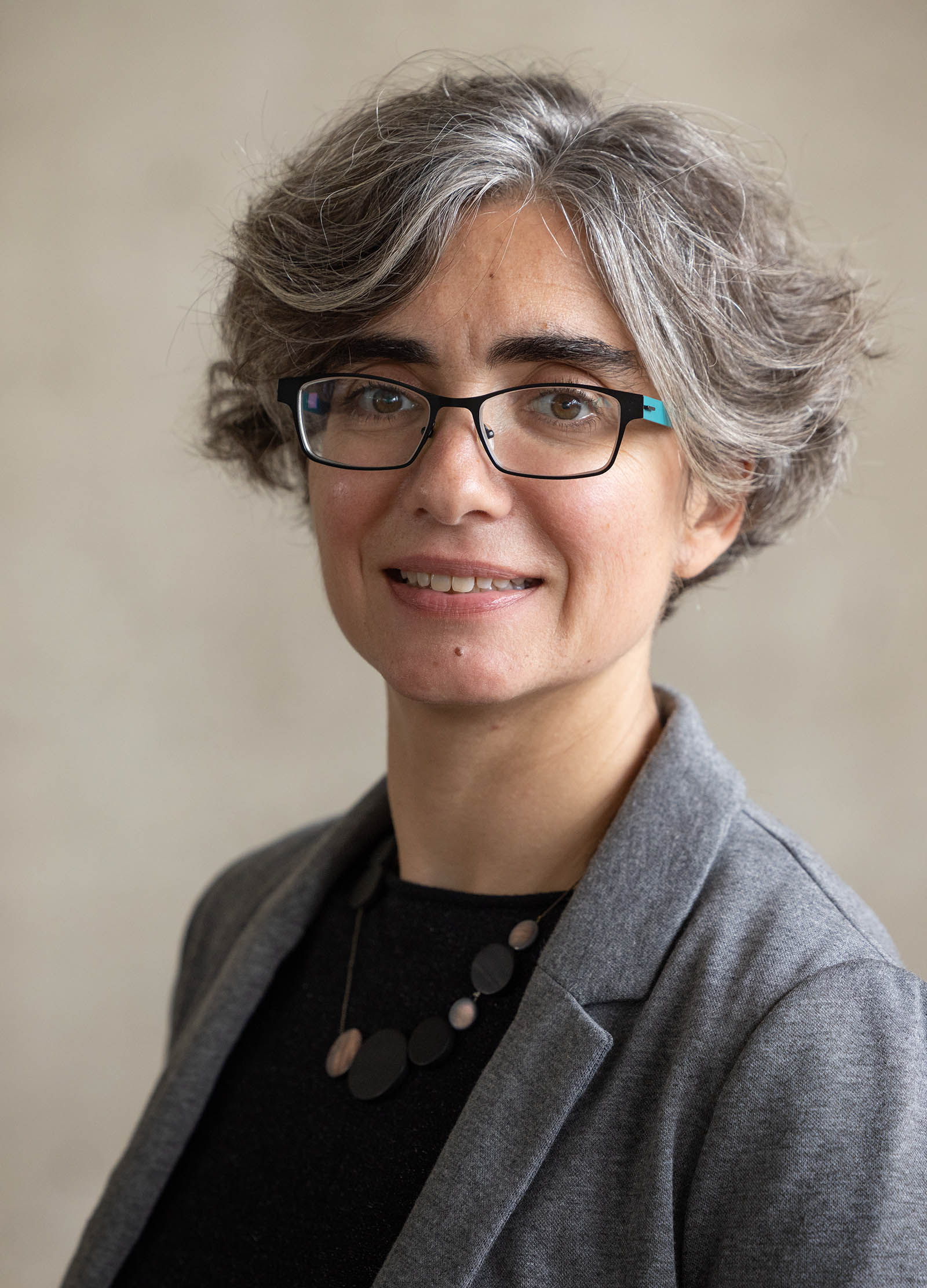
Hannah M. Teicher is an Assistant Professor of Urban Planning at Harvard University’s Graduate School of Design (GSD), affiliated with the Department of Urban Planning and Design. Her work focuses on climate change adaptation, urban transformations, and the socio-political dynamics of climate migration. She previously served as Researcher in Residence at the Pacific Institute for Climate Solutions in British Columbia, Canada. Education: PhD in Urban and Regional Planning from MIT (2019), Master of Architecture from University of British Columbia, and BA in Sociology and Anthropology from Swarthmore College. She co-chairs the Climigration Network's Welcoming Communities Work Group and contributed to the guidebook Lead with Listening , widely used by practitioners. Research interests include climate migration policy, corporate climate migration's geographic implications, urban/military collaboration for adaptation, and equity in climate planning. Her interdisciplinary work bridges academia, policy, and community engagement. Awards include MIT's Martin Fellowship for Sustainability (2019). She teaches courses on climate migration, urban adaptation, and planning studios emphasizing applied research. Projects include the Climate Allies initiative exploring urban-military partnerships and Embodied Carbon frameworks for reducing emissions in construction. Labs/Teams: Core member of the Climigration Network and collaborator with multi-university teams studying urban resilience. Current projects address Indigenous land repossession for climate relocation and equitable suburban climate governance.
Dr. Neil Carhart is a Senior Lecturer in Civil Engineering and Deputy Programme Director for Civil Engineering at the University of Bristol's School of Civil, Aerospace and Design Engineering. His research focuses on systems thinking, resilience engineering, and digital innovation applied to urban development and infrastructure systems, with a particular emphasis on public health and sustainability. He holds an MEng and EngD from the University of Bristol. His work bridges academia and practical application, addressing challenges in infrastructure resilience, spatial planning for health, and digital engineering solutions like blockchain applications and digital twins. Recent projects include analyses of urban development interventions, flood-resilient road networks, and autonomous rail systems. Dr. Carhart’s research emphasizes systems approaches to complex urban and planetary health problems, leveraging causal loop diagrams and interdisciplinary collaboration. He has contributed to frameworks for infrastructure interdependency management and resilience in the UK’s National Infrastructure Assessment. His digital twin work on the Clifton Suspension Bridge exemplifies innovative civil engineering applications. Key collaborations include the TRUUD consortium (Tackling Root Causes Upstream of Unhealthy Urban Development) and South West Infrastructure Partnership decarbonisation projects. He actively engages with stakeholders to co-create sustainable solutions for freight systems and urban governance.
Dr. Sepehr Alizadehsalehi is an adjunct lecturer and researcher at Northwestern University's Robert R. McCormick School of Engineering and Applied Science, where he teaches in the Master of Project Management program. Concurrently, he works as an industry professional in land development and real estate in California's Bay Area. His global experience spans major construction projects across the Middle East, Europe, and North America. His educational background includes: Ph.D. in Civil Engineering with a specialization in Construction Management M.S. in Project Management M.S. in Civil Engineering B.S. in Civil Engineering Dr. Alizadehsalehi's research centers on transformative construction technologies including Building Information Modeling (BIM), Extended Reality (XR), Artificial Intelligence (AI), the Metaverse, Cognitive Digital Twins, Reality Capture Technologies, and Lean Construction methodologies. His investigations focus on practical implementation challenges and innovative applications in industrial workflows. His scholarly contributions demonstrate consistent focus on digital transformation in construction, with recent works exploring the integration of AI with extended reality, metaverse applications in AEC, and cognitive digital twins. The publications reveal strong emphasis on practical implementation challenges, sustainability considerations, and human-centric approaches to technological adoption. Dr. Alizadehsalehi actively contributes to academic discourse as an editor and reviewer for leading journals including Automation in Construction (Elsevier), ASCE Journal of Construction Engineering and Management , and Advanced Engineering Informatics .
Therese J. McGuire is a Professor of Strategy and Chair of the Strategy Department at the Kellogg School of Management, Northwestern University. She has been with Kellogg since 2002 and held administrative roles including Director of the Real Estate Program and Senior Associate Dean for Curriculum and Teaching. Her expertise spans state and local public finance, fiscal decentralization, property tax policies, education finance, and regional economic development. McGuire has advised governments on tax reform and economic growth, notably leading a study for Arizona's revenue and expenditures in 1989. She served as President of the National Tax Association (1999-2000) and editor of the National Tax Journal (2001-2009). She holds a B.A. in Mathematics and Economics from the University of Nebraska-Lincoln and a Ph.D. in Economics from Princeton University. Her research focuses on fiscal federalism, property taxation, and the economic impacts of tax policies. McGuire has published extensively in journals like the National Tax Journal and Journal of Public Economics, addressing topics such as tax reform, regional development, and intergovernmental fiscal relations. She teaches courses on public economics and policy analysis, emphasizing real-world applications through field studies. McGuire’s editorial leadership and academic contributions have shaped public economics discourse. Her work bridges theoretical frameworks and practical policy implementation, particularly in evaluating tax systems’ effects on economic growth and equity. She continues to engage with policymakers to inform evidence-based decisions in state and local governance.
Mark Oei is an Adjunct Lecturer of Real Estate at the Kellogg School of Management, Northwestern University. With 25 years of investment experience, he has managed over US$5 billion across private and public investments, specializing in deal structuring, financing, valuation, and asset management. His expertise bridges real estate and technology, focusing on how technological advancements reshape the industry. He teaches REAL ESTATE TECHNOLOGY (REAL-930-5) , a course exploring the intersection of technology and real estate. Topics include AI applications, clean energy integration, disruption of traditional office/retail spaces, and technology-driven real estate finance. Guest speakers from prominent firms provide industry insights, and students analyze real estate tech innovations in a final team project. No scientific awards, grants, or labs are explicitly listed in the provided text.
Cheryl Wassenaar is an Associate Professor of Art in the Sam Fox School of Design & Visual Arts at Washington University in St. Louis. She holds a BFA from Calvin College and an MFA from the University of Cincinnati. Her practice merges visual art with text, repurposing found commercial signage into site-specific installations that explore communication, bureaucracy, and modernist aesthetics. Notable collaborations include 'The Cabinet of Ordinary Affairs' with poet Stephanie Ellis Schlaifer, funded by the 2018 Artistic Innovations Grant. She teaches foundational design, color theory, and methodology. Her exhibitions include 'Doomscapes and the Digital Beyond' (2024), 'Architecture of Form' (2024), and 'Wayfinding II' (2022). Corporate commissions include works for Camden Real Estate, Fidelity Investments, and the Urban Institute of Contemporary Art. Wassenaar’s research emphasizes interdisciplinary approaches, merging poetry, sculpture, and sound to interrogate societal systems. Awards: 2016 ArtPrize Calvin Alumni Award Publications: Co-authored chapter in At Length (2019), contribution to MIT Press (2024) Labs/Teams: Collaborates with poets and multimedia artists on immersive installations
Juan Palacios serves as an Assistant Professor at Maastricht University's School of Business and Economics and holds a Visiting Assistant Professor position at the Massachusetts Institute of Technology's Center for Real Estate. His research spans environmental economics, sustainable real estate, and health economics, with particular focus on the relationship between indoor environmental quality and human outcomes. He coordinates the Climate and Real Estate Multi-PI Research Cluster at MIT, demonstrating leadership in interdisciplinary environmental research. Palacios' research interests center on environmental economics with specific emphasis on indoor air quality, building performance, and climate risk assessment. His work bridges the gap between environmental science and economic outcomes, examining how physical environments affect productivity, health, and financial performance. He investigates the economic implications of sustainable building practices, climate adaptation strategies, and environmental health interventions, with particular attention to quantifying the financial value of these initiatives. His research combines field studies, econometric analysis, and systematic reviews to provide evidence-based insights for policymakers and industry stakeholders. His publication record reveals a consistent focus on the intersection of environmental quality, building performance, and economic outcomes. Palacios' work demonstrates growing attention to climate risk assessment in real estate, with increasing sophistication in measuring the financial impacts of environmental factors. His research spans multiple methodologies from field experiments in primary schools to systematic reviews of worker productivity data, showing methodological versatility. A notable trend is his progression from documenting environmental effects to quantifying their financial value, reflecting the maturation of sustainable real estate as a field of academic inquiry. Palacios actively collaborates with leading researchers in the field, including Nils Kok, Siqi Zheng, and Piet Eichholtz, indicating strong connections within the sustainable real estate research community. His work appears in prominent research paper series including those from MIT's Center for Real Estate and IZA Institute of Labor Economics, suggesting recognition within both economics and real estate academic circles.
Dr. Precious Angelo Brenni is Assistant Professor in Finance at Durham University Business School. He joined Durham in 2021 after completing his PhD in Finance at the same institution, following extensive industry experience in global markets and asset-liability management at Stanbic Bank Ghana. His research encompasses: Behavioral aspects of financial decision-making Corporate governance structures in emerging markets Sustainable investment frameworks for real estate Urban economic development patterns Dr. Brenni's work examines property tax compliance dynamics in shared occupancy arrangements and investigates sustainable financing mechanisms for real estate development in emerging economies. His industry background informs research on practical applications of financial models in developing market contexts.
Danny McGowan is Professor of Finance at Durham University Business School, specializing in applied microeconomics with emphasis on banking systems, financial intermediation, and household economics. He leads significant research projects funded by ESRC, Leverhulme Trust, and British Academy totaling approximately £600,000. Research explores: Banking market structures and mortgage securitization Fintech disruption and regulatory impacts Household financial distress during economic crises Real estate market dynamics Publications demonstrate consistent focus on financial innovation and crisis response, with recent work analyzing pandemic economics, privacy regulations' market effects, and regional poverty mapping. Research consistently examines how financial institutions adapt to technological and regulatory changes. Currently supervises doctoral candidate Dora Wu. Established the SilverCloud online mental health platform now used in over 75% of NHS services.
Jingshu Luo is an Assistant Professor of Finance at the University of Mississippi, holding the Liberto-King Professorship in Insurance. She is affiliated with the Department of Finance within the School of Business Administration. Her research focuses on corporate risk management, insurance economics, and corporate finance, with notable contributions to journals like the Journal of Risk and Insurance and Journal of Real Estate Finance and Economics. Dr. Luo earned her Ph.D. in Risk Management and Insurance from Temple University (2016). She was named a National Association of Insurance Commissioners (NAIC) Research Fellow in 2021, reflecting her expertise in regulatory policy and insurance economics. Her work frequently examines topics such as Medicaid expansion impacts, corporate risk management dynamics, and urban development in China. Her recent research trends emphasize policy analysis (e.g., NAIC model laws diffusion, ACA Medicaid expansion effects) and economic drivers of urban phenomena (e.g., skyscraper construction in China). Courses taught include FIN 341 (Risk Management and Insurance) and FIN 441 (Commercial Insurance). Awards: NAIC Research Fellow (2021) Advising/Grants: No advisees listed; grant information not specified. Labs/Teams: Not explicitly mentioned, but her research collaborations are likely tied to institutional insurance and finance initiatives.
Bill Winsten serves as an Adjunct Professor at Wayne State University Law School teaching Evidence while leading Honigman LLP's Complex Commercial Litigation Practice Group. Recognized in Chambers USA as an "outstanding trial lawyer" and "phenomenally talented," he bridges academic instruction with high-stakes legal practice. Education: J.D., Wayne State University Law School B.A., Wayne State University His expertise spans complex commercial disputes including business sales, shareholder conflicts, supply arrangements, lending relationships, real estate development, noncompetes, and constitutional matters. Winsten employs innovative trial strategies to secure client outcomes through litigation or settlement while frequently instructing peers in trial skills and serving as a mediator leveraging his tenacious approach to dispute resolution. At Honigman LLP, Winsten heads the Complex Commercial Litigation Practice Group managing high-profile cases and mentoring attorneys. His dual role connects theoretical legal education with real-world application, particularly through Evidence instruction that draws from decades of courtroom experience.
Troy L. Tassier is a Professor of Economics at Fordham University since 2021, with prior roles as Associate Professor (2009-2021) and Assistant Professor (2003-2009). He holds affiliations with Fordham's Urban Studies Program and International Political Economy and Development Program. His career includes a postdoctoral fellowship at the University of Michigan and prior banking industry experience in mortgage lending and risk management. Ph.D. in Economics, University of Iowa, 2002 M.A. in Economics, University of Iowa, 2000 B.S. in Economics, Michigan Technological University, 1993 Tassier specializes in complex systems, economic epidemiology, and labor economics, focusing on social network dynamics, epidemic modeling, and urban economic history. His work bridges economics, epidemiology, and network science. His 15 most recent publications span economic epidemiology, game theory, and urban economics, with a focus on network effects in healthcare, labor markets, and historical urban development. Notable topics include vaccination prioritization, spatial coordination games, and Manhattan's skyline formation. Georgescu-Roegen Prize runner-up (2006) for "Labor Market Implications of Weak Ties" MacArthur Network fellowship (1999) for social interactions and inequality research Tassier has advised Ph.D. students (Wael Hibri, Brandon Vick) and honors theses (e.g., Brendan Marshall, Sara Shahmiri). He has secured interdisciplinary grants for network-based vaccination strategies and Manhattan skyline studies.
Dr. Yang Zhou is Assistant Professor of Economics at the University of North Texas and Assistant Director of the Economics Research Group. His research spans public economics, urban/regional economics, and applied machine learning, with a focus on housing markets, political economy, and policy evaluation. His work examines how institutions and policies shape economic outcomes, with recent studies on housing values, economic freedom, and crisis resilience. Methodological approaches include text analysis, spatial econometrics, and machine learning applications. Recent publications explore pandemic economics, craft brewery impacts on property values, and facial recognition in labor markets. Awards include the Don Lavoie Prize (2019) for political economy research. Research collaborations focus on policy-relevant questions with implications for community development and institutional reform. Current projects investigate migration patterns, censorship effects, and economic resilience frameworks.
Assoc. Prof. Dr. Gökhan ÖZKUL is affiliated with the Department of Banking and Finance at the Faculty of Economics and Administrative Sciences, Suleyman Demirel University. His academic rank is Associate Professor. He holds a PhD in Economics from Suleyman Demirel University (2013), following a Master's (2008) and Bachelor's (2003) in Economics from Mediterranean University and Suleyman Demirel University, respectively. Education: Bachelor's: Economics, Mediterranean University (2003) Master's: Economics (Thesis), Suleyman Demirel University (2008) PhD: Economics, Suleyman Demirel University (2013) Research interests focus on Macroeconomics, Banking, Regional Development, Entrepreneurship, Innovation, and Financial Economics. His recent work examines topics like the impact of monetary policy on inflation, pandemic effects on housing markets, and financial development in Islamic countries. He has co-authored over 30 peer-reviewed articles and edited several books on economics and finance. Prof. ÖZKUL has supervised 10 master's theses, including studies on cryptocurrency adoption, credit markets, and regional development. He has contributed to projects such as analyzing entrepreneurial opportunities in TR61 regions and the role of innovation in tourism dynamics. His work frequently intersects with policy-relevant issues, including financial crises, dollarization effects, and the impact of macroeconomic variables on economic growth.