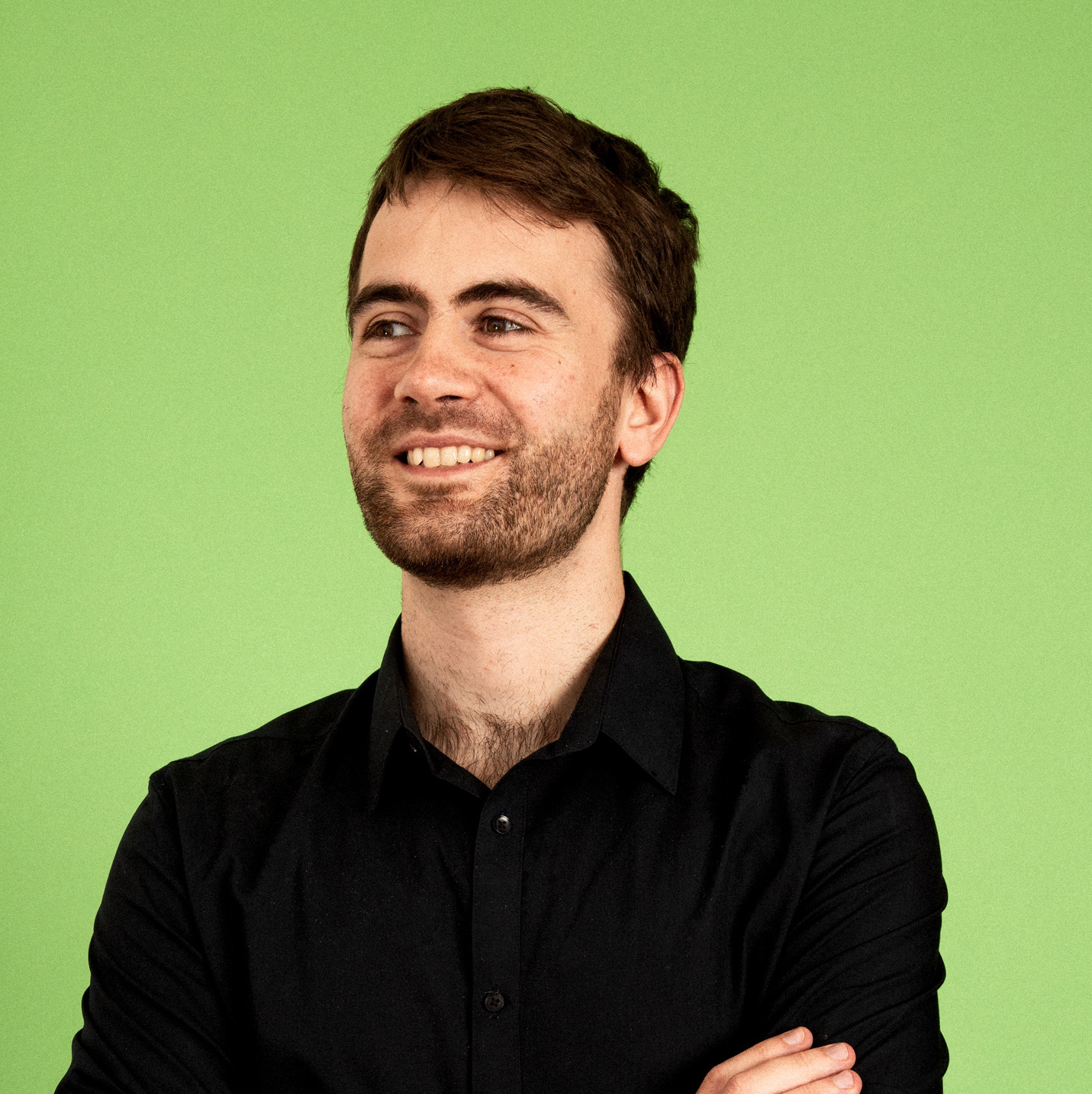
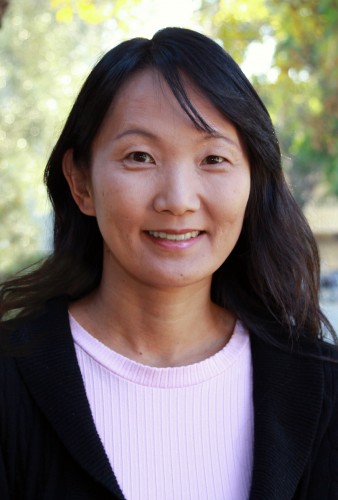
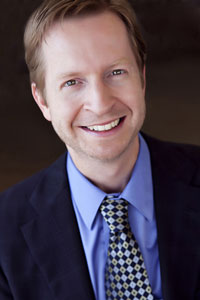
Volodymyr Kuleshov is an Assistant Professor at Cornell Tech and Cornell University's Department of Computer Science. His research focuses on machine learning, particularly generative models, probabilistic methods, and applications in health and sustainability. He co-founded Afresh, an AI startup reducing food waste, and has commercialized genome sequencing work via Moleculo (now part of Illumina). Kuleshov earned his PhD from Stanford University, advised by prominent figures like Stefano Ermon and Serafim Batzoglou. He teaches courses like CS 5785 (Applied Machine Learning) and CS 6785 (Advanced Topics in Machine Learning). His awards include the NSF CAREER Award and Arthur Samuel Best Thesis Award. Education: PhD in Computer Science from Stanford University (2018), advised by Stefano Ermon, Serafim Batzoglou, Michael Snyder, Christopher Re, and Percy Liang. Research Interests: Core ML (generative models, approximate inference), health tech (genome sequencing, clinical decision support), sustainability (AI-driven food waste reduction). Notable projects include Caduceus for DNA sequence modeling and Diffusion Duality theory. Awards: Google Research Scholar Award (2025), Outstanding Paper Award (EMNLP 2023), NIH MIRA Award (2023). Students/Advising: Over 20 advisees across PhD, Master’s, and undergraduate programs, including Edgar Marroquin (PhD) and Charlie Marx (Stanford). Alumni include Allan Bishop (Bloomberg) and Yong Huang (UCI PhD). Labs/Teams: Leads research groups at Cornell Tech focusing on generative AI and its real-world applications. Collaborates with institutions like MILA (Montreal) and DeepMind.
Helmut Leder is a Professor at the University of Vienna, specifically within the Faculty of Psychology's Department of Cognition, Emotion, and Methods in Psychology. He serves as Head of the Vienna Cognitive Science Hub, integrating interdisciplinary approaches to study aesthetic experiences and cognitive processes. His academic profile includes teaching courses in General Psychology, Cognitive Psychology, and Neurosciences, alongside supervising master's and doctoral thesis seminars focused on perception and neuroaesthetics. Key Research Areas : Empirical Aesthetics, Cognitive Psychology, Visual Perception, Cross-Cultural Psychology, Urban Art Impact, Mental Imagery Studies Methodological Focus : Eye-tracking, Machine Learning Analysis, Cross-Cultural Comparisons, Field Experiments, Neuroimaging Recent Contributions : Investigated urban art's role in stress reduction, developed network models of aesthetic experiences, explored non-visual color navigation for the blind, and applied machine learning to art evaluation. His work bridges psychology with cultural studies, examining how aesthetic experiences shape well-being and cognitive processes. Current projects emphasize the neural and behavioral distinctions between real and imagined art encounters, while challenging traditional gender-based perception models.
Jay David Bolter holds the Wesley Chair of New Media and serves as Professor and Director of Computational Media at the Georgia Institute of Technology, where he is affiliated with the School of Literature, Media, and Communication within the Ivan Allen College of Liberal Arts. A foundational figure in digital media studies, he is renowned for his influential theoretical works and practical contributions to new media forms. His research spans Augmented Reality , Virtual Reality , Digital Culture , and the History of Media , with particular emphasis on remediation theory (developed with Richard Grusin) and the evolution of digital writing. As an active member of the Augmented Environments Lab, Bolter creates narrative-driven AR applications for cultural heritage sites and educational contexts, blending theoretical rigor with experimental design. His work consistently examines how new media technologies reshape human perception and cultural practices. Recent publications reveal a concentrated exploration of reality media (AR/VR) as narrative spaces, with articles addressing biofeedback integration in VR fitness, agency-driven interactive storytelling, and theoretical frameworks for understanding immersive experiences. His scholarship bridges historical media analysis with cutting-edge technical implementation, demonstrating how remediation processes continue to evolve in mixed reality environments. This trajectory reflects his lifelong investigation into the interplay between technological capabilities and human expression. Bolter maintains significant collaborative partnerships, including co-authoring seminal texts like Remediation and developing the Storyspace hypertext system with Michael Joyce. His leadership in the Augmented Environments Lab drives interdisciplinary projects that merge humanities perspectives with technological innovation, particularly in creating culturally resonant AR experiences. Teaching responsibilities include advanced courses in mixed reality design, computational media, and digital media theory, shaping the next generation of media scholars and practitioners.
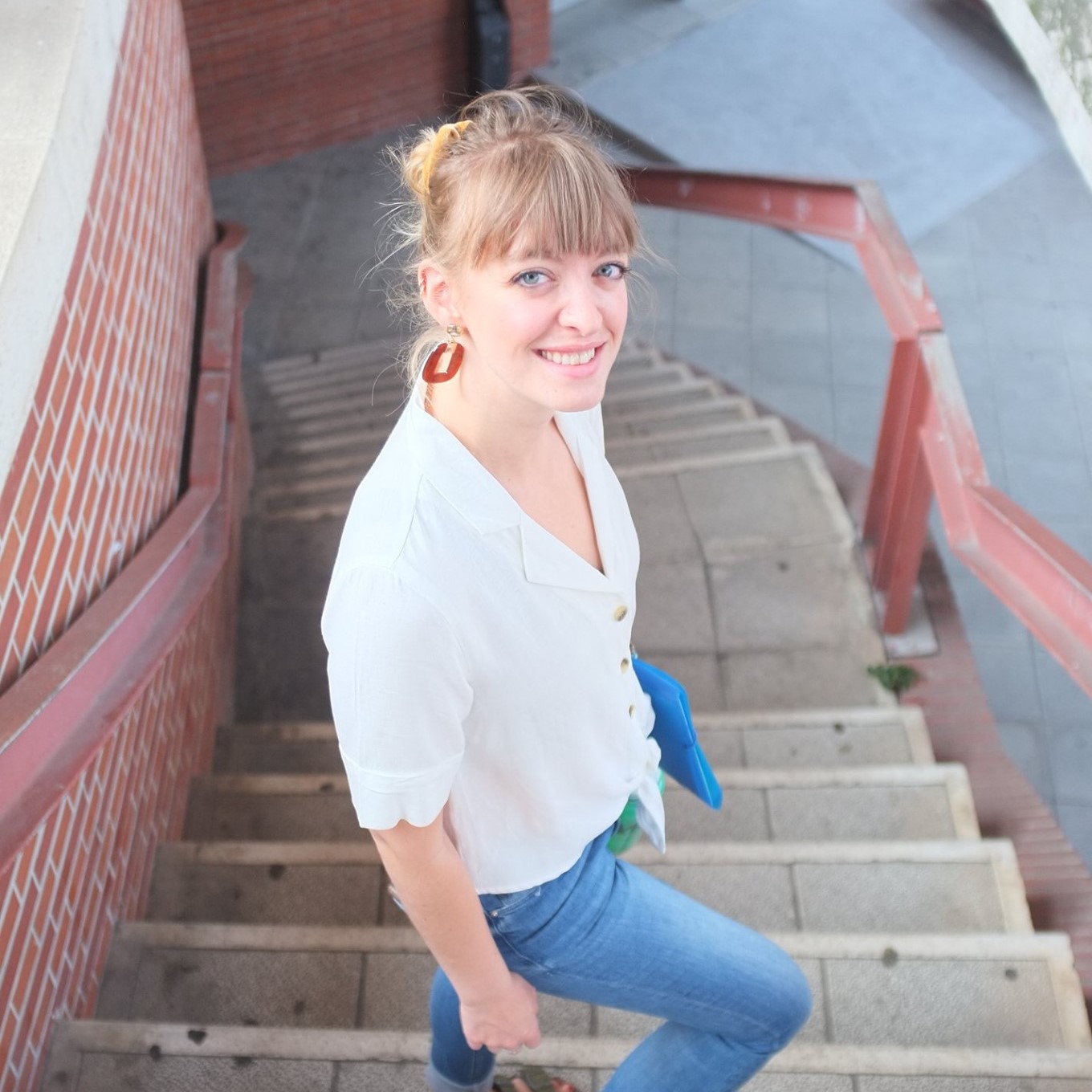
Hannah Hoganson is an NSF Postdoctoral Fellow in the Department of Mathematics at the University of Maryland, mentored by Christian Rosendal after previously holding a Brin Postdoctoral Fellowship under Lei Chen. Her research bridges geometric group theory, low-dimensional topology, and descriptive set theory, with a focus on mapping class groups of infinite-type surfaces and topological groups. Her educational background includes a PhD from the University of Utah (2022) advised by Ken Bromberg, and prior graduate studies at Miami University where she investigated Thompson's groups. She has taught multiple calculus courses at UMD and the University of Utah, receiving exceptional student evaluations for her clarity and supportive teaching style. Hoganson's research explores the coarse geometry of mapping class groups, connections between topological groups and descriptive set theory, and geometric structures on infinite-type surfaces. Her work often combines algebraic, geometric, and topological methods to address fundamental questions about group actions and classification problems in low-dimensional topology. Her recent publications demonstrate a strong trend toward interdisciplinary approaches, integrating geometric group theory with descriptive set theory to analyze infinite-type mapping class groups and Polish groups. Key themes include geometric finiteness, coarse boundedness, and the interplay between algebraic structures and topological dynamics in infinite settings. NSF Postdoctoral Fellowship (DMS-2303365) Brin Postdoctoral Fellowship Hoganson has advised an undergraduate reading course in geometric group theory (Spring 2024) and served as a mentor for REU students at SUMSRI. Her current research is supported by NSF grant DMS-2303365, which funds her postdoctoral work on geometric and topological aspects of infinite-type surfaces and groups. She actively collaborates with researchers including George Domat, Sanghoon Kwak, and Robbie Lyman across multiple projects. She co-organizes the University of Maryland Geometry and Topology Seminar and has co-led specialized workshops including the Big Mapping Class Groups log cabin workshop in Young, AZ (2024) and the AWM special session on Women in Groups, Geometry and Dynamics (2023), fostering collaborative research environments in geometric topology.
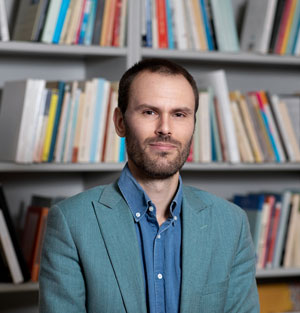
Prof. Dr. Pia Knoeferle is a leading academic at Humboldt-Universität zu Berlin , where she serves as a Professor in the Department of German Language and Linguistics . She is a principal investigator in the Collaborative Research Center (CRC 1412) focused on register phenomena and leads the Reaction Time, Eye-tracking, and EEG Laboratories . Her research spans psycholinguistics , cognitive neuroscience , and computational modeling of language , with a central interest in how real-time language comprehension interacts with social context , formality-register congruence , and morphosyntactic processing . Appointments: Professor at Humboldt-Universität (2024), CRC 1412 member Methodologies: Eye-tracking, EEG, Visual World Paradigm, ERP Her work investigates lifespan language processing (children, adults, older adults) through contextual cue integration , including emotional , spatial , and social context such as gender cues , eye gaze , and facial expressions . Key questions include: How do pragmatic and contextual factors modulate lexical and grammatical processing ? What representations underlie register sensitivity in spoken and written comprehension ? Recent articles (2022-2024) focus on register congruence effects in German sentence processing, age-related differences in formality-register anticipation , and interactions between register and morphosyntactic knowledge . Using eye-tracking and visual world paradigms , her team examines incremental integration of socially-situated context with verb-argument relations and grammatical constraints . Findings suggest subtle late-stage register effects and interference between pragmatic and syntactic processing . Her lab collaborates with researchers like Katja Maquate , Valentina Nicole Pescuma , and Camilo Ronderos , contributing to the Frame text of the Second Phase Proposal for CRC 1412 (2020) and subsequent reviews in Frontiers in Psychology (2023). The work emphasizes complementary methods to model register variability across languages , modalities , and cultural contexts .
Dr. Ewan Jones is Associate Professor in Nineteenth-Century Literature at the University of Cambridge's Faculty of English and a Fellow at Downing College, where he serves as Director of Studies for Part II. He completed his BA, MPhil, and PhD at King's College, Cambridge, and was previously Thole Research Fellow at Trinity Hall. His educational background includes comprehensive training in English literature at Cambridge, with specialization in nineteenth-century literary studies. His academic journey reflects deep engagement with both traditional literary scholarship and innovative computational approaches to textual analysis. Dr. Jones's research concentrates on poetics, embodied cognition, and computational approaches to intellectual history. His work fundamentally questions how we understand 'close reading' not as interpretation but as a specific cognitive practice. He explores how aesthetic phenomenology can illuminate historical reading communities, develops pedagogical routines to de-habituate standard attention modes, and seeks constructive engagement between computational analysis and traditional reading practices. His scholarship bridges literary studies with cognitive science, demonstrating how rhythm, attention, and cognition intersect in literary form. His research trajectory shows increasing focus on attentional practices in reading, with recent work examining group attention practices and rhythm in Victorian poetry. The computational dimension of his work has grown steadily, moving from individual textual analysis to large-scale corpus studies through projects like the Concept Lab. Fulbright Scholar Leverhulme Research Fellowship (2021/22) on 'Close Reading as Attentional Practice' Residential fellow at the Swedish Collegium of Advanced Study Visiting fellow at Ludwig Maximilian Universität Visiting fellow at Pomona College Dr. Jones supervises doctoral work on diverse topics including 'radical conservatism' in Victorian poetry, queer theory and historical poetics, Wagner reception in Anglophone poetry, morphogenetic conceptions of form, and metre and exact measurement. His interdisciplinary collaborations include work with Phyllis Weliver on digitizing Tennyson manuscripts and with Peter de Bolla on computational concept analysis projects that have secured significant research funding. He has developed innovative teaching approaches that integrate cognitive science with literary analysis. He co-founded and participates in the Concept Lab, an interdisciplinary project developing open-source computational resources for historical dataset analysis. This initiative has fostered collaborations across humanities and computer science disciplines, creating tools that bridge traditional literary scholarship with digital methods. His work with the Princeton Prosody Archive demonstrates his commitment to building scholarly infrastructure for rhythm and meter studies.
Prof. April Wang is an Assistant Professor in the Department of Computer Science at ETH Zurich. Her work focuses on Educational Technology, Human-Computer Interaction, and AI-driven tools for programming education. She is affiliated with the Professur Educational Technology group and teaches courses such as Human Computer Interaction and Ethics in Computing. Her research explores interactive learning environments, collaborative data science workflows, and AI-augmented educational systems. Her research interests span computational notebooks, live coding interfaces, and human-AI collaboration in software development. Notable contributions include frameworks like DBox for algorithm learning and EDBooks for interactive programming narratives. She also investigates challenges in real-time collaboration tools and automated documentation systems for data scientists. Recent work emphasizes understanding user needs in automated copilot systems and resolving conflicts in collaborative notebook environments. Her projects often bridge theoretical HCI principles with practical educational tools, aiming to enhance both instructor efficacy and student engagement. Prof. Wang’s teaching portfolio includes courses on user-centered interface design and ethical scientific practices. She actively contributes to advancing interdisciplinary computational literacy through initiatives like datAR, which uses everyday objects to teach data concepts.
Dinah Ribard is a Director of Studies at the École des Hautes Études en Sciences Sociales (EHESS), working within the Centre de Recherches Historiques (CRH). She serves as Center Director for the GRIHL (Groupe de recherche interdisciplinaire sur l'histoire du libéralisme) research group. Her academic career has been dedicated to the historical study of work, intellectual practices, and cultural production from the early modern period through the 19th century. Ribard completed her thesis in December 2000 at the University of Paris III - Sorbonne Nouvelle under the direction of Alain Viala, entitled "Live Tell Think. Research on the literary status of the philosopher: the Lives of philosophers in France 1650-1766." She was formerly a student at the École Normale Supérieure (Ulm) and holds a degree in Modern Literature. Prior to her position at EHESS, she served as an ATER (Attaché Temporaire d'Enseignement et de Recherche) at Paris III University from 1999 to 2001 and taught at Lycée Jacques-Feyder in Epinay sur Seine from 2001 to 2003. Ribard's research focuses on the history of work from multiple perspectives - examining both intellectual work (1600-1900) and material labor. She investigates how work has been conceptualized, narrated, and institutionalized throughout history. Her work explores the relationship between knowledge production and labor, analyzing how different professions and social statuses have shaped intellectual and cultural practices. She examines the historical construction of disciplines, professions, and social classifications, with particular attention to how writing practices intersect with work identities. Her recent publications reveal a consistent focus on the relationship between writing, work, and social identity across the early modern and modern periods. Ribard's scholarship demonstrates how textual practices were embedded in specific work contexts, from artisanal workshops to academic institutions. Her work shows how literary forms were used to construct professional identities and how writing practices served as forms of political action. She has made significant contributions to understanding the historical relationship between intellectual labor and material production. Ribard has published extensively, including the notable 2023 book "Le Menuisier de Nevers. Poésie ouvrière, fait littéraire et classes sociales (XVIIe-XIXe siècle)" which examines how working-class poetry was historically constructed and marginalized. Her scholarship challenges traditional literary classifications and reveals how social categories have been historically produced through cultural practices. As Director of Studies at EHESS, Ribard supervises doctoral students and contributes to the academic training of historians. She co-responsible for the Grihl seminar and teaches courses at EHESS on topics including "Writings of the Past. Literature and History: Methods, Theories, Fields" and "History and stories of work." Her teaching reflects her research interests in the intersection of literary practices, historical methodology, and social analysis. Within the CRH, Ribard is affiliated with the GRIHL research group, which focuses on the interdisciplinary history of liberalism. Her work bridges historical, literary, and sociological approaches to understanding the development of social and intellectual categories. Through her research, teaching, and institutional leadership, Ribard has made significant contributions to the historical understanding of work, knowledge production, and cultural classification.
Yuuko Uchikoshi Tonkovich is a Professor at the School of Education, University of California, Davis, where she has served since 2004, advancing from Assistant to Associate and then to full Professor. Her work centers on language and literacy development in young dual language learners, with a focus on bilingualism, early literacy, and the role of family and media in language acquisition. Her research interests include: Early Childhood Development Multilingual Learners and Bilingual Education Language Acquisition and Literacy Parent-Child Interaction and Home Language Environment Quantitative Analysis of Educational Outcomes Educational Television and Multimedia Her recent publications span topics such as cognitive distancing in parent-child reading, morphological awareness in bilingual readers, and the impact of teacher language use in multilingual classrooms. The research consistently emphasizes longitudinal, cross-cultural, and interdisciplinary approaches, particularly focusing on Chinese American and Mexican American immigrant families. Her scientific awards include: AERA Vocabulary SIG Notable Vocabulary Researcher Award (2025) Foundation for Child Development Young Scholars Program Grant International Reading Association Dissertation Fellowship and Finalist Award Harvard Graduate School of Education Fellowships She has advised numerous research projects and secured significant funding from NIH/NICHD, the Foundation for Child Development, and other organizations. She teaches courses such as Language Development, Early Literacy, and Research on Text Comprehension. She is actively involved in national initiatives, serving on the Technical Advisory Group for the First 5 California Dual Language Learner Study and as Associate Editor of Applied Psycholinguistics . She leads the Language & Literacy Development Lab at UC Davis, which investigates the cognitive, linguistic, and socio-emotional development of dual language learners.
Prof. Dr. Teresa Sansour is a full Professor of Pedagogy and Didactics in Cases of Intellectual Development Impairments with Special Consideration of Inclusive Educational Processes at the Institute for Special and Rehabilitation Education, Carl von Ossietzky University of Oldenburg. She joined the university in April 2020 and has held leadership roles including Vice Director for Teaching at the Center for Teacher Education (since October 2021) and Deputy Institute Director (since April 2025). Her academic affiliations reflect a deep commitment to inclusive and special education. Her research focuses on educational interactions in the context of intellectual disabilities, inclusive subject didactics, the participation of people with complex disabilities, and the professionalization of educators and prospective teachers. Key research areas include inclusive literacy, art education, teacher motivation, and social integration. She leads significant funded projects such as Literary Texts in Simple Language (LiES) and Lighthouses for Participation , both aimed at enhancing inclusion for people with disabilities. The recent publications of Prof. Sansour span topics such as school absenteeism in autism, self-concept in intellectual disabilities, inclusive art education, and participation models. Her work demonstrates a strong interdisciplinary and applied focus, combining qualitative methods with pedagogical innovation. She frequently publishes in peer-reviewed journals and edited volumes on special education, inclusive didactics, and disability studies. Member, German Society for Educational Research (DGFE), Section Special Education Member, Network for Complex Disabilities e.V. Chair, Advisory Board of the Georg-Leffers-Stiftung Chair, Association for the Promotion of Pedagogical Rehabilitation and Social Integration of People in Risk Situations Board Member, German Interdisciplinary Society for Research Promotion for People with Intellectual Disabilities (DIFGB) Prof. Sansour actively contributes to academic leadership and teacher training. She serves as program coordinator for the Bachelor’s in Special Education and accreditation officer for the Special Education/Social Studies cluster. Her work includes advising on inclusive curricula, fostering research collaborations, and securing external funding for inclusive initiatives. She has not received explicitly mentioned scientific awards in the provided text. She is involved in multiple collaborative research teams and projects focused on inclusion, literacy, and disability rights.
Dominique Chen is a Professor at Waseda University's School of Culture, Media and Society since 2022, previously serving as Associate Professor from 2017-2022. A French national born in 1981, he holds a Ph.D. in Interdisciplinary Informatics from the University of Tokyo (2013). His work bridges technology, art, and human experience with a focus on digital well-being and more-than-human relationships. Chen's research interests include human-microbe interaction, neo-cybernetics, and the design of systems that foster mutual care between humans and non-human entities. His work with the Nukabot project exemplifies this interdisciplinary approach, exploring how fermentation processes can serve as metaphors for communication and relationship building. He leads the Ferment Media Research group, investigating how fermentation principles apply to digital cultures and communication systems. His recent publications reveal a consistent focus on designing for well-being in digital societies, with particular attention to translation processes, human-microbe relationships, and the creation of systems that support co-adaptive interaction. The Nukabot research series demonstrates how traditional fermentation practices can inform novel interaction paradigms that acknowledge and incorporate more-than-human perspectives. Best Paper Honorable Mention (2024) - ACM Synlogue with Aizuchi-bot ACM SIGGRAPH Special Prize (2023) - Nukabot Best of AppStore 2015/2016 - Picsee/Syncle applications Good Design Award (2008) - Creative Commons Japan Super Creator certification (2009) - IPA Exploratory IT Program Chen has advised numerous projects through his leadership of Ferment Media Research and has served on various committees including the Good Design Award jury (2016-), Yomiuri Shimbun Reading Committee, and advisory boards for art and design institutions. His work extends beyond academia through his founding of Divideal Inc. (acquired by Smart News in 2018) and Creative Commons Japan (now Commonsphere). His laboratory, Ferment Media Research, explores interdisciplinary connections between fermentation processes, digital systems, and human relationships, creating installations like Nukabot that facilitate human-microbe interaction and Last Words/TypeTrace that examines writing processes and communication.
Ibo van de Poel is a Full Professor at Delft University of Technology , within the Faculty of Technology, Policy and Management , specifically in the Section Philosophy . He holds the prestigious Antoni van Leeuwenhoek professorship , awarded to excellent young researchers, and is a leading figure in Design for Values , engineering ethics , and technology as social experimentation . Education: Van de Poel studied Philosophy of Science, Technology and Society at the University of Twente , with a propaedeutic exam in Mechanical Engineering . He earned his PhD in Science and Technology Studies (STS) in 1998 from the University of Twente , under the supervision of Prof. Dr. A. Rip. Research Interests: His research spans three major themes: Design for Values : Investigating how moral values can be integrated into engineering design, including empirical studies on how engineers handle value conflicts. Moral Responsibility in R&D Networks : Exploring the "problem of many hands" in large-scale research and development projects, developing formalizations and empirical methods. Ethics of Emerging Technologies : Examining ethical issues in new technologies like nanotechnology and synthetic biology , with a focus on technology as social experimentation . Publications and Impact: Van de Poel has authored over 25 international peer-reviewed articles and 15 book contributions . He is co-editor of major works including the Handbook of Philosophy of Technology and the Engineering Sciences (Elsevier, 2009), Philosophy and Engineering (Springer, 2010), and Ethics, Engineering and Technology (Wiley-Blackwell, 2011). His recent work includes leading the VICI project "New Technologies as Social Experiments" , funded by NWO. Scientific Awards: Antoni van Leeuwenhoek Professorship (TU Delft) VICI Grant for "New Technologies as Social Experiments: Conditions for Morally Responsible Experimentation" Advising and Grants: Van de Poel has led and contributed to multiple high-impact projects, including: NWO Project on "Moral Responsibility in R&D Networks" (2007–2012) EU Project on ethical issues in synthetic biology (2009–2011) VICI Project on "New Technologies as Social Experiments" (ongoing) He has also supervised PhD students and contributed to educational innovations, including the development of the AGORA web-based program and the first Dutch textbook on ethics and technology . Labs and Teams: Van de Poel is an active member of 4TU.Ethics & Technology , a federation of Dutch technical universities focused on ethics and technology. He contributes to the Simon Stevin Series in the Ethics of Technology and participates in various reading groups and PhD communities within the network.
Cecilia O. Alm is a Professor in the Department of Psychology within the College of Liberal Arts at Rochester Institute of Technology (RIT), where she serves as the Artificial Intelligence Program Director. She holds multiple leadership roles including Director of the Center for Human-aware AI and Director of the Computational Linguistics and Speech Processing Lab (CLaSP). Her institutional affiliations span the School of Information, Ph.D. Programs in Cognitive Science and Computing and Information Sciences, Department of Computer Science, and MS in Data Science program. Dr. Alm earned her Ph.D. from the University of Illinois at Urbana-Champaign. Her research focuses on human-centered artificial intelligence with particular emphasis on linguistic and multimodal sensing, affective computing, and natural language processing. She investigates how AI systems can better understand and respond to human communication through multimodal dialogue processing, with applications in accessibility, education, and healthcare. Her recent publications demonstrate a strong trend toward developing inclusive AI systems, particularly through projects addressing Deaf community needs (MULTICOLLAB-ASL), subtle emotion recognition (FUSE corpus), and bias mitigation in NLP. The work consistently integrates multimodal data streams (speech, gaze, gesture) to create more responsive human-AI interaction frameworks. Current research directions emphasize diversity in AI education, visual prosody in sign languages, and human-in-the-loop AI development. Dr. Alm leads several significant NSF-funded initiatives including the AWARE-AI program, IRES AI-PROWIL international research experience, and collaborative projects with Gallaudet University focused on Deaf scientist-centered AI research. She has secured over $2.5 million in external funding for her work on human-aware AI systems. She directs the CLaSP lab which provides research opportunities for PhD, MS, and undergraduate students, with graduates employed at major technology companies including Amazon, Apple, Microsoft, and Facebook. The lab focuses on real-world AI applications in accessibility, human-robot interaction, and multimodal communication systems.
Rainer Watermann is a Full Professor for Empirical Research in Education at the Free University of Berlin since 2011, previously serving as Full Professor for Education and Empirical Research in Schools at Georg-August University of Göttingen (2005-2011). His academic career includes significant research positions at the Max Planck Institute for Human Development in Berlin (1997-2005). Watermann earned his Diploma in Educational Science from the University of Münster (1996), followed by a Dr. phil (2002) and Habilitation (2005), both from Freie Universität Berlin. His educational background established the foundation for his extensive research in educational transitions and disparities. His research focuses on educational transitions, particularly from primary to secondary school and into higher education, examining motivational factors, social background influences, and achievement goal development. Watermann's work consistently addresses how social disparities affect educational opportunities and outcomes, with particular attention to gender differences and longitudinal developmental patterns. His methodological expertise includes latent class analysis, structural equation modeling, and large-scale assessment design. Watermann's publication portfolio reveals consistent research trajectories examining motivational frameworks (particularly expectancy-value theory), educational transitions, social disparities in education, and political socialization. His work spans both theoretical development and practical applications for educational policy and practice, with increasing focus on intervention effectiveness in recent years. As an active member of the academic community, Watermann serves on multiple editorial boards including the Swiss Journal for Educational Sciences and Empirical Educational Science , and regularly reviews for major educational and psychological journals. He has also contributed to significant research centers, including serving as spokesman for the Center for Empirical Research on Teaching and Learning in Schools (ZeUS) at the University of Göttingen (2008-2010). Watermann maintains an active research program with numerous collaborations across Germany and internationally, evidenced by his consistent publication record through 2025. His work bridges educational psychology, sociology of education, and policy-relevant research, maintaining strong connections between theoretical frameworks and practical educational contexts.
Matthew Santa serves as Professor of Music Theory and Chair of the Music Theory and Composition Area at Texas Tech University School of Music, with prior teaching appointments at Queens College and Hunter College. His leadership shapes curriculum development and academic initiatives within the department. Academic credentials include advanced degrees from Louisiana State University and The City University of New York, establishing foundational expertise in theoretical frameworks and analytical methodologies. Research focuses on post-tonal analysis , diatonic set theory , and parsimonious voice leading , bridging complex theoretical concepts with practical pedagogy. His work integrates popular music analysis and metrical studies, emphasizing accessibility for diverse learners through innovative teaching resources. Publications demonstrate evolving scholarly trends from late-20th century set theory toward contemporary applications in musical form and rhythm. Recent textbooks synthesize Rothstein, Krebs, and Mirka's theories into unified analytical approaches for undergraduate and graduate education. Scientific recognition includes: MTSNYS Young Scholar Award (1998) Mentorship encompasses graduate and undergraduate students across composition and theory disciplines, though specific advisees aren't documented in source materials. No grant funding details appear in available records. Collaborative projects include the Flute/Theory Workout series with Lisa Garner Santa and Thomas Hughes, blending performance technique with theoretical concepts through MIDI accompaniment systems.