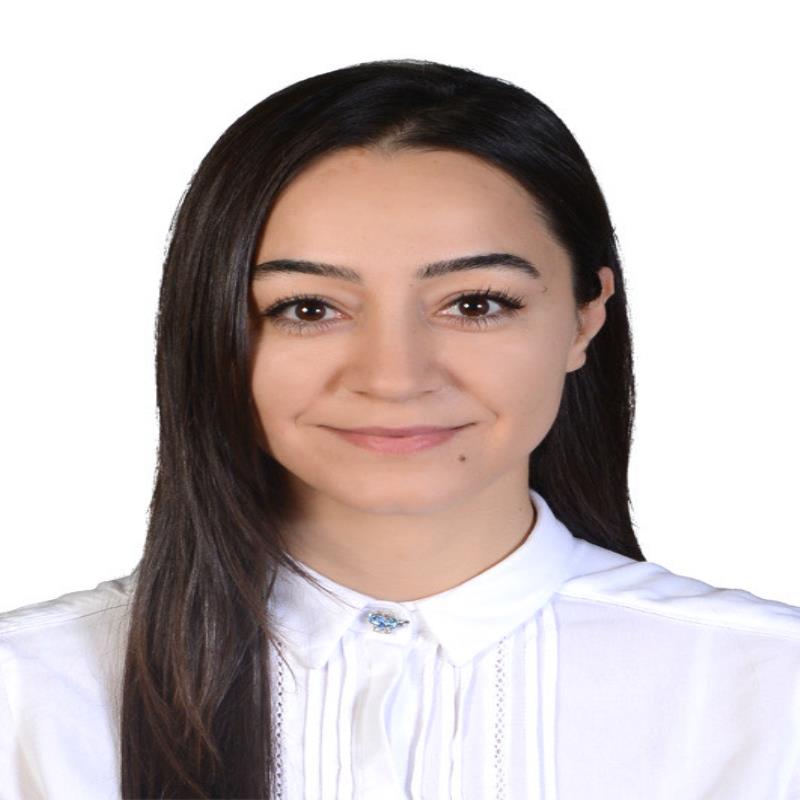
Assoc. Prof. Duygu Koçak is an academic at Alanya Alaaddin Keykubat University's Faculty of Education, specializing in Measurement and Evaluation in Education. She holds a Ph.D. from Ankara University (2016) and conducted postdoctoral research at the University of Toronto (2018-2019). Her roles include Associate Professor, Department Head, and Deputy Head of Department at her current institution. Her research focuses on educational measurement, psychometrics, and statistical methodologies in education. Her academic journey includes positions at Adıyaman University (2014-2016) and lecturing roles since 2016. She has authored/co-authored over 30 peer-reviewed articles on topics like test validity, Monte Carlo simulations, and learning disabilities. Notable works include the 'Academic Jealousy Scale' (2019) and studies on homework impact (2020). Dr. Koçak has contributed to edited volumes on data analysis and measurement tools. She serves as a referee for journals like the Journal of Measurement and Evaluation in Education and Psychology and has presented at international conferences on educational statistics and assessment.
Assoc. Prof. Dr. Serkan Arıkan is a faculty member at Boğaziçi University's Faculty of Education, Department of Mathematics Education. His research focuses on educational measurement, computerized adaptive testing, non-routine problem solving, and large-scale assessment frameworks like PISA and TIMSS. He has developed psychometric tools for STEM competency evaluation and conducted bias detection studies in international exams. Education : PhD in Secondary Science and Mathematics Education (METU, 2010), Postdoc (Tilburg University, 2015) Awards : Outstanding Achievement in Teaching Award (2021-2022) Research Trends : His recent work includes psychometric validation of self-compassion scales, extending the Community of Inquiry framework for technology integration, and adaptive test design using multiple matrix sampling. He investigates how socioeconomic factors, item bias, and emotional skills intersect with academic performance. Projects : Leads TÜBİTAK-funded AI-based test design and computerized adaptive mathematics test initiatives. Conductor of Boğaziçi University Adaptive Testing Laboratory.
GÜÇLÜ ŞEKERCİOĞLU is an Associate Professor at Akdeniz University, Faculty of Education, Department of Educational Sciences. Currently serving as Director of the Center for Measurement, Evaluation, Certification Research and Application and Director of the Institute of Educational Sciences since 2022, they also hold the position of Vice Dean of the Faculty of Education (2022-2025). Their academic career spans over 15 years at Akdeniz University, progressing from Research Assistant (2010-2011) to Assistant Professor (2011-2019) and currently Associate Professor (2019-present). Academic background includes: Doctorate (2003-2009): Ankara University, Institute of Educational Sciences, Measurement and Evaluation Postgraduate (1998-2001): Ankara University, Institute of Educational Sciences, Measurement and Evaluation Undergraduate (1993-1997): Ankara University, Faculty of Educational Sciences, Psychological Services in Education Dr. Şekercioğlu's research focuses on the intersection of psychometrics, educational measurement, and statistical analysis in educational contexts. Their work demonstrates deep expertise in measurement invariance, differential item functioning, scale development and validation, and advanced statistical methods in education. They have developed specialized knowledge in analyzing international assessments like PISA and TIMSS, with particular attention to cross-cultural measurement equivalence. Their research methodology combines rigorous quantitative approaches with practical applications in educational settings, contributing significantly to the understanding of how psychological constructs can be reliably measured across diverse populations. Analysis of their publication record reveals a strong emphasis on measurement theory and its practical applications in educational contexts. Their work consistently addresses critical issues in cross-cultural assessment, scale adaptation, and the psychometric properties of educational instruments. A notable trend is the application of advanced statistical techniques to solve practical measurement problems in education, particularly focusing on how tests function across different language groups and cultural contexts. They have made significant contributions to understanding measurement invariance in international assessments like PISA, with implications for fair and valid cross-national comparisons. Dr. Şekercioğlu has supervised 8 theses at various levels and serves on numerous doctoral and master's thesis committees. Their research is supported by multiple grants, including several TÜBİTAK projects addressing critical educational issues such as child sexual abuse prevention, nursing education assessment, and language acquisition among immigrant children. They actively contribute to the academic community through peer review activities for journals like Educational Sciences: Theory & Practice and Hacettepe Education Faculty Journal.
Zabitgil Gülseren, Özlem is an academic at Istanbul Sabahattin Zaim University specializing in English Language Teaching (ELT) and Second Language Acquisition . Her work focuses on integrating technology into language instruction, analyzing learner anxiety, and evaluating pedagogical methods. Research Themes : Technology-enhanced learning, vocabulary acquisition, formative assessment. Key Collaborations : Co-authored studies with Sıla Selver Akar, Enes Atay, and others. Article Trends : Recent works (2024) examine authentic video-based vocabulary instruction, while 2022–2020 studies explore online collaborative writing, digital storytelling, and formative assessment practices. Earlier works (2015–2019) analyze anxiety, gender factors in strategy use, and classical teaching methods. Advising and Grants : Supervised research on topics like digital tools in ELT and L1 usage in classrooms. No specific grant details provided in the text.
Prof. Dr. Nuri Dogan is a Professor at Hacettepe University, Faculty of Education, Department of Educational Sciences, where he serves as Head of the Department of Educational Sciences since 2021 and previously as Head of the Department of Measurement and Evaluation in Education since 2019. He earned his BA (1996), MA (1999), and PhD (2002) from Hacettepe University's Department of Educational Measurement and Evaluation. After working as a research assistant (1998-2002) and lecturer (2003-2010), he became an Associate Professor in 2011 and a full Professor in 2016. He conducted post-doctoral research at University of Massachusetts-AMHERST under Ronald K. Hambleton in 2014-2015 with a TÜBİTAK scholarship. His research focuses on educational measurement and evaluation, psychometrics, test development, classical test theory, item response theory, and computerized adaptive testing. He teaches courses on measurement and evaluation in education, test development, scaling techniques, classical test theory, psychological foundations of measurement, research techniques, computerized measurement applications, and various other topics related to educational assessment. His extensive body of work demonstrates strong expertise in educational assessment methodologies, with particular emphasis on the technical aspects of measurement and evaluation. Dogan's publication record shows a clear progression from foundational work in classical test theory to more sophisticated applications in computerized adaptive testing and multistage testing. His recent work (2023-2024) reveals a strong focus on practical applications of measurement theory in large-scale assessments like PISA, with increasing integration of data mining and machine learning approaches. His research spans both theoretical psychometrics and practical applications across various educational contexts. Scientific Awards: TÜBİTAK scientist support program (BİDEP) scholarship for post-doctoral research at University of Massachusetts-AMHERST Prof. Dogan has supervised 55 graduate students (28 master's and 27 PhD candidates) whose research spans educational measurement, psychometrics, test development, and various applications of assessment methodology. His research projects include significant work on computerized adaptive testing, multistage testing, measurement invariance, and large-scale international assessments like PISA. He has received multiple research grants from TÜBİTAK and other national and international funding bodies. Prof. Dogan also chairs the Board of Directors of the Association for Measurement and Evaluation in Education and Psychology (EPODDER) and has been actively involved in numerous national and international research projects related to educational assessment and measurement.
Ayça Dinçer serves as a Lecturer at Çukurova University's School of Foreign Languages since 2010, holding a PhD in English Language Education from the same institution. Her academic foundation includes doctoral (2008-2014) and postgraduate (2005-2008) studies in Foreign Language Education at Çukurova University, and an undergraduate degree in English Linguistics from Hacettepe University (1994-1999). Her educational background encompasses: Doctorate (2008-2014): Çukurova University, Foreign Language Education, English Language Education Postgraduate (2005-2008): Çukurova University, Foreign Language Education, English Language Education Undergraduate (1994-1999): Hacettepe University, Faculty of Literature, English Linguistics Dinçer's research centers on English Language Teaching methodology, with emphasis on discourse analysis, figurative language, and self-regulated learning strategies. She investigates collocations in EFL materials, metonymy in coursebooks, gender representation, and teacher-student dynamics in writing instruction. Her work bridges theoretical linguistics with classroom applications, particularly in Turkish higher education contexts. Analysis of her 2014-2022 publications reveals persistent focus on linguistic phenomena in pedagogical materials and learner outcomes. Key trends include collocation patterns in student writing, metonymic structures in textbooks, and self-regulation frameworks for writing instruction. These studies collectively advance evidence-based ELT practices through empirical classroom research. No scientific awards were documented in the source material. She executed two significant research projects: 'Promotion of Self-Regulation in Writing Instruction' (2015-2016) and 'Collocational Analysis of EFL Coursebooks' (2018-2020). Dinçer actively promotes institutional collaboration through the Language-for-All Conference series, serving as editor for multiple proceedings and organizing four international conferences (2022-2025) focused on language education innovation.
Ali İbrahim Can GÖZÜM serves as an Associate Professor in the Department of Preschool Education at Kafkas University's Dede Korkut Faculty of Education. With dual doctoral degrees in Preschool Education from Gazi University and Science Education from Ondokuz Mayıs University, he specializes in early childhood science and technology education. His academic journey includes progressive appointments from Research Assistant (2013) to Associate Professor (2022), alongside administrative roles including Dean Assistant and Career Center Director. His research focuses on early childhood STEM education , digital game mediation , and cognitive development , reflected in over 90 publications with significant international impact (Google Scholar h-index: 18). Current projects examine flipped classroom models in language education and nature-based learning environments. His editorial leadership includes Editor-in-Chief of e-Kafkas Journal of Educational Research and Associate Editor for Frontiers in Education 's STEM section. Notable scientific recognition includes TUBITAK's Publication Incentive Award. His advising includes master's theses on self-regulation and number sense development. Active in professional development, he conducts workshops on digital parenting and AI libraries, demonstrating commitment to bridging research with practical educational applications.
Sedat EROL is an Associate Professor in the Department of Turkish and Social Sciences Education at Adıyaman University's Faculty of Education. He currently serves as the vice dean of the Faculty of Education and has extensive experience in Turkish language education, both domestically and internationally. His academic career spans teaching, research, and administrative roles across multiple institutions in Turkey. His educational background includes: Born in Adıyaman in 1986, completed primary and secondary education there Graduated from Turkish Language Teaching Department of Gaziantep University's Muallim Rıfat Faculty of Education in 2009 Completed master's degree at Adıyaman University in 2014 Completed doctorate at İnönü University in 2019 Dr. EROL's research primarily focuses on teaching Turkish as a foreign language, children's literature, and Turkish language education. His work particularly emphasizes educational games, social media literacy, and critical reading methods in Turkish instruction. He has published extensively on these topics, with 20 articles, 10 books, 17 proceedings, and 7 editorships to his name. His publications consistently explore innovative approaches to Turkish language teaching, with special attention to refugee education and Turkish instruction for foreign learners. His publication record shows a clear evolution toward practical applications of educational theory, with increasing focus on digital literacy, social media, and educational technology applications in language teaching since 2020. Much of his recent work addresses the educational needs of Syrian refugees learning Turkish in Turkey, as well as Arab students studying Turkish as a foreign language. Dr. EROL serves as a consultant, researcher, and facilitator in projects supported by TÜBİTAK, the EU, Erasmus, and the Ministry of National Education. He has led numerous significant projects including 'A Festival of Cultures Meet with Flavor,' 'Moral Support for Earthquake Volunteers,' and 'A Comparative Analysis of Social Media Literacy Status among Students.' His administrative experience includes serving as deputy director of TÖMER and deputy director of the Graduate Education Institute before becoming vice dean of the Faculty of Education.
Zeynel Hayran is an Associate Professor at the Department of Turkish and Social Sciences Education, Faculty of Education, Ahi Evran University. Holding a PhD in Fine Arts Education from Ankara University (2010) and an MSc in Curriculum and Instruction from Hacettepe University (2002), his research focuses on Turkish language education, educational technology, and cognitive development in children.
Mehmet Çiçek is a Professor at Gaziantep University's Faculty of Education in the Department of Turkish Language Education. He holds a doctorate in Linguistics from Université de Reims Champagne-Ardenne (France) and has served in various academic and administrative roles since 1992. Doctorate: Linguistics, Université de Reims Champagne-Ardenne (1995-1999) Master's: Linguistics, Université de Reims Champagne-Ardenne (1993-1995) Licence: Atatürk University, Turkey (1987-1991) His research focuses on Turkish language education, semiotics, discourse analysis, and cross-linguistic studies. Recent work examines textual analysis, cultural representation in language learning, and pedagogical methodologies. His publications span Turkish language structure, semiotic systems, and educational applications. Articles include analyses of adjective placement, plural/possessive morphology, and discourse in literary and visual contexts. Prof. Çiçek has supervised multiple graduate theses on Turkish pedagogy, cultural transfer in language teaching, and discourse analysis. He has held leadership roles including Faculty Dean and Department Chair at Gaziantep University. He contributes to academic governance as a board member and serves on examination juries for professorship and doctoral applications.
ÖNDER ÇANGAL is an Associate Professor at Gaziantep University Faculty of Education Department of Turkish and Social Sciences Education since 2024. He previously served as Associate Professor (2022-2024) and Lecturer (2015-2022) at Gaziantep University Turkish Language Teaching Center. His international experience includes teaching Turkish at Yunus Emre Institutes in Belgrade (2021), Algeria (2019-2020), and Bosnia (2012-2015), as well as Turkic studies at Emir Abdulkadir Islamic Sciences University (2019-2020). PhD in Teaching Turkish as a Foreign Language (Hacettepe University, 2016-2020) MSc in Turkish Language Education (Gazi University, 2011-2013) BSc in Turkish Language Teaching (Gazi University, 2007-2011) His research focuses on Turkish as a Foreign Language (TFL) pedagogy, digital language tools, cultural context in language learning, and technology integration in education. With over 27 articles and 20 book chapters, his work examines social media applications, grammar acquisition challenges, and specialized Turkish curricula for migrants and professionals. Scientific recognition includes the 2024 Ziya Gökalp Başarı Ödülü and 2022 Kurtuluş Bilim Ödülü . He designed online Turkish learning portals under national projects and developed cultural immersion programs for Serbian students. His publications analyze Turkish language teaching methods across 18 countries and address writing skill challenges for Syrian and Bosnian learners.
Musa KAYA is an Associate Professor at the Department of Turkish Education within the Faculty of Education at Bayburt University. His academic work focuses on Turkish language teaching, foreign language acquisition, and multicultural education. He actively contributes to curriculum development and analysis, particularly in alignment with European language standards. Research Interests : Turkish as a foreign language, language transfer phenomena, text simplification, cultural integration, value education, and reading comprehension. Article Trends : Recent publications examine Tunisian students' attitudes toward learning Turkish, comparative analyses of language programs, text complexity in Turkish instruction, and integration of cultural values through literature. Contact : Email - musakaya@bayburt.edu.tr | Phone - (458) 333-2033
ARİF ÇERÇİ is an Associate Professor at Gaziantep University's Faculty of Education, Department of Turkish Language and Social Sciences Education. He has been serving in this position since 2015, following a 14-year career as a Turkish Language and Literature Teacher at the Ministry of National Education (2001-2015). His academic background includes a Doctorate in Turkish Education from Necmettin Erbakan University (2009-2013), a Master's in Turkish Education from Selcuk University (2003-2006), and a Bachelor's degree in Turkish Language and Literature Teaching from Selcuk University (1997-2001). Dr. Çerçi's research focuses on Turkish Language Education, Teaching Turkish as a Foreign Language, and Grammar Education. His work particularly addresses challenges in teaching Turkish to Syrian refugee students and developing effective language teaching methodologies. He has published extensively on teacher self-efficacy, educational assessment, and language teaching materials development. His scholarly output shows a clear progression from foundational language teaching research to more specialized work on Turkish as a foreign language instruction, with increasing focus on refugee education integration since 2018. His publications span both Turkish and international journals, demonstrating his commitment to contributing to both national and global academic discourse in language education. Among his notable scientific contributions are his work on developing assessment tools for language teaching activities and his research on the integration challenges faced by Syrian students in the Turkish education system. His publications frequently address practical classroom applications of language teaching theories. 23 peer-reviewed journal articles 8 book chapters 17 conference papers 9 editorial works 2 TÜBİTAK-funded research projects Dr. Çerçi has supervised 11 master's theses on topics ranging from podcast usage in language teaching to activity development for teaching Turkish as a foreign language. His teaching portfolio includes courses on Turkish Grammar Teaching, Turkish Teaching Methods, Oral Expression, and Scientific Research Methods at undergraduate, graduate, and doctoral levels. He has also participated in national workshops related to educational assessment and Turkish teaching material development for refugee students.
Prof. Dr. Hacı Ömer Beydoğan is a faculty member at the Faculty of Education , Department of Educational Sciences , Ahi Evran University , Turkey. Holding a PhD in Curriculum and Instruction from Atatürk University (1993), a Master’s in Classroom Education from Gazi University (1988), and a BA in Educational Sciences (1985), he has dedicated his career to teacher education and curriculum design. Key Roles : Professor (2013–present, Ahi Evran University) Chair of Department of Educational Sciences (2018–2021) Department Head (2004–2007) Research Interests : His work focuses on Curriculum and Instruction , Measurement and Evaluation in Education , and Educational Technologies . Notably, he has explored multimedia-based learning , peer assessment , and feedback mechanisms in teacher training. Publication Trends : Recent articles address scale development for educational assessment (2024), non-digital computer science education (2023), and drama-based language instruction (2022). Earlier works examine multimedia learning (2015), self-regulated learning (2015), and concept map applications (2010). Advising and Projects : He has supervised over 13 theses, including Lokman Çavdar’s 2025 PhD on teacher technology integration and Davut Yıldırım’s 2019 Master’s on augmented reality in preschool education . Active in projects like Development of the Student University Image Scale (2016) and Analysis of 5th Grade English Curricula (2019), his research bridges theory and practice in educational quality.
SÜMEYYE AYDIN GÜRLER is an Associate Professor in the Department of Mathematics and Science Education at Nizip Education Faculty, Gaziantep University. She specializes in Science Education, with a particular focus on STEM/STEAM education, assessment methods, and science teacher training. Her academic career spans from her appointment as a Doctoral Lecturer in 2018 to her current position as Associate Professor since 2024. Education Background: Doctorate (2011-2016): Fırat University, Institute of Educational Sciences, Science Education Master's (2008-2011): Fırat University, Institute of Science, Science Education Bachelor's (2004-2008): Fırat University, Faculty of Education, Department of Mathematics and Science Education Research Interests: Dr. Aydın Gürler's research focuses on multiple aspects of science education. She has extensively studied assessment methods in science education, particularly rubric-based evaluation and academic achievement testing. Her work on STEM/STEAM education examines students' attitudes, critical thinking dispositions, and innovative thinking. She has also made significant contributions to environmental education research, investigating sustainable development awareness and students' metaphorical perceptions of natural resources. Her research on teacher education explores science teachers' awareness of international assessments like TIMSS and their implementation of science teaching methods. Her interdisciplinary approach connects science education with educational psychology, teacher training, and curriculum development. She has published numerous studies on how students connect science concepts to everyday life, particularly regarding matter properties, pure substances and mixtures, and motion characteristics. Publication Trends: Dr. Aydın Gürler's recent publications (2018-2023) demonstrate a clear focus on contemporary issues in science education. Her work increasingly addresses STEM/STEAM education, assessment methodologies, and environmental awareness. She has developed academic achievement tests and attitude scales while examining the relationship between scientific literacy and reading attitudes. Her research shows a growing interest in how students connect scientific concepts to everyday life and how teachers can better facilitate this connection. The international scope of her work is evident in publications in English addressing global educational concerns. Scientific Awards: TÜBİTAK Domestic Doctoral Scholarship (2211 code, 2011) TÜBİTAK Domestic Master's Scholarship (2210 code, 2009) Fırat University Science Teacher Education Department First Place (2008) Fırat University Faculty of Education First Place (2008) Fırat University University First Place (among 4-year faculties, 2008) Advising and Grants: Dr. Aydın Gürler currently supervises three ongoing master's theses focusing on elementary students' understanding of basic science concepts, metaphorical perceptions of environmental concepts, and the effects of educational games on science achievement. She has served as a consultant for the Adile Altınbaş Middle School Science Fair project (2018) and as an instructor for the Sustainable Environment and Climate Change International Science Festival Project (2021). Her research has been supported by prestigious TÜBİTAK scholarships during her graduate studies. Professional Activities: Dr. Aydın Gürler actively participates in the academic community through conference presentations, serving on scientific committees, and jury memberships. She has presented at numerous national and international conferences on science education topics and has served on the organizing committee for the 15th National Science and Mathematics Education Congress. Her contributions to teacher training include conducting workshops on context-based question preparation for science teachers at Nesibe Aydın Schools in Gaziantep and Diyarbakır.