Kevyn Collins-Thompson is an Associate Professor at the University of Michigan with joint appointments in the School of Information and College of Engineering. As Academic Director of the Master of Applied Data Science program, his research bridges information retrieval, machine learning, and educational technology. Research focuses on: Readability prediction and text difficulty assessment Search as learning frameworks Adaptive educational systems Risk-aware information retrieval Human-centered AI for education Publications demonstrate innovation in educational technology, including gaze-tracking systems for learning optimization and conversational AI for technical reading support. Recent work explores large language models for educational applications.
Lisa Beinborn is a Professor for Human-Centered Data Science at the University of Göttingen, leading the Human-Centered Data Science group. Her research bridges natural language processing with cognitive science, focusing on multilingual models and interpretability. PhD in Computer Science (2016), Technische Universität Darmstadt MSc in Computational Linguistics (2010), Saarland University & Bolzano, Italy BSc in Computational Linguistics (2008), Saarland University & Barcelona, Spain Her research explores cognitive plausibility in NLP, analyzing how language models process language differently from humans. Key areas include multilingual model interpretability, semantic drift, eye-tracking, and readability prediction. Recent work examines input representation stability in neural models, cross-lingual transfer of complexity, and aligning language models with human cognitive patterns. Her team has presented findings at EMNLP, CoNLL, ACL, and CoLING. VENI Grant for "Interpretability of Transfer in Multilingual Models" Early Career Partnership by Royal Dutch Academy of Science "Most Interesting Paper" Award at BabyLM Challenge "Best Project Award" by Network Institute She has taught courses like Language as Data and Advanced NLP at University of Göttingen, VU Amsterdam, and TU Darmstadt. Her group collaborates with institutions like Gemeente Amsterdam and NT2 on multilingual text simplification and learner correction.
Dr. Henk Pander Maat is an Affiliate Researcher at the Humanities Institute for Language Sciences (Utrecht Institute of Linguistics OTS) at Utrecht University, specializing in Language and Communication. With a career spanning over three decades from the early 1990s to present, he has established himself as a leading expert in text readability, comprehensibility, and communication between experts and laypeople. His research primarily focuses on understandable language, financial communication, corporate communication , and corpus-based discourse analysis . His work examines how experts can effectively communicate with lay audiences, particularly in government, healthcare, and financial contexts. He has developed practical tools like T-Scan for analyzing text complexity and has contributed significantly to evidence-based guidelines for creating comprehensible texts. Analysis of his extensive publication record (over 125 publications) reveals a consistent focus on text readability across diverse domains including healthcare communication (patient information leaflets), financial communication (pension documents), legal communication (summonses), and government communication. His methodological approach combines corpus linguistics with experimental and qualitative reader studies to understand how textual features affect comprehension across different reader populations, particularly those with lower literacy levels. Dr. Pander Maat has made notable contributions through the development of the Utrecht Readability Model (U-Read) and the T-Scan tool for analyzing Dutch text complexity. His collaborative work spans multiple disciplines, with frequent co-authorship with researchers like L. R. Lentz, T. J. M. Sanders, and S. Kleijn. His research has practical applications in improving communication between organizations and citizens, particularly for vulnerable populations. His media presence includes coverage of his work on text readability tools, such as the December 2017 article 'Nieuwe tool bepaalt leesniveau' (New tool determines reading level) by the Language Union. While specific awards aren't detailed in the provided information, his sustained publication record in reputable journals and the practical implementation of his research findings indicate significant recognition within his field.
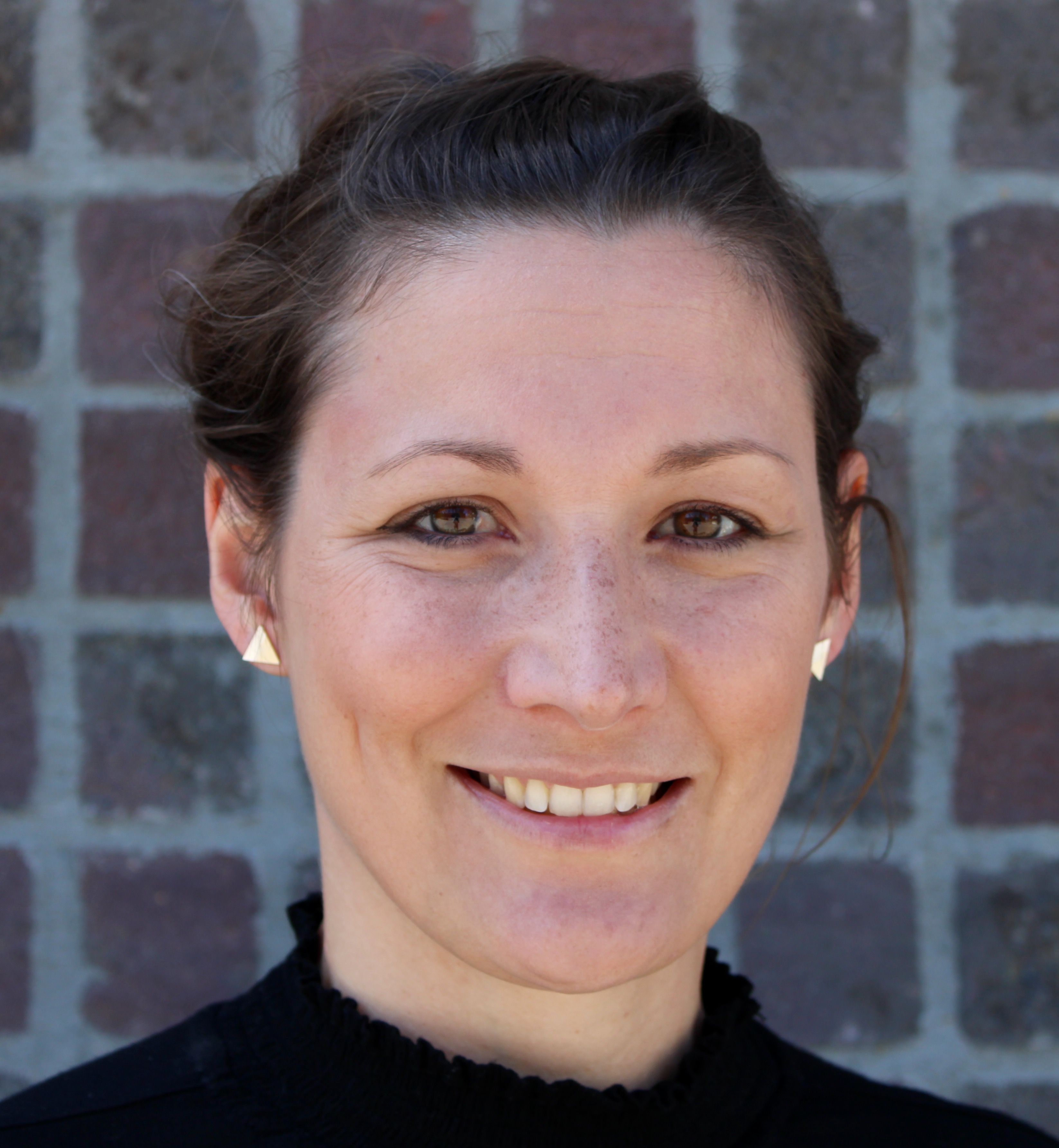
Julie Medero is an Associate Professor and Associate Chair of the Computer Science Department at Harvey Mudd College. Her research focuses on applying computing technologies to community-engaged environmental projects, natural language processing (NLP), and educational tools. She holds a PhD in Electrical Engineering from the University of Washington (2014), an MS from the same institution (2010), and a BA in Computer Science and Linguistics from Swarthmore College (2003). Her work includes developing low-cost air quality sensors for community research and exploring machine learning techniques for text simplification, kinetic typography, and hyperpartisan news detection. She has taught multiple courses including 'STEM and Social Impact: Climate Change' and 'Data Structures & Program Development,' collaborating with colleagues across disciplines. Medero's publications span NLP, computational linguistics, and interdisciplinary projects. She actively mentors students through independent studies and has contributed to open-source annotation tools like the ACE Annotation System at the Linguistic Data Consortium. Her advising and grants include undergraduate research support for environmental computing projects. She emphasizes community partnerships in her work, such as the Active Transportation project encouraging sustainable commuting among schoolchildren.