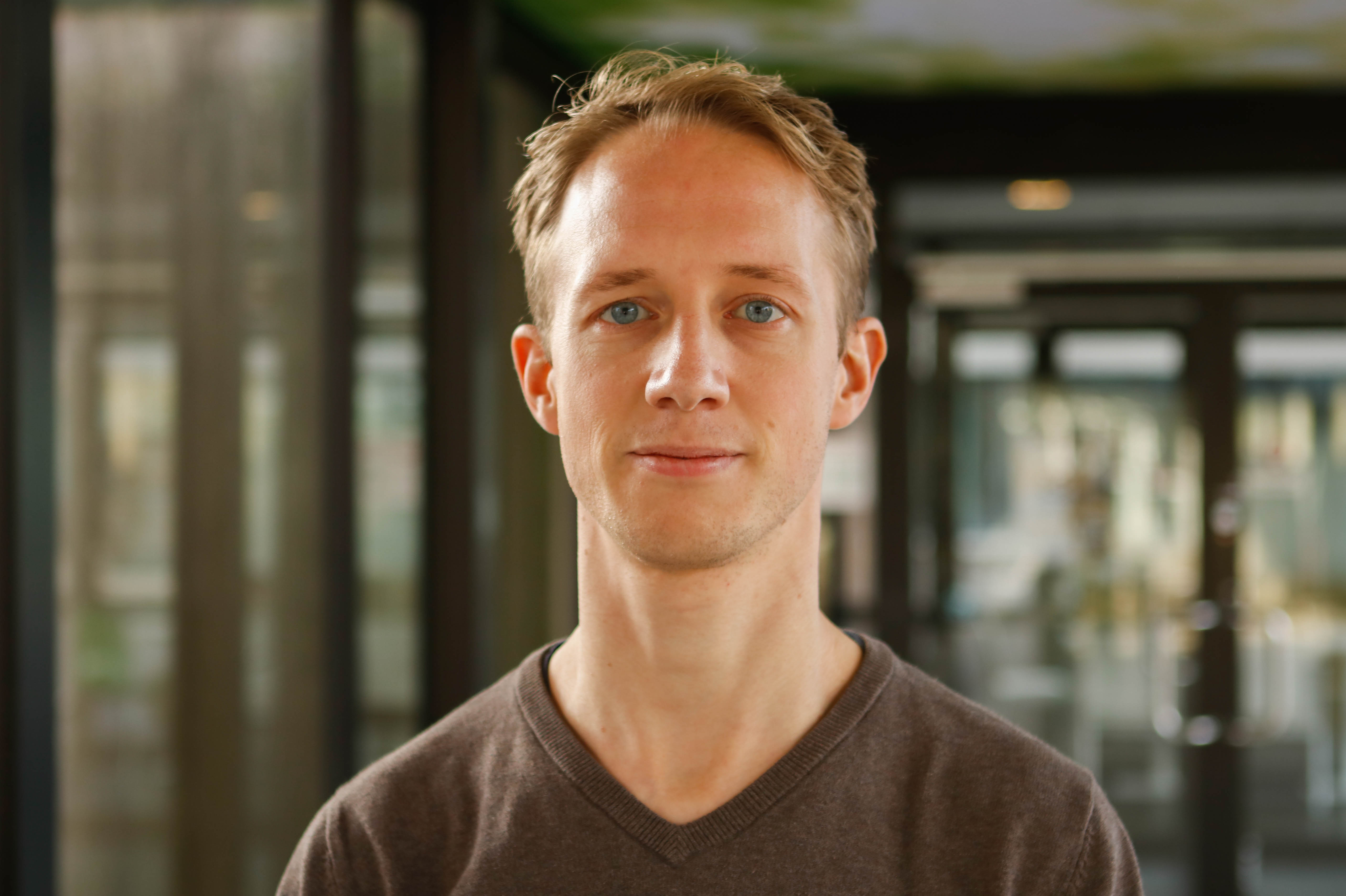
Anita Torabi is a Professor in Structural Geology at the University of Oslo , affiliated with the Department of Geosciences. Her research focuses on structural geology, fault mechanics, fluid flow in deformed reservoirs, CO2 storage, geothermal reservoirs, and seismicity. She employs advanced methods such as 3D seismic analysis, fault asperity studies, and machine learning for geological applications. Key affiliations: University of Oslo, NORCE (2015-2018), Uni Research CIPR (2008-2018) Education: PhD in Geosciences (2008) - University of Bergen Research Interests include: Fault mechanics and deformation processes Fluid flow in faulted reservoirs CO2 storage and green energy solutions Geomechanics and seismic risk assessment Machine learning in structural geology Basement rock fracture analysis Recent Publications highlight trends in: 3D fault characterization using deep learning Fluid dynamics in siliciclastic-carbonate systems Seismic attribute analysis for fault geometry Compaction bands in Tertiary-Quaternary sequences Ontology-driven geological modeling Machine learning applications for CO2 storage Research Leadership includes projects such as: CO2 Seal and Bypass – COPASS CO2SafeQuest (fault behavior for CO2 storage) gigaCCS@UiO (Center of Excellence in Carbon Capture) VICCO (volcanic-sedimentary CO2 storage) Pool Studies CO2 Storage research group
Babak Naderi is a Researcher at the Quality and Usability Lab of Technical University of Berlin , where he has been employed since August 2012. He holds a Dr.-Ing. (PhD) from 2017 for his dissertation on Motivation of Workers on Microtask Crowdsourcing Platforms , a master's degree in Geodesy and Geoinformation Science from TU Berlin (2017), and a bachelor's in Software Engineering . His research focuses on subjective quality assessment , speech quality evaluation in crowdsourcing environments, and motivation theory applied to microtask platforms. He developed the Crowdwork Motivation Scale based on Self-Determination Theory and has worked on standardization efforts within the P.CROWD work program of the ITU-T Standardization Sector . His publications demonstrate expertise in crowdsourcing for speech quality assessment, statistical modeling of worker behavior, and text complexity analysis . He has contributed to IEEE and ITU-T venues while serving as a reviewer for conferences like WWW and journals including International Journal of Human-Computer Studies . Awarded BMBF training program (2013-2015) Leader of the CrowdMAQA project
Dr. Florian Kunneman is an Assistant Professor at the Department of Languages, Literature and Communication, Utrecht University. He specializes in applying language technology to analyze communication on social media and human-chatbot interactions, collaborating with societal partners on projects like improving governmental communication and developing adaptive dialogue systems. Current affiliation: Utrecht University (2023–present) Prior roles: Social AI Group (VU University, 2019–2023), Postdoctoral Researcher (Radboud University & Tilburg University, 2017–2019) His research spans sentiment analysis, text readability prediction, question answering, and pragmatic aspects of communication. He developed tools like Chefbot_NCF , QRel , and Quoll for conversational modeling and document classification. Key projects include Hybrid Intelligence (2020–2025) and Data Inspired Creativity (2019–2021). His work focuses on extracting insights from social media (e.g., vaccination sentiment, public health debates) and improving chatbot conversational competence. Projects often integrate computational linguistics with societal applications. Contact: f.a.kunneman@uu.nl | Office: 1.62 (Trans 10, Utrecht)
Qi Feng is an Assistant Professor at the Faculty of Science and Engineering, Waseda University, specializing in deep learning applications for computer graphics and vision, with a focus on virtual and augmented reality. He holds a Doctor of Engineering (2022), Master of Engineering (2019), and Bachelor of Engineering (2017) from Waseda University. Research Interests: His work spans 3D reconstruction, depth estimation, occlusion handling, and multimodal systems integrating eye tracking and speech recognition. Notable projects include SyncViolinist for audio-driven motion generation and the Depth360 dataset for omnidirectional imaging. Publications: Qi's research has been featured in top conferences like CHI, ISMR, ICCVW, and journals such as The Visual Computer. His articles emphasize practical solutions for immersive environments, language learning, and synchronized audio-visual editing. Contact: Email: fengqi@ruri.waseda.jp
Fabian Paischer is a Researcher at the Institute for Machine Learning, Johannes Kepler University Linz (JKU), holding a Doctorate and Master of Science degree. His work bridges machine learning with high-impact scientific domains including plasma physics for fusion energy and reinforcement learning systems. Education: Doctorate (Dr.) Master of Science (MSc) His research focuses on developing neural surrogate models for plasma turbulence simulations and advancing reinforcement learning through pre-trained model modulation and human-readable memory architectures. This interdisciplinary work integrates deep learning with computational physics and autonomous decision-making, targeting applications in sustainable energy and intelligent systems where interpretability and data efficiency are critical. Analysis of his 2023-2025 publications reveals two dominant research thrusts: (1) neural operator applications for plasma edge simulations requiring long-term predictive accuracy in fusion environments, and (2) modular reinforcement learning frameworks enabling knowledge transfer between pre-trained models. These directions highlight his commitment to solving complex scientific computing challenges through novel AI methodologies. Dr. Paischer actively participates in academic communities, including the ELLIS Doctoral Symposium (2021), and maintains ongoing research output through preprints and conference publications at venues like NeurIPS and ICLR workshops.
Hui Liu is a Professor in the School of Computer Science and Technology at Beijing Institute of Technology, where he leads research in AI-based software development with a focus on LLM applications. His work spans software refactoring, quality improvement, and maintenance, funded by the National Natural Science Foundation of China and the National Key Research and Development Program of China. PhD from Peking University (2008) Former graduate student at Software Engineering Institute, Peking University Distinguished member of China Computer Federation Secretary-General of CCF Technical Committee on Software Engineering Professor Liu's research centers on LLM-based program generation, evaluation and testing of large language models, software refactoring techniques, and automatic construction of software engineering datasets. His work bridges artificial intelligence and software engineering, with particular emphasis on improving code quality through empirical studies and machine learning techniques. Current projects include code contamination detection, context-aware naming recommendations, and refactoring validation using LLMs. His research has evolved from traditional code smell detection to cutting-edge applications of large language models in software development. Liu's publication record shows a strong trend toward LLM applications in software engineering, with recent work focusing on code review generation, commit message generation, and refactoring validation using large language models. His research combines empirical methods with machine learning approaches, often analyzing large code corpora from open-source projects. The work spans both theoretical foundations and practical tool development, with several contributions merged into Eclipse as part of the open-source community. ACM Distinguished Paper Award (ESEC/FSE 2023) ACM Distinguished Paper Award (ICSE 2022) RE'2021 Best Research Paper Award IET Software Premium Award (2018) New Century Excellent Talents in University (2013) Beijing Higher Education Young Elite Teacher (2013) Professor Liu actively mentors PhD and Master's students, with recent graduates including Waseem Akram (awarded Outstanding Graduate) and several students publishing at top venues. His research is supported by major Chinese funding agencies, and he serves on program committees for leading software engineering conferences including ASE, ICSE, and FSE. He maintains strong industry connections through contributions to Eclipse and studies of open-source ecosystems like Rust. Liu leads a research group focused on AI for software engineering, with active projects on code generation, refactoring, and quality improvement. The group collaborates extensively with international researchers and contributes directly to open-source tools, particularly in the Eclipse ecosystem where multiple refactoring improvements have been merged.
Simone Scalabrino is an Assistant Professor at the University of Molise, Italy, where he is part of the STAKE lab. He also serves as CSO at Datasound. His academic career includes teaching courses such as Automated Software Delivery and Object-Oriented Programming at the University of Molise. Dr. Scalabrino received his Ph.D. from the University of Molise in 2019 with a thesis entitled "Automatically Assessing and Improving Code Readability and Understandability," supervised by Prof. Rocco Oliveto. He earned his Master's Degree in Computer Science from the University of Salerno in 2015 and his Bachelor's Degree in Computer Science from the University of Molise in 2013. His research interests focus on Software Quality, Software Testing, Software Security, and Empirical Software Engineering . Dr. Scalabrino's work spans multiple areas including code readability assessment, software testing methodologies, Docker container analysis, game quality assessment, and voice user interface testing. His research often combines empirical methods with machine learning techniques to address practical software engineering challenges. Analysis of his recent publications reveals a strong focus on improving software quality through various approaches. His work spans code readability assessment, Docker container analysis, game quality testing, and voice user interface evaluation. There's a clear trend toward applying machine learning techniques to traditional software engineering problems, particularly in the areas of code understanding, defect prediction, and quality assessment. His research often involves large-scale empirical studies with real-world data from open source projects and commercial applications. Scientific Awards Distinguished Reviewer Award @ FSE 2025 Distinguished Reviewer for TSE (2023) Best Reviewer Award for JSS (2022) ACM Distinguished Paper Award @ MSR 2019 ACM Distinguished Paper Award @ ASE 2017 ACM Distinguished Paper Award @ ICPC 2016 Dr. Scalabrino has been actively involved in mentoring students through research projects, though specific student names are not listed in the provided information. He has served on program committees for numerous prestigious conferences including ASE, ICSE, ICPC, and FSE. His service extends to reviewing for top-tier journals such as Transactions on Software Engineering and Empirical Software Engineering. He leads or contributes to several research projects including DevProDev, which focuses on developer-centered recommendation systems, and ATTICUS, a tele-monitoring system for ambient-assisted living. Dr. Scalabrino has also developed multiple research tools such as Code Readability Predictor, TIRESIAS, OCELOT, CLAP, and ACRyL to address various software engineering challenges.
Qing Huang is an Associate Professor in the School of Computer and Information Engineering at Jiangxi Normal University in Nanchang, China. His academic career focuses on bridging software engineering with artificial intelligence, particularly through the application of large language models to enhance software development processes. His research interests span multiple interconnected domains: Software Engineering Knowledge Graphs Human-Computer Interaction Programming Languages Artificial Intelligence applications in software development Dr. Huang's recent work demonstrates a strong focus on leveraging large language models (LLMs) to address fundamental challenges in software engineering. His research explores how AI can enhance code generation, API understanding, software testing, and knowledge representation in programming contexts. A significant portion of his work investigates the intersection of knowledge graphs and LLMs to create more intelligent software development tools. His publications reveal a consistent pattern of innovation in applying cutting-edge AI techniques to practical software engineering problems, with particular emphasis on improving developer productivity through better tooling and knowledge management. Dr. Huang has made notable contributions to the field of prompt engineering for software development tasks, exploring how natural language interfaces can serve as "APIs" for human-AI interaction. His work on AI Chains represents a novel approach to connecting human developers with LLM capabilities through structured knowledge representations. Additionally, he has conducted significant research on smart contract analysis, code reuse, and type inference in partial code contexts. His scientific contributions have been recognized through publications at major software engineering conferences including ASE and ICSE, with multiple papers accepted across different tracks (Research Papers, Journal-First, Tool Demonstrations). Dr. Huang serves as a Program Committee member for ASE 2025 in the Research Papers track, demonstrating his standing in the software engineering research community. Dr. Huang collaborates extensively with researchers from various institutions, including Data61 (Australia), Nanyang Technological University, and other Chinese universities. His work demonstrates strong interdisciplinary connections between traditional software engineering and emerging AI technologies.