Dr. Robert O’Connor is an Assistant Professor at the School of Physical Sciences, Dublin City University (DCU) , specializing in interface chemistry and thin film characterization. His work bridges semiconductor physics and energy harvesting technologies , with a focus on materials like high-κ dielectrics and III-V substrates. BSc in Applied Physics (2001), DCU PhD in Semiconductor Physics (2005), DCU His research employs X-ray photoelectron spectroscopy (XPS) and atomic layer deposition (ALD) to study material interfaces in devices such as MOSFETs and photoelectrochemical systems . He leads a 4-year SFI-funded project on solar water splitting for hydrogen fuel and collaborates with Trinity College Dublin (SPOKE project) and IMEC, Belgium on area-selective deposition techniques. His lab utilizes a state-of-the-art integrated ALD-XPS tool . His scientific awards include the Marie Curie Intra-European Fellowship , Irish Research Council EMBARK Fellowship , and SFI TIDA Award . Publications span high-κ dielectrics , self-assembled monolayers , and block copolymer lithography , with recent work on graphene oxide heterostructures and recyclability in additive manufacturing . He supervises 5 postgraduate students and teaches modules like Final Year Project (PS451) and Solid State Physics I (PS204) . Collaborations include institutions such as IMEC and Trinity College Dublin , with tools like the integrated ALD-XPS system at DCU.
Gyeong Hwang is a Matthew Van Winkle Regents Professor of Chemical Engineering at The University of Texas at Austin. He leads the Hwang Research Group focused on computational materials discovery and design for energy and electronic applications. His work emphasizes multiscale modeling of nanostructured materials, with applications in energy storage/conversion, carbon capture, and semiconductor processing. Educational Qualifications: Ph.D., Chemical Engineering, California Institute of Technology (1999) M.S., Applied Physics, California Institute of Technology (1998) M.S., Chemical Engineering, Seoul National University (1993) B.S., Chemical Engineering, Seoul National University (1991) Research Interests: Hwang's research integrates first-principles modeling with experimental validation to address challenges in: - Surface chemistry and interfacial reactions - Nanostructured materials synthesis - Electrochemical device fabrication - CO₂ capture mechanisms His group develops computational tools for predicting material behaviors at atomic and continuum scales. Recent Publications Trends: Publications (2023-2025) focus on: - Solid-state battery interfaces - Plasma-enhanced material deposition - Ionic liquid interactions - Thermal/spatial transport phenomena - Electrochemical reaction mechanisms Awards: NSF CAREER Award (2005) Electrochemical Society's F.M. Becket Memorial Award (1999) Korean Chemical Engineering Service Award (2010) Advising & Grants: Leads interdisciplinary research funded by NSF, industry partnerships, and regents' endowments. Active in graduate student training through courses like ChE 379 (Molecular Simulation) and ChE 348 (Numerical Methods). Labs/Teams: The Hwang Research Group operates state-of-the-art computational facilities for quantum mechanics simulations and multiscale modeling. Collaborates with experimental groups globally on materials prototyping.
Dr. Rajeev Jindal is a Professor of Practice in the Department of Sustainable Energy Engineering at IIT Kanpur. With over 20 years of experience in the technology industry, he has held leadership roles at C&S Electric Ltd., NTL Electronics, and Moser Baer India Ltd. He earned his PhD in Physics from IIT Delhi and completed post-doctoral research at Université de Nice (France) and Michigan State University. PhD in Physics, IIT Delhi (1998) MSc in Physics (Gold Medalist), IIT Roorkee (1993) BSc (Gold Medalist), Rohilkhand University (1991) His research spans renewable energy systems , flexible electronics , and optical engineering . Recent work focuses on solar power economics, carbon footprint accounting in institutions, and electric vehicle charging infrastructure. Prior publications include sol-gel fiber sensors, organic solar cells, and photonic devices. Recent publications (2023-2025) emphasize solar energy deployment , policy analysis , and sustainable mobility , while earlier works (2002-2015) highlight optical sensor development , sol-gel processing , and photonic device modeling . Scientific Honors: Gold Medalist, IIT Roorkee (MSc Physics) Gold Medalist, Rohilkhand University (BSc) Dr. Jindal led the establishment of IIT Kanpur's Flexible Electronics Center (2014), secured >$20M in government funding, and managed R&D teams that filed 20 patents across solar, LED lighting, and optical fiber technologies.
Scott L. Anderson is a Professor in the Department of Chemistry at the University of Utah, with a distinguished career in nanoparticle chemistry and catalysis. He received his B.A. from Rice University (1977), Ph.D. from UC Berkeley (1981), and trained at Stanford (1981-1983). His research focuses on size-dependent catalytic behavior, high-temperature reaction kinetics, and advanced analytical techniques like single nanoparticle mass spectrometry. Chair, Division of Chemical Physics, American Physical Society (2018-2019) ACS Physical Division Award in Experimental Physical Chemistry (2016) Robert W. Parry Teaching Award (2015) Fellow of the American Association for the Advancement of Science (2011) Distinguished Scholarly and Creative Research Award (2007) His work spans cluster model catalysts, oxidation mechanisms, and functional nanoparticle synthesis, with significant contributions to understanding coking resistance, sintering suppression, and surface interactions. He has held visiting positions at institutions in Japan, Germany, and France, and currently serves as Associate Director for Surface Analysis and Nano-imaging at the Utah Nanofab. Selected publications reveal a focus on nanoscale catalysis, thermal stability of nanoparticles, and innovative applications of mass spectrometry. His research bridges fundamental studies of cluster reactivity and practical applications in energy and materials science.
Dr. Binbin Weng is an Gerald Tuma Presidential Associate Professor in the Department of Electrical and Computer Engineering at the University of Oklahoma. He holds joint faculty fellow positions with IREES and DISC, and directs the Micro- and Nano-fabrication labs. His research focuses on nanophotonics, mid-infrared optoelectronics, and quantum-inspired photonics, with applications in chemical sensing, renewable energy, and IoT systems. Education: B.S. in Physics, Xiamen University M.S. in Semiconductor Physics, Zhejiang University Ph.D. in Electrical and Computer Engineering, University of Oklahoma Research Interests: Nanophotonic device design and simulation Non-Hermitian PT symmetry and topological photonics Mid-infrared optoelectronic devices Polariton-phonon-photon interactions NDIR gas detection SERR chemical detection Awards: NSF CAREER Award (2021) Grants: $4M DOE grant for methane emission monitoring systems $1.5M NSF PIRE grant for clean energy research $0.25M USGS grant for SERS-based chemical sensors Labs: Nanophotonics Laboratory Micro- and Nano-fabrication labs
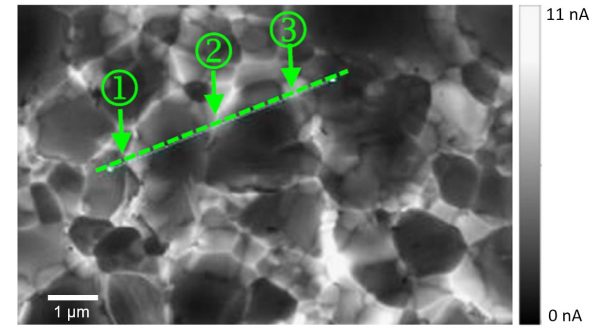
Heayoung Yoon serves as an Associate Professor in the Electrical & Computer Engineering department and Adjunct Associate Professor in Materials Science & Engineering at the University of Utah's College of Engineering. Her research focuses on advanced fabrication and nanoscale characterization of optoelectronic materials and devices, with particular expertise in engineering micro/nanostructures of semiconductor materials to enhance functionality and stability in optoelectronic devices including translucent solar cells and radiation-hard systems. Dr. Yoon earned her BS in Physics with a Computer Science minor from Chungnam National University in South Korea, an MS in Physics from Pohang University of Science and Technology, and a PhD in Electrical Engineering from The Pennsylvania State University. Her academic journey includes positions at Samsung, Penn State University, and NIST where she conducted research on molecular junction devices, pillar array solar cells, and near-field optoelectronic imaging techniques. Her research interests span multiple cutting-edge areas in energy technology and materials science. Dr. Yoon leads investigations into radial junction solar cells that decouple light absorption from carrier collection, thin-film solar cells with enhanced efficiency through microstructural optimization, translucent solar cells for diverse applications like skylights and self-powered facades, multi-probe microscopy techniques for nanoscale characterization, and molecular junction devices for advanced optoelectronics. Her work bridges fundamental research with practical applications to address global sustainability challenges. Analysis of Dr. Yoon's 15 most recent publications reveals a strong focus on solar cell technology and nanoscale characterization. Her research consistently explores patterned back contacts, micro/nanostructured solar cells, and perovskite materials, with particular attention to grain boundaries, surface potential variations, and carrier dynamics at the nanoscale. The publications demonstrate interdisciplinary approaches combining electron microscopy, optical spectroscopy, and device engineering to advance photovoltaic technologies. Outstanding Teaching Award (2024, ECE Department) Chair's Award (2022, ECE Department) CAREER Award (2021, National Science Foundation) Dr. Yoon actively mentors students through thesis research and undergraduate research projects, and leads the Yoon Research Group which develops in-situ, local measurement techniques using electron beams and focused light sources. Her lab focuses on elucidating structure-property relationships in micro/nanomaterials and devices, with applications in energy, optoelectronics, and chemical and biomedical fields. The group leverages cross-disciplinary collaborations to advance energy technologies, particularly in creating exploratory optoelectronic systems that address emerging global challenges in sustainability.
Maria Dimaki is a Senior Researcher at the Technical University of Denmark (DTU), affiliated with the Department of Biotechnology and Biomedicine. Her research focuses on microfabrication, dielectrophoresis, microfluidics, and biosensing, with contributions to nanotechnology and biomedical engineering. She holds a PhD in Dielectrophoretic Assembly of Carbon Nanotube Devices from DTU (2004), preceded by studies in Engineering and Physical Science at Imperial College London (2001) and Electrical Engineering at the National Technical University of Athens (2000). Her research interests include developing advanced microfluidic systems for biomedical applications, such as pathogen detection, milk analysis, and neural studies. She has supervised multiple PhD students, including projects on photonic sensors, bacterial viability classification, and milk contaminant detection. Her work aligns with UN SDGs, particularly addressing sustainable health and innovation. Recent publications emphasize microfluidic platforms for PCR, impedance-based cytometry, and nanoscale sensor technologies. She has co-invented methods for improving milk sample analysis and has participated in international conferences on microfluidics and analytical miniaturization. Her lab integrates nanotechnology, biosensors, and biomedical engineering for innovative diagnostic solutions.
Prof. Greg Hughes is a Full Professor at the School of Physical Sciences , Dublin City University, with a career spanning over 30 years in semiconductor surface science. Holding a B.Sc in Chemistry and a PhD in Semiconductor Physics from the University of Ulster, he conducted postdoctoral work at IBM’s Yorktown Heights lab and held sabbaticals at Technical University of Berlin (Alexander von Humboldt fellowship) and Boston University. Research Focus : Surface interactions on semiconductors, including Schottky barriers, heteroepitaxy, and dielectric layer characterization for transistor technology. His work bridges fundamental surface chemistry and applied semiconductor device engineering, with recent emphasis on novel materials for interconnects and sensors. Academic Leadership : Served as Vice-President for Research and Innovation at DCU for five years and contributes to the European Consortium of Innovative Universities (ECIU) alliance. Scientific Contributions : Authored over 170 papers, with expertise in synchrotron radiation-based XPS, scanning tunneling microscopy, and electrical-chemical interface analysis. Key collaborators include institutions like IBM, Boston University, and Humboldt University. Awards : Alexander von Humboldt Research Fellowship (1994). Contact : greg.hughes@dcu.ie
John N. Randall serves as Adjunct Professor at the University of Texas at Dallas' Jonsson School of Engineering since 2012, concurrently holding CEO roles at Zyvex Labs and Executive VP positions at Teliatry and NanoRetina. With 40+ years in micro- and nano-fabrication, his industry leadership has attracted $48M in research contracts and generated $750M+ in product revenues through innovations in semiconductor manufacturing and quantum technologies. Dr. Randall earned his academic foundation at the University of Houston: PhD in Electrical Engineering (1981) MS in Electrical Engineering (1977) BS in Electrical Engineering, Cum Laude (1975) His research spans semiconductor lithography (optical, e-beam, ion-beam, x-ray, STM-based) and quantum devices/circuits, with significant contributions to MEMS, atomic layer epitaxy, and metrology. This interdisciplinary work bridges fundamental nanofabrication with quantum electronic applications, driving advancements in nanoscale device manufacturing for semiconductor and computing industries. Analysis of his publication history reveals a clear evolution from 1980s foundational work in ion beam lithography and quantum dot structures toward 1990s applications in optical proximity correction and MEMS. The consistent focus on precision nanofabrication techniques demonstrates a trajectory from theoretical quantum phenomena to industrial semiconductor manufacturing solutions. Dr. Randall's scientific recognition includes IEEE and AVS Fellowships, University of Houston's Distinguished Engineering Alumni Award, and leadership honors as Conference Chairman for premier nanotechnology forums. His early career accolades encompass National Collegiate Judo Championships and academic distinctions. Fellow of the IEEE (2015) Disinguished Engineering Alumni Award – University of Houston (2010) Fellow of the AVS (2009) Elected Distinguished Member of Texas Instruments’ Technical Staff (2000) Conference Chairman roles for Gordon Conference (1998) and EIPB Conference (1995) National Collegiate Judo Champion (1974-1975) His $48M research funding at Zyvex directly enabled commercially successful nanotechnology products, while his advisory roles with University of North Texas, Girl Scouts of NE Texas, and UT Dallas demonstrate commitment to education and industry collaboration. Though student mentoring isn't explicitly documented, his academic appointments and conference leadership indicate substantial field guidance. As Zyvex Labs CEO, Randall leads atomic-precision manufacturing initiatives building on his MIT/TI-era nanofabrication breakthroughs. His current focus on quantum computing applications extends his legacy of transforming fundamental research—like room-temperature quantum circuits and 80nm lithography—into industry-shaping technologies across semiconductor, medical, and computing sectors.
Thomas P. Beebe Jr. is a Professor of Chemistry and Biochemistry at the University of Delaware's College of Arts & Sciences, where he also serves as Director of the Surface Analysis Facility. He holds additional appointments as Adjunct Professor of Materials Science & Engineering at UD and Adjunct Professor at the University of Utah. His multidisciplinary research bridges chemistry, physics, and biology with applications in biomaterials and nanotechnology. Dr. Beebe earned his B.A. in Chemistry from Franklin & Marshall College (1982) and Ph.D. in Physical Chemistry from the University of Pittsburgh (1987), followed by postdoctoral work at Lawrence Berkeley and Livermore National Laboratories. Prior to joining UD in 2001, he progressed through the faculty ranks at the University of Utah from Assistant to Associate to full Professor. His research focuses on surface chemistry, biology, and physics of diverse systems including living neurons, graphite monolayers, air pollution particulates, and fuel cell membranes. He employs advanced analytical tools including STM, AFM, XPS, TOF-SIMS, and AES. Two signature research areas include molecule corrals (nanometer-sized pits on graphite) for templated nanostructures and ligand-receptor interactions for nerve regrowth applications, where his group developed a unique Poisson statistics-based force analysis method for measuring single-molecule bond ruptures. His publication record shows consistent high-impact research across surface science and nanotechnology, with recent work focusing on neurite outgrowth, micropatterning techniques, and air pollution characterization. His research has been supported by multiple grants including the Howard Hughes Summer Analytical Chemistry Program which he directs. NSF National Young Investigator (1993-1999) Camille Dreyfus Teacher-Scholar (1994-1999) Alfred P. Sloan Research Fellow (1996-1999) IUPAC Young Observer Recipient (1999) Robert W. Parry Departmental Teaching Award (1999) Dr. Beebe has mentored numerous students, many of whom co-authored publications with him. His Surface Analysis Facility provides state-of-the-art imaging capabilities for interdisciplinary research across multiple institutions. His work demonstrates how fundamental surface science can address practical challenges in biomaterials, environmental analysis, and nanotechnology.
Swiss Federal Institute of Technology in LausanneSwitzerland
Berke Erbas is a researcher at the École polytechnique fédérale de Lausanne (EPFL) within the Department of Microengineering under the School of Engineering . His work focuses on advancing nanofabrication techniques through thermal scanning probe lithography (t-SPL) and complementary methods like reactive ion etching (RIE) and nanoimprint lithography (NIL). Education : Doctoral candidate at EPFL, specializing in semiconductor strain engineering and quantum device fabrication. Research interests center on grayscale nanopatterning, 2D material engineering, and quantum hardware development. His innovations in strain-controlled MoS 2 transistors have demonstrated significant electron mobility improvements ( 185 cm²/V.s ), while hybrid t-SPL/DSA approaches address sub-20 nm fabrication challenges. Publication trends reveal expertise in combining top-down lithography with bottom-up material assembly, enabling contamination-free interfaces and scalable CMOS-compatible processes. Applications span transparent electronics, photonic devices, and quantum computing. Labs & Collaborations : A core member of the LMIS1 laboratory , with collaborations across EPFL's Center of Micro/Nanotechnology (CMI), ETH Zürich, and international institutions. His work integrates interdisciplinary methodologies from materials science, quantum physics, and advanced manufacturing.
Christine Lefrou is a Lecturer at LEPMI (Grenoble INP), specializing in electrochemistry and battery technology. Her research focuses on optimizing battery performance, particularly through ohmic drop compensation techniques, and developing advanced battery management systems (BMS). She has contributed to studies on lithium-ion batteries, fast-charging protocols, and second-life battery applications. Her work also extends to material science, including the use of scanning electrochemical microscopy (SECM) for analyzing surface reactivity and permeable films. Her research interests span electrochemical fundamentals, battery aging, and energy storage systems for electric vehicles and renewable energy integration. Key achievements include improving battery efficiency in drones and electric vehicles, as well as advancing methodologies for precise electrochemical measurements and modeling. Publications highlight contributions to battery safety, electrochromic materials, and the reliability of power systems using valve-regulated lead-acid batteries. Her interdisciplinary approach combines theoretical modeling with experimental validation, emphasizing practical applications in sustainable energy and materials science.
Swiss Federal Institute of Technology in LausanneSwitzerland
Simon Henein is an Associate Professor at the École Polytechnique Fédérale de Lausanne (EPFL) , leading the Micromechanical and Horological Design Laboratory (INSTANT-LAB) under the School of Engineering and Institute of Mechanical Engineering . Since 2024, he holds a Courtesy Appointment at the Digital Humanities Institute (DHI-GE) . He was Tenure Chairholder at Patek Philippe (2012–2020) and a Visiting Professor at the University of Lausanne's Centre d'études théâtrales (2020–2021). His research bridges micromechanical design and creative pedagogy , focusing on flexure mechanisms for aerospace, biomedical devices, and horology, alongside improvisational arts in education. He has authored over 25 peer-reviewed journal articles and 60+ conference papers , with 35 patents. Notable awards include the Best Teacher Award (2023) , OMEGA Scientific Prize (1996) , and Maillefer SA Award (1996) . His teaching involves 12 ECTS credits annually with over 200 students , including mentorship of 26 Master’s and 60 semester projects . He has directed 6 completed PhD theses and currently supervises 4 PhD students , co-supervising 1 more. His lab, INSTANT-LAB, comprises a dozen researchers focusing on centimeter-scale mechanisms with novel kinematics and technologies.
Dorte Nørgaard Madsen is an Associate Professor at the Department of Physics and Technology, University of Bergen. Her research focuses on nanotechnology, materials science, and renewable energy, with a particular emphasis on carbon-based nanostructures and their applications. She has contributed to studies on carbon black transformation into nanotubes, solar energy economics, and nanoassembly techniques. Her work often integrates experimental and theoretical approaches to explore material properties and energy systems. Key research interests include nanomaterial synthesis (e.g., carbon nano-beads, nanotubes), renewable energy modeling (solar power saturation analysis in Europe), and nanotechnology applications in sensors and electronics. Madsen has collaborated on interdisciplinary projects, such as the use of carbon nanotubes as etch masks and the development of nano-scale fabrication methods. Publications span over two decades, reflecting her sustained contributions to advancing nanotechnology and energy research. She has advised doctoral student Vijayshankar Asokan and participated in conferences addressing science policies, gender equality, and proposal writing for industry partnerships. Her presentations highlight topics like 'Going nano in Scandinavia' and 'Courage, Carbon, Communication, Women,' emphasizing both technical and societal dimensions of science. Madsen’s work is further evidenced by her involvement in academic lectures, interviews, and poster sessions, underscoring her role as an engaged researcher and educator. Her research aligns with broader efforts to address energy sustainability and material innovation through nano-level engineering.
Dr. Scott Doyle is an Interdisciplinary Fellow in the School of Natural and Computing Sciences at the University of Aberdeen. His research spans theoretical, numerical, and experimental plasma physics with applications in aerospace propulsion, nuclear fusion, and plasma-driven electrochemistry. He is actively supervising and accepting PhD students in Physics. Scott's research focuses on low-temperature plasma physics, magnetic confinement fusion (particularly in the SMART tokamak), plasma propulsion systems, and the control of plasma-liquid interactions. His work integrates electromagnetism, chemical physics, and aerospace engineering principles to develop advanced plasma technologies. Key areas include tailored voltage waveforms in RF and capacitive plasmas, energy efficiency in microthrusters, and plasma-material interactions. The recent publications highlight a strong trend in interdisciplinary plasma applications: from fusion reactor design and tokamak engineering to innovative plasma propulsion and plasma-electrochemical systems. His work increasingly explores the coupling of acoustic structuring with plasma-liquid interfaces, opening new pathways for sustainable chemistry and materials processing. Scientific Awards: None listed in the provided text. Dr. Doyle is actively involved in interdisciplinary research and innovation at the University of Aberdeen. He supervises PhD students in plasma physics and related fields and contributes to large-scale collaborative projects such as the SMART tokamak development. While specific grants are not mentioned, his publications indicate involvement in advanced fusion and propulsion research, likely supported by national and international funding bodies. His team collaborates with experts in plasma modeling, aerospace engineering, and materials science. His research is conducted within the interdisciplinary plasma research group at the University of Aberdeen, contributing to both fundamental science and industrial applications. The group engages in experimental, computational, and theoretical studies, with strong ties to fusion energy and aerospace technology development.