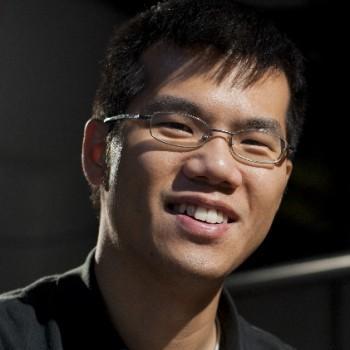
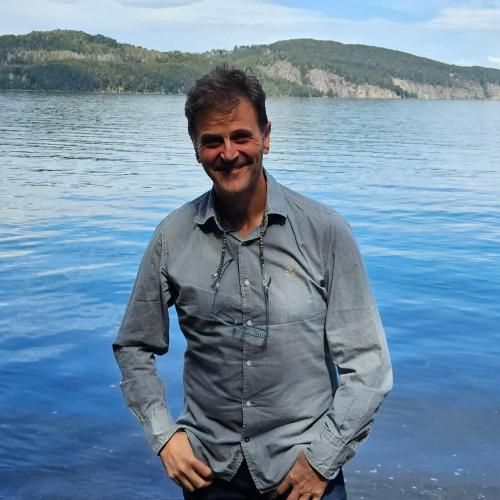
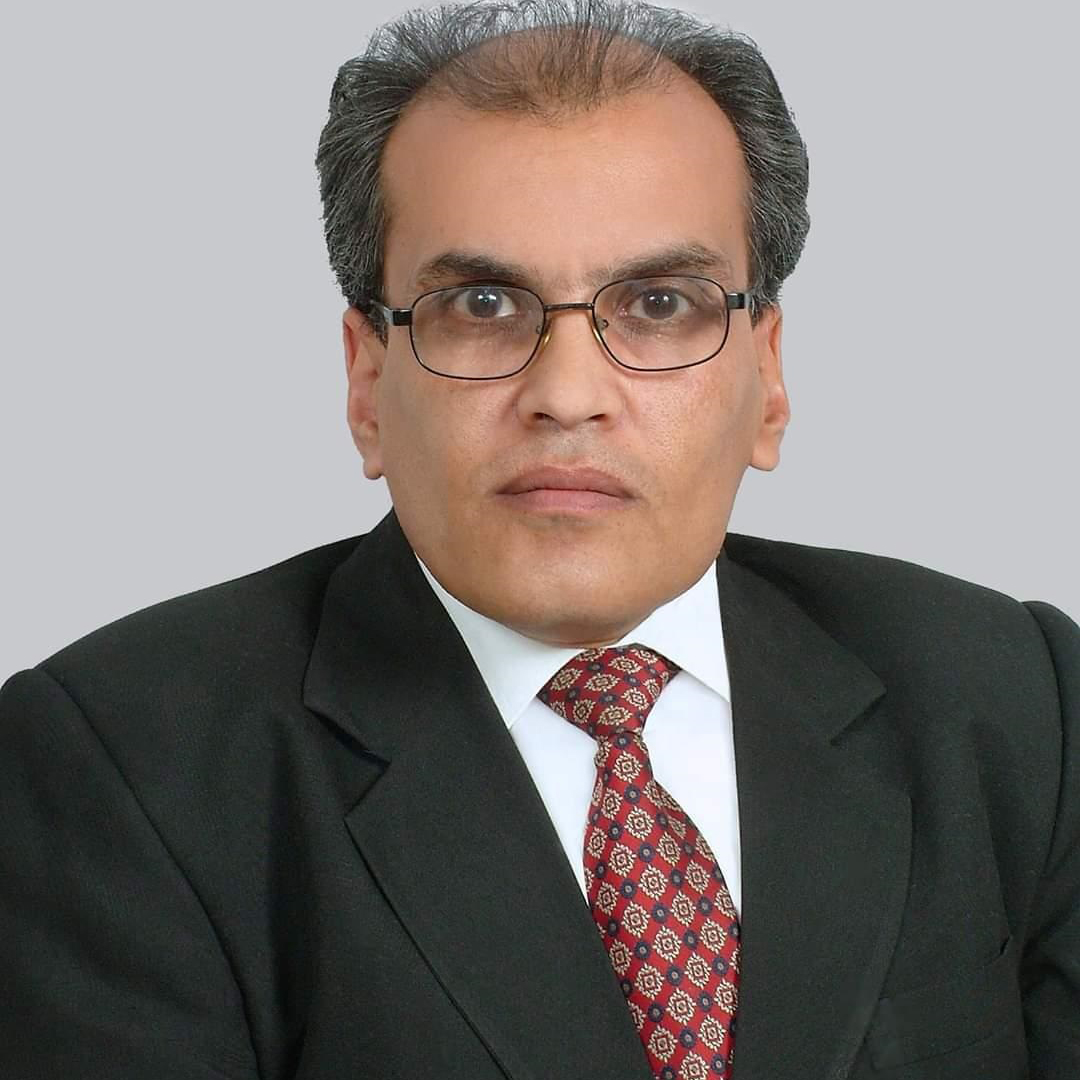
Dr. Nathan Marks is a Postdoctoral Researcher at the School of Engineering , University of Newcastle, Australia. His career spans academic and defense-related research roles, including a 2016-2020 position as Electrical Research Engineer with Defence Science and Technology Group in Melbourne. Bachelor of Electrical Engineering (Honours 1, University Medal) - University of Newcastle, 2011 Doctor of Philosophy in Electrical Engineering - University of Newcastle, 2016 His research focuses on power electronics and renewable energy systems , particularly electric machines for maritime propulsion , multilevel converters , and real-time simulation . Key contributions include sensorless MPPT algorithms and stability analysis of PHIL systems . Recent publications (2024-2012) demonstrate expertise in electrical machine control , converter topologies , and power hardware-in-the-loop techniques. He teaches Power Electronics and Electric Machines courses while maintaining active IEEE memberships.
Christine Lefrou is a Lecturer at LEPMI (Grenoble INP), specializing in electrochemistry and battery technology. Her research focuses on optimizing battery performance, particularly through ohmic drop compensation techniques, and developing advanced battery management systems (BMS). She has contributed to studies on lithium-ion batteries, fast-charging protocols, and second-life battery applications. Her work also extends to material science, including the use of scanning electrochemical microscopy (SECM) for analyzing surface reactivity and permeable films. Her research interests span electrochemical fundamentals, battery aging, and energy storage systems for electric vehicles and renewable energy integration. Key achievements include improving battery efficiency in drones and electric vehicles, as well as advancing methodologies for precise electrochemical measurements and modeling. Publications highlight contributions to battery safety, electrochromic materials, and the reliability of power systems using valve-regulated lead-acid batteries. Her interdisciplinary approach combines theoretical modeling with experimental validation, emphasizing practical applications in sustainable energy and materials science.
Dr. Oğuz Taşdemir serves as a Lecturer in the Department of Electrical and Electronics Engineering at Kırşehir Ahi Evran University's Faculty of Engineering and Architecture since 2025, following his tenure as full-time teaching staff at the university's Kaman Vocational School (2017-2025). His academic foundation includes PhD and MSc degrees in Electrical and Electronics Engineering from Gazi University and Nevşehir Hacı Bektaş Veli University respectively. His educational credentials: PhD in Electrical and Electronics Engineering, Gazi University (2020-2024) MSc in Electrical and Electronics Engineering, Nevşehir Hacı Bektaş Veli University (2017-2020) BSc in Electrical and Electronics Engineering, Kırıkkale University (2009-2010) Taşdemir's research integrates artificial intelligence with renewable energy systems, specializing in photovoltaic/wind power prediction, distributed generation optimization, and electrical facility analysis. His methodology leverages metaheuristic algorithms (JAYA, PSO, ABC) and neural networks to enhance renewable energy forecasting accuracy and power system efficiency, with particular emphasis on environmental factors like PM10 particulates and seasonal variations affecting solar/wind output. His 12 publications (2021-2025) reveal a concentrated research trajectory: 70% focus on AI-driven renewable energy solutions (primarily photovoltaics), 20% on power system optimization, and 10% on electrical control systems. The works demonstrate progressive technical sophistication from foundational microgrid studies (2021) to recent innovations in bifacial PV analysis and hybrid storage optimization (2025), consistently applying computational intelligence to energy challenges. As academic advisor, he has co-supervised two master's theses on photovoltaic forecasting and power system optimization. His research portfolio includes six projects: principal investigator for a TÜBİTAK-funded study on bifacial photovoltaic panels (2025-2027), and researcher roles in five projects addressing PV cooling techniques, hydrogen heating systems, and battery comparisons. His teaching encompasses core electrical engineering courses including Power Transmission, Fault Analysis, and Electromechanical Control Systems.
Tomasz Lerch serves as a Lecturer in the Department of Power Electronics and Automation of Energy Conversion Systems at AGH University of Science and Technology's Faculty of Electrical Engineering, Automatics, Computer Science and Biomedical Engineering in Kraków. He actively participates in the Discipline Council for Automation, Electronics, Electrical Engineering and Space Technologies. His research spans power electronics, renewable energy integration, and electrical machine design with emphasis on grid stability and power quality. Key interests include grid-tied converter systems, islanding detection methods for distributed generation, permanent magnet motor optimization (particularly transverse flux and cogging machines), and power quality analysis in modern LED lighting and photovoltaic installations. His methodological approach frequently combines electromagnetic modeling with experimental validation. Analysis of his 2021-2025 publications reveals consistent focus on renewable energy grid integration challenges. Dominant themes include rapid voltage fluctuation compensation using hardware-in-the-loop techniques, hybrid islanding detection combining phasor measurement units with artificial intelligence, and thermal/power density optimization in novel motor designs. His work demonstrates strong industry relevance through experimental validation of control algorithms for grid-connected systems.
Mohammad Sadegh Golsorkhi is an Associate Professor at the Centre for Industrial Electronics within the Institute of Mechanical and Electrical Engineering at the University of Southern Denmark. His work focuses on power electronics, microgrid control, and converter design. Research Interests: Specializes in power electronics, microgrid control, and harmonic compensation. His research explores hybrid AC/DC microgrids, predictive control systems, and wide bandgap devices. Recent Publications: His 2024–2025 work includes AI-driven microgrid optimization, parasitic modeling in SiC converters, and harmonic compensation strategies. Scientific Awards: World's Top 2% Scientists 2023 (Stanford University) ABB research poster award (2014) International Research Postgraduate Scholarship (2013) Australian Postgraduate Award (2013) Projects: Leads EU-funded initiatives like OptiDCG4H2 and CUHIED, focusing on decentralized control of offshore DC grids, hydrogen production, and ultra-high efficiency drives.
Will Chueh is a Professor of Materials Science and Engineering at Stanford University, with joint appointments in Energy Science & Engineering. He serves as Director of the Precourt Institute for Energy and Principal Investigator at the Stanford Institute for Materials and Energy Sciences. His research focuses on redox-active materials for energy storage and conversion, addressing challenges in batteries, fuel cells, and electrolyzers. He holds a PhD in Materials Science from Caltech (2010) and a BS in Applied Physics (2005). Key roles: Faculty Director of Energy Innovation Program (2018–present), Director of Precourt Institute (2024–present). Research Themes: Electrochemical reactions across scales, predictive design frameworks for energy materials, and sustainable energy technologies. His work bridges molecular pathways, interfacial structure, and device-level performance. Recent studies include battery formation protocols, dynamic cycling effects, and techno-economic analysis of sodium-ion batteries. Award highlights include the Camille Dreyfus Teacher-Scholar Award (2016), Sloan Research Fellowship (2016), and MIT Technology Review's Top Innovator (2012). Advises over 30 doctoral students and sponsors postdoctoral researchers in electrochemistry and materials synthesis. His group emphasizes diversity and creativity in addressing global energy challenges.
Simon Henein is an Associate Professor at the École Polytechnique Fédérale de Lausanne (EPFL) , leading the Micromechanical and Horological Design Laboratory (INSTANT-LAB) under the School of Engineering and Institute of Mechanical Engineering . Since 2024, he holds a Courtesy Appointment at the Digital Humanities Institute (DHI-GE) . He was Tenure Chairholder at Patek Philippe (2012–2020) and a Visiting Professor at the University of Lausanne's Centre d'études théâtrales (2020–2021). His research bridges micromechanical design and creative pedagogy , focusing on flexure mechanisms for aerospace, biomedical devices, and horology, alongside improvisational arts in education. He has authored over 25 peer-reviewed journal articles and 60+ conference papers , with 35 patents. Notable awards include the Best Teacher Award (2023) , OMEGA Scientific Prize (1996) , and Maillefer SA Award (1996) . His teaching involves 12 ECTS credits annually with over 200 students , including mentorship of 26 Master’s and 60 semester projects . He has directed 6 completed PhD theses and currently supervises 4 PhD students , co-supervising 1 more. His lab, INSTANT-LAB, comprises a dozen researchers focusing on centimeter-scale mechanisms with novel kinematics and technologies.
Lyudmila Borysivna Zhornyak serves as an Associate Professor in the Department of Electrical Apparatus at the Faculty of Electrical Engineering, Zaporizhzhia Polytechnic National University. With over 39 years of academic service since 1985, she holds a Candidate of Technical Sciences degree (2004) specializing in Electrical Machines and Devices. Her educational background includes graduation from Zaporizhia Machine-Building Institute (1982) as an electromechanical engineer specializing in Electrical Devices. Her dissertation focused on accelerating thermal tests of complete power distribution devices. Dr. Zhornyak's research spans Electrical Device Modeling , Thermal Process Analysis in Electrical Equipment , and High-Voltage Equipment Reliability . Her work addresses critical challenges in power distribution systems, electromagnetic field optimization, and insulation technologies for high-voltage applications. She has published extensively on thermal management, shielding systems, and reliability enhancement of electrical apparatus. Her recent publications demonstrate consistent contributions to electrical engineering, particularly in high-voltage equipment design, power quality improvement, and distribution network optimization. The research shows strong practical applications for energy-intensive industries and transportation electrification. As an educator, she teaches courses including Electrical Control Automation Devices, Fundamentals of Microprocessor Technology, and Low Voltage Switchgear Electrical Apparatus. She has authored multiple textbooks on electrical apparatus design and power supply systems for energy-intensive production. Her professional activities include participation in international conferences (SIEMA, IEEE MEES) and research collaborations with institutions including Kharkiv Polytechnic Institute. Her work maintains strong connections between theoretical modeling and practical engineering solutions for electrical apparatus.
JESÚS DE LA CASA HERNÁNDEZ is a Full Professor (academic rank: Professor ) in the Department of Electrical Engineering at the University of Jaén, affiliated with its Higher Polytechnic School. He has held academic leadership roles including Secretary of his department and Deputy Director of Monitoring and Coordination at the Higher Polytechnic School. Education : Ph.D. in Industrial Engineering (2003), University of Jaén; M.S. in Industrial Engineering, University of Seville. Research interests focus on optimizing renewable energy systems, energy storage, and smart grid technologies. His work emphasizes metaheuristic algorithms, power electronics, and distributed generation. Key projects include advancing microgrid stability, reducing grid harmonics, and integrating photovoltaics. Recent publications highlight BESS optimization, fault-clearing algorithms for multilevel converters, and voltage regulation in DC converters. His studies span AC/DC microgrids, offshore wind farms, and predictive maintenance in wind farms, reflecting interdisciplinary work in electrical engineering and sustainability. Scientific recognition includes three CNEAI six-year research periods and postdoctoral fellowships in Colombia. He has directed 11 doctoral theses and secured funding for national and international projects, including CYTED and PAIDI grants. Collaborative efforts involve coordinating 17 Erasmus+ mobilities and leading research stays in Italy, Chile, and Cuba. His group, TEP152 'Investigación y Tecnología Eléctrica', contributes to global energy transition initiatives.
Dr. Saleh Al Jufout is a Part-time Lecturer in the Electrical Engineering Department at California State University, Long Beach (CSULB), appointed since January 2020. He previously held academic roles at Al-Balqa’ Applied University and Tafila Technical University in Jordan from 1997 to 2020. He holds a dual Ph.D. in Electrical Power Engineering from Donetsk National Technical University (Ukraine), with M.Sc. and B.Sc. degrees from Donetsk Polytechnic Institute. He completed postdoctoral research at the Technical University of Berlin (Germany) and Wayne State University (USA). His research focuses on power system transient simulation, protection system design, and electrical machine modeling. Key areas include renewable energy integration, cybersecurity for industrial networks, and smart grid technologies. He has authored/co-authored 72 scientific articles and serves as the founder and editor-in-chief of the Jordan Journal of Electrical Engineering . He is also a Quality Matters (QM) certified reviewer for online course design. Dr. Al Jufout’s recent work explores machine learning applications in distributed systems, photovoltaic plant optimization, and intrusion detection systems. His contributions span theoretical advancements in power system modeling and practical solutions for improving grid efficiency and cybersecurity. Education: Ph.D. (Dual), Electrical Power Engineering, Donetsk National Technical University M.Sc., Electrical Power Engineering, Donetsk Polytechnic Institute B.Sc., Electrical Power Engineering, Donetsk Polytechnic Institute Postdoctoral Research: Technical University of Berlin & Wayne State University Awards: Quality Matters (QM) Certified Reviewer for Online Courses Professional Roles: General Co-Chair, International e-Engineering Education Services Conference (IEEE-affiliated) Founder Editor-in-Chief, Jordan Journal of Electrical Engineering His advising and grants focus on advancing electrical engineering education and applied research. He has contributed to labs and teams developing smart road sensors, piezoelectric energy harvesters, and cybersecurity frameworks for industrial systems.
Hen-Geul Yeh is an active professor and researcher with a distinguished career spanning nearly four decades in electrical engineering and communications systems. With publications dating from 1986 to the present (2025), Yeh has established expertise in wireless communications, signal processing, and power systems applications. Yeh's research interests encompass wireless communications, signal processing, MIMO systems, OFDM systems, intercarrier interference cancellation, smart grid applications, electric vehicle charging systems, and artificial intelligence applications in communications. The research demonstrates a consistent evolution from foundational signal processing work to contemporary applications in smart grid and 5G/6G communications. Recent publications (2023-2025) reveal a strong focus on practical applications including EV charging infrastructure, UAV communications, fault detection systems, and green communication technologies. The work shows increasing integration of machine learning techniques with traditional signal processing approaches, particularly reinforcement learning for dynamic system optimization. Yeh has established longstanding collaborations with researchers including Donald C. D. Chang, Joe Lee, and Yu Yang, resulting in numerous co-authored publications across IEEE journals and conferences. The research output demonstrates consistent productivity with multiple publications per year, including several in top-tier IEEE journals. Current research directions emphasize sustainable technologies, with significant work on photovoltaic integration, electric vehicle infrastructure, and energy-efficient communication systems that address contemporary challenges in power and communications infrastructure.
Dr. Fatma Gül Bağrıyanık is a Research Fellow at Istanbul Technical University's Department of Electrical Engineering. Her research focuses on optimizing electrical power systems, renewable energy integration, and grid stability. With expertise spanning electromagnetic systems, renewable energy feasibility studies, and demand-side management, she contributes to sustainable energy solutions in Turkey. Her work investigates renewable energy grid integration, power transmission optimization, and electromagnetic systems. Recent research explores transformer design enhancements, water-electricity infrastructure interactions, and photovoltaic system implementation in urban environments. Publications demonstrate a consistent focus on improving grid resilience through computational optimization techniques. Research employs genetic algorithms and fuzzy logic to solve complex power system challenges. Collaborations include multidisciplinary projects examining energy-water nexus challenges and renewable infrastructure optimization. Research outputs contribute to sustainable development goals related to clean energy access.
Andrés José Piñón Pazos is a researcher at the Department of Industrial Engineering within the Ferrol Polytechnic School of Engineering at University of A Coruña (UDC). His work focuses on intelligent and advanced control, optimization and modeling of systems, and virtual and intelligent instrumentation. He teaches both required and optional courses in Industrial and Automatic Electronic Engineering, Industrial Informatics and Robotics, and Mechanical Engineering programs. Research interests include: Intelligent control systems development Industrial process optimization Virtual instrumentation design Smart monitoring systems Automation solutions Energy efficiency improvements Scientific contributions: Registered software (2014) Multiple patents (2013, 2008, 2005) Over 15 research articles International conference publications Key grants and contracts include projects with: Spanish Foundation for Science and Technology (FECYT) Instituto Tecnológico de Castilla y León (ITCL) Galician Department of Education Ministry of Science and Innovation Navantia shipyard International collaborations
Ramazan Çağlar is an Associate Professor in the Department of Electrical Engineering at Istanbul Technical University, College of Engineering. His research focuses on modern power systems, including microgrids, renewable energy integration, reliability assessment, and intelligent control of distributed energy resources. He actively publishes in high-impact journals and leads research initiatives in smart grid technologies. Research Interests: His work spans electric power distribution, system reliability, microgrid dynamics, induction motors, and power transmission. He integrates advanced computational methods such as machine learning, Bayesian inference, and optimization algorithms to solve complex problems in energy systems. His recent focus includes fault prediction using drones, energy forecasting with neural networks, and optimal allocation of distributed generators. Recent Research Trends: Analysis of his latest publications (2022–2024) reveals a strong trend toward data-driven and AI-enhanced modeling in microgrids and renewable integration. He combines physical models with machine learning (e.g., neural ODEs, autoencoders, LSTMs) and applies multi-objective optimization techniques like multiverse optimization. His work increasingly emphasizes uncertainty quantification, real-time control, and sustainable energy solutions. Scientific Projects: Completed: Reliability Evaluation of Power Station Designed for DC-Fed Traction Systems in Light Rail Transit (2011–2021). Advising and Grants: He is currently supervising 14 theses in progress, indicating an active role in mentoring graduate students. While specific grant details are limited, his long-running project funded by ITU's BAP (Scientific Research Projects) suggests sustained research funding. His collaborations include international researchers, particularly in Africa and the Middle East. Labs and Research Teams: Though not explicitly named, his research activities suggest leadership in a power systems and smart grid laboratory at ITU, focusing on reliability, optimization, and AI applications in energy infrastructure.
Dr. Luis Rouco Rodríguez is a Full Professor at the Higher Technical School of Engineering (ICAI) of Comillas Pontifical University and a leading researcher at the Technological Research Institute (IIT). He holds a PhD in Industrial Engineering from the Polytechnic University of Madrid (1990). His roles include Director of the REE-ICAI Electrical System Operation Specialist Course, former Director of the Electrical Engineering Department (1999-2005), and Director of the ENDESA-IIT Master's in Electrical Technology (2007-2011). He teaches courses in Electrical Machines, Protections, and Power Systems. His research focuses on modeling, analysis, simulation, control, and identification of electrical power systems. Over 250 projects for Spanish/EU administrations and companies have been overseen by him, emphasizing grid stability, renewable integration, and smart grid technologies. He is a Distinguished Member of CIGRE and Senior IEEE member, leading editorial and advisory roles in journals like IEEE Transactions on Power Systems. Recent work highlights include grid-forming converter control, transient stability in high-renewable grids, and optimization of virtual power plants. His over 200 publications span top journals like IEEE Transactions and International Journal of Electrical Power & Energy Systems. Key awards include four six-year research grants and leadership in global initiatives like the TWENTIES project. He collaborates with institutions worldwide, including MIT, ABB, and CIGRE committees. Projects involve smart grid scalability, island power systems, and hydrogen infrastructure. His work bridges theoretical advancements with industry applications, addressing critical challenges in modern power systems.