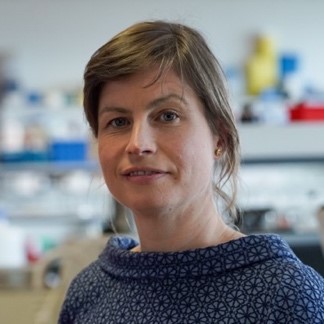
Rachel Oliver is a Professor of Materials Science at the University of Cambridge and Director of the Cambridge Centre for Gallium Nitride. Her research focuses on characterisation techniques for gallium nitride materials used in LEDs and laser diodes, with an emphasis on nanostructure engineering and quantum technology. Awarded OBE (2025), Fellow of the Royal Academy of Engineering (FREng) (2021), and Fellow of the Institute of Materials, Minerals and Mining (FIMMM) (2019) Developed atom-probe tomography and scanning capacitance microscopy to study nitride devices Her work on quantum dots and single-photon emitters has advanced quantum crystallography and optoelectronics. Recent publications highlight trends in nitride semiconductors , solar cell efficiency , and quantum device fabrication . Scientific Awards Royal Society University Research Fellowship (2006-2011) Chair in Emerging Technologies (2023) Grants EPSRC grant for semi-polar nitride structures Oliver's lab at the Department of Materials Science and Metallurgy explores nanoscale nitride structures for future devices, while advocating for gender equality in STEM.
Joshua Nicks is a Researcher in the Department of Chemical Engineering at the University of Bath. His work focuses on advanced materials science, particularly Metal-Organic Frameworks (MOFs) and their applications in environmental engineering, energy systems, and nanotechnology. He contributes to UN Sustainable Development Goals (SDGs) through innovations in sustainable materials and energy solutions. His research explores vapor dynamics, pore engineering, and nanosheet synthesis for applications ranging from solar cells to catalysis. Key research areas include MOF-based nanomaterials, scalable manufacturing techniques like inkjet printing, and functionalization methods such as click chemistry. Collaborations span international teams, emphasizing interdisciplinary approaches to material design and application. Dr. Nicks is actively accepting doctoral students and has published widely on topics like liquid exfoliation, layered frameworks, and programmable 2D materials. His work bridges fundamental material science with practical engineering solutions for sustainability and energy efficiency.
Brian Fronk is an Associate Professor in the Department of Mechanical Engineering at Pennsylvania State University, College of Engineering. His research is centered on advanced thermal systems, with a focus on supercritical CO 2 heat transfer, solar thermal technologies, and energy storage solutions. He is affiliated with the Institute of Energy and the Environment and contributes to research themes in Integrated Energy Systems and Equitable Communities and the Built Environment. His research interests span Supercritical CO2 Heat Transfer , Solar Thermal Systems , Heat Pump Systems , High-Temperature Heat Exchangers , Thermochemical Energy Storage , and Natural Refrigerants . His work combines experimental validation with modeling to develop efficient and sustainable energy systems for industrial and residential applications. The recent publication trend (2023–2025) highlights a strong focus on particle-to-fluid heat exchange , microchannel solar receivers , techno-economic analysis of energy systems , and advanced manufacturing of heat exchangers . These works reflect a commitment to decarbonization, industrial efficiency, and innovative thermal storage. Scientific Awards and Recognition: Recognized for excellence by the Institute of Energy and the Environment (2025) Brian Fronk actively advises graduate students and leads research funded by major grants, including a $2.5M project aimed at reducing emissions and inefficiencies in industrial systems. His lab conducts experimental work on particle-based heat exchangers, solar receivers, and high-flux thermal systems. He collaborates with researchers across disciplines to advance clean energy technologies and promote equitable engineering solutions.
Dr. Stephen Ebbens is a Senior Lecturer at the University of Sheffield within the School of Chemical, Materials and Biological Engineering. His research spans experimental materials science and active matter, with a focus on catalytic colloids , microfluidic devices , and high-value thin film coatings for healthcare and environmental applications. PhD in surface science from University of Durham (2000) Postdoctoral work in Physics Department (2008) and Chemical and Biological Engineering (2009) Established independent research group via EPSRC and University fellowships Research Themes: Active Matter: Autonomous micro-swimmers, boundary steering, gravitaxis, and bubble propulsion for targeted drug delivery and environmental remediation. Thin Film Coatings: Roll-to-roll slot die coating, machine learning optimization, and self-assembled structures for energy storage/generation. Scientific Contributions: Pioneering work on catalytic Janus motors, reactive inkjet printing of silk-based devices, and experimental characterization of colloidal motion. Key publications in Nature Communications , Advanced Functional Materials , and Physical Review E . Collaborations: Partnerships with industry (Ossila Ltd.) and academic institutions (Loughborough University, Kroto Centre for confocal microscopy).
Kara Maki is a Professor in the School of Mathematics and Statistics at the Rochester Institute of Technology (RIT), serving as Director of the Applied and Computational Mathematics MS Program. She holds a BS from the University of New Hampshire and MS and PhD degrees from the University of Delaware. Her research focuses on mathematical modeling of fluid dynamics, particularly tear film dynamics, droplet evaporation, and interfacial phenomena. She has contributed to understanding biological systems like ocular surfaces and respiratory models, as well as engineering applications in microfluidics and materials science. Dr. Maki teaches advanced courses such as Mathematical Modeling I & II, Differential Equations, and supervises graduate research through capstone and thesis programs. Her work bridges applied mathematics with interdisciplinary fields, including collaborations on tear film mechanics, nanoparticle behavior, and viral infection modeling. She actively engages in educational outreach through programs like the SMASH Experience for Girls, promoting STEM education for underrepresented groups. Her publications span topics from evaporation-driven flows to contact lens mechanics, with notable contributions to the Journal of Engineering Mathematics, Journal of Aerosol Science, and Langmuir. While no formal awards are listed, her research has garnered attention for its practical implications in healthcare and engineering. Ongoing projects include computational modeling of biological systems and the development of low-cost microfluidic devices.
Mathieu Soutrenon is an Associate Professor at HES-SO Valais-Wallis - School of Engineering, affiliated with the Institut Systèmes industriels. His work focuses on additive manufacturing, inkjet technology, catalysis, and sustainable materials. He leads and collaborates on projects addressing CO2 conversion, biomass waste valorization, and advanced materials for energy applications. Current projects include developing non-noble metal catalysts for CO2 reduction (RIP process) and a Moroccan-Swiss initiative on biochar production from biomass. Research interests span reactive inkjet printing, functional materials synthesis, and scalable manufacturing processes. He has contributed to over a dozen peer-reviewed publications since 2018, with recent work on electrocatalysts for fuel cells, CO2 adsorption using MOFs, and photo-pyrolysis of waste tires. His projects often involve interdisciplinary collaboration with academic institutions like EPFL and industrial partners. Key Projects: Leading House MENA (2025-2027), Reactive Inkjet Printing (2024-2025), TexUp recycled acoustic panels (2023-2024) Skills: Additive manufacturing, rheology, design for manufacturing, catalysis Lab Affiliations: iPrint Institute (HEIA-FR), Industrial Systems Institute (HEI-VS)
James Blinco is an Associate Professor and Head of School of Chemistry & Physics at Queensland University of Technology (QUT). He holds a PhD from QUT and specializes in synthetic polymer chemistry, free radical chemistry, and photochemistry. His research focuses on light-driven polymer synthesis, surface modifications, and functional materials for applications in energy storage, sensors, and advanced manufacturing. Blinco leads projects funded by Australian Competitive Grants, including initiatives on photoresists for 3D lithography and high-performance OLED inks. Key achievements include the 2018 AIPS Queensland Young Tall Poppy Science Award and a Humboldt Fellowship in 2016. He is actively involved with the Royal Australian Chemical Institute, leading the Queensland Polymer Group. Blinco’s work bridges fundamental polymer science with applied technologies, emphasizing sustainability through innovations like erasable 3D-printed structures and nitroxide-based organic radical batteries. His research portfolio spans over 50 publications in journals like Advanced Materials and Journal of the American Chemical Society . Current projects explore light-controlled polymer networks, pH-sensitive drug delivery systems, and regulatory frameworks for plastic packaging. Blinco also supervises doctoral students in topics such as metal-free battery materials and photo-triggered chemical reactions.
Dr. Aoife Morrin is an Associate Professor at the School of Chemical Sciences, Dublin City University (DCU), and Director of the National Centre for Sensor Research (NCSR) at DCU. She leads the 'Sample & Sense' research strand within the Insight Centre for Data Analytics, focusing on biochemical sensor platform development. Her work integrates electrochemical and optical transduction mechanisms with soft responsive materials to create wearable sensors for skin surface applications. She has published over 60 peer-reviewed papers (H-index 29, 4000+ citations), edited a book, and contributed to three book chapters. Dr. Morrin’s research spans wearable sensor formats, skin volatile emission profiling for disease biomarker discovery, and educational technology innovations in chemical education. Her recent publications highlight advancements in mobile phone-based sensors, volatilomic analysis of infections, and green chemistry approaches to sensor fabrication. She actively explores the intersection of analytical chemistry, biomedical diagnostics, and environmental monitoring through printed electronics and flexible sensor platforms. Her work also addresses the integration of digital tools like virtual laboratories and micro-skill badging for chemical sciences education. Dr. Morrin collaborates across disciplines to develop non-invasive diagnostic technologies, including for diabetic foot ulcer infections and skin pH monitoring. She contributes to environmental sensor development for pollutants like PFAS and cooking oil VOCs, as well as emerging applications in honey characterization and aging research via skin volatiles.
Theresa Saenz is a Researcher at the National Renewable Energy Laboratory (NREL), specializing in Materials Science with a focus on low-cost III-V solar cells. Her work addresses critical challenges in photovoltaics and semiconductor processing. Education : PhD in Materials Science from Colorado School of Mines; BSc in Materials Science and Engineering from Purdue University. Research Interests include: Low-cost metallization using copper Lithography-free processing via screen printing, inkjet printing, and laser methods Epitaxy on Si substrates Defect management in semiconductors Nanoimprint lithography Alternative substrates for III-V growth Scientific Awards : DAAD Research Fellowship (2020) Fulbright Student Research Fellowship (2017) Stamps Leadership Scholar (2015)
Dr. Yong Huang is a Professor in Mechanical & Aerospace Engineering, Biomedical Engineering, and Materials Science and Engineering at the University of Florida. His research focuses on advanced manufacturing techniques for biomedical and energy applications, including 3D bioprinting, material processing, and microphysiological systems. He holds a Ph.D. in Mechanical Engineering from Georgia Institute of Technology (2002). Education: PhD in Mechanical Engineering, Georgia Institute of Technology (2002). Research interests include: three-dimensional printing of biomaterials, design of engineered living systems, and understanding material behavior during manufacturing. He has pioneered methods like nanoclay suspension-based printing and embedded bioprinting for perfusable tissues. Awards: ASME Blackall Award (2005), SME Outstanding Young Engineer (2006), NSF CAREER Award (2008), and ASME Fellow status. His recent work emphasizes translational biomedical applications, such as lung organoid cultures for disease modeling and drug delivery systems. Key contributions include innovations in additive manufacturing for healthcare, including 3D-printed titanium implants with enhanced bioactivity, and laser-induced forward transfer for precise material deposition. His lab develops bioprinting technologies addressing vascularization challenges in tissue engineering.
Xiaoyu Tang is an Assistant Professor in the Department of Mechanical and Industrial Engineering at Northeastern University, with an affiliation in the Chemical Engineering department. She joined Northeastern in January 2021 after completing a postdoctoral fellowship at the University of California, Santa Barbara. Her research focuses on multiphase flow, microfluidics, and complex fluids, with applications in energy, environment, and healthcare. Tang leads the Tang Lab, which combines experimental techniques (high-speed imaging, interferometry) with computational methods to explore fluid dynamics and colloidal systems. Education: Ph.D. (2018) and M.A. (2014) in Mechanical and Aerospace Engineering from Princeton University, and B.E. (2011) in Thermal Engineering from Tsinghua University. Notable awards include the NSF CAREER Award (2025) and the Summerfield Fellowship (Princeton). Her work spans fluid mechanics, soft matter, and additive manufacturing, addressing challenges in droplet impact dynamics, particle delivery, and energy systems. Recent projects include NSF-funded studies on complex fluid droplet impacts and inkjet printing frameworks. Tang actively mentors undergraduate and graduate students, many of whom have received prestigious awards like the Knight-Hennessy Scholarship and NSF Graduate Research Fellowships. Professional affiliations include the American Physical Society and American Institute of Chemical Engineers. She has presented invited talks at institutions such as Harvard, MIT, and Brown University, and collaborates on interdisciplinary grants like the TIER 1 Research Seed Grant and ACS PRF funding.
Dr. Sebastien Moret is a Senior Lecturer in Forensic Science at the University of Technology Sydney (UTS), where he has been since 2017. He serves as Course Director for the Bachelor of Forensic Science program and coordinates subjects like Forensic Imaging and Document Examination. His academic journey began at the University of Lausanne, where he earned a PhD in Forensic Science (2013) after completing undergraduate studies in the same field. PhD, Forensic Science - University of Lausanne (2008–2013) MSc, Forensic Science - University of Lausanne (2006–2008) BSc, Forensic Science - University of Lausanne (2003–2006) Dr. Moret's research focuses on advanced fingermark detection methodologies, particularly leveraging nanoparticle technology and chemical optimization. His work addresses critical challenges in forensic science including solvent alternatives (e.g., Solstice® PF replacement for HFE7100), standardization of quality assessment protocols, and environmental impacts on detection techniques through studies of biodegradable plastics. He has pioneered synthetic secretion formulations for artificial fingermark production, enabling controlled research through modified inkjet printing systems. His recent publications examine diverse forensic challenges across 15 articles including: carrier solvent performance in amino acid techniques, dark web document fraud analysis, surfactant optimization in powder suspensions, and biodegradable plastic substrate interactions. These works demonstrate his expertise in detection chemistry, forensic material science, and digital criminal marketplace analysis. Swiss National Science Foundation Postdoctoral Fellowship (2014–2015) Swiss National Science Foundation Grant (2016) US National Institute of Justice Funding (2018–2019) As a leading forensic scientist at UTS's Centre for Forensic Science, Dr. Moret bridges academic research with operational forensic practice through his method development and validation studies. His work emphasizes practical implementation challenges while maintaining rigorous scientific standards.
Dr. Elham Ghadiri is an Assistant Professor in the Department of Chemistry at Wake Forest University, leading the Ghadiri Lab for Nano-Photo-Chemistry. She focuses on nanomaterials fabrication, ultrafast laser spectroscopy, and applications in energy conversion and bioelectronics. Her research integrates advanced spectroscopic techniques to study photochemical processes in nanomaterials, organic dyes, and semiconductor interfaces. Education: Ph.D. Chemistry, Swiss Federal Institute of Technology Lausanne (EPFL), 2010-2014 Ph.D. Nanoscience and Nanotechnology, Sharif University of Technology, 2006-2010 M.Sc. Physics, Sharif University of Technology, 2003-2005 B.Sc. Physics (Honors), Arak University, 1999-2003 Research Interests: Her work spans nanomaterials synthesis, ultrafast spectroscopy, and bioelectronics. Key areas include solar energy conversion (dye-sensitized solar cells), biomedical applications (bio-pigments, neural resilience), and femtosecond laser techniques to study charge dynamics. She bridges nanotechnology with biology, developing materials for optoelectronics and medical devices. Publications: Over 15 peer-reviewed articles highlight her contributions to ultrafast charge separation in semiconductors, bio-printed materials, and reactive oxygen species scavengers. Notable work includes enhancing solar cell efficiency via nanostructured TiO₂ and developing tunable bioinks for faster tissue maturation. Awards: 2023 NSF Career Award 2017 WFIRM TERMIS Young Investigator Award Advising & Labs: The Ghadiri Lab collaborates on interdisciplinary projects at the Wake Forest Institute for Regenerative Medicine (WFIRM). Research emphasizes translational applications in renewable energy and biocompatible electronics. Future work aims to advance nano-bio interfaces for diagnostics and therapy.
Dr. Leila Zouridi is a PostDoctoral Research Fellow at the Institute of Chemical Engineering Sciences (IESL-FORTH) in Greece. She holds a Ph.D. in Materials Science and Engineering (2024), M.Sc. in Materials Science and Technology (2019), and B.Sc. in Chemistry (2017), all from the University of Crete. Her research focuses on nanomaterial synthesis, additive manufacturing of electrochemical devices, and energy-saving technologies including solid oxide fuel cells and thermochromic coatings. Current affiliations: IESL-FORTH, collaborating with University of Crete (UOC), Aristotle University of Thessaloniki (AUTh), and others Research interests include perovskite oxide nanomaterials for electrochemical applications, colloidal dispersions, and low-tech green chemistry solutions. Notable achievements include developing inkjet-printed solid oxide fuel cell components and investigating vanadium dioxide-based thermochromic materials for energy efficiency. Awards include a 2023 Excellence Scholarship from IPTO/ADMHE and recognition in international innovation competitions (PowerUp! 2018, EYCN Photochimica 2017). Active in cross-disciplinary collaborations involving chemical engineering, materials science, and renewable energy systems.
Dr. David Alexander Gregory is a Lecturer in the Department of Chemical and Biological Engineering at the University of Sheffield, joining the institution in 2023. His research focuses on developing sensing devices and novel printing technologies for applications in process monitoring, medical diagnostics, and environmental challenges. He is also the Chief Technology Officer (CTO) of PHAsT, a promising spin-off initiative focused on sustainable production of biocompatible, biodegradable polymers via bacterial fermentation. Dr. Gregory holds a PhD in Catalytic Micromotors from the University of Sheffield (2016), an MSc in Bionanotechnology jointly offered by the University of Sheffield and Leeds University, and dual BSc degrees in Physics with Astrophysics and Cosmology from Lancaster University and Biochemistry and Music from Keele University. His interdisciplinary background enables him to bridge multiple scientific domains in his research. His research interests span multiple cutting-edge areas including sensors and biosensors, Raman spectroscopy, additive manufacturing, 3D printing, Reactive Inkjet Printing (RIJ), biomaterials, tissue engineering, drug delivery, bioelectronics, and micromotor technology. Dr. Gregory has made significant contributions to the development of RIJ technology, designing and building custom printers while developing modifications to existing systems. His work on enzyme-powered silk microrockets gained considerable media attention and resulted in multiple high-impact publications. His recent publications demonstrate a strong focus on developing sustainable biomaterials, particularly polyhydroxyalkanoates (PHAs), and applying advanced manufacturing techniques to create biomedical devices. The research trends show increasing emphasis on tissue engineering applications, nerve regeneration, and the development of biodegradable polymers for medical use. 2023 Award via 'the Deal' for exceptional student guidance 2022 Award via 'the Deal' for stepping in at short notice 2021 Award for outstanding postdoc work 2016 Best poster at E-MRS Symposium 2013 First Prize for best Poster at Sheffield University Dr. Gregory has secured multiple research grants totaling over £650,000, including projects from UKRI, EPSRC, and Diamond Light Source. He has supervised numerous PhD students and undergraduate researchers through SURF and SURE programs. His current research group includes PhD students Leo Fish, Faruk Abdullahi, Ewan Hicking, and Ardhika Ulfah. He leads the Sensors and Advanced Manufacturing Research Group, which focuses on applied inkjet printing for tissue engineering, printed electronics, and 3D scaffold printing. His work on PHAsT involves upscaling bacterial fermentation processes to produce biocompatible polymers for biomedical applications, with successful 100L fermentations conducted at the University of Cambridge facilities.