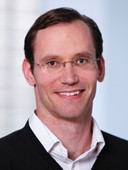
Professor Balz Kamber is a renowned academic in the Faculty of Science at Queensland University of Technology (QUT), leading research in elemental and isotopic geochemistry paired with petrology. He holds the position of Professor in Petrology within the School of Earth & Atmospheric Sciences . His work focuses on Earth's differentiation into chemical spheres, with applications in climate science, planetary evolution, and resource exploration. Kamber has held prestigious roles, including Chair in Geology and Mineralogy at Trinity College Dublin and a Tier 1 Canada Research Chair at Laurentian University. Education: PhD (University of Bern, Switzerland), MSc (University of Bern) Professional Memberships: Royal Irish Academy (since 2018), European Association of Geochemistry Research interests include thermodynamic modeling of igneous processes, automated mineralogy, and the interplay between climate and geological history. His current projects address mantle dynamics, crustal evolution, and planetary weathering. Teaching focuses on Earth Materials, Petrology, and Climate Science at QUT. Notable achievements include editorship of Chemical Geology (since 2018) and contributions to understanding the Great Oxidation Event and Deccan Traps volcanism. His work bridges fundamental geochemistry with real-world challenges, such as climate change mitigation through enhanced rock weathering. Grants/Funding: Led the 23M Euro Irish Centre for Research in Applied Geosciences (2011–2018) Labs/Teams: Heads a dynamic research group advancing LA-ICP-MS methodologies and geochemical imaging
Yong Zhang is a Professor in the Department of Geological Sciences at the University of Alabama, serving as Undergraduate Program Director. His research focuses on stochastic hydrology, contaminant transport in soil/water/aquifers (including heavy metals, PFAS, microplastics, and antibiotics), and surface water-groundwater interaction. He has held postdoctoral positions at the University of California, Davis; Desert Research Institute; and Colorado School of Mines. Current research includes the 'Groundwater 2070' project in Baldwin County, Alabama, addressing climate change impacts and seawater intrusion. Education: BS in Hydrogeology and Geo-Engineering (Nanjing University, 1993), PhD in Hydrology and Water Resources (Nanjing University, 1998). He teaches courses like GEO 101, GEO 306, and specialized topics such as Fractional Calculus and Hydrogeophysics. His work integrates fractional calculus with hydrogeology, yielding models for non-Fickian transport and pollutant source identification. Students under his advisement include Jonathan Frame, Chaloemporn Ponprasit, and Hossein Gholizadeh. Research outputs emphasize environmental geochemistry, numerical modeling, and groundwater sustainability. Notable collaborations involve Dr. Geoff Tick on co-advised PhD students.
Dr. Todd D. Murphey is a Professor of Mechanical Engineering at Northwestern University's Robert R. McCormick School of Engineering and Applied Science. He serves as Director of Transformative Research and Director of the Master of Science in Robotics Program at Northwestern, leading initiatives in computational dynamics, control systems, and robotics. His work bridges engineering, neuroscience, and biomedical applications, with a focus on developing systems that interact effectively with humans and their environments. Dr. Murphey received his Ph.D. in Control and Dynamical Systems from the California Institute of Technology in 2002, with a thesis titled "Control of Multiple Model Systems." Prior to that, he earned a B.S. in Mathematics, summa cum laude, from the University of Arizona in 1997. Dr. Murphey's research centers on computational methods in dynamics and control, with applications spanning neuroscience, health science, robotics, and automation. His work in the Interactive & Emergent Autonomy Lab focuses on computational models of embedded control, biomechanical simulation, dynamic exploration, and hybrid control. The group develops mathematical approaches that lead to orders of magnitude improvement in computational efficiency for real-time implementation. Key application areas include assistive exoskeleton control, stabilization of energy networks, bio-inspired active sensing, entertainment robots, robotic exploration, and software-enabled stroke rehabilitation. Analysis of Dr. Murphey's recent publications reveals a strong emphasis on human-swarm interaction, algorithmic matter, and control of cyber-physical systems in uncertain environments. His work increasingly integrates information theory with physical systems, exploring how both autonomous and biological systems interact with environments to learn and improve behaviors. Recent trends show growing applications in rehabilitation technology, with particular focus on human-machine interaction in biomedical devices and embodied intelligence. Dr. Murphey has received numerous honors and awards for his contributions to robotics and engineering: Named Director of Transformative Research at Northwestern University (2025) Appointed IEEE Robotics and Automation Society Vice President of Publication Activities (2022) Co-recipient of Best Paper Award for IEEE Transactions on Robotics (2020) Appointed to Air Force Scientific Advisory Board (2019) Recipient of ABB Best Student Paper Award for CPL-SLAM research (2019) Cole-Higgins Award from Northwestern Engineering (2015) Dr. Murphey has supervised numerous graduate students including Taosha Fan, Giorgos Mamakoukas, and Ian Abraham, with research spanning robotic exploration using electrosense and mechanical contact, human-in-the-loop control, and shared control for rehabilitation devices. His lab has secured significant funding from the National Science Foundation, DARPA, and industry partners including Siemens and Ekso Bionics, supporting research in algorithmic matter, emergent behavior, and human-swarm collaboration. The Interactive & Emergent Autonomy Lab, led by Dr. Murphey, investigates how both autonomous systems and biological systems interact with their environments to learn and improve behaviors. Current projects include active learning and data-driven control, active perception in human-swarm collaboration, algorithmic matter and emergent computation, control for nonlinear and hybrid systems, cyber physical systems in uncertain environments, harmonious navigation in human crowds, information maximizing clinical diagnostics, reactive learning in underwater exploration, robot-assisted rehabilitation, and software-enabled biomedical devices. The lab collaborates with researchers across Northwestern and institutions including Georgia Tech, MIT, and industry partners.
Martin Berggren is a Professor at the Department of Computing Science , Umeå University , Sweden. His work focuses on Computational Design Optimization , combining computer simulations and numerical optimization to enhance engineering designs for devices like antennas, microwave components, and loudspeakers. Berggren is also active in mathematical modeling of physical phenomena, particularly wave propagation and fluid mechanics, with a strong emphasis on finite-element methods . His research addresses large-scale conceptual design problems using thousands to millions of design variables, relying on gradient-based algorithms and adjoint-based computations of design sensitivities—similar to back-propagation in deep learning. Key application areas include acoustic and electromagnetic devices, where he investigates damping mechanisms, boundary conditions, and material distribution. Other interests, though less active, involve flow control and unsteady fluid–structure interaction . Berggren collaborates extensively on projects such as Structured Regularization , Topology Optimization of Acoustic Black Holes , and Design of Microstrip-to-Waveguide Transitions . His publications span journals like Journal of Computational Physics , Pattern Analysis and Applications , and IEEE Transactions on Antennas and Propagation , often co-authored with researchers like Linus Hägg , Eddie Wadbro , and Disi Lin .
Carsten Sievers serves as Adjunct Professor in the Department of Chemical and Biomolecular Engineering at Georgia Institute of Technology, where he leads research in sustainable catalytic processes for fuel and chemical production from alternative resources. His work bridges fundamental spectroscopy with industrial reactor design to address petroleum dependence. Education: Diploma, Technical University of Munich, Germany (2003) D.Sc., Technical University of Munich, Germany (2006) Research Focus: Sievers' program integrates fundamental studies using IR, NMR, XAS, and Raman spectroscopy to probe catalyst structure-reactivity relationships with applied research on flow reactor systems for biomass conversion (hydrodeoxygenation, sugar upgrading) and mechanocatalytic polymer depolymerization. Key initiatives target CO 2 -neutral chemical production from biomass and waste plastics, emphasizing catalyst stability and regeneration. Publication Trends: Recent work (2023-2025) reveals a strategic pivot toward mechanocatalysis for plastic recycling (polyethylene, polystyrene) and ammonia synthesis, while maintaining expertise in hydrocarbon catalysis. Dominant themes include reaction environment engineering in ball mills, metastable surface characterization, and process intensification for CO 2 electrolysis. Scientific Recognition: 2012 Young Scientist Award, International Congress on Catalysis 2023 ACS Fellow designation Academic Leadership: As Director and Past President of the Southeastern Catalysis Society, former ACS Division Director, and Editor of Applied Catalysis A: General , Sievers shapes catalysis research direction. His Sievers Group has secured competitive fellowships for students like Yuchen George Change (Eastman Chemical Fellowship) and Victor Brandão (Ziegler Award), reflecting strong mentorship in sustainable reaction engineering. Research Infrastructure: The group operates advanced flow reactors, spectroscopic characterization suites, and mechanochemical systems for in-situ catalyst analysis, supporting collaborations with industry partners on technology translation.
Prof. Dr. Oliver Schilling is an Assistant Professor of Hydrogeology at the University of Basel and affiliated with Eawag , the Swiss Federal Institute of Aquatic Science and Technology. He leads research on surface water-groundwater interactions using integrated surface-subsurface hydrological models (ISSHM) and novel tracer techniques including dissolved atmospheric noble gases, environmental DNA, and radioactive tracers. Research Focus : Surface-subsurface hydrology, ecohydrology, groundwater-surface water interactions, tracer hydrogeology, climate change adaptation in water systems Key Projects : Integrated Hydrological Modeling for Operational Forecasting, Sustainable Nitrogen Fertilization, Slow Water Initiatives, Cryosphere-Groundwater Connectivity in Alpine Regions Scientific Contributions include developing HGS-PDAF (modular data assimilation framework), advancing microbial transport algorithms in HydroGeoSphere, and pioneering online flow cytometry for microbial analysis in high-turbidity environments. His work addresses drinking water production via bank filtration along alluvial rivers, critical for 30% of Swiss and 50% of European drinking water supply. Scientific Leadership : Editor, Hydrogeology Journal (since 2025) Associate Editor, Frontiers in Water (since 2021) Coordinator, Swiss Water-Earth Systems (WES) PhD School (2020–2022)
Matti Sällberg is a Professor in Biomedical Analysis at Karolinska Institutet's Department of Laboratory Medicine, leading the VIVAC research group focused on vaccines and immunotherapies against viruses and cancer. He earned his DDS and PhD from Karolinska Institutet (1988-1992), followed by postdoctoral research at The Scripps Research Institute (1994-1996). As a leader in infectious disease and hepatology, his research addresses chronic viral hepatitis, cancer prevention, and gene/cell-based therapies (GTMPs/ATMPs). He has directed the Department of Laboratory Medicine (2011-2022) and actively teaches in biomedical laboratory science, dentistry, medicine, and nursing programs. Key research areas include SARS-CoV-2 vaccine development (OPENCORONA consortium), hepatitis B/D/C therapies, and Crimean-Congo hemorrhagic fever vaccines. His work combines basic science with translational efforts at Karolinska's ANA Futura facility. Notable projects include a phase I clinical trial for a broad-acting SARS-CoV vaccine and preclinical testing of hepatitis therapies. Collaborations span academia and industry, with funding from the Swedish Cancer Society, EU, and VINNOVA. He oversees advanced techniques like viral propagation, flow cytometry, and adoptive cell therapy manufacturing. Grants include a 2024 Swedish Cancer Society award for hepatitis-related cancer therapies and a 2022 Swedish Research Council grant for the Doctoral Program in Advanced Therapies. His team maintains an active lab with researchers like Lars Frelin and Gustaf Ahlén. Future work emphasizes expanding vaccine platforms against emerging pathogens and optimizing immuno-therapies for solid tumors.
Neelakantan R. Krishnaswami is a Professor of Computer Science at the University of Cambridge's Computer Laboratory , and a Fellow of Trinity College . His research focuses on the intersection of program verification, programming language design, and foundational topics like type theory and semantics. His work spans areas such as refinement types, parser design, separation logic for systems software, and the semantics of reactive programming. Notable contributions include the Datafun language for higher-order Datalog and the λert type theory for explicit refinement types. He has also developed foundational frameworks for verifying imperative programs using advanced type systems and logical relations. Key publications include 'Explicit Refinement Types' (ICFP 2023), 'flap: A Deterministic Parser with Fused Lexing' (PLDI 2023), and 'CN: Verifying Systems C Code' (POPL 2023). His work frequently addresses challenges in efficiency, correctness, and modularity for both functional and imperative systems. His awards include Distinguished Paper Awards at PLDI 2019 and POPL 2020. His research integrates theoretical rigor with practical tooling, exemplified by contributions to languages like Coq, Lean, and Haskell.
Véronique Michaud is an Associate Professor at the École Polytechnique Fédérale de Lausanne (EPFL), affiliated with the Laboratory for Processing of Advanced Composites (LPAC) within the School of Engineering (STI). Her research focuses on polymer composite processing, adaptive composites (e.g., shape memory alloys, self-healing mechanisms), and material science. She also contributes to teaching in Materials Science and Engineering, including courses like 'Materials: From Chemistry to Properties' and 'Composite Materials Processing.' Her academic roles include Associate Professorships in SMX, EDMX, and EDAM teaching units, and she serves as a PhD program committee member for the Doctoral Program in Advanced Manufacturing. She has advised numerous PhD students, including Michele Bonacina, Pierre-Alexandre Boschert, and Jean-Baptiste Desbrest, among others. Research highlights include sustainable composite material development, defect mitigation in composites, and advanced manufacturing techniques. Her work often addresses challenges in aerospace and renewable energy applications, emphasizing sustainability and material innovation.
Christoph Müller is a Full Professor of Energy Science and Engineering at ETH Zürich's Department of Mechanical and Process Engineering. He leads the Laboratory of Energy Science and Engineering, focusing on sustainable energy generation, heterogeneous catalysis, and granular systems. His research integrates experimental methods like Magnetic Resonance Imaging (MRI) and Discrete Element Modelling (DEM) with mathematical modeling to address industrial energy challenges. Education: Dipl.-Ing. from Technical University of Munich (2004), PhD in Chemical Engineering from the University of Cambridge (2008). Notable awards include the Danckwerts-Pergamon Prize (2009) and DAAD Scholarship (2005). He teaches courses such as Thermodynamics I and Thermo- and Fluid Dynamics. Research interests span CO₂ capture via chemical looping, catalytic hydrogenation, and granular flow dynamics. Recent work explores catalyst design for propane dehydrogenation, MXene-based ammonia synthesis, and MgO-based CO₂ sorbents. His lab employs advanced techniques like operando X-ray absorption spectroscopy to study catalyst behavior under reaction conditions. Key achievements include developing stable PtGa propane dehydrogenation catalysts and advancing understanding of Na₂CO₃-promoted CO₂ sorbents. His work on fluidized bed hydrodynamics via MRI contributes to reactor design optimization. Müller's interdisciplinary approach bridges fundamental science and industrial application, addressing global energy sustainability challenges.
David Eaton is a Professor and former NSERC/Chevron Industrial Research Chair in Microseismic System Dynamics at the University of Calgary's Department of Geoscience. He holds a PhD in Geophysics from the University of Calgary (1992) and has published the textbook 'Passive Seismic Monitoring of Induced Seismicity'. Educational Background: PhD Geophysics, University of Calgary, 1992 MSc Geophysics, University of Calgary, 1988 BSc Geology and Physics, Queen's University, 1984 His research focuses on induced seismicity characterization, microseismic monitoring technology development, distributed acoustic sensing applications, physics-informed machine learning approaches, and lithospheric structure analysis. Current projects investigate earthquake triggering mechanisms during hydraulic fracturing and geothermal energy development. Publications show consistent focus on induced seismicity source characterization, monitoring methodologies, and geophysical applications for energy resource development. Recent work integrates machine learning with seismic monitoring to understand geological controls on induced seismicity. Scientific Awards: NSERC Synergy Award for Innovation (2020) J. Tuzo Wilson Medal, Canadian Geophysical Union (2020) CSEG Distinguished Lecturer (2019) Schulich School of Engineering Distinguished Collaborator (2019) University of Calgary Great Supervisor Award (2016) He leads the CREATE-REDEVELOP program training future leaders in responsible resource development and directs the microseismic research laboratory.
Jaal Ghandhi is a Professor in the Department of Mechanical Engineering at the University of Wisconsin-Madison. His research focuses on combustion and fluid mechanics in internal combustion engines, utilizing laser-based diagnostics to study temperature and concentration fields. He holds significant academic roles and has received multiple prestigious awards, including the John Bollinger Chair and ASME/Society of Automotive Engineers Fellowships. Education: PhD 1995 (Princeton University), MS 1988 (UW-Madison), BS 1986 (UW-Madison) His research interests include laser diagnostics, turbulent flow, and advanced engine design. Recent work emphasizes thermal barrier coating performance, diesel engine efficiency, and hydrogen-based fuels. Over 20 years, his publications span combustion dynamics, material durability, and engine thermodynamics. Awards include the NSF CAREER Award, Grainger Professorship, and multiple teaching accolades. He teaches graduate courses in energy sustainability, combustion, and engine experiments. His research contributes to sustainable engineering through improved engine efficiency and reduced emissions, with collaborations in automotive and energy sectors.
Jonathan Boualavong is an Assistant Professor in the Department of Civil, Structural and Environmental Engineering at the University at Buffalo, State University of New York. His research focuses on electrochemical separations for climate change mitigation, public health, and environmental justice, integrating engineering and critical science and technology studies perspectives. PhD, Environmental Engineering, Pennsylvania State University (2023) MPhil, Chemical Engineering, University of Strathclyde, Scotland (2019) BS, Biomedical Engineering, University of Rochester (2017) His work examines: Electrochemical CO2 capture and its energy implications Mechanistic understanding of metal separations Ethical dimensions of scientific measurement Integration of renewable energy systems with chemical processes Current projects analyze: Air-water interface manipulation for CO2 absorption Electrochemical controls on lead/copper corrosion Coordination chemistry in transition metal redox processes Ethical citation networks in separation science Contact: jboualav@buffalo.edu
Massimo Bongiorno is an Assistant Professor in Electrical Engineering at Chalmers University of Technology. He holds a Master’s degree in Electronics Engineering from the University of Palermo (2002) and earned his Licentiate and PhD from Chalmers University. His research focuses on power electronics applications in power systems, particularly grid-forming converter systems, power quality, and renewable energy integration. MSc in Electronics Engineering (University of Palermo, 2002) Licentiate and PhD (Chalmers University of Technology) Research interests include: Power electronics in power systems Grid-forming converter stability Renewable energy integration Modular multilevel converter design Small-signal and large-signal stability analysis Energy storage system applications Recent publications highlight trends in: Converter control strategies for grid stability Dynamic modeling of power electronics systems Applications in offshore wind and hydro microgrids Impedance analysis and resonance mitigation Advanced fault ride-through techniques Multi-terminal HVDC grid control
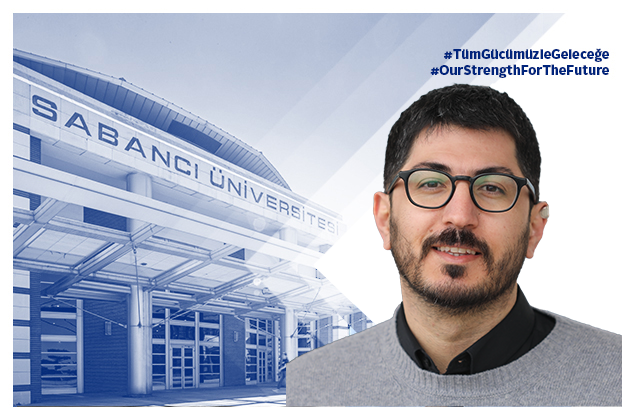
Dr. Morteza Ghorbani is a researcher and faculty member at Sabancı University's Faculty of Engineering and Natural Sciences (FENS), specializing in fluid mechanics and environmental engineering. He leads the AquaCav project, a collaborative effort with Oxford Brookes University, focused on developing sustainable water treatment solutions using hydrodynamic and acoustic cavitation. His research addresses global challenges such as PFAS pollution and wastewater management, with applications in biomedical devices and energy-efficient technologies. Key collaborations include projects funded by the International Science Partnership Fund (ISPF), leveraging his expertise in microfluidic systems and cavitation dynamics. Dr. Ghorbani's work combines experimental and numerical methods to optimize cavitation-based processes for environmental and biomedical applications. His contributions span from fundamental fluid dynamics studies to applied technologies like flexible cystoscopes and clot-on-a-chip platforms. Scientific achievements include the ISPF Research Collaboration Grant (2024) and advancements in PFAS removal, graphene exfoliation, and microalgae cultivation. His research group at Sabancı University explores interdisciplinary solutions at the intersection of engineering, nanotechnology, and sustainability.