Professor Alex Copley holds the position of Professor of Tectonics at the Department of Earth Sciences, University of Cambridge. His research focuses on understanding Earth's crustal deformation, tectonic forces, and earthquake dynamics across scales from microcrystalline to continental. He employs integrated approaches combining field geology, geophysical data, numerical modeling, and petrological analysis. His work addresses key questions on earthquake controls, tectonic force origins, and crustal material properties, with global field projects spanning Asia, the Middle East, Europe, Africa, and South America. Research interests include: Earthquake mechanics and seismic hazard mitigation Continental tectonics and mountain belt evolution Crustal rheology and lithospheric dynamics Metamorphic petrology and continental collision processes Large-scale controls on critical mineral distributions Recent publications highlight studies on fault mechanics in Iran, Himalayan shortening, and the thermal evolution of mountain ranges. His work bridges fundamental geoscience with societal applications, including earthquake resilience and tectonic influences on resource formation. Affiliations include Bullard Laboratories and collaborations with global institutions. No formal awards are listed in the provided text, though his research has been published in high-impact journals like Nature and Geophysical Research Letters .
Thomas Justus Schmidt is a Professor and Chair for Electrochemistry at ETH Zürich and Head of the PSI Center for Energy & Environmental Sciences at the Paul Scherrer Institute (PSI) in Switzerland. He also directs the Swiss Center of Excellence for NetZero Emissions. His research focuses on electrochemical energy conversion and storage, including fuel cells, electrolyzers, and catalyst development. Schmidt received his University Diploma (1996) and PhD (2000) in Chemistry from the University of Ulm, followed by postdoctoral work at Lawrence Berkeley National Laboratory. He has held leadership roles in industry (BASF Fuel Cell GmbH) and academia, including directing the Swiss Competence Center for Energy Research. His awards include the Charles W. Tobias Young Investigator Award and the CW Schönbein Gold Medal. He advises PhD students and leads interdisciplinary teams at ETH and PSI, with a focus on advancing sustainable energy technologies. Education: University of Ulm (Diploma 1996, PhD 2000) Industry Experience: BASF Fuel Cell GmbH (2002–2010) Key Roles: Director of Swiss NetZero Center, Head of PSI Energy & Environmental Sciences His research bridges fundamental electrochemistry with practical applications, emphasizing catalyst design, operando spectroscopy, and sustainable energy systems. Notable projects include high-temperature membrane electrode assemblies and CO₂ electroreduction technologies. Collaborations leverage PSI’s large-scale facilities for advanced material characterization. Scientific contributions include over 200 publications in journals like Nature Chemistry and Advanced Energy Materials . His team explores electrocatalysts for oxygen evolution/reduction reactions and novel materials for energy storage. Current work addresses scalability of electrochemical processes and low-carbon technologies.
Cesare Franchini is a full Professor at the University of Vienna's Faculty of Physics, leading the Computational Materials Physics research group. His work focuses on theoretical understanding and computational modeling of quantum materials using first principles methods, particularly VASP. He maintains an active research program with numerous postdocs, PhD students, and collaborations across multiple institutions including the University of Bologna. Professor Franchini's research centers on quantum materials with many interacting degrees of freedom (lattice, spin, and electron orbital) that enable novel electronic and magnetic phases. His specific interests include metal-insulator transitions, polaron physics (electron-phonon interactions), non-collinear spin orderings, topological Dirac/Weyl phases, multiferroism, and superconductivity. He has increasingly incorporated machine learning data-driven tools and diagrammatic Monte Carlo techniques into his computational approaches. Analysis of his recent publications (2024-2025) reveals a strong focus on polaron physics across multiple material systems, with significant work on hematite, titanium dioxide, and quantum paraelectrics like KTaO3. His research increasingly integrates machine learning with traditional first-principles methods, particularly for studying hydrogen diffusion, surface science phenomena, and electronic structure calculations. There's also substantial work on single-atom catalysis and the application of advanced computational techniques to understand fundamental charge transport mechanisms in energy materials. Professor Franchini actively supervises numerous PhD students and postdocs, including Andrea Angeletti, Viktor Birschitzky, Lorenzo Celiberti, and several others working on diverse aspects of computational materials physics. He leads or participates in major research projects including TACO (Taming Complexity in Materials Modeling), DCAFM (Doctoral College Advanced Functional Materials), and the recently launched Spin-orbit entangled anharmonic polarons project. His group maintains strong collaborations with experimentalists at Charles University, Technical University of Vienna, and other international institutions.
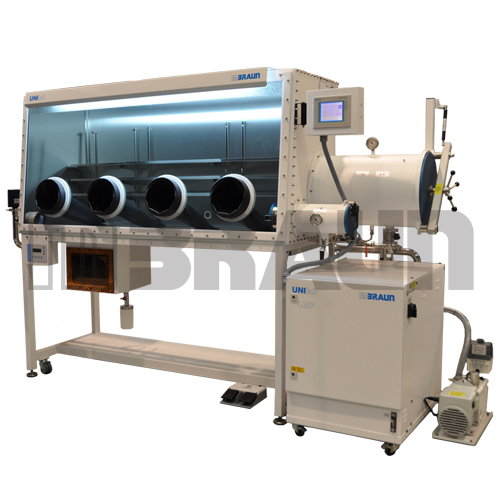
Dr. Likun Zhu is a Professor of Mechanical Engineering at Purdue University's School of Mechanical Engineering in Indianapolis. His research focuses on advanced battery technologies, including lithium-ion and solid-state batteries, with an emphasis on in situ and operando characterization, modeling, and micro/nano fabrication. Dr. Zhu's work addresses critical challenges in battery energy density, safety, and longevity through innovative materials and manufacturing processes. Education: Ph.D. Mechanical Engineering, University of Maryland (2006); M.S./B.S., Tsinghua University (2001/1998). His lab is affiliated with the Birck Nanotechnology Center and equipped with advanced facilities such as gloveboxes, electrochemical analyzers, and microscopy systems. Recent milestones include securing an NSF grant for solid-state battery research (2023) and advising over 30 graduate students. Research Interests: Solid-state batteries, micro/nano fabrication, operando characterization, and sustainable energy materials. His group develops novel electrode materials and designs for high-performance batteries, leveraging cutting-edge in situ techniques to study dynamic processes during cycling. Grants & Awards: NSF grant (2023) for solid-state battery research. Advising: Notable students include Hua Wang (Ph.D. 2024), Xintong Li, and Tianyi Li. Collaborations include work with Professors Hazim El-Mounayri and Andres Tovar on Bayesian optimization of battery materials. Labs & Facilities: The lab, located at ET 118, houses equipment like Arbin battery cyclers, FIB-SEM systems, and Comsol Multiphysics software. Dr. Zhu teaches courses including ME 330 (Dynamic Systems), ME 509 (Fluid Mechanics), and ME 597 (Renewable Energy).
Bjorn Sandstede is the Alumni-Alumnae University Professor of Applied Mathematics at Brown University. His research focuses on applied dynamical systems, nonlinear waves, pattern formation, and computational biology. He holds a PhD from the University of Stuttgart and has held faculty positions at The Ohio State University and the University of Surrey before joining Brown in 2008. Sandstede has received numerous awards, including the SIAM J.D. Crawford Prize and the Royal Society Wolfson Research Merit Award. He served as Department Chair at Brown and directed the Data Science Initiative. His work involves interdisciplinary collaborations, such as modeling zebrafish stripe formation and developing computational tools like SCOT for single-cell data integration. Sandstede also mentors extensively, advising over 30 PhD students and postdoctoral researchers. He leads the NSF-funded Institute for Computational and Experimental Research in Mathematics (ICERM) and contributes to initiatives promoting diversity and inclusion in STEM. Education: PhD in Mathematics, University of Stuttgart Undergraduate Degree, University of Heidelberg Research Interests: Applied Dynamical Systems Nonlinear Waves and Pattern Formation Computational Biology Data Science PDE Analysis Awards and Recognition: Alfred P. Sloan Research Fellowship SIAM J.D. Crawford Prize Royal Society Wolfson Research Merit Award Elsevier Jack Hale Award Teaching Excellence Awards from Brown University Fellow of the AMS and SIAM Grants and Leadership: Principal Investigator of NSF grant establishing ICERM Director of Brown's Data Science Initiative Member of Research Advisory Board and Tenure Committees Labs and Teams: Leads the Sandstede Lab at Brown, focusing on computational biology and dynamical systems. Collaborates with the Volkening Lab on zebrafish pattern modeling and the Singh Lab on optimal transport methods.
Kunihiko Kaneko is a Professor at the Niels Bohr Institute, University of Copenhagen, with a distinguished career in theoretical biophysics and complex systems. He received his PhD and MSc in Physics from the University of Tokyo, and has held leadership roles at the Universal Biology Institute and Center for Complex Systems Biology. PhD Physics, 1984 - University of Tokyo MSc Physics, 1981 - University of Tokyo His research spans five primary areas: Universal Biology, Evolutionary Constraints, Ecosystem Dynamics, Neural Cognition, and Universal Anthropology. He has published extensively on multi-level consistency principles, dimensional reduction in biological systems, and reciprocity between robustness and plasticity across scales. Recent publications show strong focus on microbial ecosystems (2025), evolutionary game theory (2025), neural modular architectures (2024), and dimensional reduction in cellular systems (2024). His work bridges physics and biology through dynamical systems theory applied to diverse phenomena from protocells to human societies.
William A. Goddard, III is the Charles and Mary Ferkel Professor of Chemistry, Materials Science, and Applied Physics at the California Institute of Technology. With a career spanning over five decades, he has held positions from Noyes Research Fellow (1964–66) to his current professorship since 2001. His educational background includes a B.S. from UCLA (1960) and a Ph.D. from Caltech (1965). Quantum chemistry and first-principles simulations Multiscale modeling (QM→MD→mesoscale) Catalysis and protein structure prediction Nanotechnology and bionanotechnology Energy storage (batteries, supercapacitors) Recent publications emphasize applications in metal-organic frameworks , electrocatalysis , and space manufacturing , reflecting his interdisciplinary approach. His work on G-protein coupled receptors and Li-S batteries demonstrates methodological innovation through quantum mechanics and machine learning . Horizon Prize , Royal Society of Chemistry Over 1548 total publications (1967–2022) As Director of Caltech's Material and Process Simulation Center , he leads development of software like ReaxFF for reactive dynamics. He teaches Ch 120 ab (Nature of the Chemical Bond) and Ch 121 ab (Atomic-Level Simulations), emphasizing hands-on computational applications for experimentalists and theorists.
Scott L. Diamond is the Arthur E. Humphrey Professor of Chemical and Biomolecular Engineering and Bioengineering at the University of Pennsylvania's School of Engineering and Applied Sciences. He serves as Director of the Penn Center for Molecular Discovery, Director of the Penn Biotechnology Masters Program (one of the largest in the country with over 130 students), and Associate Director of the Institute for Medicine and Engineering (IME). His laboratory is located in the Roy and Diana Vagelos Laboratories at 3340 Smith Walk, 1020 Vagelos Research Laboratories, Philadelphia, PA. Diamond's research spans multiple interconnected fields in blood biology and biotechnology. His work focuses on mechanobiology, thrombolysis, coagulation, bioadhesion, gene therapy, drug/device development, proteomics, drug discovery, systems biology, and microfluidics. His laboratory has developed numerous specialized microfluidic devices for studying blood clotting under various flow conditions, including 8-channel devices for high-throughput clotting assays, side-view devices for clot structure analysis, stenosis devices for high shear clotting assays, and impingement-post devices for studying von Willebrand factor fibers. Diamond's research group has pioneered approaches to model and predict blood function using systems biology principles. His team has developed computational models that integrate reaction-transport phenomena with platelet signaling networks to predict thrombus formation under flow. These models have enabled the development of 'virtual blood' computer simulations that can predict the effectiveness of anticoagulation drugs for individual patients, contributing significantly to personalized medicine approaches in hemostasis and thrombosis. His extensive publication record demonstrates a consistent focus on understanding the fundamental mechanisms of blood clot formation and dissolution. Recent work has emphasized microfluidic approaches for point-of-care diagnostics, patient-specific modeling of platelet function, and the development of novel therapeutic strategies for thrombotic disorders. His research bridges engineering principles with clinical hematology to address significant challenges in cardiovascular medicine. NSF National Young Investigator Award NIH FIRST Award American Heart Association Established Investigator Award AIChE Allan P. Colburn Award George Heilmeier Excellence in Research Award Elected Fellow of the Biomedical Engineering Society (BMES) Diamond has secured significant research funding, including a $2.8 million NIH grant for 'Blood Systems Biology' and a $9.5 million NIH grant for the Penn Center for Molecular Discovery. His laboratory has developed numerous microfluidic devices for blood analysis and has collaborated extensively with clinicians and industry partners. Diamond has served on advisory committees for NSF, NIH, AHA, and NASA, and has consulted extensively for industry and government. With over 180 publications and patents, his work has significantly advanced the understanding of blood clotting mechanisms and the development of diagnostic and therapeutic approaches for thrombotic disorders.
Richard B. Sowers is a Professor at the University of Illinois at Urbana-Champaign, holding joint appointments in the Department of Industrial and Enterprise Systems Engineering, Mathematics, and Statistics (courtesy). He has held faculty positions since 1996, starting as an Assistant Professor in Mathematics and advancing to Professor across multiple departments. His research spans stochastic processes, financial engineering, and data analytics. He also serves as a Research Principal at the Office of Financial Research since 2012. Education: B.S. in Electrical Engineering (Drexel University, 1986), M.S. and Ph.D. in Applied Mathematics (University of Maryland, 1988 and 1991). Research Interests: Financial networks, stochastic systems, and applications in decision-making and control. His work bridges theoretical probability with practical domains like finance and healthcare. Recent articles focus on machine learning applications in gait analysis for neurological disorders and stochastic modeling in financial systems. Professional Contributions: Taught courses in stochastic calculus, deep learning, and financial mathematics. His research often involves interdisciplinary collaboration, including projects on credit risk, algorithmic trading, and wearable technology for health monitoring. Labs/Teams: Active in the Institute for Predictive and Computational Science, focusing on data-driven solutions for complex systems.
Konstantinos Spiliopoulos is a Professor and Director of Statistics at Boston University's Department of Mathematics and Statistics, part of the College of Arts & Sciences. He leads research in Applied Mathematics and Probability and Statistics groups, focusing on stochastic processes, machine learning, and mathematical finance. His research interests include stochastic analysis of complex systems, multiscale phenomena, and their applications to neural networks, PDEs, and financial modeling. Notable areas of study involve mean-field limits, rare event simulation, and asymptotic methods in stochastic differential equations. He has received grants such as DMS-EPSRC funding for analyzing online training algorithms in recurrent and deep neural networks. His work bridges theoretical advancements with practical applications in data science and computational methods. Spiliopoulos maintains an active presence in interdisciplinary research, addressing challenges in systemic risk, network dynamics, and optimization. His contributions span from fundamental probability theory to applied problems in engineering and finance.
Gheorghe Craciun is a Professor in the Department of Mathematics and the Department of Biomolecular Chemistry at the University of Wisconsin-Madison. His research focuses on mathematical and computational models in biology and medicine, particularly dynamical systems models of biological interaction networks. He has been a visiting researcher at the Max Planck Institute for Mathematics in the Sciences during the 2019-2020 academic year and has organized the Madison Workshops on Mathematics of Reaction Networks. Craciun's primary research interests include Mathematical Biology, Dynamical Systems, Chemical Reaction Networks, Computational Biology, Systems Biology, and Algebraic Geometry. He investigates systems of differential equations with polynomial right-hand sides, which are common in biochemical reaction networks, ecological interactions, and epidemiological models. His work often involves proving global stability, analyzing multistability, and characterizing steady states using tools from algebraic geometry and combinatorics. Recent publications demonstrate his focus on toric differential inclusions, endotactic networks, and the global attractor conjecture, extending to applications in biochemical networks and discrete Boltzmann equations. His extensive publication record reveals a strong trend toward algebraic and geometric methods for analyzing complex biological networks, with significant contributions to reaction network theory, stability analysis, and parameter characterization. Craciun's work bridges abstract mathematical concepts with practical applications in biochemistry, ecology, and medicine, including modeling vitellogenin production in trout and peptide mass distributions. He has collaborated extensively with international researchers including Alicia Dickenstein, Anne Shiu, Bernd Sturmfels, Casian Pantea, and Miruna-Stefana Sorea. In education, Craciun teaches graduate courses such as Math 703 and mentors students through the Madison Math Circle and Putnam Club, while organizing specialized workshops that foster collaboration in reaction network theory.
Pietro de Anna is an Associate Professor at the Institute of Earth Sciences (ISTE), University of Lausanne, since August 2021. He holds an Italian nationality and completed a Master's in Theoretical Physics (2009) at the University of Florence, followed by a PhD in Earth Sciences at the University of Rennes 1 (2012). His research focuses on reactive transport in porous media, filtration, and interactions between bacteriological activity and flow dynamics. He directs the Environmental Fluid Mechanics Laboratory since 2015, employing microfluidics, numerical simulations, and theoretical models to study coupled physical, biological, and chemical mechanisms in confined systems. He has published 21 peer-reviewed articles, teaches environmental science courses at the Bachelor's and Master's levels, and supervised two PhD theses and four postdoctoral researchers. His work includes investigations into microbial biomass accumulation in porous media, diffusion-limited mixing, and biocementation processes. Key research themes are spatial heterogeneity effects, chemotaxis, and quorum sensing in microbial systems. He has pioneered methods combining microfluidics with microscopy to analyze transport at pore scales.
Dr. Edward L. Quitevis is a Professor in the Department of Chemistry and Biochemistry at Texas Tech University, holding joint appointments in Physics. He earned his Ph.D. from Harvard University (1981) and completed postdoctoral research at the University of Toronto (1981-1984). His research focuses on the dynamics of complex fluids, particularly ionic liquids and supercooled liquids, using advanced techniques like optical heterodyne-detected Raman-induced Kerr effect spectroscopy (OHD-RIKES) and fluorescence recovery after photobleaching (FRAP). Key interests include nanostructural organization in ionic liquids, intermolecular dynamics, and the glass transition phenomenon in supercooled systems. Current research themes include understanding the relationship between nanostructure and dynamics in ionic liquids, studying ultraslow translational/rotational diffusion near the glass transition, and exploring applications of ionic liquids in materials science. His group has developed novel insights into the role of cation-anion interactions and nanoscale segregation in these systems. Dr. Quitevis collaborates widely, with publications in top journals like Physical Chemistry Chemical Physics and Journal of Chemical Physics . Students advised include Jagdeep Kaur, Dujuan Meng, Mahesh Thakurathi, and Sophia Sagala. His lab focuses on experimental and theoretical approaches to probe liquid-state dynamics, with recent work on cellulose dissolution, graphene exfoliation in ionic liquids, and lubrication applications.
Plamen Atanassov is a Chancellor’s Professor in the Department of Chemical and Biomolecular Engineering with a joint appointment in Materials Science and Engineering at the Samueli School of Engineering, University of California, Irvine . His work focuses on developing advanced electrocatalysts for energy conversion and storage systems. Department: Chemical and Biomolecular Engineering, Materials Science and Engineering Academic Rank: Professor (Chancellor’s Professor honorific) Research Themes: Electrocatalysis, Bio-electrocatalysis, Fuel Cells, Energy Harvesting Research Interests: Prof. Atanassov specializes in non-platinum and platinum-based electrocatalysts for fuel cells, bio-inspired energy systems , and carbon dioxide valorization technologies . His group has pioneered: Atomically dispersed metal-nitrogen-carbon catalysts Novel synthesis methods for durable electrocatalysts Machine learning-guided fuel cell optimization Electrochemical ammonia and urea production Hydrogen evolution reaction with non-precious metals Scientific Contributions: With over 380 peer-reviewed papers (101 h-index), 50 issued US patents , and 35+ PhD students advised , his work bridges fundamental electrochemistry and industrial-scale energy solutions. Recent publications emphasize catalyst durability under realistic conditions, CO2 reduction, and sustainable manufacturing practices.
Jason Schweinsberg is a Professor in the Department of Mathematics at the University of California, San Diego (UCSD), where he has been a faculty member since Fall 2004. His academic journey began with a Ph.D. in Statistics from the University of California, Berkeley in 2001, followed by a three-year NSF Postdoctoral Fellowship at Cornell University. His research focuses on probability theory with applications to evolutionary biology and population genetics. Schweinsberg's work centers on stochastic processes involving coalescence, branching Brownian motion, and their connections to biological phenomena. He has made significant contributions to understanding population models undergoing selection, cancer evolution, and spatial mutation processes. Recent publications reveal a strong emphasis on coalescent theory (particularly Λ-coalescents and nested coalescents), branching processes with absorption, and spatial evolutionary models. His work often bridges rigorous mathematical analysis with biological applications, especially in population genetics and cancer modeling. The 15 most recent articles demonstrate consistent focus on asymptotic analysis of stochastic processes, genealogical structures, and mutation dynamics in evolving populations. Scientific Awards: Fellow of the Institute of Mathematical Statistics NSF Postdoctoral Research Fellowship While specific student names aren't listed in the source material, Schweinsberg has delivered numerous lecture series at international institutions including the Indian Institute of Science (Bangalore), Centre de Recherches Mathématiques (Montreal), and the Isaac Newton Institute (Cambridge), indicating active mentorship and academic leadership. His collaborations span multiple institutions, with frequent co-authorship with researchers like Julien Berestycki, Nathanaël Berestycki, and Rick Durrett. Though no formal lab structure is mentioned, Schweinsberg participates in interdisciplinary research communities through workshops at institutions like BIRS (Banff International Research Station), where he presented on mutation patterns in spatially structured populations in May 2025. His work connects probability theory with biological applications through sustained collaborations across mathematics, statistics, and computational biology fields.