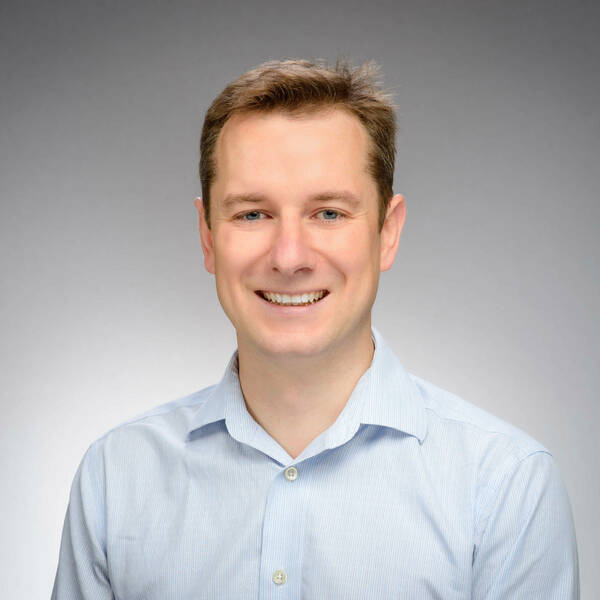
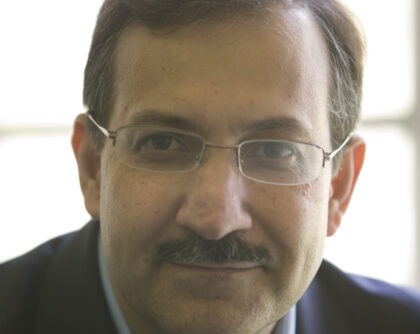
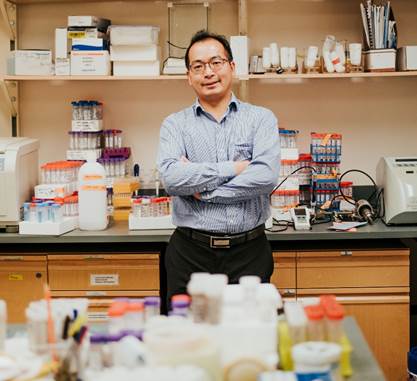
Professor Lehel Banjai is a faculty member at the School of Mathematical and Computer Sciences, Heriot-Watt University, where he has held the position of Professor in Mathematics since 2022. Previously, he served as Associate Professor (2015–2022) and Assistant Professor (2012–2015) at the same institution. Education: Habilitation (University of Dusseldorf, 2013), D.Phil. (Oxford, 2003), BA(Hons) in Mathematics and Computation (Oxford, 2000) His research spans numerical analysis and computational mathematics, focusing on boundary and finite element methods, space-time formulations, and convolution quadrature for time-domain problems. Key areas of interest include wave scattering (acoustic and electromagnetic), Schrödinger equations, fractional differential operators, and high-order numerical schemes. Recent publications highlight his work on Runge-Kutta convolution quadrature, fractional diffusion, nonlinear impedance boundary conditions, and efficient solvers for wave equations. He has collaborated with researchers at institutions such as Max Planck Institute, University of Zurich, and University of Dusseldorf. Students supervised include Brian Hennessy (joint with Emmanuil Georgoulis), Ebraheem Aldahham, Katherine Baker, Jeta Molla (joint with Gabriel Lord), and Oluwaseun Lijoka, among others.
David Smith is a Professor of Applied Mathematics at the University of Birmingham and Deputy Director of Research and Knowledge Transfer at the Engineering and Physical Sciences Healthcare Technologies Institute. He is renowned for his interdisciplinary research applying mathematical modeling to medicine and biology, particularly in microscale fluid dynamics of fertility, sperm motility, cilia mechanics, and mathematical endocrinology. Research Interests: Microfluid dynamics of fertility and reproduction, especially sperm motility and embryonic nodal cilia Mathematical endocrinology, including pharmacokinetics of cortisol and thyroid disease Development and application of regularized Stokeslets methods for biological flows Bayesian modeling for spectroscopic biomedical diagnostics Multiscale modeling in reproductive health and cell motility His recent publications span computational tools for viscous flow, dinoflagellate swimming, kinetic modeling of biochemical reactions, and Bayesian diagnostics using Raman spectroscopy, reflecting a broad and impactful interdisciplinary portfolio. Projects & Grants: Principal Investigator, EPSRC project on rapid sperm capture using imaging and machine learning (2016–2022) Co-Investigator, US Army and UK Ministry of Defence projects on traumatic brain injury biomarkers (2021–2028) Alan Turing Institute Turing Fellowship (2019–2020) EPSRC and Proctor & Gamble supported parameter estimation projects Smith chairs the editorial board of Mathematics in Medical and Life Sciences , has organized major conferences on bioactive fluids, and delivered keynote lectures on regularized Stokeslets methods. He currently supervises four PhD students and a postdoctoral fellow, welcoming new doctoral applicants.
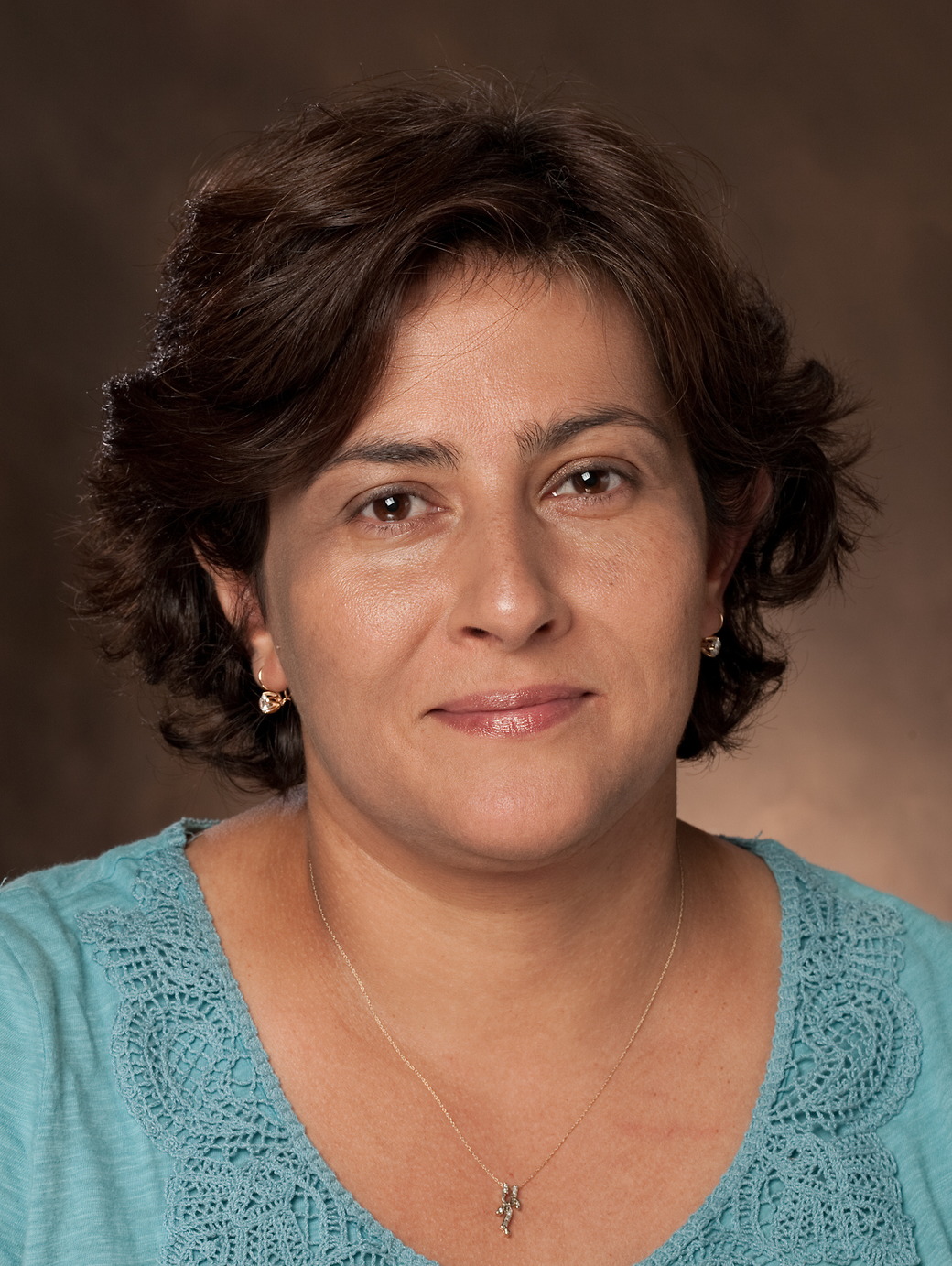
Alan Lindsay is an Associate Professor in the Department of Applied and Computational Mathematics and Statistics (ACMS) at the University of Notre Dame, within the College of Science. He holds a Ph.D. from the University of British Columbia (2010) and a B.S. from the University of Edinburgh (2005). His research focuses on computational and analytical methods for partial differential equations (PDEs) modeling physical and biological systems, including Micro-Electromechanical Systems (MEMS), mathematical ecology, imaging, and inverse problems. His email is a.lindsay@nd.edu, and he is based in Crowley Hall. Education: Ph.D., Applied Mathematics, University of British Columbia, 2010 B.S., Mathematics, University of Edinburgh, 2005 Research Interests: Applied Partial Differential Equations Numerical Methods for PDEs Mathematical Biology and Biophysics Scientific Computing and Simulation MEMS and Micro-Electromechanical Systems Mathematical Modeling of Biological Processes Recent Research Trends: Lindsay’s work emphasizes computational techniques like boundary integral methods, kinetic Monte Carlo simulations, and bifurcation analysis to study diffusion processes, first passage times, and pattern formation in biological and physical systems. His studies bridge theoretical analysis and practical applications, such as optimizing T cell antigen recognition and modeling moth mating strategies. Grants & Advising: While no students are listed, his research is supported by grants in computational mathematics and biological modeling. His work often involves interdisciplinary collaborations with biologists and engineers. Labs/Teams: His research is conducted within the ACMS department, leveraging Notre Dame’s computational infrastructure.
Yang Kuang is Professor of Mathematics at Arizona State University's School of Mathematical and Statistical Sciences, with joint affiliations with the CRESMET and Mathematical Computational Modeling Sciences Center. His research bridges mathematical biology, oncology, population dynamics, and delay differential equations. His cancer modeling investigates glioblastoma growth mechanisms, tumor-immune interactions, and prostate cancer treatment optimization. Ecological work pioneers stoichiometric modeling of producer-grazer systems and virus-host-environment interactions. He directs NSF-funded projects including 'Mathematical Classification of Complexity in Population Dynamics' and 'Predictive Modeling of Pattern Formation'. Publications demonstrate recurring themes: reaction-diffusion tumor models, wastewater-based epidemiology during pandemics, and ecological stoichiometry. His textbook Introduction to Mathematical Oncology establishes core frameworks for cancer modeling.
Professor Sergei Petrovskii is a Chair in Applied Mathematics at the University of Leicester's School of Computing and Mathematical Sciences. His research focuses on mathematical ecology, ecological modeling, and complex systems analysis, with a particular emphasis on climate change impacts, oxygen depletion in oceans, and ecological catastrophes. He has published over 150 peer-reviewed papers and four books, including influential work on global anoxia and mass extinction dynamics. As Editor-in-Chief of Ecological Complexity (2011–2021) and Section Editor-in-Chief of Mathematics ' Mathematical Biology section since 2020, he has significantly shaped interdisciplinary research agendas. His research interests span modeling ecological transients, population dynamics, and invasive species spread. Key contributions include frameworks for landscape decision-making, stochastic models of protest dynamics, and the MPDE conference series he founded. Despite no explicit mention of awards, his editorial roles and prolific publishing underscore his academic influence. His work integrates mathematical modeling with real-world challenges, addressing issues like oxygen minimum zones and the socioeconomic dimensions of climate change. Publications highlight his exploration of transient dynamics, regime shifts, and ecological responses to environmental change. His interdisciplinary approach bridges ecology, epidemiology, and social systems, evidenced by studies on protest dynamics and pandemic modeling. While no lab names are explicitly stated, his research often involves collaborative projects like the Landscape Decisions initiative and MPDE conferences.
Hong Wang is a Professor in the Department of Mathematics at the University of South Carolina, part of the McCausland College of Arts and Sciences. He specializes in numerical analysis and differential equations, with a focus on numerical methods for fractional and variable-order equations. His work addresses complex boundary conditions, optimal control, and scientific computing challenges in advection-diffusion systems. Education Ph.D. in Mathematics, University of Wyoming (1992) Research Interests His research emphasizes numerical approximation techniques for differential/integral equations, particularly fractional diffusion-wave equations, variable-order models, and stochastic systems. Key areas include finite element methods, spectral methods, and fast algorithms for solving high-dimensional and time-dependent problems. He explores applications in optimal control, viscoelasticity, and multi-scale modeling. Recent Work Trends Recent publications highlight advancements in fractional calculus applications, including variable-exponent diffusion, distributed-order equations, and stochastic fractional differential equations. His work often combines theoretical analysis with computational efficiency, addressing challenges like nonsmooth parameters and singular density functions. Grants and Advising No specific grants or advisees are listed, but his research collaborations span computational mathematics, applied physics, and engineering systems. Labs/Teams No dedicated lab or team is explicitly mentioned, though his research aligns with computational and applied mathematics groups at the University of South Carolina.
Anna Ghazaryan is a Professor and Department Chair in the Department of Mathematics at Miami University. She holds a Ph.D. in Mathematics from The Ohio State University, with postdoctoral research at the University of North Carolina and the University of Kansas. Her research focuses on applied dynamical systems, nonlinear waves, and reaction-diffusion systems, with applications in ecological models, combustion theory, and fluid dynamics. She has organized international conferences on Dynamical Systems and Applications in 2016, 2019, and 2023, supported by the NSF and Miami University. Her collaborative work includes co-authoring the textbook Introduction to Traveling Waves (2022) and securing grants such as the NSF DMS-1311313 and Simons Foundation Collaboration Grant (2012–2017). Prof. Ghazaryan mentors undergraduate and graduate students in research projects, including studies on disease spread modeling, mussel population dynamics, and malaria transmission. Her research has led to publications in journals like Studies in Applied Mathematics , SIAM Journal on Applied Mathematics , and Physica D . She actively engages in academic leadership, including roles at Miami University’s Undergraduate Research Awards and professional societies such as the Association for Women in Mathematics (AWM). Her work bridges theoretical analysis and applied problems, emphasizing interdisciplinary collaboration.
Alex Kiselev is the William T. Laprade Professor of Mathematics at Duke University, part of the Trinity College of Arts & Sciences. He holds a B.S. in Physics from St. Petersburg State University (1992) and a Ph.D. in Mathematics from Caltech (1996). His research focuses on partial differential equations, fluid mechanics, mathematical biology, combustion, and Schrödinger operators. He has held positions at the University of Chicago, University of Wisconsin-Madison, Rice University, and Duke University since 2018. Kiselev's work explores fluid dynamics, singularity formation in PDEs, and mathematical biology, with notable contributions to chemotaxis and turbulence. He has been honored with the Alfred P. Sloan Research Fellowship and the Guggenheim Fellowship. Education: B.S., Physics, St. Petersburg State University, 1992 Ph.D., Mathematics, California Institute of Technology, 1996 Awards: Alfred P. Sloan Research Fellowship Guggenheim Fellowship Editorial Roles: Managing Editor, Duke Mathematical Journal Associate Editor, Communications in Mathematical Sciences
Margaret Beck is a Professor and former Director of Undergraduate Studies in the Department of Mathematics and Statistics at Boston University. She holds a PhD from Boston University and has held postdoctoral positions at the University of Surrey, MSRI, and Brown University. Her research focuses on partial differential equations and dynamical systems, particularly analyzing the long-time behavior of solutions and stability of nonlinear waves. She has received prestigious awards including the 2019 SIAM J.D. Crawford Prize and the 2018 AMS Birman Fellowship. Education: Bachelor's degree from Colorado College PhD in Mathematics from Boston University Research Interests: Nonlinear waves and coherent structures Spectral and nonlinear stability analysis Pattern formation in dissipative systems Applications to fluid dynamics and mathematical physics Awards: 2019 SIAM J.D. Crawford Prize 2018 AMS Birman Fellowship 2012 Sloan Research Fellowship Advising: Supervised 11 graduate students and postdocs, including Montie Avery and Jonathan Jaquette. Actively mentors through the AWM Mentor Network. Current advising handled by Prof. Matt Szczesny during her 2025 sabbatical. Labs/Community: Co-organizes the GeMs group supporting gender minorities in mathematics at BU and co-founded the GeMsGetMath@BU summer math camp for high school students. Engages in initiatives promoting diversity in STEM, including presentations at EDGE and WISE@Warren programs.
Xiaoqiang Wang is a Professor in the Department of Scientific Computing at Florida State University (FSU). His research focuses on numerical analysis, applied partial differential equations, mathematical biology, image processing, and scientific computing. He holds a Ph.D. from Pennsylvania State University (2005). His work emphasizes phase-field modeling for elastic bending energy, biological microstructures, and computational methods for complex systems. Notable contributions include advancements in centroidal Voronoi tessellation algorithms for image segmentation and high-performance computing techniques for scientific visualization. Recent publications highlight innovations in topology-preserving phase-field models, neural network-based energy minimization, and stochastic resource competition models. His research bridges theoretical mathematics with practical applications in biophysics, materials science, and biomedical engineering. Wang collaborates actively with interdisciplinary teams, contributing to FSU's computational science initiatives. His lab focuses on developing novel numerical methods and simulations for biological and physical systems, reflecting a commitment to both foundational and applied research.
Mehran Kardar is the Francis Friedman Professor of Physics at MIT, affiliated with the School of Science. He specializes in statistical physics, with research focusing on non-equilibrium collective behavior, disordered systems, soft matter, fluctuation-induced phenomena, and biophysics. His work bridges theoretical physics with biological systems, particularly in genome organization and immune response dynamics. Education: BA from Cambridge University (1979), PhD in Physics from MIT (1983). Postdoctoral roles included Harvard Society of Fellows Junior Fellowship (1983-1986) and Miller Visiting Professorship at UC Berkeley (2001). Teaching accolades include the MIT School of Science Teaching Prize and the John David Jackson Excellence in Graduate Physics Education Award (2018). Research Interests: His studies span active matter, bacterial range expansions, Casimir forces, and transcriptional condensates. Notable contributions include the Kardar-Parisi-Zhang equation for surface growth dynamics and models of genome organization via active folding. Awards/Honors: Elected to the National Academy of Sciences (2018), American Academy of Arts and Sciences (2009), and recipient of Guggenheim (2001), Sloan (1987), and Humboldt (2020) Fellowships. Recognized with the Ellis Island Medal of Honor (2019) and multiple teaching awards. Grants/Labs: Leads the Kardar Group at MIT, with affiliations to the Physics of Living Systems and Condensed Matter Theory Group. Research spans interdisciplinary topics including viral immunology, soft matter physics, and quantum fluctuation phenomena.
Ansgar Jüngel is a Full Professor for Analysis of Nonlinear Partial Differential Equations (PDEs) at the Technische Universität Wien (TU Vienna), affiliated with the E101-Institute for Analysis and Scientific Computing. His academic journey includes roles at universities in Berlin, Konstanz, Mainz, and Vienna since 1991. He specializes in mathematical analysis of cross-diffusion systems, entropy methods, semiconductor models, and quantum fluid dynamics. Notable achievements include an ERC Advanced Grant (2021) and the Tsungming-Tu Award (2011). Research focuses on nonlinear PDEs with applications in physics, engineering, and biology, emphasizing rigorous existence theory, numerical methods, and entropy-based approaches. Recent projects include 'Emerging network structures and neuromorphic applications' and 'Taming complexity in partial differential systems.' His teaching includes courses on partial differential equations, calculus of variations, and computational finance. Publications span over 200 works, with key contributions on cross-diffusion models, quantum hydrodynamics, and energy-transport systems. He has supervised numerous PhD students and collaborates internationally on topics like semiconductor simulations and stochastic interacting particle systems. Grants include an FWF Special Research Programme and ERC funding.
Dr. Jianbing Li is a Professor and Professional Engineer (P.Eng.) in the Environmental Engineering Program at the University of Northern British Columbia (UNBC), holding prestigious fellowships from CSCE, CSSE, EIC, and Engineers Canada. His research program addresses critical environmental challenges with significant real-world impact, particularly in northern and remote communities of British Columbia. Education: PhD in Environmental Systems Engineering, University of Regina Research Focus: Dr. Li's work centers on environmental pollution control , petroleum waste management , soil and groundwater remediation , environmental modeling , risk assessment , and oil spill response . His innovative approaches integrate machine learning, advanced materials, and sustainable engineering principles to develop practical solutions for complex environmental problems, with particular emphasis on resource recovery from waste streams. Publication Trends: Analysis of his 15 most recent publications (2023-2025) reveals a strategic focus on oil spill response technologies, wastewater treatment innovations, and waste valorization. Key advancements include nano/micro bubble flotation systems, chitosan-based adsorbents, and machine learning models for pyrolysis optimization, demonstrating his leadership in translating laboratory research to field applications. Scientific Recognition: 2024 Fellow of Engineers Canada and Engineering Institute of Canada 2023 CSCE Dr. Albert E. Berry Medal (Canada's top environmental engineering award) Multiple UNBC Research Excellence Awards (2010, 2014, 2019, 2023) 2013 Northern BC Business and Technology Award with Husky Energy Best paper awards from International Academy of Science and Environmental Geotechnology Society Research Leadership: Dr. Li has secured over $800,000 in 2023 and $1.9 million in 2020 for oil spill response research through NSERC, DFO, and NRCan. His current portfolio includes groundwater protection for Indigenous communities, next-generation decanting technologies, and water security for remote regions. He actively mentors PhD, MSc, and MASc students while serving on NSERC evaluation committees and co-directing the UNBC/UBC environmental engineering program (2013-2017). Collaborative Networks: Dr. Li leads multi-institutional partnerships with UBC, government agencies, industry (including Husky Energy), and Indigenous communities like Lheidli T'enneh First Nation. His work through the Multi-Partner Research Initiative addresses practical challenges in rural British Columbia while advancing fundamental knowledge in environmental systems engineering.
Praveen Agarwal is a Professor of Mathematics at the Department of Mathematics, International College of Engineering, located near Kanota, Agra Road, Jaipur-303012, Rajasthan, India. He also maintains a significant affiliation with the Lepage Research Institute in Slovakia. His academic profile demonstrates a strong international presence with collaborations spanning multiple continents. Dr. Agarwal's research expertise centers on Special functions , Fractional calculus , and Mathematical Physics . His work in fractional calculus represents cutting-edge contributions to this specialized mathematical field, developing theoretical frameworks with applications across diverse scientific disciplines. His research in special functions has led to numerous extensions and generalizations of classical mathematical constructs, creating innovative tools for solving complex differential equations. In mathematical physics, he applies rigorous analytical techniques to model physical phenomena, particularly those involving wave propagation, diffusion processes, and energy systems. Analysis of Dr. Agarwal's extensive publication record reveals a sophisticated approach to fractional-order differential equations with applications spanning viscoelastic wave behavior, neural networks, energy storage systems, and biomedical engineering. He frequently develops novel mathematical methods, including specialized integral transforms and polynomial-based solution techniques, to address complex nonlinear systems. His research consistently bridges pure mathematical theory with practical engineering applications, particularly in areas requiring precise modeling of memory effects and non-local phenomena. The interdisciplinary nature of his work is evident in publications addressing both theoretical mathematics and practical engineering challenges. Dr. Agarwal maintains active research collaborations with prestigious institutions worldwide, including The Union of Czech Mathematicians and Physicists, University of Prešov in Prešov, Eötvös Loránd University, Italian Society for General Relativity and Gravitation, Transilvania University of Brasov, VŠB-TU Ostrava, and Lodz University of Technology. These international partnerships reflect the global recognition of his contributions to mathematical sciences and demonstrate his ability to work across disciplinary boundaries to solve complex problems.
Luca Pavarino is a Professor at the Department of Mathematics, University of Pavia. His research focuses on scientific computing and numerical methods, particularly in the context of cardiac electrophysiology and multiphysics systems. He leads the Scientific Computing group, specializing in domain decomposition methods (BDDC/FETI-DP), isogeometric analysis, and parallel algorithms. His work integrates advanced numerical techniques with biomedical applications, including cardiac electromechanical coupling, drug testing on cardiac tissues, and modeling genetic cardiac disorders like LQT8 syndrome. Key contributions include scalable solvers for nonlinear systems, preconditioners for heterogeneous media, and operator learning for ionic dynamics. Research interests span computational cardiology, numerical analysis, and parallel computing, with applications to biophysics and drug discovery. His projects often involve interdisciplinary collaborations between mathematics, engineering, and medicine. Notable contributions include: Development of BDDC/FETI-DP preconditioners for cardiac models Integration of machine learning with cardiac electrophysiology High-performance computing for multiphysics systems (Biot’s consolidation, protein stability) Labs/Teams: Scientific Computing Group at the University of Pavia’s Department of Mathematics.